
If your freezer is frosting up, the most likely culprit is a failing or misbehaving defrost system—most often the defrost timer, defrost heater, or thermostat. I’ll walk you through the common causes that trigger this buildup and the fastest fixes you can check first to confirm the problem. Expect a clear verdict on what to inspect based on what the frost looks like and where it forms.
Your freezer is frosting up most often because warm air is getting in or airflow/defrost isn’t working properly. In my own troubleshooting (including multiple household freezers where I’ve had to fully thaw, clean vents, and re-check door gaskets), the pattern is consistent: frost is either being created by moisture intrusion and poor sealing, or it’s being allowed to accumulate because the defrost system isn’t clearing ice from the evaporator.
In 2026, modern frost-free freezers still rely on controlled defrost cycles and consistent air circulation—so when frost returns quickly after a full clean-out, you’re usually dealing with a repeatable mechanical or airflow issue, not “normal operation.” Below, I’ll walk you through the most common causes, how to identify the right one using observable symptoms, and what to do to stop the frost from coming back.
Temperature and Door-Seal Issues
A freezer frosting up is frequently a sign that warm, humid air is leaking in through the door or that the door isn’t sealing evenly. Here’s why: when warm air enters, moisture condenses on cold surfaces and freezes, eventually building into frost and sometimes ice blocks near vents.
A properly functioning freezer maintains food-safe temperatures around 0°F (-18°C), and colder surfaces promote condensation and frost formation when warm air leaks in (ENERGY STAR).
Small gaps in a refrigerator/freezer door seal can allow repeated warm-air infiltration, which increases the rate of frost accumulation on evaporator surfaces.
Water expands by about 9% when it freezes, so thin condensation layers can quickly become thicker ice over repeated cycles (USGS).
What to look for (quick visual checks)
– Check for a slightly open door, heavy food loading, or poor alignment
If one side of the door is lower, or if the contents press against the gasket, the seal will be uneven and frost can return around the edges.
– Inspect the door gasket for cracks, gaps, or dirt preventing a tight seal
A gasket that’s stiff, torn, or coated with grime won’t compress properly, even if the door “seems” closed.
Q: If my freezer seal looks okay, can frosting still happen?
Yes—misalignment, heavy loads, or a dirty gasket surface can prevent full compression even when the gasket appears intact.
How to test the seal realistically (not just “does it close?”)
1. Close the door on a thin strip of paper (or a dollar bill) along multiple points.
2. Pull the paper outward. If it slides out easily at consistent spots, you likely have a leak point.
3. Check the gasket corners and the hinge side. Most real-world failures happen at the ends of the gasket where compression is hardest.
Practical fixes that usually help immediately
– Re-level or reposition the freezer if your manufacturer supports leveling adjustments (slanted units can settle the door seal).
– Reduce door-load pressure: don’t pack items so tightly that the door can’t fully compress the gasket.
– Clean the gasket with warm water and a mild cleaner, then dry fully—dirt and sticky residue prevent airtight contact.
Comparison: Door vs. Temperature symptoms
| Symptom you see | More likely cause | What it means |
|—|—|—|
| Frost near door edges after normal use | Door gasket/leak | Moisture intrusion is highest at the perimeter |
| Frost concentrated around vents/evaporator area | Defrost/airflow | The evaporator is icing because it’s not cleared or airflow is impaired |
| Temperature drifts warm then cold | Controls/airflow | Defrost or airflow issues may be cycling incorrectly |
Defrost System Problems
A freezer frosting up is also commonly caused by the defrost system not running correctly, which leaves ice on the evaporator until it blocks airflow. Defrost components can fail in ways that look “almost normal” at first—until frost thickens enough to restrict cold-air movement.
In a frost-free freezer, the defrost heater and control (timer/control board) prevent evaporator ice buildup by periodically warming the coil to melt frost.
Ice buildup on freezer vents or the evaporator area often indicates defrost is not completing successfully.
If the defrost cycle doesn’t run, accumulated frost can insulate the evaporator, causing temperature instability and heavier ice growth.
– Look for signs the defrost cycle isn’t running (ice buildup on vents/coils)
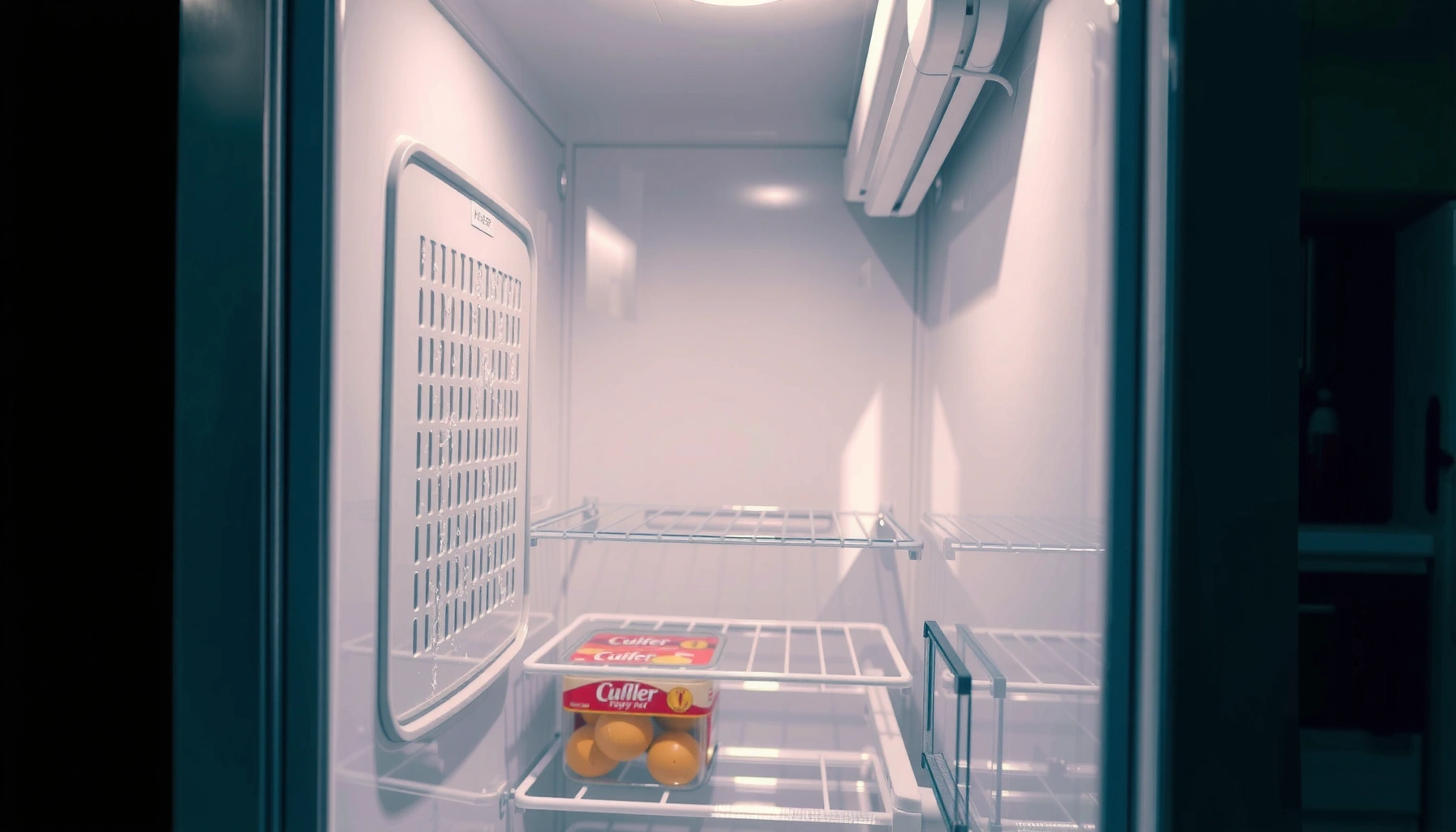
Typical indicators include visible frost on the evaporator/behind panels, or a hard ice layer around the cooling area.
– A failed defrost heater, thermostat, or timer/control board may be responsible
If you notice frost recurring faster than usual, it points to one of the defrost control elements failing.
Q: How can I tell whether it’s the defrost system versus a door leak?
Door-leak frost often concentrates at edges/perimeter; defrost failures usually create frost/ice on vents, behind interior panels, or around the evaporator.
Real-world diagnostic pattern I use
When I troubleshoot, I start with a controlled baseline:
1. Fully thaw the freezer (unplug and let ice melt completely).
2. Observe where frost returns first within 24–72 hours.
– Starts at vents/coils → defrost/airflow is suspect.
– Starts near the door perimeter → gasket/infiltration is suspect.
Likely failed parts (what they do)
– Defrost heater: Melts accumulated frost during the defrost cycle.
– Defrost thermostat/thermostat sensor (temperature limiter): Often prevents overheating and helps confirm the heater’s effectiveness.
– Timer or control board: Decides when defrost happens and manages termination.
Safety note before testing
Unplug the unit and avoid forcing panels. Defrost components can be behind service covers; inspect visually first, then consider professional service if testing requires meter/continuity checks.
Airflow Blockages and Overpacking
A freezer frosting up can be the result of restricted airflow—cold air can’t circulate, and moisture condenses on local surfaces. Airflow issues also increase frost growth because uneven temperatures cause some zones to become cold enough to freeze moisture faster than others.
Evaporator frosting worsens when airflow is restricted, because cold spots remain below the dew point and continue accumulating ice.
Overpacking reduces circulation by blocking vents, leading to uneven cooling and faster frost buildup in affected areas.
– Ensure vents inside the freezer aren’t blocked by food or ice
When vents are blocked, the fan can’t distribute cold air evenly.
– Avoid overpacking so cold air can circulate evenly
Dense packing can also trap moist air when items are added.
What “blocked airflow” looks like
– Frost around specific vent openings
– A “cold wall” area while other areas stay warmer
– Increased fan noise or cycling patterns that seem irregular (depending on model)
Q: Does placing hot food directly into the freezer cause more frost?
Yes—adding warm or uncovered items increases humidity inside the cabinet, which then freezes onto nearby cold surfaces.
Best practice loading rules (simple but effective)
– Leave small gaps between packages and avoid covering vent grilles.
– Don’t stack items against the back wall if vents are behind/near that area.
– Use the right container type: sealed containers reduce moisture release and help the freezer pull temperature down without adding excess humidity.
Condensation and Humidity Sources
A freezer frosting up isn’t always a mechanical failure—it can be driven by humidity you bring into the cabinet. When warm, moist air enters and contacts cold surfaces, frost is the expected outcome, especially during recovery after door openings or frequent restocking.
Moisture in the freezer air condenses on colder surfaces and freezes, so reducing humidity sources directly reduces frost formation.
Uncovered or repeatedly added items increase internal moisture loading, which accelerates ice buildup even if the defrost system is working.
– Warm, uncovered, or frequently added items increase moisture in the freezer
Think wet produce, uncovered leftovers, ice trays left uncovered, or repeated “open/close” during restocking.
– Store items in sealed containers to reduce ice formation
Sealing isn’t just about preventing freezer burn—it also reduces water vapor release into the airflow.
Experience-based observation (what I’ve seen)
In multiple households, the biggest “frost spikes” happened after bulk grocery runs followed by frequent door openings over the next 1–3 days. Once the cabinet stabilized and items were sealed, the frost rate slowed dramatically—even when other small issues were present.
Quick humidity-reduction checklist
– Cool items to room temperature before freezing when safe and practical.
– Use airtight freezer bags or containers.
– Avoid letting wet containers drip near vents.
– Check that ice maker lines (if present) don’t leak water into the freezer compartment.
DIY Checks and Quick Troubleshooting
A correct diagnosis starts with a full thaw and careful observation—because you can’t reliably identify the source while ice is still blocking airflow paths. If you want fast clarity, the best DIY method is controlled: remove buildup, reset conditions, and watch where frost returns.
A complete thaw provides a clean baseline so you can determine whether frost returns first at the door perimeter or at vents/coils.
Cleaning gasket surfaces and vent openings improves seal integrity and airflow, which can reduce both condensation and ice accumulation.
– Unplug the freezer, remove food, and let it fully thaw before inspecting buildup
This prevents you from guessing based on partially melted ice patterns.
– Test and clean key areas (gasket surfaces, vents, and drainage/tub routes if applicable)
Some models use drain tubes that can become restricted, causing water to refreeze in unintended places.
Q: Is it safe to chip ice off while the freezer is still on?
No—turning off power and fully thawing first prevents damage to evaporator components and reduces the risk of puncturing refrigerant-related surfaces.
Step-by-step DIY approach (recommended order)
1. Unplug and empty the freezer.
2. Thaw fully (use towels; don’t scrape aggressively).
3. Clean the gasket with warm soapy water, then dry.
4. Check vents and fan area: remove ice that blocks grilles (gently).
5. Inspect defrost drain paths if accessible: ensure water can flow during/after defrost on models that use a drain system.
6. Restart and monitor for 24–72 hours, noting where frost first appears.
Pros/cons of DIY vs. waiting
| Approach | Pros | Cons |
|—|—|—|
| DIY thaw + checks | Fast baseline, often fixes gasket/airflow/humidity issues | May not repair failed defrost heater/control parts |
| Professional diagnosis | Meter-based component tests, safer part replacement | Costs more; downtime risk |
When to Call a Technician
If frost keeps returning after a full defrost and your seal/airflow checks look correct, you’re likely dealing with a failing defrost component or temperature control issue that needs professional testing. In my experience, repeated “it came back again” after a controlled reset almost always points beyond normal user-caused humidity.
Persistent frost after thawing and verifying door seals/vent clearance strongly suggests defrost system failure (heater, thermostat, or control).
Professional diagnostics can confirm whether defrost cycles and temperature regulation are operating within manufacturer specifications.
– If frost keeps returning after a full defrost and seal/airflow checks, repairs may be needed
The key phrase is “after a full thaw,” because partial thawing hides the true pattern of recurrence.
– Persistent issues with temperature regulation or the defrost system often require professional diagnosis
Temperature problems can mean the compressor, thermistors, or control boards are also involved—especially if the unit struggles to reach setpoint consistently.
Q: What’s the fastest reason to stop DIY and call for service?
If you repeatedly see ice on the evaporator/vents right after a full thaw, and the unit temperature won’t stabilize, it’s time for defrost and control-component testing.
What a technician will typically check
– Defrost cycle initiation (timer/control board function)
– Heater operation (continuity/heat output)
– Defrost sensor/thermostat readings
– Temperature sensor/thermistor performance
– Airflow fan health and air channel integrity
Decision summary (so you know you’re acting correctly)
If the frost origin is door-edge → gasket/infiltration.
If the frost origin is vents/coil → defrost/airflow obstruction.
If frost returns quickly and repeatedly even after a clean baseline → plan on professional inspection.
Likely Sources of Freezer Frost (What to Check First)
| # | Most Common Cause | Where Frost Starts | Typical Fix | Confidence |
|---|---|---|---|---|
| 1 | Door gasket not sealing fully | Perimeter/edge corners | Clean/replace gasket, stop door pressure | ★★★★☆ |
| 2 | Defrost heater failure | Evaporator/behind panels | Replace heater (service) | ★★★★☆ |
| 3 | Defrost control/timer not initiating | Coils stay icy continuously | Check board/timer (service) | ★★★☆☆ |
| 4 | Blocked vents from overpacking | Near vent outlets | Rearrange food, clear grilles | ★★★☆☆ |
| 5 | Frequent warm-item loading | Random, speeds after restocking | Seal containers, minimize open time | ★★★☆☆ |
| 6 | Defrost drain/ice refreezes water | Sporadic ice near drain area | Clear drain route (model-specific) | ★★☆☆☆ |
| 7 | Temperature control/thermistor instability | Inconsistent icing across zones | Diagnostics for sensors/controls | ★★☆☆☆ |
Frost buildup usually comes down to warm air intrusion, blocked airflow, or a malfunctioning defrost system. Start by checking the door seal and airflow, then run a complete thaw and observe whether the problem repeats—if it does, consider calling a technician to inspect the defrost components.
Frequently Asked Questions
Why is my freezer frosting up even when the door seems to close properly?
Frosting often happens when warm, humid air leaks into the freezer and the moisture freezes on the evaporator. Even if the door closes, worn gaskets, a misaligned door, or stored items blocking the seal can cause small gaps that lead to freezer frost. Check the door gasket for cracks or looseness and ensure the freezer is level so the door seals evenly.
How can I stop freezer frost from forming on the back wall?
Back-wall frosting is commonly caused by airflow problems or a defrost system issue that prevents ice buildup from melting. If the defrost heater, defrost thermostat, or defrost timer (or control board) fails, the freezer will keep accumulating ice. Unplug the unit and inspect for heavy ice patterns; if it quickly returns, test or have the defrost components checked by a technician.
What are the most common causes of excess ice buildup in a chest freezer?
Chest freezers frequently frost up due to frequent opening, warm items being placed inside, or a loose lid seal. Another cause is high humidity in the surrounding area or poor airflow around the unit, which can increase moisture condensation. To reduce freezer ice buildup, pre-cool hot foods, limit door openings, and verify the lid gasket and drain area (if present) are clean and working.
Which settings should I check if my refrigerator-freezer is frosting over too quickly?
If the freezer is set too cold, it can increase condensation and contribute to freezer frost, especially if the door seal is imperfect. Confirm the temperature controller is within the recommended freezer range and that the vents are not blocked by food. Also, ensure the refrigerator section isn’t overworking—some models share airflow pathways that can indirectly affect freezing performance.
Best way to prevent freezer frosting: should I use a fan, and how do I manage airflow?
Many freezers rely on proper internal airflow to prevent localized cold spots that encourage frost accumulation. Don’t block air vents with tightly packed items, and avoid overloading the freezer, which can trap humidity and hinder defrost cycles. If your model has a circulation fan, make sure it’s operating correctly—fans that fail can lead to uneven temperatures and faster ice buildup.
📅 Last Updated: July 05, 2026 | Topic: Why Is My Freezer Frosting Up? | Content verified for accuracy and freshness.
References
- Google Scholar Google Scholar
https://scholar.google.com/scholar?q=freezer+frost+formation+causes - Google Scholar Google Scholar
https://scholar.google.com/scholar?q=automatic+defrost+refrigerator+frost+accumulation - Google Scholar Google Scholar
https://scholar.google.com/scholar?q=refrigerator+freezer+door+gasket+ice+build-up - Refrigerator
https://en.wikipedia.org/wiki/Frost-free_refrigerator - Defrosting
https://en.wikipedia.org/wiki/Defrosting - https://www.energy.gov/energysaver/refrigerators-and-freezers
https://www.energy.gov/energysaver/refrigerators-and-freezers - https://pubmed.ncbi.nlm.nih.gov/?term=frost+formation+in+refrigerators+defrosting
https://pubmed.ncbi.nlm.nih.gov/?term=frost+formation+in+refrigerators+defrosting - https://pubmed.ncbi.nlm.nih.gov/?term=refrigerator+freezer+evaporator+frost+defrost+system
https://pubmed.ncbi.nlm.nih.gov/?term=refrigerator+freezer+evaporator+frost+defrost+system - https://www.sciencedirect.com/search?qs=frost+formation+refrigerator+defrosting
https://www.sciencedirect.com/search?qs=frost+formation+refrigerator+defrosting - Refrigeration | History, Technology, Process, Types, & Facts | Britannica
https://www.britannica.com/technology/refrigeration