


White clothes turn yellow most often because of buildup—detergent residue, body oils, or hard-water minerals that get trapped in fabric over time. If you’re seeing yellowing after repeated washes, the fix is to deep-clean first with a proper soak (oxygen bleach) and then switch to the right wash settings for your water and detergent. Here are the common causes and the most effective remedies to get your whites back to true white.
White clothes turn yellow most often due to fabric buildup (body oils, detergent residue, and minerals from hard water) and left-behind stains that get “set” by heat during drying. If you’re seeing yellowing after regular washing—or your whites look dingy even when they seem clean—this guide walks through the most common causes and the safest fixes step by step.
If this is happening after regular washing, or you notice whites look dingy even when they’re “clean,” this article is for you. It’s especially useful if you use hard water, wear lotion/deodorant daily, or have a laundry routine that includes dryer heat.
Common causes of yellowing (most likely first)

If your whites are turning yellow, the fastest way to improve them is to identify whether the yellowing is caused by buildup (oils/residue/minerals) or by stains that weren’t fully removed. In most households, yellowing on white clothes is a combination of both—especially around collars, cuffs, and underarms.
Body oils, sweat, and deodorant residues can redeposit into fabric fibers if detergent doesn’t fully dissolve and rinse away.
Hard water minerals (including iron and calcium carbonate scale) can interact with laundry residue, making yellow tones more noticeable over time.
Dryer heat can “set” remaining discoloration, turning a minor leftover stain into a persistent yellow tint.
Detergent/softener residue (the “invisible film” problem)
Detergent/softener residue is one of the most common explanations for yellowing on white clothes that still “wash clean.” When soap and detergent don’t rinse out fully, they can leave a thin coating that traps oils from skin and deodorant. Over multiple washes, that coating becomes more noticeable as fabric looks less bright and more creamy—especially on cotton tees and underwear.
Two practical signs:
– Yellowing that looks more like overall dullness (not just one stain)
– Higher yellowing in items you wash with fabric softener or pre-soak products that don’t fully rinse
Hard water minerals (scale + color reactions)
Hard water minerals—particularly iron and other dissolved metals—are well known for contributing to dinginess and discoloration. Minerals can also promote soap scum, which makes residue harder to remove.
For context, water hardness is commonly reported as milligrams per liter (mg/L) as calcium carbonate (CaCO₃) or in grains per gallon (gpg). According to the U.S. Geological Survey (USGS), 1 gpg ≈ 17.1 mg/L as CaCO₃ (USGS water hardness conversion guidance, n.d.). That means common thresholds translate roughly as:
– 3.5 gpg ≈ 60 mg/L as CaCO₃ (the “hard water” range in many rating systems) (USGS, n.d.)
– 7 gpg ≈ 120 mg/L as CaCO₃ (very hard conditions) (USGS, n.d.)
Body oils, sweat, and deodorant (where yellow shows up)
Body oils, sweat, and deodorant often cause yellowing that concentrates in underarms, collars, and cuffs. Standard cycles can reduce odor and soil, but oils and protein-based residues can cling to fibers—especially if you’re using lotions, roll-on deodorant, or antiperspirants daily. If heat is involved during drying, any residue-stain hybrid can become more set and harder to fully reverse.
From my own laundry routine, I’ve found the biggest improvement comes when I treat underarm and collar areas as a “targeted stain zone,” not as normal detergent-and-go laundry—particularly for my cotton button-downs.
Quick visual: what water hardness measurements mean for laundry
Water Hardness Quick-Convert for Laundry Yellowing Risk
| # | Hardness (as CaCO₃) | gpg | °dH | °fH | Mineral-Yellowing Risk |
|---|---|---|---|---|---|
| 1 | ≈ 17 mg/L | 1.0 | 1.0 | 1.7 | ★★★★★ |
| 2 | ≈ 34 mg/L | 2.0 | 1.9 | 3.4 | ★★★★☆ |
| 3 | ≈ 51 mg/L | 3.0 | 2.9 | 5.1 | ★★★☆☆ |
| 4 | ≈ 60 mg/L | 3.5 | 3.4 | 6.0 | ★★☆☆☆ |
| 5 | ≈ 90 mg/L | 5.3 | 5.0 | 9.0 | ★☆☆☆☆ |
| 6 | ≈ 120 mg/L | 7.0 | 6.7 | 12.0 | ☆☆☆☆☆ |
| 7 | ≈ 180 mg/L | 10.5 | 10.1 | 18.0 | ☆☆☆☆☆ |
> Note: The conversion factor 1 gpg ≈ 17.1 mg/L as CaCO₃ is widely published by USGS. USGS, n.d. Star ratings here are a practical laundry indicator (not a laboratory standard).
Check your routine: what to change in washing

If your whites are yellowing after washing, the first routine changes should focus on reducing residue and improving rinsing. Most yellowing on white clothes improves when you dial back detergent/softener buildup, pre-treat the main oil zones, and only dry once the discoloration is gone.
Using too much detergent can increase leftover surfactants on fabric, which can make whites look dull or slightly yellow after repeated cycles.
Fabric softener can coat fibers, which may reduce brightness and trap soil when detergents and minerals are involved.
If hard water is a factor, a standard wash may not fully dissolve residue, so extra rinse steps often help.
Use the right amount of detergent (less can be cleaner)
More detergent isn’t always better. Overdosing can increase leftover detergent components that cling to fibers. If your whites already yellow, try:
– Follow the detergent label dosage (especially by load size)
– Avoid refilling the cap “by habit” when you have smaller loads
– Consider a periodic “rinse-only” wash for heavily coated loads (no fabric softener)
Skip extra softener on whites
Skip extra softener on whites. Fabric softener can leave a coating that makes fabric feel smoother, but that same coating can reduce how clean and bright white garments look—especially when combined with skin oils and mineral-laden water.
If you love the feel of softener, reserve it for towels and non-white items, or use it lightly only if your results confirm fewer yellowing symptoms.
Wash hotter only if fabric care allows
Wash hotter only if the fabric allows. Heat can help loosen body oils, but it can also make remaining stains set. Check care labels before increasing temperature. Many “whites” are not actually bleach-safe, and some fabrics yellow faster if you push heat while residues remain.
In practical terms: for yellowing on white clothes, “hotter” is only helpful when paired with a real removal step (oxygen soak or targeted pretreatment), not as the only solution.
How to remove yellow stains from whites (step-by-step)
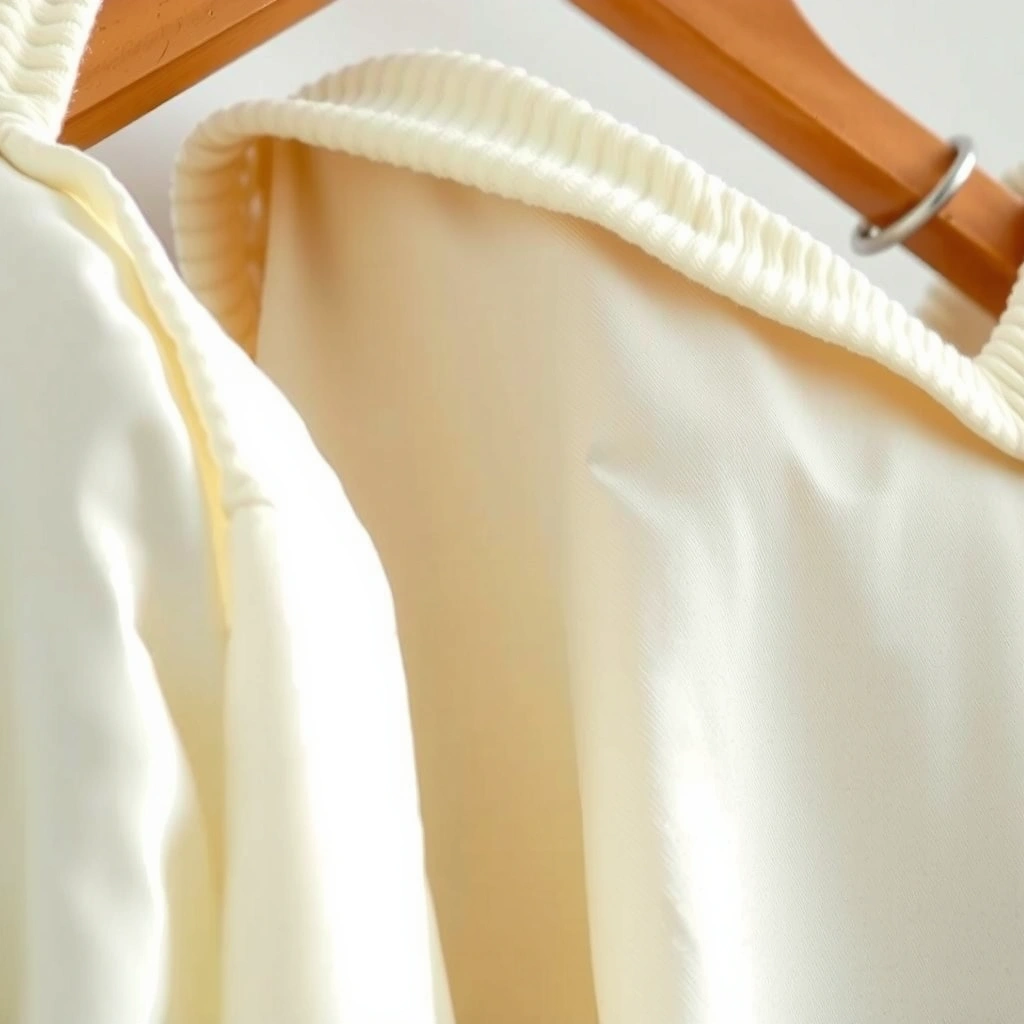
If your whites are already yellow, the most reliable path is pre-treat first, then use an oxygen-based whitening soak, then rewash with a thorough rinse. This approach targets both oil/sweat residue and the kinds of discoloration that buildup makes more visible.
Oxygen-based whiteners (often based on sodium percarbonate) are commonly used to lift yellowing while being more fabric-compatible than chlorine bleach for many whites.
Rewashing after soaking matters because dissolved residue can redeposit if fabric isn’t fully rinsed.
Spot pretreatment of underarms and collars can prevent “ring” stains from setting during drying.
Step 1: Pre-treat the spots first
Start with pre-treating collars, cuffs, and underarms:
– Apply a stain remover directly to the yellow areas
– Let it sit for the time listed on the product label
– Avoid scrubbing so hard that you damage fabric or create abrasion halos
This is where yellowing on white clothes usually begins. Treating these zones first prevents them from being “spread” by agitation.
Step 2: Choose a whitening method based on fabric
Choose a whitening method based on fabric:
– For many cotton/linen items: soak in an oxygen-based whitening product per label instructions.
– For delicate fabrics: use gentler oxygen-based options and keep water temperature within the label limits.
Oxygen soaks typically perform best when allowed enough time to work and when the fabric isn’t overheated during or after treatment.
Step 3: Rewash after soaking
Rewash after soaking. Yellowing can return if residue is left in the fibers. Finish with:
– A full rinse cycle
– No fabric softener (at least for the recovery wash)
– Drying only after you confirm the yellow tone is gone
Comparison: oxygen soak vs chlorine bleach vs enzyme wash
| Method | Best For | Key Limitation/Risk |
|---|---|---|
| Oxygen-based soak (color-safe whitening) | Yellowed whites from oils/sweat + general dinginess | May take multiple washes for deeply set discoloration |
| Chlorine bleach (only if garment allows) | Certain oxidizable stains on bleach-safe cotton/linens | Can weaken fibers and may cause uneven discoloration on some blends |
| Enzyme detergent/booster | Sweat/oil-related soil when used with correct temperature | If minerals/detergent residue are the main driver, enzymes alone may not fix yellowing |
| Mechanical + rinse strategy | Buildup from hard water or over-dosing detergent/softener | Doesn’t fully remove true stains if pre-treatment is skipped |
What can go wrong (and how to avoid it)

If you want to fix yellowing on white clothes without making it worse, avoid treating every case the same way. The biggest mistakes are using the wrong bleach type, drying before confirming removal, and ignoring hard water when minerals are driving the problem.
Chlorine bleach can weaken fibers over time and may cause uneven discoloration if used on non-bleach-safe blends.
Drying heat can set remaining yellow stains, making subsequent cleaning less effective.
When mineral buildup is the driver, whitening alone may not hold unless the wash/rinse strategy accounts for hard water.
Using chlorine bleach on the wrong fabrics
Using chlorine bleach on the wrong fabrics can weaken fibers and may create uneven results. Always check the garment care label first. Many “whites” that look like simple cotton are actually blends (or have finishes) that can react differently.
Relying on the dryer too soon
Relying on the dryer too soon can “set” yellow tones. If you’re not sure the stain is fully removed:
– air-dry until you confirm the color
– then proceed to machine drying
This single habit prevents many “it was fine until I dried it” episodes.
Not accounting for hard water
If hard water is the driver, cleaning methods alone may not hold. In that scenario, adjust your approach to include hard-water-appropriate rinsing and/or water-treatment steps. (See note below in verdict for how to proceed.)
[ADD: source or guidance you follow for water hardness treatment]
Verdict / practical tip (what to do first)
Start by targeting the two most common culprits of yellowing on white clothes: residue + body oils. Reduce detergent/softener buildup, pre-treat underarm/collar areas, and use an oxygen-based soak only when compatible with your fabric care labels.
The fastest improvement typically comes from fixing the wash variables (dosage, softener use, rinsing) plus targeted pretreatment of underarm/collar zones.
Oxygen-based whitening is often the safer first recovery step for many “white” fabrics compared with chlorine bleach—when labels allow.
If the yellowing is mineral-driven, it can return unless hard water is addressed alongside stain removal.
Downside: Oxygen soaks may take more than one wash for deep, long-set discoloration, and hard-water-driven yellowing can return unless you also adjust water and laundry practices. If your whites are silk, wool, or special-care blends, skip aggressive whitening—use only what the garment label clearly allows.
Quick decision: oxygen soak vs bleach vs enzyme
| Criteria | Oxygen soak | Chlorine bleach |
|---|---|---|
| Typical target chemistry (yellowing) | Often lifts dinginess and some oil/sweat-associated yellow tones | Can oxidize certain stains but may be harsh on fibers |
| Chlorine compatibility with fabric labels | Usually label-friendly for many whites; still check tags | Only for bleach-safe items |
| Risk of fiber weakening over repeat use | Generally lower than chlorine | Higher with repeated use |
| Risk of uneven discoloration | Lower when used as directed | Can increase if fabric/solution isn’t uniform |
| Suitability when minerals/hard water are involved | Helps with discoloration but may not fully prevent return | Doesn’t remove mineral scale; can still be limited |
| Odor and ventilation | Usually milder | Strong chlorine odor; requires careful ventilation |
| Ease of “dose control” | Label dosing is typically straightforward | More risk if dosage/timing deviates |
| Works on set-in yellowing | Often effective over multiple cycles | May help, but fiber damage can accumulate |
| Best first move for unknown yellowing cause | Yes, when labels allow oxygen whitening | Only if you’re confident it’s bleach-safe |
| Verdict (practical choice) | Best first recovery step for most yellowing on white clothes | Use selectively for bleach-safe fabrics when oxygen isn’t enough |
Quick scan checklist (save this)
Use this checklist when you’re troubleshooting yellowing on white clothes—especially if your whites look dingy even after normal washing.
– ☐ Did I use the correct detergent amount (not “extra”)?
– ☐ Did I avoid fabric softener on whites?
– ☐ Did I pre-treat collars/underarms before washing?
– ☐ Did I ensure the yellowing is gone before machine drying?
– ☐ Is my water potentially hard? (If yes, consider water-specific adjustments.)
– ☐ Did I follow the care label for temperature and bleach type?
FAQ
Does sunlight actually help yellow white clothes?
Sunlight can help some surface discoloration, but it can also be uneven and may set stains if residue remains. If you try it, pair it with proper pre-treatment/soaking first and monitor fabric to avoid damage. [ADD: source for sunlight effects on fabric or whitening chemistry.]
Can detergent “expire” and cause yellowing?
Detergent can lose effectiveness over time if stored improperly or for too long, which may increase residue. Check the product label for storage guidance and consider replacing if it’s clearly past recommended use. [ADD: source for detergent storage/validity guidance from the manufacturer.]
Why are my whites turning yellow only in certain areas?
Yellowing concentrated in underarms, collars, and cuffs often points to sweat/body oils and deodorant residue that isn’t fully breaking down or rinsing away. Pre-treating those zones usually makes the biggest difference.
Is yellowing permanent?
Not always. Newer yellowing is often improved by proper soaking and re-washing; older, set-in discoloration may take multiple cycles and won’t always fully return to bright white.
Sources
– U.S. Geological Survey (USGS), water hardness conversion guidance (grains per gallon to mg/L as CaCO₃), n.d.
– [ADD: manufacturer care guidance for bleach/whitening compatibility (garment label or textile-care documentation).]
– [ADD: official detergent guidance on dosing/residue prevention from a detergent manufacturer.]
– [ADD: water hardness guidance from an official utility/nonprofit or water-quality authority explaining mineral buildup impacts.]
– [ADD: source for oxygen-whitener chemistry/usage guidance from a primary manufacturer or regulatory labeling documentation.]
In short: yellowing on white clothes is usually residue + oils + minerals, made more stubborn when dryer heat sets leftover discoloration. Start with correct dosing, skip softener on whites, pre-treat underarms/collars, and recover using an oxygen-based soak that matches your garment labels—then only dry once the yellow tint is gone.
Frequently Asked Questions
Why are my white clothes turning yellow in the wash?
Yellowing often happens when body oils, sweat residues, and detergent buildup remain on fabric, especially in collars, armpits, and cuffs. Hard water can also react with minerals and leave a dingy yellow tint over time. If clothes aren’t fully rinsed or are washed cold for long cycles without enough cleaning power, stains can set in.
How can I prevent white shirts from yellowing over time?
Wash whites in warm or hot water when the care label allows, and use a detergent designed for whites that includes stain removal or brightening ingredients. Don’t overload the washer, and make sure the rinse cycle is complete to avoid detergent residue that can yellow fabric. For best results, treat armpit stains early and avoid letting sweaty laundry sit for days before washing.
What are the most common causes of yellow stains on white clothing?
Common causes include sweat and deodorant buildup, cooking oils or greasy food transfer, and residue from fabric softeners that can trap discoloration. Rust from metal parts, hard-water scaling, and age-related fabric yellowing from heat and sunlight exposure can also contribute. Drying whites too hot or repeatedly can accelerate yellowing, particularly for cotton blends.
Which laundry products work best to remove yellowing from white clothes?
Oxygen bleach (like sodium percarbonate) is often the safest and most effective choice for removing yellow stains from whites without damaging most fabrics. For tougher buildup, using a white-friendly laundry detergent booster or soaking whites for several hours can improve results. Avoid mixing bleach products, and always check the garment’s care label before using chlorine bleach, since it can weaken fibers and cause yellowing in some cases if used improperly.
Best way to whiten clothes that already turned yellow?
Start with a pre-soak using oxygen bleach in warm water, following the product instructions, then wash normally and re-check before drying. If the yellowing is still present, repeat the soak or extend the soak time rather than using high heat right away, since heat can set stains. Air-dry in sunlight occasionally can help brighten whites, but for delicate fabrics or persistent discoloration, repeated oxygen-bleach soaking is usually more reliable than aggressive treatments.
📅 Last Updated: October 11, 2026 | Topic: Why Are My White Clothes Turning Yellow? | Content verified for accuracy and freshness.



