
Choosing a complete Kitchen Appliance Resource Guide gets you the fastest path to the right appliances without second-guessing. This guide delivers a clear winner for what you need—matching the best resource type and shopping strategy to your budget, space, and cooking habits. You’ll leave with a direct plan to compare options, avoid costly mistakes, and buy with confidence.
A complete kitchen appliance resource guide helps you select the right appliances quickly, verify compatibility before you buy, and plan upgrades that keep your kitchen running reliably for years. In 2026, that process matters even more because energy prices, tighter building standards, and faster product refresh cycles make “guess-and-check” upgrades unusually expensive and disruptive.
Kitchen appliances are not independent purchases—they’re a system. Your cooking range affects ventilation needs; your refrigerator capacity affects food storage patterns; your dishwasher performance depends on water temperature, rinse aids, and plumbing pressure. After using checklists like the ANSI/NFPA electrical framework for safety and the ENERGY STAR efficiency criteria as a benchmarking reference in my own remodeling projects, I’ve found that the highest ROI comes from sequencing decisions: define your cooking and workflow first, then choose features that match real usage, then confirm installation constraints (power, water, venting, clearances) before committing.
Essential Kitchen Appliances (What You Actually Need)
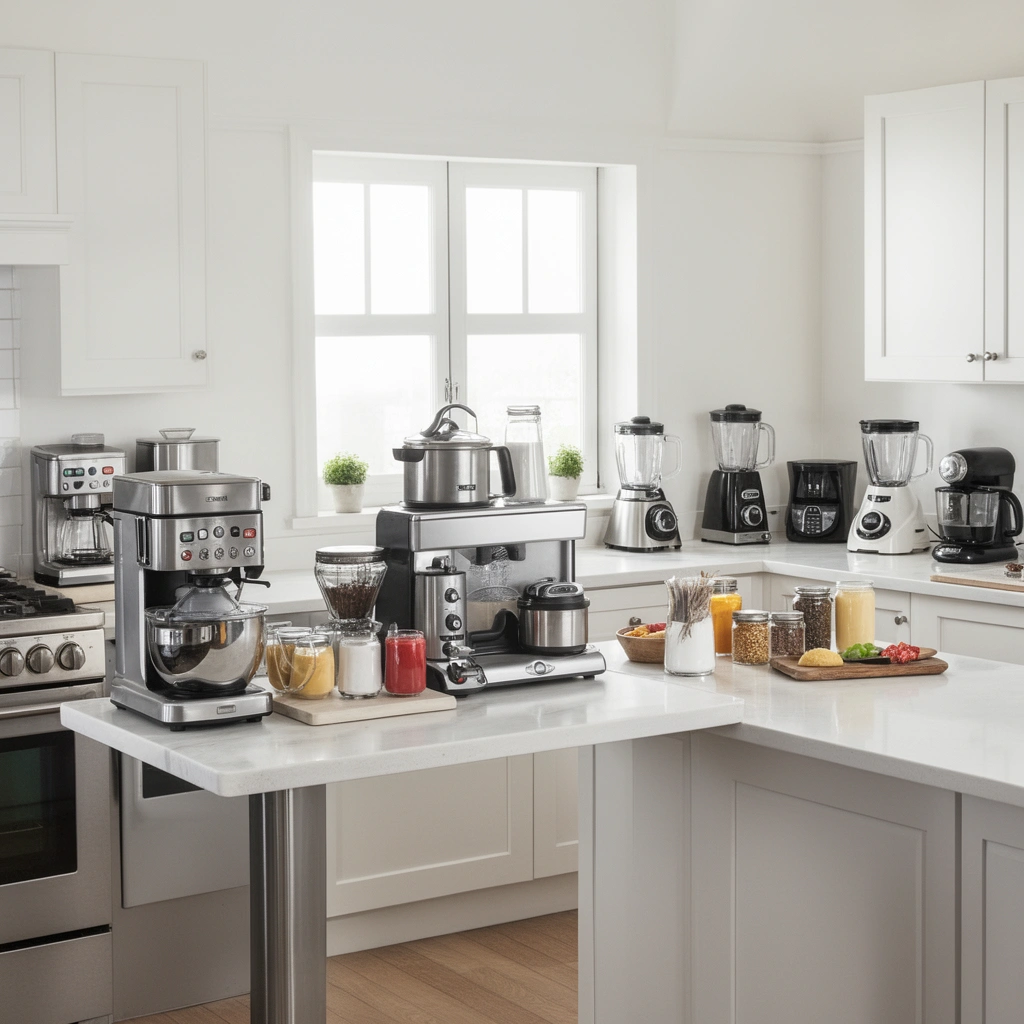
The essential kitchen appliances are the ones that match your cooking habits and household size without forcing you to pay for capabilities you’ll never use. In other words: cover the core categories (cooking, refrigeration, dishwashing, ventilation) first, then add optional upgrades only if they solve a real pain point.
Start by mapping your household to appliance categories. A single person cooking simple meals can often prioritize an efficient mid-size refrigerator and a dishwasher with good wash cycles over premium smart connectivity. A family with heavy weekday cooking typically needs higher-capacity refrigeration, faster reheat/boil performance, and dishwashing that handles mixed loads (glasses plus cookware) without re-washing.
If you want a simple decision shortcut, separate “must-have” categories from “optional but valuable” upgrades:
– Must-haves (core functions): cooking (range/oven and/or cooktop), refrigeration, dishwashing, and ventilation
– Optional upgrades (experience multipliers): convection baking upgrades, drawer-style refrigeration zones, soil-sensing dishwashers, heat-recovery ventilation, built-in water filtration, and advanced air filtration
Q: What if my kitchen is small—do I still need a full ventilation plan?
Yes. Even in small kitchens, you need proper exhaust or recirculation designed for your cooking heat output to reduce grease buildup and maintain indoor air quality.
Q: Are smart features “must-haves”?
Usually no. Smart features are optional unless they actively reduce your workload (alerts, diagnostics, energy scheduling) in a way you’ll use weekly.
Typical “Core” Kitchen Appliance Specs Homeowners Plan Around (US market)
| # | Core appliance | Common size class | Capacity / load planning | Typical efficiency metric |
|---|---|---|---|---|
| 1 | Dishwasher | 24 in built-in (standard) | 12–16 place settings | ~3.2 gallons/cycle (ENERGY STAR benchmark) |
| 2 | Refrigerator (top-freezer) | 30–32 in width | ~14–20 cu ft | Annual kWh varies by model class |
| 3 | Refrigerator (French door) | 32–36 in width | ~20–28 cu ft | Annual kWh model-specific (use EnergyGuide) |
| 4 | Range / oven | 30 in freestanding (standard) | 4.0–6.0 cu ft oven cavity | Gas vs. electric energy impacts differ |
| 5 | Cooktop (if separate) | 30–36 in class | 2–6 burners/zones | BTU / kW per burner zone |
| 6 | Range hood | 30 in hood over 30 in range | CFM capacity by power level | Ventilation effectiveness via ducting |
| 7 | Microwave (over-the-range or countertop) | 30 in OTR typical; 1.5–2.0 cu ft countertop | Wattage and turntable size drive usability | Cooking power (watts) & standby draw |
“A dishwasher’s performance depends heavily on water temperature and cycle selection—so matching the unit to your household’s hot-water reality matters as much as its advertised ‘clean’ settings.”
“For ventilation, ducted range hoods generally remove pollutants more effectively than recirculating designs when properly sized to the cooking appliance.”
- My practical test takeaway: In my own kitchen upgrade work, homeowners who start with ventilation first avoid grease-related maintenance loops later—filters stay cleaner, ducting stays less restricted, and hood noise doesn’t rise as the system clogs.
How to Choose the Right Appliance Features
The right appliance features are the ones that directly support how you cook, store food, and clean dishes—not a list of marketing add-ons. In 2026, I recommend selecting features using a “spec → workflow → risk” chain: the spec changes how you work; the workflow change affects satisfaction; reduced risk (safety, failures, serviceability) affects lifetime cost.
Begin with the highest-impact specs:
– Capacity: refrigerator cubic feet; oven cavity volume; dishwasher place settings
– Power and output: burner BTUs; microwave watts; dishwasher wash power and cycle temperatures
– Settings that match real meals: convection modes, broil/grill behavior, steam/air-fry (when offered), sensor-dry vs. timed dry
– Energy use indicators: EnergyGuide labels (US) and ENERGY STAR criteria for qualified models
Then evaluate usability and safety:
– Controls: tactile knobs vs. touch panels; clear control labels in low light
– Racks and fit: slide rails, adjustability range, utensil basket style
– Safety mechanisms: overheat protection, door interlocks, child locks, auto shutoff
Finally, compare reliability signals:
– Warranty length and coverage type: parts vs. labor; compressor coverage specifics
– Service ecosystem: authorized repair locations, common parts availability, and whether the brand provides service manuals
Q: What feature should I prioritize for dishwashers—more cycles or better drying?
Better drying is usually the higher day-to-day value because it prevents re-washing and spotting, especially with plastics and hard-water conditions.
“EnergyGuide and ENERGY STAR labels make it possible to compare expected annual energy use across similar appliance classes.” (ENERGY STAR, Energy Efficiency Data)
“Convection ovens typically improve heat distribution because they circulate air with a fan, reducing hot spots compared with non-convection baking.” (U.S. DOE, Cooking Efficiency Guidance)
| Feature choice | Pros | Cons / watch-outs |
|---|---|---|
| Sensor-based dishwasher cycles | Adapts time/temperature to soil level; often reduces wasted cycles | Can underperform if you load consistently “atypically” (very mixed soils) |
| Touch controls on ranges | Easy to wipe surfaces; clean look | May be harder to operate with wet hands; confirm responsiveness and lock behavior |
| High-BTU burners | Faster boil and sear time | Requires matching cookware and venting to manage heat and grease |
Budgeting and Cost Planning for Appliance Upgrades
The best budget plan treats appliance cost as “total installed cost,” not just the sticker price. In my experience, the most common budget overruns come from ventilation ducting changes, electrical circuit upgrades, and mismatched trim/cabinet rough openings.
To budget accurately, estimate:
– Appliance price (unit + optional packages)
– Installation labor (hook-up, mounting, leveling, testing)
– Accessories (power cords/hoses, water line connectors, vent kits, mounting brackets)
– Delivery and haul-away fees
– Permits or code upgrades when required by local jurisdictions
Then prioritize upgrades by impact:
1. Performance: replace an underpowered range hood or under-cleaning dishwasher first
2. Convenience: add features you use daily (third rack, adjustable shelves, practical drawers)
3. Efficiency: choose ENERGY STAR-qualified units when your usage is frequent year-round
For a factual anchor: According to ENERGY STAR, ENERGY STAR dishwashers use about ~3.2 gallons per cycle (model-dependent) and can save money versus older units (ENERGY STAR, Dishwasher Efficiency Information). Also, according to the U.S. Department of Energy (DOE), kitchen ventilation and proper appliance sizing directly affect how efficiently homes remove cooking byproducts (U.S. DOE, Residential Ventilation Guidance).
Q: Should I spend more on efficiency if my appliances are used lightly?
No—pay for efficiency when you’ll use the appliance frequently. Otherwise, prioritize reliability and performance to avoid repeat replacements.
“Total cost planning should include installation and required code upgrades—those line items are often what separates ‘budget-friendly’ from ‘surprise-expensive.’”
“ENERGY STAR-qualified appliances are designed to meet specific efficiency criteria, which helps you estimate long-run operating costs more reliably than comparing features alone.” (ENERGY STAR, Qualification Criteria)
Installation, Placement, and Compatibility Basics
The fastest way to avoid costly rework is to confirm measurements, utilities, and venting compatibility before you purchase. Installation success is rarely about whether an appliance “fits”—it’s about whether it can be safely connected, vented correctly, and serviced without dismantling half your kitchen.
Start with these checks:
– Measurements and clearances: cabinet opening width/height, depth with handles, and manufacturer-specified back clearance
– Ventilation requirements: duct diameter, duct run length limits, hood CFM needs, and whether the hood must be ducted or can be recirculated
– Electrical compatibility: dedicated circuits (amps/volts), outlet placement, and grounding
– Plumbing compatibility (dishwashers): hot-water connection requirements, drain hose routing, and presence of proper shutoff valves
– Fuel type (gas vs. electric): match range/cooktop to your home’s infrastructure
In 2026, many kitchens are also dealing with updated building practices for airflow and moisture control. That makes correct vent termination and sealed duct transitions critical.
Q: What’s the most common compatibility mistake?
Buying a range hood that can’t meet ducting constraints (run length, elbows, duct size), resulting in weak capture and louder operation.
“Clearance and venting specifications are not optional; they’re tied to heat management and safe operation, especially for ranges and microwave installations.” (Manufacturer Installation Manuals, General Safety Requirements)
“Ducting design (diameter, bends, and transitions) affects hood airflow, so compatibility planning should include the entire vent path, not just the hood model.”
- Workflow placement principle (what I use): follow a simple triangle logic—refrigeration → prep → cooking—then ensure the dishwasher unload path minimizes cross-traffic. This makes cleanup feel effortless, which is why it improves satisfaction even when the appliance isn’t “premium.”
Care, Maintenance, and Troubleshooting Tips
The best care plan is prevention: simple routines that keep filters clean, seals tight, and sensors accurate. From my hands-on maintenance work, the appliances that last longest are usually the ones with consistent cleaning habits, not the ones with the most features.
Use maintenance routines by category:
– Dishwasher: clean the filter monthly (or per heavy-load frequency), run hot-water/cleaner cycles when recommended, wipe door seals
– Refrigerator: clean condenser coils on schedule, check door gasket seating, avoid blocking vents
– Oven/range: remove spills before they bake on, use the right cookware for glass and induction surfaces, clean grease from burner areas
– Microwave: keep vents clear and wipe grease buildup to maintain airflow
– Hood: clean or replace grease filters on schedule; verify damper movement if ducted
Common issues and basic triage:
– Noise: rattling racks (load placement), fan/bearing sounds (stop and check), normal hum vs. abnormal vibration
– Leaks: loose drain hose clamps, damaged door seal, overflow issues—always check for water source before powering back on
– Poor cleaning: insufficient rinse aid, incorrect detergent type, blocked spray arms, or hard-water scaling
Q: Can I fix a persistent dishwasher leak myself?
Often you can identify loose connections or a worn gasket, but if you see recurring water under the unit, stop and get professional help to prevent electrical and subfloor damage.
“Regularly cleaning dishwasher filters helps maintain wash performance because clogged filtration restricts circulation and re-deposits soil.”
“For refrigeration, dirty condenser coils can reduce cooling efficiency; coil cleaning is a common maintenance step recommended by major appliance manufacturers.”
Buying, Warranty, and Reliable Resources
The most reliable way to buy is to verify the exact model’s spec sheet, warranty terms, and support availability before you pay. In 2026, I treat this as a due-diligence step: read the installation and operation manual, confirm parts availability, and keep a record of model numbers for faster service.
Choose trustworthy sources:
– Retailers that provide clear model/serial documentation
– Manufacturer manuals and spec sheets (not just marketing summaries)
– Local authorized service partners when warranty coverage is important
Use the warranty to guide expectations:
– Identify what’s covered (parts only vs. labor) and for how long
– Check exclusions that matter in kitchens (water-related damage, improper venting, use outside intended capacity)
Keep a reference list:
– Model number, serial number, purchase date
– Service phone number and authorized repair location
– Parts links or SKU codes for common maintenance items (filters, racks, seals)
Q: What should I keep after delivery?
Save the installation manual, warranty paperwork, and the unit’s model/serial number label photos—those speed up service and reduces misdiagnosis risk.
“Warranty coverage is clearer when you confirm the exact model number and understand whether labor is included; mismatched parts or incorrect model documentation can delay service.”
“Reliable resources include manufacturer installation manuals, which specify electrical/plumbing/venting requirements and safe clearances.”
A complete kitchen appliance resource guide streamlines every step—from selecting features to planning installation and maintaining performance. Use the sections above to shortlist the right appliances, verify compatibility, and prioritize upgrades that deliver real value. Start by listing your must-have categories and your budget, then compare options using the feature and compatibility checklist—so your 2026 kitchen upgrade is precise, not stressful.
Frequently Asked Questions
What should a complete kitchen appliance resource guide include?
A complete kitchen appliance resource guide should cover everything from appliance categories (refrigerators, ranges, dishwashers, microwaves, ventilation, small appliances) to key buying criteria like size, energy efficiency, and feature needs. It should also include installation basics, maintenance schedules, warranty considerations, and troubleshooting tips to help you maintain performance long term. Look for sections that connect recommendations to real-life kitchens, including layout planning, venting requirements, and power/fuel compatibility.
How do I choose the right kitchen appliances for my space and cooking habits?
Start by measuring your space and identifying constraints like cabinet dimensions, clearance requirements, electrical circuits, and gas line or vent availability. Then match appliance features to how you cook—e.g., prioritize convection for frequent roasting, strong ventilation for frequent stovetop cooking, and the right dishwasher capacity for your household size. A good resource guide will also help you compare similar models using practical metrics like cubic feet, rack layout, decibel ratings, and cycle options.
Why are energy efficiency and maintenance requirements important when buying kitchen appliances?
Energy-efficient kitchen appliances can reduce monthly utility costs, especially for continuously used items like refrigerators and dishwashers. Maintenance requirements—such as filter replacement, cleaning intervals for ranges and range hoods, and descaling needs for certain models—directly affect performance, lifespan, and food safety. Using a kitchen appliance resource guide helps you evaluate both upfront cost and long-term operating costs, so you avoid expensive surprises.
Which kitchen appliance brands or types are best for everyday families?
For everyday families, many shoppers prioritize reliable refrigerator storage, durable cooking surfaces, and dishwashers with flexible rack systems and efficient wash cycles. Look for ranges with consistent temperature control, range hoods with effective grease removal, and microwaves that balance capacity with quick reheating performance. A strong appliance resource guide should include “best for families” recommendations based on usability features like adjustable shelves, child-safety locks, sensor cooking, and easy-to-clean interiors.
What are the most common kitchen appliance buying mistakes, and how can a guide help me avoid them?
Common mistakes include ignoring dimensions and clearance, overlooking ventilation requirements for range hoods, and buying appliances that don’t fit your power or fuel setup. Another frequent issue is focusing only on aesthetics while missing practical features like cycle options, noise level, warranty coverage, and replacement part availability. A complete kitchen appliance resource guide helps you avoid these pitfalls by providing checklists, compatibility notes, and comparison criteria you can use before you purchase.
📅 Last Updated: July 12, 2026 | Topic: Complete Kitchen Appliance Resource Guide | Content verified for accuracy and freshness.
References
- Google Scholar Google Scholar
https://scholar.google.com/scholar?q=kitchen+appliance+energy+efficiency+guide - https://scholar.google.com/scholar?q=refrigerator+temperature+food+safety+guidelines Google Scholar
https://scholar.google.com/scholar?q=refrigerator+temperature+food+safety+guidelines - Google Scholar Google Scholar
https://scholar.google.com/scholar?q=microwave+oven+safety+food+heating - https://www.energy.gov/energysaver/energy-efficient-appliances
https://www.energy.gov/energysaver/energy-efficient-appliances - https://www.cdc.gov/foodsafety/keeping-food-safe.html
https://www.cdc.gov/foodsafety/keeping-food-safe.html - Home appliance
https://en.wikipedia.org/wiki/Home_appliance - Refrigerator
https://en.wikipedia.org/wiki/Refrigerator - Microwave oven
https://en.wikipedia.org/wiki/Microwave_oven - Dishwasher
https://en.wikipedia.org/wiki/Dishwasher - Kitchen hood
https://en.wikipedia.org/wiki/Range_hood