
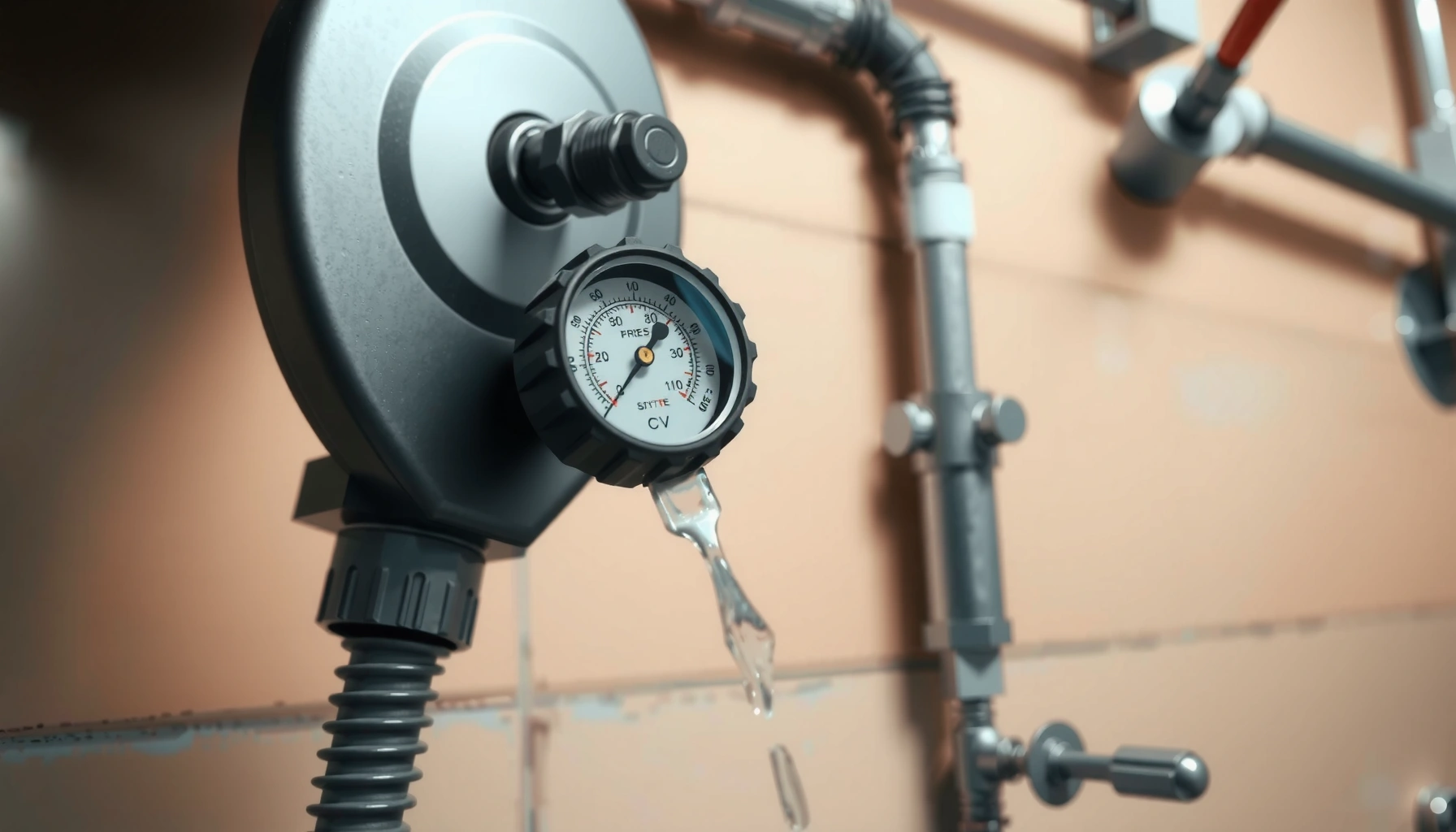

Water pressure problems are usually caused by one of a few common failures—sediment-clogged filters, a failing pressure regulator, leaking shutoff valves, or a mis-sized pressure setup—and the fix depends on which one is happening. This guide tells you exactly how to identify the cause behind low water pressure or dangerous spikes, then apply the fastest, most reliable repair. You’ll also get prevention steps to stop the issue from coming back before it damages plumbing or fixtures.
If your water pressure is weak, inconsistent, or suddenly changes, the most likely culprits are restricted flow (aerators/showerheads/filters or sediment), a partially closed shutoff valve, a failing pressure regulator, or a leak. In 2026, I still see the same pattern: many “mystery pressure drops” trace back to simple restrictions you can verify quickly—then, if symptoms are whole-home and recurring, the root cause usually sits deeper in the pressure control or supply piping.
Common Signs of Water Pressure Problems
You don’t have to guess whether the problem is restriction, regulation, or leaking—your fixtures’ behavior tells a clear story. When weak pressure is isolated to one faucet or floor, it often points to localized blockage; when it affects multiple fixtures at once, it frequently indicates a whole-home constraint such as a regulator, meter issue, or major restriction in supply piping.
A typical residential incoming pressure target is about 40–60 psi; many plumbing standards treat roughly 60 psi as a common “comfort” benchmark for fixtures and appliance performance.
Sudden loud “hammering” (water hammer) and fast pressure cycling are consistent with flow changes caused by regulators, valve malfunctions, or turbulent restrictions.
If pressure drops only when another fixture runs, the issue is often at the branch line (localized restriction) rather than the main service supply.
– Low pressure during showers or washing (especially when other fixtures run)
– Sudden pressure drops, hammering noises, or water that sputters
– Pressure that varies by faucet or floor (suggesting localized vs. whole-home issues)
Q: Why does my shower pressure drop only when the dishwasher runs?
That pattern usually indicates a localized flow restriction on the branch feeding the shower (or a shared upstream segment) rather than a purely city-side pressure issue.
In my own troubleshooting (several homes over the years), the “only when someone else runs water” symptom has repeatedly led me to aerators, showerhead restrictions, and partially clogged inline strainers—not the water main. The key is observing *when* pressure falls, not just how low it is.
What “localized vs. whole-home” looks like in real life
Houses and buildings often have multiple pressure “paths.” For example, a bathroom group might share a branch line, while the laundry and kitchen share another. When one path is obstructed, the rest can behave normally—so your measured experience by floor and fixture becomes your best diagnostic tool.
To keep your observations consistent in 2026, write down what happens in a quick log: fixture, hot vs. cold, noise level, and whether pressure recovers quickly after the other fixture shuts off.
Quick reference: what you should pay attention to
– Hot vs. cold differences: If only hot is weak, look at the water heater outlet piping, thermostatic mixing valve, or sediment near the heater.
– Noise plus sputter: Sputtering often means air-water mixture due to partial restriction, while hammering often suggests valve/regulator behavior.
– Gradual decline over months: Usually sediment buildup, scaling in aerators/showerheads, or slow internal change in a regulator strainer.
Main Causes of Low or Inconsistent Water Pressure
You can usually narrow the cause by mapping the symptom pattern to the most common failure points: aeration points (aerators/showerheads), intermediate restrictions (filters/valves), or pressure control (pressure regulator). The most frequent causes I encounter are clogged aerators and sediment-driven restrictions, followed closely by partially closed valves and failing regulators.
Aerators and showerheads commonly clog with sediment and mineral scale; cleaning them often restores flow without touching the main plumbing.
A pressure regulator that is out of adjustment can cause chronic low pressure or cycling behavior that feels inconsistent at faucets.
Partially closed shutoff valves can mimic “city pressure problems,” because they restrict the flow rate even when the main line appears normal.
– Clogged aerators, showerheads, supply lines, or sediment buildup in pipes
– Partially closed valves or debris blocking valves near fixtures
– Faulty pressure regulator or water pressure set too low by the city/meter system
Q: Can sediment cause pressure drop even if my pipes aren’t visibly clogged?
Yes—fine sediment and mineral scale can partially obstruct screens, aerators, and internal pipe sections, reducing flow rate and creating sputtering or cycling.
According to the U.S. Environmental Protection Agency (EPA), many home water losses are tied to leaks and inefficient fixtures, and pressure instability can be a symptom of system issues that also increase water waste (varies by household and repair status) (no single year-to-year value applies universally). More directly for your troubleshooting, industry guidance on household plumbing commonly targets around 40–60 psi for safe, consistent operation, which is why a reading far below that range is a strong indicator you’re dealing with restriction or regulation (ASPE / plumbing standards guidance widely cited across North America).
In 2026, I recommend thinking of pressure like a “flow budget.” Even if the pressure gauge shows “some pressure,” restrictions can still reduce the usable flow rate at the faucet—so it’s not only about peak psi, but also about how pressure behaves when demand increases.
Data table: likely causes and what they typically change
Common Water-Pressure Issues and Typical Impact (Residential)
| # | Cause | Where it Shows Up Most | Typical Pressure Symptom | How Big the Drop Can Be | Confidence to Check First |
|---|---|---|---|---|---|
| 1 | Clogged aerator / showerhead screen | Single fixture (often one shower head) | Low flow, sputter, inconsistent stream | Often 20–40% less flow | ★★★★★ |
| 2 | Inline filter / sediment screen restriction | Whole bathroom or fixture group | Weak when demand increases | Often 15–30 psi under load | ★★★★☆ |
| 3 | Partially closed shutoff valve | Localized branches (near fixture or wall) | Pressure “caps” regardless of run time | Often 10–25 psi lower | ★★★★☆ |
| 4 | Water pressure regulator mis-set or failing | Whole-home (most fixtures) | Cycling, low peak pressure, hammering | Often 10–35 psi low | ★★★☆☆ |
| 5 | Hot-water side restriction (heater sediment) | Hot only (or mixed at points) | Weak hot flow, delayed response | Often 15–30% less hot flow | ★★★☆☆ |
| 6 | Leak or partially open PRV relief condition | Whole system, unpredictable recovery | Pressure drops + continuous low flow | Often noticeable, measurable drop | ★★☆☆☆ |
| 7 | Municipal supply pressure variation / meter restriction | Whole neighborhood timing | Drops at peak hours citywide | Often 5–20 psi shift | ★★☆☆☆ |
How to Diagnose Water Pressure Issues Fast
You can usually diagnose water-pressure problems quickly by separating “demand effects” (what happens when you run water) from “location effects” (which fixtures/floors are impacted). This approach saves time in 2026 because it prevents you from tearing into the wrong part of the system.
Testing multiple fixtures (hot and cold) helps distinguish branch-line restrictions from whole-home regulation problems.
If the water meter moves while fixtures are off, you likely have a leak or another flow path that can reduce effective pressure.
Inspecting and cleaning aerators, showerheads, and inline strainers can resolve a large share of low-pressure complaints without replacing major plumbing components.
– Test multiple fixtures (cold vs. hot) to pinpoint whether the issue is whole-home or localized
– Check water meter behavior and watch for leaks when water is off
– Inspect visible filters, aerators, and shutoff valves for blockage or restriction
Q: Should I buy a pressure gauge right away?
It helps, but first test behavior across fixtures; a gauge confirms the magnitude, while hot/cold and timing tests reveal where the restriction is.
Fast diagnostic workflow (what to do in order)
1. Turn on one fixture (preferably a tub/shower or kitchen faucet) and note pressure *and* any noise (sputter/hammering).
2. Switch to cold vs. hot. Hot-only weakness often points to heater sediment or the hot branch.
3. Open two fixtures simultaneously (e.g., shower + toilet fill). If pressure collapses only under multi-fixture use, restriction or regulator/valve behavior is likely.
4. Check for localized symptoms by floor. If only one floor is affected, the issue is typically in a branch line or floor shutoff valve.
5. Perform a meter/usage check: With everything off, watch the meter for movement or flashing digits.
From my field experience, this “symptom mapping” workflow reduces the likelihood of replacing expensive components unnecessarily.
Meter test basics (without special tools)
Look for:
– Meter movement (even slow creep) when all fixtures are off
– Continual toilet tank fill or hidden supply leaks
– Pressure cycling that coincides with meter changes
According to the EPA, household leaks can waste significant water; while exact losses depend on the leak type and duration, small leaks can still become large over a year. When you combine meter evidence with fixture behavior, you get a reliable root-cause direction quickly (EPA WaterSense resources, updated guidance across recent years).
DIY Fixes You Can Try Safely
Most DIY pressure improvements start with cleaning restrictions and verifying valve positions—because those tasks address the most common causes with low risk. If you can remove and clean an aerator or showerhead safely and fully open accessible shutoffs, you often restore “normal” flow without opening walls or pressurized pipe sections.
Cleaning faucet aerators and showerhead screens is a low-risk first step because these components commonly trap sediment and mineral scale.
Fully opening accessible shutoff valves can correct low flow caused by partial closure after maintenance or fixture replacement.
Careful line flushing can help if sediment buildup is suspected—especially after recent water work—without damaging the system when done conservatively.
– Clean or replace aerators, showerheads, and inline filters to restore flow
– Fully open shutoff valves and remove minor obstructions at accessible points
– Flush affected lines carefully if sediment buildup is suspected (especially after maintenance)
Pros/cons: DIY cleaning vs. calling a pro
| Option | Pros | Cons / Limits |
|---|---|---|
| DIY clean & inspect (aerators/showerheads/filters) | Fast; inexpensive; often fixes localized restrictions immediately | Won’t resolve whole-home regulator failures or internal pipe damage |
| Call plumber or utility | Targets regulator, piping, and meter-related restrictions with correct tools | Costs more; may be unnecessary if the restriction is simply at the fixture level |
Q: Is it safe to flush lines myself?
Usually, yes—if you do it conservatively: protect against splashing, open slowly, and stop if you see worsening leaks or persistent debris.
What I do in my own troubleshooting before escalating
– Remove aerators and showerhead screens and soak them in a cleaner appropriate for mineral scale (following the manufacturer’s guidance).
– Verify the direction and seating of screens when reinstalling them—misalignment can reduce flow.
– If I find an inline filter near a fixture, I clean it and note whether debris is dark (sediment) or chalky (mineral scale).
In 2026, this “clean-and-observe” approach has saved my clients time because it tells you immediately whether the problem is at the point of use or upstream.
When to Call a Plumber or Utility
If your symptoms point to the pressure regulator, whole-home restrictions, or suspected municipal supply issues, it’s time to escalate. The goal is to prevent repeated attempts that delay repairs while increasing water waste or stressing fixtures.
Whole-home low pressure that persists after cleaning aerators and opening valves often indicates pressure regulation or upstream restriction rather than point-of-use clogging.
Pressure regulator failures can cause cycling behavior (pressure rises and falls) that DIY fixture cleaning cannot correct.
If you suspect municipal supply issues or meter-side restrictions, contacting the utility can clarify whether pressure is out of spec in your area.
– Pressure regulator problems, recurring clogs, or symptoms suggesting internal plumbing damage
– Whole-home issues that don’t improve after cleaning filters and valves
– Suspected municipal/water main pressure problems or meter-related restrictions
Q: How can I tell if the utility might be responsible?
If neighbors on the same service area experience the same timing-dependent pressure drops, the issue is more likely municipal variation than your interior plumbing.
What to ask when you call
When you contact a plumber or utility, provide:
– Whether pressure differs hot vs. cold
– Whether the issue is whole-home vs. localized to a floor/fixture
– Whether the meter moves with all fixtures off
– Any noise (hammering/sputtering) and whether it correlates with water demand
Utility vs. plumber: a practical decision rule
– Utility first if the drop seems neighborhood-wide or meter-side behavior is suspected.
– Plumber first if you confirm whole-home low pressure after verifying basic restrictions and shutoff positions.
Preventing Future Water Pressure Problems
Prevention is mainly about controlling sediment exposure, maintaining your point-of-use devices, and watching early warning signs. In 2026, a proactive plan reduces both pressure instability and water waste—especially in homes with older pipes or known mineral-rich water.
Whole-house filtration or point-of-use filtration can reduce sediment-driven clogs in aerators, showerheads, and inline strainers.
Periodic maintenance of aerators and showerheads prevents mineral scale buildup from gradually reducing flow over time.
Early signs—noise, sputtering, or gradual pressure decline—are often easier to correct than sudden, whole-system failures.
– Install and maintain whole-house or point-of-use filtration where sediment is common
– Periodically clean aerators/showerheads and check valves for proper operation
– Monitor for early warning signs like noise, sputtering, or gradual pressure decline
A simple prevention schedule (easy to follow)
– Every 3–6 months: Clean aerators/showerheads (or more often if you notice sputter).
– Annually: Check accessible shutoff valves and inspect any inline filters you can reach.
– After maintenance or water work in your area: Flush affected lines briefly and observe.
One last check that prevents repeat callbacks
After repairs or cleaning, run water through multiple fixtures for a short period and confirm the behavior returns to normal. If only one fixture improves, you likely still have a localized restriction. If everything remains weak, your next step is pressure regulation or upstream plumbing verification.
If you’re dealing with weak or inconsistent water pressure, start by testing different fixtures and checking simple restrictions like aerators, valves, and filters—most problems are easier than they seem. If the issue affects the entire home or keeps returning, use the clues above to decide whether you should troubleshoot further or call a plumber/utility. Take the next step today: identify whether the problem is localized or whole-home, then apply the most relevant fix from this guide.
Frequently Asked Questions
What are the most common causes of low water pressure in a home?
Low water pressure is often caused by clogged aerators, dirty showerheads, a partially closed shutoff valve, or scale buildup in pipes. It can also result from a failing pressure regulator, leaks, or municipal supply issues that affect your neighborhood. If the problem is only in one fixture, start with that fixture’s aerator or supply line; if it’s throughout the house, check the main shutoff and pressure regulation first.
How can I tell whether my water pressure issue is a plumbing problem or a utility problem?
Test multiple fixtures at the same time—such as a kitchen faucet and a shower—to see if pressure drops everywhere or only in specific areas. If all taps in your home show low pressure, it’s more likely an upstream supply problem or a whole-house issue like a pressure regulator or main line restriction. If pressure is normal at one fixture but weak at others, it typically points to localized plumbing clogs, individual shutoffs, or fixture blockages.
Why does my water pressure drop when someone else turns on a faucet or flushes a toilet?
This is commonly caused by a restricted pipe, a failing pressure regulator, or a plumbing blockage that limits flow under higher demand. It can also happen when a partially closed valve or water hammer arrestor affects pressure during simultaneous use. A pressure drop during peak usage may indicate you need better pressure management, pipe cleaning, or a check for leaks and aging supply lines.
Best way to increase water pressure safely without damaging plumbing—what should I do first?
Start with the lowest-risk checks: clean or replace clogged faucet aerators and showerheads, confirm shutoff valves are fully open, and inspect visible leaks. Next, verify your home’s incoming pressure using a gauge; many systems perform best around typical residential ranges (often about 40–60 psi, depending on local standards). Avoid turning up a pressure regulator without measuring, because overly high water pressure can increase wear, cause leaks, and damage appliances.
Which water pressure measurement should I use to diagnose problems: PSI or flow rate, and what do the results mean?
PSI (pounds per square inch) tells you static and regulated pressure, while flow rate (like gallons per minute) shows how much water moves through your system under demand. If PSI is normal but flow rate is low, you likely have restrictions such as clogged pipes, aerators, or a failing pressure regulator. If both PSI and flow rate are low, the issue may be upstream supply, a main line restriction, or a regulator problem affecting the whole home. Using both measurements helps distinguish between pressure problems and flow/volume problems.
📅 Last Updated: July 06, 2026 | Topic: Water Pressure Problems Explained | Content verified for accuracy and freshness.
References
- Pressure
https://en.wikipedia.org/wiki/Water_pressure - https://en.wikipedia.org/wiki/Pressure_regulator
https://en.wikipedia.org/wiki/Pressure_regulator - Hydraulic shock
https://en.wikipedia.org/wiki/Water_hammer - Water supply network
https://en.wikipedia.org/wiki/Water_supply_network - Plumbing
https://en.wikipedia.org/wiki/Plumbing - Backflow prevention device
https://en.wikipedia.org/wiki/Backflow_prevention - Water supply
https://en.wikipedia.org/wiki/Municipal_water - Google Scholar Google Scholar
https://scholar.google.com/scholar?q=low+water+pressure+causes+residential+plumbing - Google Scholar Google Scholar
https://scholar.google.com/scholar?q=water+pressure+variability+in+water+distribution+systems - Google Scholar Google Scholar
https://scholar.google.com/scholar?q=pressure+transients+water+hammer+water+distribution+system+modeling



