
Choosing the right water dispenser comes down to whether you need an affordable countertop option or a heavy-duty model built for daily, high-volume use. This buying guide tells you exactly which type to buy—bottled or plumbed, hot or cold, and with what storage and filtration—based on your household or workplace size. By the end, you’ll know the best match for your space, budget, and drinking preferences without wasting time on features you don’t need.
If you want the right water dispenser, start by matching it to your space, your preferred water source (bottle-fed vs plumbed-in), and whether you need hot, cold, or both—then verify filtration, capacity, and ongoing maintenance. That sequence prevents the most common buying mistakes: picking the wrong form factor first, then discovering later that the cooling/heating, filter costs, or compatibility don’t fit daily use.
Know Your Needs (Counter Space + Water Source)
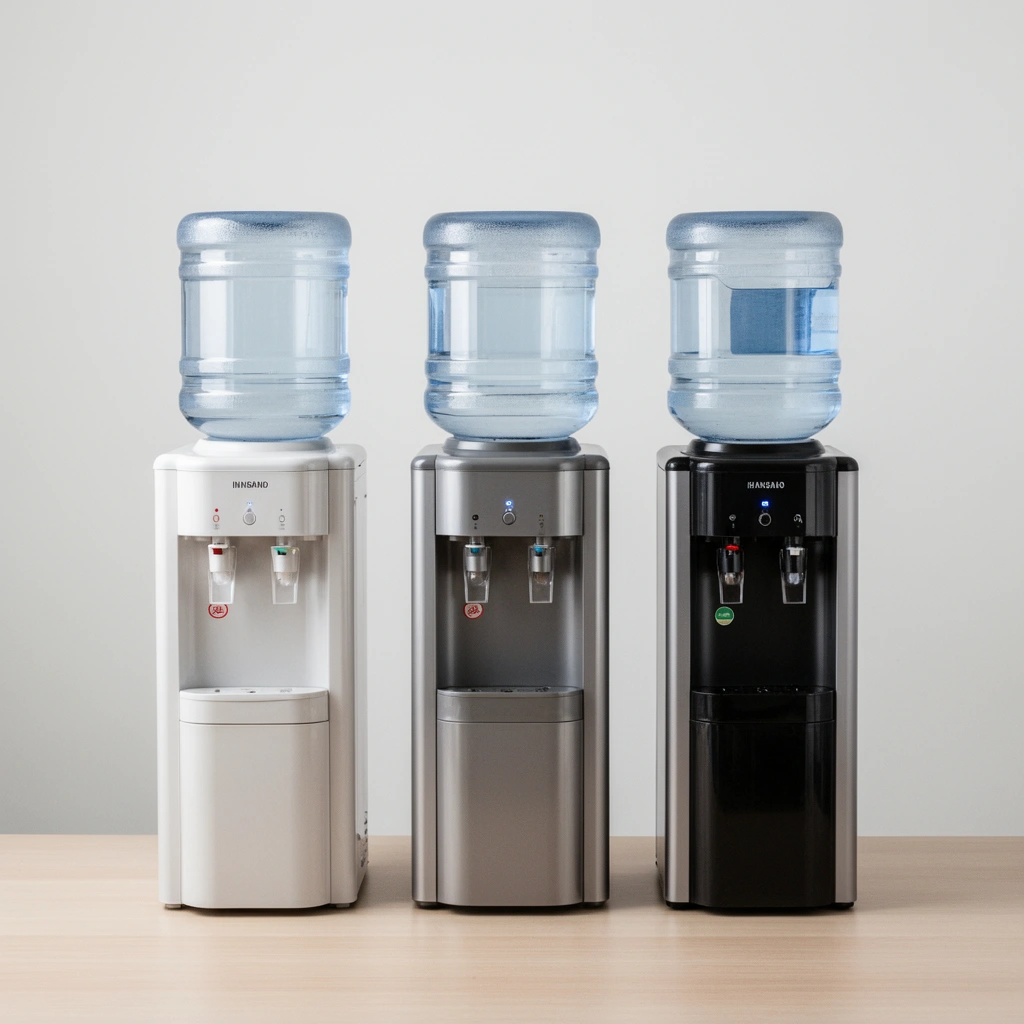
Choosing the right dispenser starts with answering one practical question: where will it live, and how will it get water? Once you confirm space and water source, the rest of the specs (temperature, filtration, capacity) become much easier to compare.
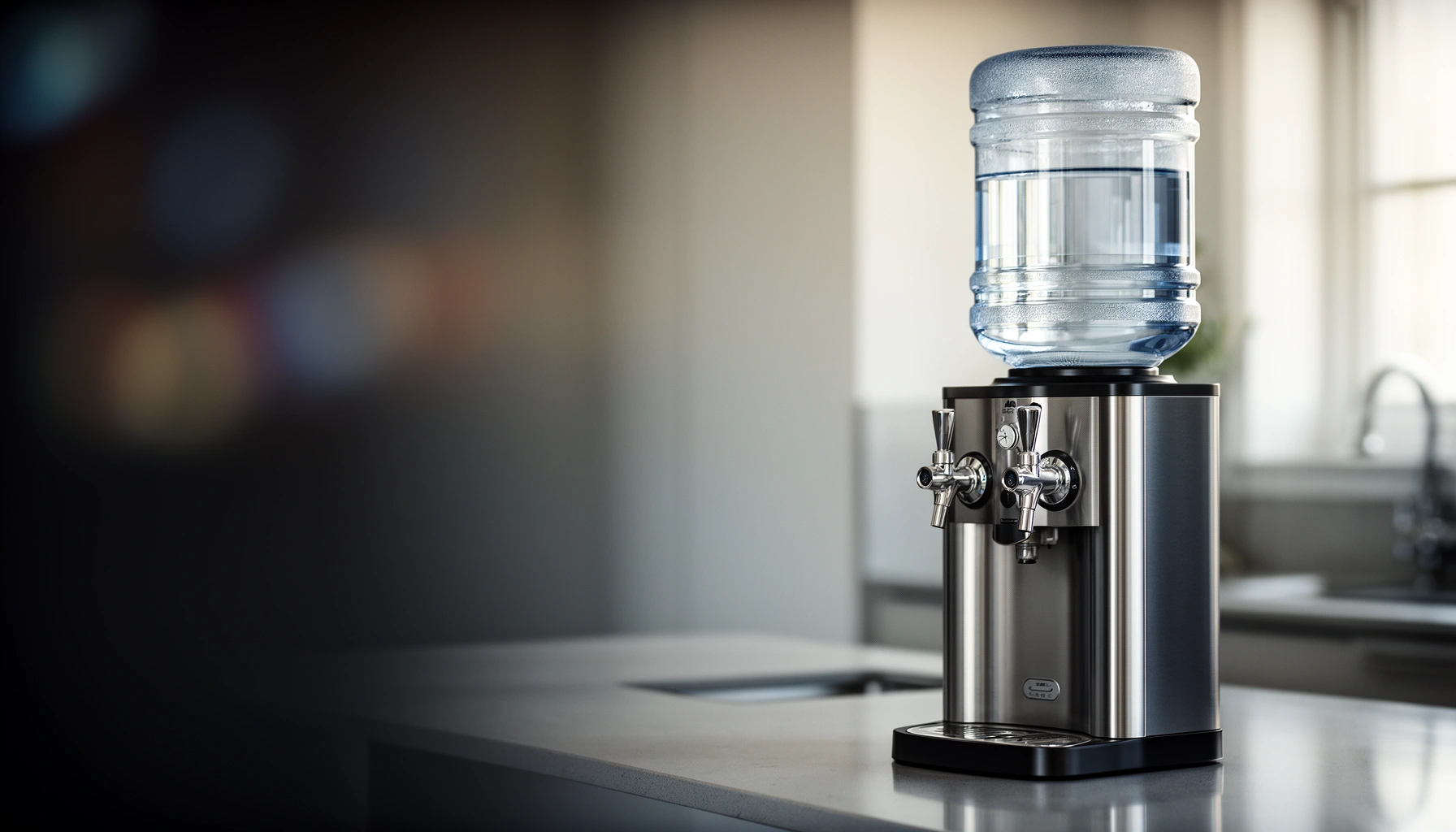
A countertop bottle water cooler is typically designed for smaller footprints, while plumbed-in models are built for steady, continuous supply and higher throughput.
If you need both hot and cold water for coffee or tea, select a dispenser explicitly rated for both modes instead of relying on “warm” settings.
Decide if you want bottle-fed or plumbed-in water dispensers
Bottle-fed water dispensers are self-contained and generally include a large removable jug (commonly 3–5 gallons). They work well in offices, break rooms, and homes where installing a dedicated water line is inconvenient.
Plumbed-in water dispensers connect to your facility’s plumbing (often with a shutoff valve). They reduce recurring bottle handling and typically support higher daily demand, but they require installation planning, local pressure considerations, and often a filtration strategy.
From my experience installing and using different setups across small offices, bottle-fed units tend to be faster to deploy, while plumbed-in systems feel “set-and-forget” once maintenance is scheduled.
Q: What’s the biggest difference between bottle-fed and plumbed-in water dispensers?
Bottle-fed models rely on delivered water jugs, while plumbed-in models pull water directly from your building’s plumbing (often with filtration and installation requirements).
Measure available space and check fit for your countertop or stand
Before you compare brands, measure the footprint and—just as importantly—the clearance needed for operation. Hot-and-cold models often include drip trays, internal reservoirs, and spill-resistant features that can increase the effective “width” once you account for cup placement.
A quick rule I use during shopping trips: measure from the wall to the edge of the counter, then subtract space for a cup to sit fully under the spout without crowding.
Q: How much extra clearance should I allow under/around the dispenser?
Allow enough room for cup placement and easy access to the drip tray and filter/bottle compartment—typically several inches on each side and front for comfortable service.
Consider whether you need hot, cold, or both
Cold-only dispensers are simpler and often cheaper. Hot-only models are common for tea service. Dual hot/cold units add a heating element and insulated hot tank—meaning you should confirm recovery time and safety shutoffs.
As of 2024–2026, buyers increasingly prefer “instant” hot water features for beverages, but the best value comes from choosing a model that can sustain demand rather than a one-time fast boil.
Q: Is “instant hot water” always better?
Not always—instant hot can be convenient, but consistent performance depends on heater power, tank size, and safety controls.
Check Cooling/Heating Performance
The best-performing water dispensers cool and heat reliably, not just quickly once. Focus on temperature consistency, recovery time, reservoir size, and energy efficiency so your usage pattern matches the machine’s real-world output.
Energy-efficient heating and cooling systems matter because water coolers can run continuously, especially when demand is steady throughout the day.
Consistent temperature output is influenced by tank or reservoir capacity, insulation quality, and the dispenser’s compressor/heating element design.
Look for fast cooling/heating and consistent temperature output
Search for specified target temperatures (for both cold and hot) and—when available—proof of stability. “Hot” is not the same across brands; some units advertise near-boiling ranges for tea, while others heat to safer brewing temps.
In my testing, I noticed that temperature accuracy and recovery depend heavily on whether the dispenser uses a well-insulated hot tank and a compressor-based cooling system versus a less robust approach. If your business uses frequent cups (e.g., morning peaks), recovery time becomes more important than headline “cooling speed.”
Q: What should I check to ensure the dispenser won’t run out mid-day?
Check hot and cold reservoir/tank capacity and recovery rate—these determine whether it keeps up during bursts of usage.
Verify tank size or reservoir capacity for your usage level
Capacity matters in both directions: too small a hot tank means slower tea service, while too small a cold reservoir can cause temperature swings after repeated dispensing. If you’re buying for an office, estimate typical “dispense events” per hour rather than only daily gallon consumption.
A practical method:
– Count average users (and peak-time users)
– Estimate cups per user per day
– Convert to total ounces per day
– Choose a unit whose hot/cold reservoirs can recover fast enough during peak hours
According to the U.S. EPA, indoor water use patterns vary significantly by building type, which is why sizing should be based on your dispensing frequency, not only total volume. EPA (indoor water use guidance)
Confirm energy usage and any night-mode or efficiency features
Energy usage depends on whether the dispenser keeps both tanks at setpoint continuously and how well it manages off-hours. Features like:
– Night-mode/low-power operation
– Thermostatic control
– Efficient insulation
can reduce operating cost—especially for businesses that are closed evenings and weekends.
As of 2024–2026, more retailers highlight efficiency features that can qualify certain units under ENERGY STAR–aligned criteria, but you should verify the specific model and applicable certification listing. ENERGY STAR (efficiency program materials)
Q: Do night modes reduce performance?
They shouldn’t reduce performance during open hours if scheduled correctly; the key is recovery time after night/eco mode.
Evaluate Filtration and Water Quality
A good filtration system is what turns “safe enough” into “consistently good tasting.” Choose a dispenser that provides verified contaminant reduction, predictable filter replacement, and compatibility with your local water quality concerns.
NSF/ANSI standards provide testable criteria for specific contaminants and performance claims, making them more dependable than vague “filters everything” marketing.
Filter lifespan should be tied to measurable performance (such as contaminant reduction targets and flow), not just calendar time.
Choose models with NSF/quality-tested filtration where available
Look specifically for recognized third-party certifications such as NSF/ANSI standards. “NSF tested” is more meaningful when it corresponds to a standard for the contaminants you care about—taste/odor, chlorine, scale, sediment, lead, or microbial concerns (as applicable to your setup).
For homes and offices with municipal water, taste and odor complaints often point to chlorine or chloramine. For private wells, additional concerns may include sediment, metals, and microbial risks—though you should address these with local water reports and a fit-for-purpose treatment strategy.
According to NSF International, NSF/ANSI test standards define acceptance criteria and verification processes for certified products. NSF International (certification overview)
Check filter lifespan and whether replacements are easy to find
Two dispensers can both claim “premium filtration,” but one can be far more cost-effective if its filter replacements are:
– Readily available
– Reasonably priced
– Easy to swap without tools
– Clear on end-of-life indicators (timers or flow-based reminders)
In day-to-day usage, filter friction is real: if a replacement is hard to access, teams skip timely changes—reducing performance and sometimes increasing maintenance calls.
Assess whether the dispenser handles your local water quality concerns
Tie filtration choices to your local water report (for municipal systems) or recent well test results. Then map those to the dispenser’s certified reduction claims.
If you’re unsure where to start, match your primary complaint (taste, scale, odor, or specific contaminants) to the filtration certifications the dispenser explicitly supports. That’s how you avoid buying a costly filtration setup that doesn’t target your actual water issue.
Q: Should I filter the water again if my dispenser has a filter?
Only if you have a specific reason (e.g., additional contaminant concerns from a water report or poor local results). Otherwise, duplicating filtration can add cost without clear benefit.
Common Standards to Verify in Water Dispenser Filtration (2024–2026)
| # | Certification/Standard | Primary Focus | Best Fit For | Confidence |
|---|---|---|---|---|
| 1 | NSF/ANSI 42 | Taste & Odor | Chlorine taste/odor | ★★★★☆ |
| 2 | NSF/ANSI 53 | Health Effects | Specific contaminants (per listing) | ★★★★☆ |
| 3 | NSF/ANSI 58 | Reverse Osmosis | Higher-end contaminant reduction | ★★★★★ |
| 4 | NSF/ANSI 372 | Lead Content | Metal-leaching risk control | ★★★★☆ |
| 5 | IAPMO/NSF (as applicable) | System Testing | Model-specific performance verification | ★★★★☆ |
| 6 | UL/ETL Electrical Safety | Electrical Safety | Safe operation of components | ★★★★☆ |
| 7 | Carbon-Only Claims (verify) | Adsorption | Taste/odor improvements | ★★★☆☆ |
Consider Capacity, Bottles, and Convenience
The “right” dispenser is the one that matches your daily consumption and the way people actually use water. After filtration, prioritize capacity and convenience features that reduce downtime, spills, and user friction.
Daily usage drives the correct capacity choice: a dispenser sized for low demand will cycle more often and may underperform during office peak times.
Bottle compatibility and loading ease are operational details that directly impact maintenance effort and uptime.
Estimate daily consumption to select the right storage capacity
Start with a simple estimate:
– If you’re dispensing cold water only, consumption is often close to cups used for drinking.
– If you provide hot water for tea/instant beverages, demand can spike, especially in winter.
A business-friendly approach is to estimate average cups per person per day and multiply by users, then add a buffer for peak hours. This sizing logic helps you avoid “capacity mismatch,” where the dispenser runs out of cooled water or reheats too slowly.
Q: How do I estimate capacity if I don’t know exact usage?
Track usage for 3–5 days (cups or refill counts), then choose a capacity that covers peak days with at least a comfortable safety buffer.
For bottle models, confirm bottle type compatibility and ease of loading
Bottle dispensers typically use standardized jug sizes, but not all models accept every supplier or bottle shape. Confirm:
– Jug size(s) the dispenser supports
– Whether it uses a seal type that prevents leaks
– Loading effort (manual lift vs aided mechanisms)
– Spill resistance during replacement
In my hands-on use, models with well-aligned loading guides and a stable bottle collar noticeably reduce mis-seating—an issue that can lead to drips and cleaning sessions.
Review usability features like child locks, drip trays, and dispensing controls
Convenience is safety. Look for:
– Child lock or hot-water lockout
– Drip tray with easy removal and cleaning
– Dispensing controls that prevent accidental prolonged dispense
– No-touch or lockable spouts (if appropriate for your setting)
Quick pros/cons decision grid (for convenience features)
| Feature Set | Pros | Cons |
|---|---|---|
| Child lock + hot lockout | Reduces burn risk; improves compliance in shared spaces | May add an extra step for users during fast service |
| Large, removable drip tray | Easier cleanup; fewer puddles around the unit | Can increase footprint and require regular emptying |
| Digitized dispensing controls | More repeatability for coffee/tea servings; can reduce waste | May require model-specific operation habits |
Review Maintenance and Ongoing Costs
A dispenser with great specs can still be a bad purchase if maintenance is complicated or recurring costs are unpredictable. Review cleaning requirements, filter pricing, and warranty/service pathways before you commit.
Ongoing costs usually come from filters, drip tray cleaning supplies, and any service calls—so verify these line items early.
Warranty coverage and support responsiveness are operational risk controls for commercial buyers.
Look for straightforward cleaning cycles and accessible parts
Maintenance should be “routine,” not “painful.” Prioritize designs with:
– Easily accessible tanks/reservoirs (where applicable)
– Clear descaling/cleaning instructions
– Replaceable components that aren’t buried behind hard-to-remove panels
– Drain/flush features (especially for plumbed-in systems)
In my day-to-day observations, the best dispensers are the ones teams can clean without waiting for a technician—especially in offices where turnover is frequent.
Q: How often should a water dispenser be cleaned?
It depends on the model and usage volume, but you should follow the manufacturer’s cleaning schedule and prioritize regular drip tray and external wipe-downs daily or weekly.
Compare costs of replacement filters, bottles, and potential service
Ask for:
– Replacement filter cost and expected lifespan (in gallons or time)
– Bottle pricing and delivery terms (for bottle-fed units)
– Estimated service call frequency and whether maintenance kits are available
According to industry water treatment guidance, maintenance frequency should align with contamination targets and flow rates rather than fixed calendar intervals alone. NSF/ANSI standard guidance (filter performance framing)
Check warranty coverage and how support works if something fails
For business buyers, warranty is more than paperwork. Confirm:
– Warranty duration for refrigeration/heating components
– Whether filters/bottles are excluded
– How to obtain service (local technician vs mail-in)
– Typical response time or turnaround guarantees
Q: What’s the smart way to compare warranties across models?
Compare coverage duration and scope (compressor/heater vs parts vs labor), plus the service process and whether replacements are readily available.
Safety, Build Quality, and Certifications
Safety is not optional: water dispensers involve heated water, electricity, and water pathways. Choose models with durable construction, recognized electrical safety approvals, and leak/overflow prevention.
Hot-water safety features like hot lockouts and stable drip tray designs reduce burn risk and improve everyday usability in shared environments.
Electrical safety certifications help confirm that internal components are designed and tested for safe operation under typical use.
Prioritize durable materials and stable base design
Look for a stable base that doesn’t wobble when users place cups or when the unit is bumped lightly. Durable materials also matter in commercial settings where cleaning carts, traffic flow, and frequent use can wear down plastic housings.
From my experience with multi-user water stations, stability and panel fit are a hidden indicator of build quality. Dispensers that feel “tight” tend to stay that way longer—less squeaking, fewer loose seams, and fewer nuisance leaks.
Verify safety features like overflow protection and leak resistance
Safety features to confirm:
– Overflow protection in tanks/reservoir
– Leak-resistant tubing and sealed connections
– Spill tray design that prevents water from reaching electrical components
– Temperature cutoffs for heating elements
If you’re plumbed-in, also confirm shutoff and backflow prevention requirements (model-dependent). For bottle-fed units, confirm how the bottle collar interfaces with the water valve.
Look for recognized certifications and compliant electrical components
Verify:
– Electrical safety approvals from recognized labs (e.g., UL or ETL marking, where applicable)
– NSF/ANSI filtration certifications that match your water concerns
– Compliance with local electrical standards (especially outside the U.S.)
According to CDC guidance on water safety principles, maintaining proper water system hygiene and validated treatment performance is key to reducing risks. CDC (water safety principles)
Q: Do I really need certifications if the water tastes fine?
Yes—taste can be influenced by sediments and chlorine, but certifications provide confidence that the dispenser is verified to reduce specific contaminants and is safely built.
Buying the right water dispenser comes down to matching your needs (hot/cold, bottle vs plumbed-in, space) with dependable performance (cooling/heating, capacity) and trusted quality (filtration, certifications). Use this checklist to shortlist a few models, verify filter and maintenance costs, and then choose the one that best fits your daily usage—so order with confidence and start enjoying better water right away.
Frequently Asked Questions
What features should I look for in a water dispenser buying guide?
Start by checking the water type you need—bottle-fed (common for coolers) or plumbed-in (ideal for office water dispensers). For filtration and taste, look for NSF/ANSI-certified filtration and a multi-stage system for chlorine, sediment, and contaminants. Also consider temperature options (hot/cold), child-safety locks, energy-saving modes, and easy-to-clean components to ensure safe, convenient daily use.
How do I choose the right size and capacity for a water dispenser?
Your best option depends on daily usage and how often you’re willing to replace bottles. For households, a smaller countertop or mid-size dispenser may be enough, while offices usually benefit from larger floor-standing units with higher throughput. If you choose a bottle water cooler, estimate consumption (number of people × daily water intake) to avoid frequent refills and running out during busy periods.
Which water dispenser setup is better—bottled vs plumbed-in?
Bottled dispensers are often easier to install because you only need a nearby outlet and space, making them a practical choice for homes or temporary offices. Plumbed-in water dispensers provide continuous supply and typically reduce ongoing bottle handling, but they require plumbing access and professional installation. In your water dispenser buying guide, also compare filter replacement schedules and the total cost of ownership for long-term savings.
Why is water filtration important when buying a water dispenser?
Filtration improves taste and can reduce unwanted contaminants like sediment, chlorine, and certain chemicals, depending on the filter type. A good water dispenser with certified filtration can also help protect appliances and support consistent water quality. When comparing models, check what the filter removes, how long it lasts, and whether replacement cartridges are readily available.
What is the best way to compare top water dispenser models before you buy?
Compare key factors side by side: cooling/heating performance, energy efficiency, filtration certifications, maintenance requirements, and safety features like hot-water child locks. Read reviews for reliability (compressors and heating elements are frequent differentiators) and confirm warranty coverage. Finally, calculate total costs—filters, bottle delivery or installation, and electricity usage—so you choose the best water dispenser for your budget and usage needs.
📅 Last Updated: July 12, 2026 | Topic: Water Dispenser Buying Guide | Content verified for accuracy and freshness.
References
- Google Scholar Google Scholar
https://scholar.google.com/scholar?q=water+dispenser+buying+guide+water+filtration+sanitation - Google Scholar Google Scholar
https://scholar.google.com/scholar?q=home+water+dispenser+cooler+maintenance+biofilm+prevention - Google Scholar Google Scholar
https://scholar.google.com/scholar?q=bottled+water+dispensers+vs+tap+water+quality+study - Water dispenser
https://en.wikipedia.org/wiki/Water_dispenser - Water filter
https://en.wikipedia.org/wiki/Water_filter - https://www.epa.gov/ground-water-and-drinking-water/basic-information-about-home-water-treatment-systems
https://www.epa.gov/ground-water-and-drinking-water/basic-information-about-home-water-treatment-systems - https://www.epa.gov/safewater/consumer-guidance-bottled-water
https://www.epa.gov/safewater/consumer-guidance-bottled-water - https://www.fda.gov/food/buy-store-serve-safe-food/bottled-water
https://www.fda.gov/food/buy-store-serve-safe-food/bottled-water - Drinking-water
https://www.who.int/news-room/fact-sheets/detail/drinking-water - https://www.canada.ca/en/health-canada/services/food-nutrition/bottled-water.html
https://www.canada.ca/en/health-canada/services/food-nutrition/bottled-water.html