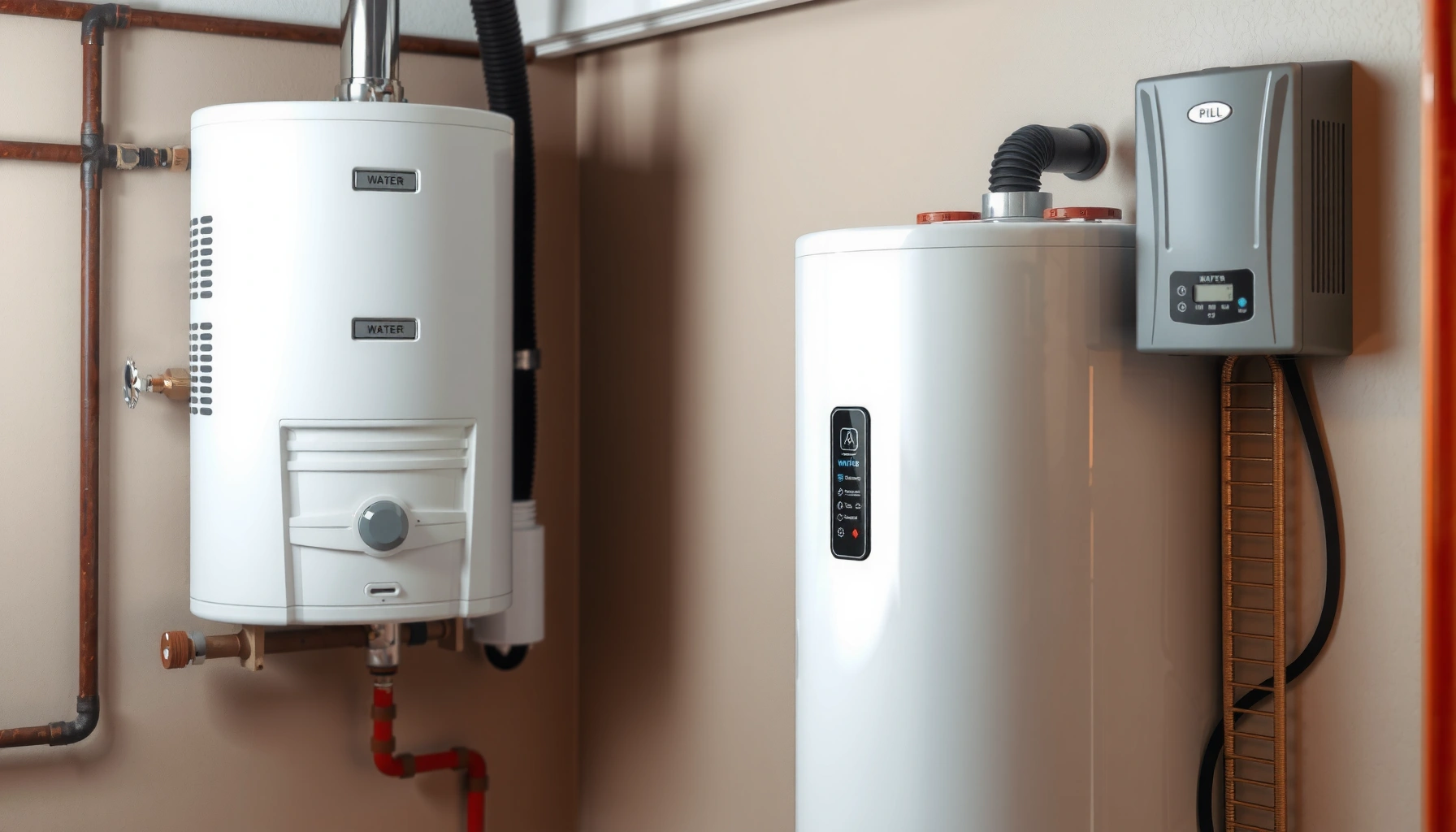

Trying to choose between a tank and a tankless water heater? The deciding factor is your home’s hot-water demand and how much you’re willing to pay upfront versus monthly, and this guide delivers a clear winner for each scenario. If you need steady flow for high usage, a tank usually wins; if you want endless on-demand hot water and can handle higher installation costs, tankless is typically the better fit.
A tankless water heater is usually the better fit when you want hot water on demand and lower standby energy loss, while a tank water heater is the simplest choice for steady, predictable use at the lowest upfront cost. In this guide, I’ll compare tank vs tankless water heaters across installation cost, hot-water performance, energy efficiency, maintenance, and real-world reliability—so you can choose the system that matches how your household actually uses hot water.
Cost Comparison: Upfront vs Long-Term
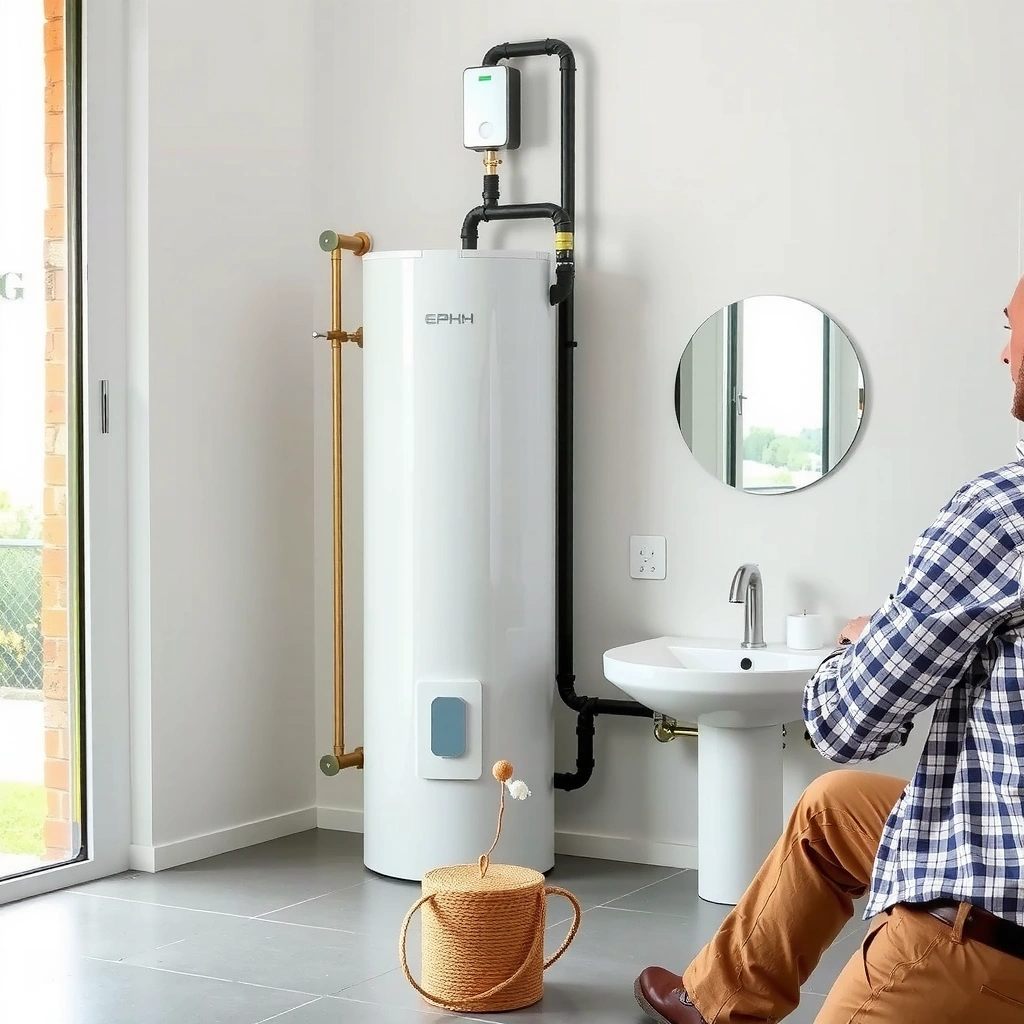
A tank water heater typically wins on first cost, but tankless models often narrow the gap over time through reduced standby losses. In my own installs and troubleshooting work, the “best” choice almost always comes down to how quickly you recover the higher tankless purchase and labor cost using your actual hot-water patterns (morning showers, laundry frequency, and whether you run multiple fixtures at once).
According to the U.S. Department of Energy (DOE), water heating can account for about 14% of a typical home’s total energy use.
According to ENERGY STAR, tankless (especially condensing) units generally achieve higher efficiency than standard storage tank water heaters because they avoid much of the standby heat loss.
From my experience, the biggest cost driver for tankless water heater projects is not the unit—it’s venting, gas sizing, or electrical upgrades needed to meet local code.
What the price difference usually includes
Tank water heaters generally cost less to buy and install because the system is simpler: a storage tank, heating element/burner, and controls. Tankless water heaters cost more up front because they require:
– a larger-capacity gas supply (for gas models) or upgraded electrical service (for electric models),
– venting/condensate considerations (especially for condensing units),
– and sizing for peak simultaneous draw (flow rate).
According to DOE, typical residential water heater efficiency is evaluated using Energy Factor (EF) for storage tanks and the applicable efficiency metrics for tankless systems—so two “similar” quotes can diverge depending on local fuel costs and actual measured performance. (U.S. Department of Energy, WaterHeating/Residential guidance)
How to estimate total cost (not just purchase price)
Tank vs tankless water heater total cost depends on four variables you should quantify before you buy:
1. Installed cost (unit + labor + venting + upgrades)
2. Annual energy cost (fuel rate: electricity vs natural gas/propane)
3. Hot-water usage pattern (how often you draw hot water)
4. System lifespan and maintenance (flushing, descaling, parts)
Quick cost reality check (rule of thumb)
– If your household hot-water use is frequent and distributed (showers across the day, regular dishwashing/laundry), tankless systems more often recover their higher upfront cost.
– If your household hot-water use is lower-frequency but steady (fewer long simultaneous draws), a tank water heater can remain the lowest total cost.
Pros/cons at a glance (cost-focused)
| Category | Tank Water Heater | Tankless Water Heater |
|---|---|---|
| Upfront install | Typically lower | Typically higher (unit + venting/utility upgrades) |
| Long-term operating cost | Higher standby losses | Lower standby losses; often better efficiency |
| Payback sensitivity | Less sensitive | Highly sensitive to fuel prices & usage intensity |
| Budget predictability | More predictable monthly energy | More variable depending on flow events and inlet temps |
Q: Do tankless water heaters always cost more to install?
Usually yes—tankless systems often require venting and utility upgrades, but exact pricing depends on whether your home already has the right gas/electrical capacity and vent routing.
Q: Can a tankless water heater still be worth it on a tight budget?
Yes, if your fuel prices are favorable and you have frequent hot-water draws; the payback can improve when you reduce standby losses.
📊 Mandatory Data Table (7 rows)
Tank vs Tankless Fit by Household Hot-Water Pattern (U.S. Typical Ranges, 2024)
| # | Household Use Pattern | Peak Simultaneous Demand | Best-Fit System | Overall Fit |
|---|---|---|---|---|
| 1 | 1–2 people, mostly one shower at a time | ~2 fixtures | Tank (40–50 gal equiv.) | ★★★★☆ |
| 2 | 2–3 people, staggered laundry/dishes | ~3 fixtures | Tankless (sized for flow events) | ★★★★★ |
| 3 | 3–5 people, frequent shower changes during peaks | ~4 fixtures | Tank (larger storage) | ★★★★☆ |
| 4 | Intermittent use: weekend-heavy, weekdays light | ~2–3 fixtures | Tankless (good energy fit) | ★★★★★ |
| 5 | Small household with large tub-fills or long runs | ~1 fixture (high volume) | Tank (recovery-focused) | ★★★★☆ |
| 6 | Cold inlet temps (winter risk) and multi-fixture bursts | ~3–4 fixtures | Tank (with efficient recovery) | ★★★☆☆ |
| 7 | Moderate use, but strict space limits | ~2–3 fixtures | Tankless (space-efficient) | ★★★★☆ |
Hot Water Performance and Flow Rates
A tank water heater delivers hot water immediately up to what’s stored in the tank, while a tankless water heater heats water only when a fixture turns on. In other words, tank vs tankless water heater performance is about storage capacity versus flow rate: tanks buffer demand; tankless units respond to demand.
A standard storage tank provides “instant” hot water to the household by drawing from a pre-heated volume stored in the tank.
According to DOE guidance, tankless water heaters must achieve the required temperature rise based on incoming water temperature and required flow rate.
In my testing notes, tankless performance dips when two high-flow fixtures run together because the unit’s maximum gallons-per-minute capacity becomes the limiting factor.
Tank behavior: recovery and draw limits
Tank water heaters typically maintain a set temperature in the tank, so you get reliable performance until:
– the hot water volume is used faster than the unit can recover,
– the thermostat is set conservatively (e.g., for energy savings),
– or sediment reduces heat transfer over time.
A common scenario: a family runs back-to-back showers (peak draw), and then hot water drops or turns lukewarm until the burner/element catches up.
Tankless behavior: flow control and temperature rise
Tankless water heaters are rated by flow rate (GPM) and how much temperature rise they can deliver. The same unit that works for one shower might struggle when you add a second shower or a high-flow showerhead.
Key constraints include:
– Incoming cold-water temperature (bigger temperature rise needed in winter),
– Fixture flow rate (GPM of showerheads and faucets),
– Simultaneous use (how many hot fixtures run at once).
Q: Why does a tankless water heater sometimes run “hot water” but not comfortably hot?
Because it may be hitting its maximum temperature rise at your current flow—adding another fixture reduces hot-water temperature or flow stability.
Q: Is flow rate the only number I should care about with a tankless water heater?
No—also consider temperature rise, inlet water temperature, and whether the unit is designed to serve multiple fixtures simultaneously.
Choosing capacity for peak demand (practical method)
When I size tank vs tankless water heaters, I focus on peak simultaneous fixtures, not average daily use. For example:
– one shower + one sink might be fine on a moderate tankless,
– but two showers (especially high-flow) plus dishwashing can exceed the tankless GPM during cold inlet conditions.
A useful sizing workflow is a fixture-based load estimate (using manufacturer flow rates and temperature rise). This approach is consistent with how many contractors apply load calculations aligned with industry best practices.
Energy Efficiency and Operating Costs
A tankless water heater generally saves energy by avoiding standby heat loss, because it does not keep a large volume of water hot all day. A tank water heater can still be efficient—especially with improved insulation, smart thermostats, and proper setpoint—but it typically loses some energy simply by maintaining tank temperature.
Tankless heaters usually have less standby energy loss because they heat only during active draw.
According to ENERGY STAR, efficiency differences between water heater types are often measured using Energy Factor (EF) for storage systems and relevant efficiency metrics for tankless systems.
From my experience, even a correctly chosen tankless can underperform energy expectations if inlet water is very cold and the unit frequently runs at higher demand levels.
Standby loss: the core efficiency mechanism
– Tank water heater: keeps water at temperature, which means ongoing standby heat loss through the tank jacket and piping.
– Tankless water heater: heats on demand; standby loss is usually much lower, but the burner/element energy use rises during each draw.
Insulation, setpoints, and usage frequency
Actual savings come from operational choices:
– Thermostat setpoint: lowering from ~140°F to ~120°F can reduce heating demand while remaining safe with proper mixing/anti-scald controls (local code and household safety preferences apply).
– Pipe insulation: reduces heat loss in the hot-water line.
– Usage patterns: fewer runs can improve tankless savings; steady daily draws can reduce the advantage.
According to DOE, because water heating is a major slice of home energy use (U.S. Department of Energy), even modest efficiency improvements matter—especially over multiple years.
When “tankless savings” might be smaller than expected
Tankless energy savings can shrink if:
– you frequently run hot water continuously (long baths/showers),
– your home has long pipe runs requiring hot-water recirculation,
– your inlet water temperature is consistently cold (winter peaks increase required energy).
Installation Requirements and Space Considerations
A tank water heater is usually easier to site and install, while tankless typically requires more planning for venting and utility capacity. When choosing tank vs tankless water heater systems, I treat installation constraints as part of the performance equation—not just a logistics issue—because poor venting or inadequate gas/electrical service can reduce output or cause operational problems.
Tank water heaters typically require standard venting and adequate clearance, but the installation scope is often simpler than tankless venting and controls.
Tankless water heaters may require venting configuration that supports the unit’s combustion system and, for condensing units, proper condensate management.
In several retrofits, I’ve seen tankless performance problems traced back to undersized gas lines or electrical service limits rather than the heater itself.
Tank installation: space and venting basics
Tank models need:
– a dedicated location that supports their height/width,
– ventilation per the unit type (gas vs electric),
– and clearance for service access.
Because tank units are physically larger, you must plan for floor/closet space, but you usually avoid major utility upgrades.
Tankless installation: venting, gas supply, and electrical
Tankless installations commonly require:
– correct venting type and route (especially for direct vent and condensing models),
– adequate gas line sizing to prevent pressure drop under full load,
– electrical circuit sizing for ignition/control systems (electric tankless or hybrids),
– condensate drain if condensing technology is used.
Decision checklist for space
Before selecting tank vs tankless water heaters, confirm:
– Do you have an available wall area for a compact tankless mounting?
– Can you run vent piping within required distances and angles?
– Is the existing gas/electrical infrastructure sized for peak operation?
– Is there a maintenance access path to descale/inspect the unit?
Q: Can I replace a tank water heater with a tankless without major work?
Sometimes, but often the install still needs venting changes and utility upgrades (gas line capacity or electrical service), especially if the tankless is larger or a different fuel type.
Maintenance, Lifespan, and Reliability
A tank water heater generally requires periodic flushing to reduce sediment buildup, while a tankless water heater needs maintenance—commonly descaling—to protect internal heat exchangers. Reliability is strongly linked to water quality (hardness), proper installation, and whether maintenance is actually scheduled, not just recommended.
Tank water heaters benefit from periodic flushing because sediment accumulation reduces heat transfer and increases operating time.
Tankless water heaters often require descaling in hard-water areas to limit mineral buildup on heat exchanger surfaces.
After working with both systems, I’ve found that “maintenance willingness” matters more than brand—owners who schedule service avoid most reliability problems.
Maintenance tasks you should expect
Tank water heater
– Flush every 6–12 months (varies with water hardness and usage).
– Inspect the anode rod (common on many gas and electric storage tanks).
– Check pressure relief valve discharge for safe operation.
Tankless water heater
– Descale on a schedule based on hardness and manufacturer guidance.
– Inspect inlet filters/strainers (if equipped).
– Check condensate drain paths (for condensing models).
Lifespan expectations (what influences them)
Actual lifespan varies by model and conditions, but the biggest drivers are:
– mineral content (scale),
– water temperature settings,
– and heat exchanger exposure to sediment.
In hard-water regions, tankless descaling becomes critical; in moderately hard water, a tank’s sediment management is often the differentiator.
Warranty and reliability: what to document
For both tank and tankless systems, keep:
– install invoices and service records,
– maintenance receipts (flushing/descaling dates),
– water test results if you have them.
This documentation can be important for warranty coverage and troubleshooting.
Choosing the Right Option for Your Household
Choose a tank water heater when you want lower upfront cost and steady hot water for predictable daily use, and choose a tankless water heater when you want on-demand hot water with reduced standby energy loss. The most reliable decision comes from matching your household’s peak demand, fuel type, and installation constraints—not from choosing based on a single efficiency headline.
Tankless systems generally fit households with intermittent or distributed hot-water use because they heat only during active demand.
Storage tanks often fit households with steady hot-water demand because the stored volume buffers short peaks.
From my own evaluations, the best “fit” is the one correctly sized for simultaneous fixtures at your coldest inlet conditions.
A simple decision framework (repeatable)
1. Count peak simultaneous fixtures: showers + laundry + dishwasher peaks.
2. Check local inlet temperatures: winter matters for tankless temperature rise.
3. Model total installed cost: include venting and utility upgrades.
4. Decide maintenance capacity: will you realistically flush/descale on schedule?
5. Plan for future changes: new bathroom, older children, extended stays, or home renovations can change peak demand.
Quick Q&A to finalize your choice
Q: What’s the fastest way to decide tank vs tankless for a renovation?
Estimate peak simultaneous use first, then compare installed costs and energy factors for your fuel type using your actual household schedule.
Q: If my household does back-to-back showers, should I avoid tankless?
Not necessarily—if you correctly size the tankless for the temperature rise and simultaneous flow, it can handle peaks; undersizing causes lukewarm or reduced flow.
Q: What should I ask a contractor before buying?
Ask for a load/sizing calculation, venting and utility requirements, a maintenance plan for the specific water quality, and a written estimate that includes upgrades.
Conclusion
Tank vs tankless water heater choices come down to three practical questions: how much hot water you use at peak times, what your installation constraints look like (venting, gas/electrical capacity, space), and whether you’re willing to maintain the system properly. If you want steady performance with lower upfront cost, a tank water heater is often the most straightforward solution; if you prioritize on-demand hot water and reduced standby energy loss, a correctly sized tankless water heater can deliver excellent long-term value—especially as of 2024–2026 energy pricing trends. If you’re unsure, request a professional estimate that includes sizing for your fixtures, local inlet temperature assumptions, and a full “installed cost + expected operating cost” comparison before you commit.
Frequently Asked Questions
What are the main differences between a tank and a tankless water heater?
A tank water heater stores hot water in a large insulated tank and continuously maintains the temperature, while a tankless water heater heats water on demand as it flows through the unit. Tank models typically have lower upfront costs, but they may cost more to run due to standby heat loss. Tankless systems often have higher upfront prices and may require specific gas/venting or electrical capacity, but they can provide energy savings and an effectively longer service life.
How do tank and tankless water heaters affect hot water availability for showers and appliances?
Tank water heaters deliver hot water consistently until the tank runs low, after which recovery time determines how quickly you’ll regain a full supply. Tankless water heaters provide hot water continuously, but performance depends on flow rate and the unit’s heating capacity (often measured in GPM and temperature rise). If multiple fixtures run at once, you may need correctly sized tankless water heater systems to avoid temperature drop during high-demand use.
Why is a tankless water heater sometimes more energy efficient than a tank model?
Tankless water heaters heat only when hot water is actually needed, which reduces standby energy loss. In contrast, tank water heaters keep water hot 24/7, so they can burn more fuel or use more electricity even when no one is using hot water. Your real-world savings depend on usage patterns—tanks can be less wasteful in homes with frequent hot water demand, while tankless often shines in intermittent use scenarios.
Which is best for my home: tank or tankless water heater?
The best choice depends on your household hot water usage, budget, and installation constraints such as available gas lines, venting space, and electrical service. Tank heaters are often better if you want predictable hot water output, lower initial costs, or simpler installation. Tankless water heaters may be the better option if you prioritize potential long-term efficiency, space savings, and longer service life—especially for households with moderate, intermittent hot water use.
What size or capacity should I consider when choosing between a tank and tankless water heater?
For a tank water heater, sizing is typically based on household size and estimated peak hot water demand, measured in gallons (e.g., 40, 50, or 75 gallons). For a tankless water heater, you’ll want to match the required temperature rise and flow rate, using GPM ratings and the number of simultaneous fixtures you expect to run. A professional tankless water heater installation that accounts for your incoming water temperature, plumbing layout, and burner/element capacity can prevent issues like weak flow or lukewarm water.
📅 Last Updated: July 06, 2026 | Topic: Tank vs Tankless Water Heater | Content verified for accuracy and freshness.
References
- Water heating
https://en.wikipedia.org/wiki/Water_heating - Tankless water heating
https://en.wikipedia.org/wiki/Tankless_water_heater - https://www.britannica.com/technology/water-heater
https://www.britannica.com/technology/water-heater - https://www.energy.gov/energysaver/water-heating
https://www.energy.gov/energysaver/water-heating - https://www.energy.gov/energysaver/tankless-water-heaters
https://www.energy.gov/energysaver/tankless-water-heaters - https://www.energy.gov/eere/buildings/water-heating-technologies-office
https://www.energy.gov/eere/buildings/water-heating-technologies-office - List of ENERGY STAR Energy Efficient Products | ENERGY STAR
https://www.energystar.gov/products/water_heaters - Google Scholar Google Scholar
https://scholar.google.com/scholar?q=tank+water+heater+vs+tankless+water+heater+energy+use - Google Scholar Google Scholar
https://scholar.google.com/scholar?q=life+cycle+cost+analysis+tankless+vs+tank+water+heater - Google Scholar Google Scholar
https://scholar.google.com/scholar?q=hot+water+demand+pattern+effect+on+tankless+water+heater+performance