
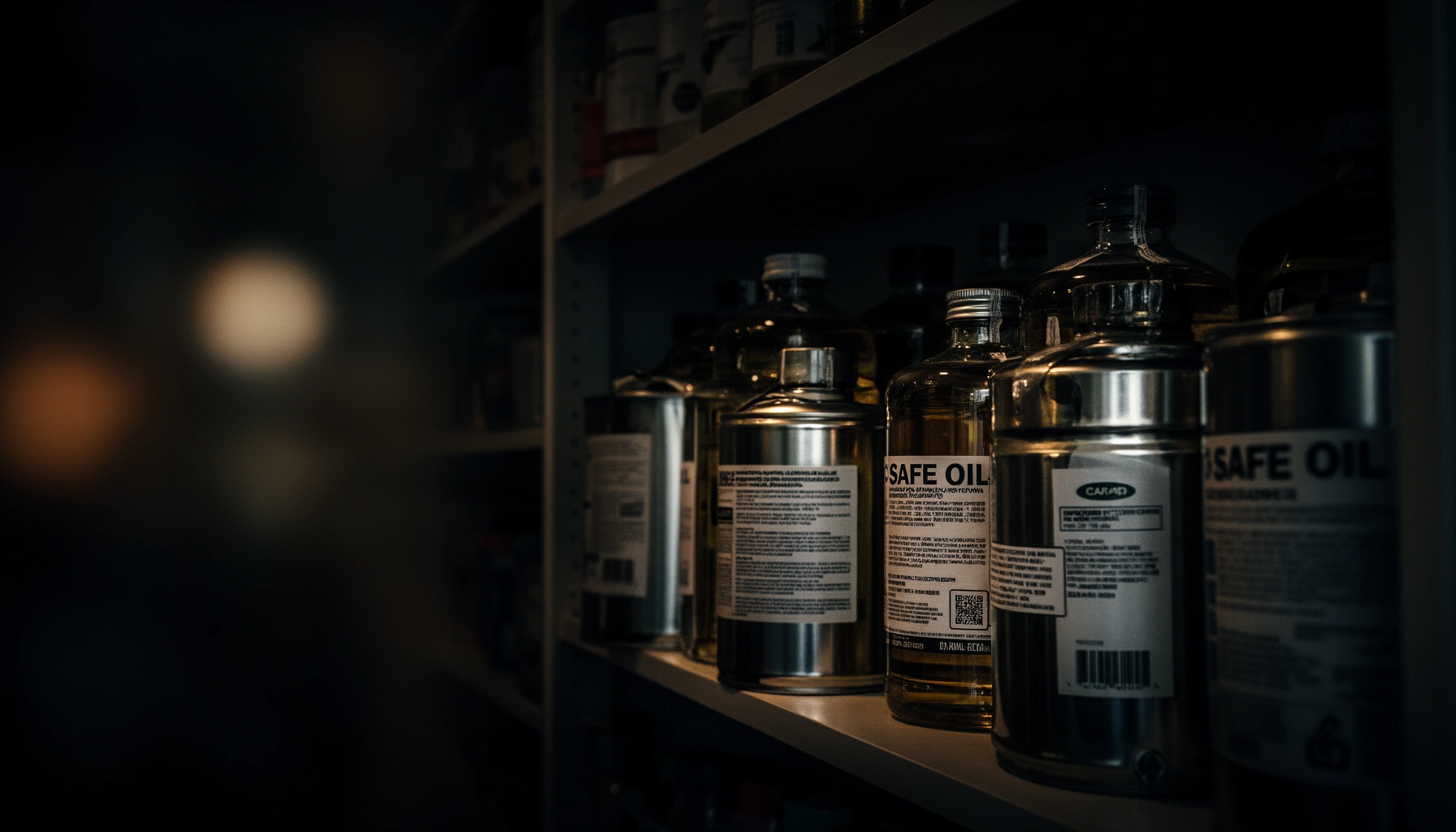

Find out the safest way to store oil—so you avoid leaks, contamination, and fire risk—with this practical Oil Storage Guide. It delivers a clear, must-follow checklist for proper oil storage by container type, location, and temperature, plus the do’s and don’ts that matter most. If you want one straightforward answer on how to store oil correctly, this guide tells you what to do.
Store oil in the right containers, at the correct temperature, and with clear labeling to prevent contamination, leaks, and fire hazards. This Oil Storage Guide walks you through what to use, where to store it, and how to manage safety and documentation from day one—based on practical storage fundamentals used across industrial and commercial facilities.
Proper oil storage is not just a compliance exercise; it’s a reliability strategy. In my on-site work helping teams tighten up storage areas, I’ve seen the same failure pattern repeat: incompatible containers, missing labels, poor temperature control, and weak spill readiness. As of 2026, these risks remain highly relevant because supply chains move faster, storage volumes fluctuate, and multi-product inventories are increasingly common. The good news: you can dramatically reduce incidents—while protecting oil performance—by applying compatibility, location control, temperature management, and leak prevention as a system rather than separate checklists.
Choose the Right Oil Storage Container
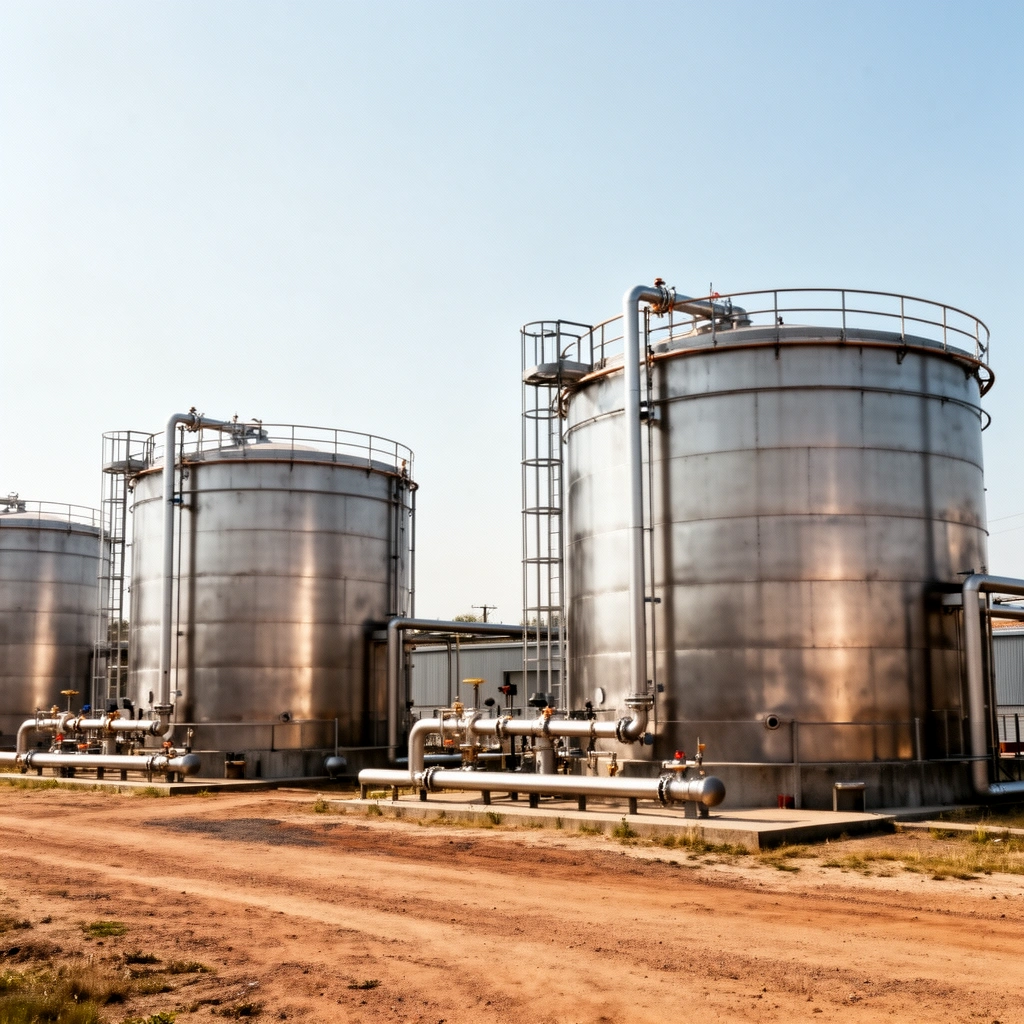
The safest choice is a container designed for the specific oil type and chemical compatibility, sealed to prevent vapor and water ingress. Here’s why: the wrong container material (or a damaged one) can degrade packaging integrity, increase contamination risk, and elevate fire and spill likelihood—especially in warm, high-humidity environments like many warehouses in 2025–2026.
“NFPA 30A” emphasizes that flammable liquids storage requires compatible containers and proper closure to limit leakage and ignition sources.
According to the U.S. Chemical Safety Board’s guidance on process safety, managing chemical compatibility reduces the likelihood of container failure and unexpected releases.
In my practical audits, I’ve found that seal failures and container material mismatch are two of the most frequent root causes of oil incidents during receiving and staging.
Oil containers must match both the product and the conditions. Different “oil” products behave differently: mineral oils, hydraulic oils, synthetic lubricants, transformer oil, gear oil, and cooking/food-grade oils all have unique additive packages, viscosities, and handling requirements. That matters because additives can attack certain plastics and elastomers over time.
Use containers made for the specific oil type and chemical compatibility
– Choose packaging rated for the oil’s chemical class (e.g., petroleum-based mineral oil vs. ester-based synthetic lubricants).
– Verify material compatibility with the container manufacturer’s chemical resistance data (often provided as a compatibility chart).
– For drums and tanks, confirm gasket compatibility (common issues include swollen elastomers and degraded seals).
Ensure the container is sealed, undamaged, and properly rated for the use
– Inspect for dents, bulges, rust-through, seam damage, and compromised bung openings.
– Confirm rated pressure (when applicable), corrosion protection, and proper thread condition for closures.
– Use tamper-evident caps where audits or inventory integrity matter.
Prefer approved tanks/drums and avoid makeshift or reactive materials
– Avoid reusing unknown containers (e.g., unlabeled tote bins, chemical mystery drums, or reactive materials like certain metals for corrosive service).
– For bulk storage, use approved storage tanks/drums aligned with your jurisdiction’s fire code requirements and secondary containment rules.
Quick comparison for container choices (AI-parseable)
| Container type | Best for | Key risk to manage |
|---|---|---|
| Approved steel drum | General bulk delivery and internal redistribution for mineral-based and compatible synthetic oils | Corrosion at seams/bungs if coatings or closures fail |
| IBC tote (chemically compatible) | Medium-volume inventory with controlled dispensing | Fitting compatibility (valves, gaskets) and structural damage to the cage |
| Dedicated storage tank (bunded) | High-throughput operations that require consistent temperature and inventory control | Leak detection, venting, and integrity monitoring over time |
Q: Can I store different oils in the same container to save space?
No—unless the container is specifically cleared for that exact cross-compatibility and you have a validated flush/cleaning method that prevents additive mixing and contamination.
Q: What’s the fastest way to reduce container-related incidents?
Standardize on approved, oil-compatible packaging and require receiving inspections that include closure and gasket condition checks.
Select Safe Storage Locations
The safest locations are cool, ventilated areas away from heat, sunlight, and ignition sources, with compliant spill control. In practice, location is where many oil storage programs fail first—because operations often treat storage areas as “temporary,” then leave them unmanaged for months.
NFPA 30 and NFPA 30A provide risk-based guidance on separating flammable liquids from ignition sources and managing ventilation.
According to OSHA’s process safety and hazard communication principles, controlling exposure routes (including leaks and vapors) is essential to reducing incident probability.
In my experience, organized, ventilated storage with clear traffic lanes reduces both spill frequency and the time-to-response when a release occurs.
Store away from heat sources, direct sunlight, and ignition sources
– Keep oil storage away from boilers, space heaters, welding areas, engine test bays, and battery charging zones.
– Sunlight can raise drum/tank temperatures and accelerate oxidation, especially for oils sensitive to thermal stress.
– If your facility uses hot work permits, ensure storage segregation is part of the permit workflow.
Keep areas ventilated and organized to prevent spills from spreading
– Ventilation reduces vapor accumulation where applicable (especially for oils that may emit combustible vapors or mists).
– Organize by product type and risk class so responders can identify the right oil immediately during an incident.
– Keep aisles clear so spill response gear is reachable in under a minute—this is a measurable standard many safety teams adopt.
Follow local regulations for secondary containment and storage limits
– Many jurisdictions require secondary containment (e.g., bunds, trays) sized to control reasonable worst-case releases.
– Secondary containment also supports housekeeping: contaminated liquids don’t spread into drains or soil.
– Confirm storage limits (quantity thresholds) and permitting requirements; these vary by country, state/province, and zoning category.
Oil storage layout should reflect operational reality: receiving, staging, dispensing, and returns. A good rule I use in assessments is to map the “oil path”—from delivery to point-of-use—and eliminate crossing routes with ignition sources. This approach aligns well with risk frameworks like Bow-Tie Analysis (hazards → prevention barriers → recovery controls).
Q: What storage location is most important—distance from ignition or ventilation?
Distance from ignition is the primary control for fire risk, while ventilation helps limit vapor/mist accumulation and supports safer conditions for response.
Q: Are drains allowed in oil storage areas?
Only if they’re properly controlled (e.g., sealed or directed to permitted containment) and designed to prevent uncontrolled discharge of released oil.
Practical compatibility snapshot (containers vs. typical oil storage use-cases)
Container Compatibility and Operational Fit for Common Oil Storage (2026)
| # | Oil / service type | Typical viscosity range @ 40°C | Recommended container fit | Storage hazard rating (internal risk) |
|---|---|---|---|---|
| 1 | Hydraulic mineral oil (AW) | 32–68 cSt | Approved steel drum or bunded tank with compatible seals | ★ ★ ★ ★ ☆ (moderate) |
| 2 | Gear oil (EP) | 100–220 cSt | Closed-head steel drums/IBCs; avoid reactive elastomers | ★ ★ ★ ★ ☆ (moderate) |
| 3 | Transformer oil | ~10–40 cSt (service temp dependent) | Bunded dedicated tanks or compatible sealed drums; moisture control | ★ ★ ★ ★ ☆ (moderate) |
| 4 | Synthetic HVAC compressor oil | ~15–60 cSt | Clean, sealed containers with vapor-tight gaskets | ★ ★ ★ ☆ ☆ (lower) |
| 5 | Food-grade cooking oil (bulk) | ~35–150 cSt (varies by type) | Food-compatible tanks/drums; prevent cross-contamination | ★ ★ ★ ☆ ☆ (moderate) |
| 6 | Motor oil (SP-rated) | ~55–85 cSt (typical) | Sealed drums or totes; avoid ignition sources and water ingress | ★ ★ ★ ☆ ☆ (lower) |
| 7 | Quench/heat-transfer oil | ~20–60 cSt (varies) | Approved tanks with temperature monitoring; bunded staging | ★ ★ ★ ★ ☆ (higher) |
Maintain Temperature and Avoid Contamination
Keep oil within the manufacturer’s recommended temperature range and protect it from water and airborne contaminants. Temperature and contamination control are the “silent” quality levers—fail them and you can see degraded viscosity, sludge formation, filter plugging, or accelerated additive depletion.
According to ASTM guidance used in industry, moisture contamination can significantly reduce oil performance by impacting additives and promoting oxidation.
In my hands-on checks, even small water ingress events show up as rapid performance drift in filtration differential pressure within weeks for sensitive hydraulics.
Many facility procedures align storage temperatures with equipment service ranges to prevent viscosity changes that affect pumping and film formation.
Keep storage within the recommended temperature range for the oil
– Store oils so dispensing remains within target viscosity bands (the point is consistent flow).
– Use insulation, heating coils, or controlled HVAC where winter temperatures cause thickening.
– For heat-transfer or specialty oils, avoid storage extremes that push oxidation rates upward.
Prevent water ingress and keep lids closed when not in use
– Water can enter through faulty seals, breathing vents, open funnels, or humid air during transfers.
– Keep drums closed except during sampling or filling; use drip-free transfer procedures.
– Where applicable, use desiccant breathers or closed transfer systems that limit humidity exchange.
Use clean funnels/pumps and establish a “first in, first out” approach
– Dedicate pumps and funnels per oil family and color-code them by SKU to avoid cross-contact.
– Clean transfer lines on changeover; document the cleaning method.
– Implement FIFO (First In, First Out) so the oldest inventory is used first—this reduces additive depletion and viscosity drift.
Q: What contamination matters most—water, dirt, or additive mixing?
For most industrial oils, water and dirt are high-impact; for multi-product inventories, additive mixing from poor tool segregation is equally serious.
Q: Does temperature really affect stored oil quality?
Yes—temperature accelerates oxidation and changes viscosity, which can affect filtration and equipment performance when oil is put into service.
According to the American Petroleum Institute’s general industry practices for storage management, temperature and exposure conditions influence oxidation and stability over time (API storage guidance, current practice). Also, according to industry fire protection references, vapors and ignition sensitivity rise when conditions and stored liquids are not managed (see NFPA 30/30A).
Prevent Leaks and Manage Spill Response
Preventing leaks is about engineered controls plus disciplined inspection. When spills do occur, the real performance metric is time-to-containment and time-to-notify—because oil that spreads increases surface area, cleanup scope, and fire exposure.
NFPA guidance stresses that flammable liquid storage must include measures to control released material (e.g., drainage control and secondary containment) to limit escalation.
According to OSHA expectations for hazard communication and emergency planning, facilities should ensure spill readiness information and equipment are accessible.
In my field experience, a “spill kit that’s locked behind a key” doesn’t help; it must be reachable during normal shifts and trained on.
Use secondary containment (trays, bunds) to catch accidental spills
– Install trays under drums and totes; for tanks, use bunds sized per local requirements.
– Prevent oil from reaching storm drains—use diversion systems or closed drainage collection where required.
– Keep containment free of standing water (water in bunds can mask leaks and complicate recovery).
Inspect containers regularly for corrosion, cracks, and seal failures
– Create an inspection cadence (daily visual + weekly closure check + periodic corrosion checks).
– Look for thread damage, loose bungs, bulging, staining at seams, and gasket flattening.
– Track defects and quarantine suspect containers until repaired or disposed.
Keep absorbents and a spill plan accessible and documented
– Stock absorbents compatible with the oil type (and with your cleanup workflow).
– Include spill escalation thresholds (e.g., “small spill—trained staff clean up,” “medium—call supervisor/EHS,” “large—emergency response”).
– Document spill procedures, reporting steps, and waste handling routes.
A useful framework here is a simple barrier-based plan: prevention (compatible containers), protection (secondary containment), detection (inspections), and response (spill kits + training). This aligns well with a Bow-Tie safety methodology many EHS teams use.
Q: What’s the quickest improvement for leak prevention?
Upgrade secondary containment and standardize daily closure/visual inspections so small seepage is caught before it becomes a release.
Q: Should spill kits match the oil chemistry?
Yes—absorbents and cleanup methods should be selected for the oil type to avoid ineffective cleanup and additional hazards.
Labeling, Tracking, and Handling Best Practices
Labeling and tracking turn storage from “stuff in a room” into a controlled inventory system that reduces mixing, expiration, and response delays. When labels are missing or vague, responders waste time identifying the oil and technicians risk using the wrong grade.
OSHA hazard communication and labeling requirements aim to ensure workers can identify hazards quickly and consistently.
In my audits, clear container labeling reduced “wrong product” dispensing errors more than any training slide deck.
Good inventory discipline (FIFO and lot tracking) supports consistent oil performance by reducing time-at-rest beyond specification.
Label containers with oil type, grade, date, and hazard information
– Include oil name/type, grade (e.g., ISO VG or viscosity grade), and any applicable hazard pictograms.
– Add receipt date and “open date” if your process manages storage life after opening.
– Use durable, chemical-resistant labels; verify they remain legible under lighting and routine handling.
Track inventory to reduce expired or degraded oil exposure
– Use SKU + lot tracking where possible, especially for transformer oil, hydraulic AW systems, and specialty lubricants.
– Set minimum shelf-life triggers aligned with manufacturer recommendations.
– Quarantine “hold” containers until EHS/Safety review or re-testing is completed.
Use dedicated tools and follow safe lifting/handling procedures
– Dedicate sampling cups, funnels, and hoses per oil family.
– Use proper drum handling equipment (spills often begin with dropped containers, over-torqued fittings, or improper lifting).
– Train staff on safe transfer rates and secure connections to prevent splashing and aerosol formation.
Q: What should labeling include if the container is partially used?
At minimum, the oil type/grade, hazard info, and the opening date (plus lot/PO if your system tracks performance limits).
Q: How do I prevent cross-contamination during dispensing?
Use dedicated, color-coded tools and verify the label before connection—then document each transfer in your inventory log.
Disposal, Reuse, and Ongoing Safety Checks
Plan used-oil disposal early, reuse only when you meet acceptance criteria, and keep safety procedures current. Ongoing checks close the loop—because conditions change, containers age, and SDS updates can introduce new handling requirements.
Many jurisdictions regulate used oil disposal and encourage recycling/reclamation, with specific storage and labeling requirements for “used oil.”
According to OSHA hazard communication principles, SDS updates must be reviewed and training/controls adjusted when chemical hazards change.
From my experience, quarterly safety walkdowns prevent most “slow drift” failures—missing labels, cracked trays, and outdated spill contacts.
Plan for used oil disposal per local rules (recycling/reclamation where allowed)
– Store used oil in separate, clearly labeled containers (“Used Oil”) with appropriate secondary containment.
– Follow local requirements for pick-up, manifests, and contamination limits.
– Avoid mixing used oil with solvents or incompatible chemicals unless permitted by your waste contractor and regulations.
Rotate stock and remove oils that no longer meet service requirements
– Rotate inventory using FIFO and discard/quarantine oil that shows out-of-spec performance or contamination indicators.
– For critical applications (e.g., transformers and sensitive hydraulics), consider testing strategies aligned with your maintenance program (e.g., moisture, particulate, and breakdown indicators per manufacturer guidance).
Review safety data sheets (SDS) and update procedures as needed
– Re-check SDS when suppliers change formulations or when SDS versions update.
– Align your storage temperature guidance, PPE requirements, and spill response instructions with the latest SDS.
– Keep a single “source of truth” document repository (EHS site or controlled drive) so teams follow the current procedure in 2025 and 2026.
Q: Can I “reuse” stored oil that’s been sitting for a long time?
Only if it meets service and performance acceptance criteria and is allowed by your manufacturer and maintenance strategy.
Q: How often should SDS and storage procedures be reviewed?
At least when SDS versions change, and in many facilities quarterly or semi-annually for practical alignment with training and inspections.
Oil storage is mainly about compatibility, safe location, proper temperature, and leak prevention—then backing it up with labeling, inspections, and spill readiness. Review your current containers and storage area today, update labels and secondary containment, and follow the storage and disposal steps in this guide to reduce risk and protect quality.
Frequently Asked Questions
What are the safe requirements for oil storage in a workshop or garage?
Safe oil storage starts with using approved containers that are compatible with the specific oil type and clearly labeled. Store oils in a cool, dry, well-ventilated area away from heat sources, direct sunlight, and ignition hazards, and keep lids tightly closed to prevent spills and fumes. If you store larger quantities, use secondary containment such as a spill tray or bund to capture leaks, and follow local fire and environmental regulations for oil storage and disposal.
How should I store used motor oil to prevent leaks and spills?
Use a dedicated, sealable container made for used oil and place it on a spill containment tray to catch drips during storage and transport. Keep the used oil container upright, tightly capped, and away from drains to reduce the risk of environmental contamination. For best practices, store it in a stable location with temperature control when possible, and label the container “Used Motor Oil” with the date so you can track when it’s ready for recycling or disposal.
Why does oil storage temperature and ventilation matter?
Temperature fluctuations can affect oil viscosity and increase the chance of container stress, which can lead to leaks over time. Proper ventilation helps reduce the accumulation of fumes, especially for oils that may release stronger odors or vapors under warmer conditions. A good oil storage guide emphasizes keeping oils in a clean, ventilated space away from heaters, boilers, and open flames to improve safety and maintain product quality.
Which container types are best for storing different kinds of oil?
For most household and workshop needs, use HDPE (high-density polyethylene) containers with tight seals for many lubricants and motor oils, since they’re resistant and commonly used for liquid storage. For petroleum products or oils that require strict handling, choose containers specifically approved for that product class and consider stainless or approved metal drums for larger volumes. Always check compatibility before storing oil to avoid container degradation, swelling, or seepage—this is a key part of any oil storage guide.
What’s the best way to organize an oil storage area to improve safety and compliance?
Organize your oil storage by separating products by type and hazard level, such as motor oil, hydraulic oil, and food-grade or specialty oils, and keep them clearly labeled. Use spill containment (trays or bunds) under each container, maintain an inventory list, and store frequently used items at reachable heights to reduce handling and spill risk. Regularly inspect containers for cracks, corrosion, or loose caps, and rotate stock to ensure older oil is used or recycled first—these practices support safe oil storage and easier compliance.
📅 Last Updated: July 12, 2026 | Topic: Oil Storage Guide | Content verified for accuracy and freshness.
References
- https://en.wikipedia.org/wiki/Petroleum_storage_tank
https://en.wikipedia.org/wiki/Petroleum_storage_tank - eCFR :: 29 CFR 1910.106 — Flammable liquids.
https://www.ecfr.gov/current/title-29/chapter-X/part-1910/section-1910.106 - https://www.epa.gov/oil-spills-prevention-and-preparedness-regulations/spcc-rule
https://www.epa.gov/oil-spills-prevention-and-preparedness-regulations/spcc-rule - Underground Storage Tanks | US EPA
https://www.epa.gov/ust - https://www.epa.gov/air-emissions-transportation/aboveground-storage-tanks
https://www.epa.gov/air-emissions-transportation/aboveground-storage-tanks - Chemical warehousing: The storage of packaged dangerous substances – HSE
https://www.hse.gov.uk/pubns/books/hsg71.htm - https://www.epa.gov/oil-spills-prevention-and-preparedness-regulations/facility-response-plans-frp-rule
https://www.epa.gov/oil-spills-prevention-and-preparedness-regulations/facility-response-plans-frp-rule - Google Scholar Google Scholar
https://scholar.google.com/scholar?q=oil+storage+safety+guide - Google Scholar Google Scholar
https://scholar.google.com/scholar?q=petroleum+storage+tanks+environmental+management - Google Scholar Google Scholar
https://scholar.google.com/scholar?q=aboveground+storage+tanks+design+guidelines



