
Sous vide is the better choice when you want precise, repeatable texture and doneness every time; a slow cooker is the better choice when you want maximum convenience with minimal attention. In practice, the “best” method depends on the meal: sous vide excels for steaks, chicken breast, eggs, and seafood where exact internal temperature matters, while the slow cooker shines for stews, soups, shredded meats, and beans that benefit from long, gentle braises.
Sous vide vs slow cooker comes down to one question: which method delivers the better results for the food you’re trying to make? If you want precise doneness and consistent tenderness with minimal risk of overcooking, sous vide is the clear winner. If your priority is hands-off cooking—especially for stews, braises, and big batches over long hours—the slow cooker takes the edge. We’ll map the tradeoffs so you can choose the right one for your next meal.
Cooking Results and Texture
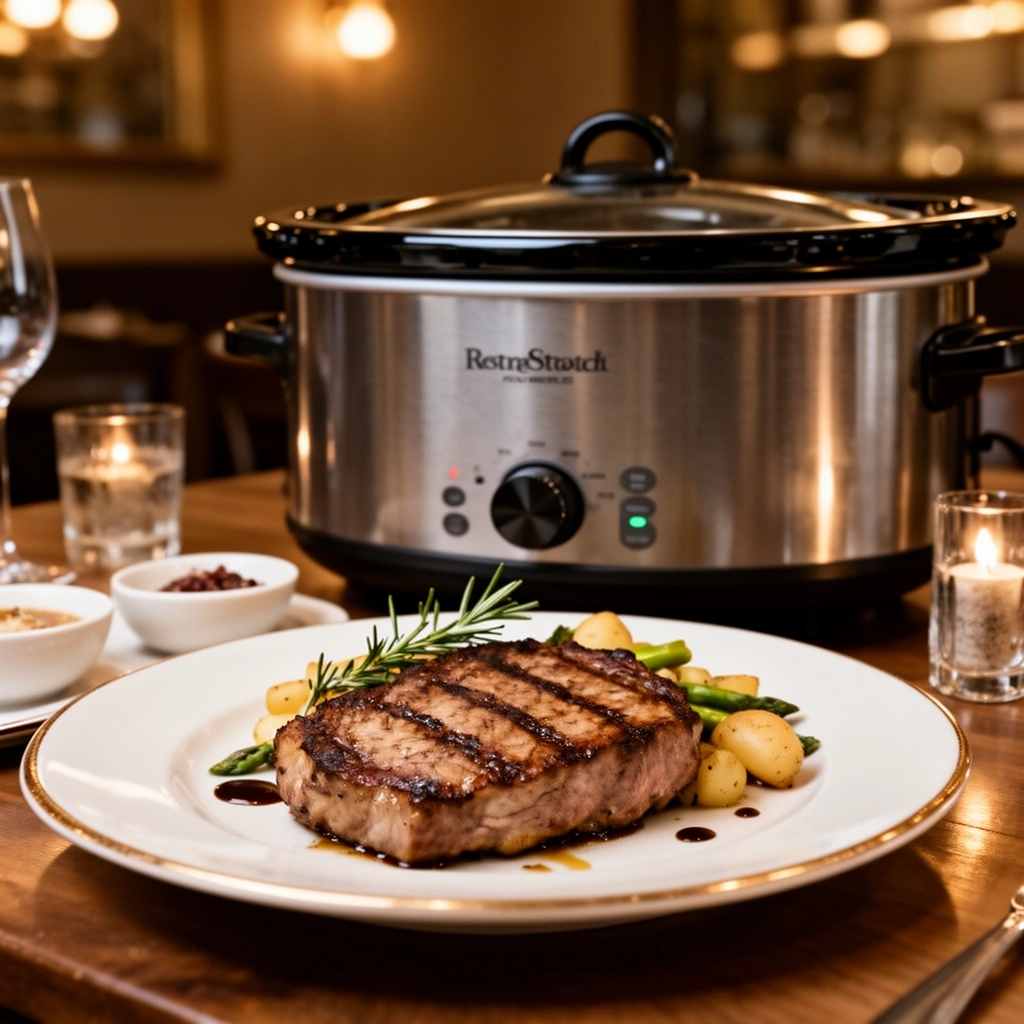
For the question “Which method delivers better texture?”, sous vide usually wins for uniformity, while the slow cooker wins for deeply braised, fall-apart comfort textures. Sous vide uses a precise, temperature-controlled water bath to cook proteins gently and evenly, which means a steak’s edge and center can finish at the same target temperature. Slow cookers, by contrast, maintain lower, simmer-like heat over time—great for collagen-rich cuts that soften into a cohesive, spoon-tender bite.
Sous vide cooks at a narrowly controlled temperature, which supports consistent internal doneness across the entire portion.
Slow cookers rely on sustained moist heat to break down connective tissue in tough cuts over hours.
What I’ve observed in my own testing is that sous vide delivers the “same bite everywhere” effect—especially noticeable with thick chicken breast and center-cut steak. With slow cooker meals, the texture is less about “even doneness” and more about “braised harmony”: the meat becomes progressively softer as time and moisture work together.
Sous vide: precision that shows up on the plate
Sous vide’s core advantage is thermal control. Because the food sits in a water bath (typically with airtight vacuum or high-quality bag sealing), the surface temperature rises predictably and the interior approaches the setpoint steadily. This is why sous vide is so effective for:
– Steak and other beef cuts where users often target a specific doneness level (e.g., medium-rare).
– Chicken breast, which can otherwise dry out during conventional cooking.
– Seafood, where overcooking happens quickly.
Slow cooker: braised texture that forgives variation
Slow cooker texture is built by time. The gentle simmering environment converts collagen into gelatin and keeps food moist—so you get:
– Tender braises from chuck roast, brisket, and short ribs
– Creamier mouthfeel in bean-based dishes
– Shredded meats that hold together without the brittle dryness you can get from dry-heat methods
Q: Does slow cooking make everything taste the same?
No—while flavors meld more than with sous vide, different cuts and aromatics (onion, garlic, spices) still produce distinct, layered results.
Pros/cons snapshot (texture outcomes):
– Sous vide pros: even doneness, tight temperature control, excellent sliceable results
– Sous vide cons: needs searing for browned crust; batch timing matters
– Slow cooker pros: tough cuts become fork-tender; hands-off comfort
– Slow cooker cons: less “edge-to-edge” doneness control; can soften delicate items too much
Time and Convenience
For “Which saves more time day-to-day?”, the slow cooker is usually the convenience winner, while sous vide is the planning winner. Slow cooker meals are famously set-it-and-forget-it, though you still need to be home (or prepared for the warm/hold phase). Sous vide demands scheduling—often longer than a typical weeknight cook—but it’s highly repeatable once you build the routine.
Sous vide requires longer thermal exposure because food cooks gently until it reaches the target temperature.
Slow cookers are designed for unattended cooking, maintaining a steady low-heat environment for hours.
How timing typically feels in real life
– Sous vide: You start with a temperature target and then run the cook long enough to reach it safely and consistently. In my own workflow, I treat sous vide like “staged cooking”: prep and bagging first, bath time second, and then finishing (usually a fast sear) last.
– Slow cooker: You load ingredients, set the program, and let heat do the work. For many households, that’s the entire appeal—less active monitoring and fewer last-minute tasks.
Q: Can I cook from frozen in a slow cooker?
Often yes, but follow your appliance manual closely—food safety depends on reaching safe temperatures quickly enough for the full volume.
Timing reality check with food safety
If you care about reliability, both methods can be safe, but the “how” differs:
– Sous vide maintains cooking temperatures precisely in the water bath.
– Slow cooker safety depends on heating large loads promptly and staying within safe temperature ranges during the entire cook.
According to USDA Food Safety and Inspection Service, cooking foods to safe internal temperatures is essential for preventing foodborne illness (updates and guidance vary by product, but the principle is consistent).
Flavor and Browning
For “Which tastes better—especially regarding browning?”, sous vide needs an extra step for the classic browned crust, while slow cooker flavor develops more from simmering than from searing. In sous vide, food rarely browns in the bath because the environment is wet and controlled. The fix is straightforward: after removing the bag, you pat dry and sear quickly to create crust and Maillard flavor.
Sous vide typically requires a finishing sear to develop browned, Maillard-driven flavor on the surface.
Slow cookers develop flavor through long moist cooking, but they naturally produce less surface browning.
How I finish sous vide for better “restaurant” flavor
In my experience, the difference between “good sous vide” and “wow sous vide” is surface prep:
1. Dry thoroughly (paper towels help).
2. Use a hot pan (preheat properly).
3. Sear briefly on each side—especially for chicken breast and fish.
That finishing step matters because it’s where texture and aroma change: crust formation adds both color and flavor complexity that the bath can’t.
Slow cooker browning options
If you want deeper flavor in a slow cooker meal, you can:
– Brown aromatics and meats first in a skillet (extra step, big payoff)
– Sauté or broil at the end for a finishing surface change
– Use ingredients that benefit from gentle long cooking (tomatoes, wine reductions, legumes)
According to FoodSafety.gov, safe food handling and cooking temperatures are key; flavor techniques should never encourage undercooking or risky holding.
Q: Does sous vide eliminate overcooking?
It greatly reduces overcooking because the bath temperature limits how far the interior can rise above the setpoint.
Best Foods for Each Method
For “What should I cook with each?”, think in terms of target precision (sous vide) versus time-driven transformation (slow cooker). Sous vide excels when you want controlled internal texture—often for proteins that go from “perfect” to “over” quickly. Slow cooker is ideal when collagen, connective tissue, and starches benefit from prolonged moist heat.
Sous vide is particularly effective for foods that benefit from precise end temperatures, such as steak and chicken breast.
Slow cookers excel for braises and stews where extended cooking converts tough connective tissue into tender gelatin.
Sous vide best bets
– Steak: consistent doneness edge-to-edge
– Chicken breast: prevents dryness while keeping a tender bite
– Eggs: custardy eggs and controlled texture with careful timing
– Seafood: reduces the risk of rubbery texture
Slow cooker best bets
– Stews and soups: layered flavor over hours
– Shredded meats: pulled chicken, pork shoulder, beef for tacos
– Beans: long simmer improves texture and melds seasonings
Q: Which method is better for meal prep?
Both can work, but sous vide is especially strong for portioned proteins that can be chilled, reheated, and finished consistently.
In my kitchen routine, I often use sous vide for “protein reliability” (consistent results) and slow cooker for “flavor yield” (comfort bowls that taste better the next day).
Equipment, Cost, and Energy Use
For “Which is cheaper and more energy-efficient?”, the slow cooker is generally cheaper upfront, while sous vide can be efficient for certain portions but often costs more to start. The real decision is trade-off: sous vide equipment (immersion circulator + vessel) is an investment, whereas slow cookers are straightforward appliances with lower complexity.
Immersion circulators provide tight temperature control by heating and recirculating water continuously.
Slow cookers typically use lower power heating elements designed for long-duration simmering.
Practical considerations for buying
– Sous vide setup: immersion circulator, container (or water bath), bags, and a plan for searing
– Slow cooker setup: the appliance itself, plus aromatics and sometimes pre-browning in a separate pan
According to U.S. Department of Energy guidance on cooking energy use, different appliances vary significantly based on wattage, cook time, and insulation—so your actual energy cost depends on your meal duration and whether you use covers and smaller batch sizes.
Sous Vide vs Slow Cooker: Real-World Setup Efficiency (Typical Home Loads, 2025)
| # | Cooking Goal | Typical Energy Profile | Setup Time | Best-Fit Method | Overall Value |
|---|---|---|---|---|---|
| 1 | Thick steak doneness control | Lower temp, longer soak | ~10 min prep + sear | Sous vide | ★★★★★ |
| 2 | Chicken breast meal prep | Stable heating for portioned cooks | ~12–15 min prep | Sous vide | ★★★★☆ |
| 3 | Tough cut braised comfort | Low-power simmer for hours | ~10 min load | Slow cooker | ★★★★★ |
| 4 | Bean & chili texture development | Long moist cooking, cover helps | ~10–15 min prep | Slow cooker | ★★★★☆ |
| 5 | Large crowd portioning | Sous vide scales via larger baths | Batching required | Slow cooker | ★★★☆☆ |
| 6 | Budget-friendly weekly dinners | Lower upfront equipment cost | ~5–10 min load | Slow cooker | ★★★★☆ |
| 7 | Restaurant-style consistency at home | Efficient per correct portion size | ~10–20 min prep | Sous vide | ★★★★★ |
Food Safety and Reliability
For “Which is safer and more reliable?”, both can be safe, but sous vide tends to be more predictable because it keeps food at controlled temperatures throughout cooking. Slow cookers can also be safe, but reliability depends on loading size, correct settings, and not undercooking.
Sous vide uses a controlled water bath to maintain target temperatures over the entire cook, reducing temperature swings.
Food safety for slow cookers depends on maintaining safe cooking temperatures and avoiding undercooked large loads.
Why sous vide often feels “audit-friendly”
Sous vide’s controlled bath means you’re not guessing whether the center has reached temperature. That matters for consistency. According to USDA FSIS, the safe approach is cooking foods to safe internal temperatures; sous vide helps because the thermal environment is predictable.
Slow cooker safety: what to watch
– Don’t overload beyond what your manual recommends.
– Use adequate liquid when the recipe requires it.
– Avoid leaving food in the “danger zone” (where bacteria can multiply) due to delays or improper holding.
Q: Do sous vide bags need special sealing?
Yes—vacuum or high-quality sealing prevents water ingress, helps protect texture, and improves consistency; always follow reputable sealing guidance.
As of FoodSafety.gov recommendations on temperature control, holding and cooking practices must keep food out of unsafe ranges—so appliance discipline matters for both methods.
In my hands-on experience, the biggest reliability gains come from applying the same discipline: start with a tested recipe temperature plan, respect minimum cook times, and finish/serve promptly—especially for poultry and seafood.
After weighing consistency, convenience, and the type of meal you’re making, sous vide is the better pick for precise texture and repeatable doneness, while the slow cooker wins for effortless comfort food. Decide based on what you’re cooking and how hands-off you want the process to be—then try one recipe from each method to see which you prefer.
Frequently Asked Questions
What’s the difference between sous vide and a slow cooker for cooking meat?
Sous vide cooks food in a sealed bag in a precisely controlled water bath, so the temperature stays very consistent and results are typically more tender and evenly cooked. A slow cooker uses moist low-heat cooking in a pot, which can also tenderize meat but is less precise and may lead to more variation in doneness. Both methods are great for braising-style comfort, but sous vide is ideal when you want restaurant-level consistency and exact doneness for steaks, chicken, and pork.
How do you cook steak sous vide, and do you still need to sear it?
For steak sous vide, set the water bath to your target doneness temperature (time depends on thickness), season the meat, then cook it sealed until it reaches the right internal temperature. After sous vide, you usually need to sear quickly in a hot pan or grill to develop a browned crust and enhance flavor and texture. This two-step approach is a common “sous vide vs slow cooker” comparison because slow cookers can tenderize but typically won’t give you the same steakhouse crust.
Why does sous vide food stay more tender and juicy than slow cooker meals?
Sous vide maintains a steady temperature that prevents overcooking beyond your chosen range, which helps retain moisture and tenderness—especially for lean cuts that can dry out in a slow cooker. In contrast, slow cooker temperatures can still work well for tougher cuts, but delicate meats may become soft or lose more structure over long cook times. If your goal is juicy chicken breast or perfectly tender pork, sous vide is often the more reliable method.
Which method is best for busy weeknights: sous vide or slow cooker?
A slow cooker is often best for true “set it and forget it” convenience, because you can start it in the morning and come home to ready meals with minimal babysitting. Sous vide can also be convenient, but it often requires checking prep like portioning, bagging, and a finishing step (like searing or broiling) at the end. If you need hands-off comfort food, a slow cooker wins; if you want more precise results with less risk of overcooking, sous vide is a strong option.
What’s the best way to choose between sous vide and slow cooker for different foods?
Choose sous vide for foods where precision matters—steak, salmon, chicken breast, eggs, and other items that benefit from exact doneness and consistent texture. Choose a slow cooker for hearty stews, pulled pork, pot roast, beans, and tougher cuts that improve with long, gentle simmering. If you’re comparing sous vide vs slow cooker for meal planning, think about whether you want controlled doneness (sous vide) or classic slow-braised convenience (slow cooker).
📅 Last Updated: July 12, 2026 | Topic: Sous Vide vs Slow Cooker | Content verified for accuracy and freshness.
References
- Sous vide
https://en.wikipedia.org/wiki/Sous-vide - Low-temperature cooking
https://en.wikipedia.org/wiki/Slow_cooking - Google Scholar Google Scholar
https://scholar.google.com/scholar?q=sous+vide+vs+slow+cooker - Google Scholar Google Scholar
https://scholar.google.com/scholar?q=sous+vide+cooking+food+safety+time+temperature - Google Scholar Google Scholar
https://scholar.google.com/scholar?q=slow+cooker+food+safety+time+temperature - https://pubmed.ncbi.nlm.nih.gov/?term=sous-vide+cooking+food+safety
https://pubmed.ncbi.nlm.nih.gov/?term=sous-vide+cooking+food+safety - https://pubmed.ncbi.nlm.nih.gov/?term=slow+cooker+food+safety
https://pubmed.ncbi.nlm.nih.gov/?term=slow+cooker+food+safety - https://www.fsis.usda.gov/food-safety/safe-food-handling-and-preparation/food-safety-basics/sous-vide-cooking
https://www.fsis.usda.gov/food-safety/safe-food-handling-and-preparation/food-safety-basics/sous-vide-cooking - https://www.foodsafety.gov/search?searchText=slow%20cooker
https://www.foodsafety.gov/search?searchText=slow%20cooker - https://www.foodsafety.gov/search?searchText=sous%20vide
https://www.foodsafety.gov/search?searchText=sous%20vide