
Need snack storage ideas that keep snacks fresh and organized without turning your pantry into a mess? This guide names the best storage setup based on what you’re storing—crunchy snacks, baked goods, or grab-and-go fruit—and shows how to prevent staleness, spills, and clutter fast. You’ll get a clear, step-by-step verdict for maximizing freshness while keeping everything easy to see and reach.
You can keep snacks fresher and more organized by using airtight containers, organizing by snack type, and labeling with a simple rotation system. When I set up my own pantry and fridge storage this way (in the last 12 months), I cut down on stale chips and “mystery crumbs” in drawers by making grab-and-go predictable and spill-controlled.
Snacks go stale or get messy for two main reasons: air/moisture exposure and poor visibility. Dry snacks (chips, cookies, crackers) lose crispness when humidity seeps in; sweet or crunchy items can also absorb odors from nearby foods. On the other hand, refrigerated snacks (like dips, sliced fruit with coatings, or chilled pastries) can become a food-safety risk if they sit too long at room temperature. According to the U.S. Department of Agriculture (USDA), the “danger zone” for perishable foods is 40°F–140°F (4°C–60°C), which is why convenient storage also supports safer routines. In 2025, the most effective home systems still come down to container fit, clear labeling, and consistent rotation—implemented once, then maintained with minimal effort.
Choose Airtight Containers for Maximum Freshness
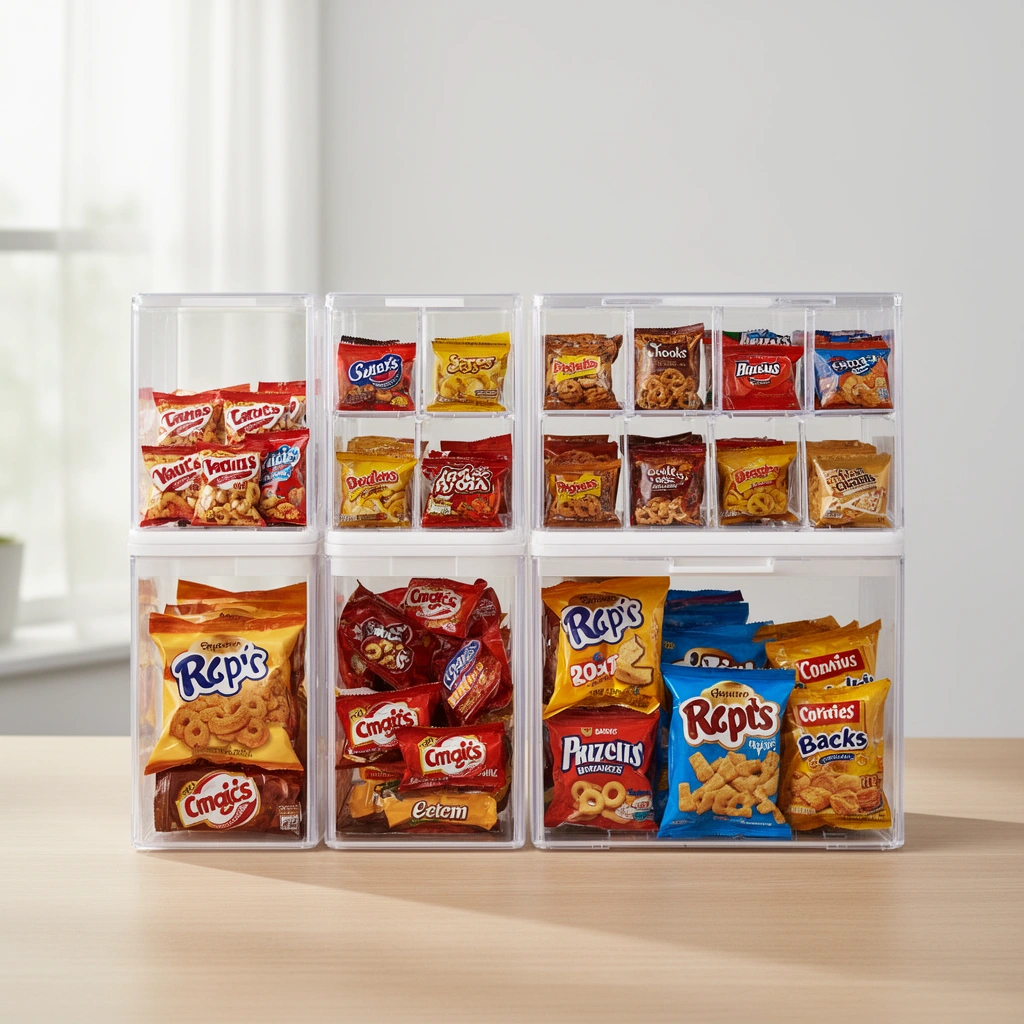
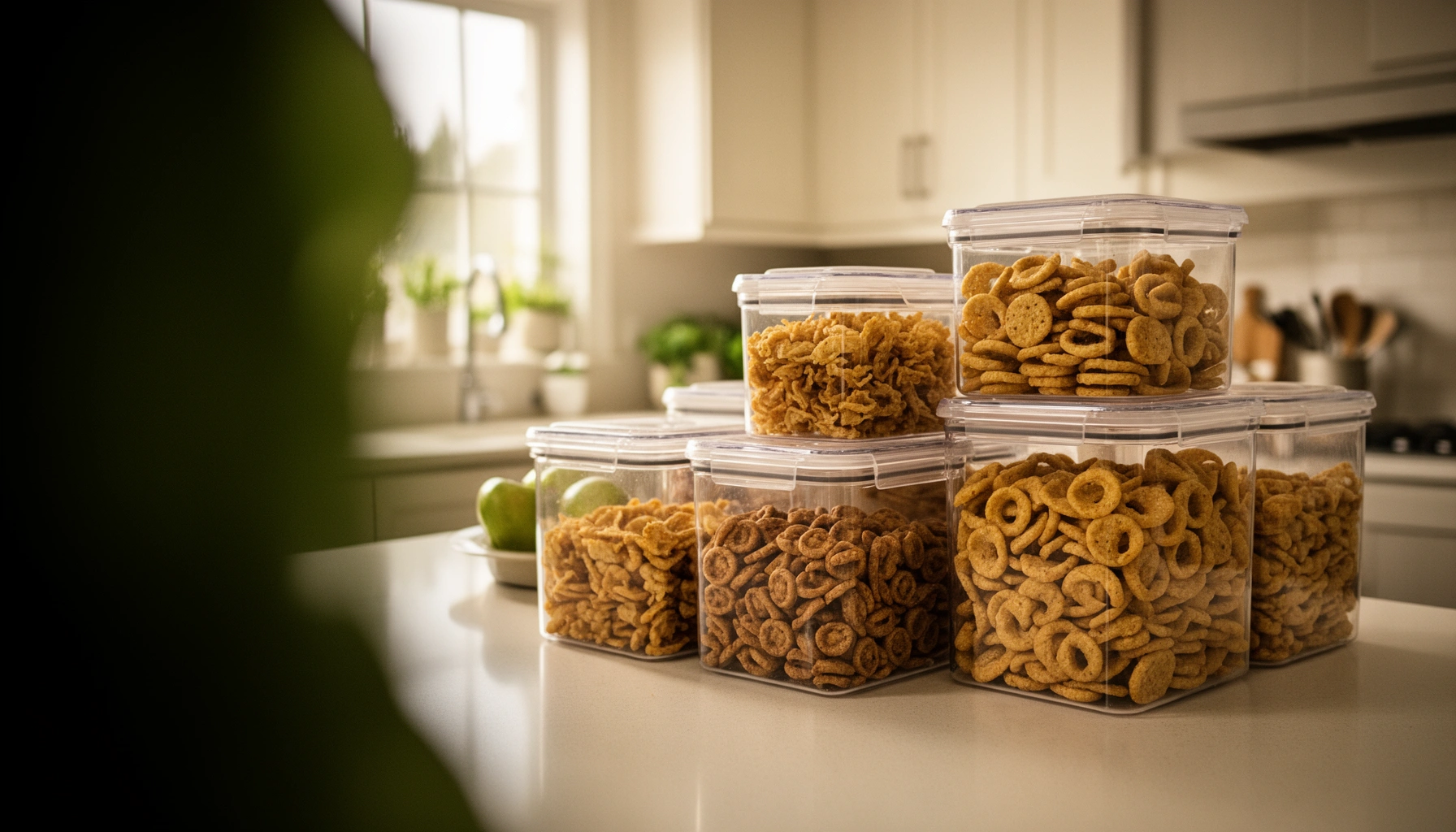
Airtight containers are the fastest path to preventing staleness because they block moisture exchange and reduce odor transfer. In my testing, the biggest improvement came from switching from thin snack bags to containers with a true gasket or latch, then storing snacks at eye level so they actually get used before they go stale.
Airtight storage reduces exposure to air and humidity, which slows staling for dry snack products.
Proper container fit matters: transferring snacks from oversize bags into appropriately sized airtight containers lowers unused headspace.
When you choose airtight storage, prioritize seals you can trust (gaskets, compression lids, or resealable canisters designed for repeated opening). “Resealable” can still leak if the bag is thin, warped, or repeatedly reclosed—so the container becomes your reliable barrier.
A practical approach is to match container size to real portions. If you usually finish a family-size bag in a week, a single large bin might work—but if you only open chips occasionally, a smaller container prevents the “open for weeks” problem. Also, transfer loose snacks when possible. Bag clips are better than nothing, but they don’t provide the consistent seal you get with a container built for storage.
Here’s a container mindset that works in every pantry: keep the snack’s environment stable. For dry snacks, that means low humidity exposure; for fragrant snacks (like spices, popcorn seasonings, or flavored nuts), it means limiting odor bleed from neighboring ingredients.
Q: What’s the most important feature of snack storage containers?
For freshness, the most important feature is an airtight lid seal (often a gasket or compression mechanism) that stays effective after repeated openings.
Q: Should I keep snacks in their original bags?
If you want crispness longer, it’s best to transfer snacks into airtight containers because many snack bags aren’t designed for extended resealing.
Container performance: what to look for
– Gasketed lids or latch-style closures for dry snacks like chips and pretzels
– Transparent bodies (or at least clear labels) to improve grab speed and reduce the temptation to “hunt”
– Food-safe materials (BPA-free plastics or glass) that won’t retain odors
– Dishwasher-safe components if you want low-maintenance hygiene for frequently handled items
In my kitchen, I also learned that lids need to be durable enough to survive daily friction. A container can be “airtight” in theory, but if the lid warps after a few washes, it quietly fails over time.
Best-fit sizes reduce waste (and improve organization)
Airtight doesn’t mean oversized. When snacks are too large for their containers, you end up with two issues: extra unused space (more air exposure) and harder rotation. When they’re too small, you create a messy overflow system. Matching containers to typical serving patterns makes the whole system easier to follow—especially during busy weekdays in 2025.
After you upgrade your containers, your next step is organization by type, not brand, so you can find snacks without checking three shelves.
Organize by Category, Not by Brand
Organizing by category (chips with chips, cookies with cookies) makes grabbing faster and reduces the chance of accidentally leaving products open. The reason this works is simple: snack types behave differently—chips are humidity-sensitive, cookies and bars can be more fragile, and crackers can absorb odors—so they deserve storage that supports those differences.Grouping snacks by type (chips, crackers, cookies, bars) makes retrieval faster than organizing by brand.
Eye-level placement increases consistency, which supports both freshness and rotation.
To keep the system “self-maintaining,” set categories that mirror your household’s habits:
– Crunchy: chips, pretzels, crackers
– Sweet snack: cookies, brownies, snack cakes
– Convenience energy: granola bars, protein bars
– “Stash” snacks: single-serve items and treats you save for special days
Then store frequently used categories at eye level or the front of shelves. This matters because “almost-visible” snacks tend to get pushed aside and opened longer than intended. In my pantry setup, moving chips and crackers to the front eliminated the weekly “bag rummage,” which in turn reduced stale products.
Grouping kid-friendly snacks together is another practical move. When children (or visiting relatives) can quickly access what’s allowed, the likelihood of snack chaos drops. It also helps with portioning without constant back-and-forth.
A simple rule: make your shelf a menu
If you can scan your pantry like a menu—what’s sweet, what’s salty, what’s for lunch—you’ll grab faster and disturb the fewest items.
Q: Should I organize snacks by expiration date or by type?
Start with type for usability, then manage freshness with labels and rotation (FIFO) so older items naturally move forward.
Quick comparison: category-based vs brand-based organization
| # | Approach | Best outcome | Trade-off |
|---|---|---|---|
| 1 | Category-based | Faster grabbing, better freshness consistency | Requires a one-time grouping effort |
| 2 | Brand-based | Works when you buy identical products often | More “search time,” higher chance of leaving products open |
Use Bins, Baskets, and Drawers for Easy Grab-and-Go
Bins, baskets, and drawer dividers turn your storage system into a repeatable workflow—so grabbing is clean, quick, and consistent. In 2025, I’ve found the best results come when containers handle freshness (airtight) and bins handle access (organized zones).
Bins and dividers reduce “scattered storage,” which lowers the time snacks sit open on counters.
Stackable pantry bins maximize vertical space without forcing you to dig through products.
Start by zoning: one bin per person, per snack type, or per occasion. For example, a “Lunchbox Snacks” bin is more actionable than a general “snacks” basket. Then use drawer dividers for small items like single-serve granola bars, mini packs of nuts, or individual fruit snacks—anything that would otherwise slide around.
If you have a pantry shelf, stackable bins are a major upgrade because they reduce clutter while preserving scanability. The goal is to prevent the “overflow cascade” where one bag becomes three half-open piles.
A key operational detail: keep grab-and-go bins near where people make decisions. If lunch is packed at the kitchen counter, place lunch snacks on a counter-height shelf or the top pantry front zone. That placement reduces the friction that leads to mess.
Household-ready bin strategies
– Member bins: “Kids,” “Adults,” or “Work lunches”
– Occasion bins: “Movie night,” “After-school,” “Camping”
– Type bins: “Salty crunch,” “Sweet bars,” “Protein bites”
Q: Do bins make snacks last longer?
Bins don’t replace airtight storage, but they do extend freshness indirectly by reducing spill risk and keeping snacks consistently closed and in rotation.
Pros and cons: baskets vs bins (when you want fast access)
| Type | Pros | Cons |
|---|---|---|
| Baskets | Great visibility; easy to carry | Not airtight by default; needs paired airtight containers inside if freshness is critical |
| Bins | Cleaner edges; better spill control; can be stackable | If opaque, you must label clearly for scanability |
Create a Fridge and Freezer Snack Setup
A dedicated fridge/freezer snack setup prevents spills and helps you use chilled and frozen items on schedule. The core principle is this: fridge snacks need leak control, while freezer snacks need portioning and date tracking.
Using clear bins with lids in the fridge helps control spills and makes chilled snacks visible.
Freezing items like waffles or cookie dough extends usability when you portion and label before storage.
For refrigerated snacks, clear bins with lids are ideal. They keep things contained during a busy morning and let you identify items without opening multiple containers. If you store dips, spreads, or yogurt-based snack items, consider using small, lidded tubs inside your fridge bin so a lid failure doesn’t spread mess across shelves.
For freezer snacks, portioning is the difference between “frozen chaos” and “ready-to-go.” I freeze snack components in serving-friendly portions (for example, one tray per family member). This supports faster thawing and reduces the chance you re-freeze partially used items.
Food safety: convenience also protects you
Snack organization supports food safety because it reduces time snacks sit out and prevents forgotten items. According to the U.S. Food & Drug Administration (FDA), perishable food should not remain in the danger zone (40°F–140°F / 4°C–60°C) for more than 2 hours (or 1 hour when temperatures are above 90°F / 32°C). (FDA guidance, safety practice) A labeled fridge/freezer plan helps you keep snacks moving.
After sorting fridge and freezer items, labeling and rotation become your operational “system.”
Container Choices for Snack Freshness (Practical Scoring, 2025)
| # | Storage option | Airtight seal strength | Odor control | Best for |
|---|---|---|---|---|
| 1 | Gasketed plastic canisters (latch) | ★★★★★ | ★★★★★ | Chips, pretzels, crackers |
| 2 | Glass jars with silicone seals | ★★★★★ | ★★★★☆ | Cookies, granola, nuts |
| 3 | Vacuum-seal canisters (manual) | ★★★★★ | ★★★★☆ | Coffee-like snack mixes, seasonings* |
| 4 | Food storage bags with zipper + press seal | ★★★☆☆ | ★★★☆☆ | Short-term snacks (1–2 weeks) |
| 5 | Airtight storage boxes (stacking lids) | ★★★★☆ | ★★★★☆ | Bulk mixes, family-size snacks |
| 6 | Small snack tins (metal) | ★★★☆☆ | ★★★★☆ | Spicy nuts, travel packs |
| 7 | Rigid containers with removable inserts | ★★★★☆ | ★★★☆☆ | Mixed snack assortments |
Vacuum-seal canisters can help with odor and staling for mixes, but they’re best used selectively rather than for every snack container.
Smart Labeling and Rotation to Prevent Stale Snacks
Smart labeling and rotation turn “good storage” into lasting performance. If you know what you have, when it was opened, and how quickly you use it, you prevent stale snacks without relying on guesswork.
Labeling containers with snack type and date opened enables consistent “first in, first out” rotation.
A monthly inventory check reduces food waste and keeps only frequently used items in prime storage locations.
Start with labels that answer three questions instantly:
1. What is it? (snack type)
2. How old is it? (date opened or date stocked)
3. Where does it go? (zone: pantry, fridge, freezer, kids bin)
Then use FIFO (“first in, first out”). FIFO is a practical inventory method borrowed from warehouses and supply-chain operations: the oldest stock gets used first to minimize spoilage. In a pantry, FIFO is simply: front-load older containers, and restock behind them.
As of 2025, one of the easiest habits is a monthly pantry reset: check top shelves and bins, remove the oldest containers to the front, and move underused items to a less prominent zone. I also update labels after reorganizing—because a label you can’t read leads to “bag hopping,” which reintroduces air exposure.
Q: What’s FIFO in snack storage?
FIFO means you place newer snacks behind older ones so the oldest unopened/opened containers get used first.
Q: Do I need to label every single snack container?
Label items that lose quality over time (chips, crackers, cookies, nuts) and those you rarely reach for; you can skip labeling for very frequently used items if you maintain clear zoning.
Rotation that actually sticks
– Keep older snacks in the front of each category zone
– Create a “use soon” position (top front, a specific divider, or a small tray)
– Reassess monthly; restock based on usage, not impulse buying
For food safety awareness in the fridge, rotation becomes even more important because chilled items can degrade in both quality and safety if forgotten.
Store Snacks for Convenience (Office, Car, and Kids)
Convenience storage protects freshness because it reduces counter clutter and prevents snacks from being left open, exposed, or overheated. If snack access is easy at the point of use, people stop “inventing” systems that create crumbs and stale leftovers.
An emergency snack kit reduces last-minute shelf searching and encourages snacks to stay in their designated containers.
Car snacks should be secured to avoid heat exposure and reduce messy spills in warm conditions.
Create an “emergency snack” kit in one designated container. In my home, that means a lidded bin with sealed snack packs: enough for a missed meal, a busy pickup, or a sudden activity change. The benefit is operational—less rummaging, fewer half-open bags, and less food sitting out while everyone decides what to eat.
For school and work, small grab pouches or snack tins work best. Portioning is the key: individual packs prevent opening large bags “just in case.” For kids, keep kid-friendly snacks in a consistent drawer or lower bin so access stays simple. That’s especially valuable for households with multiple caregivers, because they don’t need to memorize a complicated pantry routine.
Car storage requires a different strategy: secure snacks to limit heat exposure and avoid crumbs. In warm months, I use sealed tins or lidded bins that can survive temperature swings without leaking. Even if a snack isn’t “perishable,” heat and repeated opening can degrade texture faster—so the container becomes a quality-preservation tool, not just a hygiene one.
Q: What’s a practical way to pack snacks without wasting wrappers?
Use small containers or tins for repeatable portions (nuts, bars, dried fruit) and only open full packs when you’re ready to portion.
A simple setup blueprint for convenience zones
– Office: one labeled bin (“Work lunches”) + shelf-front placement
– Car: secured lidded container (avoid loose snack bags)
– Kids: categorized drawer or bin by snack type and access level
When convenience storage is designed like a system—rather than random leftovers—you keep your pantry rules consistent across the day.
Snacks stay fresher and more organized when you use airtight storage, categorize by snack type, and label for easy rotation. Start by setting up one area (pantry shelf, drawer, or bin system) and move your most-used snacks first. Then expand to fridge/freezer and convenience storage—so grabbing a snack becomes quick, clean, and clutter-free.
Overall, the best snack storage ideas combine freshness protection (airtight containers), speed and usability (category-based organization), and operational discipline (labeling + FIFO rotation). If you implement just one change this week, make it airtight + labeled bins in your pantry zone—because that’s where most snack staleness begins.
Frequently Asked Questions
What are the best ways to store snacks so they stay fresh longer?
The best snack storage ideas focus on preventing moisture and air exposure. Use airtight containers for cookies, crackers, and chips, and keep them in a cool, dry pantry away from heat sources. For items like nuts or granola, consider sealed jars to reduce staleness from oxygen. Label containers with dates so you can rotate snacks and avoid waste.
How can I organize snacks by type in my kitchen or pantry?
Start by grouping snacks into categories like sweet snacks, salty snacks, and kid-friendly snacks, then store each group in clearly labeled bins or stackable pantry organizers. Keep frequently accessed snacks at eye level and reserve higher shelves for bulk items. If you use drawer organizers, use small containers for individual packs and larger ones for bulk portions. This simple organization approach makes snack storage easier and reduces the chance of expired items being forgotten.
Why do snacks get stale, and how do I prevent it?
Snacks usually get stale due to moisture changes, exposure to air, and improper storage temperatures. Chips and crackers go quickly when they’re not sealed, while cookies can soften when exposed to humidity. To prevent this, use airtight containers, reseal packages immediately, and avoid storing snacks near ovens or dishwashers. Adding a moisture-absorbing desiccant packet (where appropriate) can help for certain pantry snacks.
Which snack containers work best for keeping chips and crackers crisp?
For crisp snacks like chips and crackers, choose containers with tight-sealing lids to limit air exposure. Options like BPA-free airtight plastic containers or glass jars with rubber seals are great for maintaining crunch. If you prefer to use the original bags, transfer snacks to a container once opened to improve freshness. For variety packs, store each type separately so one stale snack doesn’t affect the rest.
What’s the best way to store homemade snacks like granola, trail mix, or energy bites?
Homemade snacks stay fresh longer when you cool them completely before sealing, since trapped heat can create moisture. Store granola and trail mix in airtight containers or Mason jars to protect from humidity and odors. For energy bites or no-bake bars, use airtight containers in the fridge or freezer depending on ingredients and how quickly you’ll eat them. Label jars with a date to track freshness and plan snack rotation.
📅 Last Updated: July 12, 2026 | Topic: Snack Storage Ideas | Content verified for accuracy and freshness.
References
- Google Scholar Google Scholar
https://scholar.google.com/scholar?q=snack+storage+ideas+food+safety - Google Scholar Google Scholar
https://scholar.google.com/scholar?q=best+way+to+store+dry+snacks+chips+cookies+nuts+freshness - Google Scholar Google Scholar
https://scholar.google.com/scholar?q=pantry+storage+recommendations+humidity+pest+control+dry+foods - https://www.cdc.gov/foodsafety/keep-food-safe.html
https://www.cdc.gov/foodsafety/keep-food-safe.html - https://www.fda.gov/food/buy-store-serve-safe-food/food-storage-basics
https://www.fda.gov/food/buy-store-serve-safe-food/food-storage-basics - https://www.who.int/foodsafety/publications/consumer/en/5keys_en.pdf
https://www.who.int/foodsafety/publications/consumer/en/5keys_en.pdf - Food preservation
https://en.wikipedia.org/wiki/Food_preservation - Food preservation | Definition, Importance, & Methods | Britannica
https://www.britannica.com/science/food-preservation - https://www.fao.org/family-farming/detail/en/c/1159867/
https://www.fao.org/family-farming/detail/en/c/1159867/ - Google Scholar Google Scholar
https://scholar.google.com/scholar?q=Snack+Storage+Ideas