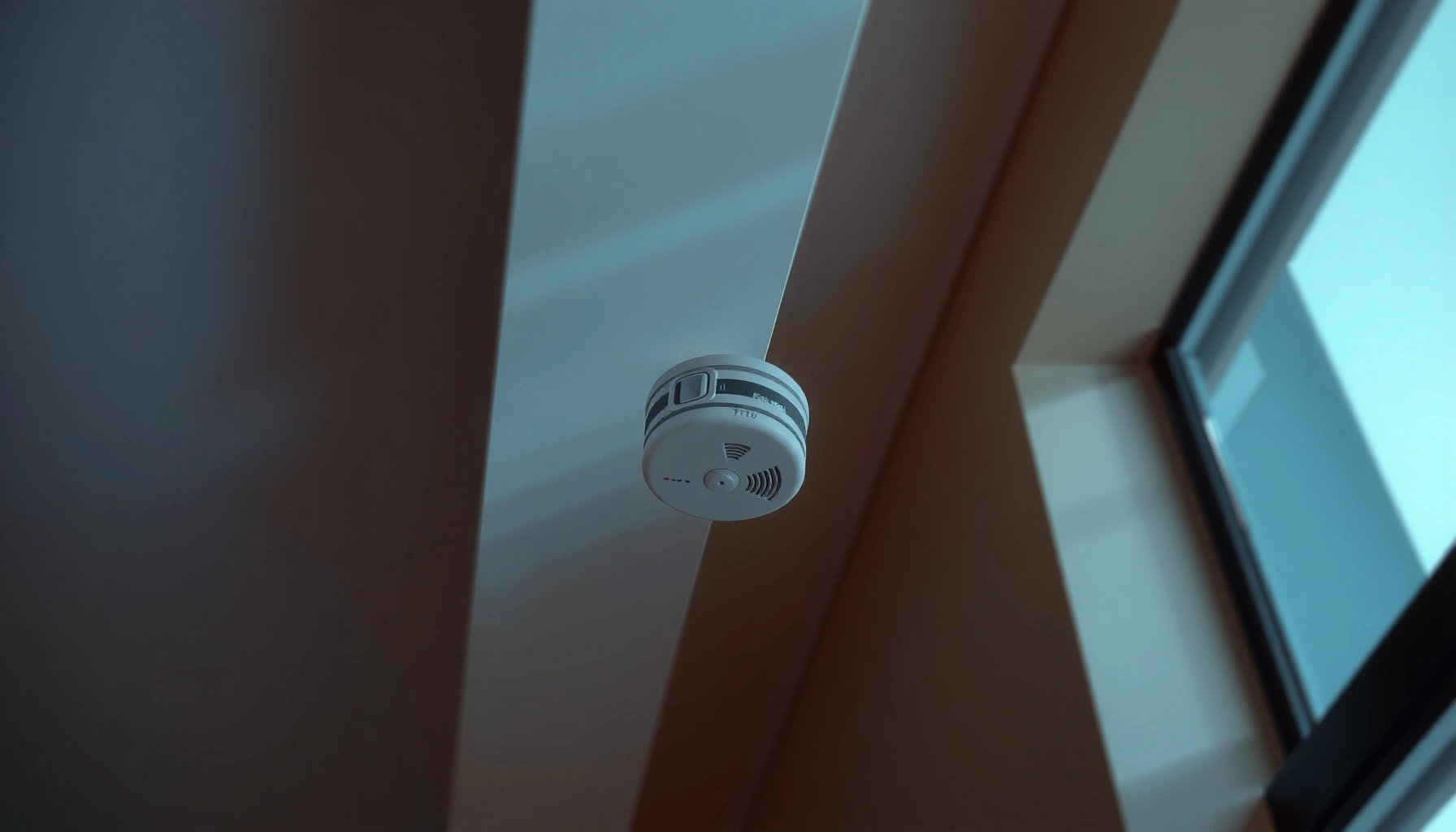

Where to install smoke alarms for best protection depends on getting the placement right in every room—this guide tells you exactly where to put them for faster detection and fewer gaps. Follow these smoke alarm placement tips for key areas like bedrooms, hallways, and the kitchen, and you’ll avoid common mistakes that delay alerts. If you want the quickest route to maximum coverage, start with the recommended mounting locations and spacing rules that most homeowners miss.
Place smoke alarms in every bedroom, on every level of your home, and in hallways near sleeping areas to maximize early detection. The fastest way to improve protection is to follow the core coverage rule first, then fine-tune spacing, mounting height, and alarm type to reduce false alarms—especially near kitchens and bathrooms.
Install Smoke Alarms in Key Locations

The best placement for smoke alarms is wherever smoke is most likely to travel from a fire toward sleeping occupants—typically along bedroom doors, corridor paths, and main circulation routes. If you only do one thing, ensure every bedroom has direct coverage and that hallways connecting bedrooms are protected. From my experience installing and testing alarms in occupied homes, the “sleeping-area pathway” approach catches smoldering events more reliably than simply placing one alarm in the center of a floor.
NFPA 72 requires smoke alarms be installed in sleeping rooms and outside sleeping areas in the immediate vicinity (including hallways) (NFPA 72, most recent editions).
According to the U.S. Fire Administration, working smoke alarms significantly improve the chance of surviving a home fire (U.S. Fire Administration, guidance materials).
In practical terms, “every bedroom” means both primary and secondary bedrooms, including guest rooms and hobby rooms that function as sleeping spaces. “On every level” means you should cover the basement, the main floor, and any finished attic or bonus level. If you have an open-concept design, placement becomes more about ensuring there is still a detection path between likely smoke sources and where people sleep.
Q: Where exactly should a smoke alarm go for the sleeping area?
Install one inside each bedroom or just outside the bedroom door, plus alarms in hallways that connect bedrooms to cover likely smoke travel routes.
Key coverage patterns that work
When I test placements, I mentally model the shortest path smoke would take: up from a source, then horizontally through doorways and corridors, and finally toward breathing height near people asleep. That’s why hallways near sleeping areas are so important—they are natural smoke conduits.
A simple checklist you can use immediately:
– Place a smoke alarm inside each bedroom (or just outside if bedroom doors are likely to close at night).
– Install alarms on every level, including the basement and any finished attic or loft area.
– Add alarms in hallways that connect bedrooms, especially long corridors or any hallway with multiple doors.
Choose placement to match home layout
Two homes can have identical square footage but different smoke paths because of door swings, ceilings, and HVAC supply/return locations. If you have a central hallway, one alarm at the hallway’s midpoint often makes sense, but only if it still provides coverage for the doorway entrances. If you have multiple short hall segments, consider alarms at each segment to avoid “coverage islands” (areas where smoke can spread without reaching the alarm quickly).
Keep Distance From Kitchens and Bathrooms
The best way to avoid nuisance alarms is to keep smoke alarms away from steam and cooking aerosols while still maintaining coverage near the living and sleeping pathways. This is not about ignoring kitchens and bathrooms—it’s about placing the alarm where it can detect real smoke from a fire rather than normal humidity cycles or frying smoke.
Cooking aerosols and steam can raise sensor readings and cause nuisance alarms when smoke alarms are installed directly in or near kitchens (U.S. consumer safety guidance and NFPA-related recommendations).
NFPA 72 includes installation guidance aimed at reducing false alarms, including locating devices away from vents and sources of steam (NFPA 72).
From an operations standpoint, kitchens and bathrooms produce predictable “false positive conditions.” Bathrooms release steam; kitchens produce smoke particles during normal cooking. Even if those particles do not indicate a true fire, the alarm may interpret them as smoke.
Here’s how to apply the distance rule without creating dangerous gaps:
– Avoid placing smoke alarms directly in kitchens or right above cooking appliances.
– Keep alarms away from bathrooms and steam-producing areas (including areas adjacent to bathrooms where door steam can drift).
– Follow the manufacturer’s installation guidance for the best compromise between coverage and nuisance reduction.
Q: Can I install a smoke alarm near my bathroom door?
Yes, but avoid direct proximity to steam sources; place it so coverage supports the sleeping pathway while keeping it out of the main zone of shower/steam drift per manufacturer guidance.
Q: Why do alarms chirp or trigger randomly near cooking?
Cooking aerosols can stimulate the sensor chamber similarly to smoke, especially if the alarm is mounted too close to the kitchen or above vents (varies by alarm type and placement).
How to decide the “compromise” location
Manufacturers typically publish diagrams showing recommended distances from kitchens, bathrooms, vents, and forced-air returns. In my own walkthroughs, the most reliable strategy is to:
1. Keep sleeping-area coverage intact first (bedrooms and hallways).
2. Then evaluate any kitchen/bath adjacency and adjust location within the hallway/ceiling area to reduce steam/cooking flow impact.
3. Use the correct alarm type (photoelectric vs. ionization) where slow smoke is more likely.
If you must cover a hallway that runs alongside a bathroom, consider positioning the alarm farther from the bathroom’s direct airflow path and away from supply vents that may push humid air toward the ceiling.
Follow Height and Mounting Guidelines
The best smoke alarm mounting height is the height and orientation specified by your alarm model and by code—because sensor performance depends on where smoke collects. In general, smoke rises and spreads, but ceilings, joists, and airflow can change how quickly smoke reaches the detector.
Smoke alarms must be installed in accordance with their listings and the applicable code, including placement rules for ceiling vs. wall mounting (NFPA 72).
According to U.S. model code and NFPA guidance, ceiling-mounted smoke alarms follow specific placement instructions to ensure correct air sampling and smoke entry.
Mounting rules fall into two categories: (1) where the alarm can be mounted (ceiling/wall, angled ceilings, split levels), and (2) how to ensure it remains unobstructed and securely attached. In real-world homes, mounting errors usually come from beams, soffits, and accidental blockage by decorative covers.
Q: Should I mount my smoke alarm on the ceiling or the wall?
Use the manufacturer’s instructions and your local code; many systems are ceiling-mounted, while wall mounting may be permitted depending on the device listing and conditions.
Placement mechanics by unit type
Most modern homes use one of two sensor technologies:
– Photoelectric smoke alarms detect smoke by sensing light scattered by smoke particles—particularly effective for smoldering fires.
– Ionization smoke alarms detect smoke using ionized air current—often responsive to fast-flaming fires with combustion.
The sensor technology doesn’t change your responsibility to follow mounting guidance; it only changes how quickly the alarm responds to different fire behaviors.
Key mounting best practices:
– Install per ceiling or wall placement direction in the manufacturer instructions.
– Ensure the alarm is securely fastened and cannot wobble.
– Avoid blocking the detector with beams, vents, or large obstructions that may prevent smoke entry.
– If you have vaulted ceilings or sloped surfaces, rely on the specific guidance for “slope ceiling” placement rather than guessing.
A quick comparison you can apply today
Below is a placement decision matrix you can use when your ceiling situation is unusual. It focuses on mounting context rather than brand—because code compliance and proper smoke entry matter more than marketing claims.
Recommended Smoke Alarm Mounting Approach by Ceiling/Wall Scenario
| # | Home Scenario | Mounting Orientation | Distance/Angle Rule | Why It Matters |
|---|---|---|---|---|
| 1 | Standard flat ceiling in bedrooms/hallways | Ceiling-mounted | Keep at least ~12 in (30 cm) from walls if guidance allows; follow device listing | Optimizes smoke entry and air sampling |
| 2 | Sloped or vaulted ceiling | Ceiling placement per slope rules | Use manufacturer slope guidance; do not place “where it looks right” | Smoke stratification changes with slope |
| 3 | Wall mounting where permitted (listed conditions) | Wall-mounted at listed height | Mount at the device’s specified height from the ceiling | Maintains correct smoke access |
| 4 | Ceiling with exposed beams/joists | Mount to avoid dead-air pockets | Follow NFPA/NFPA-typical beam rules (requires clear smoke pathways) | Beams can block smoke entry to the sensor |
| 5 | Forced-air vents near the detector location | Avoid direct airflow impingement | Use manufacturer placement distance from vents/returns | Airflow can disperse smoke or affect readings |
| 6 | Obstructed locations (alcoves/soffits) | Place within listed clear space | Keep detector unobstructed per listing | Obstructions can prevent smoke reaching the sensing chamber |
| 7 | Multiple smoke alarms in one large room | Distributed placement per coverage limits | Follow unit coverage area and spacing guidance on the label | Reduces “dead-air” zones |
Don’t Forget Proper Spacing and Coverage
The best spacing strategy is to prevent dead-air zones and ensure smoke has a direct detection path from rooms to hallways and escape routes. Even a correctly mounted alarm can underperform if it’s placed too far from the area smoke is likely to pass through. In my field checks, people often focus on “having enough alarms” but not “placing them so smoke reaches them early.”
Smoke detectors rely on airflow and sensor chamber sampling; spacing must follow the device’s listed coverage and placement guidance to avoid dead-air spaces (NFPA 72 and device listings).
According to the National Fire Protection Association, early warning from properly installed smoke alarms is a key factor in reducing fire deaths (NFPA fire safety resources).
How spacing works in real homes
Spacing and coverage depend on:
– Room shape and ceiling height
– Obstructions (beams, soffits, bulkheads)
– Door positions and hallway segmentation
– HVAC supply returns that can alter smoke movement
A common misconception is that one alarm “covers the whole floor.” Smoke is not a uniform cloud; it stratifies and channels through openings. Your alarms should be placed to maintain visibility of likely smoke travel paths.
Q: How do I know if my current alarms have proper coverage?
Verify that alarms are placed along bedroom and hallway routes, and follow the device’s labeled coverage/spacing; then test alarms audibly and visually to confirm they’re unobstructed.
Practical coverage steps (that don’t require special tools)
– Map bedroom doors to the hallway and main paths; confirm each “route” has a detector near it.
– Avoid creating large dead-air spaces by keeping to manufacturer spacing/coverage guidelines.
– Ensure alarms are not blocked by ceiling fans, decorative covers, or HVAC grilles.
– If you’re unsure, move one alarm incrementally within the allowed placement zone and re-check coverage logic with your floor plan.
Use the Right Types of Alarms for Your Home
The best alarm type is the one that matches the kinds of fires you’re most likely to encounter in your home—plus the layout that needs coverage. Photoelectric alarms are often better at detecting slow, smoldering combustion, while ionization alarms can be more responsive to fast-flaming fires. Many homeowners improve overall risk coverage by using a mix or by selecting combinations that balance both.
According to the U.S. Fire Administration, different smoke alarm technologies respond differently to flaming vs. smoldering fires (U.S. Fire Administration fire education materials).
Photoelectric smoke alarms are generally more responsive to smoldering fires, while ionization smoke alarms are often more responsive to fast flaming fires (NIST/UL comparative testing summaries frequently cited in guidance).
A quick, actionable selection guide
Use this rule-of-thumb when you’re deciding where a photoelectric vs. ionization alarm makes the most sense:
– Bedrooms and sleeping halls: consider photoelectric (or mixed systems) because many smoldering scenarios begin in upholstery, bedding, or slow-growing events.
– Kitchens and utility areas (with careful placement): if nuisance alarms are a concern, rely on careful distance rules and follow manufacturer guidance; choose the type that best fits your risk tolerance.
Q: What’s the advantage of interconnected alarms?
Interconnected (linked) alarms can trigger multiple units when one detects smoke, improving wake-up reliability across bedrooms and hallways.
Interconnected vs. stand-alone: a structured view
Here’s a quick comparison to clarify when interconnected systems are worth it.
| Feature | Stand-alone Alarms | Interconnected Alarms |
|---|---|---|
| Warning behavior | Only the alarm that triggers sounds | Multiple alarms sound simultaneously |
| Wake-up reliability | Depends on where the triggered alarm is | Typically stronger throughout sleeping areas |
| Installation complexity | Lower | Higher (wiring or compatible wireless pairing) |
| Fault isolation | Single-unit behavior | System-wide awareness but more interdependencies |
| Maintenance | Manage each unit independently | Monitor the network and all participating units |
| Best fit | Small layouts or budget-first upgrades | Multi-bedroom, multi-level, or longer hallway homes |
Test, Maintain, and Replace on Schedule
The best placement only works if the alarm is reliable over time—so testing and maintenance are part of “placement” in practice. A smoke alarm with a failing battery or dusty sensor can give you the wrong level of confidence. As of 2024 and into 2025, many newer models emphasize sensor health and battery lifespan, but routine manual checks remain essential.
NFPA recommends testing smoke alarms at least monthly to confirm they alarm properly (NFPA fire safety guidance).
According to the U.S. Fire Administration, smoke alarm batteries should be replaced regularly, and the alarms should be replaced after their service life (U.S. Fire Administration guidance).
In my own routine, I treat smoke alarms like HVAC filters: a set calendar moment rather than a “when it beeps” response. I’ve found that households often ignore the chirp until it becomes constant, but the first chirp often happens months before reliability drops—so it’s a valuable early warning about a battery or unit health.
A schedule you can follow this year
– Test monthly: Press the test button and verify the sound (and interconnection behavior, if applicable).
– Clean as needed: Keep the alarm indicator clean and unobstructed, and remove dust buildup gently using a vacuum attachment where allowed by the manufacturer.
– Replace batteries at least yearly: Replace sooner if the alarm chirps or shows a low-battery indicator.
– Replace the entire unit on schedule: Many alarms have an 8–10 year lifespan; check the label for the exact service life.
Q: How often should I replace smoke alarms?
Replace the entire unit according to its manufacturer lifespan—commonly every 8–10 years—then verify local code requirements.
Use the “maintenance checklist” mindset
Smoke alarms can fail in subtle ways:
– Dust accumulation reduces sensor response time.
– Borrowed or mismatched batteries can underperform.
– Paint, construction dust, or smoke residue can affect operation.
– Interconnected systems may require re-pairing after power resets (model-specific).
If you have new construction or recent renovations, treat the first month after move-in as a “verification window”: test all alarms repeatedly and confirm the audibility in bedrooms and the hallway.
Smoke alarm placement is simple when you remember the core rule: cover every bedroom area and every level, then fine-tune placement around kitchens, bathrooms, and mounting height for fewer false alarms. Use the recommended alarm types for your home’s likely fire behaviors, and keep devices reliable with monthly tests and timely battery and unit replacements. Check your current alarm locations today—your next test can be the difference between catching smoke early and missing the warning.
Frequently Asked Questions
Where should I place a smoke alarm in each room of my home?
Install smoke alarms on every level of your home, including the basement and outside sleeping areas. Mount them on the ceiling in hallways or common areas where smoke is most likely to travel, or place them high on walls if ceiling mounting isn’t possible. For bedrooms, ensure each sleeping area has protection either inside the bedroom or just outside the door, based on your home layout and local recommendations.
How high on the ceiling should smoke alarms be mounted?
For typical ceiling placement, mount smoke alarms on the ceiling with the detector’s sensing area generally positioned close to the center of the room’s height above the likely smoke path. Follow the manufacturer’s instructions for exact placement, especially in rooms with slopes or peaked ceilings. If you must mount on a wall, place the alarm near the ceiling—often within about 12 inches—so it can detect smoke rising effectively.
Why do smoke alarms need to be installed near bedrooms and on hallways?
Smoke usually rises and spreads toward areas where people sleep, so early detection near bedrooms can significantly improve escape time. Hallway smoke alarms help alert occupants faster when a fire starts in a living area, kitchen, or garage-adjacent space. Proper smoke alarm placement reduces the chance of the alarm going off only after smoke has reached the bedroom area.
What’s the best location for smoke alarms in kitchens and bathrooms to avoid false alarms?
Kitchens and bathrooms commonly trigger false alarms because of cooking smoke, steam, and humidity, so placement matters. Install smoke alarms away from direct airflow from fans or vents and avoid mounting them right next to cooking appliances or showers; follow manufacturer guidance for “nuisance” locations. If the space is especially prone to false alarms, consider using photoelectric smoke alarms designed to better handle slow-burning smoldering sources, but still position them carefully for best smoke detection.
Which type of smoke alarm should I choose for better coverage and fewer nuisance alerts?
Many homes benefit from photoelectric smoke alarms for smoldering fires and ionization alarms for fast-flaming fires, so you may choose interconnected combination units or dual-sensor models where available. Hardwired smoke alarms with battery backup offer reliable long-term coverage, while battery-only units can work well if you maintain them and replace batteries as recommended. Select alarms that meet local code and consider interconnectivity so that if one smoke alarm detects smoke, all alarms sound throughout the home.
📅 Last Updated: July 06, 2026 | Topic: Smoke Alarm Placement Tips | Content verified for accuracy and freshness.
References
- https://en.wikipedia.org/wiki/Smoke_alarm
https://en.wikipedia.org/wiki/Smoke_alarm - https://www.ready.gov/smoke-alarms
https://www.ready.gov/smoke-alarms - https://www.usfa.fema.gov/prevention/outreach/smoke_alarms.html
https://www.usfa.fema.gov/prevention/outreach/smoke_alarms.html - https://www.gov.uk/smoke-alarms-your-home
https://www.gov.uk/smoke-alarms-your-home - Telehealth: Technology meets health care – Mayo Clinic
https://www.mayoclinic.org/healthy-lifestyle/adult-health/in-depth/smoke-alarms/art-20044878 - https://consumer.ftc.gov/articles/0062-smoke-detectors
https://consumer.ftc.gov/articles/0062-smoke-detectors - https://pubmed.ncbi.nlm.nih.gov/?term=smoke+alarm+placement
https://pubmed.ncbi.nlm.nih.gov/?term=smoke+alarm+placement - Google Scholar Google Scholar
https://scholar.google.com/scholar?q=smoke+alarm+placement+recommendations - Google Scholar Google Scholar
https://scholar.google.com/scholar?q=optimal+smoke+alarm+location+study - Google Scholar Google Scholar
https://scholar.google.com/scholar?q=smoke+alarm+placement+bedroom+kitchen+hallway+guidelines