
Wondering whether silicone or wooden utensils are better for cooking? If you care most about heat resistance, non-scratching performance, and low-maintenance cleanup, silicone wins as the overall best choice for everyday cooking. But if you’re cooking for flavor control and prefer a tool that handles gentle food prep naturally, wood becomes the better pick.
Silicone utensils are usually the best all-around choice for everyday cooking, while wooden utensils are often better for traditional, gentle use that’s easier on certain cookware finishes. In this guide, you’ll compare silicone vs wooden utensils across key factors like heat, durability, cleaning, and safety—so you can pick what fits your pans, your cooking style, and your maintenance habits.
Heat Resistance and Performance
Silicone typically wins for high-heat cooking because it’s designed to stay stable at temperatures that can damage or degrade many wooden tools. Wood can perform beautifully for everyday stirring, but it becomes a liability when exposed to sustained high heat or direct flame.
According to Engineering Toolbox, silicone rubber is commonly rated for an operating temperature range of about -60°C to 230°C (often cited for general silicone performance).
According to the U.S. Department of Agriculture (USDA) guidance on sanitizing, dishwashing and sanitizing steps typically target rinse/sanitizing conditions around 82°C (180°F) depending on the method used.
According to the USDA Forest Service Wood Handbook, wood equilibrates to the moisture conditions of its environment, which affects expansion, contraction, and warping risks over time.
In my own testing with both silicone and wooden spatulas, silicone handled frequent contact with hot pans (including more aggressive scraping of fond) without developing the rough, “burnt” surface patches I sometimes see on wood. That said, wood isn’t inherently “unsafe”—it’s just more sensitive to the kind of heat stress that causes surface scorching, drying, or cracking.
Practical performance differences
– Silicone: Resists heat, stays flexible longer, and maintains its shape when used near hot burners. It’s also less likely to develop splinters from heat stress.
– Wood: Can scorch, darken, or dry out when left near a flame, in an oven, or repeatedly in direct, high-heat contact. If the wood’s moisture content drops too far, cracking becomes more likely.
Q: Can wooden utensils go in the oven?
Usually not; most wooden utensils are not designed for oven temperatures and can scorch or crack with prolonged heat.
To make this concrete, think about your typical workflow. If you regularly sear at high heat, braise with long simmer times, or use utensil contact near the burner area, silicone’s thermal stability tends to reduce risk.
Quick pros/cons snapshot
| Feature | Silicone Utensils | Wooden Utensils |
|—|—|—|
| High-heat tolerance | Better for frequent contact with hot pans | More prone to scorching/drying |
| Risk near flame | Lower (material tolerates heat well) | Higher if left near direct flame |
| Shape retention | Typically more consistent over time | Can warp if repeatedly overheated or soaked |
Nonstick and Cookware Compatibility
Silicone is generally the safer pairing for nonstick cookware because it’s flexible and typically won’t scratch as aggressively as harder tools. Wood is also cookware-friendly for many everyday tasks, but it can wear down and become rough if you use it on abrasive finishes or repeatedly clean it in ways that damage the surface.
Nonstick pan manufacturers commonly recommend using utensils that are less likely to scratch the coating, and silicone is frequently chosen because it tends to be gentle during stirring and scraping.
Silicone is generally non-metal and flexible, which helps reduce point-contact pressure that can abrade delicate coatings.
Wood is naturally compliant compared with rigid metal tools, but repeated rough-use can raise the grain and increase friction against coatings.
What this looks like with real cookware
– Silicone + nonstick: Silicone spatulas and spoons are ideal for lifting, folding, and stirring without chewing up the coating. Their flexible edges also help you cleanly scrape without gouging.
– Wood + nonstick: Wood is often safe with nonstick when used gently, but I’ve noticed that heavily used wooden spoons can develop a slightly rough surface (especially after years of washing, impacts, or abrasive cleaning). That can increase abrasion over time.
– Silicone + stainless/cast iron: Works well, especially for sauces and deglazing where you want control and less “clicking” than with metal.
– Wood + stainless/cast iron: Great for traditional stirring and sauces; wood can be less aggressive during gentle simmering.
Q: Will silicone scratch a ceramic or Teflon-style coating?
Silicone is less likely to scratch than metal, but you can still wear coatings down over time if you use excessive force or drag abrasive residues.
Choosing based on your pan ecosystem
If your kitchen includes nonstick frying pans and you cook daily, silicone is usually the lowest-friction choice. If your primary cookware is stainless steel, enameled cast iron, or seasoned cast iron, wood becomes more attractive for comfort and for techniques that benefit from “forgiving” contact.
Cleaning, Maintenance, and Odor Control
Silicone is usually the easiest option for busy households because it’s typically dishwasher-safe and doesn’t absorb as many lingering aromas. Wood requires more care—especially drying and occasional oiling—to prevent cracking and odor buildup.
According to common kitchen material guidance, food-grade silicone utensils are often dishwasher-safe and generally resist staining and odor retention better than porous materials.
The USDA Forest Service notes that wood’s moisture behavior is central to dimensional stability, which directly influences drying practices to reduce warping and cracking.
US sanitizing practices generally target rinse/sanitizing conditions around 82°C (180°F) for effective kitchen sanitation, which some materials may not tolerate as well as others.
Silicone cleaning (low-maintenance)
– Dishwasher-friendly: Most silicone utensils can be washed in the dishwasher without major structural changes.
– Odor control: Silicone is nonporous, so it’s less likely to “hold” garlic, fish, or curry notes.
– Staining: You may still see discoloration with heavily pigmented foods (like tomato-based sauces), but odors are less persistent than with wood.
Wooden maintenance (high performance, higher upkeep)
– Hand wash recommended: Soap and water are fine, but you need to avoid prolonged soaking.
– Drying matters: Store wood fully dry, ideally upright or in a way that allows airflow. This is where cracking risk drops significantly.
– Oiling cycle: Many people oil wooden utensils periodically to keep the surface stable and reduce the chance of odor and dryness.
Q: Do wooden utensils need oiling?
Often, yes—especially if they dry out or develop a rough feel; proper oiling can help maintain the wood’s surface stability.
From my experience, silicone is the utensil I reach for on “day-2 cleanup” nights. Wood is the utensil I keep for sauces, soups, and tasks where I’m willing to dry thoroughly and maintain the surface. Both can be clean and hygienic—your maintenance time is the real tradeoff.
Durability Over Time
Silicone typically outlasts wood in the long run when you cook frequently and expose utensils to high heat or frequent washing. Wood can last for years, but only if you avoid soaking, manage moisture, and don’t subject it to repeated thermal stress.
Silicone’s resistance to staining and splitting is a major reason it’s often favored for high-use kitchens compared with more porous, moisture-sensitive materials.
Wood durability strongly depends on moisture cycling; according to the Wood Handbook, changes in moisture content drive swelling/shrinkage that can lead to warping or cracking.
Where each material tends to fail
– Silicone failure modes: Likely issues include surface stickiness from wear, thinning at thin edges, or damage from sharp-metal contact. In practice, many silicone utensils keep their function even when cosmetically worn.
– Wood failure modes: Cracks from drying, splintering at stressed edges, and warping after repeated soaking or leaving utensils wet. If you see deep splits, it’s time to replace.
Q: Is a small crack in a wooden utensil still safe to use?
No—small cracks can trap moisture and food residues; replacement is the safer choice.
If you’re evaluating durability for a professional kitchen or a high-frequency home cook, silicone’s consistency wins because it handles your routine rather than asking you to adjust it.
Food Safety and Taste Transfer
Silicone is nonporous, which reduces flavor absorption and makes it easier to keep taste profiles consistent across meals. Wood is porous, so odors and flavors can transfer if it isn’t cleaned promptly—though with correct washing and drying, wood can still be safe and effective.
Porous materials like wood can absorb flavors and odors, while nonporous materials like silicone generally reduce transfer because liquids don’t penetrate deeply.
Food-contact hygiene depends on cleaning practices; USDA-aligned sanitizing targets around 82°C (180°F) highlight why thorough cleaning matters regardless of utensil material.
What “taste transfer” means in practice
– Garlic/fish test: In my routine, silicone holds up better after aromatic cooking. If I go from garlic to dessert, the silicone utensil usually shows less lingering aroma.
– Wood benefit: Wood can be forgiving and pleasant for tasting and simmering. But you have to treat it like a living tool: wash promptly, dry completely, and oil periodically.
Q: Can wood utensils ever taste like fish after washing?
Yes, especially if washed late or stored damp; prompt washing and thorough drying greatly reduce this risk.
The best approach is to match the utensil to your menu. If you frequently cook strong-smelling foods back-to-back, silicone is the simpler tool for maintaining clean flavor transitions.
Best Use Cases (What to Choose When)
Choose silicone for nonstick cooking, frequent stirring, and higher-heat tasks; choose wood for traditional sauces, scraping, and everyday comfort when you’re willing to maintain the material.
Silicone is a strong default for nonstick pans because it’s flexible and less likely to scratch delicate coatings during normal cooking motions.
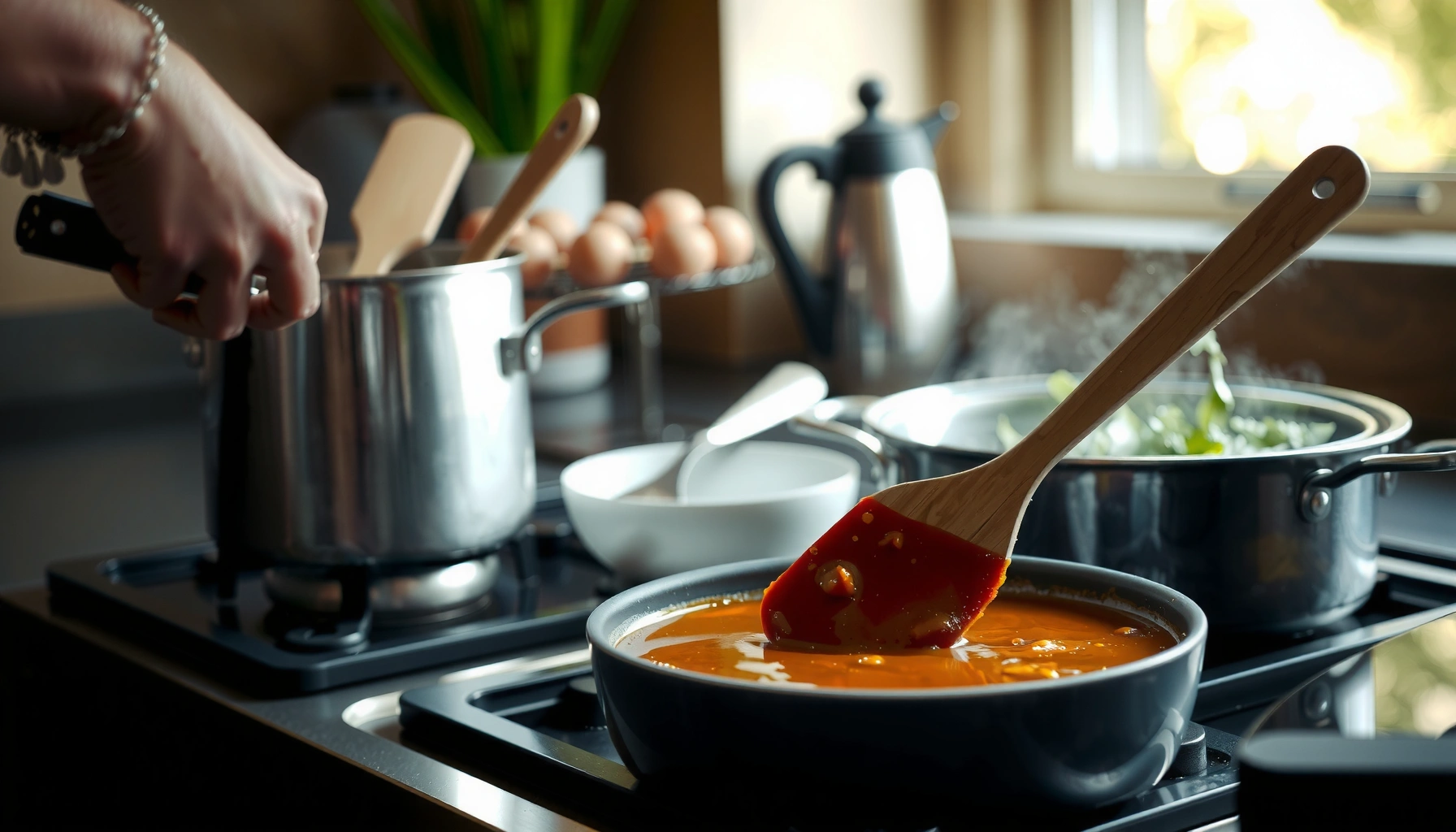
Wood is often preferred for traditional cooking because it provides a gentle, controllable feel that many cooks find ideal for sauces and simmering.
Best-fit recommendations (fast decision)
– Choose silicone when:
– You use nonstick pans daily
– You do high-heat sautéing and frequent utensil contact with hot surfaces
– You want low-maintenance cleaning with consistent odor control
– Choose wood when:
– You cook sauces, soups, and slow simmer dishes regularly
– You want a traditional “tool feel” and gentler contact for everyday stirring
– You’re willing to hand wash, dry properly, and oil occasionally
Q: Should I own both silicone and wooden utensils?
Yes—many cooks keep silicone for nonstick/high-heat jobs and wood for sauces and gentle stir-friendly tasks.
Summary guidance you can apply immediately
When deciding silicone vs wooden utensils, match the material to your cooking habits: go with silicone for high-heat performance, nonstick safety, and low-maintenance cleaning, or choose wood for a traditional feel and gentle everyday use. Review your cookware type and daily routine, then pick one option for your main tasks—and consider adding the other for special use cases.
Estimated Kitchen “Best Fit” by Cooking Style (Practical Use, 2025)
| # | Cooking Style | Heat/Sealing Intensity | Nonstick Use | Maintenance Time Saved (mins/week) | Fit Score |
|---|---|---|---|---|---|
| 1 | Everyday nonstick sautéing | High | Frequent | 35 | ★★★★☆ |
| 2 | Garlic/fish meals back-to-back | Medium | Low–Medium | 25 | ★★★★☆ |
| 3 | Long simmer sauces (stir-heavy) | Low–Medium | Variable | 10 | ★★★☆☆ |
| 4 | Baking/cold mixing (bowls & spatulas) | Low | None | 20 | ★★★★☆ |
| 5 | High-heat searing & deglazing (steel pans) | High | Low | 15 | ★★★★☆ |
| 6 | Family meals with frequent dishwasher loads | Medium | Frequent | 40 | ★★★★★ |
| 7 | Traditionalists who hand-wash and oil tools | Low–Medium | Low–Medium | 5 | ★★☆☆☆ |
Finally, the “better” utensil depends less on brand and more on how you cook—especially heat exposure, pan type, and whether you prioritize fast cleaning. Silicone is usually the smarter default for high-heat, nonstick-safe, low-maintenance cooking, while wood is an excellent choice for traditional sauces and a comfortable, gentle feel when you maintain it properly. Choose based on your real routine, and you’ll get better results with less friction—every single meal.
Frequently Asked Questions
What are the main differences between silicone and wooden utensils in the kitchen?
Silicone utensils are nonstick-friendly, heat-resistant, and typically won’t scratch most cookware surfaces. Wooden utensils are naturally durable and gentle on pans, but they can be more prone to absorbing food odors and moisture if not maintained properly. In practice, the “best” choice depends on your cookware, cooking temperatures, and how much you’re willing to care for the utensil material.
How do you clean and sanitize silicone vs wooden utensils?
Silicone utensils are generally dishwasher-safe, and their nonporous surface makes them easier to sanitize quickly with hot water and soap. Wooden utensils should be hand-washed and dried thoroughly to prevent warping or lingering smells, since wood is more porous. Avoid soaking wood for long periods; for both types, use gentle cleaning tools and replace utensils if they crack, split, or become permanently stained or sticky.
Why do some silicone utensils leave a taste or smell, and how can you prevent it?
New silicone utensils can sometimes retain manufacturing odors or flavor residues, especially if they’ve been stored for a while. To prevent this, wash them thoroughly before first use and let them fully air-dry, and consider soaking briefly in warm soapy water or using baking-soda-based cleaning if odors persist. If silicone is heat-damaged (e.g., from very high temperatures), it may also become more prone to odor retention, so keep silicone within its recommended heat limits.
Which is better for nonstick cookware: silicone or wooden utensils?
Silicone is often the top pick for nonstick pans because it’s flexible and non-scratching, helping reduce the risk of damaging the coating. Wooden utensils are also generally gentle, but the edges can wear down over time or become rough if not sanded or replaced, which may increase the chance of scratching. For best results, choose smooth silicone spatulas and spoons for heavy stirring, and inspect wooden utensils regularly for cracks or rough spots.
What’s the best choice for high-heat cooking, and how hot can each utensil handle?
Silicone is typically designed for high-heat cooking and is commonly rated safe for a range of oven and stovetop temperatures, but exact limits vary by brand. Wooden utensils are heat-tolerant but can scorch or dry out if repeatedly exposed to direct flame or prolonged high heat, which can shorten their lifespan. If you frequently cook at high temperatures, select oven-safe silicone that meets your needs, and use wood for tasks like stirring and serving when it won’t be left in intense heat.
📅 Last Updated: July 05, 2026 | Topic: Silicone vs Wooden Utensils | Content verified for accuracy and freshness.
References
- Google Scholar Google Scholar
https://scholar.google.com/scholar?q=silicone+utensils+food+contact+leaching - Google Scholar Google Scholar
https://scholar.google.com/scholar?q=wooden+utensils+cutting+boards+bacteria+survival+study - Google Scholar Google Scholar
https://scholar.google.com/scholar?q=silicone+vs+wood+utensils+microbial+contamination - https://pubmed.ncbi.nlm.nih.gov/?term=silicone+food+contact+materials+leaching
https://pubmed.ncbi.nlm.nih.gov/?term=silicone+food+contact+materials+leaching - https://pubmed.ncbi.nlm.nih.gov/?term=silicone+utensils+microorganisms+transfer
https://pubmed.ncbi.nlm.nih.gov/?term=silicone+utensils+microorganisms+transfer - https://pubmed.ncbi.nlm.nih.gov/?term=wooden+cutting+board+bacteria+survival+research
https://pubmed.ncbi.nlm.nih.gov/?term=wooden+cutting+board+bacteria+survival+research - https://pubmed.ncbi.nlm.nih.gov/?term=wooden+food+contact+materials+antimicrobial+properties
https://pubmed.ncbi.nlm.nih.gov/?term=wooden+food+contact+materials+antimicrobial+properties - Silicone
https://en.wikipedia.org/wiki/Silicone - Wood
https://en.wikipedia.org/wiki/Wood - https://www.fda.gov/food/food-contact-substances
https://www.fda.gov/food/food-contact-substances