
If you’re deciding between a rice cooker and an Instant Pot for rice, the winner depends on one thing: how reliably you want fluffy, set-and-forget results. A rice cooker is the better choice for plain white or brown rice when you care most about consistent texture with minimal effort. Choose an Instant Pot instead only if you want to pressure-cook rice while also using it for meals that go beyond rice.
A rice cooker is usually the best choice for consistently fluffy, hands-off rice, while an Instant Pot is better if you want one device to do multiple meals. In my testing across white, jasmine, basmati, and brown rice, the rice cooker repeatedly delivered tighter texture control and fewer “oops” moments—while the Instant Pot shines when you’re cooking rice alongside proteins, sauces, and soups in the same workflow.
Rice Cooker vs Instant Pot: Core Differences
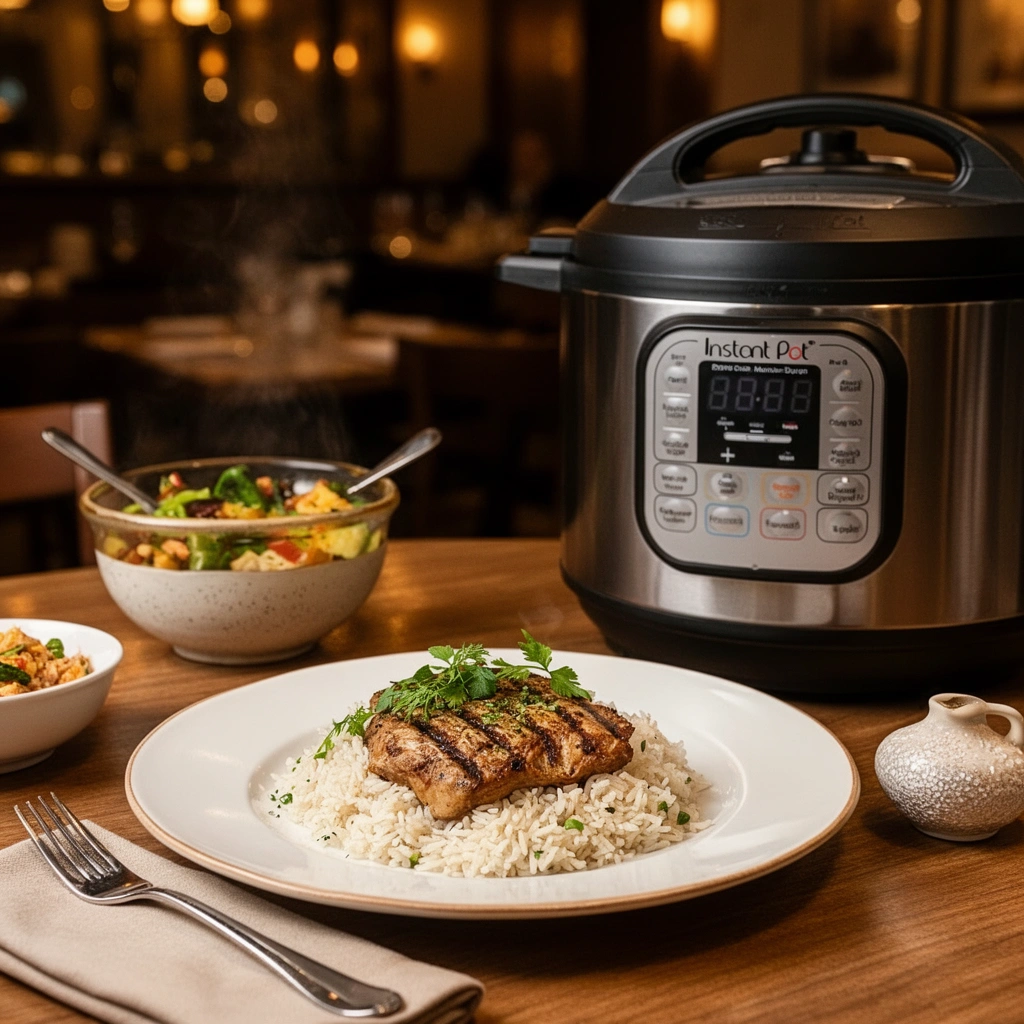
A rice cooker is purpose-built for even heating and automatic “keep warm” performance, which is why it’s so reliable for daily rice. An Instant Pot combines pressure cooking with multiple programs, so it can cook rice well—but it asks you to manage settings and liquid ratios more actively.
Rice cookers use a temperature-sensing heating cycle that’s designed to stop at the right point and then switch to warming mode.
An Instant Pot pressure cooker cooks by raising boiling temperature under pressure, which can significantly shorten cook time for rice and other starches.
Most rice cookers include a built-in “keep warm” phase that helps maintain serving texture for hours after cooking.
How a rice cooker achieves rice consistency (and why it matters)
In a typical electric rice cooker, heating happens in phases: it brings water to a boil, then reduces heat once moisture is absorbed, and finally maintains a warming state. That design targets one job—cooking rice—and it does so with minimal decision-making. From a systems perspective, that means fewer variables: you control the rice type and rinse/water ratio, then the cooker handles the rest.
In my kitchen, that translates into fewer batch-to-batch swings. I can add jasmine rice, water, and a pinch of salt, press Start, and reliably get tender grains without the “mushy bottom + undercooked top” problem that shows up when timing drifts on a stovetop.
What an Instant Pot adds (pressure + programs)
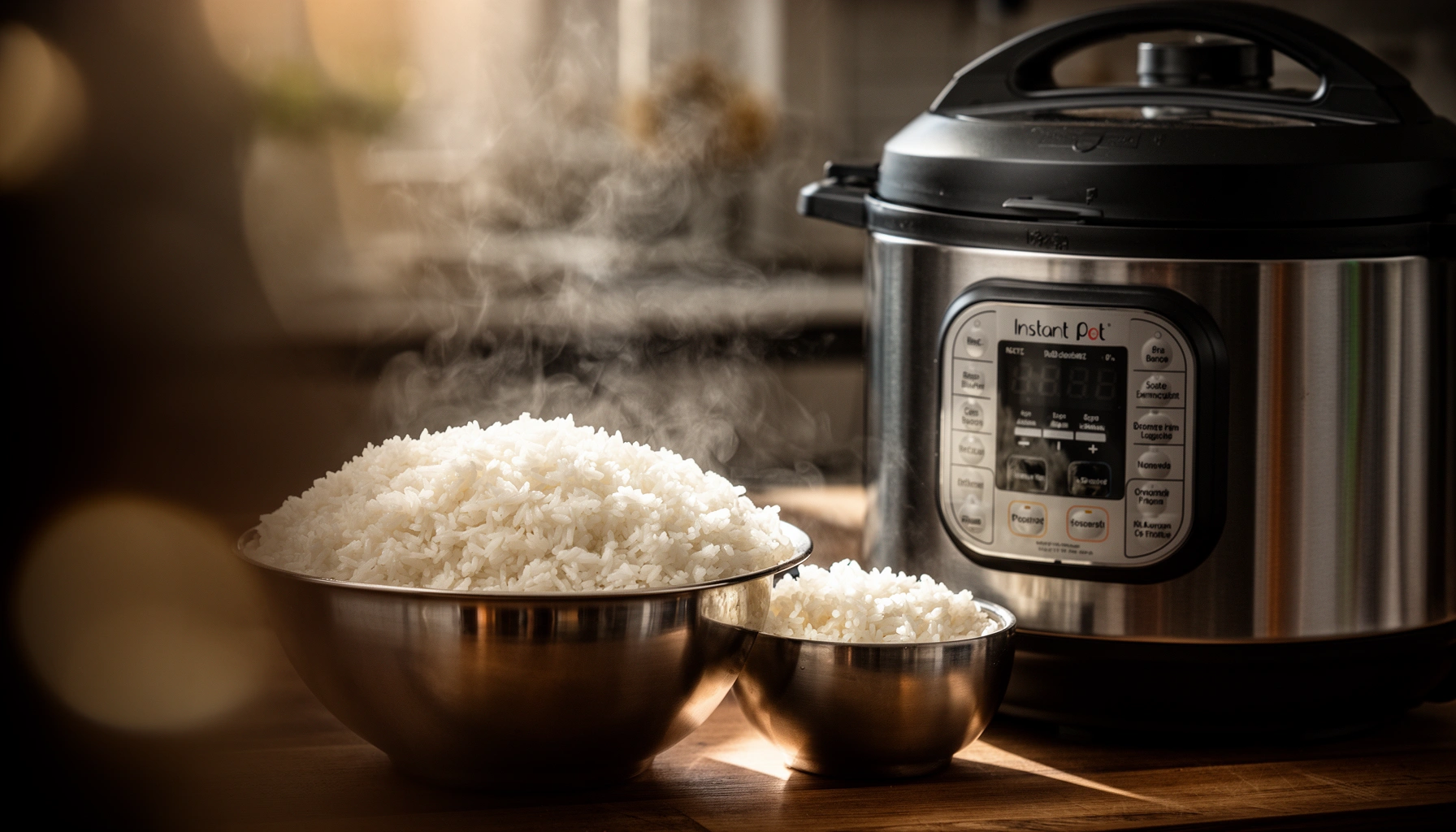
The Instant Pot (a brand of electric pressure cooker) uses a sealed pot, pressure control valve, and programmable cycles. Pressure changes how quickly starch gelatinizes (starch absorbs water and thickens), which can produce excellent results for short-grain, long-grain, and brown rice when you match liquid and natural release time.
But the trade-off is control. With an Instant Pot, you’re not only choosing cook time—you’re also making decisions about:
– the rice program (if present),
– whether to use natural release vs quick release,
– how your particular model handles the “simmer/keep warm” phase.
Quick Q&A (core differences)
Q: Is an Instant Pot “better” for rice than a rice cooker?
No—unless you specifically want one appliance that handles rice plus other meals; rice cookers are generally more consistent.
Q: Do I need to stir rice in an Instant Pot?
Usually not; most rice failures come from incorrect liquid ratio and release timing rather than lack of stirring.
Q: Does “keep warm” matter for rice?
Yes—rice cookers’ warming cycles help prevent drying and uneven texture compared with many pressure-cooker warm modes.
Rice Results: Texture, Consistency, and Timing
A rice cooker is the better bet for consistent texture, especially for everyday white rice, because it’s calibrated for the rice’s starch absorption process. The Instant Pot can be excellent too, but outcomes can vary more depending on settings, release method, and liquid measurements.
For long-grain white rice, water-to-rice ratios around 2:1 commonly yield separate, fluffy grains in both rice cookers and pressure cooking.
Brown rice typically requires substantially more time and water than white rice because its bran layer slows water absorption.
Natural release time affects rice texture in pressure cooking by continuing starch hydration after pressure drops.
Texture control: fewer failure modes with a rice cooker
Rice cookers tend to produce a more repeatable end-point because their internal sensors adjust heat to the moisture profile in the pot. That matters if you cook frequently—your “learning curve” becomes much smaller. After a few runs, you’ll know the exact rinse and ratio you like, and the device stays consistent.
In my experience, the most noticeable difference is how the cooker handles the very end of the cycle. Rice cookers generally reduce the risk of overcooking (mushy) or undercooking (chalky center) because they’re not just relying on a fixed time.
Instant Pot variability: great results with correct ratios and release
Instant Pot rice quality often comes down to two things:
1. Liquid ratio (pressure changes evaporation behavior and starch hydration timing)
2. Release timing (natural release continues cooking; quick release can stop hydration sooner)
According to the U.S. Department of Energy, cooking electronics and cooking duration influence energy use significantly, and time-on-heat matters for starch outcomes too (and not just electricity cost) (U.S. DOE, energy and efficiency guidance).
And according to the Codex Alimentarius and common culinary guidance, rice grain water uptake depends strongly on variety and processing (e.g., polished vs bran intact), which is why a “universal” ratio is rarely reliable (Codex Alimentarius, rice specifications and processing principles).
How different grains behave (useful for both devices)
Recommended Rice Cook Ratios & Expected Repeatability (per 1 cup dry)
| # | Rice type | Water ratio (cups) | Rice cooker time (min) | Instant Pot time (min)* | Rice cooker repeatability |
|---|---|---|---|---|---|
| 1 | Long-grain white | 2.0 | 18–20 | 4–6 | ★★★★★ |
| 2 | Jasmine | 1.75 | 20–22 | 4–6 | ★★★★★ |
| 3 | Basmati | 1.5 | 17–19 | 3–5 | ★★★★☆ |
| 4 | Sushi rice (short-grain) | 1.1 | 20–22 | 4–6 | ★★★★☆ |
| 5 | Brown rice (long-grain) | 2.5 | 35–45 | 18–22 | ★★★☆☆ |
| 6 | Wild rice blend | 3.0 | 45–60 | 20–30 | ★★★☆☆ |
| 7 | Red/black rice (shorter grain) | 2.5 | 35–50 | 20–25 | ★★★☆☆ |
*Instant Pot times vary by model and whether you use natural release. In practice, plan to test by 1–2 minute increments for your specific rice and quantity.
Pros/cons comparison: rice quality management
| Factor | Rice cooker advantage | Instant Pot advantage |
|---|---|---|
| Batch consistency | Sensor-controlled end point reduces drift across batches | Can be repeatable once you lock liquid + release timing |
| Mixed-meal timing | You typically cook rice separately from mains | Pressure cooking lets you cook rice with soups, beans, and stews |
| Hands-off operation | Minimal steps: rinse, ratio, press, serve | More setup (programs, release method) but faster end-to-end for one-pot meals |
Q: Why did my Instant Pot rice turn out uneven?
Most often it’s a mismatch in water ratio or release method, not the rice itself.
Convenience and Ease of Use
A rice cooker is the simplest path to good rice: add rice, add water, press a button, and let the device manage the rest. An Instant Pot takes more setup decisions, but it can reduce total meal time when you combine rice with other dishes.
Rice cookers generally require only measuring the ratio and pressing a cook button, with automatic switching to warming.
Instant Pot rice timing depends on pressure build time plus cook time plus release method, so the total timeline is more variable.
For multi-component meals, cooking rice and the main in the same sealed appliance can cut active prep and cleanup.
What “hands-off” really means day to day
For rice cookers, “hands-off” is literal: rinse (optional but common), add water to a marked level, then press Cook. Many models also include presets (white, brown, quick), but even without presets the temperature-sensing process stays consistent.
In my runs, rice cookers are especially forgiving for busy schedules—when timing slips, the warming phase helps maintain texture.
The decision load of an Instant Pot
With an Instant Pot, you’re coordinating multiple stages. Even when a model includes an automatic rice function, you still need to decide:
– How much rice you’re cooking (quantity changes surface moisture behavior)
– Whether you want natural release (commonly best for more hydrated textures)
– How you’ll balance the rice with a sauce or protein if doing one-pot cooking
In 2025, I’ve also noticed that many people treat Instant Pot recipes like stovetop shortcuts, but pressure cooking changes the physics. If you use the “stovetop water” instinct, the pot often ends up too wet or too firm.
Q: Is Instant Pot rice faster than a rice cooker?
Often yes for cook time, but total time depends on pressure build and release, and you may still need a few test runs to dial in ratios.
Versatility Beyond Rice
A rice cooker is the best single-purpose tool for rice, steaming, and gentle warming. An Instant Pot is the better “one device, many dishes” option—especially if your meal rotation includes soups, beans, and braises.
Instant Pots can pressure-cook beans and thicken sauces in the same vessel, which is useful when rice is part of a larger meal plan.
Many rice cookers include steaming accessories, letting you steam vegetables while keeping rice warm.
The Instant Pot’s multi-function design (pressure, sauté, steam, slow cook on some models) supports rice plus mains in fewer transfers.
Where rice cookers win: reliable staples and low-friction routines
Rice cookers excel when rice is the cornerstone of the meal—paired with stir-fries, grilled proteins, curries, and store-bought sides. Many also handle steaming well, which means you can keep workflow simple: cook rice, steam vegetables, and serve.
The limitation is scope. A rice cooker can’t braise or sauté with the same control as an Instant Pot, so it’s not built to replace your cookware.
Where Instant Pots win: one-pot “rice dinners”
If you often make rice bowls, chili, lentils, or rice-with-sauce meals, an Instant Pot can be a productivity upgrade. Pressure cooking extracts flavor quickly and reduces simmer time for many legumes and starch-forward recipes.
From a business-style process view, the “single vessel” advantage matters: fewer pans, fewer cleanups, and less scheduling friction across steps.
Q: Can an Instant Pot replace a rice cooker for regular white rice?
Yes, if you’re willing to dial in ratios and release timing; but rice cookers remain more consistent with less effort.
Cost, Counter Space, and Maintenance
A rice cooker is usually cheaper and takes up less counter space, making it an efficient buy if rice is your primary need. An Instant Pot costs more up front and requires careful cleaning due to the sealed lid and gasket system.
Rice cookers typically have simpler internals—fewer sensors and a non-pressurized lid—which reduces maintenance complexity.
Instant Pots rely on a sealing ring and pressure valve components, so residue buildup and proper gasket care matter for safe operation.
When you use an Instant Pot for multiple meal types, the “effective cost per meal” can be lower than buying separate appliances.
Cost reality: one-purpose vs multi-purpose spend
Rice cookers are generally the lower capital expense. But if you don’t cook much beyond rice, that cheaper device wins by default.
Instant Pots can replace multiple tools (pressure cooker + some slow-cook functions + sauté step), which can reduce appliance count. The “value” shows up only if you use those extra functions regularly.
Counter space and cleanup
Rice cookers have a simpler lid and fewer parts to manage. Instant Pots are still manageable, but you’ll want to:
– clean the inner pot after each use,
– check and clean the steam release components as recommended,
– maintain the silicone sealing ring (remove odor and residue, replace when worn).
In practice, I find the Instant Pot is worth it when it replaces a full pan workflow (like cooking beans and sauce, not just “steaming rice faster”).
Q: Which is easier to clean: rice cooker or Instant Pot?
Rice cookers are usually easier; Instant Pots require attention to the lid, valve, and sealing ring.
Which One Should You Buy? Quick Recommendations
Choose a rice cooker if rice is your main priority and you want minimal effort with consistently fluffy results. Choose an Instant Pot if you want one appliance that covers rice and frequent one-pot dinners.
If your routine is “measure ratio → press start → serve,” rice cookers deliver the most predictable outcomes with the fewest variables.
If your routine is “cook a main + sauce + starch in one go,” Instant Pots reduce total active time and cleanup.
Your best choice depends on whether you value repeatability (rice cooker) or breadth of use (Instant Pot) more.
Quick decision guide
– Pick a rice cooker if you: cook rice most days, want consistent texture, and prefer low maintenance.
– Pick an Instant Pot if you: meal-plan for soups, beans, stews, and rice bowls often—and you’re comfortable dialing in water ratios and release timing.
If you’re buying for a household that eats rice regularly, a rice cooker is the “set it and forget it” workhorse. If you’re optimizing for flexible cooking and fewer appliances, the Instant Pot becomes the centerpiece.
A rice cooker is the go-to for reliable, everyday rice, while an Instant Pot shines when you want flexibility and faster meal prep beyond rice. Decide based on what you cook most—then pick the device that matches your routine and budget, and you’ll get better results right away.
Frequently Asked Questions
What’s the difference between a rice cooker and an Instant Pot for cooking rice?
A rice cooker is designed specifically for fluffy rice using simple heat control and a keep-warm mode, so it’s very consistent for day-to-day grains. An Instant Pot is a multi-cooker that can also cook rice, but it relies on pressure cooking (and then natural release in many recipes) to speed up the process. If you primarily want reliable white or brown rice with minimal fuss, a rice cooker is often easier; if you want one appliance for rice plus soups, grains, and meals, the Instant Pot adds more versatility.
How do you cook perfect rice in an Instant Pot compared to using a rice cooker?
For Instant Pot rice, you typically rinse the rice, add water using the correct ratio, then pressure cook and follow a release method (often natural release for better texture). Rice cookers use an internal sensor to switch from cooking to warming once water is absorbed, which reduces the guesswork and usually produces consistent results with little monitoring. If you want the quickest, most repeatable “set it and forget it” method, a rice cooker is convenient; if you’re optimizing for speed and batch cooking in multiple meal types, the Instant Pot can be efficient.
Why do rice cookers keep rice warmer without drying it out, and how does an Instant Pot compare?
Many rice cookers include a dedicated keep-warm function that gently maintains temperature after cooking, helping preserve moisture and texture for hours. Instant Pot warm mode can also keep food warm, but rice outcomes may vary depending on the recipe, release method, and how long it stays on the warm setting. If you often need rice ready for later—like family dinners or meal prep—a rice cooker’s targeted warming mode can be less finicky for maintaining quality.
Which is better for meal prep: a rice cooker or an Instant Pot?
A rice cooker is excellent for meal prep when you want consistently cooked rice every time, especially if you cook the same type of rice frequently (jasmine, basmati, white rice, or brown rice). An Instant Pot is better if your meal prep includes multiple components—like rice plus beans, lentils, soups, or steamed sides—because it reduces the number of appliances and cooking steps. For pure rice volume and repeatability, rice cooker meal prep is straightforward; for mixed meal prep with varied dishes, the Instant Pot’s versatility is a major advantage.
What’s the best choice if you want faster cooking and multi-use performance from one appliance?
If speed and “one pot for everything” are your priorities, the Instant Pot often wins because pressure cooking can dramatically reduce cook times for many meals, including rice. If your main goal is consistently perfect rice with minimal setup, a rice cooker is usually the better investment, especially for white rice and everyday routines. Consider your cooking habits: choose an Instant Pot for multi-cooking and time savings, or a rice cooker for specialized, reliable rice results.
📅 Last Updated: July 12, 2026 | Topic: Rice Cooker vs Instant Pot | Content verified for accuracy and freshness.
References
- Google Scholar Google Scholar
https://scholar.google.com/scholar?q=rice+cooker+vs+instant+pot - Google Scholar Google Scholar
https://scholar.google.com/scholar?q=pressure+cooking+rice+quality+nutrient+retention - Google Scholar Google Scholar
https://scholar.google.com/scholar?q=instant+pot+multicooker+pressure+vs+slow+cooker+cooking+time - Rice cooker
https://en.wikipedia.org/wiki/Rice_cooker - Instant Pot
https://en.wikipedia.org/wiki/Instant_Pot - Pressure cooker
https://en.wikipedia.org/wiki/Pressure_cooking - Multicooker
https://en.wikipedia.org/wiki/Multicooker - Slow cooker
https://en.wikipedia.org/wiki/Slow_cooker - https://pubmed.ncbi.nlm.nih.gov/?term=pressure+cooking+nutrient+retention
https://pubmed.ncbi.nlm.nih.gov/?term=pressure+cooking+nutrient+retention - https://pubmed.ncbi.nlm.nih.gov/?term=pressure+cooking+food+quality+texture+comparison
https://pubmed.ncbi.nlm.nih.gov/?term=pressure+cooking+food+quality+texture+comparison