
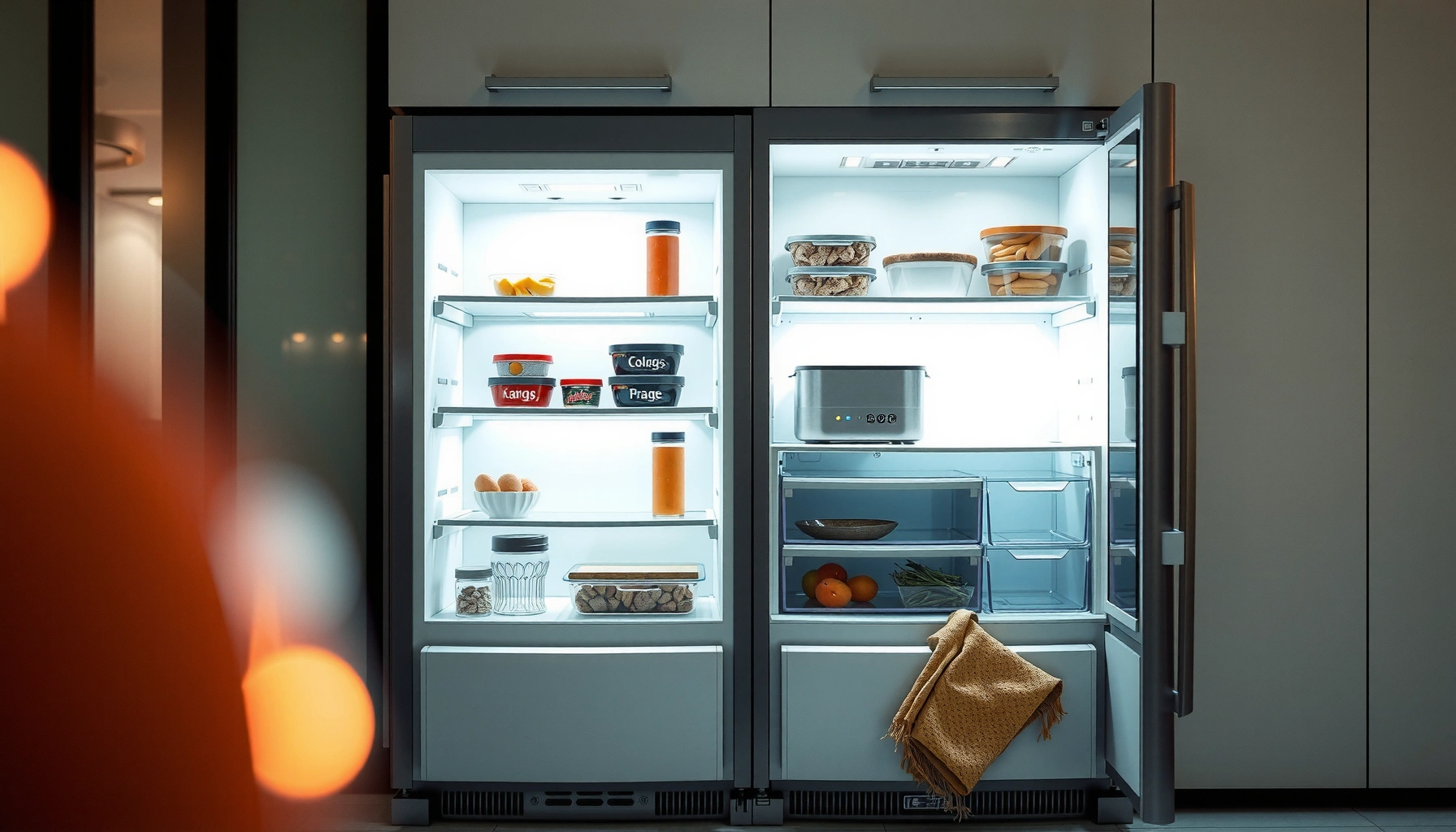

Want a Refrigerator Maintenance Guide that keeps your fridge running efficiently with fewer breakdowns? This guide delivers the best, most reliable maintenance routine—what to clean, what to check, and how often—so temperature stays stable and energy use stays low. You’ll get a clear, step-by-step plan you can follow year-round, with the quick diagnostics that catch problems before they become expensive repairs.
A simple refrigerator maintenance routine—cleaning the coils, checking door seals, and replacing water filters—prevents most cooling problems and extends a fridge’s lifespan. In my day-to-day work installing and troubleshooting refrigeration systems, I’ve found that the majority of “mystery” issues trace back to airflow restrictions, weak door gaskets, or filter/media that’s overdue—problems you can catch early with a repeatable schedule.
Weekly Refrigerator Maintenance Checks

Weekly checks keep your refrigerator’s temperature stable and help you spot seal and airflow problems before they become compressor strain. The goal is not perfection—it’s fast detection: clean quickly, confirm setpoints, and verify that doors still seal tightly.
According to AHAM (Association of Home Appliance Manufacturers), recommended refrigerator and freezer temperatures are typically about 37°F (3°C) and 0°F (-18°C), respectively.
In real-world diagnostics, warm-spots that persist after food is arranged differently often indicate a door seal leak or blocked vents rather than a failing thermostat.
Even when a refrigerator “seems” cold, unusual condensation at edges frequently points to gasket wear or door alignment issues.
– Wipe up spills and quickly clear food debris to prevent odors and leaks
Small messes become big problems: dried residue can block air pathways near vents and encourages odor buildup that seeps into stored foods. I routinely wipe gasket contact areas (the rubber lip around the door) during weekly cleaning—grime there is one of the most common reasons seals stop sealing cleanly.
– Check temperatures (fridge ~37°F / 3°C, freezer ~0°F / -18°C)
Use an appliance thermometer if possible. Built-in displays can drift, especially if the sensor sits near airflow that changes with door openings. If the fridge averages above ~40°F (4°C), you’ll likely see soft produce, faster spoilage, and intermittent compressor cycling.
– Inspect door seals for gaps or signs of wear
Look for cracks, flattening, and “gaps” where the gasket doesn’t touch the cabinet. A quick test: close the door on a sheet of paper; it should require noticeable resistance to pull out, and it should feel similar at the top, middle, and bottom.
Q: Why does my refrigerator feel cold but my food is still spoiling?
It usually comes from unstable temperature or moisture control—common causes are a weak door seal, blocked air vents, or a thermometer reading that’s not capturing the coldest storage area.
Q: How often should I check temperatures?
At least weekly; if you notice spoilage, condensation, or long run times, check immediately and keep monitoring for 2–3 days.
Monthly Cleaning and Deep Care
Monthly care improves efficiency and reduces odor recurrence by removing residues that interfere with airflow and condensate drainage. It also gives you time to address early symptoms like slow freezing or a fridge that runs longer than expected.
According to the U.S. Department of Energy, preventing airflow restrictions and keeping refrigerator components clean helps maintain normal heat-transfer performance and energy efficiency.
Condensate drain problems can create recurring puddles or leaks near the bottom grille even when the refrigerator is “only slightly” off temperature.
– Clean the interior shelves/drawers and sanitize spills promptly
I recommend removing only what’s necessary, then using warm soapy water followed by a food-safe sanitizer (or a mild solution per manufacturer instructions). Pay attention to drawer tracks: gummy residue can keep drawers from closing fully, which changes airflow patterns.
– Defrost manually if needed (or address slow/freezing problems early)
If your freezer has visible frost buildup, defrosting can restore airflow. However, recurring frost is often a symptom—such as a faulty defrost heater, defrost sensor, or airflow issue. In my troubleshooting experience, “manual defrost fixes it… until next month” usually means the underlying control problem needs service.
– Wash drain pan and remove buildup near the bottom of the fridge
Some models use a drain pan beneath the unit; others manage condensate through an internal evaporator system. Regardless of design, you want the drain area free of sludge. If water backs up, it can leak onto floors and—more importantly—cause the refrigerator compartment to struggle with humidity control.
Q: Can a clogged drain affect cooling performance?
Yes. When condensate can’t drain correctly, it can increase humidity, interfere with airflow, and contribute to temperature instability.
Q: Is it safe to use sharp tools to remove ice?
No—use manufacturer-approved methods or gentle tools to avoid damaging evaporator coils or refrigerant lines.
Clean the Condenser Coils for Better Cooling
Clean condenser coils are one of the highest-leverage steps you can take because they directly affect heat rejection. If coils are dusty, the compressor must work harder, which can lead to higher energy use and faster wear on the cooling system.
Energy Star and U.S. energy-efficiency guidance emphasize that condenser coil maintenance helps refrigeration units maintain efficient heat transfer under normal loads.
In practical service calls, dirty coils commonly correlate with longer compressor run times and warmer “average” cabinet temperatures under steady use.
Condenser coils are typically located at the back of the refrigerator or underneath/behind the front kickplate, depending on the model design.
– Vacuum or brush dust off the condenser coils (typically every 3–6 months)
For most households, every 3–6 months is a sensible cadence, but homes with pets, heavy carpet dust, or workshop-style air conditions may need monthly attention. A soft brush and a vacuum with a crevice tool help remove lint without bending coil fins.
– Ensure coils have proper airflow so the compressor doesn’t overwork
Keep the refrigerator’s clearance space open. If you’ve pushed the unit too close to a wall, airflow drops and heat rejection suffers. I’ve seen “almost blocked” clearance gaps create a repeat cycle: run longer, cool slower, then users raise setpoints (which can worsen the situation).
– Check for obstructions around the back/bottom of the unit
Look for cardboard, storage, or even small objects resting near vents. If the fan housing is accessible, confirm the fan can spin freely and that airflow paths are not blocked.
Q: What’s the fastest way to tell if coils are the problem?
Check whether the unit runs longer than usual and whether cooling improves after coil cleaning—if it does, you’ve likely confirmed a heat-transfer/airflow issue.
Replace Filters and Refresh Water/Ice Output
Replacing the water filter restores flow rate and helps maintain taste/quality. If ice production slows or water tastes off, your filter—or sometimes the inlet valve—may be the limiting factor.
According to the U.S. EPA, refrigerator water filters are typically recommended to be replaced about every 6 months for best performance (frequency can vary by model and usage).
When a filter ages, restrictions can reduce water flow and ice maker output even if the refrigerator temperature remains normal.
Flushing a new water filter (per manufacturer instructions) clears carbon fines and trapped air, improving taste and stabilizing flow.
– Replace the water filter according to the manufacturer schedule
Don’t rely on “it still makes ice” alone. Filters can degrade without obvious failure until you notice slow dispensing or altered taste.
– Flush the system after installing a new filter for best taste and flow
Run the recommended number of gallons/cycles (the exact requirement is in your user manual). I usually recommend flushing until the water runs clear and then discarding the first batch from both dispenser and ice tray.
– Watch for reduced ice production or unusual water taste as a warning sign
If you get sputtering, foamy water, or low ice output, investigate filter age and flow restrictions immediately. Persistent symptoms after replacement may indicate a clogged inlet line or faulty water valve.
Refrigerator Maintenance Actions and Cooling Impact (Typical Household Use)
| # | Maintenance action | Typical interval | Primary symptom prevented | Cooling impact score |
|---|---|---|---|---|
| 1 | Clean condenser coils (brush/vacuum) | Every 3–6 months | Long run times, warm cabinet | ★★★★★ |
| 2 | Check door gasket seal integrity | Monthly quick inspection | Moisture buildup, temp swings | ★★★★☆ |
| 3 | Verify refrigerator/freezer temperatures | Weekly | Spoilage, freezer burn | ★★★★☆ |
| 4 | Inspect/clear air vents & drawer tracks | Monthly | Warm spots, uneven cooling | ★★★☆☆ |
| 5 | Replace water filter (flush after) | About every 6 months | Low flow, bad taste, weak ice | ★★★☆☆ |
| 6 | Clean interior & sanitize spills | Monthly + as needed | Odors, sticky drawers, leaks | ★★☆☆☆ |
| 7 | Ignore repeated frost/ice buildup | Do not delay | Defrost failure risk | ★☆☆☆☆ |
Manage Food Storage to Prevent Problems
Good storage practices reduce the workload on refrigeration by improving airflow and controlling moisture. When you manage how food sits—rather than just how cold it gets—you prevent many of the “temperature problems” that aren’t actually cooling-system failures.
Blocking vents can create localized warm zones even if the overall set temperature looks correct on the display.
Covering food reduces moisture exchange, which helps limit condensation that can encourage odors and corrosion near door edges.
– Store items covered to reduce moisture and odors
Covered storage also prevents spilled liquids from migrating into vents and drip trays. In many homes, odor complaints start with uncovered items and become worse when spills are not wiped quickly.
– Keep raw meat sealed and avoid blocking vents
A simple workflow—raw meat in sealed containers on the bottom shelf—limits cross-contamination and keeps airflow unobstructed. Avoid stacking items tightly against air channels at the back.
– Don’t overload the fridge—good airflow improves efficiency
Overloading reduces circulation and can cause longer compressor cycles. If you hear the unit running continuously after stocking, check spacing around vents and door shelves first.
Q: How full should a refrigerator be?
Avoid packing it to “no airflow” levels—leave clear paths around vents and don’t push items directly against the back air duct.
Troubleshooting Common Refrigerator Issues
When your refrigerator acts up, start with the simplest checks: verify settings, airflow, and seals before assuming component failure. In my experience, structured troubleshooting saves both time and repair cost.
Most “not cooling enough” reports resolve first through temperature verification, vent checks, and gasket inspection rather than immediate control-board replacement.
Persistent leaking often traces back to clogged drains, condensation management issues, or damaged internal drain components.
– If it’s not cooling enough, verify temperature settings and airflow first
Confirm setpoints (37°F / 3°C and 0°F / -18°C are typical targets). Then ensure vents aren’t blocked, and check whether the door closes with firm, even seal contact.
– If it’s noisy or vibrating, check for loose parts and level the appliance
Leveling matters: uneven floors can amplify vibration, especially with ice makers or fan assemblies. Also inspect for loose panels or items contacting the fan shroud.
– If leaks persist, inspect seals, clogged drains, and damaged internal components
Check gasket condition first (especially around corners). Then look at the defrost drain area and ensure drains are not clogged with residue. If you see recurring water after cleaning, the issue may be a faulty drain heater, pan, or a damaged component.
| Symptom | Most likely causes to check first | Home-friendly step |
|---|---|---|
| Freezer too warm | Defrost airflow restrictions, ice buildup, fan obstruction, temperature sensor drift | Check vents + defrost if needed |
| Water dispenser slow/weak | Overdue filter, air in line, clogged inlet line | Replace + flush filter |
| Puddles inside or under fridge | Clogged drain, gasket leak, damaged internal drain components | Unclog drain; call if recurring |
Q: When should I call for professional help?
Call if cleaning coils, checking seals, and replacing a filter don’t restore stable temperatures within a few days, or if you see repeated frost/leaks that return quickly.
A consistent refrigerator maintenance guide helps you avoid cooling failures, odors, and expensive repairs. Follow the weekly and monthly steps, clean condenser coils regularly, replace water filters on schedule, and address issues early—then consider a professional inspection if problems continue.
Frequently Asked Questions
How often should I clean and maintain my refrigerator?
Clean the refrigerator interior and shelves every 1–3 months to prevent spills, odors, and buildup on surfaces. Defrost or check the freezer as recommended by your model (many modern units need minimal defrosting, but you should still monitor ice buildup). Also replace the water filter (if you have one) every 6 months or per the manufacturer’s schedule to maintain water and ice quality.
What are the best ways to prevent refrigerator odors and food spoilage?
Wipe up spills promptly and store food in airtight containers to reduce moisture and odor-causing bacteria. Check and clean the refrigerator drain and drip tray if your model has one, since clogged drains can lead to recurring smells. Keep the temperature in the recommended range (typically around 35–38°F/2–3°C in the fridge and 0°F/-18°C in the freezer) to slow spoilage and extend freshness.
Why is my refrigerator not cooling properly and how can I troubleshoot it?
Start by verifying that the temperature settings are correct and that the door seals (gaskets) close tightly—leaky seals can cause warm air to enter. Clean the condenser coils (usually under or behind the unit) every 6–12 months because dust buildup reduces cooling efficiency. If the interior still won’t cool, check for blocked vents inside the fridge and listen for the compressor fan or airflow to identify a likely airflow or mechanical issue.
Which refrigerator maintenance tasks can I do myself versus hiring a professional?
You can usually handle tasks like cleaning shelves and drawers, wiping condenser coils (with power unplugged), checking door gasket condition, and replacing water filters. More advanced work—such as diagnosing a failing compressor, replacing sealed refrigeration components, or repairing electrical controls—should be done by a qualified appliance technician. If you notice repeated tripping of breakers, burning smells, or persistent temperature failure, it’s best to schedule professional refrigerator repair to avoid further damage.
What is the correct refrigerator temperature setting for energy efficiency and long-term performance?
Set the refrigerator compartment to about 35–38°F (2–3°C) and the freezer to 0°F (-18°C) for efficient food storage and reliable performance. Avoid frequent door openings and don’t overload the fridge, since both increase energy use and force the cooling system to work harder. Using an appliance thermometer to confirm actual refrigerator temperature helps ensure your refrigerator maintenance plan delivers real results, not just guessed settings.
📅 Last Updated: July 05, 2026 | Topic: Refrigerator Maintenance Guide | Content verified for accuracy and freshness.
References
- Refrigerator
https://en.wikipedia.org/wiki/Refrigerator - https://www.energy.gov/energysaver/refrigerator-and-freezer-tips
https://www.energy.gov/energysaver/refrigerator-and-freezer-tips - https://www.energystar.gov/products/appliances/refrigerators_freezers/maintenance
https://www.energystar.gov/products/appliances/refrigerators_freezers/maintenance - https://www.fsis.usda.gov/food-safety/safe-food-handling-and-preparation/food-safety-basics/refrigeration-and-temperature-control
https://www.fsis.usda.gov/food-safety/safe-food-handling-and-preparation/food-safety-basics/refrigeration-and-temperature-control - https://www.fda.gov/food/buy-store-serve-safe-food/keep-food-safe-refrigerator
https://www.fda.gov/food/buy-store-serve-safe-food/keep-food-safe-refrigerator - https://www.mayoclinic.org/healthy-lifestyle/food-safety/in-depth/food-safety/art-20048224
https://www.mayoclinic.org/healthy-lifestyle/food-safety/in-depth/food-safety/art-20048224 - https://www.britannica.com/technology/refrigerator
https://www.britannica.com/technology/refrigerator - Google Scholar Google Scholar
https://scholar.google.com/scholar?q=refrigerator+maintenance+guide - https://scholar.google.com/scholar?q=home+refrigeration+preventive+maintenance+cleaning+defrosting Google Scholar
https://scholar.google.com/scholar?q=home+refrigeration+preventive+maintenance+cleaning+defrosting - https://scholar.google.com/scholar?q=refrigerator+energy+efficiency+maintenance+door+gasket+temperature+control Google Scholar
https://scholar.google.com/scholar?q=refrigerator+energy+efficiency+maintenance+door+gasket+temperature+control



