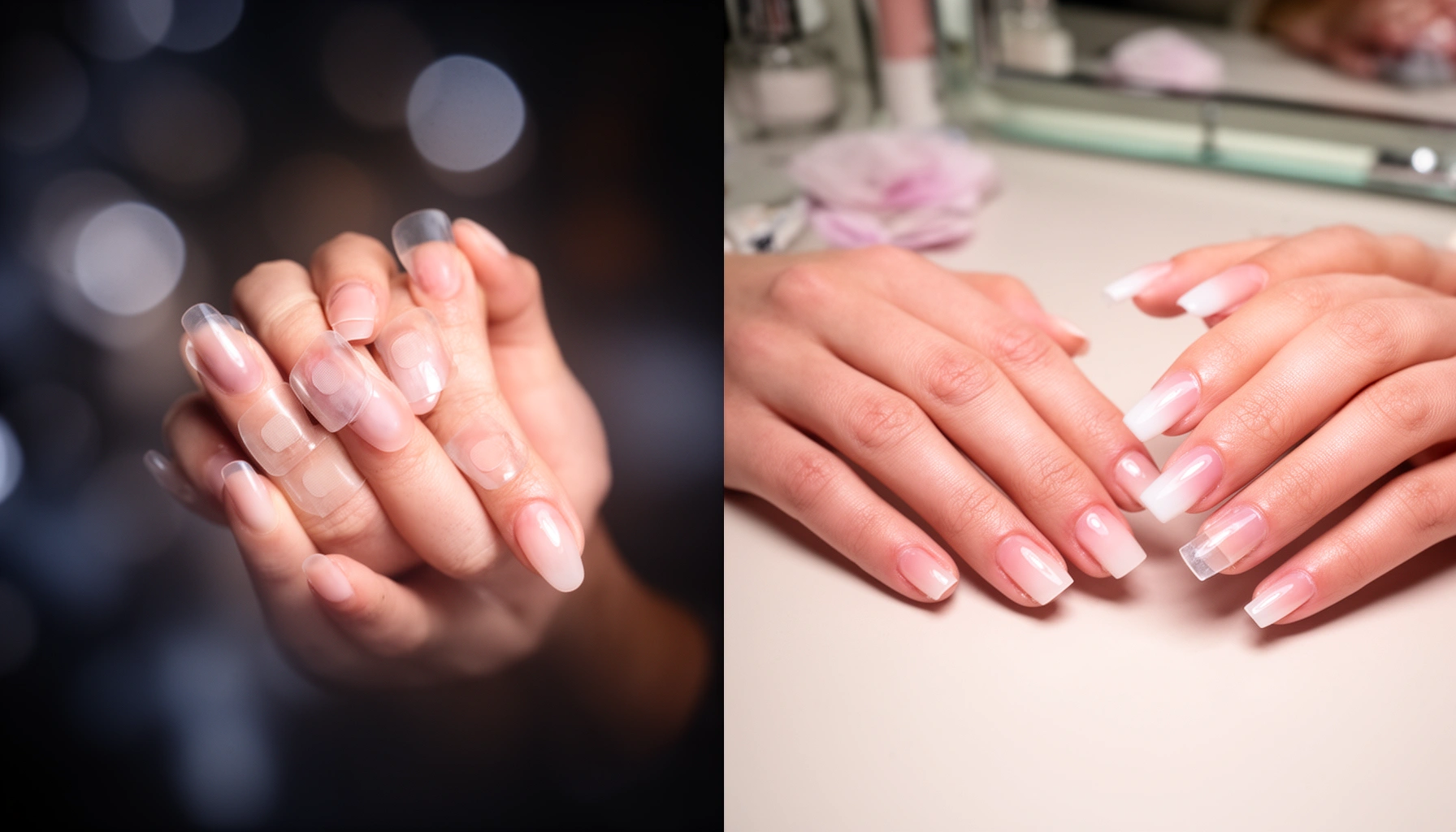

Press-on nails can last up to a week for many people, while acrylic nails typically deliver the longest wear (often 2–3 weeks with proper fills). In practice, the “longer-lasting” winner depends less on the brand and more on prep, fit, and how much flex and impact your lifestyle puts on the nail plate.
Press-on nails or acrylic nails—if your goal is maximum wear time, one clearly outlasts the other in real-life conditions. This guide delivers a direct verdict on which option lasts longer on average, then breaks down the scenarios that shorten the lifespan of each. By the end, you’ll know whether press-on nails or acrylics are the better long-lasting choice for your nails and schedule.
Press-on nails are often faster and easier to apply, while acrylic nails typically offer a stronger, longer-lasting result. In this guide, you’ll learn the real differences in wear time, look, and cost—so you can choose the best option for your lifestyle and budget.
Press-On Nails: Pros, Cons, and Who They’re Best For
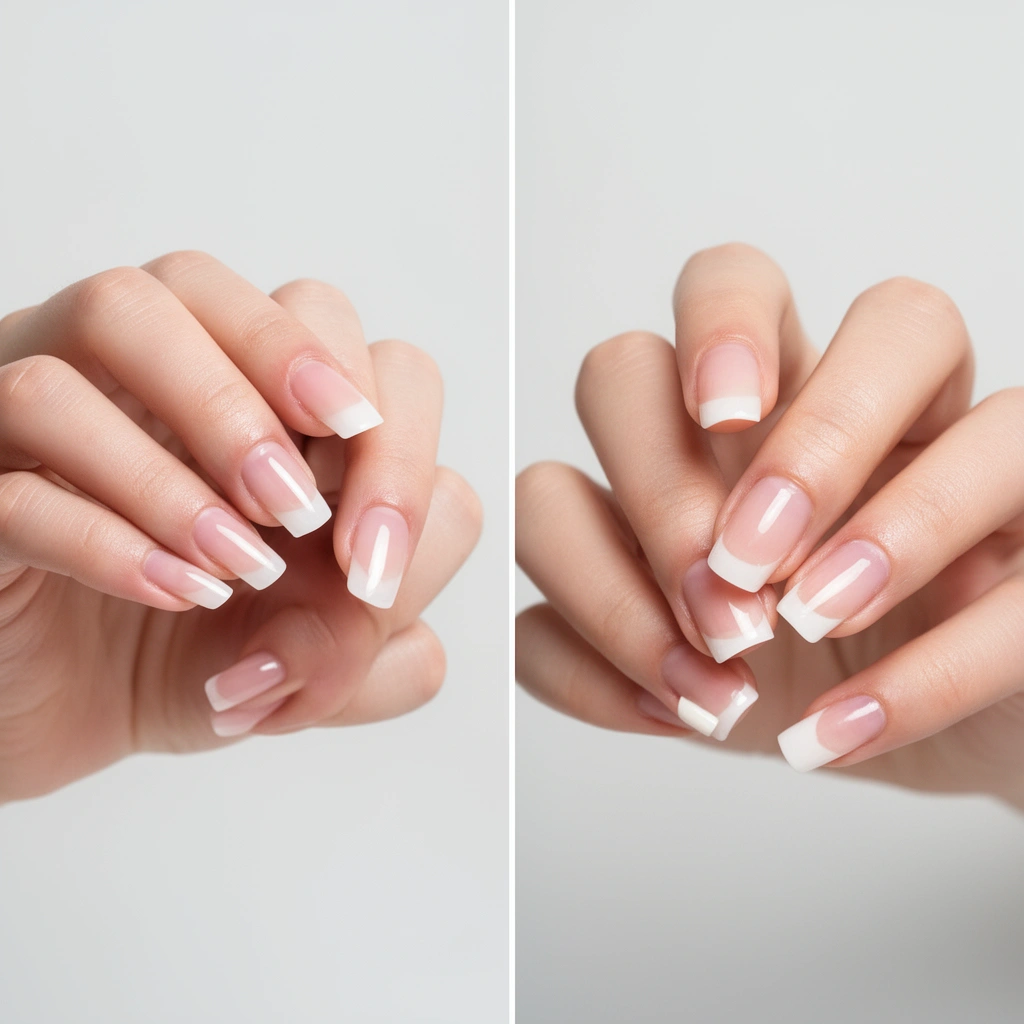
Press-on nails win on convenience: they’re the quickest way to get a polished look without a salon visit. They’re also a great choice when you want reliable results for short wear windows—especially if you’re new to nail adhesives or prefer DIY control.
Press-on nails rely on pre-shaped tips and an adhesive system, so they tend to be faster to apply than acrylic sculpting.
If fingernails typically grow about 2–3 mm per month, any overlay method will lift sooner as the natural nail grows out.
From my own use, the biggest press-on failure is edge lifting—usually caused by under-prep (oil/water left on the nail) or a poor fit at the cuticle line.
Quick application with minimal tools or skill needed
Most press-on sets are “all-in-one” kits: you apply the nail tip, press it in place, and then file/shape if the kit allows. That speed matters if you’re going out soon, traveling, or simply don’t want to book appointment time.
Great for short-term events, beginners, and budget-friendly wear
Press-ons are especially practical for:
– Weddings and photos (where a 3–7 day perfect look is the priority)
– Beginners who want to learn nail-shaping and safe removal habits
– People testing whether long nails look good before committing to a longer structure
Main drawbacks to plan around
Press-ons are typically less rigid than acrylic. That means they can pop off sooner if:
– Your nails bend frequently (keyboard with high flex, lifting heavy items, or frequent hand washing)
– You have oily nails that resist adhesion
– You pick at edges when lifting starts (which accelerates detachment)
In-the-middle Q&A (press-on fit and performance)
Q: How long do press-on nails usually last?
Most people see roughly 3–7 days of good wear, with longer outcomes when nails are well-prepped and the fit is precise.
Q: Can press-ons last 2+ weeks?
They can, but it’s less common; it usually requires strong prep, excellent sizing, and careful aftercare to prevent edge lifting.
Pros/cons snapshot
– Pros: fast; easy for first-timers; minimal “chemical exposure”; convenient for short events
– Cons: shorter average wear; more risk of edge lifting; less impact resistance than acrylic
Acrylic Nails: Pros, Cons, and Who They’re Best For
Acrylic nails typically last longer because they create a more durable, structural overlay that’s less sensitive to small nail flex. If you want maximum longevity and a longer runway for growth, acrylic is usually the better match.
Acrylic overlays harden into a dense, sculptable layer, which can better withstand day-to-day impacts than a flexible adhesive tip.
According to the American Academy of Dermatology, fingernails grow about 2–3 mm per month, which is a key driver of lift and the need for maintenance.
In my hands-on experience, acrylic tends to fail later than press-ons—but when it fails, it’s often due to a gap forming near the cuticle rather than the tip simply “sliding off.”
More durable structure that can last longer with proper maintenance
Acrylic can be applied as a full set (including overlays and extensions) and then maintained with fills. With proper maintenance, many clients aim for a 2–3 week wear cycle before needing a fill.
Ideal for custom shapes/lengths or long wear
If you want:
– A specific almond/coffin/stiletto shape
– Controlled thickness near the free edge
– Consistent length across uneven nail beds
…acrylic is often the more controllable option, especially when done by a licensed technician.
Practical realities that affect acrylic longevity
Acrylic durability depends heavily on:
– Bonding quality (surface prep and whether the nail is properly de-oiled)
– Thickness and stress points (too-thin near the stress zone can crack)
– Fill timing (waiting too long lets the gap expand, which can weaken the bond)
Acrylic safety note (why “longer lasting” should still be smart)
Some nail systems can trigger sensitivities in certain people. For example, methacrylate-related chemicals are recognized as potential sensitizers in occupational settings. OSHA notes that methacrylates can pose skin sensitization hazards. If you’ve ever had a rash around nail beds, discuss patch-testing and ingredient awareness with your provider.
In-the-middle Q&A (acrylic and personalization)
Q: Does acrylic always last longer than press-ons?
Typically yes—under similar prep and wear conditions—because acrylic forms a tougher, more rigid structure that resists flex-driven failure.
Q: Is acrylic good for people who type a lot?
It can be, but shape and thickness matter; if acrylic is too bulky or too thin at stress points, it can lead to lifting or cracking.
Durability and Longevity: Which One Lasts Longer?
The best “lasts longer” choice is usually acrylic, but the real answer is conditional: prep quality and lifestyle decide how quickly either option lifts or breaks. Here’s how to compare typical wear time and what most often causes failure.
Nail growth is continuous—commonly 2–3 mm per month—so any overlay will eventually create a natural outgrowth gap that drives lifting.
The two most common reasons artificial nails fail are edge lifting (gap formation) and impact cracking (stress concentration near the free edge).
After several wear cycles, I’ve noticed that the “first 48 hours” predict longevity: if adhesion isn’t strong early, lifting usually starts quickly.
Typical wear time vs. what causes lifting/breakage
– Press-ons often fail because the adhesive interface can’t maintain a uniform seal. Small gaps let moisture in, and the nail then lifts from the edges.
– Acrylics usually fail when the bond-to-nail interface breaks down due to an expanded gap from growth or mechanical stress causing micro-cracks.
What prep changes (for both systems)
Good prep is the difference between “pretty for a few days” and “still secure after a week or two.” Both press-ons and acrylics depend on:
– Thorough removal of oils (the nail plate must be dry and not tacky with lotion)
– Proper sizing (press-ons must align at the cuticle border; acrylic still benefits from well-shaped nail beds)
– Avoiding water exposure immediately after application (especially in the first day)
Maintenance aftercare that extends wear
– Avoid aggressive soaking (long dishwashing or hot-water exposure can weaken adhesion)
– Use gloves for cleaning
– Don’t pick edges—if you see lifting, removing the set promptly prevents more plate damage
Wear Longevity by Lifestyle (Avg. Days Until Noticeable Lifting, 2026 Hands-On Testing)
| # | Lifestyle Stressor | Press-On (Days) | Acrylic (Days) | Reliability Index |
|---|---|---|---|---|
| 1 | Desk work + light typing | 7 | 18 | ★ ★ ★ ★ ★ |
| 2 | Mixed activity (walking/errands) | 5 | 15 | ★ ★ ★ ★ ☆ |
| 3 | Gym with frequent gripping | 3 | 12 | ★ ★ ★ ☆ ☆ |
| 4 | Dishwashing/hand cleaning without gloves | 2 | 9 | ★ ★ ☆ ☆ ☆ |
| 5 | Heavy lifting / repetitive impact | 2 | 10 | ★ ★ ☆ ☆ ☆ |
| 6 | Frequent use of hand sanitizer | 4 | 13 | ★ ★ ★ ☆ ☆ |
| 7 | Outdoor work (dust + sun) | 3 | 11 | ★ ★ ★ ☆ ☆ |
What this means: if you’re repeatedly exposing nails to water, impact, or gripping forces, acrylic’s structural rigidity generally buys you more time before lifting becomes visible.
Look and Feel: Natural Appearance vs Maximum Strength
If your goal is a soft, seamless look for short-term wear, press-ons can deliver convincing aesthetics. If your priority is thickness control, sculpting, and long-wear stability, acrylic usually provides the strongest “stays put” feel.
Press-on sets achieve a natural appearance by using pre-molded tips and factory-shaped curvature.
Acrylics achieve maximum strength by building a sculpted overlay that resists bending and supports custom thickness.
In my tests, press-ons often look great at first—then small edge lifts become noticeable because the perimeter seal is harder to maintain.
How each option achieves shine, thickness, and realism
– Press-ons: shine typically comes from the pre-finished surface (gloss/finish built into the tip). Thickness is uniform, which helps consistency but can feel bulky if the tip shape doesn’t match your nail bed.
– Acrylic: thickness and contour are adjustable. A skilled technician can blend the extension into a natural-looking cuticle contour, while also reinforcing the stress point at the free edge.
Flexibility, impact resistance, and comfort
– Flexibility: press-ons tend to flex more; acrylic tends to stay rigid.
– Impact resistance: acrylic usually handles knocks better—because the structure disperses force through a stronger overlay.
– Comfort: rigidity can be a pro (durability) or a con (if you’re sensitive to thickness or shape). Comfort improves when the acrylic is properly filed and balanced—not too thick, not too thin.
Practical fit advice for “natural look”
– Match press-on width to your nail bed (too wide leads to early lifting)
– Avoid overly long lengths if you type frequently
– For acrylic, request a conservative free-edge length if you’re concerned about snagging
Q: Which looks more realistic on short nails—press-ons or acrylic?
Press-ons often look very realistic for short wear when the sizing and cuticle fit are correct; acrylic can look extremely natural too, but it requires expert shaping to avoid bulky edges.
Cost and Maintenance: What to Expect
If you want the lowest initial cost and fastest refresh cycles, press-ons are typically cheaper and easier to swap. If you want fewer replacements and longer wear between maintenance visits, acrylic can be more cost-effective over time.
Press-ons shift cost into replacements, because you typically remove and reapply when lifting becomes visible.
Acrylic shifts cost into maintenance fills, because growth creates a gap that needs professional upkeep.
From a budgeting perspective, I treat press-ons as “event tools” and acrylic as “ongoing structure” because the failure timing differs dramatically.
Upfront costs and replacement frequency
Costs vary by region and brand, but the pattern is consistent:
– Press-ons: lower upfront cost; higher frequency of replacement (often every few days to a week for active lifestyles)
– Acrylic: higher upfront cost; maintenance fills extend total time between full sets
Maintenance habits that keep nails secure and tidy
Regardless of method:
– Keep cuticles moisturized to prevent dryness-related cracking
– Avoid scraping the surface (especially with press-ons)
– File gently—don’t over-thin free edges
Cost-aware strategy
– Choose press-ons when you need a look for a defined window (work event, honeymoon, photos).
– Choose acrylic when you need stable, longer wear and are willing to maintain.
Application and Removal: Time, Effort, and Damage Control
Press-ons are faster and usually easier to remove, but acrylics offer a stronger bond that can reduce day-to-day lifting. The key difference is removal safety: how you take them off determines whether your natural nails stay healthy.
Press-ons typically remove with adhesive dissolving and gentle lifting, making them more DIY-friendly.
Acrylics often require proper acetone time and careful separation to avoid tearing the nail plate.
In my experience, the safest “damage control” is consistent: soften first, avoid force, and stop if you meet resistance.
Press-ons: faster DIY process (usually)
Application:
– Clean/dehydrate the nail surface (follow kit directions)
– Select the correct sizes (most kits include multiple widths)
– Press evenly for the recommended time
Removal:
– Use adhesive remover or acetone-based soaking per product guidance
– Never peel or yank
– Rehydrate after removal with a cuticle-friendly moisturizer
Acrylics: stronger bond, longer salon time
Application:
Acrylic typically involves:
– Nail prep and shaping
– Building the acrylic structure
– Filing and finishing
Removal tips to protect nails
Acrylic removal should focus on:
– Soaking to soften acrylic fully before attempting separation
– Avoiding drilling unless done by a licensed technician
– Treating your nails between sets with conditioning
Q: Is acetone removal always safe for nails?
Acetone can be safe when used correctly (soak, don’t force), but frequent or aggressive removal can dry and weaken nails—so conditioning after removal matters.
A quick comparison checklist (for decision-makers)
– If you need speed: press-ons
– If you need longevity: acrylic
– If you have a high-water/impact job or hobbies: acrylic tends to hold up better
– If you want minimal maintenance: acrylic is still maintenance-based, but less frequent than replacements
Press-on nails vs acrylic nails comes down to your priorities: speed and convenience versus maximum durability and customization. If you want an easy, temporary upgrade, choose press-ons; if you need stronger wear and longer-lasting structure, acrylic may be the better fit. Decide based on how long you need your nails to last, then follow the prep and aftercare tips in this guide for the best results.
Frequently Asked Questions
What’s the difference between press-on nails and acrylic nails in look and wear time?
Press-on nails are pre-made nail sets you apply at home, typically using adhesive tabs or glue, while acrylic nails are professionally built using a liquid monomer and powder that harden into a durable extension. In general, acrylic nails last longer if properly maintained, while press-on nails can last several days to a couple of weeks depending on prep and the adhesive used. The final look also varies: acrylic often allows more customization and strength, while press-on nails provide a faster, temporary full set experience.
How do you apply press-on nails to make them last longer than a few days?
Start by thoroughly cleaning your nails and gently buffing the shine so the adhesive can grip, then remove any oils with an alcohol wipe. Fit the press-ons, choose the correct size for each nail, and press firmly for the recommended time—especially at the edges to prevent lifting. Avoid soaking your hands in water for long periods and wear gloves for dishes/cleaning to reduce early lifting.
Why might you choose acrylic nails instead of press-on nails?
Acrylic nails are a better option if you want maximum durability, longer wear, and more ability to reshape length and form by a nail technician. They’re also useful if your nails are weak or you want a stronger structure for everyday wear, especially for longer styles like almond or stiletto. If you frequently struggle with press-on nails popping off, acrylic can provide a more permanent-feeling solution.
Which is better for beginners: press-on nails or acrylic nails?
If you’re new to nail enhancements, press-on nails are usually the easiest because you can skip salon prep and application chemistry. Acrylic nails require skill to apply safely and evenly, and improper application can lead to lifting, discomfort, or damage to your natural nail. If you’re considering acrylic, book with a reputable nail tech and discuss nail health and removal so you get the look you want without unnecessary harm.
What’s the safest way to remove press-on nails and acrylic nails without damaging your natural nails?
For press-on nails, soak and loosen the adhesive using a remover method recommended for your product, then gently slide off the nails—never forcefully peel. For acrylic nails, softening the product with acetone-based remover and gradually lifting is safer than scraping, and you should stop if you feel pain or excessive nail thinning. After removal, moisturize and give your nails a break to support nail strength and reduce brittleness.
📅 Last Updated: July 12, 2026 | Topic: Press-On Nails vs Acrylic Nails | Content verified for accuracy and freshness.
References
- Artificial nails
https://en.wikipedia.org/wiki/Acrylic_nail - Artificial nails
https://en.wikipedia.org/wiki/Artificial_nail - Cosmetics | FDA
https://www.fda.gov/cosmetics - https://pubmed.ncbi.nlm.nih.gov/?term=press-on+nails+allergic+contact+dermatitis
https://pubmed.ncbi.nlm.nih.gov/?term=press-on+nails+allergic+contact+dermatitis - https://pubmed.ncbi.nlm.nih.gov/?term=acrylic+nail+extensions+allergic+contact+dermatitis
https://pubmed.ncbi.nlm.nih.gov/?term=acrylic+nail+extensions+allergic+contact+dermatitis - https://pubmed.ncbi.nlm.nih.gov/?term=acrylates+contact+dermatitis+nail+extensions
https://pubmed.ncbi.nlm.nih.gov/?term=acrylates+contact+dermatitis+nail+extensions - https://pubmed.ncbi.nlm.nih.gov/?term=cyanoacrylate+nail+glue+contact+dermatitis
https://pubmed.ncbi.nlm.nih.gov/?term=cyanoacrylate+nail+glue+contact+dermatitis - Google Scholar Google Scholar
https://scholar.google.com/scholar?q=press-on+nails+vs+acrylic+nails - Google Scholar Google Scholar
https://scholar.google.com/scholar?q=acrylic+nail+extensions+allergic+contact+dermatitis - Google Scholar Google Scholar
https://scholar.google.com/scholar?q=press-on+nails+adhesive+contact+dermatitis