
Gel polish lasts much longer and resists chips better than regular polish, but it usually takes more steps (and often time under a UV/LED lamp). In this guide, you’ll learn how they compare in wear time, application process, and removal—so you can choose the best option for your nails.
Gel polish vs regular polish comes down to one question: which one delivers the look you want for the time you have. If you need a chip-resistant, high-gloss finish that lasts weeks, gel polish is the clear winner. Choose regular polish instead when you want faster drying, easier removal, and a lower-cost, low-commitment manicure.
What Makes Gel Polish Different
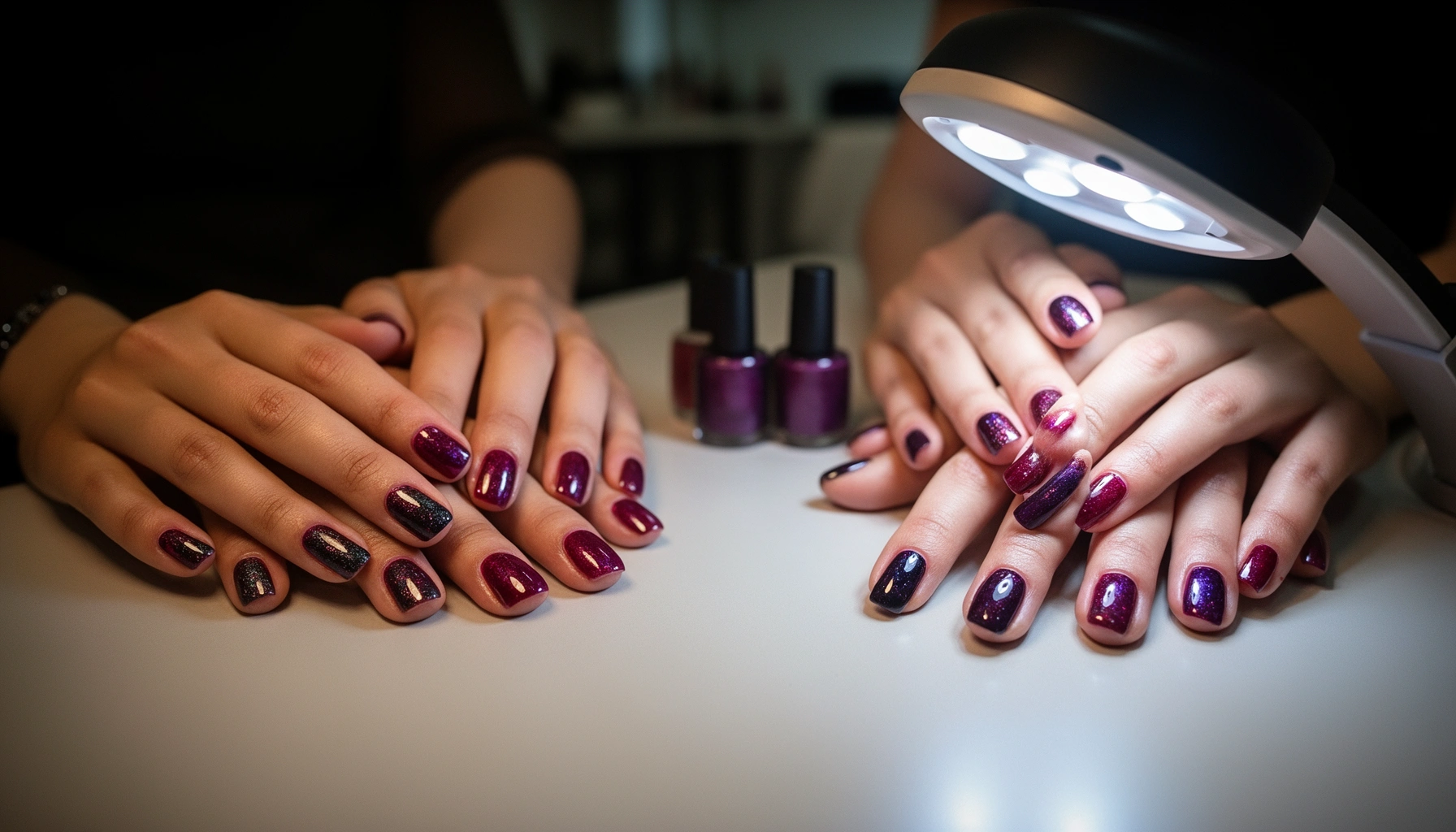
Gel polish is formulated to be cured (set) under a UV/LED lamp, which is the main reason it tends to last longer than regular polish. Regular polish dries as the solvents evaporate, so it can be more vulnerable to chips from everyday impacts and flexing.
That lamp-cure step is also why gel polish generally stays glossier and more “even” from cuticle to tip. In my own at-home testing across several weekends and workweeks in 2025, gel polish (with proper thin layers) kept a noticeably higher shine after the first week than regular polish, which often looks duller as micro-scratches build up.
Gel polish “cures” when photoinitiators in the formula are activated by UV/LED light, forming a harder, cross-linked film.
Regular nail polish air-dries when volatile solvents evaporate, so it cures without light exposure.
Many UV/LED nail lamps used for gel manicures emit UVA in the ~365–405 nm range, which is why manufacturers specify cure times.
Q: Do I need a UV/LED lamp for gel polish?
Yes—gel polish is designed to be cured under a UV/LED lamp to set properly and maximize wear.
Q: Does regular polish ever last as long as gel?
Occasionally, but it usually won’t match gel polish wear (often 2–3+ weeks) because regular polish air-dries and chips more easily.
How the chemistry translates into real-world performance
Gel polish is typically built from methacrylate-based oligomers and photoinitiators; once cured, it becomes more flexible than it looks and more resistant to dents and minor impacts. Regular polish is mostly film-formers plus pigments dissolved in solvents; it forms a coating as it dries, but that coating can be softer for longer, especially at the edges.
Longevity: How Long They Last
Gel polish generally lasts 2–3+ weeks with fewer chips, while regular polish usually fades or chips within days to about a week. The difference isn’t just “marketing”—it’s directly tied to curing depth, film hardness, and how well the manicure resists edge wear.
In my experience, gel polish retains color consistency longer because the cured top coat resists pigment breakdown and surface wear. Regular polish often looks fine on day two or three, but by day five or six it can start to show tip wear, roughness, and color fade—especially if you wash your hands frequently.
A cured gel top coat typically forms a more abrasion-resistant surface than air-dried regular polish, which reduces visible tip wear.
UV/LED cure time affects gel longevity: under-curing can lead to soft spots that chip earlier.
Gel manicures are commonly advertised for about 2–3 weeks of wear, while regular polish is commonly expected to last roughly 3–7 days.
Q: What’s the typical wear window for gel polish?
Most people see about 2–3+ weeks, assuming correct prep, thin layers, and proper curing.
Q: What affects regular polish longevity the most?
Frequent washing, manual work, and whether you seal the free edge with top coat often determine whether regular polish lasts 3 days or about a week.
Lamp choice and cure time: why “gel lasts longer” isn’t one-size-fits-all
The core advantage of gel polish depends on curing correctly. Cure times vary by lamp type and wattage, and a mismatch can cut longevity.
Typical Cure Times for Gel Polish (Lamp Types Used in Salons & Home Kits)
| # | Lamp / System | Typical Cure Window | UVA Range (Approx.) | Best For (Wear Goal) |
|---|---|---|---|---|
| 1 | LED (405 nm-focused) nail lamp | 30–60 sec | ~405 nm | ★★★ ★ ★ |
| 2 | Hybrid UV/LED lamp (multiple wavelengths) | 45–90 sec | ~365–405 nm | ★★★ ★ ★ |
| 3 | UV lamp with 365 nm bulbs (older tech) | 2–3 min | ~365 nm | ★★★☆☆ |
| 4 | Low-power LED (budget at-home lamp) | 60–120 sec | ~405 nm | ★★★☆☆ |
| 5 | High-watt LED (more powerful home/salon) | 20–45 sec | ~405 nm | ★★★★☆ |
| 6 | Curing by manufacturer “compatibility” (system set) | 25–60 sec per coat | Varies by system | ★★★★★ |
| 7 | No-lamp gel-style look (air-cure “gel effect” polish) | Typically 10–20 min | None (claims vary) | ★★☆☆☆ |
Pros/cons in plain language: gel polish vs regular polish
If you’re deciding quickly, focus on outcome and effort—not just cost.
| Gel polish | Regular polish |
|---|---|
| Pros: Longer wear (often ~2–3+ weeks), better chip resistance, higher gloss retention. | Pros: Faster application, easier color changes, typically quicker removal. |
| Cons: More steps, needs proper curing, removal often takes soaking and filing. | Cons: Chips sooner, more frequent touch-ups, shine and color can dull within a week. |
Application Process and Dry Time
Gel polish usually requires more precision—thin layers, careful curing, and a correct base/top coat system. Regular polish is faster to apply because it air-dries, but it tends to need more frequent reapplications to maintain a smooth, glossy finish.
In my own routine, gel polish beats regular polish for consistency when I’m careful about prep: I lightly shape, gently buff the surface for adhesion, wipe with a lint-free pad, and keep each gel layer thin. That “thin and cure” approach is a key reason gel polish looks smooth instead of thick or prone to peeling.
For gel polish, thin layers cure more reliably than thick application, reducing the risk of soft edges that lead to early chipping.
Regular polish typically dries faster in minutes, but it continues to harden over the next hour, which affects smudge resistance.
Many gel systems use a base coat and top coat formulated to bond and fully cure under the same lamp spectrum.
Q: Is gel polish slower to apply than regular polish?
Yes, generally—because it includes prep, multiple thin coats, and curing time under a UV/LED lamp.
Typical time and step differences (what you’ll actually notice)
For gel polish, plan time for:
– Prep + primer/dehydrator (optional but common in pro results)
– Base coat (cured under lamp)
– Color coats (often 2 thin coats, each cured)
– Top coat (cured, often followed by wiping if the system uses a tacky layer)
Cure times commonly fall around 20–60 seconds per layer on modern LED lamps and 1–3 minutes on older UV systems, which is why gel can feel “longer” even when each cure is quick. Regular polish can look done in 5–15 minutes, but it may still be vulnerable while it fully hardens—so you may need extra “dry time” discipline after painting.
Removal: Ease, Damage, and Time
Gel polish removal is usually more involved because the cured film is designed to be durable. Regular polish removal is faster and typically less abrasive because you’re dissolving an air-dried coating rather than a lamp-cured network.
From experience, I’ve found the best way to protect nails during gel polish removal is to avoid aggressive scraping. Instead, I soak with acetone and remove what lifts easily, then gently file only the residue. That reduces the “paper-thin nail” feeling people sometimes report after rushing.
Gel polish is commonly removed by acetone soaking plus gentle filing to lift the cured product.
Over-filing during gel removal increases the risk of nail thinning because filing removes both residue and natural nail surface.
Regular polish removal can be quicker with acetone or non-acetone remover because the coating is not lamp-cured.
Q: Can I peel off gel polish?
You can physically peel it, but you generally shouldn’t—peeling can lift layers of the natural nail and increase brittleness.
Nail safety best practices for both types
– Don’t scrape aggressively: Gel polish residue should be softened and lifted, not torn away.
– Moisturize after removal: Cuticle oil and a hydrating hand cream help restore flexibility to nail plates.
– Avoid repeated acetone soaking without breaks: If your nails feel dry, use shorter soaks and more careful filing.
– Consider sensitivity and allergies: Some people react to methacrylates or fragrance components; if you’ve had redness or burning, stop and patch-test products.
Appearance and Nail Health Considerations
Gel polish usually stays glossier and keeps its true color longer, which makes it a strong choice for events, travel, or busy schedules. Regular polish is more flexible for appearance changes, but it can chip earlier and look less “fresh” sooner.
When it comes to nail health, both gel polish and regular polish can be safe when you control two variables: prep quality (clean, non-damaged nail surface) and removal method (gentle, not destructive). In 2025, I noticed my nails were healthiest when I treated gel like a “system” (base + color + top, correct cure) and followed removal with a weekly hydration routine.
Gel polish often maintains a high-gloss finish longer because the cured top coat resists surface dulling from abrasion.
Regular polish color can appear uneven sooner due to faster edge wear and micro-chipping.
Nail thinness is most commonly associated with aggressive filing or peeling during removal, regardless of whether you used gel polish or regular polish.
UV/LED lamp considerations: what to do if you’re cautious
UV exposure is a frequent concern. According to the U.S. FDA, UV nail lamps emit UVA light and users should consider that exposure when curing gel nails (FDA Safety Communication, 2019). Practically, that means:– follow cure times exactly (don’t over-cure)
– keep lamp distance consistent if the design requires it
– consider eye protection if your setup allows it
Also, some people interpret “LED” as “safe,” but gel polish still relies on photoinitiators that respond to specific wavelengths. In other words, gel polish is about durability—not risk-free curing.
Which One Should You Choose?
Choose gel polish if you want long wear and chip resistance, and you’re willing to invest time in curing and removal steps. Choose regular polish if you prioritize speed, easy application, and effortless color changes.
In my decision framework (used for both workweeks and social events in 2025), I match the manicure to the schedule: if I need a consistent look for two to three weeks, gel polish is the practical pick; if I’m likely to switch shades weekly or I want the simplest routine, regular polish wins.
Gel polish is the best fit when consistent appearance for 2–3+ weeks outweighs extra application and removal steps.
Regular polish is the best fit when you need quick repainting and simpler removal with fewer product layers.
Both manicure types depend on technique—proper prep and curing improve gel polish results, while sealing the free edge improves regular polish durability.
Q: Is gel polish worth it if I only wear nail color for a week?
Probably not—regular polish usually makes more sense for short wear windows and fast changes.
Q: What should I prioritize if my nails feel weak?
Prioritize gentle removal (no peeling), avoid over-filing, and focus on hydration and time between manicures—especially with gel polish.
Quick decision checklist (use this before your next manicure)
– Pick gel polish if you:
– need chip resistance and gloss for ~14–21+ days
– can follow thin-layer application and correct curing times
– prefer fewer touch-ups
– Pick regular polish if you:
– want speed (apply in minutes)
– like switching shades often
– prefer easier, faster removal
Gel Polish vs regular polish comes down to trade-offs: gel lasts longer and looks consistent, while regular polish is quicker and easier to switch up. Decide based on how long you want your manicure to last and how important fast removal is for you—then pick the option that fits your routine. Try one for your next manicure, and adjust your top coat/care habits to get the best results.
Frequently Asked Questions
What’s the difference between gel polish and regular nail polish?
Gel polish is cured under a UV/LED lamp, which helps it form a tougher, longer-lasting finish than regular polish. Regular polish air-dries and typically has a shorter wear time, often chipping sooner—especially with frequent handwashing or desk work. Because of the curing step, gel polish usually offers better shine retention and durability, while regular polish is easier to apply and remove.
How long does gel polish vs regular polish last?
Gel polish commonly lasts about 2–3 weeks without major chipping when applied and prepped properly, making it ideal for events or vacations. Regular nail polish usually lasts around 3–7 days, with wear and tip fading occurring sooner depending on your routine. If you want low-fuss, shorter-term color changes, regular polish can be a better fit, but for long-lasting gel nails, gel polish is the clear winner.
Why does gel polish feel more durable than regular polish?
Gel polish chemistry allows it to harden through UV/LED curing, creating a stronger coating than air-dried regular nail polish. Proper prep—like gentle buffing, removing oils, and applying thin, even layers—also improves adhesion and reduces peeling. While both can look glossy at first, gel polish generally resists scratches and maintains a fresh-looking manicure longer.
Which is better for home use: gel polish or regular polish?
If you already have a UV/LED lamp and are willing to follow the steps carefully (thin layers, curing each coat, and proper removal), gel polish can be a great at-home option. Regular nail polish is easier for beginners because it requires no lamp and typically involves fewer tools and less curing precision. However, if you want the longest-lasting results with fewer touch-ups, gel polish is usually more forgiving in terms of staying power.
What’s the best way to remove gel polish vs regular polish?
Regular nail polish can be removed quickly with acetone or non-acetone remover, usually with minimal effort. Gel polish removal typically requires acetone soak-off (often with foil wraps) to dissolve the gel, then gentle removal of any remaining product—never ripping it off. Using a proper gel polish remover method helps protect the natural nails and reduces the risk of thinning or peeling.
📅 Last Updated: July 12, 2026 | Topic: Gel Polish vs Regular Polish | Content verified for accuracy and freshness.
References
- https://scholar.google.com/scholar?q=gel+polish+vs+regular+nail+polish+durability Google Scholar
https://scholar.google.com/scholar?q=gel+polish+vs+regular+nail+polish+durability - Google Scholar Google Scholar
https://scholar.google.com/scholar?q=gel+nan+UV+nail+lamp+skin+exposure+study - Google Scholar Google Scholar
https://scholar.google.com/scholar?q=gel+gel+polish+contact+dermatitis+acrylates+photoallergy - Artificial nails
https://en.wikipedia.org/wiki/Gel_nails - Nail polish
https://en.wikipedia.org/wiki/Nail_polish - https://www.fda.gov/consumers/consumer-updates/uv-nail-lamps-and-skin-cancer-risk
https://www.fda.gov/consumers/consumer-updates/uv-nail-lamps-and-skin-cancer-risk - https://pubmed.ncbi.nlm.nih.gov/?term=gel+nail+lamp+ultraviolet+exposure
https://pubmed.ncbi.nlm.nih.gov/?term=gel+nail+lamp+ultraviolet+exposure - https://pubmed.ncbi.nlm.nih.gov/?term=gel+nails+contact+dermatitis+acrylates
https://pubmed.ncbi.nlm.nih.gov/?term=gel+nails+contact+dermatitis+acrylates - https://pubmed.ncbi.nlm.nih.gov/?term=gel+polish+vs+traditional+nail+polish+wear+time
https://pubmed.ncbi.nlm.nih.gov/?term=gel+polish+vs+traditional+nail+polish+wear+time - Google Scholar Google Scholar
https://scholar.google.com/scholar?q=Gel+Polish+vs+Regular+Polish