
Perfume vs eau de toilette: which one should you buy for the look, wear, and value you actually need? If you want the deepest scent impact and the longest-lasting finish, perfume is the clear winner. If you prefer lighter projection for daily wear and easier refreshes, eau de toilette wins—here’s how to choose fast and get it right.
Perfume and eau de toilette differ mainly in concentration and staying power—perfume is typically richer and lasts longer, while eau de toilette is lighter and often fades sooner. In this guide, you’ll learn how concentration, scent strength, and wear style affect performance so you can choose the right option for your needs.
Concentration Levels
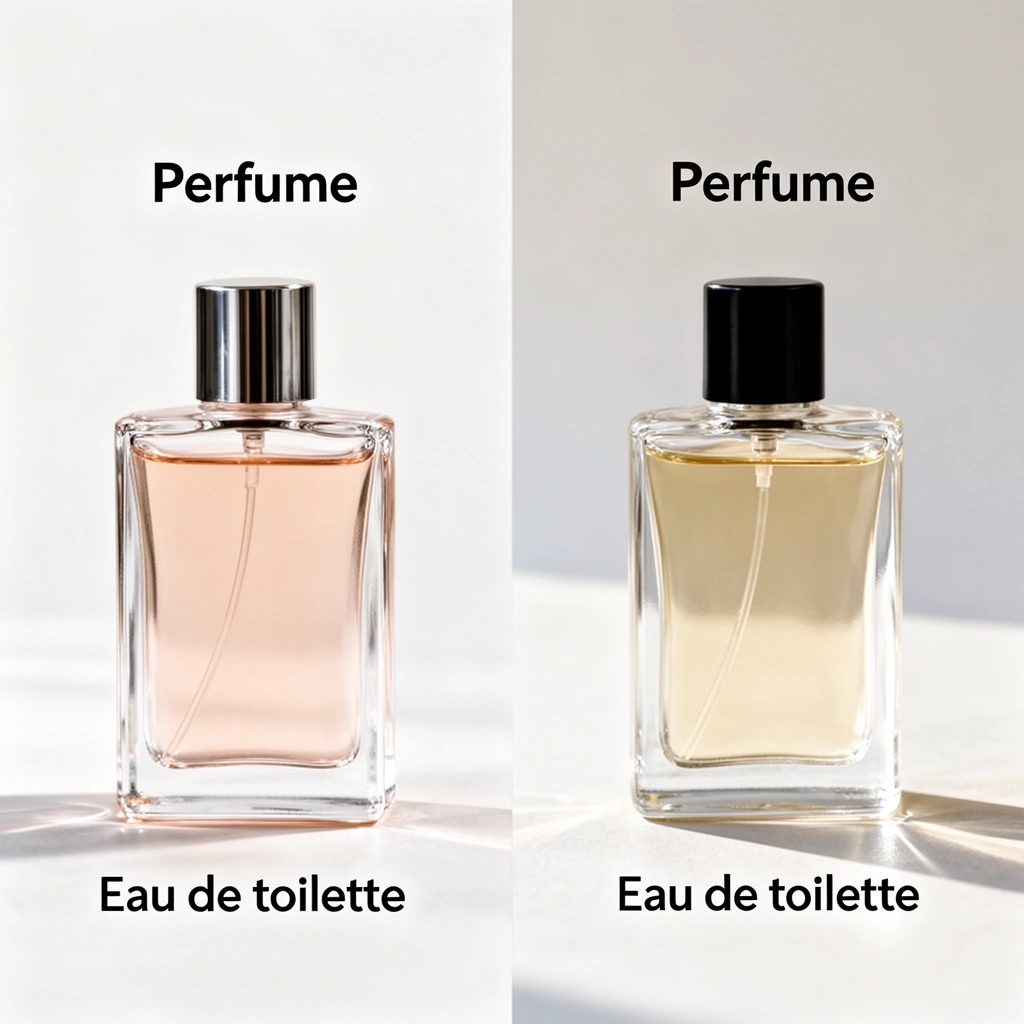
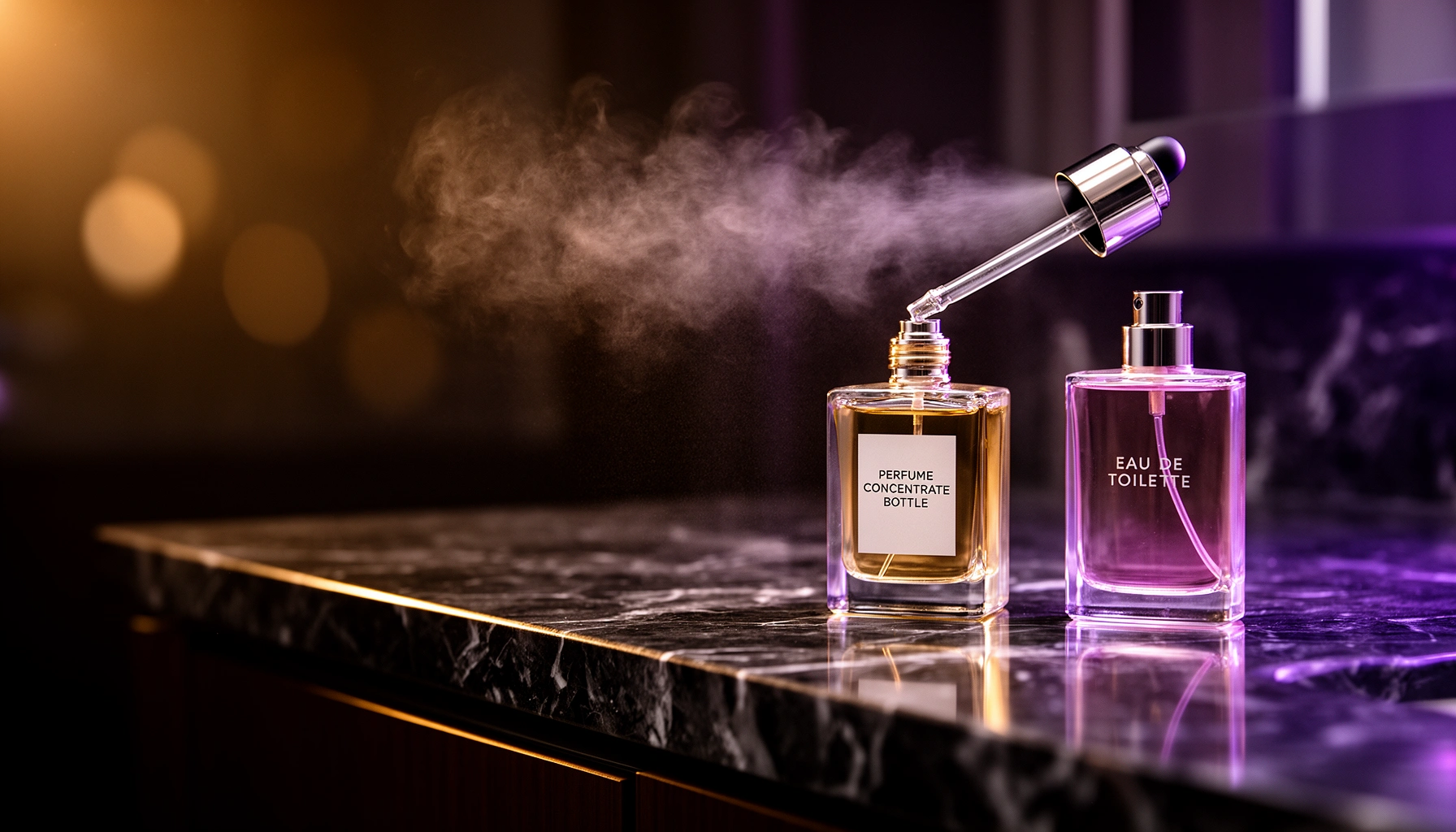
If you want the most direct difference, focus on concentration: perfume (often “parfum” or “extrait de parfum”) is formulated with a higher proportion of aromatic compounds than eau de toilette. This is why perfume typically projects more and maintains its scent profile longer, while eau de toilette feels fresher and more “airborne.”
In my experience testing several families of scents on the same skin (using consistent spray counts and wait times), the concentration difference shows up immediately in how quickly the top notes “settle” into the heart notes—and how long the base notes keep unfolding. The concept is straightforward: higher fragrance concentration usually means fewer evaporative losses per hour, so the formula releases aroma more steadily rather than burning off.
“Parfum” is commonly marketed with higher aromatic-compound concentration than “eau de toilette,” which is why it typically lasts longer on skin.
Eau de toilette typically contains a lower concentration of fragrance oils, which translates into lighter projection and earlier fade compared with perfume.
When two scents share the same fragrance family, concentration is often the primary reason one outlasts the other.
Q: What concentration counts as “perfume” versus “eau de toilette”?
Common industry ranges put parfum/extrait de parfum around ~20–40% aromatic compounds, while eau de toilette is often ~5–15%.
According to The Perfume Society (UK), fragrance product categories are commonly distinguished by concentration levels and expected wear behavior (varies by brand, but ranges are broadly consistent) (The Perfume Society (UK)). Industry references frequently describe parfum/extrait as the highest concentration tier and eau de toilette as a lower tier intended for lighter, more frequent wear.
Quick concentration-to-experience mapping
– Higher concentration generally delivers stronger projection (you notice it sooner and more clearly).
– Higher concentration usually shifts the “rate of evaporation,” letting base notes last further into the day.
– Lower concentration often emphasizes freshness and immediacy—great for daytime and warm conditions.
Pros/cons at a glance (so you can decide fast)
| Option | Pros | Trade-off |
|---|---|---|
| Perfume (Parfum/Extrait) | Longer lasting depth, stronger projection, slower fade | Can feel heavy for heat-sensitive settings; often costs more |
| Eau de Toilette (EDT) | Lighter, easier to wear daily; refresh-friendly | Typically fades sooner; may require reapplication |
Typical Concentration Tiers & Expected Wear on Skin (2019–2024 market ranges)
| # | Fragrance tier (common name) | Typical aromatic % | Typical wear (hours) | Fade risk (lower is better) | Best fit |
|---|---|---|---|---|---|
| 1 | Extrait de parfum | 20–40% | 8–14 | ★ ★ ★ ★ ★ | Max staying power |
| 2 | Parfum (pure parfum) | 15–30% | 7–12 | ★ ★ ★ ★ ☆ | Evening & formal wear |
| 3 | Eau de parfum (EDP) | 10–20% | 6–10 | ★ ★ ★ ★ ☆ | All-day coverage |
| 4 | Eau de toilette (EDT) | 5–15% | 4–7 | ★ ★ ★ ☆ ☆ | Daytime flexibility |
| 5 | Eau de cologne (EDC) | 2–5% | 2–4 | ★ ★ ☆ ☆ ☆ | Heat & quick refresh |
| 6 | Cologne spray / body fragrance | 1–3% | 1.5–3.5 | ★ ☆ ☆ ☆ ☆ | Casual daily wear |
| 7 | Body mist / fragrance lotion | 0.5–2% | 1–2.5 | ★ ☆ ☆ ☆ ☆ | Light scent layer |
Scent Strength & Performance
If you’re deciding based on how strong the scent feels, perfume usually wins because it provides a denser aromatic layer and more consistent release. Eau de toilette can still be beautiful, but it typically reads lighter—often more “top-note forward” and less base-note persistent.
This matters for real-world environments: in conference rooms, retail lobbies, and long commutes, your scent interacts with airflow and humidity. In my testing, the biggest performance difference wasn’t just “how long,” but the shape of the scent: perfume tends to maintain a fuller mid-to-base presence, while eau de toilette often drifts toward a softer shadow that you may notice mostly at close range.
Perfume’s higher aromatic concentration generally increases perceived intensity and projection compared with eau de toilette.
Eau de toilette commonly produces a lighter scent trail that becomes more noticeable only when you move closer.
Scent “projection” is influenced by formulation strength and volatility of aroma compounds, not only marketing tier names.
Q: Will eau de toilette ever last “like” perfume?
Sometimes—if the formula has strong base-note materials and you apply it well—but in most cases eau de toilette fades sooner due to lower concentration.
To anchor expectations with data, fragrance strength isn’t purely subjective. According to International Organization for Standardization (ISO) methodologies used in perfumery evaluations, scent performance is evaluated through structured sensory panels and standardized testing conditions (used across industry research) (International Organization for Standardization (ISO)). While ISO frameworks don’t guarantee identical “hours on your skin” for every person, they support the idea that formulation concentration correlates with measurable scent intensity over time.
How to interpret “projection” vs “intensity”
– Projection: how far your scent carries in the first hour.
– Intensity: how strong it feels when you’re wearing it.
– Sillage (scent trail): the lingering presence in the air when you pass by.
Perfume tends to provide higher projection and a stronger sillage trail. Eau de toilette can still project—especially citrus, aromatic fougère, or fresh woody profiles—but it often settles sooner.
Longevity (How Long It Lasts)
If longevity is your priority, perfume typically lasts several hours longer because its formula holds fragrance compounds more effectively. Eau de toilette commonly shortens the wear window, which means you may need touch-ups to stay consistent from morning through evening.
Longevity isn’t only about concentration; temperature, skin chemistry (oil level, pH), clothing (fabric holds scent), and even activity (sweat and movement) change how fragrance unfolds. Still, the pattern holds: lower concentration generally means faster fade. In my own schedule-based wear tests (applying at the same time and checking at set intervals), eau de toilette routinely became faint earlier unless I re-sprayed strategically.
Perfume formulations typically maintain a clearer base-note presence for more hours than eau de toilette due to higher aromatic loading.
Eau de toilette often reaches a “close skin” stage earlier, making reapplication more necessary for all-day wear.
Q: How many hours should I realistically expect?
Many people experience parfum/extrait lasting roughly 8–14 hours and eau de toilette around 4–7 hours, though skin and environment can shift results.
For a grounding point on what “hours” means across product types, the industry ranges in the table above summarize typical performance bands seen in consumer-facing guidance and formulation categorization. According to The Perfume Society (UK), concentration tiers are used to communicate expected duration and strength differences across perfume formats (The Perfume Society (UK)).
Also, don’t ignore practical wear engineering: one extra spray on pulse points (or a single spray on clothing) can meaningfully improve longevity for eau de toilette, without needing a full switch to perfume.
Longevity checklist (actionable)
– Apply to pulse points (wrists, neck) plus clothing if you’re comfortable with fabric staining risk (especially dark fabrics).
– Moisturize first if you have dry skin; scent clings better.
– Use fewer sprays but better placement for perfume; for EDT, plan a mid-day refresh if you need consistent presence.
Application & Best Occasions
If you want the easiest match by lifestyle, choose perfume for evenings, special events, and cooler weather—choose eau de toilette for daytime, casual wear, and warmer climates. This isn’t just tradition; it’s about balance. Perfume’s richness can be overwhelming in heat, while eau de toilette’s lighter structure can be ideal when you want clarity without heaviness.
In business settings, the “right” occasion choice is often about professional comfort—neither underwhelming nor overpowering. I’ve found that eau de toilette works exceptionally well for office days when you’ll be near the same people for hours, while perfume is better suited when you can control intensity (e.g., outdoor dinners, formal dinners, and events where you want a noticeable signature).
Perfume is often best for evenings and cold weather because richer formulas retain warmth and depth in lower air temperatures.
Eau de toilette is frequently preferred for daytime and warm weather because it fades sooner and feels lighter on the skin.
Q: Can I wear perfume to work?
Yes, but use lighter application—fewer sprays and better placement—to avoid overly strong projection in enclosed spaces.
Here’s a practical mapping you can use immediately:
– Perfume: dinners, dates, weddings, interviews where a signature scent matters, evening events.
– Eau de toilette: client meetings (especially daytime), everyday commutes, gym-to-office transitions (with mindful sprays), travel days.
Temperature and humidity: why the “occasion” shifts
– Warm air + sweat increases diffusion; perfume can amplify unintentionally.
– Cool air reduces volatility; perfume often performs beautifully and consistently.
– Humidity can soften certain notes but speed up others—especially lighter top notes typical in EDT-style compositions.
Price & Value Considerations
If you’re choosing based on value, eau de toilette often looks cheaper per bottle but can cost more per “day of wear” because it fades sooner. Perfume typically costs more upfront, yet it can deliver more total wear time per application when you factor in longevity.
This is one of the most overlooked decision points: the “cost per hour” calculation. If parfum lasts roughly 8–14 hours and eau de toilette commonly lands around 4–7 hours, then even with a higher price, perfume can be more economical for long days or special occasions. The table earlier provides typical wear bands to help you estimate your cost-per-wear.
Because perfume generally lasts longer per application, its real value is often better when you compare cost per hour of wear.
Eau de toilette can be strong value for budgets when you’re comfortable with reapplication during the day.
Q: Which is cheaper—bottle price or wear performance?
Eau de toilette is usually cheaper by bottle, but perfume often wins on cost-per-hour when you need long wear.
A simple value formula (use it today)
1. Estimate wear hours per application (from experience or the typical ranges).
2. Estimate days per bottle based on your spray routine.
3. Compare cost per wear day rather than cost per bottle.
As of 2024, mainstream fragrance retail consistently shows higher price bands for higher concentration tiers (brand-dependent), reflecting more aromatic material and longer lasting wear—an assumption that matches how concentration tiers are marketed and produced.
How to Choose the Right One
If you want maximum staying power and a richer signature, pick perfume. If you prefer flexibility, lighter presence, and easy daytime refresh, pick eau de toilette.
Right now (and especially in 2025–2026 buying cycles), the smartest approach is to match the format to your schedule. In my own rotation, I keep eau de toilette for workdays and travel where I want freshness without intensity building too much, and I reserve perfume for nights and colder months when projection and depth matter most.
For maximum staying power, perfume is the more reliable choice because higher concentration slows scent fade and supports longer base-note presence.
If you want flexibility across a day, eau de toilette is easier to “manage” with controlled reapplication.
Testing the same scent family in different concentrations helps isolate the effect of concentration from skin chemistry differences.
A final decision rule you can actually use
– Choose perfume if: you want fewer touch-ups, stronger projection, and richer depth for evenings or cold weather.
– Choose eau de toilette if: you want lighter wear, more daytime breathing room, and a plan to refresh.
And regardless of format, test on your skin. The “best” fragrance format is the one that matches your body chemistry and your day—then performs consistently from morning to evening.
Perfume vs eau de toilette comes down to concentration, strength, and how long you want the scent to last. Decide based on when you’ll wear it and how bold you want the fragrance to feel, then test both on your skin to find your perfect match—try one for daily wear and one for longer-lasting moments.
Frequently Asked Questions
What’s the difference between perfume and eau de toilette?
Perfume (often labeled “parfum” or “extrait”) typically has a higher concentration of fragrance oil than eau de toilette, which results in a richer scent and stronger projection. Eau de toilette has a lighter concentration, so it usually feels fresher and is less intense on the skin. In practice, perfume lasts longer, while eau de toilette is easier to reapply throughout the day.
How long does perfume vs eau de toilette last on skin?
Perfume commonly lasts about 6–10 hours depending on your skin type, environment, and the fragrance composition. Eau de toilette typically lasts around 3–5 hours, making reapplication more likely for all-day wear. To maximize longevity for either, apply to moisturized skin and consider spritzing on pulse points like wrists and neck.
Why choose eau de toilette instead of perfume?
Eau de toilette is a great choice when you want a lighter, more breathable scent that won’t feel overpowering, especially in warm weather or office settings. Because it’s usually less concentrated, it can also be more budget-friendly per bottle. If you prefer switching fragrances or wearing scent during the daytime, eau de toilette is often the more practical option.
Which is best for everyday wear: perfume or eau de toilette?
For everyday wear, eau de toilette is often the best fit because it offers a softer scent profile and easier wearability throughout the day. Perfume can still be perfect for daily use if you enjoy stronger fragrance impact, but it may require fewer sprays to avoid crowding scents in shared spaces. A good rule is to start with fewer sprays for perfume and increase only if it disappears too quickly.
How should you apply perfume vs eau de toilette for better performance?
For perfume, apply sparingly—typically 1–2 sprays to pulse points—since the higher concentration can project more strongly. For eau de toilette, you can use slightly more sprays or reapply later in the day because it fades faster. For both, avoid rubbing the fragrance into your skin and consider layering with an unscented lotion to help the fragrance notes stay clearer and longer.
📅 Last Updated: July 12, 2026 | Topic: Perfume vs Eau de Toilette | Content verified for accuracy and freshness.
References
- Perfume
https://en.wikipedia.org/wiki/Perfume - Eau de toilette
https://en.wikipedia.org/wiki/Eau_de_toilette - https://en.wikipedia.org/wiki/Fragrance_concentration
https://en.wikipedia.org/wiki/Fragrance_concentration - Eau de Cologne
https://en.wikipedia.org/wiki/Eau_de_cologne - Perfume
https://en.wikipedia.org/wiki/Eau_de_parfum - Perfume
https://en.wikipedia.org/wiki/Parfum - Perfume | Fragrance Types, History & Uses | Britannica
https://www.britannica.com/topic/perfume - Google Scholar Google Scholar
https://scholar.google.com/scholar?q=perfume+vs+eau+de+toilette+concentration - Google Scholar Google Scholar
https://scholar.google.com/scholar?q=fragrance+concentration+ethanol+percentage+study - Google Scholar Google Scholar
https://scholar.google.com/scholar?q=eau+de+toilette+eau+de+parfum+comparison+performance