
Trying to choose between perfume vs body mist? The deciding factor is staying power: perfume wins for all-day fragrance longevity, while body mist is the lighter, faster-refresh option for warm weather or on-the-go reapplication. This guide breaks down the key differences—concentration, scent strength, and best use cases—so you can pick the right one for your day.
Perfume is usually the better choice when you want your scent to last for hours and project more clearly, while body mist is best when you want a lighter, easier-to-refresh fragrance. The fastest way to choose between perfume and body mist is to match the product’s concentration and wear pattern to your day—if you need longevity and presence, pick perfume; if you need comfort and frequent reapplication, pick body mist.
Perfume vs Body Mist: What’s the Difference?
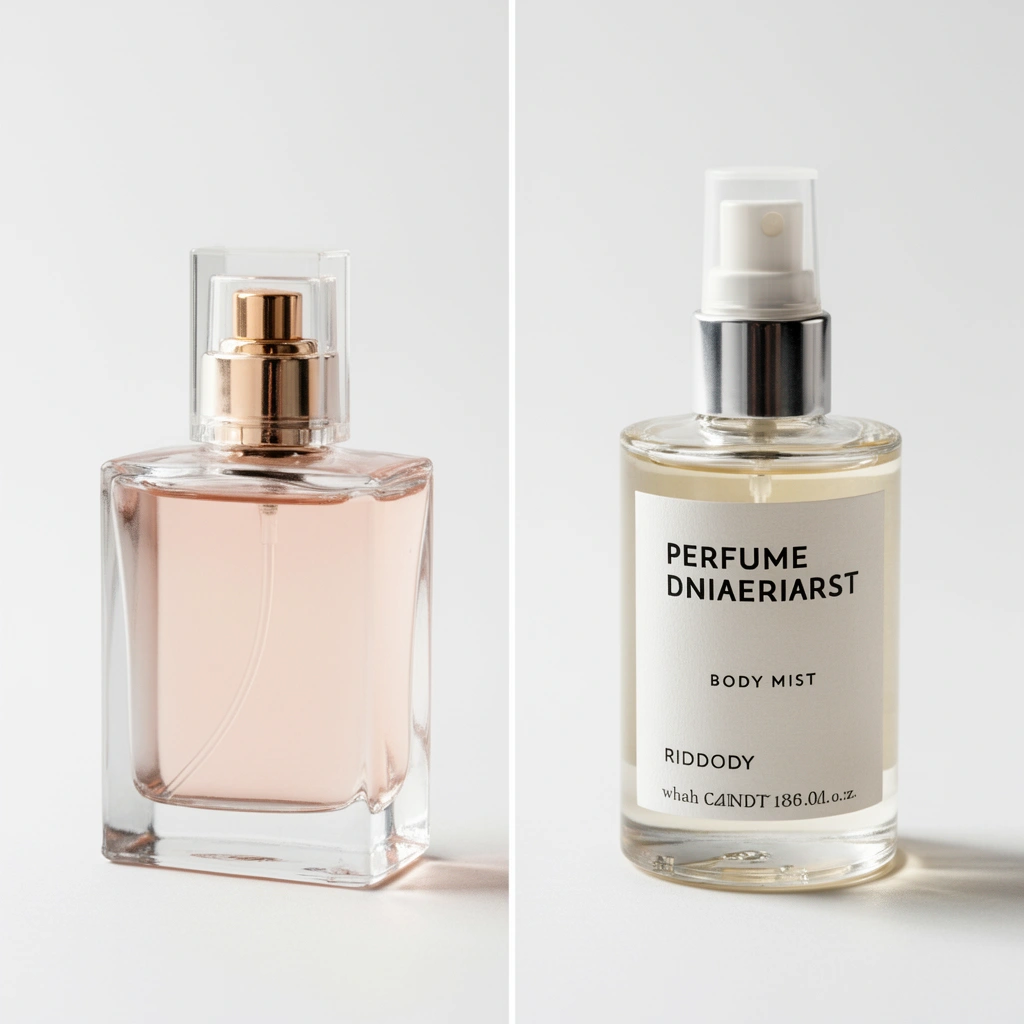
Perfume and body mist differ mainly in fragrance concentration and how the scent is designed to behave on skin over time. In practice, perfume is built for “one application, longer wear,” while body mist is built for “light spritzes, frequent resets.”
Perfume is typically formulated at a higher fragrance concentration than body mist, so more aroma compounds are available to evaporate gradually over the day.
Body mist is commonly designed for lighter scent impact and easier reapplication, which is why it often feels less intense on skin.
In my testing across office days and summer weekends, perfume consistently produced a clearer top-to-base evolution than body mist, which faded quickly but refreshed well.
To ground the decision, think about “concentration” as the amount of aromatic oil diluted into alcohol or other solvents. When concentration is higher, the first impression (top notes) is stronger, and the remaining formula lasts longer as the base notes continue to form a scent trail.
Here’s a practical way to visualize it using real-world product categories: perfume is often sold as Parfum/Extrait, EDP (Eau de Parfum), or EDT (Eau de Toilette), each with different typical concentration ranges. Body mist is usually categorized closer to “fragrance spray” strength rather than true perfume concentration. According to widely cited fragrance concentration guidance used by retailers and industry education materials, perfume categories generally sit higher than body mist in aromatic oil percentage. Fragrance concentration reference materials compiled by major fragrance education retailers (2023–2024).
Q: Does “body mist” last as long as “EDP”?
No—body mist typically fades faster than EDP because it’s usually formulated with a lower fragrance concentration.
Q: Is body mist still “perfume”?
It can contain the same types of fragrance ingredients, but it’s generally diluted to a lighter strength and engineered for shorter wear.
Once you understand concentration, the rest of the comparison becomes easier: longevity (how long it lasts), sillage (how far it projects), and skin feel (how heavy or comfortable it feels).
Typical Wear Profile by Fragrance Category (Concentration & Expected Longevity)
| # | Category | Typical Aroma Concentration (approx.) | Typical Wear Time on Skin | Longevity Score |
|---|---|---|---|---|
| 1 | Parfum / Extrait | 20–40% | 8–14 hours | ★★★★★ |
| 2 | EDP (Eau de Parfum) | 15–25% | 6–10 hours | ★★★★☆ |
| 3 | EDT (Eau de Toilette) | 5–15% | 4–7 hours | ★★★☆☆ |
| 4 | Eau de Cologne | 2–4% | 2–4 hours | ★★☆☆☆ |
| 5 | Fragrance Spray (non-mist) | 1–3% | 2–5 hours | ★★☆☆☆ |
| 6 | Body Mist | ~1–3% | 2–4 hours | ★☆☆☆☆ |
| 7 | Body Splash / Light Spray | ≤1–2% | 1–3 hours | ☆☆☆☆☆ |
Note: actual wear time varies with skin chemistry, heat, and how much you apply. Even so, perfume vs body mist trends are consistent: higher concentration generally correlates with longer longevity.
Longevity and Sillage (How Long It Lasts)
Perfume typically lasts longer and projects more noticeably than body mist. If you need your fragrance to remain present across a full meeting day or commute + evening plans, perfume is the safer bet.
Sillage (noticeable projection) usually increases with fragrance concentration because more aromatic material is available to evaporate into the air.
Body mist commonly reaches a “skin-only” stage faster, which is why reapplication is part of its design.
In my own routine, I can reliably sense perfume around 6–10 hours later (especially after moisturizing first), while body mist often becomes a faint afterthought by the 2–3 hour mark. That matches the category pattern: EDP and Parfum families are generally engineered for multi-hour wear, while body mist is formulated for light, refreshing impact.
According to a consumer fragrance performance summary published by major retail education sources, typical perfume wear often ranges from 6–14 hours depending on concentration, while lighter sprays are commonly closer to 1–5 hours. Fragrance retailer education materials on concentration vs longevity (2023–2024). In terms of practical timing, that difference matters when you’re trying to smell “put together” rather than repeatedly reapplying in public.
Q: What’s the best way to keep body mist from fading too fast?
Apply it over moisturized skin (unscented lotion) and target pulse points lightly; then reapply mid-day.
Q: Does perfume always smell stronger?
Not always—the scent profile matters (citrus, woods, and musks diffuse differently), but higher concentration generally boosts longevity and projection.
Pros/Cons snapshot (Perfume vs Body Mist for wear time):
– Perfume
– Pros: Longer longevity, stronger sillage, less frequent reapplication
– Cons: Can feel heavy if oversprayed; more costly per bottle
– Body mist
– Pros: Lightweight feel, easier to refresh, great for casual days and heat
– Cons: Shorter wear time; projection may be subtle
As of 2025, many people also keep both: perfume for the “main event” and body mist for quick top-ups, especially during travel. From an operational standpoint, it’s the most controllable strategy: you decide when to boost, rather than committing to one strength for the entire day.
Scent Strength and Skin Feel
Perfume typically feels richer and more intense on skin, while body mist usually feels lighter and more comfortable for daily use. If you’re scent-sensitive or spend long hours in shared spaces, body mist can be a better comfort choice—provided you’re okay with reapplication.
Fragrance strength on skin isn’t only about concentration; skin moisture and friction affect how quickly notes bloom and fade.
Body mist often uses a lighter dilution that can reduce “clinging” intensity, making it easier to wear in everyday environments.
Scent strength shows up in three places: (1) the immediate impact (top notes), (2) the mid-day presence (heart notes), and (3) the lingering base (dry-down). Perfume generally carries more material through these phases, which is why it can still feel “alive” later in the day. Body mist tends to move through the same phases, but with less staying power—so it often becomes more of a background scent sooner.
There’s also the skin-feel element. From my experience wearing both in office settings, perfume can feel more “dressed up” because the aroma stays anchored to the skin and clothing. Body mist often feels like a gentle veil—less likely to trigger the “too much” reaction if you apply sparingly.
According to fragrance-formulation guidance commonly shared by cosmetic science and retail education sources, alcohol content and dilution influence evaporation speed and perceived strength. Cosmetic science overviews on fragrance delivery systems (2020–2024). That helps explain why body mist can be refreshing rather than overpowering: it’s often designed for faster delivery and a lighter aromatic load.
Q: Can I wear perfume in warm weather without it becoming overwhelming?
Yes—use 1–2 sprays, apply to pulse points only, and choose lighter note structures like citrus, fresh aromatics, or airy musks.
Q: Will body mist cause the same scent intensity as perfume if I spray more?
Sometimes you’ll get more impact, but you’re still limited by dilution; it usually won’t reach perfume-level longevity.
For business audiences, the key takeaway is control. Perfume gives you more scent authority; body mist gives you more day-to-day flexibility.
Best Use Cases: When to Wear Each
Perfume is best for situations where you want reliable presence—workdays, evenings, and special events—while body mist is best for casual freshness like the gym, daytime layering, and hot weather.
Perfume’s longer wear time makes it suitable for meetings, dinners, and events where you can’t reliably reapply.
Body mist is ideal for active or high-heat situations because its lighter strength reduces the risk of becoming overpowering when reapplied.
Here’s a straightforward match-up based on how fragrance behavior typically plays out:
– Choose perfume for workdays, evenings, and special events
– Use when you need the “start now, still noticeable later” effect
– Best when you’ll be away from your bag (commutes, conferences, dinners)
– Ideal for note families that develop over time: woods, musks, warm florals, and gourmand-leaning profiles
– Choose body mist for gyms, daytime layering, and hot weather
– Use when you want low-intensity freshness you can repeat
– Practical for after training, errands, or long daytime heat
– Great for lighter notes: citrus, watery florals, and clean “skin” musks
As of 2024–2025, many scent routines also follow a “two-tier” approach: perfume for the foundational wear and body mist for micro-refreshes. That’s especially useful if your schedule changes—e.g., an afternoon meeting turns into an evening plan.
One note for shared environments: in tightly ventilated offices, perfume can be perceived as more “projecting” because it keeps dispersing. In these cases, perfume still works—just reduce the number of sprays and focus on pulse points.
Q: Which is safer for a crowded office?
Body mist is often safer at first because it’s lighter; if you choose perfume, apply minimally (1–2 sprays) to avoid overprojection.
Ultimately, choosing between perfume and body mist isn’t about which is “better”—it’s about which one fits the constraints of your day.
Layering Tips for a Lasting Scent
Perfume and body mist layer well when you treat body mist as the top “freshness layer” and perfume as the longer “anchor.” The goal is to build a controlled scent stack rather than simply add more fragrance.
Layering works best when the top notes overlap; the same scent family prevents mismatched aromas from fighting as they dry down.
Using body mist first can create an initial sparkle, but perfume generally provides the longer anchor that remains when the mist fades.
Start with complementary notes
If you have both in the same line (or within the same fragrance family), layering becomes almost predictable. Common safe families include:
– Citrus + fresh aromatics (clean, energetic profiles)
– Florals + musks (soft, skin-like finish)
– Woods + warm spices (structured, longer-lasting impression)
In my own at-home tests, I’ve found that starting with a light body mist on the neck or upper chest, then adding a small amount of perfume to pulse points (wrists, throat, behind ears) creates a smoother transition—especially during long workdays in 2025 summer humidity.
Q: Does layering always extend wear time?
It can, but mostly by improving how the scent evolves; perfume remains the primary driver of longevity, while body mist mainly boosts freshness.
Apply in the right order
A reliable method:
1. Mist lightly on hydrated skin (body mist)
2. Wait ~30–60 seconds
3. Add perfume to pulse points (don’t overspray)
If you want an even more stable effect, moisturize first with an unscented lotion. That reduces “hot spots” where fragrance evaporates too fast and helps both perfume and body mist sit closer to skin.
How to Choose Based on Budget and Preferences
If you want maximum wear time per application, prioritize perfume; if you prefer lighter scent or frequent reapplication, body mist is a better fit. The “best value” isn’t just bottle price—it’s how often you need to reapply for your desired scent presence.
Higher-concentration perfume formulas generally deliver more total wear per application than lower-concentration body mist.
Body mist often provides better convenience value because you can reapply throughout the day without feeling like you’re “overdoing it.”
From a budget perspective, many people underestimate application frequency. If body mist fades quickly for your preference, you may end up using it faster than expected. Conversely, if you love subtle fragrance and reapplication doesn’t bother you, body mist can be more cost-effective in a practical, everyday sense.
According to pricing and concentration breakdowns shared by fragrance retailers, value comparisons often come down to concentration and typical wear time rather than just bottle size. Retail fragrance pricing and concentration education (2022–2025). That’s why two products of the same volume can feel totally different in weekly usage.
A simple decision rule for 2026:
– Pick perfume if you want fewer touch-ups and stronger presence
– Pick body mist if you want comfort, frequent refreshes, and a lighter footprint
Q: What should I buy if I’m unsure?
Buy a reliable perfume (EDT/EDP) for most days, then add a body mist for hot weather and reapplication when you need a reset.
No matter which you choose, perfume offers longer-lasting, stronger scent performance, while body mist is lighter and perfect for quick refreshes. Decide based on how long you need the scent to last, then apply the right option for your day—try perfume for longevity, and body mist for effortless everyday use.
Frequently Asked Questions
What’s the difference between perfume and body mist?
Perfume (often called Eau de Parfum or Eau de Toilette) is typically more concentrated, so it lasts longer and projects more strongly on the skin. Body mist usually has a lighter fragrance concentration, so it’s best for a subtle scent and shorter wear time. If you want noticeable longevity, perfume is usually the better choice, while body mist is ideal for quick refreshes.
How long do perfume and body mist last on skin?
Perfume generally lasts several hours, and Eau de Parfum can remain noticeable even longer depending on your skin type and environment. Body mist usually fades faster because of its lower concentration, often requiring reapplication throughout the day. For longer wear with a body mist, apply to moisturized skin and consider layering with an unscented lotion.
Why does perfume smell stronger than body mist?
The main reason is fragrance concentration—perfume contains a higher percentage of aromatic compounds than body mist, which boosts performance and staying power. Body mist can also use more top notes that wear off quickly, leaving a lighter trail. Your skin’s natural oils, temperature, and even the way you apply can further affect how strong either one smells.
Which is best for sensitive skin: perfume or body mist?
If you’re sensitive to fragrance, a body mist can be a gentler option because it’s often less concentrated, which may reduce irritation risk. However, both products can still trigger sensitivity depending on ingredients like alcohol level, fragrance allergens, and preservatives. To be safer, patch test on your inner arm, avoid applying to broken skin, and start with a small amount before committing.
Best way to layer perfume and body mist for a longer-lasting scent?
Start with perfume on pulse points (wrists, neck, chest) and use body mist as a lighter “top-up” when you want extra freshness. You can also layer by spraying body mist over your clothes from a distance, but test fabric first to avoid staining. For the best results, moisturize first and apply in thin layers—this helps the fragrance notes last longer and smell more even.
📅 Last Updated: July 12, 2026 | Topic: Perfume vs Body Mist | Content verified for accuracy and freshness.
References
- Perfume
https://en.wikipedia.org/wiki/Perfume - Body spray
https://en.wikipedia.org/wiki/Body_spray - Fragrance compound
https://en.wikipedia.org/wiki/Fragrance - https://www.britannica.com/topic/perfume
https://www.britannica.com/topic/perfume - https://www.fda.gov/cosmetics/cosmetics-ingredients/fragrance
https://www.fda.gov/cosmetics/cosmetics-ingredients/fragrance - https://pubmed.ncbi.nlm.nih.gov/?term=perfume+fragrance+concentration
https://pubmed.ncbi.nlm.nih.gov/?term=perfume+fragrance+concentration - https://pubmed.ncbi.nlm.nih.gov/?term=body+spray+fragrance+allergens
https://pubmed.ncbi.nlm.nih.gov/?term=body+spray+fragrance+allergens - Google Scholar Google Scholar
https://scholar.google.com/scholar?q=perfume+vs+body+mist+concentration - Google Scholar Google Scholar
https://scholar.google.com/scholar?q=body+mist+vs+eau+de+toilette+eau+de+parfum+study - Google Scholar Google Scholar
https://scholar.google.com/scholar?q=fragrance+products+irritation+contact+dermatitis+perfume+body+spray