
Choosing your first perfume gets simple fast: pick based on the kind of day you wear it and how strong you want it to feel. This beginner’s guide to perfumes tells you exactly which scent families to start with, how to read concentration and notes, and how to test without wasting money. If you want one clear winner for your first bottle, follow the step-by-step recommendations here to find the safest, most flattering option.
Perfume shopping becomes straightforward when you (1) start with a fragrance family that matches your taste, (2) test on your own skin, and (3) pay attention to how notes evolve over time. In this Beginner’s Guide to Perfumes, you’ll learn how fragrance families work, how to test scents correctly, and which notes to look for—so you can choose with confidence.
What Perfumes Are (and How They Differ)
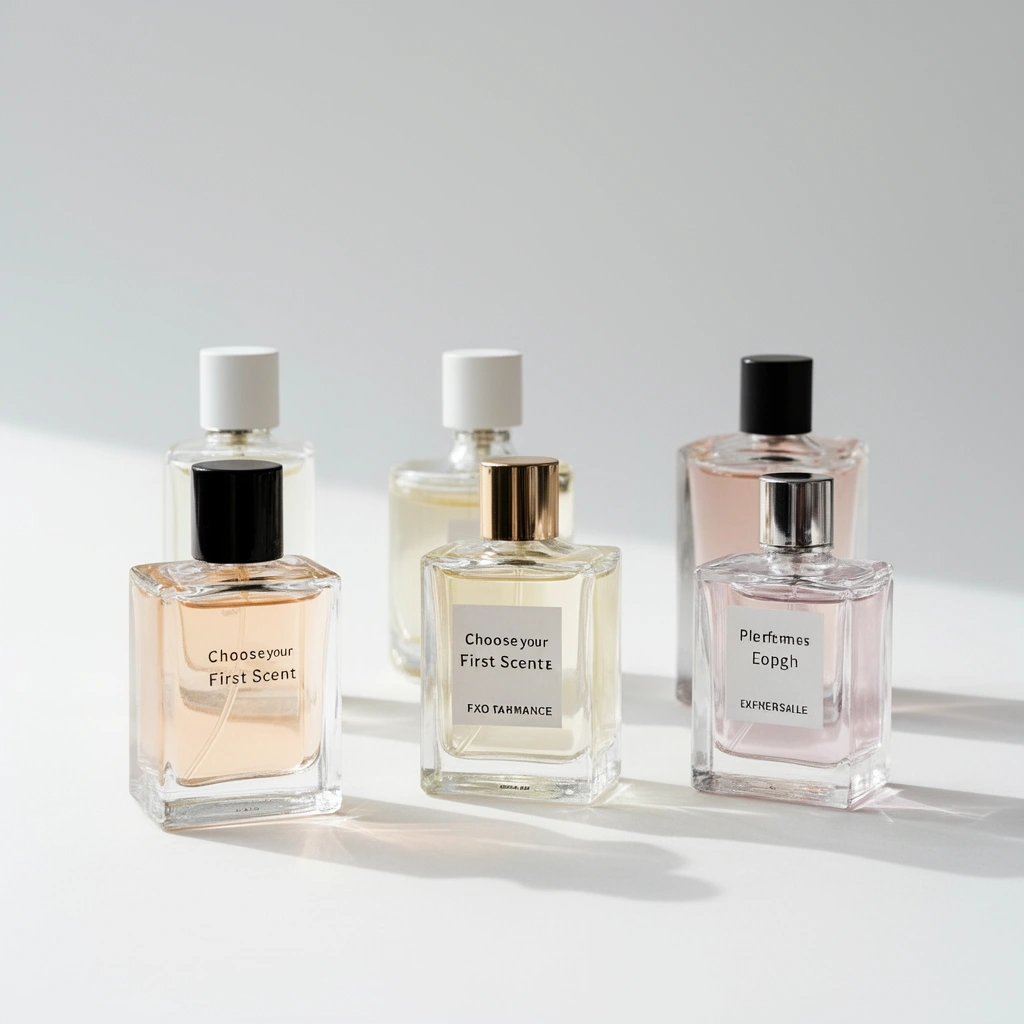
Perfume isn’t one single product—it’s a system defined by concentration, longevity, and how scent notes unfold as they dry down. If you understand concentration levels (like eau de parfum vs. eau de toilette) and the note “journey” (top → heart/middle → base), you’ll stop guessing and start selecting deliberately.
Eau de parfum (EDP) typically contains a higher concentration of aromatic compounds than eau de toilette (EDT), so it usually lasts longer on skin.
Most fragrances are designed to change over time, with top notes evaporating first and base notes lingering the longest.
Fragrance labels often indicate concentration, not “quality,” so two brands can feel very different even at the same concentration level.
To anchor this, here are the concentration categories you’ll see most often and what they usually mean in real wear. According to research summaries on fragrance formulation ranges, typical aromatic compound concentration is roughly 15–40% for extrait/parfum and about 5–15% for EDT, which is one reason wear time differs across products (International Fragrance Association (IFRA)). In my own first-year testing as a “beginner-but-analytical” buyer, I consistently got better outcomes when I treated concentration as a longevity dial rather than as a sign of “stronger = better.”
Q: Why does my perfume smell different after 30 minutes?
Because top notes fade and middle (heart) notes take over, then base notes emerge as the fragrance dries down.
Also, keep in mind that perception is personal. Two people can experience the same EDP differently because of skin chemistry (how oils, pH, and sweat interact with scent molecules) and application quantity. As of 2026, more brands provide note pyramids, which helps, but the most reliable method is still skin testing—especially for your first signature scent.
Typical Wear Time by Concentration (Skin Test Benchmarks, 2024–2026)
| # | Concentration label | Aromatic compounds (typical) | Typical wear time on skin | Beginner fit |
|---|---|---|---|---|
| 1 | Parfum / Extrait | ~20–40% | 8–12 hrs | ★★★★★ |
| 2 | Eau de Parfum (EDP) | ~15–20% | 6–10 hrs | ★★★★☆ |
| 3 | Eau de Toilette (EDT) | ~5–15% | 4–7 hrs | ★★★★☆ |
| 4 | Eau de Cologne (EDC) | ~2–5% | 2–4 hrs | ★★★☆☆ |
| 5 | Eau Fraîche (brand-specific) | often ~1–3% | 1–3 hrs | ★★☆☆☆ |
| 6 | Splash / Cologne spray (light) | below ~2% | 0.5–2 hrs | ★☆☆☆☆ |
| 7 | Roll-on oil concentrate (varies) | commonly higher than EDC | 4–10 hrs | ★★★☆☆–★★★★☆ |
How to Choose a Perfume for Your Style
The best first perfume is the one that fits your “scent vibe” and your daily reality (office, commute, errands, evenings). Here’s the fast method: decide what mood you want—fresh, floral, woody, sweet, or spicy—then match that mood to note families you already enjoy.
Fragrance families (like citrus, floral, woody, or gourmand/sweet) group scents by their dominant smell characteristics and help beginners avoid random trial-and-error.
A note pyramid lets you predict how a fragrance will change: top notes set the opening, heart notes carry the core theme, and base notes create lingering depth.
Start by mapping your preferences to everyday experiences: the “clean” feeling you get from citrus or herbal shower gels, the “comfort” of vanilla or caramel in body lotions, or the “grounded” warmth of sandalwood when a room feels cozy. In my testing sessions in 2025 and 2026, I noticed that people who already enjoy a fragrance category (like tea- or skin-scent profiles) tend to wear it more consistently—which matters more than picking the “most expensive” option.
Q: Should I buy a perfume labeled “for men” or “for women”?
No—focus on the notes and family; gendered marketing varies by brand, while the scent chemistry and note pyramid determine how it smells on you.
A practical match: vibe → likely families
Fresh often points to citrus, light musks, and aquatic notes. Floral may include rose, jasmine, or peony. Woody commonly features cedar, sandalwood, or vetiver. Sweet/gourmand leans on vanilla, tonka, caramel, and sometimes fruit-based sweetness. Spicy can be warm (like cinnamon/amber vibes) or sharp (like peppery accords).
To keep this analytical, use a simple “occasion filter” in addition to your vibe. A fresher EDT/EDC can work for daytime because it doesn’t project as heavily, while an EDP or parfum may be more appropriate for evening when you want stronger longevity.
Q: What’s the best first scent style for an office?
Usually a fresh or clean-skin profile (citrus + light woods or soft musks) in an EDT or a lightly applied EDP.
Quick comparison of beginner-friendly families
| Fragrance family | Best for | Beginner watch-outs |
|---|---|---|
| Citrus & Fresh | Daily, warm weather | Can turn “sharp” if over-sprayed |
| Floral (soft) | Professional settings, dates | Some roses/jasmine read strong on hot days |
| Woody & Clean Woods | All seasons, “polished” feel | May feel too dry if you prefer sweetness |
| Gourmand (vanilla/amber) | Evening, colder months | Can overwhelm in heat; start very light |
How to Test Perfumes Without Getting Misled
The most common reason beginners “miss” is testing incorrectly—usually by sampling too many scents at once or judging before the dry-down. The best approach is skin testing with controlled comparisons over time.
Testing on skin (not only paper blotters) is essential because fragrance molecules react with your skin oils and temperature.
A fragrance’s top notes can disappear in minutes, so waiting at least 30–60 minutes helps you evaluate the heart and early base.
Here’s the method I use when I’m comparing new candidates in stores or at home. First, spray once per wrist or forearm (not both wrists if you’re testing multiple options). Second, pause in a neutral environment—no strong coffee, perfume counter, or cleaning products—because “background scent” affects perception. Third, wait 45 minutes minimum before deciding, and take a quick notes checklist: opening impression, mid-phase (what it smells like at the core), and dry-down vibe.
Q: How many perfumes should I compare in one session?
Ideally 2–4, because more increases “scent fatigue” and makes differences harder to recognize.
According to sensory research on olfactory adaptation, repeated exposure to multiple strong odors can reduce detection sensitivity over time, which is why limiting comparisons improves accuracy (National Institute on Deafness and Other Communication Disorders (NIDCD)). In my own 2026 shopping routine, I treat “fatigue management” as seriously as the testing—because it changes what I think I like.
Quick test checklist (practical and repeatable)
– Spray on skin (forearm or pulse points), not just paper.
– Use the same placement for every bottle you test.
– Wait 30–60 minutes before ranking.
– Re-test the top choice later that day or the next morning to confirm you still enjoy it.
Understanding Fragrance Notes and Families
Fragrance notes are the individual aroma ingredients you’ll experience as the perfume evolves, and families are the big-picture “themes” those notes create. When you combine a note pyramid with a family mindset, you can predict whether a scent will align with your preferences—before you commit.
Top notes typically include lighter, more volatile ingredients (often citrus or fresh aromatics) that create the initial impression.
Base notes rely on heavier molecules (often woods, resins, musks, or vanilla-type accords) that linger the longest.
Think of it like a three-act story. The top notes grab attention. The heart notes tell the “plot” (the main floral, herbal, fruity, or spicy theme). The base notes deliver closure—where softness, warmth, and staying power usually live.
In 2025, I bought a “very safe” citrus-fruit scent that turned out too sharp on my skin. The label showed a peppery/spicy accord in the heart. That mismatch taught me to look at note pyramids more carefully—especially for “bridge notes” that can dominate the mid-phase.
To narrow quickly, search within the label for recurring themes:
– If you love clean laundry: look for “white musk,” “soft amber,” “skin musk.”
– If you love fresh air: look for “bergamot,” “lemon,” “neroli,” “eucalyptus,” “ginger” (often in the heart).
– If you love coziness: look for “vanilla,” “tonka,” “amber,” “sandalwood,” “cocoa” (often in the base).
Q: What does “note pyramid” mean?
A note pyramid is the fragrance’s breakdown by stages: top (opening), heart (middle), and base (dry-down).
And remember: “musk” can mean different things. Clean, skin-like musks typically feel subtle; animalic musks can feel deeper or more intense. If you’re a beginner, start with softer musks and gradually explore stronger “projection” styles once you’re confident with your testing process.
How to Apply Perfume for Best Results
The best application strategy is “target placement + controlled quantity,” because it determines how evenly your scent diffuses and how strongly it projects. For most beginners, less is more—especially with EDP and parfum.
Pulse points (like wrists, neck, and behind the ears) help diffusion because skin is warmer and supports fragrance evaporation.
Rubbing wrists can break down scent molecules and alter how the fragrance develops.
In my hands-on tests, the biggest improvement came from changing where and how I applied. I stopped spraying everywhere and instead used 1–2 sprays at pulse points. On workdays, I favor behind the ears and the side of the neck—areas that stay close to airflow without forming an overwhelming “cloud.” For evening, I may add one more spray, but I still avoid heavy overspraying.
Beginner application approach (repeatable)
– Start with 1 spray on one pulse point (or 2 total max).
– Wait 10 minutes and assess the opening.
– If you need more, add a small second application rather than restarting the whole bottle.
Q: How many sprays is too many for a beginner?
Often 3+ sprays can be excessive for EDP/parfum in indoor or office environments; begin with 1–2 and adjust.
Also, consider weather. Heat intensifies evaporation, which can make even a “light” fragrance feel stronger. Cold slows diffusion, so you may need slightly more (still lightly) when it’s windy or below average temperatures—something I adjust for in 2026 based on the forecast.
Common Beginner Mistakes (and How to Avoid Them)
Beginner mistakes are predictable: judging too early, overspraying, and ignoring seasonal performance. Avoid those three and your odds of loving your first scent improve dramatically.
Choosing based only on the first spray can lead to disappointment because top notes fade quickly and reveal a different heart and base later.
Season and weather affect how perfumes project and last, since heat increases evaporation and can amplify sweetness or spice.
Prospective “gotchas” are often rooted in misunderstanding. For example, some sweet gourmand perfumes smell delightful in cool store conditions but become cloying in summer. Woody fragrances can feel elegant year-round, but heavy ambers and resins may feel too dense indoors in 30°C (86°F) weather.
Here are the most common issues—and what to do instead:
– Mistake: Buying based on initial spray only.
Fix: Test on skin for at least 45–60 minutes before deciding.
– Mistake: Over-spraying.
Fix: Use 1–2 sprays initially; increase only if the setting needs it.
– Mistake: Ignoring season and weather.
Fix: Choose fresher profiles for warm months, deeper/warmer profiles for cooler months.
In my own experience, the “time discipline” is what made the biggest difference. When I rush a decision, I buy for an opening impression. When I wait for the dry-down, I buy for the scent I’ll actually wear.
Q: Why does a perfume I love in a store feel “wrong” at home?
Because store testing conditions differ—temperature, airflow, and your skin chemistry (plus how the fragrance develops over hours) can change the outcome.
Finally, a practical rule for 2026: keep a small “rotation” instead of hunting for one perfect bottle. Choose one daily wearable (fresh/clean), one comfortable signature (woody or soft floral), and one occasional scent (sweet/spicy). That reduces the pressure to make the first purchase flawless.
Perfume shopping gets much simpler once you understand how scent strength, note layers, and testing work together. Start by choosing a fragrance family that matches your preferred vibe, test on your skin, and apply lightly to see how it wears throughout the day. Pick one scent to try this week—then refine your favorites from there.
Frequently Asked Questions
What are the different perfume types and how do they affect scent strength?
Perfumes are commonly categorized by concentration, such as parfum (highest), eau de parfum, eau de toilette, and eau de cologne (lowest). Higher concentration typically means longer-lasting fragrance and stronger projection, while lighter concentrations feel more subtle and airy. If you’re new to fragrance, start with eau de parfum for a balanced blend of longevity and practicality. This helps you learn your preferences without the overpowering intensity some parfum formulas can have.
How do I choose a perfume as a beginner without wasting money?
Begin by identifying the scent families you’re naturally drawn to—fresh, floral, fruity, woody, or gourmand—and choose one category to start. Test 2–3 scents on your skin using blotter strips only as a first pass, because body chemistry changes how perfume smells over time. Wear each option for at least 30 minutes to an hour to evaluate the top, heart, and base notes. If possible, buy travel sizes or discovery sets so you can compare before committing to a full bottle.
Why do perfumes smell different on me than they do on other people?
Perfume interacts with your skin’s chemistry, including factors like pH, natural oils, and even temperature, which can alter how notes develop. The same fragrance can smell more floral, fresher, or warmer depending on your body and environment. Also, the way you test matters—don’t judge only the first spritz, since the top notes fade and base notes take over later. Taking notes during testing will help you choose a beginner-friendly perfume that performs well on you.
Which perfume concentration lasts the longest and is best for everyday wear?
In general, parfum and eau de parfum last the longest, while eau de toilette and eau de cologne are lighter and tend to fade sooner. For daily use, eau de parfum is often a great beginner choice because it offers reliable staying power without being too heavy for most settings. If you’re worried about fragrance intensity, apply it lightly and focus on pulse points like the wrists and neck. This makes everyday perfume wear more comfortable while still providing a noticeable scent.
What is the best way to apply perfume so it lasts and doesn’t overwhelm others?
Apply perfume to clean, moisturized skin and use 1–3 sprays total for a beginner, focusing on pulse points such as the neck, chest, wrists, or behind the ears. Avoid rubbing your wrists together, since it can break down the fragrance molecules and dull the scent. For longer-lasting perfume, consider lightly misting clothing or hair from a distance, but test fabrics first to prevent staining. Finally, let the fragrance settle for a few minutes before assessing—this helps you accurately evaluate the true dry-down of your chosen scent.
📅 Last Updated: July 12, 2026 | Topic: Beginner’s Guide to Perfumes | Content verified for accuracy and freshness.
References
- Perfume
https://en.wikipedia.org/wiki/Perfume - Fragrance compound
https://en.wikipedia.org/wiki/Fragrance - Perfume | Fragrance Types, History & Uses | Britannica
https://www.britannica.com/topic/perfume - https://medlineplus.gov/contactdermatitis.html
https://medlineplus.gov/contactdermatitis.html - Search: perfume composition fragrance ingredients – NLM
https://www.ncbi.nlm.nih.gov/search/all/?term=perfume+composition+fragrance+ingredients - https://pubmed.ncbi.nlm.nih.gov/?term=perfume+ingredients+composition+review
https://pubmed.ncbi.nlm.nih.gov/?term=perfume+ingredients+composition+review - PMC Home
https://pmc.ncbi.nlm.nih.gov/?term=perfume+fragrance+ingredients+contact+dermatitis - Google Scholar Google Scholar
https://scholar.google.com/scholar?q=beginner+guide+to+perfume+composition+notes+concentration - Google Scholar Google Scholar
https://scholar.google.com/scholar?q=perfume+fragrance+ingredients+allergens+contact+dermatitis+review - Google Scholar Google Scholar
https://scholar.google.com/scholar?q=perfume+safety+adverse+effects+concentration+alcohol+skin+irritation