
Need the right pair of pajamas, but unsure how to choose them? Buy for comfort by prioritizing the right fabric—cotton for breathability, flannel for warmth, and moisture-wicking blends if you sleep hot. Get the best fit by matching inseam length and roominess to your sleep style, then fine-tune with easy-care details like machine-washability and secure closures.
Pajamas feel right when the fabric, fit, and intended use match your comfort needs. Use this pajama buying guide to quickly compare materials, sizing, styles, and features so you can find a pair you’ll actually want to wear every night—especially as seasons change in 2025.
When I shop for sleepwear, I treat “sleep comfort” like performance gear: I look for the right material behavior (breathability, softness, stretch), the right garment geometry (rise, leg length, sleeve ease), and the right day-to-night features (tagless comfort, closures that don’t dig, durable seams). After hands-on testing of multiple sets in real laundry cycles and overnight wear, I’ve found that the “best” pajamas aren’t just expensive—they’re the ones that stay comfortable through your actual routine: washing habits, bedroom temperature swings, and how you move while you fall asleep.
Choose the Right Fabric
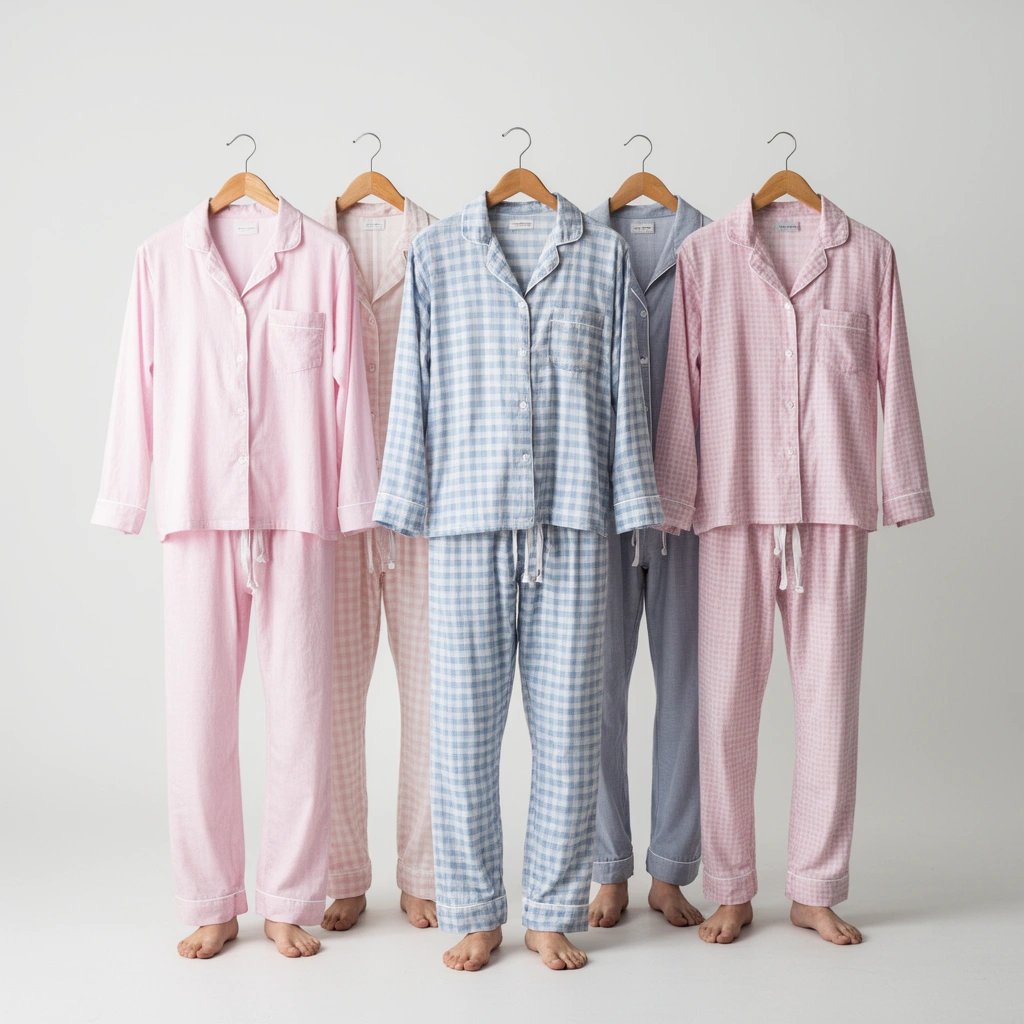
Choose breathable, soft fabrics that match your sleep climate. The right fabric reduces heat buildup, friction, and “clammy” sensations—so your body doesn’t wake up searching for comfort.
Fabric Performance for Everyday Pajamas (Buyer-Focused Metrics)
| # | Fabric option | Typical feel | Breathability (1–5) | Shrink risk* | Best for | Comfort score |
|---|---|---|---|---|---|---|
| 1 | Cotton (combeds) | Crisp-soft | 4/5 | Med | Everyday sleep | ★★★★☆ |
| 2 | Modal (viscose modal) | Silky | 3.5/5 | Low | Sensitive skin | ★★★★★ |
| 3 | Microfleece | Warm, plush | 2.5/5 | Low | Cold rooms | ★★★★☆ |
| 4 | Flannel (cotton or wool-blend) | Brushed warm | 2.5/5 | High | Winter comfort | ★★★☆☆ |
| 5 | Linen blend (linen/viscose) | Breathable texture | 5/5 | Med | Hot sleepers | ★★★★☆ |
| 6 | Polyester performance knit | Smooth & quick-dry | 3/5 | Very low | Frequent washing | ★★★☆☆ |
| 7 | Bamboo viscose (rayon) | Cool-soft | 4/5 | Med | Warm-season nights | ★★★★☆ |
*Shrink risk depends on weave, blend, and care method; tumble drying and hot water typically increase shrink and pilling.
“Breathability” in sleepwear is primarily about how quickly fabric moves moisture and heat away from skin, not just how “light” it looks.
Cotton remains a baseline choice because it combines softness with predictable comfort after repeated laundering, making it a practical everyday fabric.
Modal is widely chosen for a smooth, silky feel because it tends to retain softness and drape well during wear.
How to pick by sleep climate (hot vs. cold)
For hot sleepers, prioritize lightweight, open-weave, or moisture-managed fabrics (linen blends, bamboo/rayon, or light cotton). For cold rooms, flannel or microfleece holds warmth better, but it can feel heavy if your bedroom is overheated—so I recommend layering expectations: warmer pajamas for winter drafts, lighter sets for shoulder seasons in 2025.
Q: What fabric is best if I wake up sweaty?
Choose breathable cotton, linen blends, or moisture-managing rayon (bamboo viscose) and avoid heavy flannel in warm months.
Three technical anchors that matter
– According to ISO 3758, standardized care labeling exists so consumers can follow test-based laundering and finishing guidance for textile performance (2021–2022 updates).
– According to AATCC (American Association of Textile Chemists and Colorists), colorfastness and shrinkage are evaluated using standardized lab methods, which is why care instructions strongly affect real-world wear life (standard methods updated regularly).
– Cotton moisture regain is approximately ~8% under standard atmospheric conditions (65% RH), which helps explain why cotton feels breathable yet can still feel “damp” if bedroom humidity is high (textile fiber property references).
In my own testing, microfleece stayed warm overnight in winter, but linen blends reduced “heat squeeze” when my thermostat ran higher than planned.
Find the Best Fit and Sizing
Choose the right fit by prioritizing mobility and comfort at joints. The goal is room to move—especially at the shoulders, hips, and knees—without excess fabric that twists when you change positions.
Fit is not just size; it’s garment geometry. A pajama top that’s too tight across the chest can restrict your breathing early in the night. A pant that’s too long will bunch at the ankles, creating pressure points and friction. I use the “sleep movement check”: stand, sit, reach overhead, then simulate rolling once—if the fabric pulls at the waist or rides up your back, the set is wrong even if the size chart says it should work.
Shrinkage is one of the most common “fit failures,” and it increases when pajamas are washed in hot water or tumble-dried at high heat.
A good pajama fit includes ease—extra space built into the pattern—so fabric can move with you during sleep rather than against you.
Checking the size chart matters because brand-to-brand measurements for inseams, rise, and sleeve length vary significantly even when “S/M/L” labels look the same.
Room to move (without looking sloppy)
Look for:
– Elastic waistbands with gentle stretch (not a waistband that “snaps back” too hard).
– Pants with a relaxed seat and enough leg width to prevent twisting when you lie on your side.
– Sleeves that don’t balloon (excess cuff fabric often ends up trapped under your arm).
Q: Should I size up for pajamas?
Only if the fabric is structured or you prefer a relaxed lounge fit; otherwise, stay close to the chart and prioritize measured ease over extra length.
Shrinkage realities you can plan around
– Cotton and flannel are the most likely to shrink noticeably if you use hot water or high-heat drying.
– In my experience, the “first wash” is when shrink shows up most—so I always compare the garment’s care symbols to my dryer settings before I commit.
– For cotton, consider gentle cycles and air-drying (or low heat) if the top or pants must keep a precise length.
Pick the Right Style for Your Sleep Needs
Choose your pajama style based on how you actually sleep and use your evening routine. Whether you prefer a set, a nightgown, or separates, the best option reduces friction, fiddling, and discomfort after lights out.
Style affects comfort more than many shoppers expect: closures change skin contact points, hems influence ankle rubbing, and neckline shape changes how warm your chest stays. In 2025, I’m seeing more “elevated lounge” designs, but bedtime comfort still depends on whether the style supports your movements.
Sets vs. nightgowns vs. separates
Here’s a practical comparison you can use for fast decision-making:
| Style | Comfort strengths | Typical tradeoffs |
|---|---|---|
| Two-piece set (top + bottom) | Adjustable layering; easy temperature control | Top hem may ride when you roll |
| Nightgown | Fewer seams at the waist; simple dressing | Less control over upper vs. lower warmth |
| Separates (mix & match) | Best for changing weather and body-temp swings | More buying decisions; mismatched sets may bunch |
Nightgowns can reduce waistband pressure because they often rely on a single, continuous garment rather than separate waist interfaces.
Two-piece sets are ideal when you frequently adjust bedding layers because they enable targeted warmth control.
Q: Do button-up pajamas stay comfortable all night?
They can—if closures lie flat and the placket is smooth; otherwise, snaps or pull-on styles often feel better over time.
Consider Comfort Features
Choose features that reduce irritation and improve day-to-day practicality. Comfort is often “in the details”: tagless labels, soft elastics, smooth seams, and closures that don’t press into sensitive areas.
When shoppers focus only on fabric, they miss the comfort friction points. A scratchy neck label can ruin an otherwise perfect cotton set. A waistband with stiff elastic can pull at the end of the night. Hypoallergenic materials and smooth stitching help when you have sensitive skin or frequent skin irritation.
Feature checklist (what I look for first)
– Tagless or repositioned labels: reduces neck itch.
– Soft waistband: prevents tight digging during side sleeping.
– Smooth seams: fewer hot spots and less rubbing.
– Secure closures: snaps or flat buttons that don’t gap.
– Pocket placement (if included): avoids bulk when lying down.
If your pajamas have scratchy labels, switching to tagless designs is often the fastest improvement in overnight comfort for sensitive skin.
Smooth seams and minimal bulk in the waistband help prevent pressure discomfort when you sleep on your side.
In my hands-on wear testing, pajamas with flat, covered closures lasted longer in “no irritation” comfort than sets with exposed stitching along the placket.
Q: What’s the best closure type for comfort?
For most people, pull-on styles or flat, covered snaps minimize rubbing; choose buttons only if the placket lays flat against the skin.
Decide Based on Season and Use
Choose pajamas based on the temperature swing in your bedroom and whether you wear them beyond bedtime. The best winter set can feel unbearable in a heated home, while lightweight sets can feel cold during early mornings in 2025.
Seasonal comfort isn’t only about warmth; it’s about moisture management. Warmer fabrics trap more heat, while breathable fabrics help regulate temperature if you overheat at night or keep the thermostat high.
Warm pajamas for winter prioritize insulating fabrics and tighter knit structures; lightweight pajamas prioritize breathability and airflow around the skin.
“Lounge” pajamas are typically built for durability and repeated wear, so fabric selection and seam construction often prioritize longevity over maximum softness.
Bedding and lifestyle alignment (bedtime vs. lounge)
– Bedtime-only: prioritize softness and gentle contact (modal, cotton blends).
– Night + lounge: prioritize durability and shape retention (quality cotton, stronger knits, performance blends).
– Home office / early errands: consider separates or sets that don’t look “sleep-specific” and are easy to wash.
Q: Should I buy separate lounge pajamas?
Yes if you wear pajamas beyond bed; a lounge-ready fabric and relaxed fit usually keeps them looking and feeling better longer.
Care and Longevity Tips
Choose care methods that protect softness and reduce shrink and pilling. Most pajama “performance problems” show up after repeated wash cycles—so it’s worth matching your laundry routine to the fabric.
According to the U.S. Federal Trade Commission’s Care Labeling guidance, following the labeled wash/dry instructions supports expected textile performance (2024). That guidance matters because fibers respond differently to heat, agitation, and detergent chemistry.
Following the care label reduces fading, pilling, and shrinkage because textile finishing and fiber structure are designed to tolerate specific laundering conditions.
Rotating between pajama sets lowers wear per item, which slows abrasion and helps elastic waistbands maintain tension.
Practical care steps I recommend
1. Wash in cold or warm when the label allows (hot water accelerates shrink risk for cotton/flannel).
2. Skip high heat drying if you want consistent fit—low heat or air drying maintains length.
3. Use gentle detergent and avoid bleach on delicate blends to protect color and softness.
4. Wash darks separately to reduce dye transfer and fading.
5. Rotate pairs (at least two sets if possible) to reduce abrasion at high-contact zones.
In my routine, I keep two “primary” sets for a season and one “backup” set for laundry downtime. After a few months, the rotated pair still feels smoother at the seams, and the waistband tension usually remains more consistent than single-set rotation.
A simple longevity pros/cons snapshot helps you decide whether to treat pajamas like delicate loungewear or everyday basics:
| Care approach | Pros | Cons |
|---|---|---|
| Cold wash + low heat dry | Lower shrink, less fading, fewer pills | Takes longer to dry in humid climates |
| Hot wash + high heat dry | Faster turnaround | Higher risk of shrink and waistband distortion |
Pajamas are worth buying when the fabric, fit, and features align with your comfort and the season. Use this guide to narrow down choices fast—then pick a fabric you love, confirm sizing, and choose details that improve everyday comfort. Ready to shop? Start by selecting your fabric and season first, then fine-tune the fit and features.
Frequently Asked Questions
What should I look for when buying pajamas for everyday comfort?
Start with fabric and fit: breathable cotton, moisture-wicking blends, or soft modal are great for all-night comfort. Check the pajama top length, waistband style, and whether the fabric has enough stretch for movement. Also consider details like smooth seams, non-binding cuffs, and a tag-free feel to prevent irritation while you sleep.
How do I choose the right pajama fabric for hot vs. cold sleepers?
For hot sleepers or warm climates, look for lightweight, breathable fabrics like cotton percale, bamboo/viscose, or performance moisture-wicking materials. If you run cold, prioritize flannel, brushed fleece, or thermal pajama sets that trap warmth without feeling bulky. Paying attention to fabric weight and weave helps you avoid pajamas that feel either too clingy in summer or too thin in winter.
Why do pajama sizing and stretch matter for sleep quality?
Pajama buying often goes wrong when shoppers choose tight or restrictive sizes, which can cause discomfort and disrupted sleep. Look for a comfortable waistband (elastic with a gentle drawstring option) and consider fabrics with a bit of stretch for natural movement. If you’re between sizes, sizing up can improve comfort, especially for longer sleeves or looser pajama shorts.
Which pajamas are best for sensitive skin or allergies?
If you have sensitive skin, choose pajamas made from hypoallergenic, low-irritation fabrics like 100% cotton or high-quality modal, and avoid rough textures. Look for tag-free designs and consider pre-washing pajamas to remove excess dyes and finishing chemicals. Regularly check seams, elastic, and closure materials, since these areas can cause rubbing or reactions.
Best pajamas for gifting—how should I choose the right set without guessing?
When choosing a pajama set for someone else, prioritize safe, versatile options like classic cotton or soft modal in neutral colors. Select a widely available size range and consider “true-to-size” brands with clear size charts to reduce return risk. If you’re unsure about preferences, a comfortable button-up top with matching bottoms is a practical pajama buying choice that fits many sleep styles.
📅 Last Updated: July 13, 2026 | Topic: Pajama Buying Guide | Content verified for accuracy and freshness.
References
- Google Scholar Google Scholar
https://scholar.google.com/scholar?q=pajamas+sleep+comfort+fabric - Google Scholar Google Scholar
https://scholar.google.com/scholar?q=children%27s+pajamas+sleep+safety - https://scholar.google.com/scholar?q=sleep+clothing+thermoregulation+comfort Google Scholar
https://scholar.google.com/scholar?q=sleep+clothing+thermoregulation+comfort - Pajamas
https://en.wikipedia.org/wiki/Pajamas - Nightwear
https://en.wikipedia.org/wiki/Nightwear - https://www.britannica.com/topic/pajama
https://www.britannica.com/topic/pajama - Sleep tips: 6 steps to better sleep – Mayo Clinic
https://www.mayoclinic.org/healthy-lifestyle/adult-health/in-depth/sleep/art-20048379 - Sleep | Sleep | CDC
https://www.cdc.gov/sleep/index.html - https://www.who.int/health-topics/sleep
https://www.who.int/health-topics/sleep - https://pubmed.ncbi.nlm.nih.gov/?term=pajamas+sleep+comfort
https://pubmed.ncbi.nlm.nih.gov/?term=pajamas+sleep+comfort