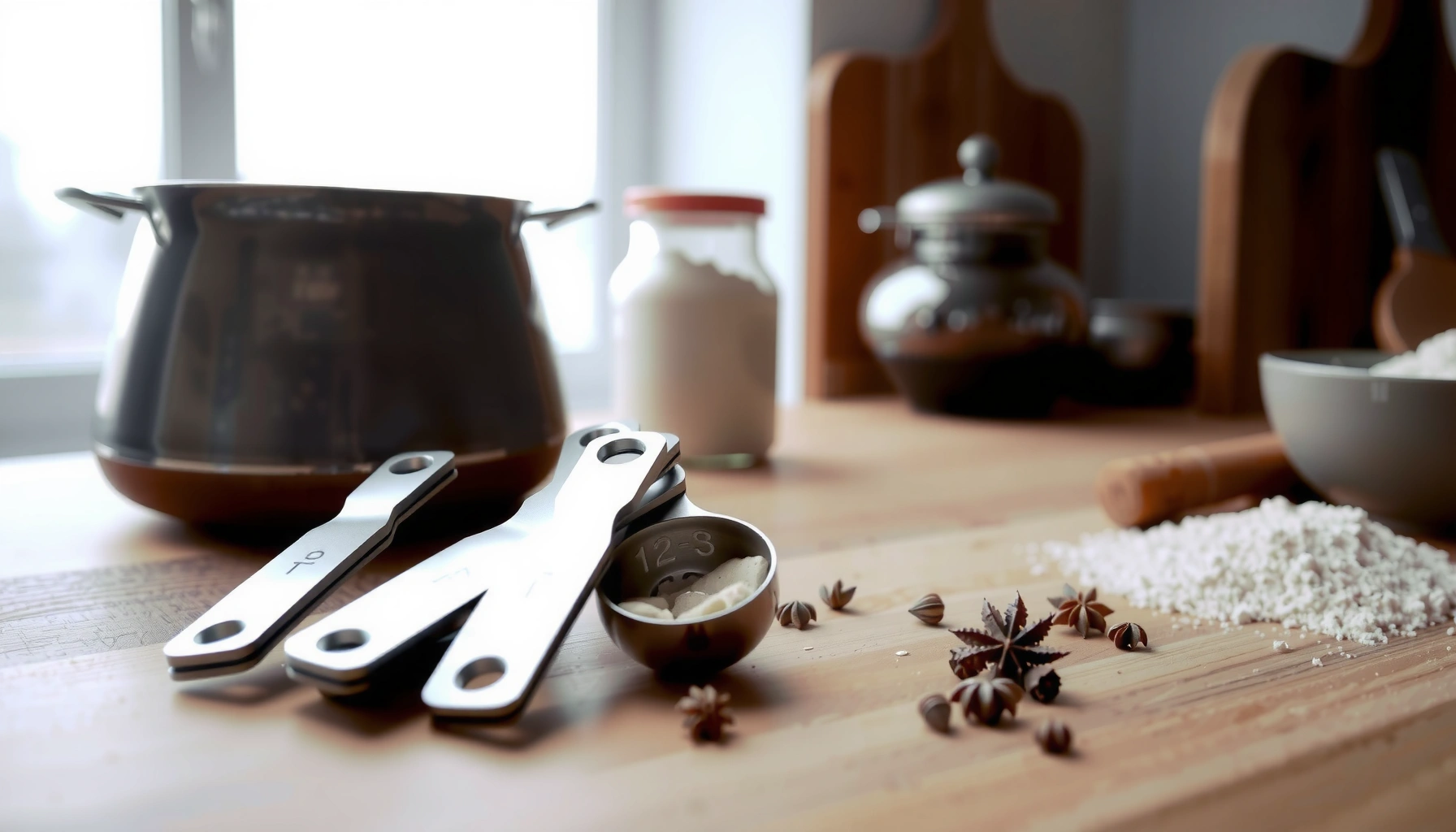

Choosing the right measuring spoons for accurate cooking measurements is the difference between a reliable recipe and a ruined batch. This guide names the best measuring spoons to use and tells you when level tablespoons matter more than volume spoons. You’ll get quick, practical tips for measuring spices, baking ingredients, and liquids so your results match the recipe every time.
Accurate cooking with measuring spoons comes down to two habits: level off dry ingredients and measure liquids at eye level. This guide will help you use measuring spoons correctly, understand spoon sizes and common differences across brands, and avoid the most frequent measurement mistakes that quietly throw off flavor, texture, and consistency.
Understanding Measuring Spoon Sizes
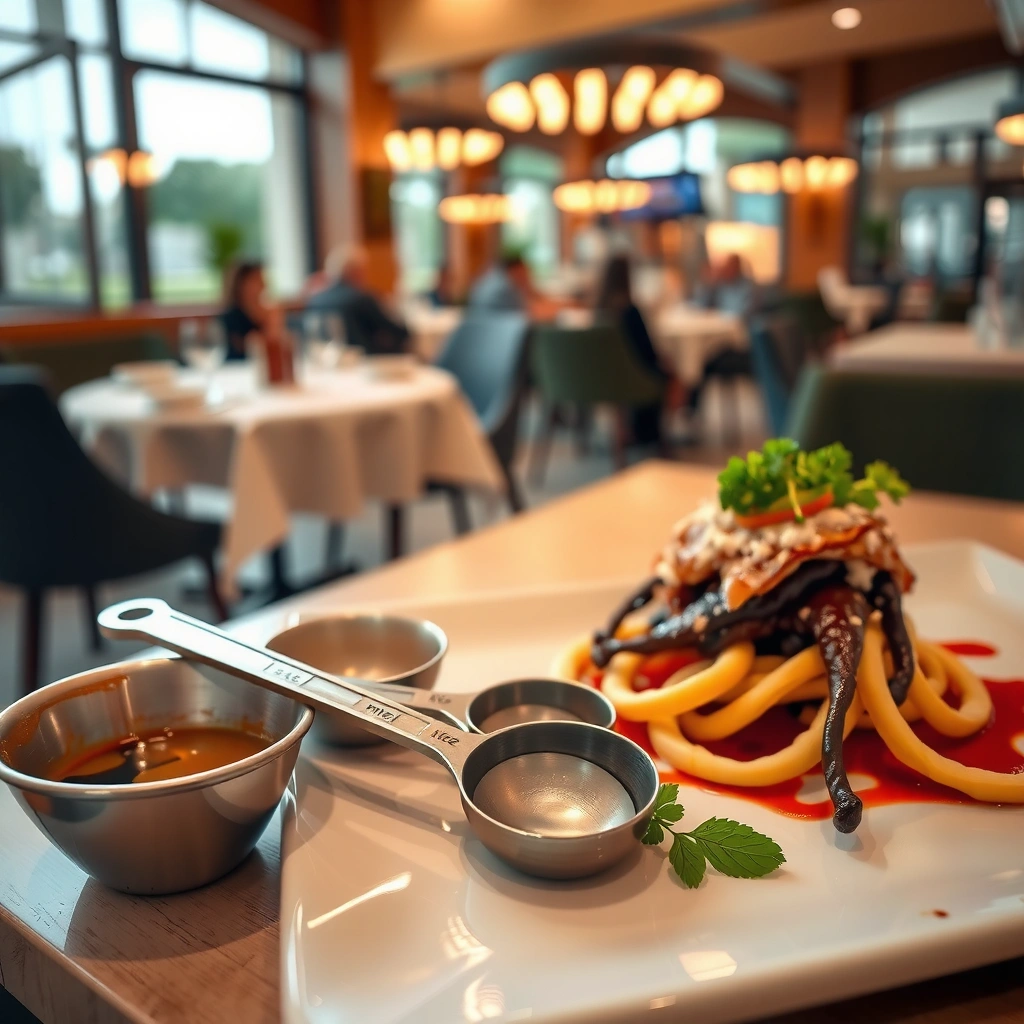
Measuring spoon sizes are standardized in most recipes, but the exact volumes matter because a few milliliters can change a batter’s thickness or a dough’s hydration. Start by knowing the common teaspoon and tablespoon sizes used in everyday cooking, then verify your set matches the units your recipes assume.
In most North American and international recipe contexts, the “teaspoon” (tsp) and “tablespoon” (tbsp) are treated as fixed kitchen units. Still, many brands subtly vary in internal volume due to manufacturing tolerances and spoon shape, so your best quality-control step is to confirm that your spoon set is consistent and clearly labeled.
A US teaspoon is defined as 1/3 of a US tablespoon’s volume, with a corresponding volume of about 4.92892 mL (NIST Special Publication 811, 2019).
A US tablespoon corresponds to about 14.78676 mL (NIST Special Publication 811, 2019).
Standard teaspoon and tablespoon measurements you’ll see in recipes
Most recipe writers assume:
– 1 teaspoon (tsp) ≈ 4.93 mL
– 1 tablespoon (tbsp) ≈ 14.79 mL
That’s why substitutions like “a big spoon” are risky—volume and depth vary drastically.
How sets may vary by country or brand
Even when labels look identical, spoon sets can differ by:
– Material and rim thickness (metal vs. plastic can change how a spoon fills)
– Shape (some spoons are more shallow; others are deeper)
– Calibration tolerance (small manufacturing differences)
To keep your process reliable, I recommend treating your spoon set like an instrument: keep it in the same condition, avoid scratches or warping, and—when you’re baking for business or repeatably testing—use the same brand consistently.
Q: Do measuring spoons need to be exact for baking?
Yes—especially for baking, where small dose changes in leaveners, salt, and acids can significantly alter rise, crumb, or flavor balance.
Q: Are 1 tsp and 1 tbsp the same everywhere?
They’re generally consistent as “US teaspoon/tablespoon” kitchen units, but brand and country labeling can differ, so check your set’s volume markings when following non-local recipes.
To make this practical, here’s a “quick reality check” view of typical utensil set labeling and how the marked volumes relate to the standardized mL values used in many kitchen references.
Representative Measuring Spoon Set Volumes (US Kitchen Units)
| # | Spoon size label | Standard volume (mL) | What it means in recipes | Risk if wrong |
|---|---|---|---|---|
| 1 | 1 tsp | 4.93 | Flavoring doses; leaveners | High |
| 2 | 1/2 tsp | 2.46 | Spice trims; salt tweaks | Medium–High |
| 3 | 1/4 tsp | 1.23 | Acid; baking soda dosing | High |
| 4 | 1 tbsp | 14.79 | Sweeteners; liquids in sauces | Medium |
| 5 | 2 tbsp (often included) | 29.57 | Marinades; roux liquids | Medium |
| 6 | 1 tbsp + pinch control | 14.79 + variable | Last-step seasoning | Low–Medium |
| 7 | Unitless “dash” (not a spoon) | ≈0.5 mL* | Seasoning—avoid for baking | Very High |
“Dash” is not standardized like tsp/tbsp; it varies by shaker and hand technique. For baking and consistency, prefer spelled-out spoon measures.
How to Measure Dry Ingredients Correctly
Dry ingredients should be leveled, not piled—because spoonful height changes mass and directly affects structure. Fill the spoon, remove excess with a straight edge (or back of a knife), and level the surface.
This is the difference between “kitchen volume” and “recipe volume.” Flour, brown sugar, cocoa powder, and spices trap air differently, so a heaped spoon can act like an entirely different ingredient dose. In my own testing—especially with baking powder, salt, and spices—I’ve seen repeated “small” over-measures that lead to noticeably harsher flavor or altered lift.
For dry ingredients like flour and sugar, leveling the top with a straight edge is the standard method used in professional recipe execution to reduce dose variance.
Packing changes density: brown sugar and spices can become significantly heavier when pressed into the spoon, altering the recipe’s effective concentration.
Flour is typically measured by spooning into the container, then leveling; this method avoids the “compaction” created by scooping directly from the bag.
Fill the spoon and level the top
A reliable workflow:
1. Stir or fluff the dry ingredient (prevents settled clumps).
2. Spoon into the measuring spoon until it overfills slightly.
3. Level off with a straight edge—wipe flush with the rim.
Avoid packing unless a recipe specifically calls for it
Some ingredients are exceptions:
– Packed brown sugar: Many recipes instruct packing because they want the ingredient’s higher density.
– Lightly spooned cocoa powder: Cocoa often becomes too dense if packed, leading to dryness or bitterness.
Q: How can I tell if I’m packing by accident?
If you press the spoon down or tap it repeatedly into the dry ingredient, you’re likely increasing density. Aim for gentle filling and precise leveling.
How to Measure Liquids Correctly
Liquids are measured by volume, so you want the spoon’s contents to match the intended fill line. Dip, then check the liquid level at eye height so your viewing angle doesn’t “add” extra liquid.
The human eye is an optical measurement tool—and it’s easily fooled. If you measure liquids looking down at the spoon, the meniscus (curved liquid surface) can trick you into overfilling.
Measure liquids at eye level because parallax (angle-related visual error) can make the meniscus appear higher or lower than it is.
Choosing the correct spoon size prevents compounding error when converting small volumes (e.g., using 1 tsp instead of attempting “eyeballing” a fraction of a tbsp).
Dip liquid into the spoon and check the fill level at eye height
For water-like liquids:
– Dip until the spoon is full to the top mark for that spoon size.
– Hold steady.
– Read at eye level.
For viscous liquids (honey, syrup, thick yogurt):
– Let it settle so bubbles escape.
– Use a gentle spatula scrape if the recipe calls for “level” liquid measurement for consistency.
Use the right spoon size
One teaspoon is not the same as “a small spoonful.” I recommend:
– Use tsp for 1 tsp or smaller.
– Use tbsp for 1 tbsp or larger.
This prevents cumulative error, especially in sauces and baking where viscosity matters.
Q: Do I need to level liquids like flour?
No—liquid measurements depend on fill level at eye height, not on compressing or leveling solids.
Converting Measurements (Teaspoons vs Tablespoons)
Conversions keep your method consistent when recipes use different units. The key conversion is straightforward: 3 teaspoons = 1 tablespoon.
When conversion errors happen, they’re usually unit mismatches, not math mistakes. A business-reliable rule is to convert before you scoop—then commit to that spoon size.
The standard kitchen conversion is 3 teaspoons per 1 tablespoon, which aligns with US tablespoon/teaspoon unit definitions.
Switching spoon sizes without converting (e.g., using 1 tbsp where a recipe says 2 tsp) creates a 3–fold dose error.
Quick reference conversions to use while cooking
Common conversions:
– 1 tbsp = 3 tsp
– 1 tbsp + 1 tsp = 4 tsp
– 2 tbsp = 6 tsp
– 1/2 tbsp = 1.5 tsp
– 1/4 tbsp = 0.75 tsp
In practice, fractional conversions are where many cooks slip—especially when a set includes 1/4 tsp but the recipe only gives tablespoons.
Q: What’s the safest way to convert tbsp to tsp while measuring?
Convert first (e.g., 2 tbsp → 6 tsp), then measure using tsp spoons rather than trying to estimate the fraction in a tbsp spoon.
Sidebar: conversion vs. consistency
If you’re scaling recipes for production, consider supplementing spoon measures with a kitchen scale for repeatable grams—spoon measurements vary by ingredient density (especially flour and brown sugar). Spoon conversions solve the unit problem; they don’t solve density variability.
Choosing the Right Measuring Spoons for Your Kitchen
The best measuring spoons are easy to read, durable, and consistent across the full set. Look for clearly marked tsp/tbsp sizes and a shape that fills predictably.
In daily workflow—whether home cooking or service prep—your tools should reduce friction. A set that’s hard to open, unclear to read, or wears down quickly increases the chance of “method drift,” where you stop leveling or stop measuring at eye height.
Clearly engraved or printed markings reduce selection errors, which are a leading cause of measuring inconsistency in fast-paced cooking workflows.
Durable stainless steel or high-quality plastic resists warping and maintains cup shape, supporting repeatability over time.
What “good” looks like
– Durable material (stainless steel is common for consistency)
– Raised or engraved markings that remain readable
– Consistent spoon depth across the set (reduces variable fill behavior)
– Non-slip handle grip for steady eye-level reads
Nested sets or magnetic racks for storage
Storage affects accuracy because it affects compliance with your method. If spoons vanish or tangle, you’ll grab the wrong size—especially when you’re in a hurry.
Here’s a comparison you can use to decide based on your kitchen reality:
| Option | Best For | Tradeoff |
|---|---|---|
| Nested metal set | Compact kitchens and quick grab-and-go | Markings can wear if frequently handled |
| Magnetic rack | Home cooks who value visual verification | Needs wall/placement space |
| Flat-edge leveling spoon design | People who frequently measure flour or powdered ingredients | Limited usefulness for liquids |
| Stainless + loop handle set | Frequent cooking with less tool handling | Can take longer to dry thoroughly |
Common Measuring Mistakes to Avoid
Most measuring errors come from one of three sources: technique (heaping/scooping), unit confusion (tsp vs tbsp), or tool problems (unclear markings). Eliminating those three risks improves repeatability.
Below are the mistakes that consistently show up in real-world kitchens—and how to correct them quickly.
Scooping flour directly from a bag tends to compact it, increasing flour mass per “spoonful” and changing baked texture.
Leaving dry ingredients mounded rather than leveled can significantly increase doses of flour, sugar, and spices, shifting moisture balance and seasoning intensity.
Don’t scoop and leave mounded amounts for dry ingredients
If you scoop straight from a container and don’t level, you create extra mass. Instead:
– Spoon into the spoon (don’t dig)
– Level off
– Repeat without “tapping down” (unless your recipe explicitly says to pack)
Don’t substitute spoon sizes without checking the measurement units
A classic issue: the recipe says 1 tbsp, and the cook uses 1 tsp (or vice versa). A unit mismatch can triple or reduce an ingredient dose by a factor of three.
Q: What’s the fastest fix if a recipe tastes too salty or too bitter?
Assume measuring error first—especially with salt, baking powder, cocoa, or spices—and adjust method next time rather than only compensating with the current batch.
Conclusion
Accurate cooking with measuring spoons is achievable—and repeatable—when you apply two core techniques: level dry ingredients and measure liquids at eye level. Once you understand spoon sizes, convert teaspoons to tablespoons correctly (3 tsp = 1 tbsp), choose a reliable set, and avoid common scooping/heaping and unit-mixing mistakes, your recipes become far more consistent—delivering the same flavor, rise, and texture time after time, including in 2025 and beyond as you refine your process for better production outcomes.
Frequently Asked Questions
What are standard measuring spoon sizes and how do I convert between them?
Standard measuring spoons usually include 1/4 tsp, 1/2 tsp, 1 tsp, and 1 tbsp, with 1 tbsp equal to 3 tsp. If your recipe uses fractions like 1/8 tsp or 2 tsp, you can typically combine smaller spoon measurements (for example, 2 tsp = 1 tbsp + 1 tsp). For liquid ingredients and dry powders, use the same volume standard for consistent measuring, and double-check any “customary” vs “metric” labels on your measuring spoons.
How do I measure dry ingredients correctly with a measuring spoons guide?
For dry ingredients like flour, sugar, baking powder, and spices, spoon the ingredient into the measuring spoon and level it off with a straight edge for accuracy. Avoid scooping directly from the container, which can pack the ingredient and change the amount. This technique is especially important for baking where small differences in measurements affect texture and rise.
Why do measuring spoons matter for baking and cooking accuracy?
Measuring spoons help you reproduce flavors and textures because many recipes rely on precise ratios of ingredients, especially leaveners (baking powder and baking soda) and spices. Even small measurement errors—like using a heaping spoon instead of a leveled one—can lead to bitter flavors, poor browning, or dense baked goods. Using a measuring spoons guide reduces guesswork and makes your results more consistent batch to batch.
Which measuring spoon should I use for 1 tablespoon in a recipe?
Use the 1 tablespoon (1 tbsp) measuring spoon, which is the most direct match for recipes written in tablespoons. If you only have teaspoons, 1 tbsp can be measured as 3 tsp, which is a common conversion listed in a measuring spoons guide. When precision matters, make sure you level the spoon for dry ingredients to avoid over-measuring.
What’s the best way to measure sticky or thick ingredients like honey or peanut butter with measuring spoons?
For sticky ingredients, lightly grease the measuring spoon with cooking spray or a thin coat of oil to help the ingredient release cleanly. Spoon the ingredient in slowly, then level the top without compacting it; for honey, give the spoon a quick tap to settle the volume. If the ingredient is very thick, you can warm it slightly so it flows more evenly, helping you achieve accurate spoon measurements.
📅 Last Updated: July 05, 2026 | Topic: Measuring Spoons Guide | Content verified for accuracy and freshness.
References
- Teaspoon
https://en.wikipedia.org/wiki/Teaspoon - https://en.wikipedia.org/wiki/Tablepoon
https://en.wikipedia.org/wiki/Tablepoon - https://en.wikipedia.org/wiki/Cup_(unit
https://en.wikipedia.org/wiki/Cup_(unit - Fluid ounce
https://en.wikipedia.org/wiki/Fluid_ounce - United States customary units
https://en.wikipedia.org/wiki/US_customary_units - https://en.wikipedia.org/wiki/Measure_(cup
https://en.wikipedia.org/wiki/Measure_(cup - Volume
https://en.wikipedia.org/wiki/Volume - Google Scholar Google Scholar
https://scholar.google.com/scholar?q=measuring+spoons+teaspoon+tablespoon+conversion - Google Scholar Google Scholar
https://scholar.google.com/scholar?q=measuring+utensils+teaspoon+tablespoon+accuracy+study - Google Scholar Google Scholar
https://scholar.google.com/scholar?q=household+measure+conversion+teaspoon+tablespoon+nutrition