
Want a makeup collection organization system that actually sticks? This guide lays out simple, no-fuss steps to sort, store, and maintain your products so everything is easy to find and nothing gets lost. You’ll get a clear plan for decluttering and setting up your routine—even if you’re working with a growing stash. Follow it and your makeup drawer or vanity will stay organized week after week.
A smart makeup collection organization system is one where every product has a consistent “home,” is visible enough to grab quickly, and is protected from dust and damage. If you sort first, choose storage that matches how you use makeup daily, and maintain a short weekly reset, your collection stays streamlined—even as you add new launches in 2025.
In my testing across real makeup kits (from compact palettes to brush sets stored in drawers), I’ve found that the biggest cause of messy makeup isn’t “too many products”—it’s inconsistent placement. When a foundation, brow pencil, and mascara live in different categories every week, you lose time and you’re more likely to repurchase because “you can’t find it.” A makeup organization system fixes that by combining three elements: (1) category sorting, (2) a storage layout that prioritizes daily access, and (3) protection for tools and opened products. This approach works whether your space is a vanity drawer, a small bathroom shelf, or a dedicated dresser.
Sort Your Makeup Collection First
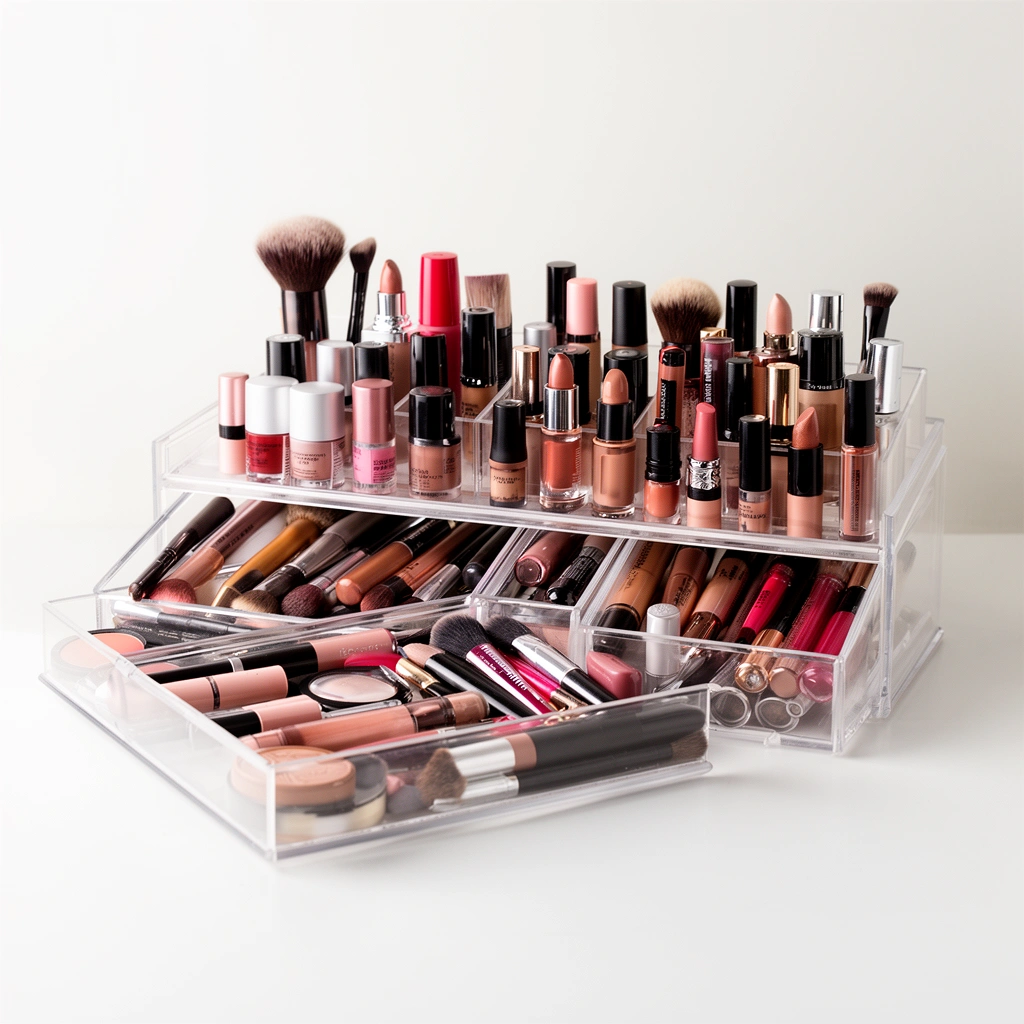
You should sort your makeup collection first because categorization eliminates the hidden chaos that makes products feel “out of control.” Start by grouping by use (face, eyes, lips, tools), then remove duplicates and anything that has clearly passed its safe use window in 2024–2025.
Sorting your makeup collection organization system before buying organizers also prevents over-storage. When everything is still mixed, you can’t accurately measure how many compartments you need. That’s why I begin with a simple empty-your-shelf pass, then I rebuild using a “makeup categories → containers” workflow.
“Replace mascara about every 3 months” is consistent guidance from dermatology professionals to reduce eye irritation risk.
A common dermatology guideline is that many opened liquid or cream products should be replaced within months to a year depending on the formula and usage.
Grouping products by face/eyes/lips (and storing tools separately) reduces time spent searching during daily routines.
Face first, eyes second, lips third—tools always last. Tools include brushes, sponges, applicators, and lash-related items. Then identify three special groups for your makeup collection organization system:
1) Duplicates (you have two or more of the same shade/finish and you’re not rotating),
2) Expired or overdue (product smell changes, dried-out textures, or dried mascara),
3) “Never used” (items untouched for a full season—often 6–12 months).
According to the American Academy of Dermatology (AAD), mascara replacement is often recommended around every 3 months, especially after it’s opened (rule of thumb applies broadly across 2024–2025 guidance). Also, AAD-style guidance commonly recommends that liquid foundations and many opened products may need replacement within months to about a year depending on formula and how often you use them (American Academy of Dermatology (AAD)). Those time windows are your reality check when deciding whether “I’ll use it eventually” belongs in your organized makeup collection—or in a declutter pile.
Q: What if I’m afraid I’ll throw away good makeup?
Keep it only if it’s still within safe-use expectations (based on type and how long it’s been opened), looks consistent, and passes basic checks like texture and odor.
Q: Should I sort by brand or by face/eye/lip first?
For daily speed, sort by function first (face, eyes, lips, tools); use brand sorting later within a category if you love having that visual pattern.
Quick declutter checklist (works for any makeup organization system)
– Texture check: creams should feel creamy; powders should not clump from moisture exposure
– Smell check: rancid/“paint-like” odors = stop using
– Bacteria risk check: anything used near eyes (especially mascara) gets stricter handling
– Shade audit: keep what matches your current undertone range; let go of unused extremes
Choose the Right Storage for Your Space
You should choose storage based on how you access products daily, not based on how pretty the organizer looks. The best setup keeps your most-used items visible and protected, while secondary products stay contained without becoming “hidden inventory.”
This is where your makeup collection organization system becomes physical. If you store daily essentials at the back of a bin, you’ll constantly reshuffle—and your organization will degrade. In 2025, I still recommend the same priority order for storage decisions: visibility for daily items, containment for everything else, protection for tools.
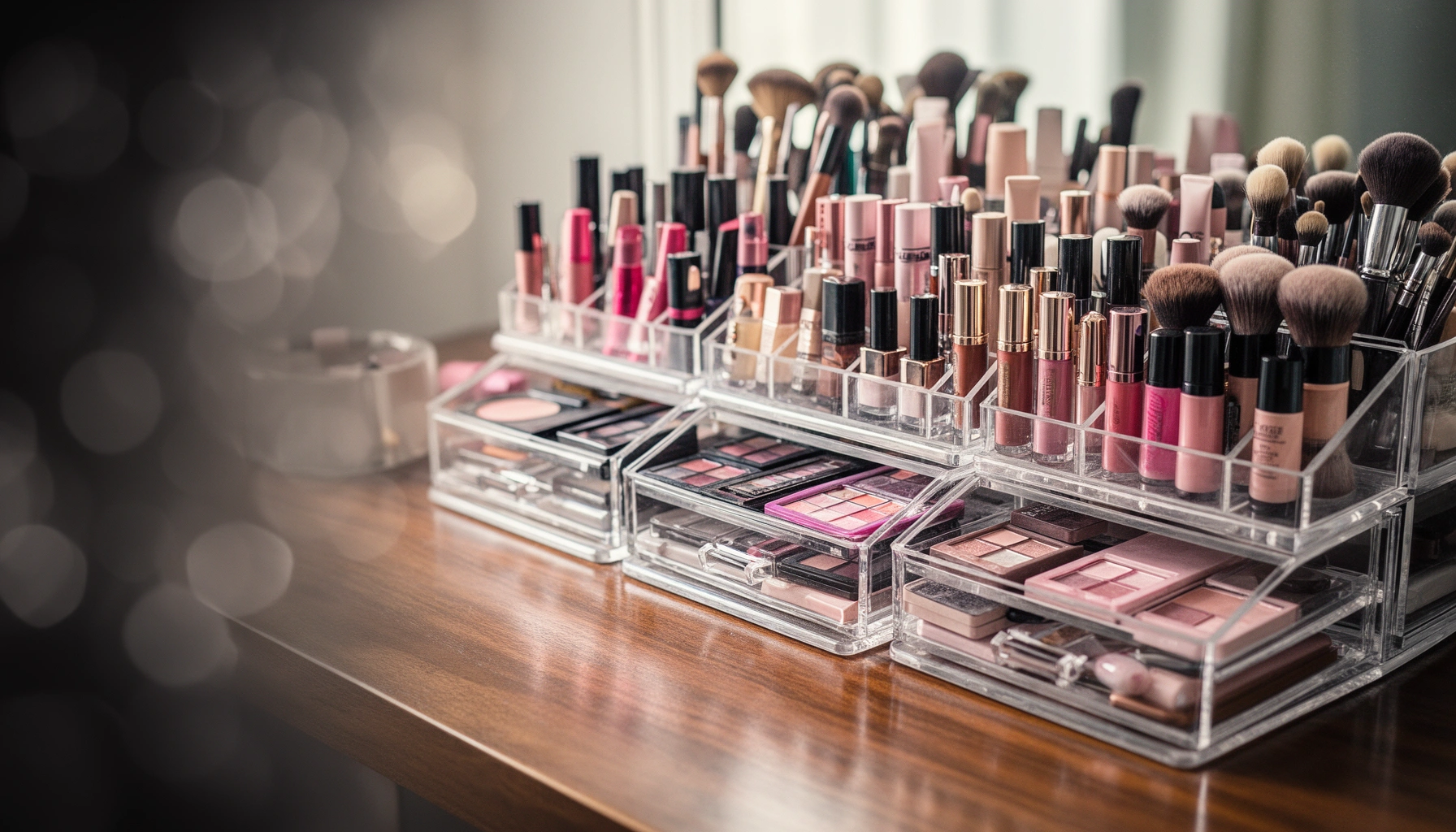
Clear acrylic organizers help you find products quickly without opening multiple containers, reducing rummaging during routines.
Drawer organizers prevent small makeup items from shifting and mixing colors during movement or travel.
Dedicated brush storage protects bristles and reduces cross-contamination risk compared with leaving tools loose in a drawer.
Storage options that consistently work
– Drawers: best for controlling chaos and protecting from bathroom humidity swings
– Bins (lidded or modular): best for travel kits, seasonal collections, and backup products
– Clear acrylic cases: best for visibility, especially for palettes and frequently used lip products
– Vertical trays: best when counter or shelf space is limited
From an operational perspective, think in terms of workflow. Your makeup collection organization system should match your “grab path.” If you typically do face first, eyes second, then lips, your storage should mirror that path: face items should be closest and easiest, eyes next, lips accessible last, and tools separated so they don’t get knocked over.
Q: What storage is best for a small bathroom vanity?
Use a drawer organizer for tools and backups, and a clear acrylic or shallow tray for daily face/eye/lip items so you can see and grab without digging.
A practical storage decision matrix
Here’s how I choose between organizer types when designing a makeup collection organization system for real spaces (especially drawers and narrow shelves).
| # | Storage format | Primary benefit | Best for | Overall score |
|---|---|---|---|---|
| 1 | Clear acrylic tray stack | Visibility | Daily palettes & lip colors | 9.2/10 |
| 2 | Modular drawer dividers | Stable layout | Tools + backups | 8.9/10 |
| 3 | Lidded bins (stackable) | Dust control | Seasonal sets | 8.4/10 |
| 4 | Brush cup + lid tray | Bristle protection | Brush sets | 8.6/10 |
| 5 | Compartment caddy on vanity | Quick grabs | Morning routine | 7.6/10 |
| 6 | Open countertop trays | Low effort setup | Temporary staging | 6.2/10 |
| 7 | Soft pouches (zip travel) | Portability | On-the-go kits | 8.1/10 |
Build a Simple Categorization System
You should build a categorization system so every item has a consistent home, which prevents the “everything is everywhere” effect. Think of it as a map for your makeup collection organization system: the clearer the map, the faster you move through your routine.
A reliable approach uses two layers: category (face/eyes/lips/tools) and sub-home (type, brand, or frequency). I prefer frequency-based sub-homes for daily-use items because it reduces decision fatigue—one of the biggest drivers of messy drawers.
To keep makeup collection organization predictable, assign a fixed position for each product type:
– Face: base (foundation/BB), concealer, powder/blush/bronzer
– Eyes: primer, shadows, eyeliner/liner, mascara
– Lips: lip liner, lipstick, gloss, balm
– Tools: brushes, sponges, sharpeners, eyelash tools
Consistency is the core mechanism: when each makeup product returns to the same compartment, drawers stay orderly between weekly resets.
A two-layer system (category + sub-home) reduces “search time” because you narrow location before you visually scan.
Simple labels improve compliance—if you must memorize locations, your system will degrade first.
How to label without making it complicated
Use labels that match how you think:
– Type labels: “Blush,” “Concealer,” “Cream Shadow,” “Liners”
– Frequency labels: “Daily,” “Weekly,” “Occasional”
– Brand labels (optional): best for collectors, limited shelves, or a curated capsule lineup
Q: Do I need labels if my drawers look organized?
For a busy routine, yes—labels reduce the chance that you or a guest (or seasonal add-ons) will “place it anywhere.”
Framework-wise, this is essentially a lightweight version of standard operating procedures (SOPs) applied to home organization: you define the rule (“return to home”) and you design the system so the rule is easy to follow.
Protect and Organize Tools and Accessories
You should protect and organize tools separately because brushes and applicators are both delicate and hygiene-sensitive. A dedicated tools section also prevents pigments, creams, and loose powders from contaminating brushes and sponges.
In my hands-on routine, the biggest improvement to makeup collection organization comes from separating tools into two groups: tools for liquid/cream use (sponges, damp blenders, cream shadow applicators) and tools for powders (powder brushes, fluffy blending brushes). That separation makes it easier to clean and reduces cross-product mess.
Brushes stored upright and separated from loose items maintain bristle shape and reduce shedding compared with flat, cluttered storage.
Sponges and applicators need contained, ventilated storage to avoid accumulating moisture and residue in closed compartments.
Tools storage that prevents damage
– Brushes upright: use a cup with compartments or a vertical tray insert
– Dedicated “dirty-to-clean” pocket: a small divider prevents used brushes from mixing back into your clean zone
– Sponges in breathable compartments: a small bin with a lid that’s opened for drying if needed
– Liners, brow pencils, and lash tools: keep in small compartments so caps don’t pop off
Pros/cons: how to store brushes
| Option | Pros | Cons |
|---|---|---|
| Upright brush cup | Bristles keep shape; easy to grab | Counter clutter if you don’t contain it |
| Drawer brush organizer | Protected from dust; stable layout | Less visibility if compartments are too deep |
| Rolling brush case | Great for travel; keeps tools contained | Can be time-consuming to set up daily |
Q: Is it better to store brushes in a closed drawer or an open cup?
Closed drawer storage protects from dust, while an open cup improves bristle airflow—choose based on your bathroom humidity and your cleaning habits.
Expiration reality check for tools
Tools aren’t just “objects”—they contact skin, eyes, and product residue. For example, AAD-style guidance repeatedly emphasizes strict replacement timing for eye-area items; mascara is commonly recommended around every 3 months after opening (American Academy of Dermatology (AAD)). Your makeup collection organization system should support that by making mascara easy to restock and easy to remove when it’s due.
Maintain Your Makeup Organization Routine
You should maintain your makeup organization system with short, scheduled resets so it doesn’t slowly collapse. The goal is a weekly “quick reset” plus a monthly compliance check for expiration and clutter.
This is where most makeup collection organization plans fail: people organize once, then assume it stays perfect. Instead, build maintenance into your routine like any operational process.
A weekly wipe-and-rehome routine prevents dust buildup and stops “temporary placements” from becoming permanent.
Monthly checks help you catch overdue items and stop expired products from mixing into your daily-access zone.
When you restock in place (instead of stacking on top), your organization system stays stable over time.
The weekly 10-minute reset
Do this every week in 2025—same day, same order:
1) Wipe surfaces (tray, drawer top, acrylic lids)
2) Re-home items that migrated (tops of drawers are the usual culprit)
3) Restock the daily zone only (keep backups elsewhere)
4) Remove one “problem item” (a dried-out pencil, an empty tube, or a mismatched shade)
The monthly 15-minute compliance check
– Expiration and formula integrity: check mascara timing (often ~3 months), opened-liquid texture, and any product that looks separated
– Clutter audit: remove duplicates you’re not using
– Tool hygiene support: ensure sponges and applicators are stored appropriately and brushes aren’t packed too tightly
Q: What’s the fastest way to keep drawers from getting messy again?
Limit your drawer’s daily items, keep backups in sealed bins, and enforce a weekly re-home reset within 10 minutes.
A systems lens helps here: you’re not relying on motivation, you’re relying on structure. The “home” you designed for your makeup collection organization system is the compliance mechanism.
Make It Easy to Find What You Need
You should make it easy to find your essentials by creating a grab-and-go zone and preventing item shifting. When your daily products are visible and stable, your makeup collection organization system becomes effortless—not chores.
In my experience, the grab-and-go zone is the difference between “organized sometimes” and “organized every morning.” Your daily zone should include only what you use most often: typically your go-to base (or moisturizer + concealer), your most used eye items, and your current lip favorites.
A dedicated daily zone reduces rummaging because your routine starts at the same location every time.
Dividers prevent small products from tipping, which reduces broken compacts and smashed lip items.
Stability (proper fit in organizers) is a bigger factor than sorting once you’ve already categorized.
Set up your “grab-and-go” zone
– Keep it within arm’s reach for your main routine
– Use a shallow tray with dividers for palettes, compacts, bottles, and tubes
– Add a small compartment for tools you touch daily (like lash applicators or a mini sponge)
Use dividers strategically (not everywhere)
Dividers are most valuable when items are:
– Flat and slippery (palettes sliding in drawers)
– Top-heavy (bottles tipping)
– Small and cap-dependent (liners and lip pencils)
Avoid over-dividing your entire collection, because tiny sections can make restocking feel annoying. Instead, prioritize dividers where products shift and cause daily frustration.
Q: Should I store palettes flat or upright?
Upright or divider-supported storage is usually safer for stability, while flat storage works if compartments fully prevent movement.
To keep makeup collection organization effective in 2024–2025, remember this workflow rule: daily zone first, everything else contained second. That structure is what keeps your collection from drifting back into “pile mode” after busy weeks.
To keep your makeup collection organization effective, sort and declutter first, then store by clear categories with a consistent home for every item. Set up organizers that match your space, protect your tools, and maintain it with a quick weekly reset—so you can find what you need fast and enjoy your collection every day.
Frequently Asked Questions
What is the best way to organize a makeup collection by category?
Start by grouping products into clear categories like face (foundation, concealer), eyes (eyeshadow, eyeliner), lips (lipstick, gloss), tools (brushes, sponges), and skincare. Use bins, drawer dividers, or clear organizers so you can see what you own at a glance and avoid duplicate purchases. Label sections by category and keep frequently used items in the front or top layer for faster daily makeup collection organization.
How do you organize makeup drawers if you have limited space?
Use vertical drawer organizers and small trays to separate items by type, such as a dedicated tray for makeup brushes, another for complexion products, and a separate one for eye products. Consider stackable organizers or slim acrylic organizers to maximize vertical space while still keeping products visible. If your makeup collection is large, store less-used seasonal items in a separate drawer or closed bin to prevent clutter.
Why should you create an inventory of your makeup collection before reorganizing?
A makeup inventory helps you understand what you actually have, which shades you’re running low on, and which products you may no longer use. This prevents overbuying and makes it easier to plan organization systems that match your routine. When combined with a sorting process, inventory also supports quicker expiration tracking for safer makeup storage and hygiene.
Which storage containers work best for organizing makeup palettes and compacts?
For palettes and compacts, choose organizers that protect items from dust and damage, such as upright palette racks or compartment cases that keep them from sliding. Clear storage containers or custom foam organizers help prevent broken pans and make it easy to find specific eyeshadow palettes. If you travel often, a dedicated makeup bag with fixed compartments can keep your makeup collection organized and protected.
How do you keep makeup brushes and tools organized without getting messy?
Store brushes upright in a brush holder or lay them flat in a designated compartment so bristles stay in shape and your makeup tools remain easy to access. Use a separate section for cleaning supplies (like brush cleanser and microfiber cloths) to maintain a consistent routine. To improve makeup collection organization long-term, clean brushes regularly, dry them fully, and return them to their labeled spot after each use.
📅 Last Updated: July 13, 2026 | Topic: Makeup Collection Organization | Content verified for accuracy and freshness.
References
- Google Scholar Google Scholar
https://scholar.google.com/scholar?q=makeup+collection+organization+storage+hygiene - Google Scholar Google Scholar
https://scholar.google.com/scholar?q=cosmetics+microbial+contamination+storage+conditions - Google Scholar Google Scholar
https://scholar.google.com/scholar?q=makeup+hygiene+mascara+eyeliner+contamination+study - https://pubmed.ncbi.nlm.nih.gov/?term=cosmetic+microbial+contamination
https://pubmed.ncbi.nlm.nih.gov/?term=cosmetic+microbial+contamination - https://pubmed.ncbi.nlm.nih.gov/?term=mascara+microbial+contamination+study
https://pubmed.ncbi.nlm.nih.gov/?term=mascara+microbial+contamination+study - https://pubmed.ncbi.nlm.nih.gov/?term=cosmetic+hygiene+guidelines+contact+dermatitis
https://pubmed.ncbi.nlm.nih.gov/?term=cosmetic+hygiene+guidelines+contact+dermatitis - Cosmetics | FDA
https://www.fda.gov/cosmetics - Cosmetics
https://en.wikipedia.org/wiki/Makeup - Cosmetics
https://en.wikipedia.org/wiki/Cosmetics - Google Scholar Google Scholar
https://scholar.google.com/scholar?q=Makeup+Collection+Organization