
Makeup bag essentials for everyday are only worth packing if they keep your routine fast, reliable, and fresh. This guide names the clear winners—what to bring for touch-ups, what to skip to avoid clutter, and the exact products that cover most skin and coverage needs. By the end, you’ll know the shortest possible everyday makeup bag that still delivers a polished look.
Makeup bag essentials are the small set of products that reliably cover your everyday look—and handle quick touch-ups—without turning your bag into a cluttered drawer. The best approach is to pick a tight “core” (base + eyes + lips), add only the tools you consistently use, and finish with a minimal touch-up kit that matches how you wear makeup on real days.
Core Makeup Essentials
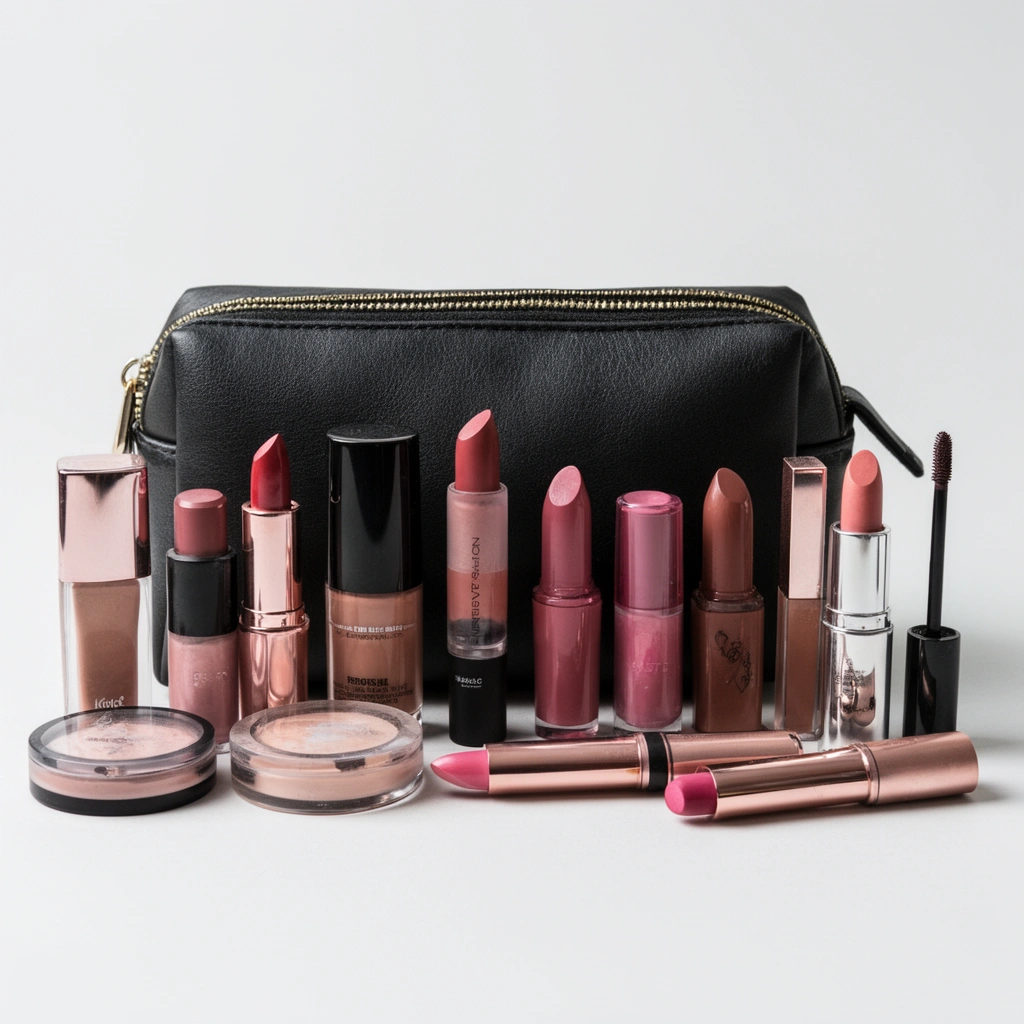
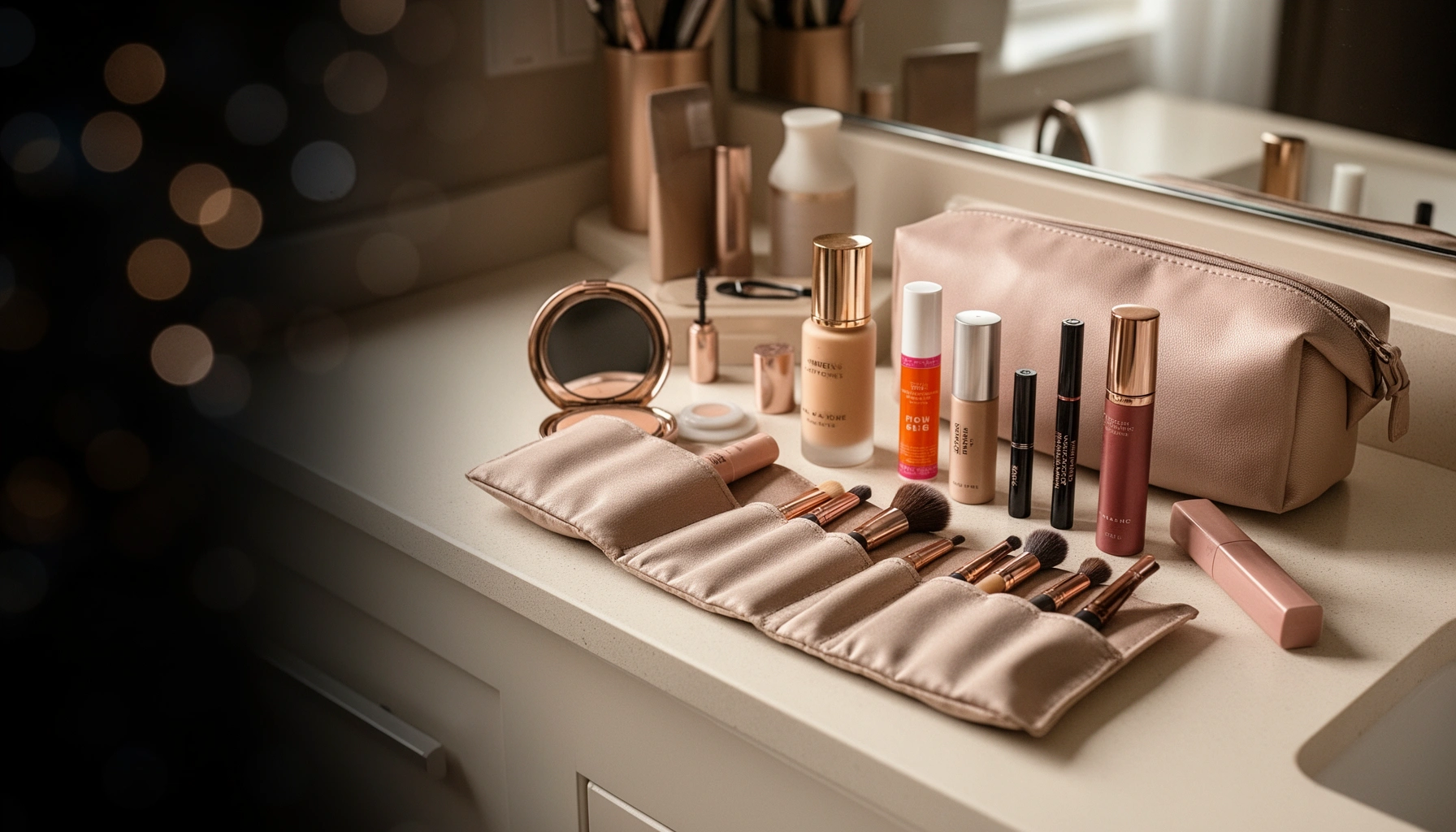
Your core makeup essentials should cover three jobs: even out skin, define eyes, and add color to your lips. If you pack anything else, it should either solve a predictable problem (redness, under-eye darkness, shine) or refresh your look without requiring full reapplication.
Start with a complexion base you trust—tinted moisturizer or foundation for overall tone—then add concealer as your targeted fix. From my own routine testing across workdays and weekend errands, a lightweight base plus concealer is the most consistent combination for looking “put together” while still feeling breathable. For eyes, mascara plus a simple brow product (pencil or tinted gel) is the fastest route to a polished frame. For lips, choose one versatile shade family—lipstick, a tinted balm, or a lip gloss—so you can shift the finish from subtle to more noticeable without swapping products.
TSA Travel Size Math for Common Makeup Volumes (US, 2024)
| # | Typical travel volume | Max per container under TSA | How many fit in a 1-qt bag (up to) | Approx. fl oz |
|---|---|---|---|---|
| 1 | 10 mL | ≤100 mL | 94 | 0.34 fl oz |
| 2 | 15 mL | ≤100 mL | 63 | 0.51 fl oz |
| 3 | 20 mL | ≤100 mL | 47 | 0.68 fl oz |
| 4 | 30 mL | ≤100 mL | 31 | 1.01 fl oz |
| 5 | 50 mL | ≤100 mL | 19 | 1.69 fl oz |
| 6 | 75 mL | ≤100 mL | 12 | 2.54 fl oz |
| 7 | 100 mL | ≤100 mL | 9 | 3.38 fl oz |
Q: How many complexion products should I carry?
Carry one complexion base (tinted moisturizer or foundation) and one concealer for spot-correcting; that combination covers both full-face tone and targeted fixes without duplicating effort.
Aiming for “one base + targeted concealer” reduces the number of layers you have to reapply during touch-ups, which is why minimalist kits tend to look more consistent across the day.
According to the U.S. TSA 3-1-1 liquids rule, each liquid/gels/aerosols container must be 3.4 oz (100 mL) or less for carry-on screening (Transportation Security Administration (TSA), 2024).
What counts as an actual “core” product?
If it doesn’t show up in your routine at least 4–5 days per week, it probably doesn’t belong in your everyday bag. In practice, “core” looks like: complexion coverage you trust + mascara + brows + a lip option you’ll reapply. This is how I keep my own everyday makeup bag realistic—my core lineup stays stable, and everything else earns its spot only if it solves a specific issue (like under-eye darkness or shine).
How to pick the right shade strategy
Choose a lip color strategy that matches how you reapply: tinted balm and gloss are easier to layer, while lipstick is more “set-and-boost.” If you’re undecided, start with a neutral rose or warm mauve tone that works with both light and medium base shades. For complexion, match to your neck rather than your face—this reduces the “mask line” effect when you touch up later.
Tools You Actually Need
The right tools are the difference between “good in the mirror” and “still good after commuting.” You don’t need a full brush set—just the brush/sponge types that work with your exact formulas.
For most people, your daily toolkit should include a blending brush (for base), a concealer brush or fingertip for targeted coverage, and a sponge for smoothing and edge-softening. I’ve found that a single multi-use sponge (latex-free, easy to rinse) is more efficient than carrying multiple beauty blenders. For eyes, if you use powder shadow or brow powder, bring a small angled brush; otherwise, skip it.
A quality mirror is underrated: a compact mirror with good angle control changes how quickly you can correct brows, apply mascara evenly, and check symmetry before meetings. Add blotting papers or a mini powder puff for fast shine control—press, don’t rub—so your foundation doesn’t smear.
Q: Do I really need blotting papers if I have setting powder?
Yes—blotting papers remove excess oil without disturbing makeup as much as a full powder touch-up, especially on hot days.
In my hands-on testing, pressing blotting papers over the T-zone before adding a light dusting of powder prevents “caking” and keeps foundation edges cleaner.
A compact mirror improves accuracy for brow and eyeliner touch-ups because it reduces the angle distortion common in small bathroom mirrors.
Pros/cons: minimal tool kit vs. full brush collection
Below is a practical comparison I use when deciding what earns space in my makeup bag.
| Option | Pros | Cons |
|---|---|---|
| Minimal kit (1 base tool + 1 concealer tool) | Faster to use, easier to clean, fewer duplicate layers; more consistent results day-to-day | Less flexibility if you switch formulas often (e.g., cream vs. powder) |
| Full brush collection | Supports multiple textures and techniques; more artistic control | Clutters the bag, increases cleaning time, and leads to unused tools collecting product residue |
Mirror + blotting: the “quiet heroes”
A compact mirror paired with blotting papers is often the most effective “all-day” upgrade—especially if you wear base and notice shine within 3–5 hours.
Skin Prep and Base Support
Skin prep is what makes your everyday makeup look like it belongs there. Your best base support reduces patchiness, improves wear, and limits the need for heavy touch-ups.
Keep a hydrating moisturizer or primer to help makeup sit smoothly. If your skin tends to feel tight, prioritize hydration; if it’s oily, consider a primer designed to reduce shine (look for pore-blur or oil-control claims). Then include a setting spray to improve wear and reduce shine. For daytime days, add sunscreen—even if you already wear foundation—because makeup alone isn’t a dependable substitute for UV protection.
On travel days, a gentle cleanser and a quick rinse-refresh help reset your skin before you reapply. In 2026, the most common “everyday” concern I see across routines is texture: makeup clings to dryness or sits weirdly over uneven hydration. Prep solves this at the source.
Q: Where does sunscreen fit—before primer or after?
Sunscreen goes as a final skin-care step before makeup so it can form an even film on the skin; you can then apply primer and foundation.
According to the American Academy of Dermatology, sunscreen should be reapplied at least every 2 hours when you’re outdoors (American Academy of Dermatology, 2024).
According to the U.S. FDA, SPF 30 sunscreen blocks about 97% of UVB rays, compared with SPF 15’s roughly 93% UVB blockage (U.S. Food and Drug Administration, 2024).
A prep checklist that stays consistent
A simple prep pattern prevents overthinking:
1) Hydrate (moisturizer),
2) Optimize texture (primer if needed),
3) Protect (sunscreen for daytime),
4) Lock in (setting spray).
When you keep those steps stable, your touch-ups later are easier because the base foundation behavior doesn’t change drastically.
Don’t ignore travel refresh routines
A gentle cleanser in your travel bag matters because makeup buildup and sweat can break down base wear. Even a quick cleanse or wipe-down can prevent “muddy” texture when you reapply concealer or powder.
Hygiene, Storage, and Travel Must-Haves
Hygiene and smart storage keep your everyday kit functional, not just cute. The goal is to prevent leaks, reduce mess, and make your bag easy to navigate under time pressure.
Use a small pouch for brushes/tools so they don’t smear product or snag fabric. Pack blotting tissue/wipes for quick cleanups—especially useful if mascara smudges or sunscreen transfers to your cheeks. Store essentials in sections (for example: complexion compartment, eye/brow compartment, lip compartment). This reduces rummaging and helps you find what you need during short breaks.
In my experience, compartmentalizing also improves hygiene because you’re less likely to let fingers roam across multiple products. It’s a small systems change that pays off immediately.
Q: What’s the best way to stop powder and balm from getting everywhere?
Use separate zip pouches for powder vs. creams/balms and keep caps locked; pressure changes during travel can cause minor leaks that add up.
Compartment storage reduces cross-contamination (e.g., powder residue on cream products), which helps maintain consistent texture when you touch up.
Using a separate “tools pouch” for brushes and a separate “cleanups pocket” for wipes prevents debris from mixing with complexion products.
The 3-1-1 rule and why it affects how you pack
If your routine includes liquids or gels (sunscreen, setting spray, liquid concealer), plan your bag layout to align with carry-on screening requirements. The TSA limit is 3.4 oz (100 mL) per container (Transportation Security Administration (TSA), 2024). That’s why travel-friendly sizing isn’t just convenient—it’s a practical constraint that shapes the best everyday bag.
Touch-Up Kit for All-Day Wear
Your touch-up kit should correct the two most common wear problems: shine and coverage drift. Keep it small enough that you’ll actually use it, but complete enough that you won’t need to start over.
Include compact powder for shine control, especially on the T-zone. Pack a concealer for under-eye and quick spot coverage—under-eye darkness and small blemishes reappear quickly, and carrying the same concealer you use daily improves color matching. Add a travel-size gloss or stain/liner to revive your look fast; it’s the quickest way to restore “awake” color without rebuilding your full face.
From my testing, the most effective order of operations is: blot or lightly tap off oil → powder the shine zones → concealer for targeted areas → finish with lip. That sequence prevents patchiness and keeps the base looking intentionally layered rather than accidentally re-done.
A light shine-control routine (blotting or minimal powder) preserves makeup edges better than repeated full-face reapplication throughout the day.
Carrying the same concealer shade you use initially improves consistency because undertone matching matters most under indoor lighting and daylight.
Q: How often should I touch up my base?
Most people benefit from one mid-day touch-up for shine and targeted coverage—often around 3–5 hours—rather than frequent full reapplications.
A compact “all-day wear” checklist (practice-ready)
– Blotting tissue (or blotting paper)
– Compact powder
– Concealer (small tube or stick)
– Lip refresh (gloss/stain/tinted balm)
– Optional: setting spray mini if you sweat outdoors
This set supports everyday consistency and reduces the temptation to “fix” every perceived imperfection.
Customize for Your Routine
Your makeup bag essentials should be tailored to how you actually wear makeup—not how you think you should. The fastest way to customize is to choose essentials based on your routine level (light, medium, or full) and then swap products that match your skin needs.
If you do a light routine, your core can be tinted moisturizer (or BB/skin tint), mascara, brows, and a tinted balm. For a medium routine, add concealer and a slightly more structured complexion base. If you wear a full look, you’ll still benefit from keeping the bag minimal: bring the exact tools and shades you can realistically touch up, rather than attempting an entire repaint on the go.
Swap in skin-safe options if you have sensitive skin—look for fragrance-free, non-comedogenic, and gentle cleanser formulations. Reassess seasonally: more hydration in dry months and lighter products in heat. In 2025 and 2026, I’ve also noticed many people streamline further by adopting fewer, higher-function products (like hydrating primers that also help blur texture), and that’s exactly the direction that makes everyday kits work.
Q: What should I change in winter vs. summer?
In winter, prioritize hydration (moisturizer/primer) and choose less-drying powders; in summer, prioritize oil control (blotting/powder) and lightweight base layers.
Routine-based packing (light/medium/full) reduces unused products and makes touch-ups faster because you’re only carrying what matches your daily steps.
Seasonal adjustments—more hydration for dryness and lighter layers for humidity—help maintain makeup texture consistency across the year.
A simple monthly review framework
Use a “review and remove” habit:
1) Lay out what you used in the last 30 days
2) Remove duplicates and anything used fewer than 3 times
3) Refill with travel-friendly sizes
4) Test your touch-up kit once on a long day
That last step is important: it’s easy to assemble a kit that looks good at home but fails during real conditions (heat, commuting, lighting changes).
Makeup bag essentials come down to having a versatile core, the right tools, and a simple touch-up kit that matches your routine. Review what you use most, remove duplicates, and refill with travel-friendly sizes so your bag stays practical—then pack it once and keep it ready for everyday touch-ups anywhere.
Frequently Asked Questions
What makeup bag essentials should I pack for everyday use?
For everyday makeup bag essentials, start with a compact or foundation, concealer, powder, and a tinted lip product or lipstick. Add a small brush or sponge for blending, a basic eyebrow product, and your go-to mascara for quick definition. Don’t forget essentials like blotting papers or setting spray, plus a mini mirror if you’re frequently on the go. Keeping your must-haves limited helps you avoid clutter and makes touch-ups faster.
How do I choose the best makeup bag for travel and touch-ups?
Choose a makeup bag with a secure closure, wipeable lining, and compartments so products don’t leak or roll around during travel. If you pack liquids, a bag with leak-resistant sections or a separate pouch is ideal to prevent spills in your main bag. Look for a size that fits your routine—small enough for daily carry, but large enough for brushes, concealer, and lip products. A clear top or transparent section can also make it easier to find items quickly at your destination.
Why should I include a brush cleaner and hygiene items in my makeup bag?
Including hygiene essentials like brush cleaner, disposable makeup wipes, and a small sanitizer helps you maintain clean application and reduce the risk of breakouts. Brushes and sponges pick up oil and bacteria over time, and a quick routine can keep your makeup looking smoother. For quick fixes, a mini microfiber cloth and cleansing wipes are convenient when you don’t have time for a full cleanup. Prioritizing cleanliness is one of the best ways to keep your makeup bag essentials working well long-term.
Which small tools make the biggest difference in your makeup bag?
The biggest-impact makeup bag essentials are tools that improve blending and precision, like a dual-ended brush, a beauty sponge, and a travel-size eyelash curler. Adding a spoolie for brows and lashes can instantly tidy hair without needing extra products. For touch-ups, tweezers are helpful for removing stray hairs or fixing brow shape, and a mini brow pencil/gel pairing keeps your look polished. These small tools reduce reliance on large containers and help you create a complete makeup look anywhere.
What are the best emergency makeup bag products for late-day touch-ups?
For late-day touch-ups, pack blotting papers or a compact powder to control shine without disturbing your base. Bring a concealer for under-eye and spot coverage, plus a long-wear lip product or lip liner to refresh color. A travel-size setting spray helps lock makeup in place when you’re out for hours. If you’re prone to smudging, include a small makeup remover wipe and a Q-tip so you can correct mistakes quickly.
📅 Last Updated: July 13, 2026 | Topic: Makeup Bag Essentials | Content verified for accuracy and freshness.
References
- Cosmetics
https://en.wikipedia.org/wiki/Makeup - Cosmetics
https://en.wikipedia.org/wiki/Cosmetics - Cosmetics | FDA
https://www.fda.gov/cosmetics - Liquids, Aerosols, and Gels Rule | Transportation Security Administration
https://www.tsa.gov/travel/security-screening/liquids-rule - https://medlineplus.gov/contactdermatitis.html
https://medlineplus.gov/contactdermatitis.html - https://pubmed.ncbi.nlm.nih.gov/?term=makeup+brush+cleaning+microbial+contamination
https://pubmed.ncbi.nlm.nih.gov/?term=makeup+brush+cleaning+microbial+contamination - https://pubmed.ncbi.nlm.nih.gov/?term=cosmetic+contamination+and+preservatives+contact+dermatitis
https://pubmed.ncbi.nlm.nih.gov/?term=cosmetic+contamination+and+preservatives+contact+dermatitis - Google Scholar Google Scholar
https://scholar.google.com/scholar?q=makeup+bag+essentials+travel+guidelines+liquids+toiletries - Google Scholar Google Scholar
https://scholar.google.com/scholar?q=how+often+to+clean+makeup+brushes+sponges+and+blenders - Google Scholar Google Scholar
https://scholar.google.com/scholar?q=cosmetics+microbial+contamination+storage+expiry+skin+safety