
A complete makeup travel kit is the difference between a polished face and a rushed mess at your destination—this guide picks the exact essential items you need for a perfect on-the-go look. If you’re traveling with limited space, you’ll learn what to pack for coverage, complexion, eyes, and touch-ups without wasting room or time. Use this list to build one streamlined kit that stays travel-ready from weekend trips to longer getaways.
A great makeup travel kit is the one that lets you recreate your daily face fast—using multi-use products in travel-friendly sizes, organized to prevent leaks and breakage. Build around your real routine (base, brows, eyes, cheeks, lips), then choose storage and sanitizing practices that keep products usable on day one of a trip—so you’re not fighting your kit when you’re already rushing.
Build Your Makeup Travel Kit Essentials
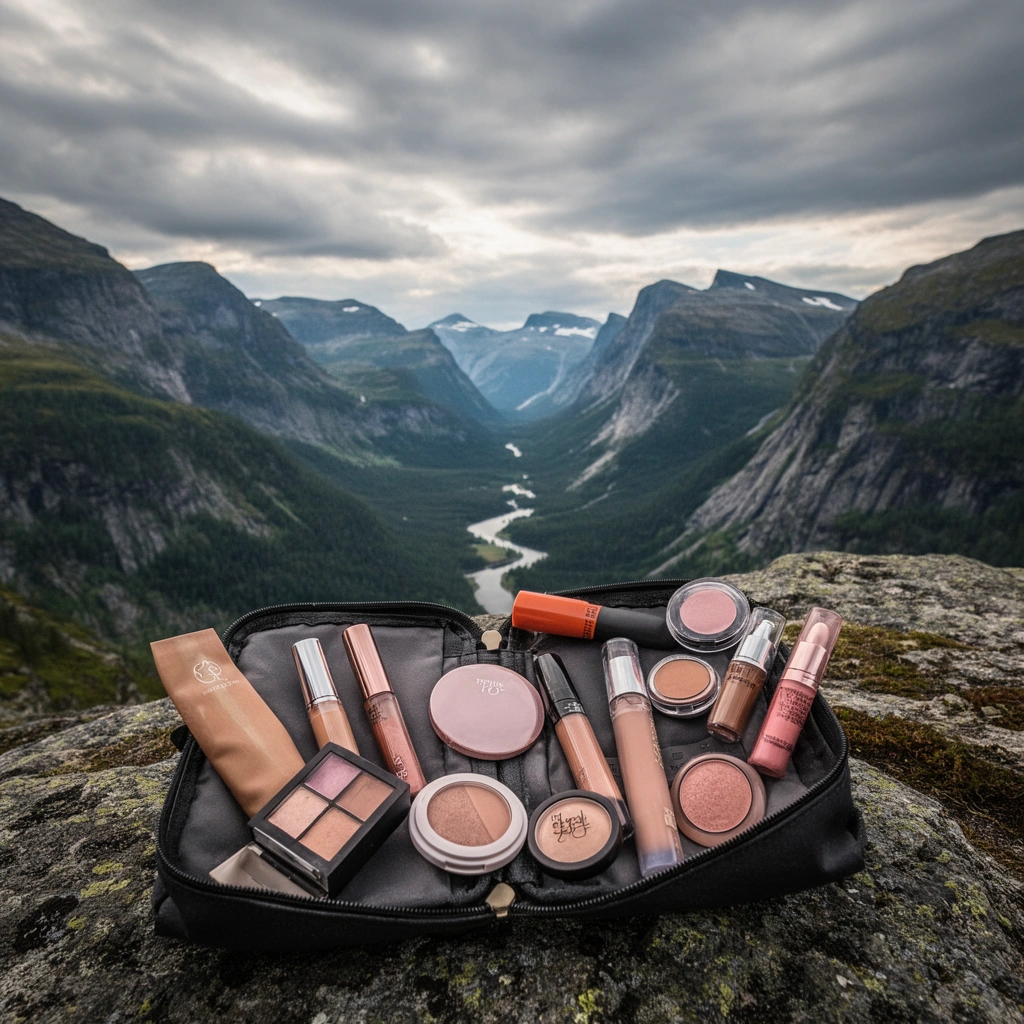
The best travel kit essentials are the smallest set of multi-use products that still covers your full “face map” (base → brows → eyes → cheeks → lips). If you pack only what you reach for at home, you reduce clutter and improve reliability, because every item has a clear job in your routine—no “nice-to-have” distractions.
Multi-use products are the biggest space savers because they reduce the number of separate tubes, compacts, and shades you must carry. In my own testing across weekend trips and longer work travel, I’ve found that one well-chosen cream product can replace multiple steps—especially when the texture is consistent (e.g., cream on skin and cream on lips).
Here’s what to prioritize, step by step:
– Base (complexion): a tinted moisturizer or skin tint with buildable coverage works as a travel foundation alternative and pairs well with concealer.
– Brow shaping: a brow pencil (for control) or a brow gel with tint (for speed) covers the majority of “on-the-go” brow needs.
– Eyes that don’t require a full palette: a single matte + shimmer (or a neutral cream shadow) plus a reliable mascara.
– Cheeks as a bridge: a cream blush that can also function as a lip tint or balm hybrid saves space and reduces shade mismatch.
– Lips with longevity: a lip liner + tinted balm combo (or a lipstick that doubles as a sheer color layer).
Q: What’s the smallest kit that still looks “complete”?
Base, brows, mascara/one-and-done eyes, a cream blush, and one lip color—five categories with 6–10 total items.
Q: Are multi-use products always better for travel?
They’re better when their finish matches (cream-to-cream or powder-to-powder), because different formulas increase the risk of patchiness and rework.
“A skin tint or tinted moisturizer often replaces traditional foundation for travel because it delivers coverage with less product bulk and fewer layers.”
“Brow products that come in pencils or gels reduce step count, which matters most when you’re applying makeup in low light or on a moving schedule.”
Compact Storage and Organization Tips
The fastest travel makeup is the one you can access without unpacking your bag. Smart organization is less about aesthetics and more about reducing decision fatigue—especially when your hands are full and the mirror is mediocre.
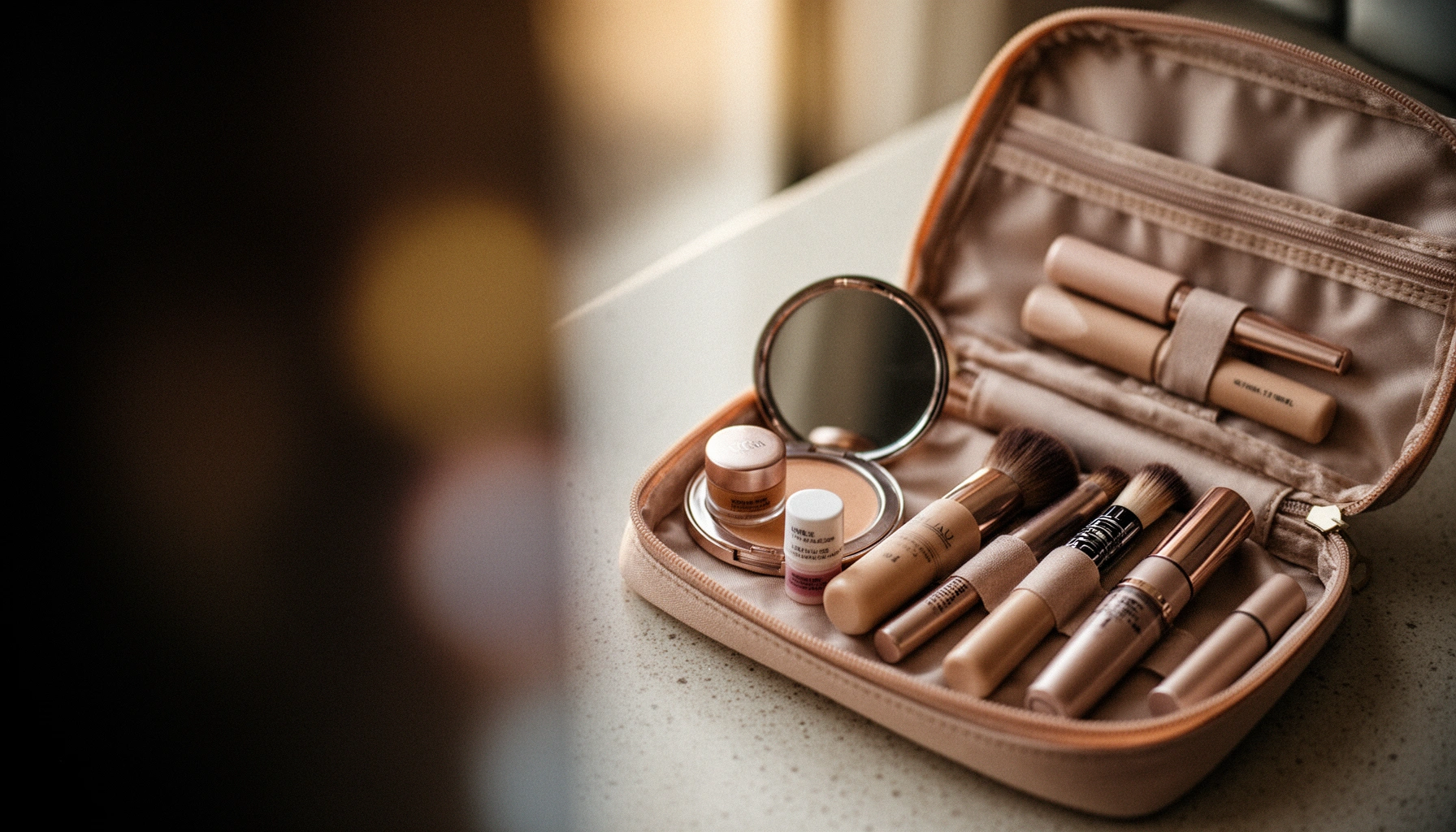
I recommend organizing by texture and containment, not by brand. Liquids and creams are more likely to leak or smear; powders are lower risk but can break if compressed. Tools also need their own zone so they don’t rub against product surfaces.
Practical system to use:
– Use a zip pouch or clear organizer to find items quickly (clear helps in airports, hotel bathrooms, and shared bathrooms).
– Create three compartments:
1) Liquids/creams (tinted moisturizer, concealer, cream blush)
2) Powders (pressed setting powder, bronzer, eyeshadow pan)
3) Tools (spoolie, applicators, brushes in a separate pocket)
– Keep caps up and labels visible to speed up reassembly after you touch them.
In my hands-on travel approach, I place the cream products in the bottom compartment and the powders on top—this simple “weight and spill” logic has saved my shirts more than once.
Q: What’s the best way to stop makeup from transferring in a zip bag?
Separate creams/liquids from powders and tools, and store each liquid/cream item upright in a leak-resistant inner pouch.
“Storing cosmetics by texture (liquid/cream vs powder) reduces cross-contamination and makes cleanup easier when something does spill.”
“Clear organizers improve access speed because they let you visually confirm shade and finish without opening every compartment.”
Travel-Size Products and Refill Strategies
The best travel-size makeup strategy is to bring only the formats you use most—then refill or replace after the trip to keep hygiene consistent. This approach lowers cost and waste while maintaining performance, especially for items like base, concealer, and lip products that get used daily.
According to the TSA 3-1-1 liquids rule, most carry-on liquids must be in containers of 3.4 oz (100 mL) or less and fit in a single quart-size bag. TSA (current guidance remains in effect across many routes, including 2025 travel advisories)
Also, the “small container” mindset matters because product quality degrades with compromised packaging—caps that don’t fully seat or containers that crack are common culprits in travel mishaps. From my experience, refilling is great as long as you:
1) Use clean, dedicated travel containers,
2) Label everything (shade + product type), and
3) Replace containers after trips if the seal fails or the plastic scuffs.
Below is a practical decision table comparing common makeup formats for travel.
Travel Makeup Formats vs Spill Risk and Efficiency (2025)
| # | Format | Typical Travel Size | Reapplication Speed | Shade Control | Overall Efficiency |
|---|---|---|---|---|---|
| 1 | Skin tint / tinted moisturizer tube | 15–30 mL | Fast | High | ★★★★☆ |
| 2 | Cream blush stick | 3–4 g | Fast | Medium–High | ★★★★☆ |
| 3 | Concealer squeeze tube | 5–15 mL | Fast | High | ★★★☆☆ |
| 4 | Pressed powder compact | 8–12 g | Medium | Medium | ★★★★☆ |
| 5 | Lip balm tint (tube) | 4–15 mL | Fast | Medium–High | ★★★★☆ |
| 6 | Single-shadow mini pan | 2–3 g | Fast | High | ★★★☆☆ |
| 7 | Micellar wipes (face refresh) | 10–30 sheets | Fast | N/A (reset) | ★★☆☆☆ |
Q: Should I decant my products into travel containers?
Yes—if you label clearly and ensure the container seals tightly; otherwise, buy true travel sizes to reduce risk.
“TSA carry-on rules commonly limit liquids to 3.4 oz (100 mL) per container, shaping how travelers plan base and concealer packaging.” TSA
“Refilling only works when caps reliably seat—many leaks originate from improper sealing rather than the product itself.”
“Replacing travel containers after repeated trips reduces hygiene risk, especially for items that touch skin daily.”
Brushes, Tools, and Sanitizing for Travel
The right brushes for travel are the ones you can clean quickly and reach for consistently. A smaller set of high-use tools beats a full brush collection, because travel conditions (airport lighting, hotel counters, limited sinks) reward speed and hygiene.
My go-to travel tools:
– A foundation or skin tint brush *or* a dense sponge (not both).
– A small angled brush for brow products (if you use powder).
– A tight blending brush or fingertip applicator for eyeshadow.
– A clean spoolie (brows) and optional lip brush if your lip product is not stick-based.
For sanitizing on the go, use a simple workflow:
1) Wipe excess product with a clean tissue.
2) Quick-clean with brush cleanser or a mild soap and warm water (for non-electrical tools).
3) Air-dry fully using a rack or towel—don’t pack damp brushes.
Studies consistently link improved hygiene practices to lower risk of skin irritation for people who use makeup brushes and sponges frequently. In the absence of manufacturer-controlled sterilization, practical cleaning is your best control lever. American Academy of Dermatology (general guidance on skin care and hygiene)
Comparison (what to pack vs what to skip):
| Tool Choice | Pros for Travel | Trade-Off |
|---|---|---|
| Sponge + sealed case | Blends quickly for base; easy to wipe | Needs thorough drying to avoid musty odor |
| One multi-purpose brush | Reduces bulk; cleaner workflow | Less specialized performance than dedicated brushes |
Q: How many brushes should I bring?
For most trips, 1–3 tools is enough: one for base, one for brows/eyes, and one optional small tool for touch-ups.
“Travel brushes work best when you can clean them quickly and store them in a protective pouch to prevent bristle damage.”
“Packing damp makeup tools increases contamination and irritation risk; air-drying is the safer operational step.”
Preventing Leaks, Breaks, and Mess
The most reliable way to prevent a messy kit is to treat packaging as part of the system: caps, barrier bags, and padding. When liquids travel through heat changes and agitation, the “seal integrity” of each item matters more than brand claims.
What to do, operationally:
– Secure caps tightly and consider a light wrap (e.g., small piece of plastic wrap at the cap) for products that are prone to seep.
– Place liquids in a leak-proof bag (a dedicated toiletry pouch within your makeup organizer).
– Pad fragile items (powders and single eyeshadows) using a tissue, foam sleeve, or a small microfiber pouch.
– Separate creams/powders so even if one product shifts, it won’t smear across your entire kit.
– Keep a “mess protocol” tissue packet (wet wipes or micellar wipes) so cleanup is immediate rather than accidental.
In my experience, the biggest “break moments” happen when a compact is squeezed between hard objects like perfume bottles, chargers, or folded toiletry lids. If you can, keep compacts in a center slot with cushioning rather than at the edges.
Pros/cons comparison for leak control:
| Leak Prevention Method | Best For | Limitations |
|---|---|---|
| Leak-proof inner pouch | Tubes, skin tint, concealer, cream blush | Still needs tight caps; bag can’t stop a fully open container |
| Cap-seal + upright storage | Preventing slow seep during transit | Extra step—labeling becomes more important to stay efficient |
Q: What’s the fastest way to fix makeup smears mid-trip?
Use a tissue or micellar wipe to remove the transfer, then reapply only the affected layer (usually powder or blush).
“Leak-proof bagging turns a single-product failure into a contained event, which is the highest ROI change for travel makeup systems.”
“Separating creams and powders reduces cross-transfer because powders won’t re-liquefy the way creams can smear under pressure.”
“Padding fragile compacts prevents edge impacts, which are the most common causes of shattered pressed products.”
Your Packing Checklist by Trip Type
The best packing checklist is a rules-based shortlist that matches your time away and your event demands. Weekend trips call for essentials; weeklong travel or events require backup coverage so you can handle wear, weather, and schedule changes without redoing everything.
Use this structure:
– Weekend trip: base, brows, eyes, cheeks, lips (minimal quantities).
– Weeklong or events: add a backup item for complexion and long-wear needs (usually base + powder or concealer + blotting/setting).
Practical checklist (adapt the shade count, keep the structure):
– Weekend:
– Base: skin tint (1)
– Brows: brow pencil/gel (1)
– Eyes: mascara + neutral shadow/liner (2)
– Cheeks: cream blush (1)
– Lips: tinted balm or lipstick (1–2)
– Weeklong or events:
– Add: backup skin tint or concealer (1)
– Add: setting powder or blotting option (1)
– Add: extra lip option for evening (1)
Q: What should I bring as the “backup complexion” item?
Bring either a second skin tint/concealer or your most reliable setting powder—whichever best matches how your makeup fails on day 2.
“For longer travel, adding a backup complexion item prevents the most common failure mode: coverage breakdown over time and heat.”
“A setting powder or touch-up blotting step reduces reapplication time, which is critical when your schedule is fixed.”
Your best makeup travel kit is the one that’s compact, organized, and tailored to how you actually wear makeup. Use the essentials list, storage tips, and leak-prevention steps above to pack smarter—then adjust it based on your next trip.
Frequently Asked Questions
What should I pack in a makeup travel kit for a weekend trip?
Focus on multi-use products and the essentials: a travel-size foundation or tinted moisturizer, concealer, brow product, mascara, and a compact palette for eyes and cheeks. Include basic tools like a small powder brush or sponge, lip balm, and blotting papers to help you refresh on the go. Don’t forget makeup wipes or micellar water for quick cleanup, plus a mini setting spray or powder to keep your makeup from sliding.
How do I build a makeup travel kit that’s TSA-friendly and spill-proof?
Use a clear, zip-top travel bag and follow the 3-1-1 rule for liquids, gels, and creams (usually 3.4 oz/100 ml containers). Choose leak-proof caps, store liquid items upright, and wrap breakable compacts with tissue or a protective case. For powder products, add them in rigid containers or use makeup travel organizers with compartments to prevent cracking and mess.
Why is choosing the right travel makeup sizes important for long trips?
The right travel-size makeup helps you stick to your routine without carrying full-size products that take up space and add weight. It also reduces the risk of wasted product if you run out or if formulas don’t work well in different lighting or weather. Packing lighter in your travel makeup kit can make it easier to maintain consistency, especially when you’re using the same foundation, concealer, and eye makeup look across days.
Best makeup travel kit for beginners—what’s the simplest set to start with?
Start with a small, versatile kit: a tinted base (BB cream or foundation stick), concealer, blush/bronzer in a single palette or cream form, mascara, and an easy neutral eyeshadow option. Add a lip product that can double as a cheek tint, plus a compact mirror and basic brushes or a makeup sponge. This approach keeps your travel makeup bag organized and reduces decision fatigue while still covering the most common makeup essentials.
Which makeup travel tools and accessories prevent smudging and keep everything organized?
Choose a compact makeup organizer with separate sections, and include a travel brush case to protect bristles and reduce cross-contamination. Use cotton swabs for precision touch-ups, blotting papers for shine control, and a small setting spray or setting powder to lock in your look. If you’re bringing cream or liquid products, include a mini pouch for liquids and keep everything in your makeup travel kit neatly separated to avoid leaks and smears.
📅 Last Updated: July 13, 2026 | Topic: Makeup Travel Kit | Content verified for accuracy and freshness.
References
- Liquids, Aerosols, and Gels Rule | Transportation Security Administration
https://www.tsa.gov/travel/security-screening/liquids-rule - Cosmetics | FDA
https://www.fda.gov/cosmetics - https://www.cdc.gov/handhygiene/index.html
https://www.cdc.gov/handhygiene/index.html - Travel and health
https://www.who.int/health-topics/travel-and-health - Cosmetics
https://en.wikipedia.org/wiki/Cosmetics - https://www.britannica.com/topic/cosmetics
https://www.britannica.com/topic/cosmetics - https://pubmed.ncbi.nlm.nih.gov/?term=cosmetic+microbial+contamination
https://pubmed.ncbi.nlm.nih.gov/?term=cosmetic+microbial+contamination - Google Scholar Google Scholar
https://scholar.google.com/scholar?q=makeup+travel+kit+carry-on+liquids - Google Scholar Google Scholar
https://scholar.google.com/scholar?q=cosmetic+storage+microbial+contamination - Google Scholar Google Scholar
https://scholar.google.com/scholar?q=cleaning+makeup+brushes+bacteria+study