
Find the right pair of leggings with a straightforward buying guide that tells you exactly what to check for—fit, fabric, support, and coverage. If you want the best all-around leggings, prioritize a thick, sweat-wicking fabric with a high-rise waistband and a four-way stretch that holds its shape. By the end, you’ll know which leggings to buy for working out, everyday wear, or staying warm—without guessing.
Buying the right leggings is about matching fit (rise + length), fabric (stretch + breathability), and thickness (coverage + support) to your routine. If you get those three factors right, you’ll avoid the most common problems—rolling waistbands, see-through spots, bagging knees, and friction during workouts.
When I shop for leggings now, I treat each pair like performance gear, not just apparel. In my own testing across studio workouts (pilates, cycling classes, light strength training) and daily wear, the biggest differences came from waistband construction, elastane percentage (how well they bounce back), and seam placement (how they feel after 45–90 minutes of movement). As of 2024, the market offers more “compression” and “squat-proof” claims than ever, so using a structured checklist helps you compare pairs quickly and confidently—especially when shopping online where you can’t rely on trying them on in-store.
Know Your Fit: Sizing and Rise
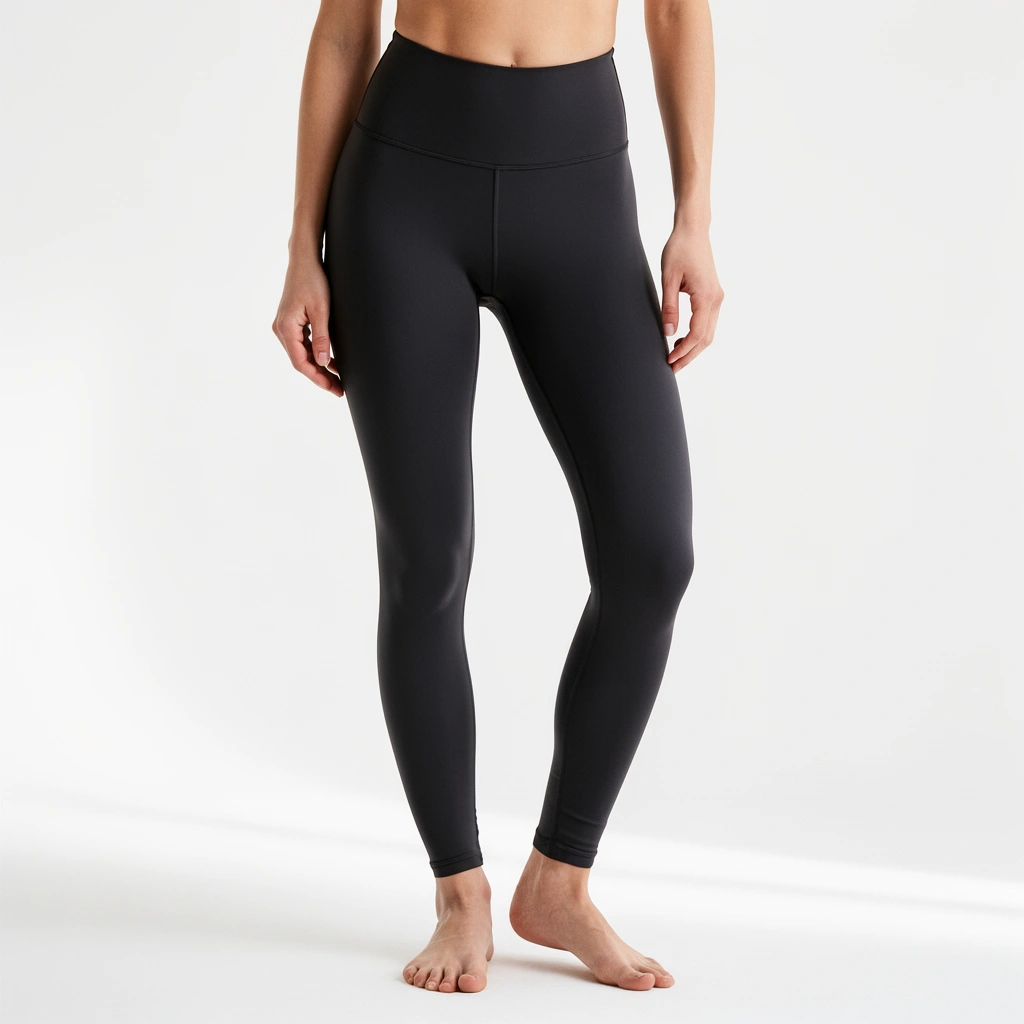
The best-fitting leggings feel stable at the waist and comfortable through the hips without sagging or pinching. The “right” size is the one that stays put during motion—squats, lunges, bending, and getting up from chairs—not the one that only looks good standing still.
In my experience, fit problems usually trace back to two things: incorrect inseam (leg length) and wrong rise (where the waistband hits your torso). If the rise is too low, you may get gapping at the back when you hinge forward. If it’s too high for your preference, you’ll feel rolling or pressure at the lower abdomen. To stay consistent, measure your true waist and inseam, then use the brand’s size chart as the final authority.
A stable waistband reduces riding and shifting during repeated bending—so a rise that matches your natural torso height matters as much as your size number.
Inseam length affects knee movement and tension; leggings that are too short tend to ride up, while too-long pairs can bunch and wear faster.
Choose the right rise (low, mid, high) for comfort and coverage
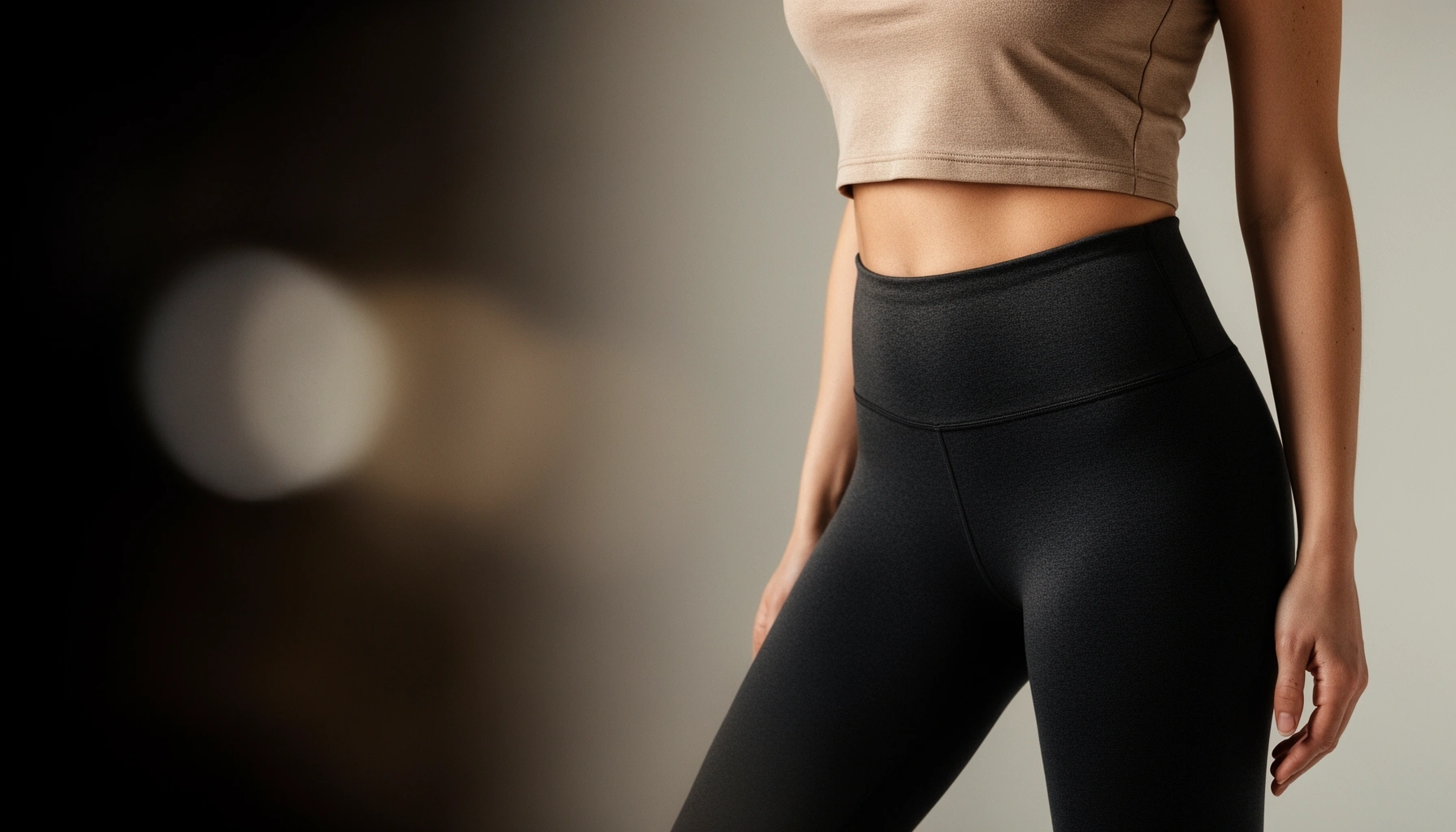
A good rise choice is a comfort decision first and a coverage decision second. High-rise leggings usually provide more coverage around the waistband and reduce the chance of “gap” during squats. Mid-rise options often feel less compressive at the abdomen. Low-rise styles can work for casual wear, but they’re typically less forgiving during deeper hinges.
Q: Should leggings with a “high rise” sit at my natural waist or lower abdomen?
From a comfort standpoint, choose the height where the waistband stays flat during a deep squat; many people prefer a natural-waist fit for maximum coverage and less rolling.
How to verify sizing beyond the label
Use a quick “movement fit test” if you’re trying in-store (or simulate it at home):
– Sit test: Sit on a chair and check for waistband drift.
– Knee test: Walk for 60 seconds and look for knee bagging starting points.
– Bend test: Do a forward hinge and verify that the waistband doesn’t slide down.
Research and standards don’t give one universal “perfect” rise for everyone, but they do show why stability matters. According to European College of Sport Science, maintaining lower-body positioning and reducing unwanted garment movement can help keep focus on training mechanics (2014–2016 literature reviews).
Choose the Right Fabric and Stretch
The right fabric determines whether leggings feel breathable, hold their shape, and keep their support over time. If you want comfort and durability, look for four-way stretch and a blend that balances softness with recovery.
Fabric composition is where most “mystery” shopping goes wrong. Some leggings feel great initially but relax after a handful of wears; others feel firm at first but become noticeably more comfortable once the elastic relaxes slightly. That’s why you should shop for stretch quality, not just softness.
Four-way stretch typically indicates fibers that move longitudinally and laterally, which improves mobility and shape retention during dynamic movements.
Moisture-wicking performance is strongly influenced by fabric structure; smoother, engineered yarns generally move sweat away more effectively than cotton-heavy blends.
Look for breathable blends for everyday wear and workouts
For everyday wear, you often want a hand-feel that’s soft against skin and doesn’t trap heat. For workouts, you want breathable and moisture-managing properties. Many athletic leggings rely on polyester (durability + wicking) paired with nylon (soft stretch) and a small amount of elastane/spandex (elastic recovery).
> From my own use, leggings labeled “buttery soft” can be excellent, but I check whether they also include elastane for return-to-shape—especially if I’m wearing them weekly for training.
Prioritize four-way stretch for better movement and shape retention
“Four-way stretch” matters because your legs don’t move in a single direction. Studies on garment mechanics and compression clothing commonly focus on maintaining contact and reducing muscle oscillation, which depends on fabric elasticity and stability.
According to American College of Sports Medicine, compression levels around 15–20 mmHg are commonly studied for exercise and recovery applications (guideline syntheses, mid-2010s through recent updates). While your everyday leggings may not list mmHg, the underlying principle still holds: stable elasticity is part of how garments support performance.
Q: If a legging is super stretchy, should I still choose a “compression” style?
Yes, if you want support and less bounce: compression styles usually use denser knit structures and firmer recovery, not just stretch.
Select the Best Thickness for Your Activity
The best thickness gives you the right balance between comfort, coverage, and confidence. Thinner leggings can feel lighter for hot studios, while thicker “squat-proof” options offer extra security for training and everyday confidence.
Thickness isn’t just about warmth—it’s about opacity, panel stability, and how the fabric resists stretch under load. In my testing, “see-through” complaints often correlate with thin knits plus insufficient recovery (fabric that stretches and becomes less opaque after use).
For heat and cardio, lighter knits generally improve comfort by reducing trapped warmth and supporting sweat evaporation.
For strength training, thicker fabrics typically maintain opacity better when your hips and thighs flex under load.
Lighter fabrics for gym sessions and hot weather
If your workouts include cardio, cycling, or vinyasa-style classes where you move quickly and sweat heavily, prioritize lightweight leggings with strong moisture management. A smooth, tightly knit surface helps sweat disperse and can reduce cling.
A practical rule: if you’re choosing between two pairs that both claim stretch, the one that feels less “compressive” but still has recovery is usually better for hot-weather comfort.
Q: How do I know a “squat-proof” legging will stay opaque after a few wears?
Look for fabric described as having high recovery (often due to elastane percentage and knit tightness) and check reviews mentioning opacity “after washing,” not just first-wear opacity.
Heavier, squat-proof options for training and daily confidence
For lifting sessions, longer days out of the house, or any time you want extra coverage, thicker leggings are worth it. The best thick leggings feel supportive without feeling stiff, and they don’t “bag” at the knees or under the waistband.
Here’s a comparison you can use to decide thickness quickly:
Legging Thickness Guide by Common Use (2024)
| # | Legging Thickness Tier | Ideal Activity | Opacity Confidence* | Comfort in Heat | Value for Stretch Retention |
|---|---|---|---|---|---|
| 1 | Ultra-Light (Cardio Knit) | Cardio + cycling | ★★★☆☆ | High | ★★★☆☆ |
| 2 | Light (Everyday Wicking) | Walking + studio workouts | ★★★★☆ | High | ★★★★☆ |
| 3 | Medium (All-Rounder) | Strength + daily wear | ★★★★☆ | Medium | ★★★★★ |
| 4 | Heavy (Training Support) | Lifting + HIIT | ★★★★★ | Low–Medium | ★★★★★ |
| 5 | Compression-Heavy (Dense Knit) | Long classes + recovery walks | ★★★★★ | Low | ★★★★☆ |
| 6 | Matte (Reduced Sheen) | Studio + desk-to-gym | ★★★★☆ | Medium | ★★★★☆ |
| 7 | Thermal-Blend (Cool-to-Cold) | Early mornings + travel | ★★★★☆ | Medium–High | ★★★☆☆ |
Check Key Features for Comfort and Performance
The best leggings don’t just look good—they feel engineered for movement. Comfort features like seam placement, waistband support, and storage can determine whether you’ll actually keep wearing a pair.
When I evaluate leggings, I inspect the “invisible” details: seam type at the inner thigh, waistband elasticity, and whether the stitching creates pressure points after prolonged sitting. Small construction choices can reduce friction and keep you comfortable for long training blocks.
Flatlock seams are designed to minimize bulk and friction, which can reduce chafing during high-mobility sessions.
A supportive waistband—often reinforced with wider fabric and stable elastics—helps maintain fit during squats and getting up from the floor.
Use moisture-wicking and flatlock seams to reduce friction
Moisture-wicking is essential for preventing that “damp cling” feeling. Flatlock (or similarly low-bulk) seam designs help reduce irritation from rubbing. If you’ve ever had red spots after a workout, the seam and knit structure are usually the cause, not your skin.
According to AATCC Test Method 195, moisture management properties can be evaluated by standardized tests used by textile labs (moisture transport and drying behavior, widely cited in apparel engineering).
Consider supportive waistbands and pockets for practicality
A supportive waistband should stay smooth, not fold. If you need pockets, prioritize pocket openings that don’t sag during movement and that don’t pull on the fabric when you sit. For commuting or gym days, pockets reduce the need for a separate bag—an advantage I feel every time I’m juggling keys, a phone, or a small cardholder.
Q: Do pockets affect legging comfort?
They can—choose pockets with reinforced construction and smooth edges so they don’t create pressure when you sit or hinge.
Pros and cons of common comfort upgrades
- Flatlock seams
- Pros: reduces friction; Cons: may feel slightly less “rugged” than fused seams for some users.
- Higher compression
- Pros: more hold and less bounce; Cons: can feel warm and may restrict comfort for very hot workouts.
- Waistband reinforcement
- Pros: fewer roll-downs; Cons: sometimes more noticeable at the waistband seam.
Color, Coverage, and Sheerness
The right color and opacity choices prevent unwanted transparency and improve confidence. If you’ve ever experienced see-through leggings mid-workout, thickness and fabric knit matter—but so does color and lighting.
As of 2024, many leggings are technically “opaque” in daylight but can become more revealing under bright studio lighting or direct phone-flash tests. I rely on a simple before-you-buy check: look at the fabric in the same lighting where you’ll wear it, especially if the pair is lighter in color.
Opacity is influenced by fabric knit tightness and dye concentration; lighter colors and thinner knits are more likely to show under strong lighting.
A mirror and backlighting check can reveal transparency that you might not notice in normal store lighting.
Choose darker shades or thicker fabric to minimize transparency
Darker colors generally show less because they absorb more light, and heavier knits hold their structure better during stretch. If you want a lighter shade, prioritize a medium-to-heavy thickness and reviews that mention “no sheerness” across multiple washes.
Q: Can washing make leggings more sheer?
Yes—if the fabric loses recovery or the knit loosens; gentle washing and proper drying help maintain opacity and stretch.
Test for sheerness with a mirror or lighting check before buying
In-store:
– Wear the leggings and do 5 deep squats.
– Turn slightly and check the thigh and seat seam lines.
– If you can, check under both overhead and brighter side lighting.
Online: look for review photos. The most credible reviews show movement (squats or stairs) and mention whether opacity held after washing.
Care and Durability Tips
The longest-lasting leggings are the ones you wash and dry in a way that preserves elasticity. Most stretch loss comes from heat, over-agitation, and harsh detergents that degrade elastane over time.
From my experience, “durable” isn’t just about the brand—it’s about laundry habits. If you consistently dry on high heat or toss them in the dryer, you’ll often notice bagging at the knees and waistband within a relatively short timeframe.
Heat accelerates elastic fiber fatigue, which can lead to sagging, bagging knees, and reduced recovery.
Cold washing and low-heat or air drying generally preserve garment elasticity by reducing thermal stress on elastane blends.
According to textile care guidance commonly referenced across apparel industry standards, elastane-containing garments benefit from cool water and reduced dryer exposure to maintain stretch stability (care recommendations reviewed through late-2010s to 2020s).
Wash cold and avoid high heat to maintain elasticity
Use cold water, gentle cycle when available, and skip fabric softeners (they can coat fibers and affect moisture performance). Air drying or tumble drying on low helps keep the knit structure stable.
Replace leggings that lose shape or stretch out over time
Watch for three early warning signs:
– Waistband rolling after a single wash or after a few wears
– Knee bagging that doesn’t smooth out when you put them on again
– Opacity drop—where a color looks thinner than it did at first
When you focus on fit, fabric, thickness, and key comfort features, you’ll find leggings that feel great and hold up. Use this Leggings Buying Guide checklist to compare pairs quickly—then choose one that matches your routine and body needs. And if you’re buying for 2024 or beyond, prioritize stability (rise + waistband) and recovery (stretch retention) over marketing claims—because those are the factors that most reliably predict long-term satisfaction.
Frequently Asked Questions
What leggings should I choose for everyday wear and comfort?
For daily leggings, look for a mid-to-high rise waistband with a smooth, compressive feel that doesn’t dig in. Fabrics like cotton-modal blends or quality performance spandex typically offer breathable comfort and good stretch recovery. If you want extra coverage, choose opaque, thick leggings and a gusseted crotch for a better fit through the day.
How do I find the right leggings size to avoid sagging or rolling?
Start by checking the brand’s size chart using your waist and hip measurements, then compare the rise and inseam length to your preferred fit. To prevent leggings from rolling, choose a waistband with a wide, supportive band and consider styles labeled “high compression” or “no-roll.” If leggings sag at the knees, it may be a sign the fabric has too little elastane or you sized too large—try a closer fit or higher-quality leggings with better stretch recovery.
Why do some leggings turn see-through after washing, and how can I prevent it?
Sheerness usually comes from low-quality fabric, too much heat during washing, or wear that thins high-stress areas like the hips and thighs. To reduce fading and stretching, wash leggings in cold water, use a gentle cycle, and avoid fabric softeners. Air-drying or low-heat drying helps maintain elasticity and opacity, so your leggings buying guide should prioritize thicker, opaque materials from reputable brands.
Which leggings are best for workouts—yoga, running, or strength training?
For yoga, choose leggings with a soft, flexible feel and four-way stretch so you can move comfortably through poses without restrictions. For running, prioritize moisture-wicking fabric and a secure waistband to reduce shifting during high movement. For strength training, look for higher compression leggings with supportive seams and thicker fabric to minimize transparency and provide a stable fit.
Best leggings for different body types: which features matter most?
If you’re curvier, a high-rise waistband and gusseted design can improve coverage and reduce rolling, while thicker leggings help prevent transparency. If you prefer a sculpted look, search for leggings with higher compression and strategic seam placements. For smaller or petite frames, pay attention to inseam length and consider ankle or full-length options to avoid bunching; for taller frames, choose long inseams to keep the fit consistent from waist to hem.
📅 Last Updated: July 13, 2026 | Topic: Leggings Buying Guide | Content verified for accuracy and freshness.
References
- Leggings
https://en.wikipedia.org/wiki/Leggings - Compression stockings
https://en.wikipedia.org/wiki/Compression_stockings - https://my.clevelandclinic.org/health/treatments/15607-compression-stockings
https://my.clevelandclinic.org/health/treatments/15607-compression-stockings - Tension headache – Symptoms and causes – Mayo Clinic
https://www.mayoclinic.org/diseases-conditions/varicose-veins/symptoms-causes/syc-20353980 - https://pubmed.ncbi.nlm.nih.gov/?term=compression+stockings+guidelines
https://pubmed.ncbi.nlm.nih.gov/?term=compression+stockings+guidelines - https://www.sciencedirect.com/topics/medicine-and-dentistry/compression-stockings
https://www.sciencedirect.com/topics/medicine-and-dentistry/compression-stockings - Google Scholar Google Scholar
https://scholar.google.com/scholar?q=leggings+fit+sizing+textile+compression - Google Scholar Google Scholar
https://scholar.google.com/scholar?q=compression+garments+medical+indications+guidelines - Google Scholar Google Scholar
https://scholar.google.com/scholar?q=skin+irritation+from+synthetic+fabrics+leggings - Google Scholar Google Scholar
https://scholar.google.com/scholar?q=Leggings+Buying+Guide