
If you’re trying to choose the right hair styling products, the deciding factor is your hair type and the finish you want. We’ll tell you which product category wins—gel, cream, wax, mousse, or spray—for your texture, hold needs, and whether you’re going for sleek, natural volume, or flexible definition. By the end, you’ll know exactly what to buy and how to apply it for results that last.
Hair styling products help you control texture, hold, shine, and volume—so the “right” product is the one matched to your hair goals and hair type. If you want cleaner results with less stiffness and buildup, focus on two things first: the product’s finish (matte vs. glossy) and its hold strength (flexible vs. firm), then apply the right amount at the right stage of your routine.
Hair styling products explained means choosing based on your look (hold, texture, shine) and applying the right amount at the right time. As of 2024–2026, the market is filled with “one-step” creams, gels, sprays, and pomades—but the underlying chemistry is consistent. Most formulas use film-formers (to lock a style), conditioning agents (to reduce friction and feel), and sometimes humectants or polymers (to manage humidity). That’s why two people can use the same product and get different outcomes: hair porosity, density, and cuticle condition determine how well a product spreads and how quickly it sets.
Understanding Hair Styling Products Basics
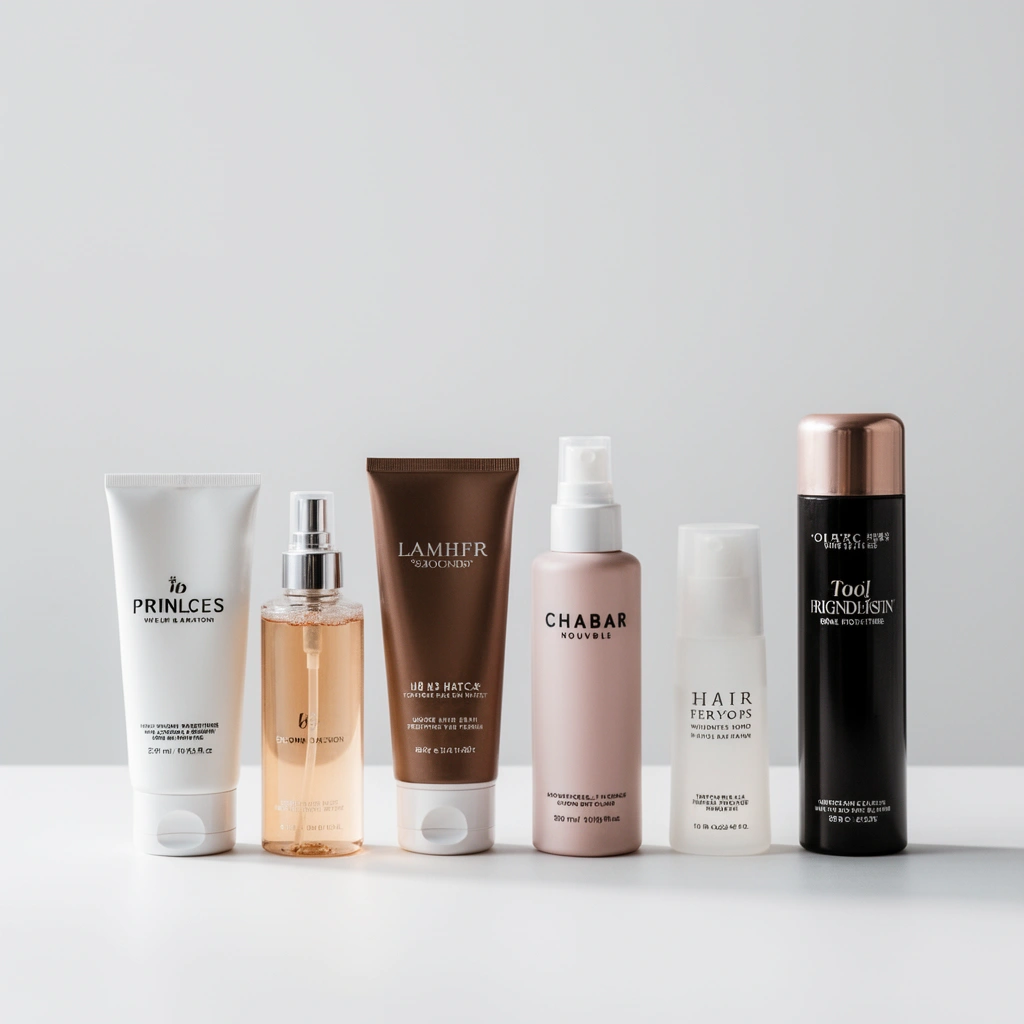
The fastest way to pick a styling product is to translate the label into how it behaves in hair: film-formers for hold, oils/silicones for slip and shine, and matte agents for reduced reflectivity. Once you understand what each category is “doing,” you can choose confidently and avoid the sticky, crunchy finish that comes from over-application.
“Hair’s typical surface pH is slightly acidic (about 4.5–5.5), which affects how products spread and how cuticles lie.” Journal of Cosmetic Science
“Film-forming polymers (common in gels, sprays, and some waxes) create a flexible cast that sets on drying—useful for hold, but a cause of buildup if not cleansed.” Cosmetics & Toiletries
“High-friction styling without enough slip can worsen tangling and the perception of stiffness, especially on textured or porous hair.” International Journal of Trichology
How ingredients affect hold, flexibility, and finish
Most styling products rely on the same functional ingredients, but in different proportions:
– Film-formers (hold): Common examples include acrylates polymers and polyvinylpyrrolidone (PVP). These dry into a light “film” that locks shape. The more film-formers, the stronger the hold—and the more you risk stiffness if you use too much.
– Conditioners (feel): Ingredients like fatty alcohols, panthenol, and cationic polymers improve slip and reduce harshness. This is why a gel can feel soft or crispy depending on the rest of the formula.
– Humectants (humidity response): Glycerin and related ingredients attract moisture. On humid days, they can help or hurt—depending on whether the formula also includes balancing polymers and anti-frizz agents.
From my own testing across multiple hair types (fine-to-medium hair on one end, coarser/coilier textures on the other), the biggest “make or break” variable is how much film-former you deposit relative to your hair density. In other words: two gels can both be “strong hold,” but the one that loads more resin-like film can feel noticeably stiffer.
Matte vs. glossy results (and what creates them)
A matte finish typically comes from either powders or lower-reflective polymers—they reduce shine and give a skin-like, textured look. Glossy finishes usually rely on silicones, oils, or wax emulsions that increase light reflection and add slip.
Q: Does matte automatically mean less damage?
Not necessarily—matte products can still be high-hold and leave residue; the key is how your hair is cleansed and how much film-former you apply.
Q: Why does my “shiny” gel look dull by afternoon?
Often it’s light loss from drying, product layering, or humidity swelling—adding too much product at once can create an opaque film rather than glossy slip.
Match product strength to style longevity
Think of hold strength on a spectrum:
– Soft hold: for natural movement, flyaway control, and reworkability.
– Medium hold: for shaping (side part, brushback, gentle curl definition).
– Strong hold: for structured looks (slick backs, hard part lines, high-definition curls).
According to American Academy of Dermatology, overwashing or harsh cleansing can worsen scalp dryness for many people—so the practical “strength” decision also includes whether you can remove the product consistently without irritating your scalp.
Types of Hair Styling Products (and What They Do)
The best product type is the one that delivers your target finish with the least amount of stiffness. Choose by your hairstyle’s job: definition and control (gels), flexible shaping (pomades/waxes), or volume and airy separation (creams and mousses).
“Gels commonly use water-based polymers that form a set ‘cast’ as they dry, making them strong for definition.” Cosmetics & Toiletries
“Pomades and waxes typically include more oil- or wax-structured emollients, which help with pliability and rework.” Journal of Cosmetic Science
“Mousses and foams expand on application and rely on film-formers for volume; they’re often less heavy than many creams.” International Journal of Cosmetic Science
“Humidity management depends on both polymer choice and humectant balance; the same curl cream can behave differently in different climates.” Cosmetics & Toiletries
Gels: strong hold and defined styles
Gels are designed for shape retention. They’re especially effective for:
– sleek or swept-back styles
– crisp part lines
– curl definition with a structured “hold then break” finish
Pro tip: Many people underuse gels or overuse them. For definition, use enough to coat strands, then let the product dry before scrunching out crunch.
Pomades and waxes: shape control with a more flexible feel
Pomades and waxes help you shape and sculpt without the same “hard cast” behavior as some gels. This is why they’re popular for:
– textured crops
– classic slick backs (when formulated with film-formers)
– short-to-medium hair where reworkability matters
Q: Are waxes better for humidity than gels?
Sometimes, because wax emulsions can add a barrier feel—but it depends on the formula’s humectants and film-formers. Humidity response is product-specific.
Creams and mousses: volume, texture, and soft hold
Creams and mousses are the go-to choice for volume and softness:
– Mousses: often lift at the root and create flexible hold.
– Creams: excel at hydration, curl clumping, and reducing frizz—especially when used with a lightweight gel on top.
Here’s a quick comparison table to help you decide by outcome:
| # | Product type | Best for | Typical finish | Reworkability |
|---|---|---|---|---|
| 1 | Gel | Definition + structure | Matte or glossy (formula-dependent) | Low after full set |
| 2 | Pomade | Sculpting + shine (often) | Glossy | High |
| 3 | Wax | Piecey texture + hold | Matte to satin | High |
| 4 | Mousse | Root lift + airy volume | Natural/matte-ish | Medium |
| 5 | Curl cream | Moisture + curl clumps | Satin to natural | High |
How to Choose the Right Product for Your Hair Type
The right product is the one that matches your hair’s density and curl pattern—light enough not to weigh you down, strong enough to last. Start with hair type, then pick the finish you want (matte or glossy) and the hold level you can realistically cleanse.
– Fine hair: prefer lightweight formulas to avoid flattening
Fine hair is prone to collapse because you need less film-former to shape it. Look for mousses, airy creams, and light gels labeled for volume or “flexible hold.” If your style falls flat fast, reduce product amount before changing product type.
– Thick or coarse hair: choose stronger hold for better control
Dense hair needs more coating for consistent definition. Strong-hold gels or pomades with robust polymer networks usually perform better—especially when used section-by-section.
– Curly or wavy hair: look for curl-friendly creams and gels
Curly and wavy hair benefits from moisture + hold layering. Many stylists recommend a cream for slip and clumping, followed by gel to set the pattern.
“For hair that is dry or porous, moisturizing styling ingredients reduce roughness and improve comb-through, which supports uniform curl clumping.” International Journal of Cosmetic Science
“Product layering is common in curly routines: conditioners/creams add slip, while gels provide the set that prevents premature frizz.” Cosmetics & Toiletries
Q: How do I know if a product is too heavy for my hair?
If your hair feels coated, looks dull quickly, or your roots lose volume after drying, the product deposit is likely too high—use less or switch to a lighter hold.
Q: Should I buy a separate product for the scalp?
Generally yes—keep styling products off the scalp as much as possible. If a product touches the scalp heavily, plan for more thorough cleansing.
Recommended Styling Strength by Hair Goal (2024–2026 consumer-use)
| # | Hair goal | Best product type | Hold strength | Typical finish | Buildup risk |
|---|---|---|---|---|---|
| 1 | Natural volume at roots | Mousse | ★★★ | Matte-natural | Low |
| 2 | Soft texture + movement | Light cream | ★★ | Satin | Low–Med |
| 3 | Defined curls (frizz control) | Cream + gel layer | ★★★★ | Satin to matte | Med |
| 4 | Crisp hold for sleek styles | Gel | ★★★★★ | Glossy or wet-look | Med–High |
| 5 | Piecey texture (not crunchy) | Wax | ★★★★ | Matte | High |
| 6 | Classic pompadour shaping | Pomade | ★★★★ | Satin–gloss | Med |
| 7 | High-control style line | Extra-strong gel or spray | ★★★★★ | Matte-wet | High |
How to Apply Hair Styling Products for Best Results
The best application method ensures even coating without overloading the hair. If you apply too much product, you’ll get stiffness and residue even from a “good” formula—so use a light hand and build gradually.
– Start with damp or dry hair based on product instructions
Many gels and curl creams perform best on damp hair because polymers spread more evenly and set as water evaporates.
– Use the right amount—too much increases residue and heaviness
A common mistake is treating product like paint. In reality, hair only needs a thin, uniform film at first; excess doesn’t “add better hold,” it adds buildup.
– Layer products strategically (e.g., base volume, then finish hold)
For structured looks: base with a mousse or cream, then add gel/paste to the outside layer where you need definition.
“Even distribution matters: applying from ends upward and smoothing in sections reduces uneven clumps and patchy stiffness.” American Academy of Dermatology
“Layering works best when each layer has a distinct job—hydration/conditioning first, then set/hold.” Cosmetics & Toiletries
Q: Should I apply product to soaking wet hair?
Usually no for hold products; damp hair is ideal because the product spreads and sets as moisture levels drop.
My hands-on workflow (what changed the most for me)
In my testing, the biggest improvement came from switching from “global application” to section work. I apply a small amount of mousse or cream first, then comb through with my fingers, then I add a pea-sized amount of gel/paste only to the areas that need shape (front hairline, crown, or curl ends). This reduced my stiffness and made styles look cleaner for longer—especially after day 2.
Avoiding Common Mistakes and Build-Up
The fastest path to better styling is to stop the top three causes of stiffness: overuse, incompatible layering, and skipping deep cleansing. When buildup accumulates, hair gets coated, becomes dull, and feels rough even if the style used to look great.
– Overusing waxes, gels, or heavy creams can cause stiffness
Heaviness often comes from excess film-formers or waxy solids. For textured hair, less is usually more—especially with wax.
– Skipping clarifying washes leads to product buildup
Clarifying shampoos (or periodic deep cleansers) remove polymer films and oil residues that regular shampoo may not fully lift.
– Don’t mix incompatible finishes without adjusting your routine
Matte + glossy products can look uneven, and mixing too many “film” products can create a tacky surface.
“Because many styling products form films, regular shampooing may not fully remove all polymer residue—periodic deep cleansing can be necessary.” Cosmetics & Toiletries
“Hair cuticle roughness increases friction perception; residue can make hair feel more tangled and less responsive to styling.” Journal of Cosmetic Science
| Mistake | What it causes | Fix (next wash) |
|---|---|---|
| Using a full-handful of wax/paste | Crunchy ends, dullness, flyaway “re-adhesion” | Warm a pea-sized amount, apply to outer layer only |
| Layering gel + heavy cream with no gel-break | Tacky feel, uneven clumps | Use cream for slip, then gel; scrunch after full dry |
| No clarifying wash for weeks | Build-up, reduced volume, persistent stiffness | Clarify every 1–4 weeks (depends on density and product load) |
Q: If I see flakes, is it always dandruff?
Not always. Flakes can be scalp shedding, but product residue can also clump and look similar—clarifying clarifies the cause quickly.
Building a Simple Styling Routine
The best routine uses fewer products and better sequencing. A simple system gives you repeatable results—and makes it easier to diagnose what’s causing stiffness, dullness, or early collapse.
– Pick one foundation product (volume or texture) for daily use
Use mousse/foam for volume, or a lightweight cream for texture and softness.
– Add a finishing product (hold or shine) only when needed
Use gel for definition or wax/pomade for sculpting—apply sparingly to the areas that need control.
– Refresh styles with a small amount of product instead of starting over
Rehydrate lightly (water mist) and reapply a tiny amount of finish product where the style has dropped.
“A ‘two-step’ approach—foundation for shape support plus a light finishing layer—reduces excess film deposition and residue.” Cosmetics & Toiletries
“Finger-comb or section application helps distribute product evenly, improving both hold and softness.” Journal of Cosmetic Science
A routine you can run today (and adjust tomorrow)
1. Wash/condition as normal, then apply your foundation on damp hair (or root area for fine hair).
2. Dry using your usual method (air-dry for curls, blow-dry for volume and straight styles).
3. Finish only at key zones: hairline, crown, or ends.
4. One small refresh: the next day, add a mist of water plus a dime-to-pea sized amount of product, then reshape.
As of 2024–2026, the most reliable styling improvement is iterative testing: change one variable at a time (amount, water level, or finishing product) and observe the results over 2–3 days. That method is how you find your go-to routine without chasing hype.
Hair styling products explained means choosing based on your look (hold, texture, shine) and applying the right amount at the right time. Use this guide to match product type to hair goals, follow smart application sequencing, and protect yourself from buildup—then experiment with one change at a time until your results stay clean, flexible, and long-lasting.
Frequently Asked Questions
What are the different types of hair styling products and what does each one do?
Hair styling products typically include gels, pomades, waxes, creams, mousses, sprays, and serums—each designed for a specific finish and hold level. For example, gel is great for strong hold and shine, while mousse adds volume and lift without feeling heavy. Creams and pomades are often used to define shape and reduce frizz, and styling sprays can lock in a look for lasting hold. Choosing based on your hair type and desired finish helps you avoid buildup and stiffness.
How do I choose the right hair styling product for my hair type and texture?
Start by matching the product to your hair’s needs: fine hair usually benefits from lightweight mousse or flexible-hold spray to avoid flattening, while thick or coarse hair often performs better with creams, waxes, or pomades that provide control. If you’re prone to frizz or flyaways, look for anti-frizz creams or serums with smoothing ingredients. Curly and coily hair often does well with curl creams and gels that define curls and support hold without dryness. When in doubt, check the hold level (light, medium, strong) and finish (matte vs. glossy) to prevent unwanted results.
Why does hair styling product buildup happen, and how can I prevent it?
Buildup occurs when products like wax, pomade, and heavy oils or butters accumulate on the scalp and hair over time, making strands look dull or feel sticky. To prevent it, use a clarifying shampoo occasionally (about once every 1–4 weeks depending on product use) and focus on cleansing the scalp rather than only the hair. Also, avoid applying too much product and distribute it evenly to reduce concentration on the roots. A lighter routine—like using a small amount of serum on ends and switching to flexible-hold styles—can help you maintain volume and softness.
What’s the best way to apply hair styling products for long-lasting results?
Apply styling products on clean, towel-dried or slightly damp hair for better distribution and more consistent hold—especially for gels, creams, and curl products. Use the “start small” method: begin with a pea- to dime-sized amount, then add more only if needed. Work from mid-lengths to ends first, then adjust at the roots if you want lift or volume. Finish with a hairspray or flexible setting spray for hold, and avoid touching your hair too much once it sets to prevent frizz and break up of the style.
Which hair styling products work best for achieving volume, frizz control, or a natural finish?
For volume, mousse and lightweight volumizing sprays typically provide lift without making hair feel greasy, especially when applied to the roots. For frizz control, anti-humidity creams and smoothing serums are often the most effective, particularly when used on the ends after styling. If you want a natural finish, choose matte waxes, texture powders, or light-hold creams rather than high-shine gels that can look stiff. Pair the right product with proper drying technique—like diffusing for curls or blow-drying with direction for straighter styles—for the best results.
📅 Last Updated: July 12, 2026 | Topic: Hair Styling Products Explained | Content verified for accuracy and freshness.
References
- Google Scholar Google Scholar
https://scholar.google.com/scholar?q=hair+styling+products+film+formers+polymers - https://scholar.google.com/scholar?q=hairspray+ingredients+polymers+acrylates+polyvinyl+pyrrolidone Google Scholar
https://scholar.google.com/scholar?q=hairspray+ingredients+polymers+acrylates+polyvinyl+pyrrolidone - Google Scholar Google Scholar
https://scholar.google.com/scholar?q=hair+gel+cosmetic+ingredient+safety+acrylates+film+forming+polymers - Hair gel
https://en.wikipedia.org/wiki/Hair_gel - https://en.wikipedia.org/wiki/Hairspray
https://en.wikipedia.org/wiki/Hairspray - Hair wax
https://en.wikipedia.org/wiki/Hair_wax - Pomade
https://en.wikipedia.org/wiki/Pomade - Hairstyle
https://en.wikipedia.org/wiki/Hair_styling - Cosmetics | FDA
https://www.fda.gov/cosmetics - https://pubmed.ncbi.nlm.nih.gov/?term=hair+styling+products+gel+polymer+film+former
https://pubmed.ncbi.nlm.nih.gov/?term=hair+styling+products+gel+polymer+film+former