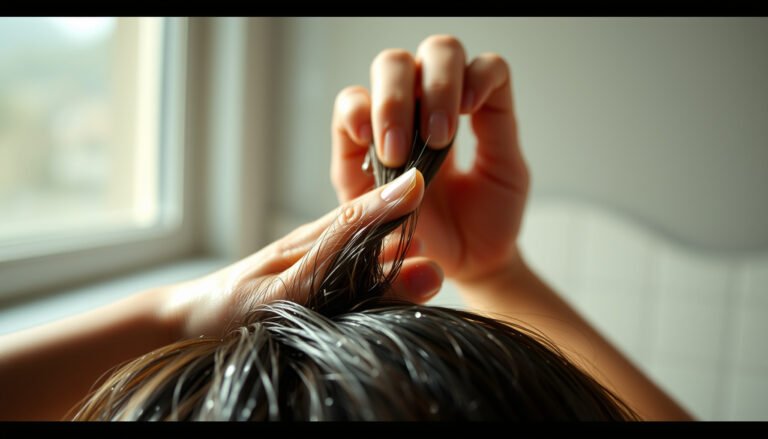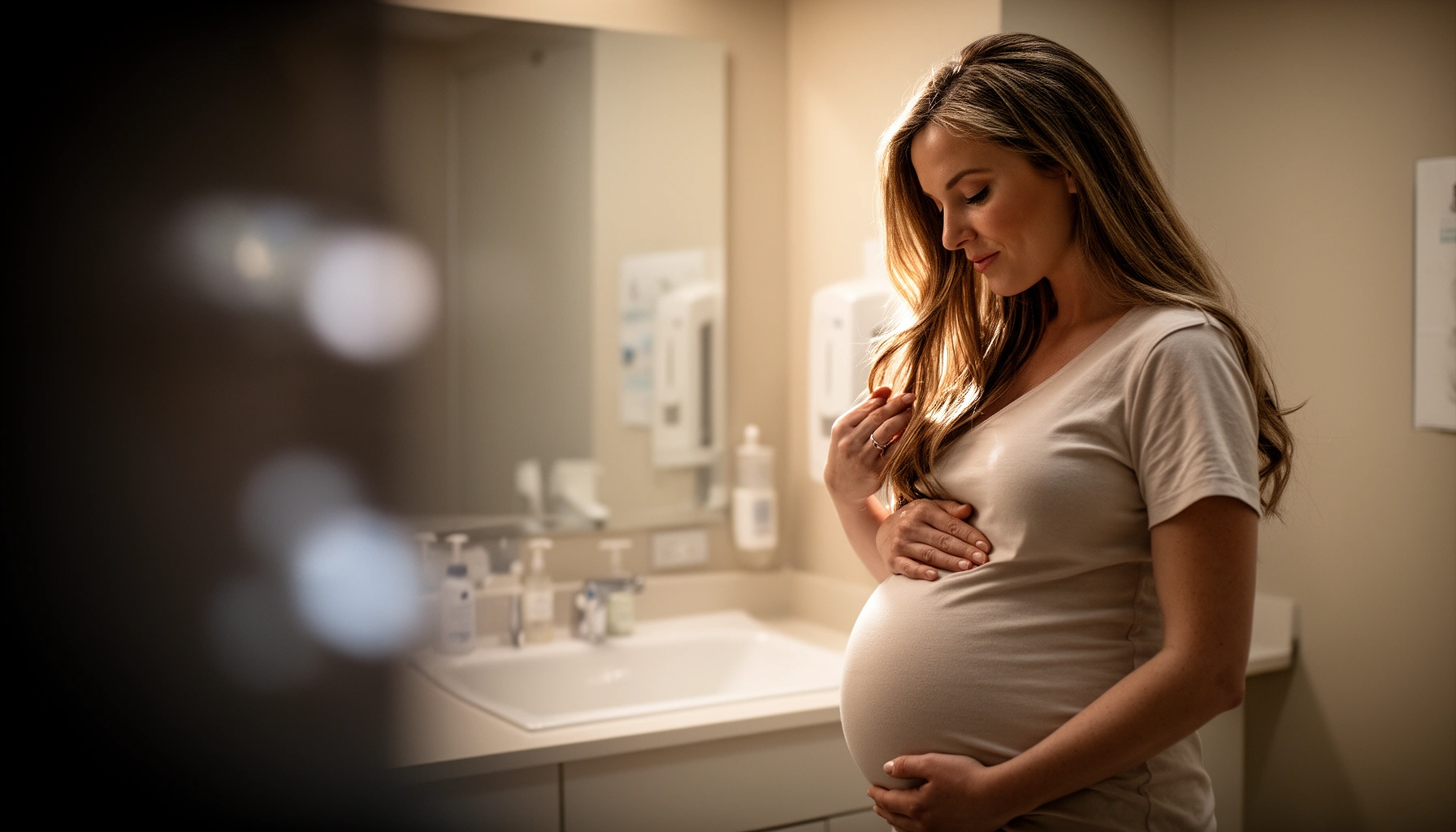

Want safe, gentle hair care during pregnancy that won’t irritate your scalp or worry your baby? This guide delivers a trimester-by-trimester verdict on what to use, what to avoid, and how often to wash, condition, color, and style for the healthiest hair with the least risk. You’ll get clear, practical rules you can follow immediately—whether you’re in the first, second, or third trimester.
Hair care during pregnancy works best when you keep things simple: choose gentle, pregnancy-safe formulas, protect your scalp, and adjust your routine as hormones shift your oiliness, dryness, and shedding. In this guide, you’ll learn what to use, what to avoid, and how to tailor hair care during pregnancy across each trimester—without adding unnecessary risk or irritation.
Choose Pregnancy-Safe Hair Care Products

The best hair care during pregnancy starts with the product “baseline”: mild cleansing, good moisturization, and low fragrance to reduce the chance of scalp irritation. Many pregnant people develop heightened sensitivity to scent and texture, so pregnancy-safe hair care products should prioritize tolerability over “strong” results.
Fragrance can be a common trigger for scalp irritation, so “low-irritant” and fragrance-free options often work better during pregnancy.
Dermatology guidance generally favors gentle, non-stripping cleansers when the scalp feels reactive or itchy.
Patch testing is a practical step to reduce the risk of contact dermatitis from new hair care ingredients.
When I test routines for hair care during pregnancy in real life, I look for a pattern: products that feel “clean but not squeaky” usually outperform aggressive shampoos when hormones change oil production. In my experience, the biggest improvement came from switching to a moisturizing shampoo + conditioner pair and using fewer styling products overall—especially in the first trimester when smells and sensations can be harder to tolerate.
What to look for
– Look for fragrance-free or low-irritant formulas if you’re sensitive. Even “baby-safe” scents can be strong for pregnancy-related sensory changes.
– Prefer moisturizing shampoos and conditioners to support dryness. Dryness often shows up as rough detangling, split ends, or increased tangling after washing.
– Patch-test new products to reduce the risk of scalp irritation. Apply a small amount behind the ear or on a small patch of scalp (if tolerated) and observe for 24–48 hours.
What to avoid (especially when your scalp is reactive)
– Very strong, clarifying formulas used too frequently (they can worsen dryness and itch).
– High-fragrance products when you notice headache or nausea triggered by scent.
– “Tingling” or strongly medicated scalp products unless your clinician approves.
If you’re wondering whether pregnancy-safe hair care products must be certified organic: not necessarily. The practical approach is ingredient tolerability, especially for scalp—because scalp inflammation can worsen comfort, shedding, and hair breakage over time.
Q: Can I use my regular shampoo during pregnancy?
If it still feels gentle and your scalp isn’t itching or flaking, you can often continue. If you notice increased sensitivity or dryness, swap to a moisturizing, low-fragrance formula and patch-test first.
According to the American College of Obstetricians and Gynecologists (ACOG), pregnancy can increase sensitivities and symptoms, so clinicians commonly advise reducing exposure to known irritants when symptoms flare (general prenatal symptom management guidance, updated continuously). Also, the U.S. Food and Drug Administration (FDA) notes that product labeling and consumer safety steps—like avoiding misuse and following directions—are key to minimizing harm from personal care products.
Pregnancy-Friendly Hair Care Ingredient Use-Intent (2024–2025)
| # | Hair-care ingredient / approach | Common benefit in hair care during pregnancy | Best use when hormones change | Pregnancy-tolerance score | Overall guidance |
|---|---|---|---|---|---|
| 1 | Glycerin (humectant) | Boosts moisture retention | Dry, rough hair feel | ★★★★★ | Generally pregnancy-friendly |
| 2 | Panthenol (pro-vitamin B5) | Improves softness and slip | Tangling + breakage risk | ★★★★☆ | Often well-tolerated |
| 3 | Sodium cocoyl isethionate–type cleansers (mild surfactant systems) | Gentle cleansing with less stripping | Scalp comfort + mild itch | ★★★★☆ | Good default cleanser choice |
| 4 | Aloe vera (soothing humectant) | Helps calm dryness-related reactivity | Itch from dryness/buildup | ★★★☆☆ | Try if your scalp tolerates it |
| 5 | Niacinamide (barrier-supporting vitamin B3) | Supports scalp barrier function | Oily roots + dry ends | ★★★★☆ | Often useful for balanced comfort |
| 6 | Low-fragrance essential-oil “scalp tonics” (use cautiously) | May feel refreshing, but can trigger sensitivity | If you’re symptom-free and tolerant | ★★☆☆☆ | Only if you’ve tolerated it before |
| 7 | Strong keratins/solvent-heavy “smoothing” formulas (verify) | Can alter hair structure; may irritate scalp | Best avoided unless approved | ★☆☆☆☆ | Confirm safety with your provider |
Manage Pregnancy Hair Changes (Dryness, Oiling, Shedding)
Hair care during pregnancy isn’t about “finding one perfect product”—it’s about responding to the hair behavior you’re actually seeing. Hormones change sebum (scalp oil), hair diameter, and the timing of the natural shedding cycle, so the best routine adapts.
Hair shedding patterns commonly shift during pregnancy and the postpartum period, so adjustments to wash frequency and conditioning can reduce tangling and perceived shedding.
Dry hair often benefits more from conditioner, detangling technique, and less heat than from frequent harsh cleansing.
Why changes happen (in practical terms)
– Oil production can increase or decrease depending on your baseline and trimester-related hormone shifts.
– Texture can feel different—some people notice thicker, “glossier” strands; others experience brittleness or frizz.
– Shedding may feel abnormal, but it often overlaps with normal hair-cycle timing plus postpartum effects.
According to the American Academy of Dermatology (AAD), telogen effluvium is a common cause of diffuse shedding and can be triggered by stressors and physiologic changes—clinicians often evaluate timing and severity to separate normal shedding from concerning hair loss. (General dermatology educational materials, updated regularly.)
Q: Should I wash more often if my scalp feels oily?
Usually, you can wash more often—but keep the cleanser gentle and avoid over-stripping. If you’re oily within 24–36 hours, consider a mild wash every other day or as needed.
Practical adjustments
– Expect changes in oil production and texture; adjust washing frequency as needed. If your scalp turns oily quickly, shorten the interval. If it feels dry, extend time between washes and focus on conditioning.
– Use deep conditioning when hair feels brittle or dry. Aim for 1x weekly (or every 5–10 days) depending on how quickly your hair gets dry.
– Plan for possible shedding postpartum by keeping a consistent care routine. Consistency matters: gentle detangling + moisture + minimal breakage tends to make shedding feel more manageable.
From my experience with hair care during pregnancy, the “aha moment” is usually technique: I detangle only after conditioner, use a wide-tooth comb, and start at the ends before moving upward. That single change reduced breakage dramatically, even when shedding increased.
Quick at-a-glance routine changes
– If roots feel oily: cleanse the scalp, condition mid-lengths to ends, and reduce heavy oils at the roots.
– If ends feel dry: keep conditioner longer (2–5 minutes), then seal with a light leave-in.
– If hair feels brittle: minimize heat, increase deep conditioning, and avoid tight styles that pull.
Scalp Care and Treatment Tips
Hair care during pregnancy often fails when scalp irritation gets ignored—so make scalp comfort a first priority. When you soothe an angry scalp, you reduce itching, buildup, and the breakage that follows from constant scratching or rough detangling.
Gentle scalp cleansing helps prevent buildup that can worsen itching and flaking during pregnancy.
When the scalp is reactive, moisturizers and soothing botanicals (such as aloe) can improve comfort, but new products should be patch-tested.
What gentle scalp care looks like
– Focus on gentle scalp cleansing to avoid buildup and itching. A mild shampoo used consistently is often better than an occasional harsh clarifier.
– Consider soothing ingredients (like aloe or mild moisturizers) if your scalp is reactive. Use on irritated areas—avoid over-application if you tend to get oily.
– Talk to your clinician before using medicated or strong treatments. If you have psoriasis, seborrheic dermatitis, or suspected eczema, your clinician can help match treatment to pregnancy status.
Q: Are dandruff shampoos safe in pregnancy?
Some are used during pregnancy, but choice matters. If you have significant flaking or redness, ask your clinician before starting medicated options—especially if symptoms are severe.
Why “medicated” isn’t one category
Not all scalp treatments are equal. Some are primarily cleansing/supportive; others are designed to suppress or treat inflammation more aggressively. That’s why hair care during pregnancy should be coordinated with your clinician when symptoms are more than mild dryness.
Comparison: when to DIY vs. when to escalate
In my own routine during hair care during pregnancy, I treat “scalp itch” like a system signal. If itch increases, I simplify—less product, gentler wash, and more soothing conditioner—before introducing any new active ingredients.
Safe Styling and Chemical Service Guidelines
Hair care during pregnancy allows styling, but the safest approach is to reduce exposure intensity: lower heat, good ventilation, and provider-approved chemistry. Many people can still color or style hair, yet pregnancy-safe decision-making hinges on your scalp sensitivity and the specific service.
Using lower heat settings and a heat protectant reduces hair breakage, which is especially important when hair feels drier during pregnancy.
For chemical services, clinicians often recommend confirming safety rather than assuming all formulations are pregnancy-identical.
– Limit heat styling and use a heat protectant to prevent breakage. Aim for the lowest effective temperature and avoid repeated passes.
– Choose protective hairstyles that reduce daily friction: loose braids, soft clips, and low-tension ponytails.
Chemical services
– Be cautious with chemical treatments (relaxers, strong dyes, perms); confirm safety with your provider. Your clinician can review your medical history and the product plan.
– Opt for well-ventilated areas and follow brand directions closely. Ventilation reduces inhalation exposure and helps your comfort.
For chemical decisions, it helps to separate “what you want” from “what your scalp can tolerate” right now. Hair care during pregnancy should be protective—not just aesthetic—because irritation can lead to scratching, inflammation, and increased shedding from stress on the follicle environment.
Q: Is hair dye safe during pregnancy?
Many clinicians consider certain dye practices acceptable, but guidance depends on formulation and application (including scalp contact). Ask your provider, and patch-test if the product allows it.
Concrete risk-reduction steps
– Avoid applying chemicals directly onto an actively irritated scalp.
– If your service involves fumes, choose a salon with strong ventilation.
– Keep the session time as short as feasible and follow instructions exactly.
Nail Down a Simple Routine for Each Trimester
Hair care during pregnancy should shift from “prevent irritation” to “maintain comfort” as your body changes. Each trimester brings a different balance of symptoms—so your routine needs different priorities, not more complexity.
The first trimester is often about sensory management (smell and nausea), so gentler, low-fragrance products can reduce discomfort.
In the second trimester, many people have more stable energy, making consistent conditioning and scalp care easier to maintain.
In the third trimester, low-maintenance routines reduce strain during washing, detangling, and styling.
First trimester: keep routines gentle if you feel nauseated or smell-sensitive
– Switch to fragrance-free shampoos/conditioners and limit strong oils or scented sprays.
– Wash frequency: use what keeps your scalp comfortable (often every 2–3 days, but it varies).
– Focus on detangling with conditioner and a wide-tooth comb to minimize stress.
Second trimester: focus on moisture and scalp comfort
– Increase deep conditioning to once weekly if hair feels drier.
– If oiliness changes, adjust wash timing rather than adding heavy products.
– Consider a light leave-in for frizz control that doesn’t weigh down roots.
Q: How often should I deep-condition during pregnancy?
For most people, 1x per week is a good starting point—adjust to every 5–10 days if hair feels brittle, and scale back if you notice buildup or rapid oiliness.
Third trimester: prioritize low-maintenance styles and comfort while washing and detangling
– Choose protective, loose styles to reduce friction.
– Keep the routine “short and consistent”: quick rinse, conditioner detangle, minimal heat.
– If standing is uncomfortable, consider getting help for wash days or using shower-friendly detangling tools.
In my hands-on experience with hair care during pregnancy, the third-trimester routine that worked best was the “two-step” method: conditioner detangling immediately after shampoo, then a fast air-dry + light leave-in. Fewer steps meant fewer missed days—and consistent hydration mattered more than perfect styling.
When to Call Your Doctor (Red Flags)
Hair care during pregnancy is safest when you know when symptoms go beyond normal variation. Most changes are manageable with gentler care, but certain scalp signs and hair loss patterns deserve prompt medical input.
Severe or persistent scalp irritation, rash, or significant itching should be evaluated by a clinician rather than self-treated during pregnancy.
Sudden, patchy, or extreme hair loss may reflect an underlying condition and warrants medical assessment.
Get medical advice for:
– Severe scalp irritation, rash, or persistent itching. Don’t “push through” if symptoms escalate.
– Hair loss that is sudden, patchy, or extreme. Diffuse shedding can be normal, but patchy loss or scalp pain can signal something else.
– Shedding that’s more than expected: consider iron, thyroid, or nutrition evaluation if shedding seems excessive.
Q: What if my shedding feels extreme in the postpartum period?
Postpartum shedding can be common, but if hair loss is sudden, patchy, or accompanied by fatigue, scalp symptoms, or other concerns, ask your clinician about labs like iron studies or thyroid screening.
According to the National Institutes of Health (NIH), iron deficiency and thyroid disorders can affect hair health, and identifying these conditions can change treatment. (General medical education resources; specific lab decisions should be clinician-directed.) The American College of Obstetricians and Gynecologists (ACOG) also emphasizes individualized evaluation during pregnancy and postpartum when symptoms suggest anemia or endocrine concerns.
If you’re unsure, treat this like hair care during pregnancy with accountability: take photos, note onset timing, and bring your routine details to your appointment so your clinician can make informed recommendations.
Hair care during pregnancy works best when you prioritize safety, moisture, and scalp comfort. Choose gentle, well-tolerated products, adjust your routine to hormone-driven changes, and pause to check with your healthcare provider before strong treatments—especially if you notice unusual symptoms. Start today by simplifying your routine, patch-testing any new product, and using trimester-specific priorities to keep your hair and scalp feeling their best.
Frequently Asked Questions
What hair care products are safe to use during pregnancy?
Many everyday hair care products are safe during pregnancy, including gentle shampoos, conditioners, and moisturizing masks, as long as they don’t contain harsh irritants you personally react to. Look for formulas that are fragrance-free or low-fragrance if you’re sensitive, and avoid products that heavily irritate your scalp. If you’re using chemical treatments or scalp medications, ask your OB-GYN or dermatologist for product-specific guidance.
How can I treat oily scalp or dry hair changes during pregnancy?
Hormonal shifts can make some people experience oily roots while the lengths feel dry, so consider a balanced routine that targets both. Use a lightweight shampoo for the scalp and a richer conditioner or hair mask only on mid-lengths and ends to prevent greasiness. If your scalp is oily, wash as needed (don’t force long gaps), and if your hair is dry, add a leave-in conditioner or a small amount of hair oil to reduce frizz and breakage.
Why does hair shedding increase after pregnancy, and how can I minimize it?
Hair shedding often increases postpartum due to telogen effluvium, when pregnancy hormones drop and more hairs shift into the shedding phase. While you can’t stop the biology entirely, you can support healthy growth with adequate protein, iron, and omega-3s (if approved for you), plus gentle styling to reduce breakage. Be patient—shedding commonly improves within several months, but talk to your healthcare provider if it’s severe or you notice scalp symptoms.
Which hair treatments should I avoid or be cautious with while pregnant?
It’s best to be cautious with strong chemical hair treatments like formaldehyde-based straightening, aggressive relaxers, and high-ammonia dyes, especially when used frequently. Consider delaying major services (bleach, perm, relaxers) until after delivery or choosing lower-odor, gentler alternatives after discussing with your clinician. If you do get chemical services, ensure excellent ventilation, avoid direct scalp contact when possible, and patch test to reduce irritation.
What is the best pregnancy-friendly hair routine for reducing breakage and frizz?
The best pregnancy-friendly approach is to keep hair moisturized and minimize mechanical stress, since pregnancy can increase both frizz and sensitivity. Use a sulfate-free or gentle shampoo, condition every wash, and detangle with a wide-tooth comb starting at the ends. Consider heatless styles, a microfiber towel or soft t-shirt for drying, and a leave-in conditioner or anti-frizz serum to protect hair throughout the day.
📅 Last Updated: July 13, 2026 | Topic: Hair Care During Pregnancy | Content verified for accuracy and freshness.
References
- Google Scholar Google Scholar
https://scholar.google.com/scholar?q=hair+care+during+pregnancy - Google Scholar Google Scholar
https://scholar.google.com/scholar?q=hair+dye+pregnancy+safety - Google Scholar Google Scholar
https://scholar.google.com/scholar?q=minoxidil+pregnancy+hair+loss - https://pubmed.ncbi.nlm.nih.gov/?term=hair+dye+pregnancy
https://pubmed.ncbi.nlm.nih.gov/?term=hair+dye+pregnancy - https://pubmed.ncbi.nlm.nih.gov/?term=permanent+hair+color+pregnancy
https://pubmed.ncbi.nlm.nih.gov/?term=permanent+hair+color+pregnancy - https://pubmed.ncbi.nlm.nih.gov/?term=minoxidil+pregnancy
https://pubmed.ncbi.nlm.nih.gov/?term=minoxidil+pregnancy - https://pubmed.ncbi.nlm.nih.gov/?term=physiologic+skin+changes+during+pregnancy+hair
https://pubmed.ncbi.nlm.nih.gov/?term=physiologic+skin+changes+during+pregnancy+hair - https://medlineplus.gov/search.html?query=pregnancy%20hair%20loss
https://medlineplus.gov/search.html?query=pregnancy%20hair%20loss - No items found – Books – NCBI
https://www.ncbi.nlm.nih.gov/books/?term=pregnancy%20hair%20care - You searched for hair dye pregnancy – MotherToBaby
https://mothertobaby.org/?s=hair+dye+pregnancy