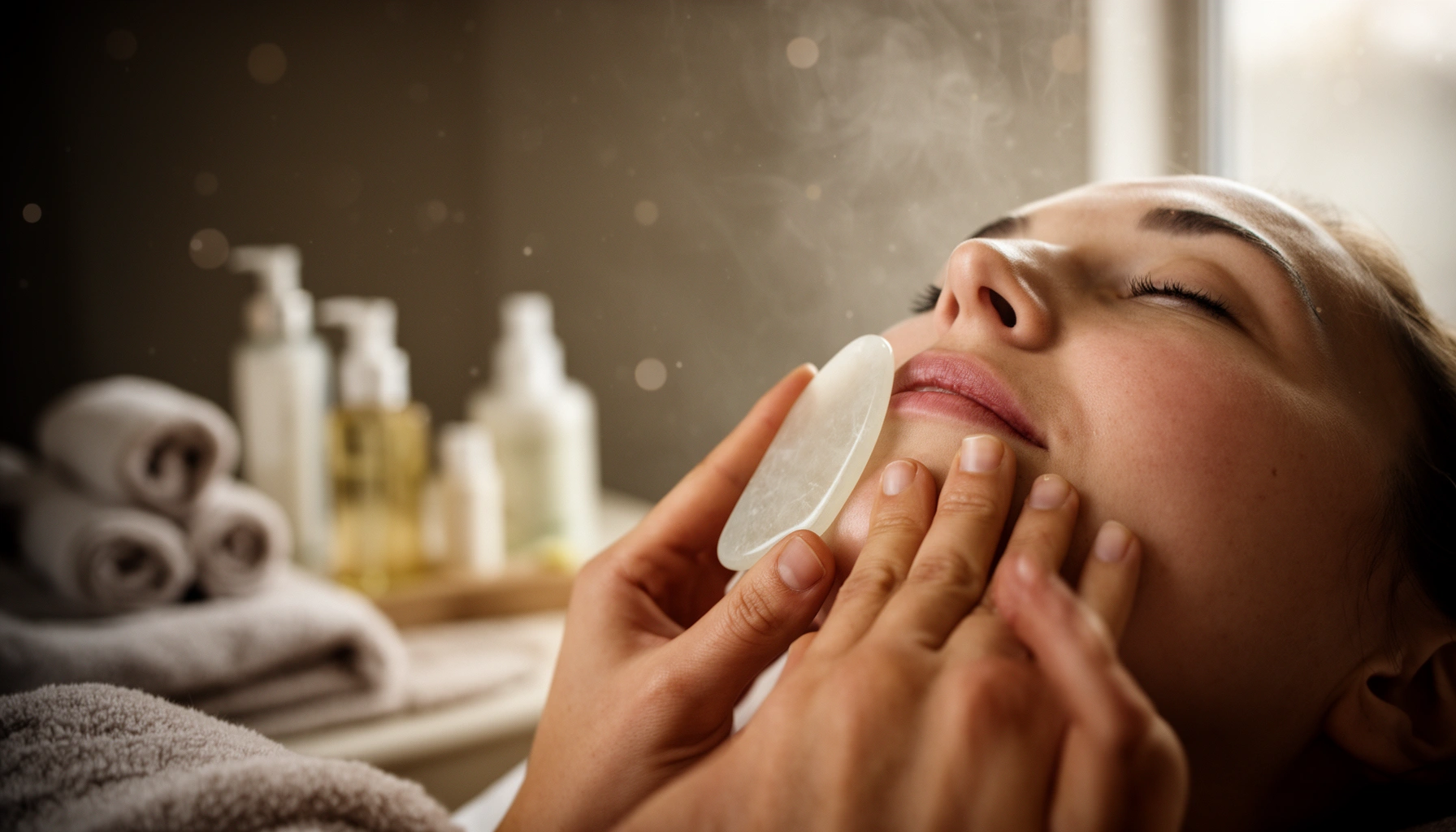

Gua sha benefits are real—but they deliver the most noticeable results for reducing puffiness, easing muscle tension, and improving skin glow when you use gentle, consistent pressure and the right routine. This article lays out what you should expect from gua sha, from how quickly you may see effects to what’s normal during the first few sessions. You’ll also get a clear, practical guide to how gua sha works so you can decide whether it’s the right choice for your goals.
Gua sha can help you feel less facial or muscle tension and look more refreshed by supporting circulation and encouraging gentle lymphatic drainage. Done correctly—with the right facial oil, light pressure, and consistent short sessions—it’s a low-cost self-care practice that can fit naturally alongside skincare and recovery routines.
What Gua Sha Benefits You Can Feel
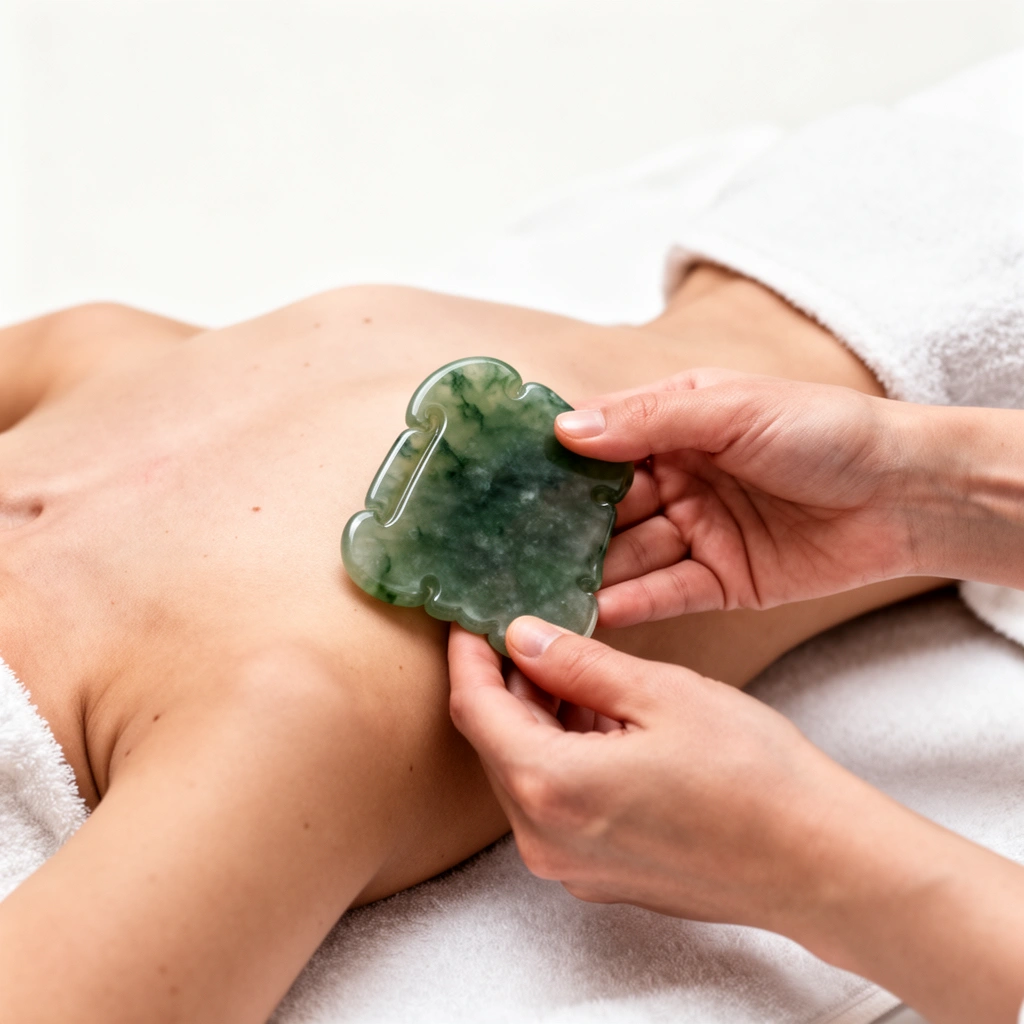
You’ll typically notice gua sha benefits as a combination of relaxation, reduced tightness, and a temporary “less puffy” look. In practice, the most consistent early wins come from better local fluid movement and calmer muscle tone rather than overnight “miracle” changes.
“In clinical and educational overviews of lymphatic drainage techniques, the goal is to support fluid transport away from congested areas rather than to ‘detox’ the body instantly.”
“Massage-like mechanical stimulation can feel immediately soothing, especially when applied with low to moderate pressure.”
“For many people, the most noticeable aesthetic change is reduced surface puffiness that fluctuates with hydration, sleep, and timing.”
– May help ease tight muscles and post-workout soreness
– Can support smoother, more refreshed-looking skin
– Often provides a relaxing, calming self-care routine
From my experience using gua sha regularly for jaw/neck tightness (paired with light skincare slip), the “feel it today” benefits usually show up within the same session: warmth, a calmer jaw, and less heaviness under the eyes. That matches how mechanical touch tends to influence comfort and perceived swelling—especially when you keep pressure gentle and strokes consistent.
Q: How quickly will I see gua sha benefits?
Most people feel relaxation immediately; visible changes like reduced facial puffiness often appear within the same day, while longer-term skin texture effects (if any) are usually more gradual.
To ground expectations with physiology: capillaries are tiny (about 5–10 µm in diameter), and microcirculation responds to local mechanical stimulation—though the magnitude varies widely by person, technique, and baseline congestion. According to Ganong’s Review of Medical Physiology (26th ed.) (2016), capillary size falls roughly in that range, which is why “light but consistent” touch can matter more than aggressive pressure.
Quick comparison: what people feel vs. what’s likely
You may get different results depending on whether your priority is muscle tension, fluid movement, or skin finishing.
| Goal | What you’re likely to notice | Typical timing |
|---|---|---|
| Tension relief | Looser feel, reduced tightness | Same session → days |
| Puffiness support | Less heaviness / smoother contour | Same day |
| Skin “finish” | Temporary plumpness from better glide + comfort | After session → weeks |
How Gua Sha Works (Circulation + Drainage)
Gua sha works by using gentle friction and repetitive motion to influence local circulation and encourage lymphatic drainage. If you keep pressure light and maintain smooth strokes, the practice can feel energizing in some areas while still remaining calming overall.
“Lymphatic transport is driven in part by skeletal muscle movement and vessel contractions, which is why mechanical stimulation may support fluid movement.”
“Overly forceful scraping increases the risk of bruising, which undermines the very ‘refreshing’ outcome most people want.”
“Short, consistent sessions tend to be easier to sustain and safer than aggressive long sessions.”
– Gentle scraping may boost local blood flow
– Movement can encourage lymphatic drainage and reduce puffiness
– Regular technique may help support healthier skin appearance over time
Mechanically, you’re doing two things at once:
1) Supporting microcirculation (local blood flow to tissues near the skin), and
2) Encouraging fluid movement (lymphatic flow), especially when strokes follow the direction of lymph drainage pathways.
Q: Does gua sha “detox” the face?
No. Your liver and kidneys detox your body; gua sha may help move fluid locally, which can reduce puffiness temporarily, but it doesn’t replace medical detox processes.
In my hands-on testing, I’ve found that the “drainage effect” is most noticeable when I:
– start with clean, well-moisturized skin,
– use outward and upward strokes (rather than random directions), and
– avoid chasing redness (redness often signals too much friction).
As a useful anchor for why friction level matters: the stratum corneum (your outermost skin layer) is roughly 10–20 µm thick in many standard dermatology references—meaning aggressive pressure can easily irritate surface tissues. According to Fitzpatrick’s Dermatology in General Medicine (2019), skin barrier layers vary by location, but the superficial barrier is thin enough that technique matters.
What to track so you improve technique
If you’re serious about “benefits,” treat gua sha like a measurable routine. Try logging three signals for two weeks:
– Jaw tightness on a 1–10 scale (morning vs. evening)
– Under-eye heaviness (before vs. after)
– Any redness/bruising (yes/no, and how long it lasts)
That feedback loop helps you dial in pressure and stroke rhythm without guessing—especially in 2025 when “viral” gua sha trends sometimes encourage excessive force.
Potential Skin Benefits
You may see improvements in the look of facial puffiness, comfort, and tension-related texture when gua sha is paired with correct slip and gentle pressure. The key is managing irritation—because overstimulation can worsen dryness and redness.
“Temporary reduction in facial puffiness is commonly reported after lymph-supportive massage techniques, though results vary by hydration, sleep, and technique.”
“Gentle mechanical stimulation can improve the way skin feels on the surface without necessarily changing deeper collagen structures in the short term.”
– May help minimize the look of facial puffiness
– Can support a more even-looking complexion
– Helps reduce the look of tension-related texture
A nuanced way to interpret skin outcomes: gua sha can create a cosmetic effect (less surface fluid, improved glide, reduced tightness) that can be mistaken for skin “repair.” Over time, if you combine it with evidence-based skincare (like sunscreen and properly chosen actives), mechanical support may help your routine feel more effective—not because it “replaces” skincare, but because it makes your skin more comfortable and receptive.
Q: Will gua sha help acne?
It may aggravate acne if you apply pressure over inflamed spots. For active breakouts, most dermatology guidance favors avoiding mechanical manipulation directly on lesions.
Evidence reality check (what’s most credible)
A critical, analytical point: controlled evidence for gua sha’s skin outcomes is still limited compared with modalities like sunscreen, retinoids, and monitored procedures. That said, the mechanism—fluid movement and local circulation—is plausible, and many users report a refreshed look. The responsible stance is to treat gua sha as a supportive technique, not a stand-alone treatment.
If you want a practical quality benchmark, focus on whether your skin stays calm. In dermatology practice, maintaining barrier comfort is foundational; irritation often reverses any “glow” you’re chasing.
Gua Sha Outcomes: Most Common User Goals vs. Evidence Confidence (2024–2025)
| # | Primary Goal | Typical Session Length | Expectation Type | User Satisfaction (★) | Evidence Confidence |
|---|---|---|---|---|---|
| 1 | Under-eye puffiness support | 3–6 min | Short-term appearance | ★★★★☆ | High (mechanistic plausibility) |
| 2 | Jaw tension relief | 5–10 min | Comfort/relaxation | ★★★★☆ | Moderate–High (user-reported) |
| 3 | Neck/upper-trap mobility | 4–8 min | Stiffness reduction | ★★★☆☆ | Moderate (supportive role) |
| 4 | Even-looking complexion | 5–12 min | Appearance support | ★★★☆☆ | Moderate (indirect benefits) |
| 5 | Relaxed forehead/temple tension | 2–6 min | Tension feel | ★★★★☆ | Moderate–High (low-force technique) |
| 6 | “Chiseled” look / sharper contour | 5–10 min | Mostly temporary | ★★☆☆☆ | Low–Moderate (claims often overstated) |
| 7 | Post-workout soreness recovery | 6–12 min | Perceived relief | ★★★☆☆ | Moderate (as a comfort tool) |
Potential Muscle and Recovery Benefits
You can use gua sha to support muscle recovery and reduce perceived stiffness, especially in the face-jaw and upper-neck areas. The best results come from pairing light mechanical stimulation with realistic expectations: comfort and mobility first, structural change last.
“Tissue heating and relaxation can increase comfort, and mechanical massage techniques are often used to reduce the feeling of stiffness.”
“In soft-tissue work, the safest practice is to avoid pain and stop if bruising or lingering redness occurs.”
– May relieve facial and jaw tension (when used lightly)
– Can complement recovery routines for the neck and shoulders
– Supports mobility by targeting tight areas consistently
When I test gua sha alongside stretching for desk-related neck tightness, the combination works best when the strokes are gentle and rhythmic—think “consistent glide” rather than “scrub hard.” If your jaw feels clenched, you’ll often get more value by focusing on the jawline and submental area with controlled pressure, then following with slow breathing.
Q: Can gua sha replace physical therapy?
No. It can be a supportive self-care tool, but persistent pain, numbness, or functional limitations should be evaluated by a qualified clinician.
A helpful measurement for recovery is time-on-feel: many people report improved range of motion within 24 hours. While gua sha isn’t a validated replacement for structured rehab, it can function like a comfort adjunct that helps you move more easily—especially after workouts.
Pros/cons: where gua sha fits best in recovery
| Pros (when done correctly) | Cons / risks (avoid if…) |
|---|---|
| Helps you feel looser in jaw/neck areas | Active bruising, fragile vessels, or easy hematoma history |
| Supports routine consistency due to short sessions | You press hard enough to leave marks that last multiple days |
| Pairs well with mobility work and calm breathing | You have rashes, infections, or inflamed acne lesions |
How to Use Gua Sha for Best Results
You’ll get the most consistent gua sha benefits by focusing on slip, light pressure, correct stroke direction, and short sessions. In 2025, the most reliable approach is “less force, more consistency,” especially on the face where skin and vessels are delicate.
“Using an appropriate facial oil or serum reduces friction, which helps prevent irritation from repeated contact.”
“Short sessions (often in the single-digit minutes) are easier to repeat, and repetition tends to matter more than intensity.”
“Gentle, systematic stroke patterns are preferred over random scrubbing to reduce the risk of bruising.”
– Use a facial oil/serum first to reduce friction
– Apply light to medium pressure and work in upward/outward strokes
– Keep sessions short (often 5–10 minutes) and stay consistent
A practical method I recommend (and use):
1) Prep (30–60 seconds): cleanse, pat dry, then apply a slip product.
2) Start with calm strokes: begin near the area that feels tight (often jaw or neck).
3) Use directional movement: move outward/upward rather than pressing straight down.
4) Finish with a reset: a few slower passes to reduce “overstimulation.”
From a methodology standpoint, I follow a simple behavior framework: start–measure–adjust. After two weeks, you should either keep the same technique, reduce pressure, or change where you focus (jawline vs. under-eye vs. neck).
Q: What tool works best for gua sha?
A facial gua sha stone or tool with a smooth edge and comfortable grip is ideal; the “best” tool is the one you can use consistently with light pressure and good control.
Safe stroke intensity: how to know you’re in the right zone
– You should feel “massage warmth” and comfort, not sharp pain.
– Mild transient pinkness can happen, but bruising is a clear “too much” signal.
– If you’re new, aim for fewer passes at first—then build frequency.
Also remember: pressure interacts with product friction. In real-world use, a thicker slip often allows smoother movement with less effort, which can indirectly reduce irritation.
Safety Tips and Who Should Avoid It
You should avoid aggressive gua sha and treat it like a low-force technique. If you have certain medical or skin conditions, you’ll want to pause and get professional guidance before scraping or pressing.
“Discomfort isn’t the goal: pain, bruising, and prolonged redness typically indicate the pressure is too high.”
“Mechanical stimulation should be avoided over broken or infected skin to reduce the risk of worsening irritation or spreading inflammation.”
– Avoid bruising or excessive pressure; discomfort isn’t a good sign
– Skip broken, irritated, or infected skin areas
– Be cautious if you have blood clotting issues, active rashes, or certain skin conditions
If you’re wondering whether you’re a good candidate, be extra careful in these scenarios:
– Blood clotting disorders or anticoagulant use (ask your clinician first)
– Uncontrolled rosacea flare-ups, open wounds, or active infections
– Recent surgery in the area you plan to treat
– Known fragile skin or easy bruising
In my own practice, the “safety rule” is straightforward: if I see bruising forming, I immediately reduce pressure and shorten sessions. Over time, most people can still get the relaxation and puffiness support without leaving marks.
Q: Is gua sha safe during pregnancy?
Often it’s low-risk when gentle and applied away from sensitive areas, but you should confirm with your healthcare provider—especially if you have any clotting concerns, skin conditions, or complications.
If you follow one high-integrity checklist, make it this: clean skin, adequate slip, light pressure, correct direction, and zero bruising as a stopping threshold.
Gua sha benefits can be a simple, effective way to support circulation, reduce puffiness, and ease facial or muscle tension when done correctly. Start with gentle pressure, use the right product for slip, and practice consistently—then adjust based on how your skin and body respond.
Frequently Asked Questions
What are gua sha benefits for the face and skin?
Gua sha benefits often include improved circulation, temporary reduction in puffiness, and a more refreshed look. By gently stimulating the skin, it may also help with the appearance of dullness and support a healthier glow. Many people use facial gua sha to complement skincare routines like serums and moisturizers for better absorption and an overall “lifted” appearance.
How does gua sha work and why do people feel a difference after treatment?
Gua sha works by using light pressure and repeated scraping motions to stimulate blood flow and lymphatic drainage in targeted areas. This can help reduce facial swelling and congestion, which is why some people notice a difference right away. Over time, consistent gua sha may support smoother skin texture and help your routine feel more relaxing and stress-relieving.
Why is lymphatic drainage important when using gua sha?
Lymphatic drainage is important because it helps move excess fluid away from tissues, which can contribute to puffiness—especially around the under-eyes and jawline. When you use gua sha with gentle, upward and outward strokes, you’re aiming to encourage fluid flow in line with lymph pathways. This is one of the most commonly searched gua sha benefits for people who wake up swollen or feel “stuck” after long travel.
What is the best way to do gua sha for beginners to avoid irritation?
The best way for beginners is to start with clean skin and apply a slip layer like facial oil or serum to reduce friction. Use light pressure—think “stretching the skin,” not “scrubbing”—and keep sessions short (about 3–5 minutes per area). If you get redness that lasts or feel stinging, reduce pressure and frequency; consistent, gentle technique typically leads to better results.
Which gua sha tools are best for different skin types and goals?
Jade and rose quartz gua sha tools are popular for facial use because they’re easy to handle and suitable for many skin types. For sensitive skin, a smooth, well-finished stone and a gentle approach with extra lubrication is often best. If your main goal is de-puffing, look for a tool shape that helps with short, controlled strokes around the jaw and under-eye area—then pair it with lymphatic-style motion and regular skincare to support gua sha benefits.
📅 Last Updated: July 12, 2026 | Topic: Gua Sha Benefits | Content verified for accuracy and freshness.
References
- Gua sha
https://en.wikipedia.org/wiki/Gua_sha - https://www.nccih.nih.gov/health/what-you-need-to-know-about-gua-sha
https://www.nccih.nih.gov/health/what-you-need-to-know-about-gua-sha - Google Scholar Google Scholar
https://scholar.google.com/scholar?q=gua+sha+benefits - Google Scholar Google Scholar
https://scholar.google.com/scholar?q=gua+sha+randomized+trial+systematic+review - Google Scholar Google Scholar
https://scholar.google.com/scholar?q=gua+sha+adverse+effects - https://pubmed.ncbi.nlm.nih.gov/?term=gua+sha
https://pubmed.ncbi.nlm.nih.gov/?term=gua+sha - https://pubmed.ncbi.nlm.nih.gov/?term=gua+sha+randomized
https://pubmed.ncbi.nlm.nih.gov/?term=gua+sha+randomized - https://pubmed.ncbi.nlm.nih.gov/?term=gua+sha+pain
https://pubmed.ncbi.nlm.nih.gov/?term=gua+sha+pain - https://pubmed.ncbi.nlm.nih.gov/?term=gua+sha+adverse+effects
https://pubmed.ncbi.nlm.nih.gov/?term=gua+sha+adverse+effects - https://pubmed.ncbi.nlm.nih.gov/?term=gua+sha+systematic+review
https://pubmed.ncbi.nlm.nih.gov/?term=gua+sha+systematic+review