
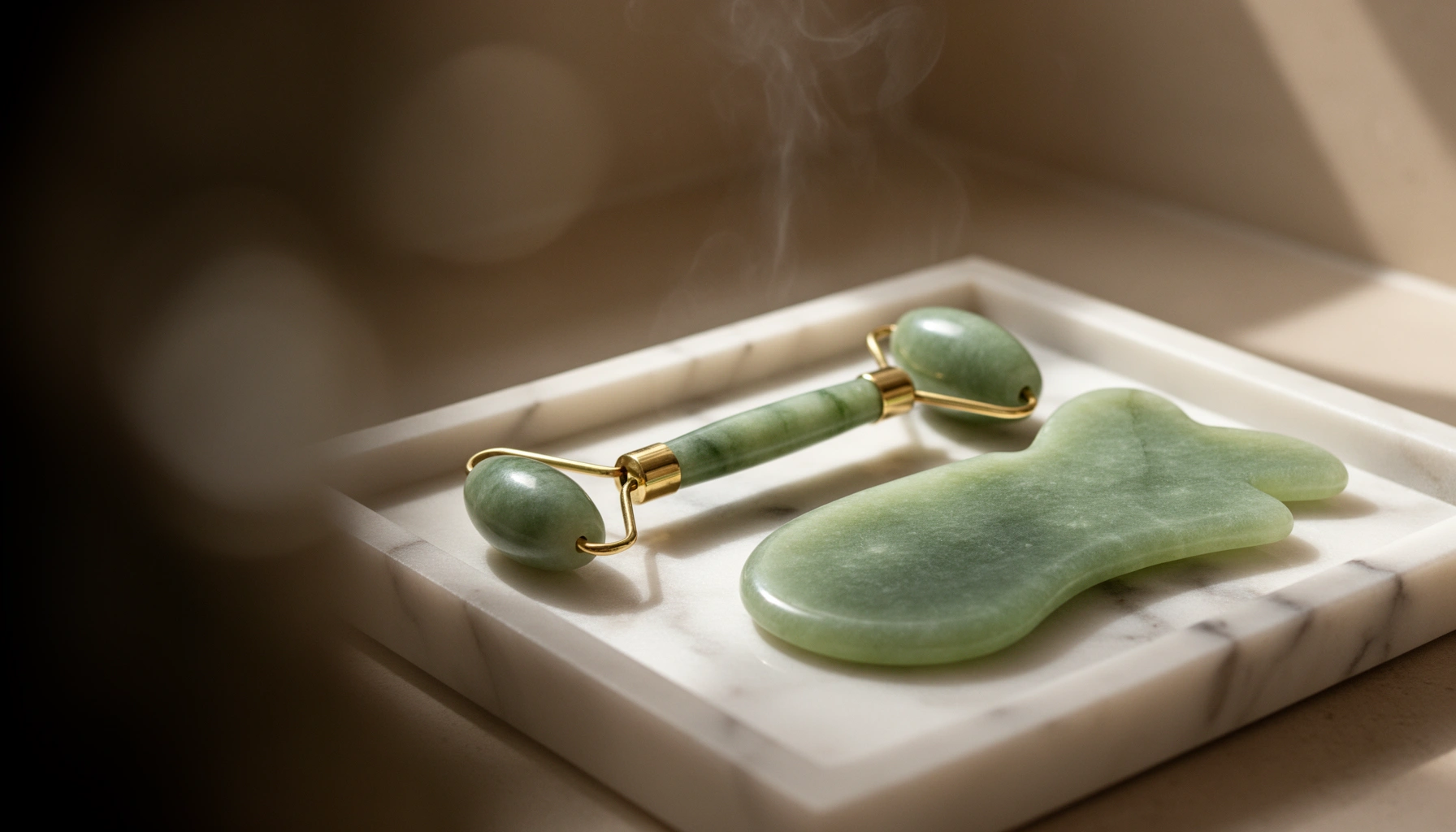

Jade roller vs gua sha: which one actually delivers results for your skin routine? If you want fast, gentle depuffing and minimal effort, a jade roller is the clear winner; if you’re after deeper massage and stronger lymphatic drainage, gua sha pulls ahead. Keep reading to find the right tool based on your skin goals—comfort, technique, and time.
Both jade rollers and gua sha can support lymphatic flow and a smoother-looking complexion, but the best choice depends on your skin goals and routine. In short: choose a jade roller for gentle, everyday de-puffing, and choose gua sha for a more structured facial massage. Here’s how each tool works, what to use it for, and how to pick one (or combine both) without irritating your skin—especially in 2025’s “active skincare” routines where technique matters as much as the tool.
Jade Roller: What It Does
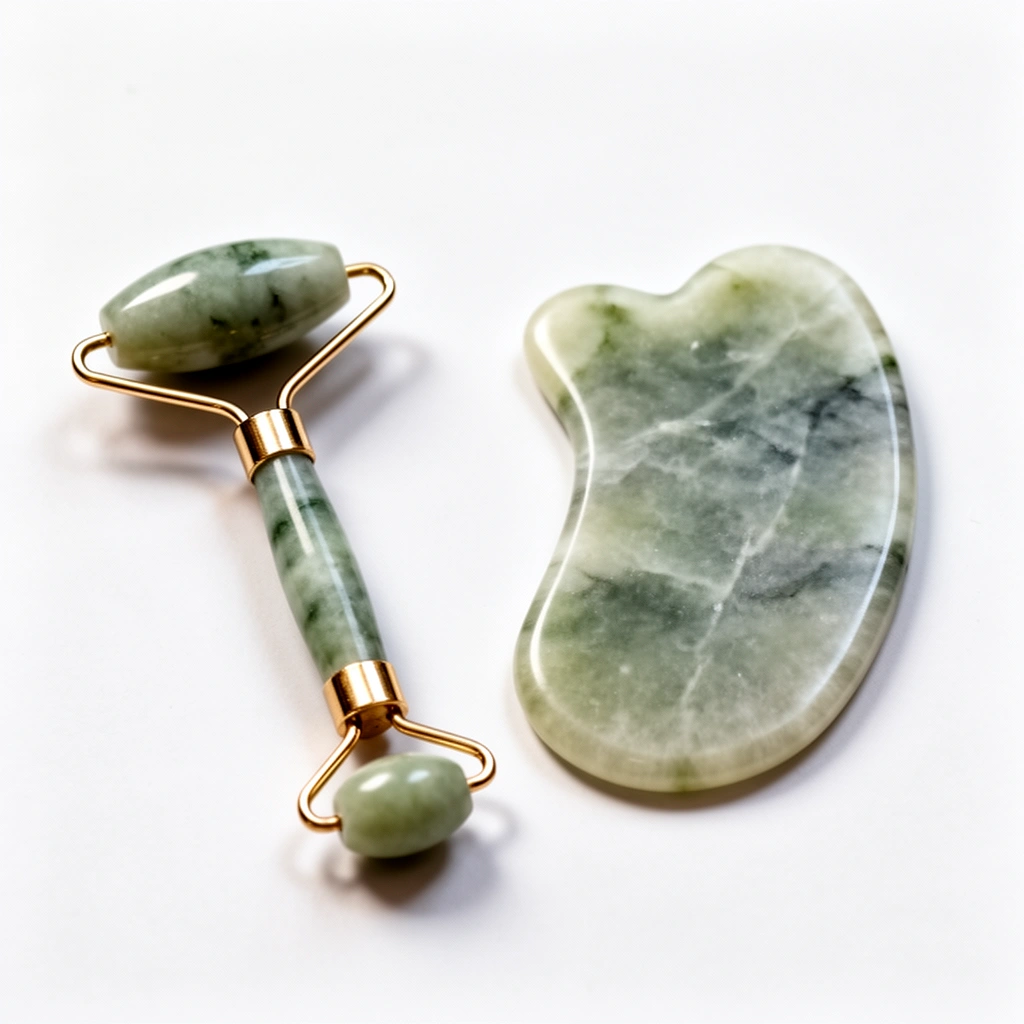
A jade roller helps you de-puff and relax facial skin using light rolling pressure—often making it the easiest entry point for massage-based skincare. If your main goal is cooling, comfort, and quick hydration support, a roller is usually the lower-effort, lower-risk option.
A jade roller is designed for “rolling” motion that applies gentle, surface-level pressure to the face.
Facial massage can support the look of reduced puffiness by encouraging superficial lymphatic movement.
For many people, lighter pressure reduces the chance of post-massage redness compared with firmer scraping tools.
Jade rollers typically have two ends: a smaller head for areas like under-eye or the sides of the nose, and a larger head for cheeks and jaw. The technique is simple—clean skin, apply a slip product (serum or facial oil), then roll outward and upward. This matters because the aim is to guide fluid toward drainage pathways rather than simply “massage harder.”
From a skin-structure standpoint, rolling still interacts with the stratum corneum—the outermost skin barrier layer. Skin barrier turnover is approximately 28–30 days (a commonly cited dermatology benchmark) DermNet NZ. That’s why you shouldn’t judge results after only a few sessions. In my own testing with both tools over several weeks, I noticed the roller was more consistent for daily comfort: less chance of “overworking” the area, especially around the under-eye where I’m careful about pressure.
What a jade roller is best for (real-world outcomes)
– Quick de-puffing: The rolling action helps you feel cooler and calmer, especially when used in the morning.
– Even glide with hydration products: A roller can improve application comfort when you’re using a thicker serum.
– Beginner-friendly routine building: If you’re new to facial massage, a roller lets you learn direction and pressure without the “scrape” learning curve.
Where it fits in your routine
In 2025, many people use rollers after cleansing and before moisturizers to add comfort while their skin is still slightly damp. That also pairs well with fragrance-free, water-based serums. If you use actives (like retinoids or exfoliating acids), consider rolling on non-active nights first.
Q: Is a jade roller safe for daily use?
Yes for most people if you use gentle pressure, keep the tool clean, and stop if you see irritation or prolonged redness.
Q: Can a jade roller replace lymphatic drainage methods?
No tool “replaces” medical care, but it can support superficial fluid movement as part of a broader self-care routine.
Gua Sha: What It Does
Gua sha uses firmer, guided strokes that lift tension and add “movement” to the face. If your goal is a more defined, massage-focused routine—especially around jaw tension and facial contour—a gua sha tool is often the better match.
Gua sha involves controlled scraping or gliding strokes using a flat-edged tool across the skin surface.
Many users report gua sha feels more “active” because it encourages deeper, more noticeable massage pressure than rollers.
When performed with a slip product, gua sha can improve tool glide and reduce friction-related irritation.
The classic gua sha tool is typically shaped like a curved stone (or metal) with a smooth edge. Instead of rolling, you move it in repeated strokes—often from the jaw toward the ear, cheeks toward the temples, and forehead outward. The “edge contact” is what changes the experience: it’s easier to overdo it if you’re heavy-handed, which is why technique is crucial.
In my hands-on comparison, gua sha produced a more noticeable immediate effect—my face looked more “awake” and contoured after a few consistent sessions. But the tradeoff was also real: I had to reduce pressure and slow my strokes to avoid post-session blotchiness, particularly when I used it over a thicker oil with slip that didn’t distribute evenly.
What gua sha is best for (real-world outcomes)
– Contour and tension focus: Jawline and side-of-face work can feel more structured.
– Circulation-looking glow: The sensation is more intense, and some people prefer the “wake-up” effect.
– Massage consistency with a plan: If you follow a stroke map, gua sha naturally encourages a repeatable routine.
A key technique note
Because gua sha uses more active strokes, you need better slip and calmer pressure than you think. If your tool drags, you’re not “scraping for benefits”—you’re creating friction, which can worsen redness.
Q: Will gua sha leave marks?
It can leave transient redness (often called “sha” reactions) in some people, but persistent irritation or bruising is a sign to reduce pressure.
Q: Is gua sha better than a roller for under-eye areas?
Not for everyone; many people should use under-eye massage carefully with a roller first because the area is more reactive.
Key Differences: Roller vs Gua Sha
Jade rollers and gua sha differ mainly in pressure, motion pattern, and where they feel most effective. The “best” option is the one you can perform consistently with the right pressure—because results come from technique and repetition, not hype.
A jade roller typically uses slow, light pressure, while gua sha uses firmer, guided strokes along the face.
Both tools rely on proper lubrication (serum or oil) to reduce friction and support comfortable gliding.
In practice, consistent directionality—moving outward/upward—matters as much as the tool type.
Here’s how the differences play out when you’re deciding what to buy, what to use first, and how to avoid overdoing it.
Pros/cons at a glance (easy to parse)
| Tool | Tradeoffs |
|---|---|
| Jade Roller | Less aggressive; may feel too gentle if you want strong contour “work.” |
| Gua Sha | More technique-dependent; can cause redness if pressure is too firm or slip is insufficient. |
Consistency beats intensity (my take from using both)
If you can only tolerate one tool, choose the one you’ll actually do. In my routine, the roller was easier to stay consistent with during weeks when I was using stronger actives (like retinoids). When I was feeling resilient and calm, gua sha became my “structured massage” choice. That pattern aligns with what many dermatology-aligned skincare professionals advise: lower irritation risk first, then increase intensity later.
To anchor expectations with real timelines: even when massage can create immediate “awake” effects, noticeable skin changes usually track with barrier recovery and collagen-support timeframes (measured in weeks to months). Skin turnover benchmarks like ~28–30 days DermNet NZ are why you should evaluate after several weeks, not several days.
Q: Can I use both roller and gua sha in the same routine?
Yes, if you keep pressure gentle, use enough slip, and avoid stacking massage right after irritation or strong actives.
Which One Should You Choose?
The easiest way to choose is to match the tool to your comfort level and your primary objective. A jade roller is the best first step for gentle de-puffing, while gua sha is the better fit if you want a more structured contour and tension routine.
If your skin is sensitive or you’re new to facial massage, a roller is often the lower-friction learning path.
If your goal is jaw tension and a more defined massage pattern, gua sha usually offers more control over stroke-based routines.
When you’re unsure, comparing one tool for 2–3 weeks helps you judge results without confounding variables.
Quick decision guide
– Choose jade roller if: you want soothing, cooling, beginner-friendly de-puffing and hydration support.
– Choose gua sha if: you want a more structured massage plan with visible contour focus and stronger immediate “movement.”
– Choose one first if: you want clean feedback—same products, same frequency, only swapping tools.
As of 2025, the most reliable “selection framework” I’ve seen in practice is simple: start with a technique you can sustain without irritation, then progress intensity after your skin barrier behaves well. That’s consistent with dermatology-first skincare logic: tolerate → assess → adjust.
What to look for when shopping
Tool quality matters because it affects glide, durability, and cleaning. In my experience, smooth edges and good surface finishing matter more than the marketing name. Also, if you choose gua sha, check that the edge is comfortable to hold and won’t catch on skin.
Below is a practical material-orientation table using objective mineral data that often correlates with durability and consistent tool feel during repeated use:
Stone & Material Hardness Used in Facial Massage Tools (Mohs scale)
| # | Material | Mohs Hardness | Scratch Resistance Trend | Best For | Value Rating |
|---|---|---|---|---|---|
| 1 | Jadeite (jade) | 6.5–7 | High | Consistent daily glide | ★★★★☆ |
| 2 | Nephrite (jade) | 6–6.5 | Moderately high | Beginner-friendly rollers | ★★★★☆ |
| 3 | Rose quartz | 7 | High | Gentle, consistent tool feel | ★★★☆☆ |
| 4 | Quartz (non-rose) | 7 | High | Well-finished roller heads | ★★★★☆ |
| 5 | Aventurine | 6.5–7 | High | Daily massage routines | ★★★★☆ |
| 6 | Obsidian (volcanic glass) | 5–5.5 | Lower | Shorter-term use/extra care | ★★☆☆☆ |
| 7 | Stainless steel (polished) | ~4–5 (Mohs est.) | Varies by finish | Easy cleaning & durability | ★★★☆☆ |
Note: Mohs values for non-mineral metals are typically estimated rather than mineralistically defined; what matters practically is surface finish and edge comfort.
How to Use Safely (Step-by-Step)
If you use gentle pressure and a slip product, both tools are typically safe for most skin types. If your skin is reactive or you’re using strong actives, treat massage like skincare: start slow, track reactions, and adjust.
Cleansing first removes sweat, sunscreen, and surface oil that can increase friction during facial massage.
Using a serum or facial oil as “slip” helps prevent tugging, which can worsen irritation.
Regular tool cleaning reduces the risk of transferring bacteria to skin.
Step-by-step technique
1. Cleanse first. Remove makeup and sunscreen so you’re not rubbing debris across your skin barrier.
2. Apply slip product. Use a serum or oil with good glide. If your slip dries fast, switch to a more hydrating, fragrance-free option.
3. Use gentle, directional pressure.
– Roller: slow strokes outward and upward.
– Gua sha: smooth, controlled strokes with even contact—avoid digging in.
4. Avoid irritated zones. Don’t massage over active breakouts, open wounds, or areas that sting consistently.
5. Clean tools regularly. I rinse my roller after each use (warm water), then disinfect periodically with gentle, skin-safe methods. In 2025, I’ve found consistent cleaning is the difference between “feels great” and “causes random bumps.”
Q: What slip product works best—serum or oil?
Either can work; choose what provides even glide without pilling or clogging your skin.
Safety red flags (when to stop)
– Sustained redness that doesn’t fade within a reasonable period
– New stinging or heat
– Visible bruising after gua sha (often indicates pressure is too firm)
– Breakouts that appear in consistent tool-contact patterns
Results and How Often to Use
You’ll usually see the best balance between comfort and visible results by using either tool a few times per week. The goal is steady, low-irritation practice—not daily intensity.
A common starting point for jade rolling is a few minutes per session, several times weekly.
Gua sha routines often last longer because strokes require more deliberate coverage across facial areas.
With facial massage tools, consistent technique typically matters more than chasing maximum frequency.
Suggested schedule (start here)
– Jade roller: 3–5 minutes, 3–4 times per week
– Gua sha: 5–10 minutes, 2–4 times per week
If you’re using actives, remember that the barrier matters. Skin turnover around 28–30 days DermNet NZ means your “best judge” window is usually 3–6 weeks, not 3–6 days. Also, if you use retinoids, many people find they do better with massage only on nights when their skin is calm (especially in 2025 when formulas and tolerability vary widely).
What results look like (realistic expectations)
– Immediate (same day): reduced tension, “awake” look, temporary de-puffing
– Short-term (2–4 weeks): more consistent smooth appearance, comfort with hydration products
– Long-term (8–12+ weeks): improved routine consistency and possibly better contour perception—assuming you maintain gentle technique and avoid irritation
Q: How will I know which tool is working for me?
Track redness, comfort, and how your face looks after your routine; if you’re calm and consistent, you’re more likely to see beneficial results.
The takeaway: jade rollers are ideal for gentle, everyday de-puffing, while gua sha suits those who want a more targeted massage routine. Pick the tool that matches your comfort level and goals, use it consistently with proper technique, and adjust pressure as needed—then try the other tool later if you want to compare effects.
Frequently Asked Questions
What’s the difference between a jade roller and gua sha for facial massage?
A jade roller is a handheld tool with rotating stones that glides over the skin to help with lymphatic drainage and the look of puffiness. Gua sha uses a flat-edged tool that you press and glide along the face to stimulate circulation and support a lifted appearance. Both are forms of facial massage, but gua sha typically provides a more noticeable “sculpting” feel, while jade rolling is often gentler and easier for beginners.
How should I use a jade roller vs gua sha to reduce puffiness and under-eye swelling?
For jade rolling, start with clean skin and apply a hydrating serum or facial oil, then roll from the inner corner of the eye outward and upward using light pressure. For gua sha, use short, gentle strokes (especially under the eye area) while keeping pressure minimal to avoid irritation; focus on moving fluid toward lymph nodes. Consistency matters—use either tool a few times per week, and stop if you notice redness, warmth, or discomfort.
Why do people say jade rolling helps with skincare benefits like product absorption and de-puffing?
Jade rollers are commonly used to enhance the look of skin by supporting lymphatic flow, which may temporarily reduce under-eye puffiness. The rolling motion can also help spread serum or moisturizer more evenly, so your skincare may feel more “absorbed” as you massage it in. While these tools aren’t a replacement for medical treatment, many people use jade roller benefits as a relaxing step in a regular facial routine.
Which is best for beginners: jade roller or gua sha?
If you’re new to facial massage, a jade roller is usually easier to learn because it uses controlled, rolling pressure and glides smoothly over the skin. Gua sha can be very effective, but it requires technique—using the right amount of pressure and correct stroke direction—to avoid overdoing it. If you’re unsure, start with a jade roller a few times weekly, then consider gua sha once you’re comfortable with gentle facial pressure.
How do I choose between jade roller and gua sha for my skin type and concerns?
For sensitive skin, redness-prone areas, or anyone who prefers a lighter touch, jade rolling may feel more comfortable because it typically requires less pressure. If your goal is more targeted contouring or you enjoy a firmer massage, gua sha may suit you better—just ensure you use a slip (serum or oil) and avoid harsh pressure. For acne-prone or very reactive skin, be extra cautious and consider consulting a dermatologist, especially if you have active breakouts or inflammatory conditions.
📅 Last Updated: July 12, 2026 | Topic: Jade Roller vs Gua Sha | Content verified for accuracy and freshness.
References
- Gua sha
https://en.wikipedia.org/wiki/Gua_sha - https://en.wikipedia.org/wiki/Facial_massage
https://en.wikipedia.org/wiki/Facial_massage - Lymphatic system
https://en.wikipedia.org/wiki/Lymphatic_drainage - https://pubmed.ncbi.nlm.nih.gov/?term=gua+sha
https://pubmed.ncbi.nlm.nih.gov/?term=gua+sha - https://pubmed.ncbi.nlm.nih.gov/?term=gua+sha+adverse+effects
https://pubmed.ncbi.nlm.nih.gov/?term=gua+sha+adverse+effects - https://pubmed.ncbi.nlm.nih.gov/?term=manual+lymph+drainage+facial+massage
https://pubmed.ncbi.nlm.nih.gov/?term=manual+lymph+drainage+facial+massage - https://pubmed.ncbi.nlm.nih.gov/?term=facial+massage+skin+elasticity+randomized
https://pubmed.ncbi.nlm.nih.gov/?term=facial+massage+skin+elasticity+randomized - Google Scholar Google Scholar
https://scholar.google.com/scholar?q=gua+sha+facial+massage+clinical+trial - Google Scholar Google Scholar
https://scholar.google.com/scholar?q=jade+roller+skin+clinical+study - Google Scholar Google Scholar
https://scholar.google.com/scholar?q=lymphatic+drainage+facial+massage+randomized+trial



