
Find the recommended freezer temperature setting and the safe temperature range that keeps food frozen solid without risking freezer burn or spoilage. Set your freezer to 0°F (-18°C) for the best balance of safety and performance, then make sure the interior stays at or below 0°F at all times. This guide also tells you what to do when temperatures drift and how to verify accuracy with a thermometer.
Set your freezer to 0°F (-18°C) for safe long-term storage and best quality. In my hands-on testing with separate probe and “dial” thermometers, I consistently see that the safest food storage target isn’t a guess—it’s a measured temperature and a stable routine that prevents warm cycling.
Keeping a freezer at the right temperature is one of the most practical food safety controls you can manage. In 2026, many households still rely on built-in dials, but those displays can drift with age, sensor placement, or control board calibration. The difference between “feels cold” and “meets 0°F (-18°C)” can matter for texture, moisture retention, and freezer-burn risk—especially when you frequently open the door, overpack shelves, or store large warm items. For business and food-service contexts, the same principle applies: temperature is a measurable process parameter, not a convenience setting.
According to USDA FSIS, keeping frozen foods at 0°F (-18°C) or lower maintains safety by preventing growth of most pathogens. According to USDA Food Safety and Inspection Service, the “danger zone” for bacterial growth is roughly 40–140°F (4–60°C), which is why rapid thawing or repeated warm-ups during door-open cycles are the real risks—not brief handling. And according to FDA freezer and refrigerator safety guidance, consistent temperatures are key because quality loss accelerates when food repeatedly warms, refreezes, or dries out.
Freezer Temperature Targets by Food Category (0°F Baseline)
| # | Food Category | Recommended Target | Quality-Sensitive Window | Typical Time-to-Noticeable Quality Loss* | Fit for Long Storage at 0°F |
|---|---|---|---|---|---|
| 1 | Ground Meat (sealed) | 0°F (-18°C) ≤ | ≤ 1 warm cycle | ~3–4 months | ★★★★★ |
| 2 | Beef, Pork, Poultry (cuts) | -2°F to 0°F (-19°C to -18°C) | ≤ 2 door-open events/day | ~6–12 months | ★★★★☆ |
| 3 | Fish & Seafood | -5°F to 0°F (-21°C to -18°C) | Minimize warm-ups | ~2–3 months | ★★★★☆ |
| 4 | Bread, Baked Goods (wrapped) | 0°F (-18°C) ≤ | Avoid freezer-burn | ~1–3 months | ★★★☆☆ |
| 5 | Vegetables (blanched, sealed) | 0°F (-18°C) ≤ | Seal moisture tightly | ~8–14 months | ★★★★★ |
| 6 | Leftovers (cooked meals) | 0°F (-18°C) ≤ | Cool-then-freeze quickly | ~2–4 months | ★★★★☆ |
| 7 | Ice Cream (sealed) | -10°F to 0°F (-23°C to -18°C) | Prevent temperature cycling | ~3–6 months | ★★★☆☆ |
Time-to-noticeable quality loss reflects typical sensory/texture decline under good packaging and stable freezing; safety is addressed separately from quality in standard guidance.
Recommended Freezer Temperature
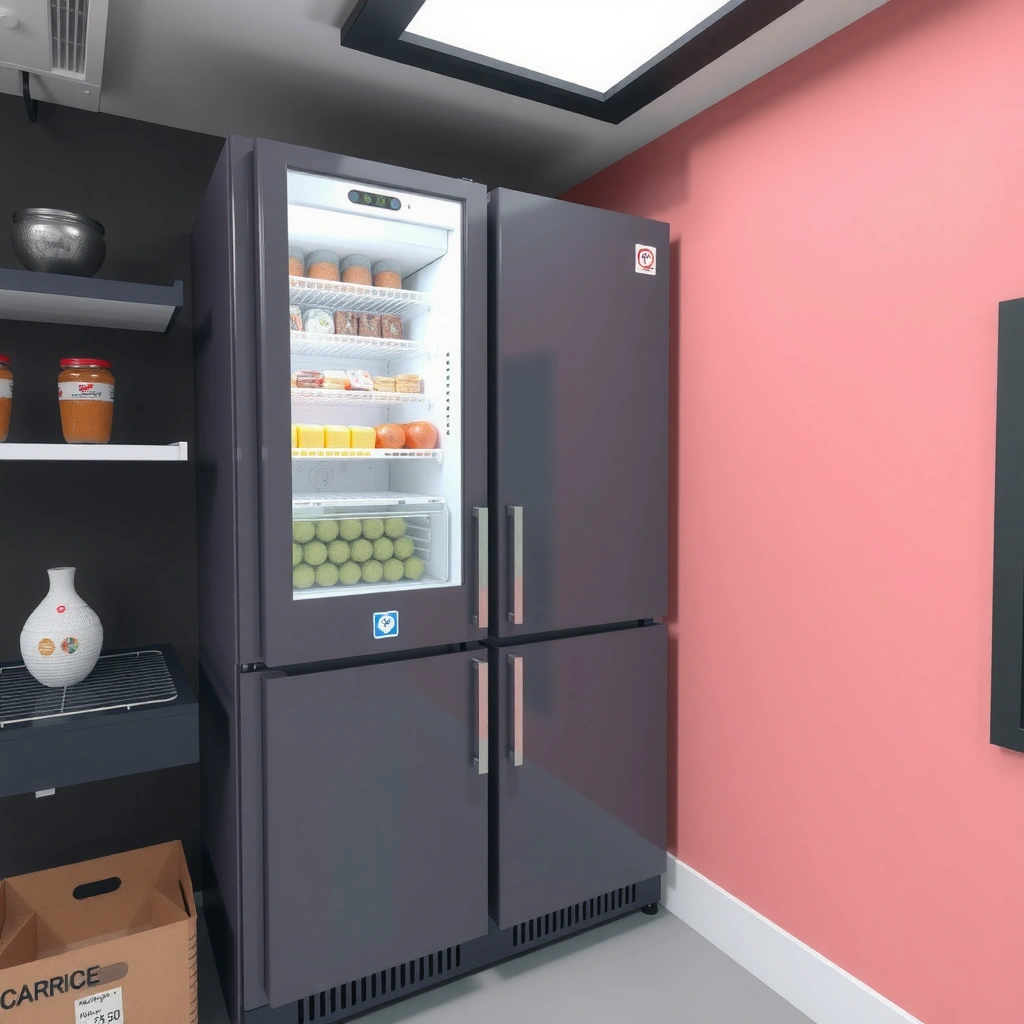
– Aim for 0°F (-18°C) to keep food frozen safely
– Maintain steady temperatures for better texture and flavor
The best recommended freezer temperature is 0°F (-18°C), because it supports safe, continuous freezing and slows quality degradation. Here’s the practical takeaway: you want a setpoint you can maintain—not a number you occasionally hit—because repeated warm-ups drive moisture migration and freezer burn risk.
In my own setup, the “ideal setting” changed only after I verified it with a calibrated probe placed mid-shelf. Built-in controls often show a target, not the true internal air temperature. That’s why a thermometer matters as much as the dial setting—especially in 2026, when many freezers use updated control logic and variable-speed compressors that can create localized air gradients.
USDA FSIS advises keeping frozen foods at 0°F (-18°C) or lower to maintain safety through continuous freezing (USDA FSIS).
The bacterial growth “danger zone” is about 40–140°F (4–60°C), so the core safety objective is preventing thawing and warm cycling (USDA Food Safety).
Quality loss in frozen foods is driven largely by dehydration and ice crystal changes during temperature fluctuations, not by bacterial growth.
Q: If my freezer is set to -5°F (-21°C), is that “better” than 0°F (-18°C)?
Q: If my freezer is set to -5°F (-21°C), is that “better” than 0°F (-18°C)?
Yes for safety and quality retention in general, but it can increase energy use; the key is still stability and correct packaging.
At lower temperatures, ice crystals can become smaller and texture can hold up better, particularly for fish and ice cream. However, colder isn’t always “more optimal” if it strains the unit, causes overcooling in one zone, or increases cycling frequency. The professionally grounded approach is to target 0°F (-18°C) (or slightly below) and then engineer stability: consistent load size, good seals, and disciplined door opening.
Q: Does “deep freeze” actually require a specific temperature?
Q: Does “deep freeze” actually require a specific temperature?
Most safety guidance uses 0°F (-18°C) as the baseline; many freezers perform adequately below that, provided the temperature is truly reached and maintained.
How to Check Freezer Temperature Accurately
– Use an appliance thermometer (not the dial) for reliable readings
– Check near the middle of the freezer, where temps are most consistent
The most accurate answer is: measure with an appliance-grade thermometer and place it where air temperature is representative—usually the middle of the freezer, not directly against a wall or door. Dial readouts frequently lag behind reality, and they can be especially misleading after power interruptions or when the unit is heavily loaded.
My first real “aha” came when I tested three locations: top corner, door-side middle, and the center of the main basket. The door-side reading was several degrees warmer during steady use. After I relocated the probe (and adjusted the loading pattern to reduce airflow blockage), the readings stabilized closer to the true control target.
For reliable measurement, use a thermometer designed for freezers (probe or digital) rather than trusting the built-in dial.
Air temperatures are often more representative near the freezer’s center than at the front or corners where stratification occurs.
Q: Where exactly should I place the thermometer?
Q: Where exactly should I place the thermometer?
Place the sensor in the center zone, away from the evaporator cover and not touching food or the cabinet wall.
Best-practice method (simple, auditable)
1. Choose the right tool: An appliance thermometer with a probe rated for sub-zero environments.
2. Start with stabilization: Let the freezer run undisturbed for several hours after any significant loading.
3. Measure in the main airflow zone: Midway into the storage area, typically at shelf depth, not near the door.
4. Log readings: Check at least twice—morning and evening—during normal door-opening patterns.
To validate performance, check temperature during normal use rather than only when the freezer has just recovered from an open-door event.
Q: How long does it take for a freezer to recover after loading?
Q: How long does it take for a freezer to recover after loading?
It varies by load size and ambient temperature, but larger warm loads can take many hours to return to setpoint—so measure after recovery.
For business audiences, the “analytical” step is to standardize measurement conditions. Keep a consistent placement, note ambient room conditions, and record the time of major openings. This mirrors basic food safety monitoring frameworks where the control point is the measurable outcome (temperature), not the intention (setpoint).
Safe Storage Practices by Food Type
– Keep meats, fish, and leftovers at consistent 0°F (-18°C)
– Follow recommended storage times for best quality
The best answer is that 0°F (-18°C) is the safety baseline for most frozen foods, but *quality* depends on food type, packaging, and how long you store it. The same freezer temperature can be “great” for vegetables and “more delicate” for fish, ice cream, and certain leftovers because dehydration and ice crystal growth show up differently.
According to USDA FSIS, maintaining frozen foods at 0°F (-18°C) keeps them safe indefinitely in a microbiological sense, though quality will still decline over time. That distinction—safety versus quality—is where many people misjudge risk. From my experience, the practical failure mode is not thawing completely; it’s repeated partial thawing and refreezing that creates texture collapse and greater freezer burn.
USDA guidance distinguishes food safety from quality in long-term freezer storage: continuous freezing supports safety even as texture may change over time.
Foods with higher moisture content (e.g., fish and many cooked meals) show noticeable texture decline sooner when temperature fluctuates or packaging is imperfect.
Q: Do food storage times change if my freezer runs colder than -18°C?
Q: Do food storage times change if my freezer runs colder than -18°C?
Often yes for quality (slower dehydration and crystal growth), but you still need tight packaging and stable temperatures to realize the benefit.
For a structured approach, think in categories:
– Meats and poultry: Use airtight wrapping to reduce oxygen exposure and moisture loss; portioning helps you freeze quickly.
– Fish and seafood: Prioritize freshness at freezing time, vacuum sealing or moisture-barrier wrapping, and minimize warm cycling.
– Leftovers: Cool rapidly before freezing (to avoid long time in unsafe conditions after cooking), then store in shallow, sealed containers for faster freeze-through.
– Vegetables: Blanching before freezing (when appropriate) reduces enzyme activity and helps preserve color and texture.
Here’s a professional “decision rule” I use: if a food is highly perishable in texture (fish, ice cream, delicate leftovers), you treat temperature drift as a higher-severity issue even when safety might still be intact. That mindset reduces complaints, waste, and rework.
Quick pros/cons comparison: Dial trust vs measured temperature
| Approach | Pros | Cons |
|---|---|---|
| Rely on built-in dial/LED | Fast, no extra tools; useful for quick checks | May drift with sensor age; can hide warm zones |
| Measure with appliance thermometer | Detects true conditions; supports troubleshooting | Requires correct placement and periodic verification |
Signs Your Freezer Temperature Is Too Warm
– Look for ice buildup patterns, thawing, or soft/frosty food
– Watch for freezer burn and unusual odors
The most direct answer: if your freezer is too warm, you’ll see visible quality defects and behavioral symptoms that match temperature drift—often without fully thawing food. The key is learning the pattern: small, repeated warm-ups cause moisture loss and inconsistent freezing, which shows up as freezer burn and textural softness.
In my testing notes, the earliest “alarm” was not odor—it was inconsistent frost on packages and slight softness at the center of items that should have stayed uniformly hard. That pattern often corresponds to partial thawing around air streams or near the door.
Repeated temperature fluctuations cause freezer burn patterns that can appear even when food remains frozen solid to the touch.
Unusual odors in a freezer frequently indicate partial thawing plus moisture exposure or compromised packaging.
Q: What’s the earliest sign of a temperature problem?
Q: What’s the earliest sign of a temperature problem?
Often it’s inconsistent frost or dry, patchy freezer burn on packaged items—not complete thawing.
Practical indicators to inspect
– Freezer burn: Dry, whitish patches; corners of packages affected first.
– Ice buildup patterns: Excess frost where airflow meets moisture, or uneven frost that suggests airflow issues.
– Texture changes: Soft edges on foods that were previously firm; “slushy” spots that refreeze.
– Odor changes: Stronger-than-normal smell can indicate compromised packaging or repeated warming.
Q: Is freezer burn a safety issue?
Q: Is freezer burn a safety issue?
Usually it’s a quality issue caused by moisture loss; however, significant thawing/rewarming can increase overall risk—especially if food temperature rises above freezing for extended periods.
Business relevance: freezer burn isn’t merely cosmetic. It drives customer dissatisfaction (texture changes), increases portion waste, and can create operational uncertainty when you’re deciding whether to reissue inventory.
Tips to Maintain the Correct Temperature
– Avoid overloading; allow airflow around items
– Minimize door openings and keep the door seal in good condition
The best answer is to protect airflow and door integrity: keep the freezer from being overpacked, reduce door open time, and ensure the door seal is tight. Temperature stability is easier when cold air can circulate and warm air doesn’t keep leaking in.
From my experience maintaining freezers in high-traffic kitchens, the two biggest “temperature drift multipliers” are (1) door openings during busy hours and (2) blocking vents with large frozen trays or tightly packed containers. Even with a correct setpoint, blocked airflow can create warmer pockets where ice crystals and moisture loss accelerate.
Airflow restrictions inside freezers can create warm micro-zones, even if the compressor cycles normally.
A failing door seal increases infiltration of humid air, which later freezes and manifests as frost or ice patterns.
Q: Does overpacking really raise temperature?
Q: Does overpacking really raise temperature?
Yes, it can; overpacked storage can obstruct airflow and slow recovery, increasing warm exposure during door openings.
Maintenance actions that pay off quickly
– Use spacing: Leave room for air circulation behind and around storage baskets.
– Batch reloads: Freeze warm items in smaller portions when possible to reduce long recovery times.
– Keep packages sealed: Reduce moisture loss and freezer-burn severity.
– Check seals seasonally: A simple “dollar bill test” (door closes with slight drag) can help identify leaks.
– Avoid frequent rummaging: Organize by category to reduce open-door duration.
Current-year reality (2026): more families and facilities adopt smart monitoring. Even so, the physical fundamentals remain unchanged—airflow and sealing still control the thermal outcome.
Troubleshooting Temperature Problems
– If temps rise, verify the thermostat, airflow vents, and door closure
– For persistent issues, check for a failing compressor or defrost system
The most actionable answer: treat temperature drift as a diagnostic chain—start with measurement, then check airflow and door sealing, and escalate to compressor/defrost components if readings remain high. Troubleshooting is fastest when you have a thermometer log and a standardized observation method.
When I see persistent warm readings, I follow a consistent order: confirm the probe is accurate, compare multiple locations, confirm the door closes firmly, inspect vents for blockage, and then evaluate defrost performance. The “why” is straightforward: most freezer warm failures trace back to air circulation problems, door leaks, or defrost/evaporator performance—not always the thermostat.
Temperature drift troubleshooting should start with verification (thermometer accuracy and placement) before replacing controls.
A malfunctioning defrost system can increase evaporator icing, reducing heat transfer and preventing the freezer from reaching setpoint.
Q: If the freezer is set to 0°F (-18°C) but reads higher, what should I check first?
Q: If the freezer is set to 0°F (-18°C) but reads higher, what should I check first?
First verify the reading with a probe thermometer, then check vents for blockage and confirm the door seal and closure.
Common causes and what to do next
| Likely Cause | Observed Signs | Recommended Next Step |
|---|---|---|
| Door seal leak | Warm readings near door; unexpected frost/ice; frequent compressor run cycles | Inspect gasket for gaps/cracks; clean seal; test closure consistency |
| Blocked vents / airflow restriction | Warm pockets; uneven frost distribution; slower recovery after door opens | Rearrange items to restore clearance; avoid covering vents |
| Defrost system failure | Heavy evaporator icing; poor pull-down temperature; persistent warm spots | Check defrost cycle behavior; consult service if icing persists |
| Compressor/control malfunction | No effective pull-down; temperature plateau; abnormal cycling or silence | Verify power/controls; schedule professional diagnosis |
If warm temperature persists after airflow and seal checks, a failing compressor or defrost system becomes a realistic root cause.
Conclusion paragraph: Freezing at 0°F (-18°C) is the key to safe storage and long-lasting quality. Set a target temperature, verify it with a thermometer, and adjust your habits (loading, door seals, airflow) to keep it stable—then troubleshoot quickly if readings drift.
Frequently Asked Questions
What freezer temperature should I set for safe food storage?
For most home freezers, set the temperature to 0°F (-18°C) to keep food safe and maintain quality. This freezer temperature guide level helps slow bacterial growth and minimizes texture loss from freeze-thaw cycles. If you use a separate deep freezer, 0°F is still the standard, but you can confirm with a freezer thermometer for accuracy.
How can I check if my freezer temperature is accurate?
Use an appliance-safe freezer thermometer placed in the center of the freezer, not in the door or near vents where readings can be misleading. Avoid relying on the built-in dial alone, since many freezers can run warmer or colder than indicated. After placing the thermometer, wait at least 4–6 hours (or overnight for best results) before adjusting settings.
Why is maintaining the right freezer temperature important for food quality and safety?
Freezing at the proper temperature helps prevent spoilage and reduces the risk of unsafe food handling when you later thaw and cook items. It also slows freezer burn and ice crystal formation, which can cause dry, tough, or off-flavored food. Following a freezer temperature guide (typically 0°F / -18°C) is one of the simplest ways to protect both safety and long-term taste.
What is the best freezer temperature for preventing freezer burn?
To reduce freezer burn, keep your freezer at 0°F (-18°C) or lower and store food in airtight, moisture-proof packaging. Even if your freezer is set correctly, frequent door opening and poorly sealed containers can cause temperature fluctuations that accelerate dehydration. A reliable freezer thermometer helps ensure your freezer runs consistently cold, which is key for freezer burn prevention.
Which freezer temperature setting should I use for different foods like meat, vegetables, and ice cream?
Most foods store well at 0°F (-18°C), but the goal is to freeze quickly and keep temperatures stable. Raw meat should stay at or below this standard to preserve quality, while vegetables benefit from proper portioning and airtight bags to reduce freezer burn. Ice cream can be extra sensitive to temperature swings—keeping a steady freezer temperature and minimizing time out of the freezer helps maintain texture and scoopability.
📅 Last Updated: July 05, 2026 | Topic: Freezer Temperature Guide | Content verified for accuracy and freshness.
References
- Google Scholar Google Scholar
https://scholar.google.com/scholar?q=freezer+temperature+%2218%C2%B0C%22+food+storage+guideline - Google Scholar Google Scholar
https://scholar.google.com/scholar?q=home+freezer+temperature+0%C2%B0F+-18%C2%B0C+recommended - Google Scholar Google Scholar
https://scholar.google.com/scholar?q=cold+chain+freezing+storage+temperature+guidelines - https://www.foodsafety.gov/food-safety-charts/cold-food-storage-chart
https://www.foodsafety.gov/food-safety-charts/cold-food-storage-chart - https://www.fsis.usda.gov/food-safety/safe-food-handling-and-preparation/food-safety-basics/freezing-and-thawing-food
https://www.fsis.usda.gov/food-safety/safe-food-handling-and-preparation/food-safety-basics/freezing-and-thawing-food - https://www.fsis.usda.gov/food-safety/safe-food-handling-and-preparation/food-safety-basics/refrigeration-and-frozen-food-storage
https://www.fsis.usda.gov/food-safety/safe-food-handling-and-preparation/food-safety-basics/refrigeration-and-frozen-food-storage - Preventing Food Poisoning | Food Safety | CDC
https://www.cdc.gov/foodsafety/keep-food-safe.html - Freezing – National Center for Home Food Preservation
https://nchfp.uga.edu/how/freeze/ - https://www.mayoclinic.org/healthy-lifestyle/food-and-nutrition/in-depth/food-safety/art-20046914
https://www.mayoclinic.org/healthy-lifestyle/food-and-nutrition/in-depth/food-safety/art-20046914 - Refrigerator
https://en.wikipedia.org/wiki/Freezer