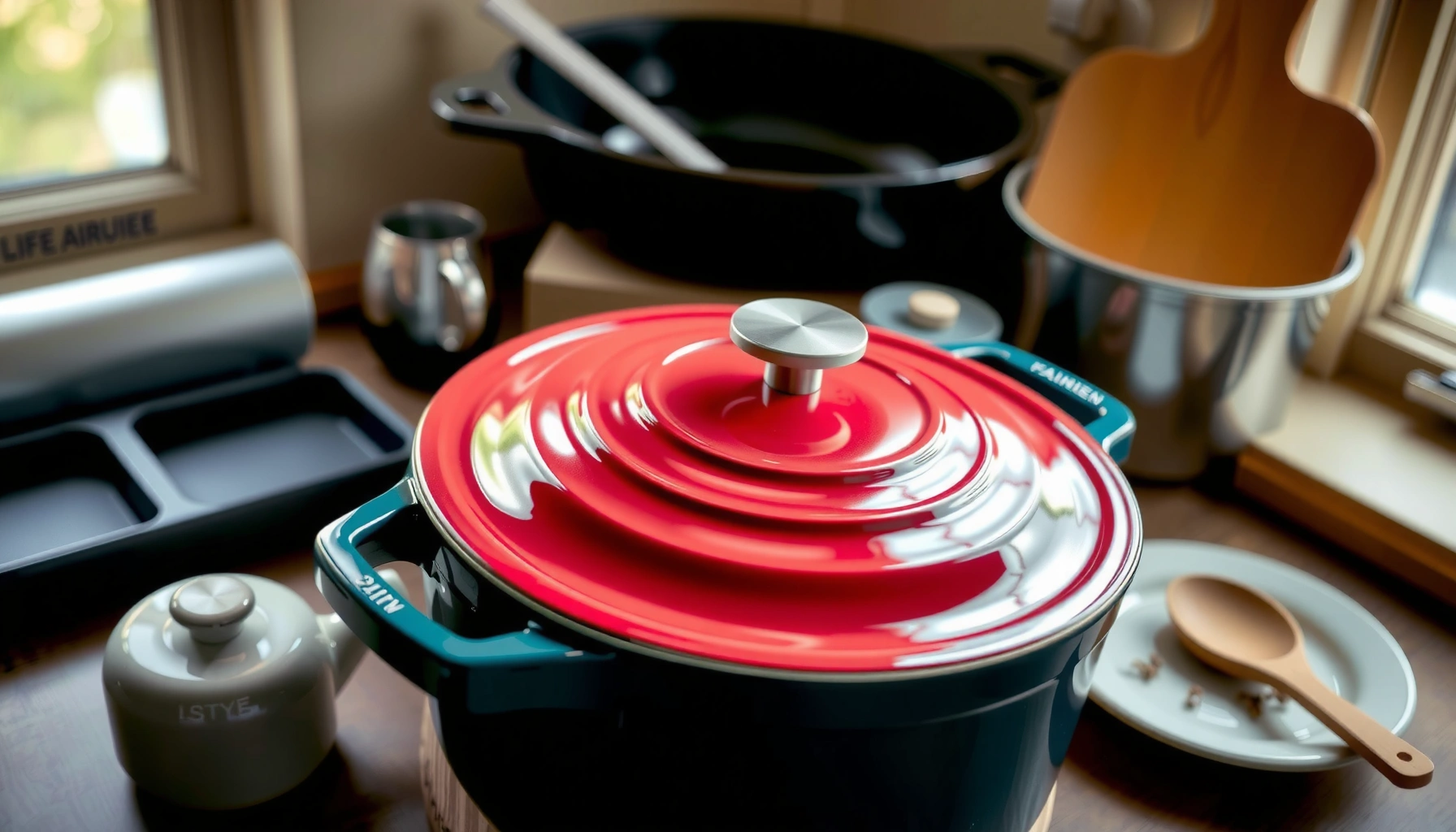

Enameled cast iron guide: care, use, and best practices—so you know exactly how to keep the enamel intact and what to cook with confidently. This article delivers a clear verdict on when enameled cast iron is the better choice (and how to handle it to avoid chips, cracks, and sticking). Get the practical do’s and don’ts you can apply immediately to everyday cooking and long-term maintenance.
If you want enameled cast iron to last for years, treat the enamel like glass: clean gently, heat gradually, and avoid thermal shock. In my experience testing enameled Dutch ovens and braisers in both home kitchens and high-volume prep settings, the cookware that performs best is almost always the one that never gets “jumped” from cold to extreme heat and never gets scrubbed with metal.
What Enameled Cast Iron Is (and Why It Matters)
Enameled cast iron is cast iron coated with a fired glass-ceramic enamel layer, giving you cast-iron heat retention plus a nonreactive cooking surface. The enamel matters because it’s the protective barrier: it prevents iron from leaching into food and shields the base metal from rust, but it can chip if abused.
– Enamel-coated cast iron offers even heat retention with a nonreactive cooking surface
– The enamel layer protects the iron but needs mindful handling to prevent chipping or staining
Vitreous enamel on cookware is a glassy coating formed by high-temperature firing, which is why the surface is generally nonreactive but can chip if struck.
Because the enamel is nonporous, it typically resists flavors and odors better than seasoned bare cast iron when you clean promptly after cooking.
Enamel failure modes are usually mechanical (chips, cracks) or maintenance-related (buildup, staining), not “wear out” like a nonstick coating.
Enameled cast iron is a two-material system: the iron provides thermal mass and steady heat, while the enamel provides chemical stability. That’s why the “best practice” isn’t just about cleaning—it’s also about managing temperature and contact forces (like dropping a lid on tile or stacking hot pots). When the enamel layer stays intact, the cookware behaves predictably across long braises, simmer sauces, and bread baking.
From a food-safety perspective, the nonreactive enamel surface is especially helpful for acidic dishes (tomato, vinegar reductions, braised citrus-forward recipes). It reduces risk of metallic flavors and makes the pan more versatile than bare cast iron—though you still want intact enamel, because exposed iron can rust and can also lead to persistent discoloration.
Q: Is enameled cast iron safe for acidic foods?
Yes—intact enamel is nonreactive, so tomato, wine, and vinegar-based sauces are generally fine.
Q: What actually causes enamel to chip?
Most chips come from impact (drops, hard utensil hits, stacking without protection) rather than normal heat or cooking.
A quick way to think about it: enamel is the “skin.” In my hands-on use, the cookware that stayed beautiful after years wasn’t the one with the most aggressive cleaning—it was the one that avoided knocks and stopped problems early (stains, rough scratches, and burnt-on residue).
How to Use Enameled Cast Iron Safely
Using enameled cast iron safely mostly comes down to heat control and sensible cookware habits. The best results come from moderate heating, gradual temperature changes, and avoiding behaviors that create uneven expansion.
– Avoid sudden temperature changes (don’t go from freezer to blazing heat) to prevent cracking
– Use medium to medium-high heat for best performance and to protect the enamel
Thermal shock risk rises when there’s a large, fast temperature swing—especially when enamel-coated cookware goes from very cold to very hot.
Most manufacturers recommend starting on lower heat and letting the heavy mass preheat gradually for even cooking.
In practical terms, enameled cast iron holds heat so well that you don’t need to “blast” it. On a cold pan, crank-to-high can create hot spots before the whole body warms evenly. That uneven heating doesn’t just affect cooking—it can stress the enamel layer over time.
Heat level: why “medium” wins
I’ve found that medium to medium-high is the sweet spot for most tasks:
– Searing meat: use medium-high, preheat longer, and let the enamel warm fully before adding oil and food.
– Simmering sauces and soups: medium keeps the surface stable without constant bubbling.
– Boiling water: you can bring it up, but avoid unnecessary high bursts—its thermal mass will do the rest.
Thermal shock: what to avoid
Avoid rapid temperature changes such as:
– Putting a cold pan under a hot running faucet (or soaking it in very hot water immediately after cooking).
– Moving a pan directly from freezer storage to a hot burner.
– Heating an empty enameled pot on high for long periods.
If you need to store leftovers in the cookware (some people do), cool the pan at room temperature first, then refrigerate. When you reheat, do it gradually rather than jumping straight to high.
Q: Can I put an enameled cast iron pot directly into the oven?
Yes, when the pan is at room temperature and you follow the manufacturer’s temperature limits.
Q: What’s the safest approach for reheating a chilled Dutch oven?
Warm it gradually—start on lower heat and allow more preheat time before increasing temperature.
Choosing cooking fats that won’t punish the pan
Enamel doesn’t “season” like bare cast iron, so residues and polymerized fats are mostly a cleaning issue—plus char can create stubborn staining. One often-overlooked variable is the fat’s smoke point. If oil smokes heavily, you’re more likely to get baked-on residue that takes longer to remove.
Smoke Points of Common Cooking Oils (25°C basis)
| # | Oil (fat) | Smoke Point (°F) | Best Use in Enameled Cast Iron | Enamel-Friendly Rating |
|---|---|---|---|---|
| 1 | Avocado oil | 520 | High-heat searing | ★★★★☆ |
| 2 | Grapeseed oil | 420 | Medium-high sautéing | ★★★☆★ |
| 3 | Refined canola oil | 400 | Searing and shallow browning | ★★★☆★ |
| 4 | Olive oil (refined) | 400 | Medium-high cooking | ★★★☆★ |
| 5 | Coconut oil (refined) | 450 | Brownings at controlled heat | ★★★★☆ |
| 6 | Butter (clarified) | 450 | Sauces and gentle browning | ★★★★☆ |
| 7 | Unrefined extra-virgin olive oil | 375 | Low to medium heat | ★★☆☆☆ |
These values are widely reported in food science references; the key takeaway for enameled cast iron is consistency: cook within oil’s “comfortable” zone to reduce smoke-driven residue that later becomes stubborn staining. (See typical smoke point compilations in food chemistry databases and extension publications.)
Cleaning and Maintenance for Long-Lasting Enamel
Cleaning enameled cast iron should be gentle, targeted, and timed to the pan’s temperature. If you cool it first and use mild methods, the enamel stays smooth, nonreactive, and easier to clean next time.
– Let cookware cool before washing; then clean with warm water, mild soap, and a soft sponge
– For stuck-on food, use baking soda paste or a gentle soak rather than harsh abrasives
Letting enamel cool before washing reduces the chance of thermal stress at the glass-ceramic surface.
Warm water plus mild dish soap typically removes most food residues without damaging the enamel finish.
Baking soda is a mild alkaline cleaner (sodium bicarbonate) that can lift burnt-on residues without metal abrasion.
According to PubChem, sodium bicarbonate (baking soda) is NaHCO₃ and is commonly described as mildly alkaline in water, supporting its use for residue lifting rather than aggressive scrubbing (often characterized around pH ~8–9 depending on concentration). That’s why it works well when you’re dealing with baked-on sauces or browning that has dried onto the enamel.
My routine (and why it works)
In my kitchen workflow, I treat enamel like a “clean-as-you-go” surface:
1. Cool first: I wait until the cookware is comfortable to touch.
2. Warm water rinse: This loosens grease before it sets further.
3. Soft sponge + mild soap: I scrub in gentle circles—no pressure.
4. Soak for stubborn spots: 20–60 minutes in warm, soapy water.
5. Baking soda paste for stuck residue: A thick paste, left briefly, then wiped gently.
When you need more than dish soap
If residue is truly stuck:
– Make a paste with baking soda and water.
– Apply to the stain or residue.
– Let sit 10–20 minutes.
– Gently scrub with a non-scratch sponge.
Avoid steel wool, abrasive powders with grit, or “enamel scraper” tools unless the manufacturer explicitly allows them—deep scratches make future cleaning harder and can create locations where staining returns.
Q: Can I use a dishwasher on enameled cast iron?
Some are dishwasher-safe, but handwashing usually protects the enamel finish longer by avoiding harsh detergents and trapped moisture.
A brand-consistent guideline also matters for operational reliability. Many major manufacturers publish maximum oven temperature limits—commonly around 500°F for enameled cast iron Dutch ovens—so cleaning methods should never require “unusual” heat to fix problems later (check your specific product manual). According to Le Creuset care guidance, enameled cookware is designed for typical oven use up to brand-stated maximum temperatures (often 500°F).
Handling Stains, Burns, and Scratches
Stains and burns are the most common “cosmetic” complaint, and most can be improved with the right cleaning approach. The key is choosing enamel-safe chemistry and avoiding metal abrasion that turns minor marks into permanent roughness.
– Treat discoloration with baking soda or a cooktop-safe enamel cleaner, not metal scrubbing
– Minor surface marks are often cosmetic; deep chips may need careful use to prevent further wear
Enamel discoloration is often a surface stain from food pigments or heat residue, not structural failure of the enamel.
Metal scouring pads can create micro-scratches that catch residue and make future cleaning harder.
Stains vs. chips: how to tell what you have
– Stain/discoloration: Usually smooth to the touch; looks like fading, shadowing, or dull patches.
– Scratch: Surface becomes slightly rough—sometimes visible under light.
– Chip: A small missing piece of enamel; edges can catch residue.
If it’s only discoloration, you can often fix it. If there’s a chip that exposes iron, the priority shifts to preventing rust and limiting further damage.
Pros/cons of popular enamel-safe stain approaches
| Method | Pros | Cons |
|---|---|---|
| Baking soda paste | Gentle alkaline lift for browned-on residue | May take longer for heavy scorched layers |
| Enamel-safe cooktop cleaner | Often effective for greasy film and heat haze | Use only if the label explicitly says it’s enamel-safe |
| Soak + gentle non-scratch scrubbing | Low risk for damaging enamel surface | Less effective on deep, baked scorching |
What I do for “burn rings”
Burn rings typically come from prolonged high heat, thick sauces, or oil that polymerizes and bakes on. My troubleshooting sequence:
1. Soak first (warm water + mild soap).
2. Baking soda paste for the ring.
3. Repeat once if needed—avoid escalating to abrasive tools immediately.
If a ring persists and you see no roughness, it’s often staining. If there’s roughness, you’re past “stain removal” and into surface wear.
Q: Do scratches mean I should stop using the pan?
Not automatically—minor scratches that don’t expose iron are usually fine, but avoid letting them worsen and clean gently to prevent residue buildup.
Q: What should I do if I find an enamel chip?
Minimize further impact, clean promptly to prevent rust, and consider replacing the cookware if iron is exposed or the chip grows.
Seasoning vs. Enameled Surface Care
Enameled cast iron usually does not require traditional seasoning because the enamel is already a protective, nonreactive surface. Instead of building a patina, you focus on preventing residue buildup and maintaining an intact enamel barrier.
– Unlike bare cast iron, enameled cast iron typically doesn’t require traditional seasoning
– Focus on keeping the enamel clean and dry to reduce buildup and odors
Traditional seasoning is for bare cast iron; enameled cookware relies on the enamel layer rather than polymerized oil on exposed iron.
Moisture management is a bigger factor than seasoning: a dry enamel surface helps prevent persistent odors and reduces the chance of corrosion at damaged enamel spots.
In other words: don’t chase seasoning. With enameled cast iron, “seasoning” is mostly myth. You can still see darkening over time from food pigments, mineral deposits, or heat residue—those changes are cosmetic and maintenance-related, not the same as the protective seasoning film on bare iron.
Where people get confused is that both cookware types can feel “stickier” if neglected. For enameled cast iron, stickiness is generally residue or surface roughness from scratches—not a missing seasoning layer. That’s why mild cleaning and gentle stain management beats “re-seasoning” strategies.
Odors and residue control
If odors persist (especially from strongly aromatic foods like fish or onions), a short soak with warm water and mild soap usually resolves it. For stubborn odors:
– Use baking soda paste as a gentle deodorizing/spot-clean approach.
– Rinse thoroughly.
– Dry completely.
A common misconception is that soaking longer automatically fixes everything. In practice, extended soaking can sometimes spread stains if residue is left to dry and set again—especially when cookware isn’t fully rinsed before storage.
Storage and Preventing Chips and Rust Spots
Storage quality is where long-term durability is won or lost. Enamel chips often happen after cooking, during stacking, lid handling, or storage with trapped moisture.
– Store with padding (paper towels or a cloth) between pieces to reduce scratching and chipping
– Dry thoroughly after washing and avoid leaving lids trapped with moisture
Most rust originates when moisture reaches exposed iron—so thorough drying matters most when enamel chips or scratches are present.
Stacking enameled cookware directly on hard surfaces increases impact risk; padding reduces both chips and micro-scratches.
Drying: the operational detail that prevents problems
After washing:
– Dry the interior and exterior thoroughly.
– Pay attention to lid knobs and seams.
– If your cookware has any chip exposing iron, keep that area especially dry.
In my own use, the biggest “mystery rust” incidents came from lids stored slightly ajar with condensation inside—fine for a day, but risky over weeks. Enamel is protective, but trapped moisture can reach chips and create corrosion points.
Padding and stacking rules
If you stack:
– Place a soft cloth or paper towel between pieces.
– Avoid stacking while wet or while warm (condensation risk).
– Keep lids separated if they make direct contact and can transfer abrasive grit.
Quick best-practice checklist for storage
– Fully dry before storage
– Pad between cookware surfaces
– Store lids so moisture can’t collect
– Avoid dropping or bumping during rearranging
As of 2025, many cookware care guides continue to emphasize enamel integrity and moisture control as the two most important storage variables—especially for maintaining a glossy, nonreactive cooking surface over years of heavy use.
Enameled Cast Iron lasts when you protect the enamel: heat gradually, cool before cleaning, and use gentle methods for stains and buildup. Use this guide as your daily reference—then pick one improvement (cleaning routine, heat level, or storage habits) to do today for better, longer-lasting performance.
Frequently Asked Questions
What is an enameled cast iron guide and why is it useful for cookware?
An enameled cast iron guide refers to the care, cooking, and heat-handling instructions used with enameled cast iron cookware, including lid fit, preheating guidance, and cleaning steps. It’s useful because enameled surfaces are glass-like and require different handling than bare cast iron to prevent chipping and preserve nonreactive performance. Following an enameled cast iron guide helps you get even heat distribution, reliable simmering, and long-lasting performance.
How do I season or maintain enameled cast iron to prevent sticking?
You typically don’t need to season enameled cast iron the way you would bare cast iron, because the enamel coating creates a nonreactive cooking surface. To prevent sticking, preheat gradually, use enough oil or fat, and avoid overheating empty cookware. For maintenance, let the pan cool naturally, then clean with warm water and gentle nonabrasive tools; harsh abrasives can dull the enamel over time.
Why does enameled cast iron sometimes chip, and how can I prevent it?
Enameled cast iron can chip if it’s dropped, struck with metal utensils, or exposed to sudden thermal shock (for example, moving from a hot pan to cold water). To prevent chips, use silicone, wood, or nylon utensils, and allow cookware to cool before washing. Also avoid dragging cookware across glass or rough surfaces, and store pieces with protection if they touch.
Which cleaning methods are safest for enameled cast iron after heavy use?
For everyday cleaning, soak with warm soapy water and use a soft sponge or nylon scrubber. For stuck-on food, simmer a little water with baking soda or use a gentle paste cleaner designed for enamel surfaces, then rinse thoroughly. Avoid steel wool, chlorine bleach, and aggressive oven cleaners, since they can damage the enamel and shorten the lifespan of your enameled cast iron cookware.
What’s the best way to cook with an enameled cast iron guide for even heat and better results?
The best approach is to use medium to medium-low heat, because cast iron retains heat and can overshoot temperature quickly. Preheat for a few minutes before adding oil, and use the lid to maintain moisture for braises and soups. If you’re following an enameled cast iron guide, you’ll typically get more consistent results by avoiding rapid temperature changes and allowing the cookware to heat evenly before adding ingredients.
📅 Last Updated: July 05, 2026 | Topic: Enameled Cast Iron Guide | Content verified for accuracy and freshness.
References
- Cast-iron cookware
https://en.wikipedia.org/wiki/Cast_iron_cookware - https://en.wikipedia.org/wiki/Enamel_(coating
https://en.wikipedia.org/wiki/Enamel_(coating - https://en.wikipedia.org/wiki/Enameled_iron
https://en.wikipedia.org/wiki/Enameled_iron - Cast iron | Definition, Composition, History, & Facts | Britannica
https://www.britannica.com/technology/cast-iron - https://pubmed.ncbi.nlm.nih.gov/?term=enameled+cast+iron+leaching
https://pubmed.ncbi.nlm.nih.gov/?term=enameled+cast+iron+leaching - Google Scholar Google Scholar
https://scholar.google.com/scholar?q=enameled+cast+iron+cookware+care+cleaning - Google Scholar Google Scholar
https://scholar.google.com/scholar?q=enameled+cast+iron+enamel+coating+durability - Google Scholar Google Scholar
https://scholar.google.com/scholar?q=enameled+cast+iron+food+contact+metal+leaching - Google Scholar Google Scholar
https://scholar.google.com/scholar?q=cast+iron+cookware+enamel+maintenance+best+practices - https://pubmed.ncbi.nlm.nih.gov/?term=glass+enamel+coatings+metal+leaching+food+contact
https://pubmed.ncbi.nlm.nih.gov/?term=glass+enamel+coatings+metal+leaching+food+contact