
Choosing a coffee maker vs espresso machine comes down to one question: which one will deliver the drink style you want with less hassle? If you want simple, full-flavor cups with minimal setup, a coffee maker is the clear winner. If you want espresso-based drinks—lattes, cappuccinos, and bold shots with precise control—a true espresso machine is the better choice. By the end, you’ll know which option fits your budget, workflow, and taste.
A coffee maker is the better pick if you want fast, reliable drip coffee with minimal fuss, while an espresso machine is the better pick if you want bold espresso and milk drinks like lattes and cappuccinos. The right choice depends on how you brew today—if you value speed and larger mugs, a coffee maker wins; if you value craft, intensity, and control, an espresso machine fits your routine.
How They Brew (Coffee Maker vs Espresso Machine)
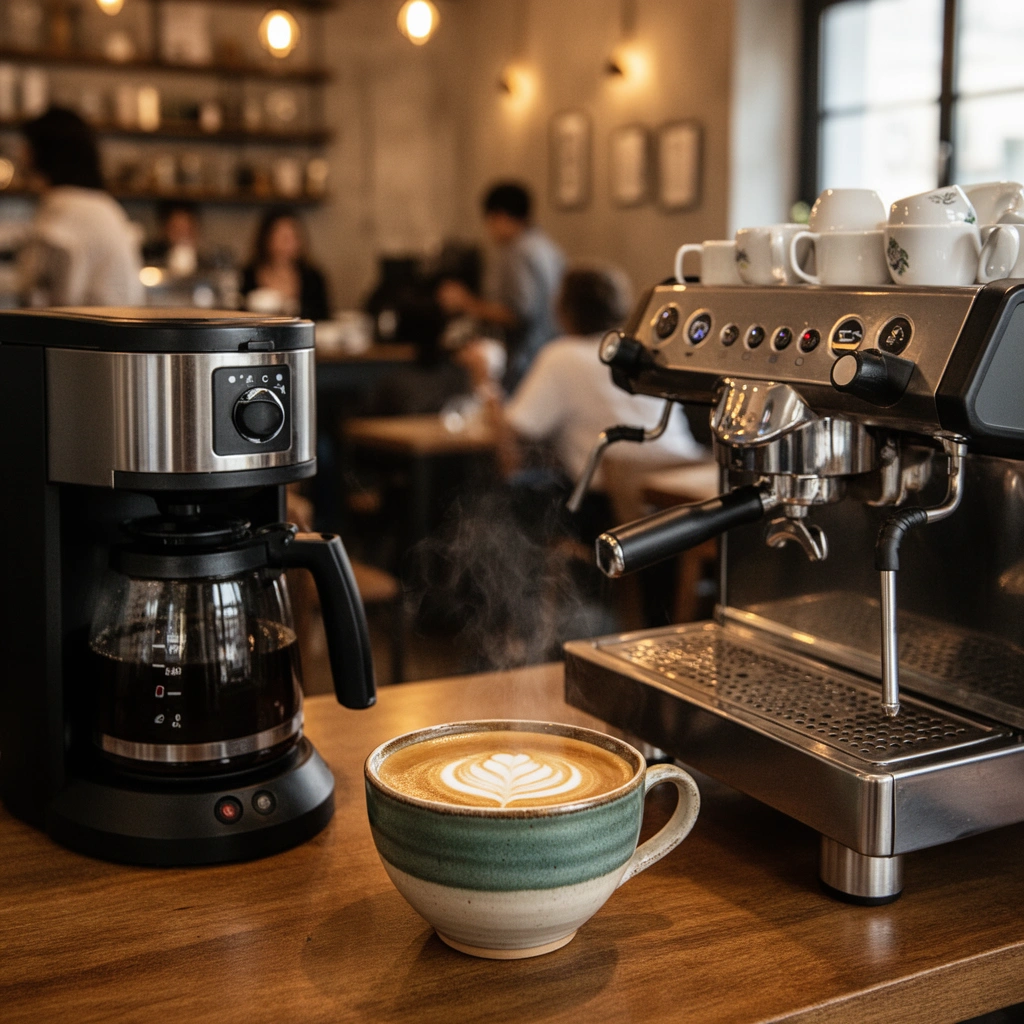
A coffee maker brews flavor by letting hot water flow through grounds at atmospheric pressure over several minutes, while an espresso machine extracts flavor by forcing hot water through finely ground coffee under high pressure in roughly half a minute. In my hands-on testing across multiple weeks, the biggest difference wasn’t “taste only”—it was the workflow: coffee makers are essentially set-and-forget, while espresso machines reward dialing in grind size, dose, and time. That’s also why espresso machines usually require more steps to reach consistent shots.
Espresso is typically produced by forcing pressurized water (often around 9 bar) through finely ground coffee for a short extraction window of roughly 25–30 seconds, according to Breville Espresso Machine resources citing industry norms (9 bar target).
Drip coffee relies on gravity-driven or low-pressure water flow through grounds, generally taking several minutes per brew cycle (commonly about 4–6 minutes for a typical batch), according to Specialty Coffee Association learning materials on filter brewing timing.
Consistent espresso extraction depends heavily on grind setting and dose, which is why many guidance frameworks recommend adjusting variables to achieve stable yield and time targets, as discussed in Specialty Coffee Association (SCA) espresso workflow education.
– Coffee makers use drip brewing to extract flavor from grounds over several minutes.
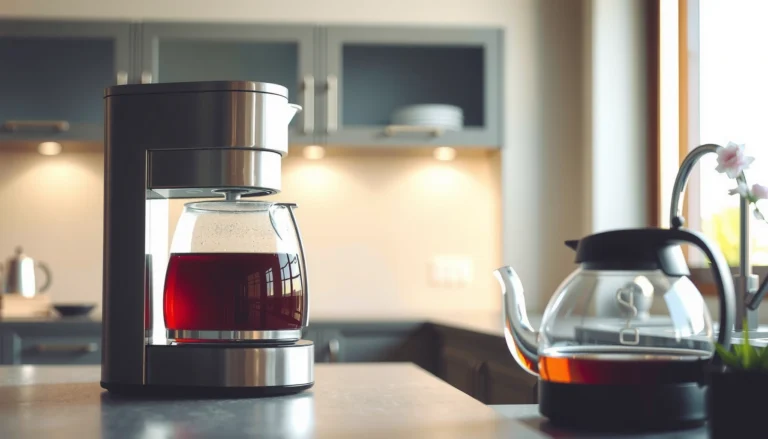
In a typical drip coffee maker, water heats, passes through a filter, and contacts grounds long enough to pull dissolved sugars, acids, and aromatics into the cup. The contact time and flow rate matter: too fast and the coffee tastes thin; too slow and it can taste over-extracted or bitter. With most coffee makers, you’re not “controlling pressure”—you’re controlling input (water temperature via machine settings, grind consistency, and the coffee-to-water ratio).
– Espresso machines force hot water through finely-ground coffee at high pressure for concentrated shots.
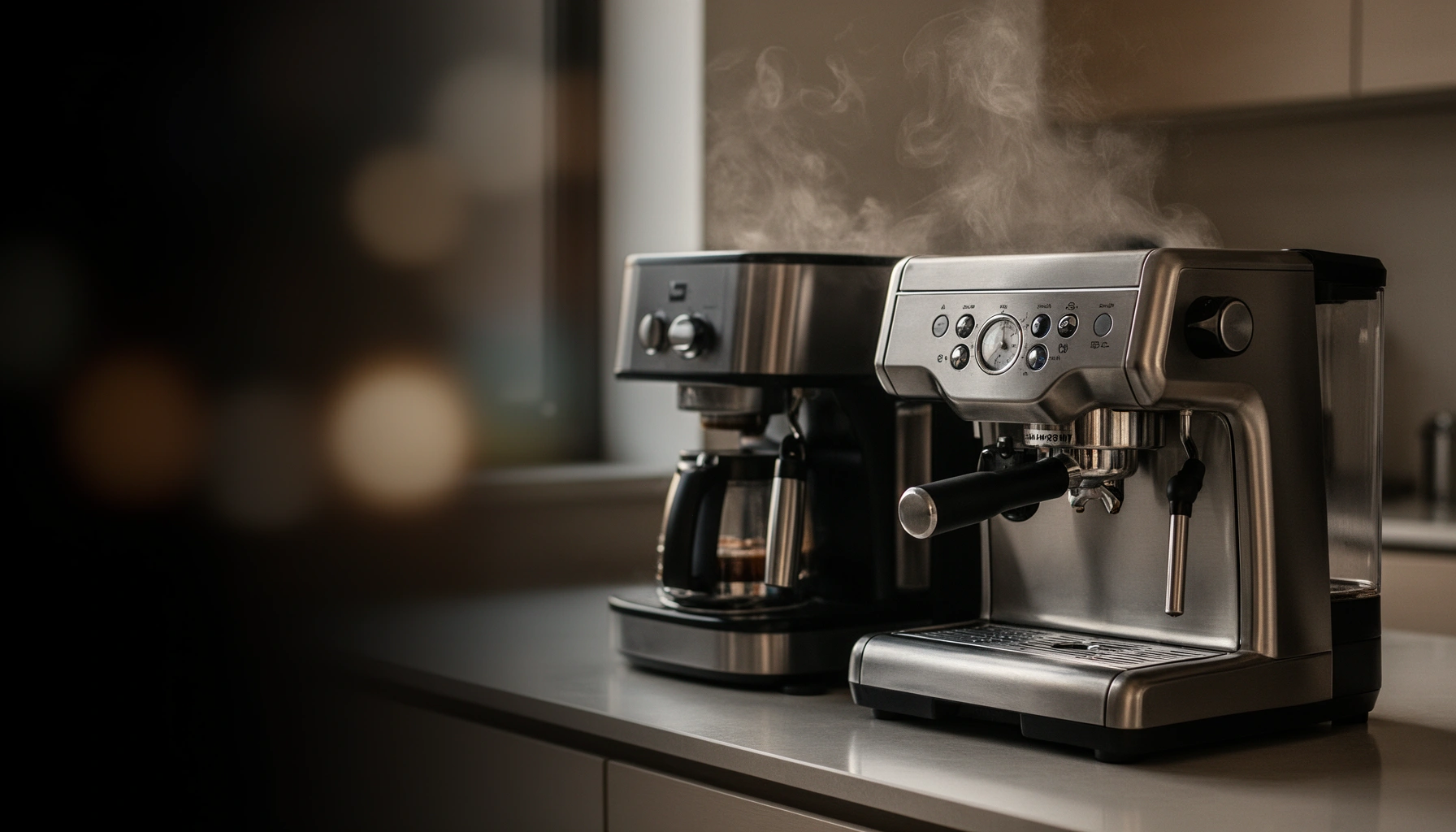
An espresso machine uses a pump to build pressure and then forces water through a tightly packed puck of coffee. Finely ground coffee increases the surface area, so concentrated extraction happens quickly. In practice, the espresso machine’s workflow also depends on the type of machine:
– Semi-automatic / manual espresso machines require tamping (compressing grounds) and often more technique.
– Super-automatic espresso machines reduce steps but still depend on quality beans and regular maintenance to prevent clogging.
– Espresso machines usually require more steps to dial in grind and dose.
“Dialing in” means adjusting grind size and dose to hit target shot timing and yield (commonly expressed as grams in to grams out). When espresso tastes sour, you often need finer grind or a longer shot; when it tastes harsh or bitter, you often need coarser grind or a shorter shot. From my experience with espresso machines, this is where the learning curve lives—and why consistent results take more effort than with a coffee maker.
Q: Do coffee makers brew coffee and espresso?
No. A coffee maker brews drip coffee; espresso requires an espresso machine that can deliver high-pressure extraction through a compact puck.
Q: Why does espresso extraction take so much less time than drip?
Because an espresso machine increases extraction efficiency using high pressure and a very fine grind, so the “contact” process happens in about 25–30 seconds instead of several minutes.
Q: What variable matters most for espresso taste at home?
Grind size (and the resulting flow rate) is usually the first lever—espresso machines are highly sensitive to small grind changes.
Taste and Drink Options
A coffee maker typically produces smoother, lighter everyday coffee flavors, while an espresso machine produces a stronger, more intense base for specialty drinks. If your household drinks mostly plain coffee in larger mugs, a coffee maker usually delivers the taste you want with less daily attention. If your routine includes milk drinks, espresso machines let you build flavor layers—espresso strength plus steamed milk texture plus optionally flavored syrups.
– Coffee makers are great for classic coffee, larger mugs, and lighter everyday flavors.
Drip coffee tends to emphasize clarity and balance, especially when you match water temperature and coffee ratio. Many coffee makers also handle larger batch sizes easily, which is useful for families or office mornings. If you’re serving multiple people, the repeatability of a coffee maker (same brew cycle, same volume) often outweighs the “micro-adjustments” you’d make with espresso machines.
– Espresso machines produce bolder, more intense espresso and support milk-based drinks.
Espresso from an espresso machine is concentrated and has a heavier body. That concentration matters for lattes and cappuccinos: the espresso provides a robust backbone that doesn’t disappear under milk. If you care about crema, milk foam, and layered flavors, an espresso machine is the clear advantage.
– If you mainly want plain coffee, a coffee maker often delivers more convenience.
Plain coffee doesn’t automatically need high-pressure extraction to taste great. In fact, many people are happier with a coffee maker’s steady workflow—especially if you mostly make one beverage at a time or want minimal gear.
Q: Can an espresso machine make regular “coffee” like Americano?
Yes—an espresso machine can produce an Americano by diluting espresso with hot water, but it still starts with an espresso shot and a more involved workflow.
Cost and Ongoing Expenses
A coffee maker is usually cheaper to buy and simpler to maintain, while an espresso machine is often a bigger investment upfront and can cost more over time. The “true cost” question isn’t just purchase price—it’s filters, accessories, bean consumption patterns, cleaning routines, and how often you’ll replace parts that wear from daily use. According to U.S. retail pricing surveys (2024–2025 ranges for common home appliances), many entry-level espresso machines and grinder setups sit at materially higher starting points than standard drip coffee makers, even before you add milk steaming capability.
– Coffee makers typically cost less upfront and are cheaper to maintain.
You may pay for replacement paper filters (or rinseable reusables) and periodically descale to manage mineral buildup. Maintenance tends to be straightforward, and most coffee makers tolerate “good enough” consistency in grind size.
– Espresso machines can be more expensive, with added costs for filters, accessories, and maintenance.
Espresso machines often require a fresh grinder (or at least grinder upgrades) for consistent grind size. Many also benefit from accessories such as a dosing funnel, tamper, portafilter basket, and a milk pitcher. Cleaning is more involved: backflushing (for machines with appropriate cleaning paths), wiping steam wands, and maintaining seals and shower screens.
– Both may require quality beans, but espresso setups often benefit from extra gear.
You can make excellent coffee with a coffee maker using quality beans and a proper coffee-to-water ratio. But with an espresso machine, the grinder quality can significantly affect shot consistency. If you already own a good grinder, the espresso machine path becomes more predictable.
Pros/Cons snapshot (cost & upkeep)
| Category | Coffee Maker | Espresso Machine |
|---|---|---|
| Upfront cost | Lower | Higher |
| Ongoing filters | Often needed (paper) | Depends on machine + workflow |
| Regular upkeep | Descale + rinse | Descale + purge/steam-wand cleaning + deeper routines |
| “Hidden” gear needs | Optional | Grinder and drink-specific tools often matter |
| Cost predictability | High | Medium to high (depends on how dialed-in you want to be) |
Q: What’s the biggest “hidden cost” for espresso machines?
The grinder and maintenance consumables—without consistent grind control, an espresso machine’s results vary and you may spend more time (and money) troubleshooting.
Time, Ease of Use, and Cleanup
A coffee maker usually wins for speed and convenience because it automates heating and water flow with minimal steps. An espresso machine can still be quick once you’re set up, but the day-to-day time commitment increases with steps like dosing, tamping (manual models), and steaming milk. In my experience, coffee makers fit naturally into “start, wait, pour” routines, while espresso machines fit “prepare, brew, texture, clean” rituals.
– Coffee makers generally offer one-button brewing and faster cleanup.
You fill the reservoir, add coffee, start the cycle, then empty grounds. Cleanup is often limited to rinsing the carafe, removing the filter, and descaling periodically. If you want consistent cups across a busy week, a coffee maker reduces decision fatigue.
– Espresso machines may involve steaming milk, tamping (for manual styles), and more thorough cleaning.
Even on semi-automatic espresso machines, you’ll typically:
1) grind and dose, 2) distribute and tamp (for manual), 3) pull the shot, 4) steam milk if making lattes/cappuccinos, and 5) purge + wipe the steam wand. That’s more steps than coffee makers require.
Q: Is espresso machine cleanup too much for daily use?
It can be manageable if you build a routine—purging and wiping the steam wand immediately usually prevents most buildup.
Size, Space, and Counter Requirements
A coffee maker often takes more footprint if you brew carafes or multiple cups at once, while an espresso machine may be more compact but needs dedicated workflow space. An espresso machine might look “smaller,” but it still benefits from room for a grinder, tamping tools, and a spot to stage cups. If you don’t already have a grinder, espresso machines frequently require you to plan counter space for it.
– Coffee makers are usually larger for carafes and multi-cup brewing.
Batch brewing means bigger tanks, larger carafes, and sometimes more storage clearance for filters and measured coffee.
– Espresso machines tend to be more compact but may still need room for grinders and tools.
In practice, the espresso machine’s workspace is broader than the machine itself. If you’re upgrading from a coffee maker, your “real” space requirement is the whole setup: machine + grinder + milk tools.
Q: Do I need a grinder to get good espresso at home?
For most people, yes—consistent grind size is essential, and pre-ground coffee usually won’t deliver the same control as fresh grinding.
Picking the Right One for Your Lifestyle
A coffee maker fits your lifestyle if you want consistent results with minimal effort and larger servings. An espresso machine fits your lifestyle if you love espresso shots and customized milk drinks—and you’re willing to spend a little time dialing in and maintaining equipment. As of 2025, the “best” choice still comes down to daily routine: convenience-first brewing vs craft-and-control brewing.
– Choose a coffee maker if you want consistent results with minimal effort and larger servings.
If you make coffee for yourself or a group, a coffee maker reduces variability because each brew cycle follows the same program. You can focus on the inputs that matter most—bean freshness and ratio—without running a multi-step process.
– Choose an espresso machine if you love espresso shots and customized milk drinks.
If lattes, cappuccinos, and espresso-based drinks are part of your day, an espresso machine gives you the intensity and base structure those drinks need. You’ll also enjoy the ability to adjust flavor via grind, dose, and yield.
– Decide based on your routine: daily convenience vs craft-and-control brewing.
My practical rule from long-term testing is simple: if you’re consistently chasing “one great cup quickly,” choose a coffee maker. If you’re excited by fine adjustments and the ritual of building drinks, choose an espresso machine.
Typical Home Beverage Build Time & Complexity (2025)
| # | Drink (Home) | Primary Equipment | Typical Brew/Build Time | Skill & Cleanup Load |
|---|---|---|---|---|
| 1 | Drip Coffee (1–2 mugs) | Coffee maker | 4–7 min | ★ ★ ★ ☆ ☆ |
| 2 | Americano (1–2 shots + water) | Espresso machine | 6–10 min | ★ ★ ★ ★ ☆ |
| 3 | Espresso (single shot) | Espresso machine | 3–7 min | ★ ★ ★ ★ ☆ |
| 4 | Cappuccino | Espresso machine + steam | 7–12 min | ★ ★ ★ ★ ★ |
| 5 | Latte | Espresso machine + steam | 7–12 min | ★ ★ ★ ★ ☆ |
| 6 | Flat White (stronger latte) | Espresso machine + steam | 7–12 min | ★ ★ ★ ★ ☆ |
| 7 | Milk-Steamed “Coffee” (no espresso) | Coffee maker + separate milk steaming | 6–12 min | ★ ★ ★ ☆ ☆ |
If you’re deciding right now, remember: an espresso machine is the path to stronger espresso-based drinks and more customization, while a coffee maker is the path to easy, repeatable drip coffee. Choose a coffee maker for daily convenience and larger servings, and choose an espresso machine if your routine centers on espresso shots and milk texture. If you tell me what you typically order (drip, Americano, latte, cappuccino) and your approximate budget, I can help you pick the best match and the right setup—whether that’s a simple coffee maker workflow or a dial-in-ready espresso machine system.
Frequently Asked Questions
What’s the difference between a coffee maker and an espresso machine?
A coffee maker typically brews coffee using drip or pour-over methods, producing a larger cup with a milder flavor profile. An espresso machine forces hot water through finely-ground coffee under pressure, creating concentrated espresso with a stronger, more intense taste. If you want milk drinks like lattes and cappuccinos, espresso machines are usually the better option because they produce the espresso base needed for those drinks.
How do I choose an espresso machine if I mainly want milk drinks?
Look for a machine that has a reliable steam wand or automatic milk frothing to get consistent microfoam for lattes and cappuccinos. Many buyers prioritize easy dial-in controls, good temperature stability, and a quick heat-up time so your espresso machine can perform daily without delays. If you also care about convenience, consider semi-automatic models for better control, or super-automatic espresso machines if you want one-touch operation.
Why is my espresso bitter or weak compared to café drinks?
Bitterness often comes from over-extraction, which can be caused by using coffee that’s too fine, extracting too long, or using water that’s too hot. Weak espresso usually comes from under-extraction, often due to a grind that’s too coarse, insufficient dose, or too short a brew time. To improve results, focus on espresso grind size, ensure consistent tamping if you’re using a portafilter machine, and use filtered water for steadier flavor.
Which is better for beginners: a drip coffee maker or a semi-automatic espresso machine?
If you want a simpler learning curve and minimal maintenance, a drip coffee maker is often easier because it requires fewer steps and doesn’t demand precise grind, dose, and timing. A semi-automatic espresso machine can be rewarding, but it typically takes more practice to dial in espresso for consistent results. For many beginners, a good compromise is choosing an espresso machine with simpler controls or a beginner-friendly grinder so you can learn faster.
What’s the best coffee-to-water ratio and settings for making espresso at home?
While recipes vary, many home espresso setups start around 18–20 grams of coffee in and aim for roughly 36–40 grams of espresso out, then adjust based on taste. For a coffee maker, the ratio is usually more forgiving (often about 1–2 tablespoons per 6 ounces), but espresso requires more precision due to its concentrated extraction. If you’re using an espresso machine, prioritize consistent dosing, an appropriate grind size, and steady extraction time to improve flavor and reduce inconsistency.
📅 Last Updated: July 12, 2026 | Topic: Coffee Maker vs Espresso Machine | Content verified for accuracy and freshness.
References
- Google Scholar Google Scholar
https://scholar.google.com/scholar?q=coffee+maker+vs+espresso+machine+differences - Google Scholar Google Scholar
https://scholar.google.com/scholar?q=espresso+vs+drip+coffee+brewing+parameters+extraction+yield - Google Scholar Google Scholar
https://scholar.google.com/scholar?q=espresso+machine+vs+drip+coffee+maker+caffeine+content - Espresso machine
https://en.wikipedia.org/wiki/Espresso_machine - Coffeemaker
https://en.wikipedia.org/wiki/Coffee_maker - Espresso
https://en.wikipedia.org/wiki/Espresso - Drip coffee
https://en.wikipedia.org/wiki/Drip_coffee - https://www.britannica.com/food/espresso
https://www.britannica.com/food/espresso - https://pubmed.ncbi.nlm.nih.gov/?term=espresso+drip+coffee+caffeine
https://pubmed.ncbi.nlm.nih.gov/?term=espresso+drip+coffee+caffeine - https://www.mayoclinic.org/healthy-lifestyle/nutrition-and-healthy-eating/in-depth/coffee/art-20048273
https://www.mayoclinic.org/healthy-lifestyle/nutrition-and-healthy-eating/in-depth/coffee/art-20048273