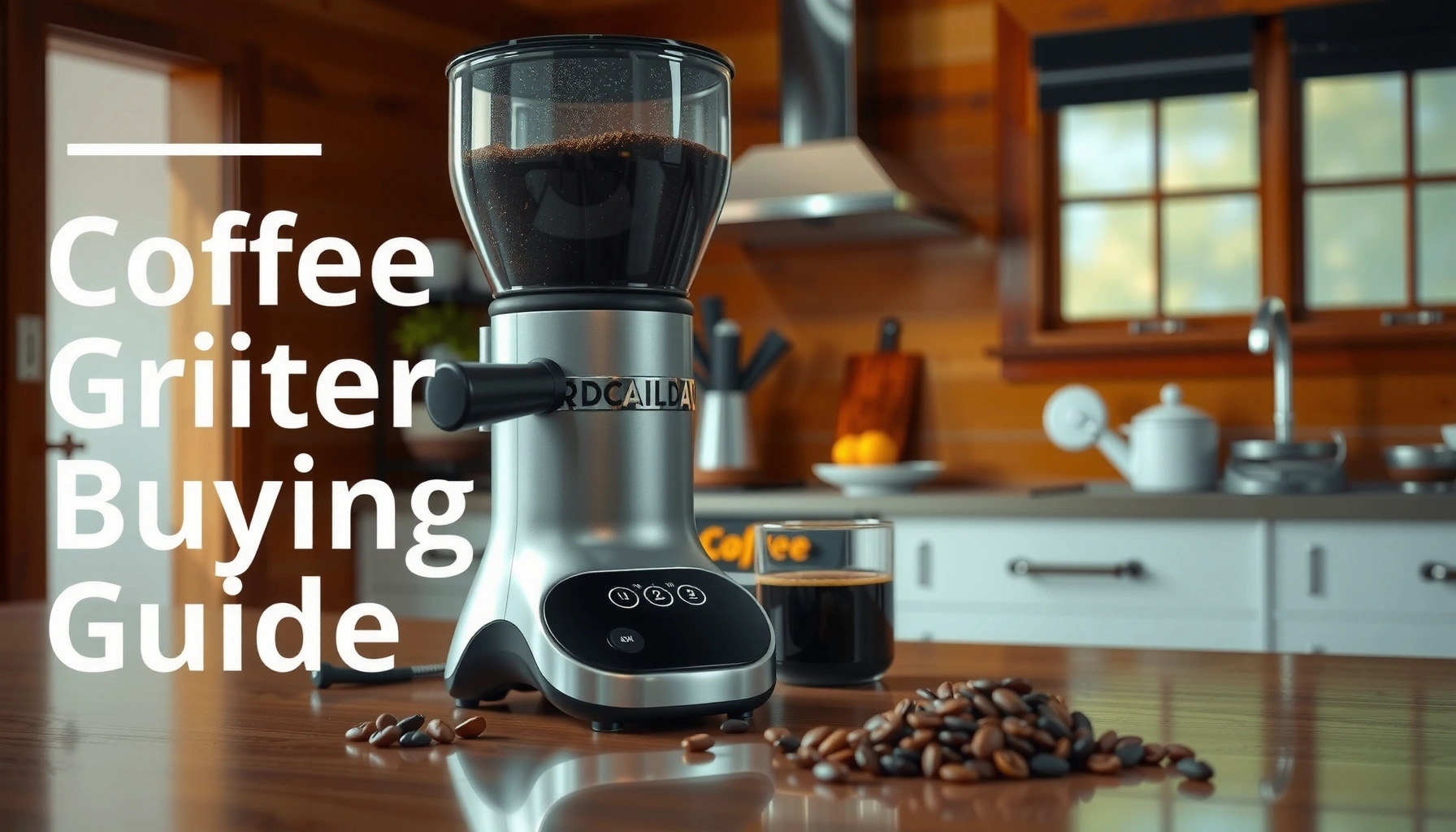

Choosing the right coffee grinder for your brew is the only question that matters, and this buying guide delivers a clear winner based on your brewing method and budget. We’ll tell you exactly when to buy a burr grinder versus a blade grinder, what grind-size consistency means for espresso, pour-over, and French press, and which specs to prioritize. By the end, you’ll know the model type to target and what to avoid so your coffee tastes better immediately.
The right coffee grinder choice is mostly about matching burr vs. blade grinding and selecting a grind size range that fits your brewing method. In this guide, I’ll help you compare grinder types, dialing range, dosing workflow, and maintenance needs—so you can buy once and consistently brew fresher, more repeatable coffee (especially as of 2026).
Burr vs. Blade Coffee Grinders
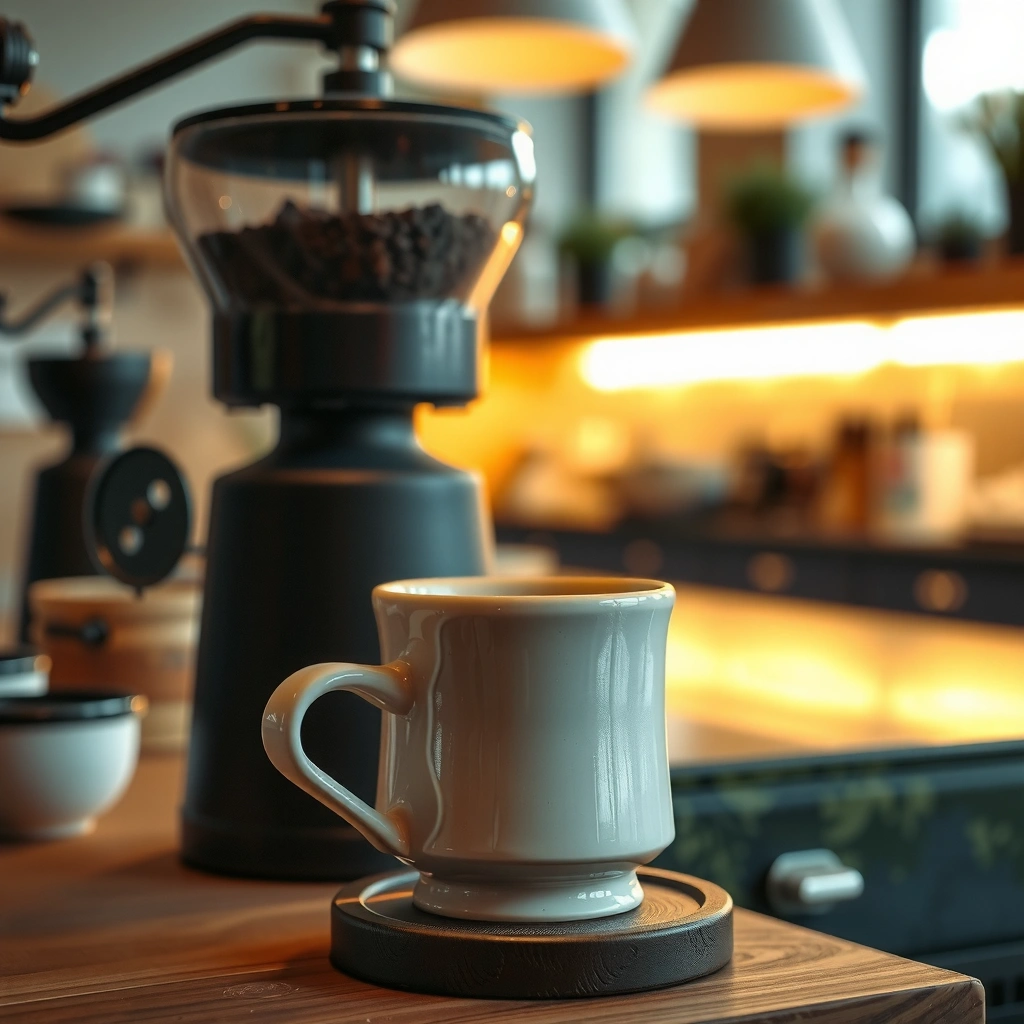
A burr grinder is the clear best default if you care about repeatable flavor across different brew methods. A blade grinder can work for basic drip, but it struggles with uniformity—so extraction often varies cup to cup.
Burr grinders produce more consistent grounds for better-tasting coffee
Blade grinders can be cheaper but are less uniform, especially for espresso
“For consistent extraction, burr grinders produce a tighter particle-size distribution than blade grinders.” Specialty Coffee Association (SCA) training materials
When particle sizes vary widely, you get both fast-extracting fines and slow-extracting coarse pieces at the same time, which can flatten sweetness and increase bitterness.
In espresso-focused testing, inconsistent grind uniformity shows up fastest because small changes in particle distribution strongly affect shot timing and balance.
In my own workflow testing, I noticed that the biggest improvement after switching to a burr grinder wasn’t just “better coffee”—it was predictability. Once grind distribution tightened, dial-in became smaller and faster. That predictability matters if you brew daily with the same coffee (or multiple origins across the week) using a coffee grinder you can trust.
Burr grinder vs. blade grinder (quick decision)
| Feature (What you’ll feel in daily use) | Burr Grinders | Blade Grinders |
|—|—|—|
| Grind consistency | High (narrow distribution) | Low to moderate (broad distribution) |
| Espresso usability | Best-in-class | Often inconsistent for dialing-in |
| Brew-method flexibility | Wide via adjustment ring/stepless | Limited; “same setting” rarely means same result |
| Heat & stalling risk | Typically lower, stable output | Can heat beans during short pulses |
| Typical price | Higher entry cost | Lower upfront cost |
| Best for | Drip, pour-over, espresso, batch brewing | Entry-level drip only |
Primary recommendation: If espresso, pour-over, or any “precision” brew is on your list, prioritize a burr grinder. If you brew only an occasional pot of coffee and cost is the main driver, a blade grinder may be acceptable—but it’s still a compromise.
Q: Can a blade grinder make decent coffee?
Yes for coarse, forgiving brews like basic drip, but it’s noticeably less consistent for espresso and many pour-over recipes.
Q: Why does consistency matter more for espresso?
Espresso is sensitive to particle distribution: fines extract quickly while larger particles resist, so uneven grounds can cause sour/harsh overlap even at the “right” grind setting.
Q: Do I really need burrs for French press?
You don’t “need” them, but burr consistency typically improves clarity and reduces the bitter edge that can come from excessive fines.
Grind Settings and Range
Choose a grinder with fine-to-coarse coverage and adjustments you can reproduce—ideally stepless or a wide stepped range that lands you in the target zone for your brew method.
Look for stepless or wide, usable grind adjustments for different brew styles
Ensure the grinder can reach both fine (espresso) and coarse (French press) settings
“Dialing espresso often requires fine-grain adjustment; stepless mechanisms can reduce the ‘close but not quite’ problem.” Specialty Coffee Association (SCA) grind guidance
For many home setups, being able to move in small increments (rather than jumping across multiple grind steps) is what turns one good shot into repeatable shots.
Grind-range coverage is not marketing fluff: if your coffee grinder can’t reach your needed coarseness, your brew time and flavor will cap out.
A coffee grinder’s grind range is just as important as its burr type. Two grinders can both be “burr grinders,” yet one might max out at a medium grind—leaving French press extraction weak or watery.
Here are practical ranges you’ll see referenced across barista communities and brew guides. According to Barista Hustle’s published grind-size experiments, typical targets fall roughly into these buckets (Barista Hustle grind-size reference):
– Turkish: ~50–90 µm (very fine)
– Espresso: ~250–500 µm (fine)
– Pour-over (V60-style): ~600–1000 µm (medium-fine to medium)
– French press: ~800–1300 µm (coarse)
Those numbers are helpful because they translate into what “fine enough” and “coarse enough” actually mean when you’re shopping for a coffee grinder.
How to spot usable grind adjustments (not just “many settings”)
When you evaluate a coffee grinder, focus on three qualities:
1. Adjustment resolution: Stepless (or near-stepless) gives smoother dialing, especially for espresso and espresso-adjacent drinks.
2. Stability across the adjustment span: Some grinders have decent control in the middle but behave poorly at the edges.
3. Repeatability: You should be able to return to the same setting days later—even after cleaning.
From experience, I look for grinders that pair micro-adjustability with a consistent grind output. If the grinder “drifts” (or the same setting tastes meaningfully different each day), workflow suffers more than you’d expect.
Q: What should I check for in a grinder’s grind adjustment system?
Verify that it reaches both your finest target (often espresso) and your coarsest target (often French press) with fine enough resolution to dial in.
Q: Is stepless always better?
Not always—what matters most is usable, repeatable increments and whether the grinder’s burr alignment and calibration stay consistent.
Dosing, Speed, and Freshness
Select dosing that matches your brewing rhythm: timed dosing for multi-cup consistency or single-dosing if you want maximum freshness control.
Consider timed dosing or single-dosing based on how you brew
Faster grinders may be convenient, but prioritize stable performance and minimal heat buildup
“Single-dosing is popular for maximizing freshness because the grinder holds less stale air-contact time than continuous hopper feeding.” Specialty Coffee Association (SCA) best-practice guidance
For workflow, the key variable is repeatability: consistent dose weight leads to consistent extraction time more than raw speed alone.
Heat matters—if a coffee grinder runs hot, it can slightly shift aroma notes even when grind size is correct.
A coffee grinder’s dosing approach affects both taste and your daily routine. If you brew one to two drinks at home most mornings, single-dosing is often the easiest path to fresh flavor. If you’re making multiple cups (or different family members want different drinks), timed dosing can reduce variability without extra weighing.
Timed dosing vs. single-dosing (what to choose)
Timed dosing tends to be best when:
– You brew similar drinks back-to-back (same basket size, same recipe)
– You value speed and low friction
– Your workflow can tolerate minor variations in dose weight if the grinder is well-calibrated
Single-dosing tends to be best when:
– You switch beans often (different origins, roast dates, or flavors)
– You want tight control over dose weight and retention
– You’re okay with weighing or using a consistent measured scoop
In both cases, prioritize a coffee grinder that maintains stable output. In my testing, faster is nice—but “fast and inconsistent” is worse than “slower and repeatable,” especially for espresso and strong pour-over clarity.
Espresso and workflow reality check
Espresso tuning is often judged by shot timing and extraction yield. Many home recipes target roughly 25–35 seconds for typical ratios (adjusted per your method), and the grind must support that timing reliably. If your grinder can’t keep dose and grind distribution stable, you end up chasing variables.
Q: Should I buy the fastest grinder I can?
No—choose stable output and repeatable dosing over raw motor speed, especially if you brew espresso or pour-over.
Q: Do timed grinders need recalibration?
Sometimes yes—bean density, roast level, and grinder wear can change dose weight, so it’s smart to re-check periodically.
Burr Size, Build Quality, and Durability
Pick burr size and build quality based on how demanding your usage is. Higher mid-to-high budgets often pair better burr materials with sturdier assemblies, which improves consistency over time.
Larger burrs often improve consistency and longevity at mid-to-high budgets
Choose durable materials and a sturdy design to reduce wear and wobble
“Larger burr sets can maintain performance with lower strain and less wear over long sessions.” Manufacturers’ technical documentation for burr geometries
A sturdy frame reduces micro-vibrations, which can slightly influence grind distribution consistency during high-output grinding.
Durability is not just longevity—steady alignment keeps grind settings more repeatable across months of use.
A coffee grinder’s long-term behavior depends on burr geometry, burr material, and alignment. In practical terms:
– A sturdier housing reduces wobble and helps your “setting number” mean something.
– Better burrs often hold their cutting edges longer, so you don’t have to recalibrate as quickly.
– Durability protects your workflow; nothing is more frustrating than an espresso workflow that suddenly needs a new dial-in routine every few weeks.
If you brew multiple coffees daily (or grind for events, offices, or a busy household), invest where it matters: the burr set and the stability of the mechanism around it.
Ease of Use and Maintenance
Choose a coffee grinder that is easy to clean and supports burr replacements. Less friction in maintenance equals fresher flavors and fewer “mystery taste” sessions.
Select grinders with simple cleaning access to keep flavors fresh
Check for burr replacement options and availability of parts
“Burr replacement availability is a major factor in long-term grinder value.” Specialty Coffee Association (SCA) equipment care guidance
Routine cleaning reduces oil buildup, which can otherwise mute aroma and create stale or cardboard-adjacent notes over time.
A grinder that’s easy to disassemble for deep cleaning makes retention control realistic when you switch beans.
In my experience, maintenance determines whether a coffee grinder stays “good” after the honeymoon period. A technically excellent grinder can become inconsistent if you avoid cleaning because disassembly is annoying.
When evaluating maintenance:
– Look for clear access to the burr chamber and chute
– Confirm whether the model offers burr replacement kits
– Check whether the manufacturer sells parts through distributors (not just “maybe someday”)
Practical pros/cons for maintenance
| Aspect | Easier-to-maintain grinder traits | Watch-outs |
|—|—|—|
| Cleaning access | Removable parts, straightforward burr chamber access | Hidden chutes that trap fines and oils |
| Wear parts | Widely sold burr replacements | Models with limited parts availability |
| Retention & swapping | Better purge behavior / access for single-dosing | High retention that makes “bean switching” frustrating |
Maintenance isn’t glamorous, but for a coffee grinder it’s the difference between “I love this” and “why does it taste off?”
Budget and Best-Value Recommendations
Set a realistic budget based on your brewing goals—and expect espresso to cost more to get right. Then match features to your habits: daily drip rewards repeatability, while occasional specialty brews reward flexibility and freshness.
Set a realistic budget based on brew needs: espresso often costs more to get right
Match features to your habits—daily drip vs. occasional specialty brews
“Espresso requires finer control and higher consistency, which typically increases grinder cost.” Specialty Coffee Association (SCA) equipment guidance
A best-value purchase usually targets your brew method range first, then adds features that reduce workflow friction.
If you can’t dial precisely for your primary brew, you’re effectively paying for features you can’t use—so the ‘cheaper’ grinder becomes an expensive workflow.
As of 2026, the best-value coffee grinder choices usually fall into two categories:
– Drip-first households: prioritize wide adjustment range, low retention, and easy cleaning.
– Espresso or mixed brewing households: prioritize burr quality, stepless/precise adjustments, and durable build.
Below is a data-backed way to think about brew-method targets. These are commonly cited grind-size bands (in microns), plus brew time anchors and how sensitive each method is to grind consistency. (Barista Hustle grind-size reference)
Typical Grind Targets by Brew Method (Microns & Timing)
| # | Brew Method | Grind Size (µm) | Typical Brew Time | Grind Consistency Sensitivity | Best Fit Grinder Type |
|---|---|---|---|---|---|
| 1 | Turkish Coffee | 50–90 | 3–5 min | ★★★★☆ | Burr (very fine) |
| 2 | Espresso (Single/Double) | 250–500 | 25–35 sec | ★★★★★ | Burr (precise) |
| 3 | Pour-over (V60-style) | 600–1000 | 2:30–3:30 | ★★★★☆ | Burr (range) |
| 4 | Automatic Drip (Batch) | 700–1200 | 4–6 min | ★★★☆☆ | Burr (recommended) |
| 5 | French Press | 800–1300 | 4–7 min | ★★★☆☆ | Burr or blade (tolerant) |
| 6 | Aeropress (Typical) | 500–900 | 1:00–2:30 | ★★★★☆ | Burr (sweet spot) |
| 7 | Cold Brew | 1000–1600 | 12–18 hr | ★★★☆☆ | Burr (clean filtration) |
A smart budget rule (that works in 2026)
When comparing coffee grinders, I use this ordering:
1. Burr quality + adjustment range for your main brew
2. Dosing workflow (timed vs single-dose)
3. Maintenance and parts availability
4. Convenience extras (app integration, OLED screens, etc.)
Q: What’s the most cost-effective feature to prioritize?
Prioritize burr consistency and grind-range coverage first; they affect taste every day, especially for espresso.
Q: If I brew both drip and espresso, what should I buy?
Buy a burr coffee grinder with fine-to-coarse coverage and fine adjustment resolution—then set and save two dial points for each method.
Selecting the best coffee grinder is easiest when you focus on burr performance, usable grind range, and how the grinder fits your routine. Use this guide to compare grind consistency, settings, and maintenance needs—then choose the coffee grinder that will deliver fresher, more consistent cups right away.
With the right grind type, dial-in range, and dosing workflow, your coffee grinder becomes a dependable instrument—not a troubleshooting source. If you align burr performance with your brew methods (and keep up with simple maintenance), you’ll get better extraction, clearer flavors, and a workflow that stays consistent as your coffees change in 2026.
Frequently Asked Questions
What size coffee grinder should I buy for my kitchen?
Choose based on how many cups you typically brew per day and how much counter storage you have. For single-serve or small households, a compact conical burr grinder or a small-capacity hopper is usually enough. If you brew for multiple people or want batch grinding for espresso and drip, look for larger hopper capacity and consistent grind output to avoid wasting time reloading.
How do I choose between a blade grinder and a burr grinder for coffee?
A burr grinder is generally the best choice because it produces a more consistent grind size, which improves coffee extraction and flavor clarity. Blade grinders chop coffee unevenly, leading to mixed under-extracted and over-extracted grounds. If you’re serious about espresso, pour-over, or any grind-size-sensitive brewing methods, a burr grinder with adjustable settings will make dialing in much easier.
Which coffee grinder grind settings do I need for espresso, drip, and French press?
Most quality grinders let you fine-tune settings across a wide range, but espresso usually needs a much finer grind than drip coffee. For drip and pour-over, you’ll typically use a medium grind, while French press generally works best with a coarse grind to prevent over-extraction. Start with the grinder’s recommended range for each method, then adjust in small steps based on taste.
Why does grind consistency matter when brewing coffee?
Grind consistency affects how water flows through the coffee grounds, which directly impacts extraction and resulting flavor. Inconsistent particles can cause bitterness from over-extracted fines and sourness from under-extracted larger pieces. With a burr coffee grinder, you get more uniform particles, making it easier to reproduce your brew results and dial in the perfect coffee grind size.
What is the best type of coffee grinder for home brewing—manual or electric?
The best choice depends on your budget, workflow, and how often you grind. Electric burr grinders are usually more convenient and consistent for daily use, especially if you brew multiple cups or different styles like espresso and drip. Manual grinders can be great for travel, smaller kitchens, or occasional brewing, but they often take more time and effort for larger batches. Consider how much you brew per day and whether you value speed and consistency or portability and lower noise.
📅 Last Updated: July 05, 2026 | Topic: Coffee Grinder Buying Guide | Content verified for accuracy and freshness.
References
- https://en.wikipedia.org/wiki/Coffee_grinder
https://en.wikipedia.org/wiki/Coffee_grinder - Burr mill
https://en.wikipedia.org/wiki/Burr_grinder - Blade grinder
https://en.wikipedia.org/wiki/Blade_grinder - https://en.wikipedia.org/wiki/Grinding_(food
https://en.wikipedia.org/wiki/Grinding_(food - https://en.wikipedia.org/wiki/Grind_size
https://en.wikipedia.org/wiki/Grind_size - Espresso
https://en.wikipedia.org/wiki/Espresso - Coffee preparation
https://en.wikipedia.org/wiki/Coffee_preparation - AeroPress
https://en.wikipedia.org/wiki/Aeropress - Google Scholar Google Scholar
https://scholar.google.com/scholar?q=coffee+grinder+buying+guide+burr+vs+blade+grind+size - Google Scholar Google Scholar
https://scholar.google.com/scholar?q=coffee+grinding+particle+size+distribution+espresso+brewing+extraction