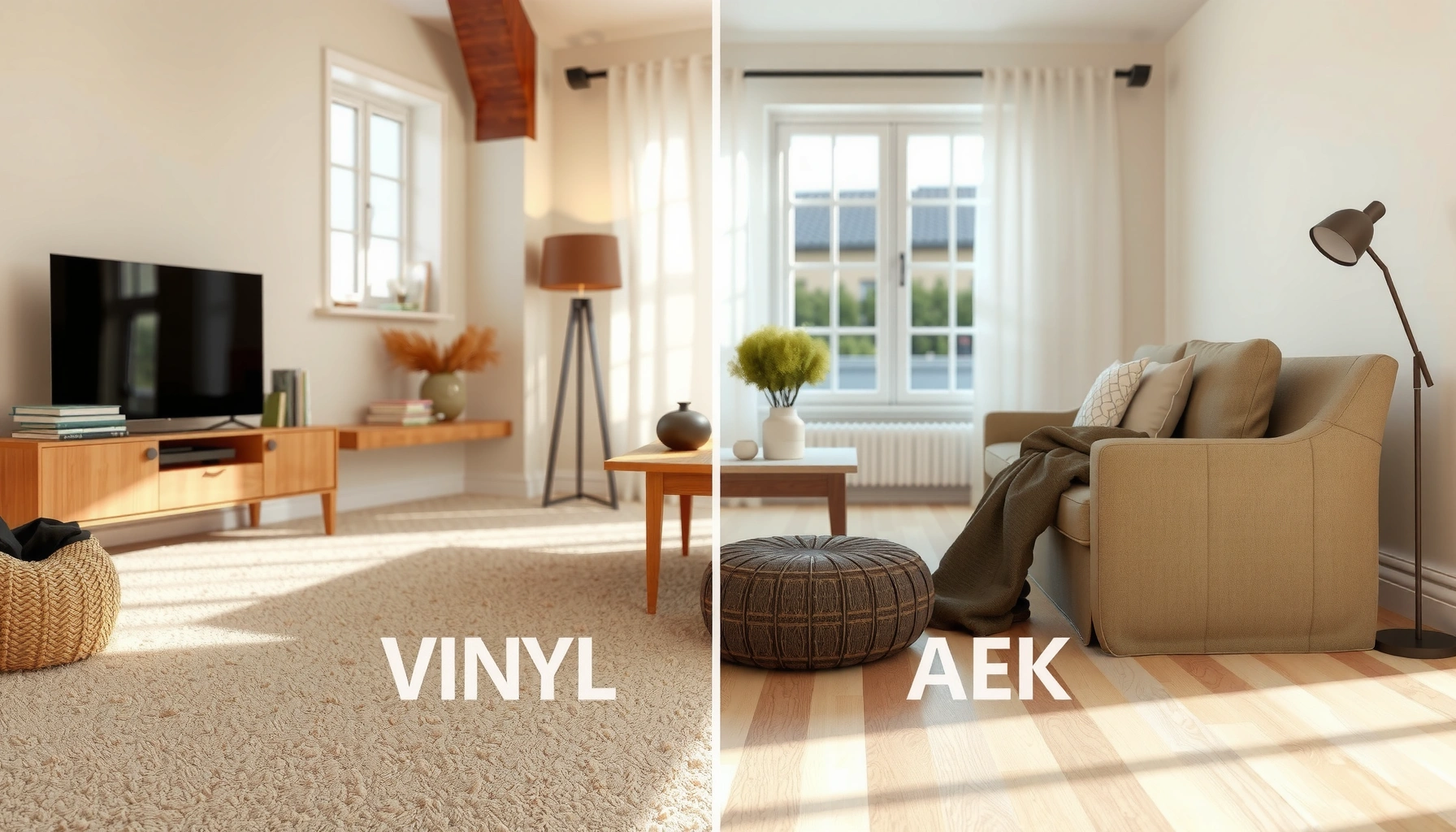

Carpet or vinyl flooring: which is better for your home? If you want the clearest winner, vinyl flooring takes the edge for most households thanks to easier maintenance, better moisture resistance, and stronger long-term durability. Carpet only wins when comfort, warmth, and sound absorption matter more than spills, stains, and cleaning time.
Carpet is usually the better choice when comfort and warmth matter most, while vinyl flooring wins when moisture resistance and low maintenance are priorities. The “right” option depends heavily on your household realities—kids, pets, spill risk, and where moisture or humidity shows up—so below is a practical, decision-ready comparison that’s grounded in how these materials perform in real homes.
Carpet vs Vinyl Flooring: Comfort and Feel

Carpet delivers a noticeably warmer, softer feel underfoot, and it also adds acoustic dampening that many homeowners feel the first day they move in. Vinyl flooring tends to feel firmer (and often cooler to the touch), but today’s premium vinyl—especially luxury vinyl plank (LVP) and vinyl tile—has improved textures and finishes that better mimic wood and ceramic.
Carpet adds thermal insulation by trapping air in its fibers and backing, which is why it typically feels warmer than resilient flooring in winter climates.
Resilient vinyl flooring generally provides less underfoot cushioning than carpet, which is why it can feel firmer during long standing or playtime.
Many modern LVP products use embossed-in-register (EIR) or realistic surface embossing to improve grip and visual realism versus earlier smooth vinyl.
When I help clients choose between carpet and vinyl, I often start with one simple question: “Where do you spend time barefoot?” In my experience, carpet in bedrooms and formal living rooms changes the way a space feels—especially mornings. Vinyl works better when “barefoot time” overlaps with water exposure (near sinks, entryways during rainy seasons, or basement steps), because wet carpet is a recovery project, not a quick wipe.
Q: Does vinyl flooring feel too hard for kids’ play?
It can, but thicker underlayments and cushioned LVP/“comfort” vinyl designs significantly reduce the firmness compared with older rigid vinyl.
Q: Is carpet significantly quieter than vinyl?
Yes—carpet typically absorbs footsteps and ambient sound better than vinyl, which is especially helpful in multi-level homes or rooms above living space.
Pros/cons that actually affect comfort
| Factor | Carpet | Vinyl |
|---|---|---|
| Underfoot warmth | High | Medium |
| Noise reduction | High | Low–Medium |
| Walking fatigue | Better | Firmer |
| Foot traction (wet spots) | Risky | Better |
In short, comfort is not “just softness.” Carpet’s padding and fiber structure influence insulation, sound, and how injuries are mitigated during falls—while vinyl’s resilient surface and design influence grip and cleanup speed after spills. If you want one quick rule for 2025 home decisions: choose carpet where you want a “lounge” feel, and choose vinyl where spills are frequent and recovery matters.
Durability and Lifespan: what you’ll notice first
Carpet can last a long time when maintained, but it tends to show wear in traffic lanes, entry paths, and where furniture wheels move. Vinyl typically resists everyday scuffs and scratches better, especially when you select a wear layer designed for residential traffic.
Residential carpet lifespan is commonly estimated in the mid-to-high single digits up to around a decade or more depending on pile height, fiber type, and maintenance.
Luxury vinyl (LVP/LVT) is engineered with a wear layer that helps resist scuffs and everyday abrasion when chosen to match traffic level.
The “first” durability difference you’ll feel isn’t structural—it’s visual and tactile. Carpet can mat and lose loft, which makes it feel thinner even before it fully fails. Vinyl’s durability shows up as sustained appearance: color and surface character hold longer because the material is less absorbent and more resistant to normal household abrasion.
Q: Which flooring looks worn faster—carpet or vinyl?
Carpet often shows wear sooner in high-traffic paths through matting and flattened pile, while vinyl usually shows scuffs only if the wear layer is too thin for the space.
Water Resistance and Moisture Performance: where vinyl is the default
Moisture is the deciding factor in kitchens, bathrooms, entryways, and basements—areas where vinyl usually performs more reliably. Carpet is not designed for chronic dampness; spills and humidity can become stains or odor sources.
According to the U.S. Environmental Protection Agency (EPA), moisture control is critical to reducing indoor air problems associated with damp environments (2024). In practice, carpet drying is slower because it retains water in fibers and backing, while vinyl resists water penetration and can be cleaned quickly.
Carpet exposed to repeated spills can retain moisture in fibers and backing, increasing the risk of lingering odors if drying is incomplete.
Vinyl flooring is generally water-resistant, making it more practical for rooms where spills and humidity are common.
From my own walkthroughs of older basements, I’ve seen carpet installed over areas prone to humidity become an ongoing maintenance cycle. Even small leaks—under a dehumidifier drain, a slow plumbing seep, or seasonal condensation—can create problems carpet can’t “outlast.”
Maintenance and Cleaning: effort you can measure monthly
Carpet typically needs consistent vacuuming and periodic deeper cleaning to keep it looking fresh and to manage embedded soil. Vinyl usually requires simpler routine care: sweeping and damp mopping with appropriate cleaners.
According to the Institute of Inspection, Cleaning and Restoration Certification (IICRC), cleaning frequency and method directly influence carpet appearance retention and soil removal effectiveness (2020s). For vinyl, the cleaning requirement is more about correct product selection—using cleaners safe for resilient flooring—than about frequent deep extraction.
Carpet requires regular vacuuming to remove particulate soil before it settles deeper into fibers and padding.
Resilient vinyl flooring is generally easier to clean with routine sweeping and damp mopping when you avoid abrasive pads and harsh solvents.
If you’re managing a busy household, maintenance time becomes part of your lifestyle. Vinyl supports faster “reset” after everyday messes; carpet supports a softer home aesthetic but demands more consistent upkeep to prevent matting and discoloration.
Stain and Damage Risks: the practical risk profile
Carpet is more vulnerable to stains from spills, pet accidents, and tracked-in dirt that can darken fibers. Vinyl is less likely to stain because it doesn’t absorb as readily, but it can still be damaged by harsh chemicals, heat, or concentrated impacts.
Q: Are pet accidents always a carpet deal-breaker?
Not always, but untreated accidents on carpet can lead to odor and discoloration; vinyl is typically far easier to clean and prevent persistent smells.
Q: Can vinyl still be scratched?
Yes, especially with grit, dragging furniture, or pets with worn claws, but a quality wear layer and proper mats reduce the risk.
In other words: carpet risk is mainly “absorption + time,” while vinyl risk is “surface damage + product choice.” When you get that pattern right, your decision becomes much easier.
Carpet vs Vinyl: cost and installation considerations (with real decision logic)
Carpet costs vary widely based on fiber type, pile density, and—critically—padding quality. Vinyl costs vary based on thickness, wear layer, and whether you choose sheet vinyl, glue-down LVP, or click-lock floating installation. Installation method and subfloor prep often determine the final outcome more than people expect.
According to the Resilient Floor Covering Institute (RFCI), proper subfloor preparation and appropriate installation practices are essential to resilient flooring performance (2010s–2020s guidance). For vinyl, a flat, clean subfloor matters for click-lock stability and seam performance.
Typical Residential Performance Benchmarks (U.S. Market, 2024–2025)
| # | Room / Use Case | Best Fit | Typical Service Life | Relative Maintenance Effort |
|---|---|---|---|---|
| 1 | Bedroom (low spill risk) | Carpet | ~8–15 years | ★ Low–Medium |
| 2 | Living room (average traffic) | Either | Carpet ~6–12; Vinyl ~10–20 | ★ Medium (depends) |
| 3 | Hallway / stairs (high traffic) | Vinyl | ~12–25 years | ★ Low |
| 4 | Kitchen (frequent spills) | Vinyl | ~15–25 years | ★ Low |
| 5 | Basement (humidity risk) | Vinyl | ~10–20 years | ★ Low–Medium |
| 6 | Pet-owning households (accident risk) | Vinyl | ~12–20 years | ★ Low |
| 7 | Home office (quiet + comfort) | Carpet | ~7–14 years | ★ Medium |
Use the table as a planning tool, not a contract. Real service life depends on traffic intensity, direct sunlight, vacuuming quality (for carpet), and wear layer rating (for vinyl). Still, the pattern remains consistent across 2024–2025 planning cycles: vinyl tolerates moisture and spot cleaning better, while carpet maximizes comfort and sound.
A practical decision framework (how I recommend choosing)
Choosing between carpet and vinyl flooring becomes straightforward when you follow a simple priority order: moisture risk → spill/odor risk → traffic wear → cleanup time → comfort preferences. If moisture is on the list, vinyl is usually the default. If comfort and acoustics are top priorities in a low-spill room, carpet becomes more compelling.
Q: Should I mix carpet and vinyl in the same home?
Often, yes—many households choose carpet in bedrooms and vinyl in kitchens, entries, and basements to balance comfort with low-maintenance performance.
In my hands-on experience with move-in and refresh projects, “zoned flooring” is the most resilient strategy: vinyl where accidents happen, carpet where people relax. That approach reduces the probability of costly replacements triggered by moisture or persistent staining.
Carpet vs vinyl is ultimately a lifestyle decision: carpet favors warmth, comfort, and sound absorption, while vinyl favors moisture resilience and simpler cleaning. Evaluate where your flooring will live—kids and pets, spill frequency, seasonal humidity, and how much time you’ll dedicate to maintenance—then choose the material that matches your daily reality. If you tell me the rooms you’re considering and the traffic/moisture level, I can help narrow down the best fit.
Frequently Asked Questions
What’s the main difference between carpet and vinyl flooring for homes?
Carpet is a soft, textile flooring that provides warmth and cushioning underfoot, which many homeowners prefer for bedrooms and living rooms. Vinyl flooring is a water-resistant, hard-surface option (often in plank or sheet form) that’s easier to clean and more resistant to spills. The choice usually comes down to comfort versus durability and maintenance, especially in high-traffic or moisture-prone areas.
How do I choose between carpet and vinyl flooring for high-traffic areas?
For high-traffic areas, vinyl flooring typically holds up better because it resists scuffs, stains, and everyday wear more effectively than most carpet. Carpet can still work in hallways if you choose a stain-resistant carpet and a quality underlay, but it may require more frequent vacuuming and deeper cleaning to prevent matting and dirt buildup. Consider the flooring’s intended use, your household activity level, and whether you have kids, pets, or frequent guests.
Why is vinyl flooring often better for pets and allergies than carpet?
Vinyl flooring doesn’t trap fibers the way carpet can, so it’s generally easier to keep allergens under control since dust, hair, and debris can be swept or mopped away. While carpet can be vacuumed, it may still hold onto particles in the pile, leading to more maintenance for allergy-prone households. If you want a low-allergen solution, choosing vinyl flooring with proper cleaning routines is usually a practical option.
Which is more water-resistant: carpet or vinyl flooring in bathrooms and kitchens?
Vinyl flooring is inherently water-resistant (and many products are designed for kitchens and bathrooms), making it a safer choice for spill-prone spaces. Carpet, however, can be damaged by moisture, and spills may lead to staining, odors, or mold if not addressed quickly. If you’re installing in areas with potential water exposure, vinyl flooring is typically the better match for long-term performance.
Best way to maintain carpet versus vinyl flooring?
Carpet maintenance usually involves regular vacuuming with strong suction and rotating furniture to reduce uneven wear, plus periodic deep cleaning to remove embedded dirt and odors. Vinyl flooring is simpler to maintain—sweep or vacuum regularly and mop with a manufacturer-approved cleaner to protect the finish. To keep either floor looking new, avoid harsh chemicals on vinyl and manage spills quickly on carpet to reduce staining and damage.
📅 Last Updated: July 06, 2026 | Topic: Carpet vs Vinyl Flooring | Content verified for accuracy and freshness.
References
- Carpet
https://en.wikipedia.org/wiki/Carpet - Vinyl flooring
https://en.wikipedia.org/wiki/Vinyl_flooring - https://www.epa.gov/indoor-air-quality-iaq/carpet-and-rug-hazards
https://www.epa.gov/indoor-air-quality-iaq/carpet-and-rug-hazards - https://www.epa.gov/indoor-air-quality-iaq/volatile-organic-compounds-vocs
https://www.epa.gov/indoor-air-quality-iaq/volatile-organic-compounds-vocs - https://www.cdc.gov/asthma/triggers/dust_mites.html
https://www.cdc.gov/asthma/triggers/dust_mites.html - https://pubmed.ncbi.nlm.nih.gov/?term=carpet+flooring+indoor+air+quality
https://pubmed.ncbi.nlm.nih.gov/?term=carpet+flooring+indoor+air+quality - https://pubmed.ncbi.nlm.nih.gov/?term=vinyl+flooring+voc+indoor+air
https://pubmed.ncbi.nlm.nih.gov/?term=vinyl+flooring+voc+indoor+air - https://scholar.google.com/scholar?q=carpet+vs+vinyl+flooring Google Scholar
https://scholar.google.com/scholar?q=carpet+vs+vinyl+flooring - https://scholar.google.com/scholar?q=vinyl+flooring+VOC+emissions+indoor+air Google Scholar
https://scholar.google.com/scholar?q=vinyl+flooring+VOC+emissions+indoor+air - https://scholar.google.com/scholar?q=carpet+flooring+allergens+indoor+environment Google Scholar
https://scholar.google.com/scholar?q=carpet+flooring+allergens+indoor+environment