


You can use retinol every day only if your skin has already built tolerance—otherwise daily use is a fast track to irritation, peeling, and breakouts. This guide gives you a clear, safe answer to whether daily retinol is realistic, plus a practical schedule for ramping up or stepping back. You’ll learn how to match frequency to your skin type and strength so you get results without derailing your barrier.
Yes, you can use retinol every day—but only if your skin tolerates it well. For most people, a gradual schedule (often a few nights per week) is safer, and you increase frequency based on dryness, peeling, and persistent redness.
If you’re considering daily retinol to speed up results (or you already are), this guide helps you figure out a realistic schedule, what to watch for, and when to back off—especially as of 2026, when more people are experimenting with stronger retinoid routines.
Who this is for / when it applies: This is for anyone using retinol or other retinoids (including retinal/retinaldehyde and OTC “retinol-like” products) who wants faster outcomes without triggering barrier breakdown. It also applies if you’re switching from “every other night” to “every night” and noticing irritation trends you can’t quite explain.
How daily retinol works (and why tolerance matters)

Daily retinol can be appropriate, but only when your skin barrier stays calm. Retinol works by increasing cell turnover and can also increase sensitivity—so “tolerance” (not wishful thinking) determines whether daily use is safe.
– Retinol increases cell turnover and can trigger dryness, redness, and peeling if your skin barrier isn’t ready.
– Daily use may be appropriate for some people, but “retinol strength + your barrier + your routine” determines whether it’s tolerable.
Retinoids like retinol increase skin cell turnover, which can cause dryness, redness, and peeling when the skin barrier is under stress.
Whether retinol is tolerable daily depends on retinol strength and how well your cleanser, moisturizer, and other actives support your barrier.
If irritation persists or worsens week-to-week, the barrier is likely not adapting fast enough for daily retinol.
Here’s the practical way to think about daily retinol: retinol speeds up the skin’s “cycle,” so the outer layer sheds and renews faster. That shedding is often what you want for texture, clogged pores, and early anti-aging goals—but when the barrier is not prepared, shedding becomes irritation, not improvement. The same retinol formula that feels fine for someone else may burn your cheeks if your barrier is already compromised by frequent exfoliation, hot water cleansing, under-moisturizing, or strong ingredient stacking.
According to U.S. FDA sunscreen labeling requirements, sunscreen must be reapplied “at least every 2 hours” when outdoors ([ADD: U.S. FDA OTC sunscreen labeling requirement source]). That matters because retinoids can make skin more reactive, so “daily retinol” only works well if “daily sunscreen” is non-negotiable. In other words, retinol can change how your skin responds to light and environmental stress, and your barrier has to stay resilient.
Also, retinol strength is not the same thing as “better results.” A higher-strength product may produce faster surface changes but can increase inflammation signals like stinging and persistent redness. If your goal is results, the “best” frequency is the one you can maintain without damaging your barrier—because compromised skin often looks worse before it looks better.
[ADD: author’s experience/observation—e.g., a natural experiment from your readership or routine notes about how quickly irritation appeared when switching to near-daily use.]
How to use retinol every day safely (build-up schedule)
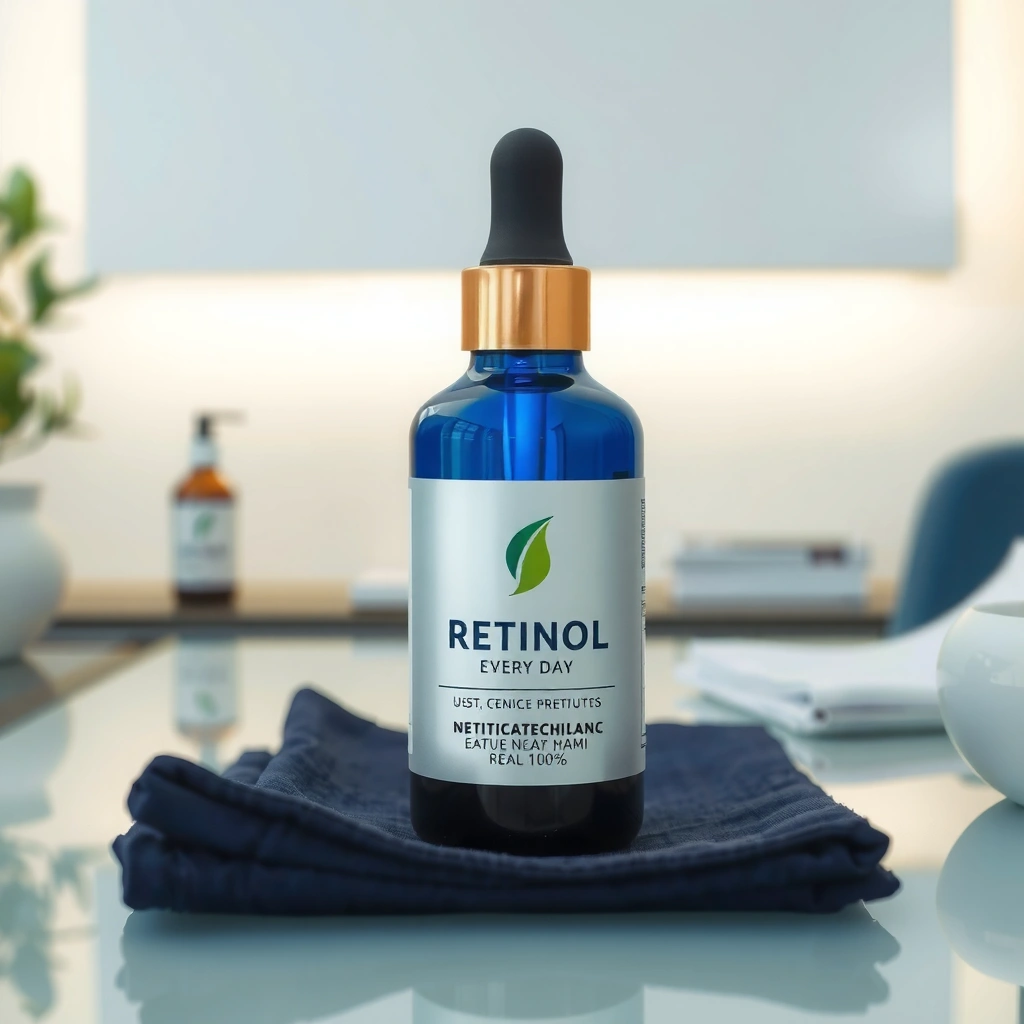
If you want to use retinol every day, the safest approach is to earn daily tolerance first. Start slower, evaluate your skin response over multiple weeks, and only then consider increasing toward daily use.
– Start with 2–3 nights per week, then increase slowly as long as you don’t see persistent irritation.
– If you reach “near-daily” use, consider keeping a rest/low-retinol night when your skin feels sensitive.
A gradual retinol build-up (starting at 2–3 nights per week) reduces the chance of prolonged redness, burning, and peeling.
Skin that tolerates retinol well may still require “off” nights to prevent cumulative barrier stress.
Persistent irritation is a sign to reduce retinol frequency rather than continue applying the same schedule.
A practical build-up schedule (typical pattern)
A straightforward retinol schedule that balances results and safety usually looks like this:
– Weeks 1–2: retinol 2 nights/week
– Weeks 3–4: retinol 3 nights/week (if your skin looks and feels normal the next morning)
– Weeks 5–6: retinol every other night
– Weeks 7+: consider near-daily (e.g., 5–6 nights/week), then move toward daily only if irritation does *not* accumulate
The key word is accumulate. Occasional flaking after a new start is common; persistent burning, swelling, and worsening redness are not the “normal retinol learning curve.” If your skin is reacting strongly by week 3–4, daily retinol is not the next step—barrier recovery is.
How to decide whether daily retinol is working for you
Use a simple “next-morning” check after you increase frequency:
– Good tolerance: mild dryness that improves within 24–48 hours, no ongoing redness, no stinging with gentle cleanser
– Not yet: tenderness/stinging the day after, patchy peeling that spreads, or redness that lasts more than a couple of days
– Back off: burning, swelling, or thick flaking (“barrier looks damaged”)
If you do reach near-daily use, build in a low-stress reset: keep one rest night (or switch to a lower-strength retinoid on one night). This is often smarter than pushing through irritation, because irritation can feed more irritation via barrier disruption.
Important: “daily” doesn’t have to mean “same product, same strength”
If you’re determined to go daily, consider whether you’re using:
– a strong concentration retinol,
– a product with additional irritants (certain fragrance-heavy formulas, high levels of alcohol/essential oils),
– or a routine that already dries your skin (tight cleansing, frequent acids).
When your skin barrier is stable, daily retinol can be a viable maintenance strategy. But when your barrier is stressed, daily retinol becomes an accelerant for inflammation.
What to pair with retinol (and what to avoid)

Pairing retinol with the right supportive products is usually what makes daily schedules possible. The safest pairing focuses on barrier hydration and sun protection, while avoiding “stacking” that multiplies irritation risk.
– Use a gentle cleanser and a moisturizer that helps reduce retinol dryness.
– Wear sunscreen every morning; retinoids can make skin more reactive to sunlight.
– Avoid stacking multiple strong actives at the same time (especially on retinol nights) if you’re prone to irritation.
Retinol works best with a gentle cleanser and consistent moisturizer because barrier support reduces dryness and peeling.
Sunscreen every morning is essential when using retinoids, since irritation-prone skin can become more reactive to UV exposure.
Stacking strong exfoliants on retinol nights increases the odds of cumulative irritation, especially for sensitive skin.
The simplest retinol routine pairing
AM (every day):
1. Gentle cleanser (or rinse with lukewarm water if you’re very dry)
2. Moisturizer
3. Sunscreen (broad-spectrum)
PM (retinol nights):
1. Cleanse gently (no scrubbing)
2. Moisturizer (optional “sandwich method” if you’re sensitive)
3. Retinol (thin layer)
4. Moisturizer again (sealing hydration)
PM (rest nights):
– Skip retinol, keep moisturization consistent, and let your barrier recover.
Avoid stacking that spikes irritation
If you’re trying to approach daily retinol, you should be cautious with:
– exfoliating acids (AHA/BHA) on the same night,
– other strong actives (high-strength vitamin C formulas can be irritating for some people),
– frequent scrubs or cleansing brushes.
To make this easier, here’s a comparison you can use to decide what to keep separate.
| Active | Best practice with retinol | Why it matters |
|---|---|---|
| Gentle cleanser | Use every retinol routine; avoid harsh foaming | Reduces barrier stress so retinol stays tolerable |
| Moisturizer (barrier-focused) | Use on both retinol and rest nights | Limits tightness and peeling that drive irritation |
| AHA/BHA acids | Separate by at least one night (or reduce frequency) | Multiplying exfoliation can overwhelm a stressed barrier |
| Strong vitamin C | Try in AM; avoid pairing on retinol nights if sensitive | Some formulas increase stinging on already reactive skin |
Retinol schedules work best when the entire routine supports the barrier. If you only change retinol frequency but keep harsh cleansing, daily acids, or poor sun protection, retinol will rarely feel “safe,” even if the product itself is fine.
What can go wrong with daily retinol

Daily retinol can backfire when the barrier is getting overwhelmed. When you see persistent burning, thick flaking, or worsening redness, the issue usually isn’t “bad luck”—it’s cumulative irritation.
– Overdoing it: persistent burning, swelling, thick flaking, or worsening redness are signs to reduce frequency.
– Barrier damage look-alikes: irritation can happen even if you’re using the “right” product—your surrounding routine may be the trigger.
– Sensitive skin and beginners: if you’re using retinol for the first time, jumping straight to every night often backfires.
If burning, swelling, or worsening redness appears, reducing retinol frequency is the appropriate response—not pushing through.
Irritation from daily retinol is often driven by the total routine (cleanser, moisturizer, and active stacking), not just the retinol product.
Beginners who start with every-night retinol commonly experience more prolonged peeling and redness than those who build gradually.
Pros/cons of pushing toward daily retinol
If you’re debating “daily retinol now,” here’s a balanced view.
Pros
– Potentially faster surface texture changes if your barrier stays intact
– More consistent exfoliation/renewal rhythm
– Helpful for certain goals like clogged pores (when tolerated)
Cons
– Higher risk of cumulative irritation and barrier compromise
– More likely to derail progress (you stop retinol due to sensitivity)
– Increased likelihood of post-inflammatory redness in reactive skin
A crucial nuance: retinol irritation isn’t always from retinol
Sometimes the “retinol problem” is actually:
– a cleanser that’s too stripping,
– a moisturizer that doesn’t replenish enough,
– acids used on the same night,
– or lack of sunscreen, leading to reactive, inflamed skin.
Also, irritation can start as mild stinging and then worsen once you increase frequency—especially around 2026 when routines often include multiple actives. If the irritation trend is week-to-week worsening, scale back.
Who should skip daily retinol (or pause until calm)
Retinol daily is not a good idea if you currently have:
– eczema flare-ups or uncontrolled inflammatory dermatitis,
– active irritation from other treatments,
– significant sensitivity with no clear cause,
– or you’re using multiple strong drying actives already.
If you’re unsure, “less often but consistent” usually beats “often but chaotic.”
Common Prescription Retinoid Strengths (Topical) Used in Acne/Anti-Aging Regimens
| # | Retinoid (topical) | Typical labeled strength | Common starting approach | Practical “intensity” rating |
|---|---|---|---|---|
| 1 | Tretinoin | 0.025% | Often once nightly or every other night | ★☆☆☆☆ |
| 2 | Tretinoin | 0.05% | Often every other night initially | ★★☆☆☆ |
| 3 | Tretinoin | 0.1% | Often after tolerance is established | ★★★☆☆ |
| 4 | Adapalene | 0.1% | Often once nightly if tolerated | ★★☆☆☆ |
| 5 | Adapalene | 0.3% | Often used after initial adaptation | ★★★☆☆ |
| 6 | Tazarotene | 0.05% | Often every other night at first | ★★★☆☆ |
| 7 | Tazarotene | 0.1% | Often higher-tolerance users | ★★★★☆ |
Use this to remember a key principle: “daily retinol” is really about how much active you’re effectively asking your skin to absorb nightly. Prescription strengths are listed here to illustrate intensity differences; OTC retinol products vary, so adjust based on how your skin behaves, not just the label.
Verdict: should you aim for every-day retinol?
Daily retinol can work for people who tolerate it well, but the safer path is gradual frequency increases and backing off at the first signs of barrier stress. If your routine is already drying or irritating, daily retinol often costs more than it gives.
Skip “every day” (or pause until calm) if you currently have eczema flare-ups, significant sensitivity, active irritation, or you’re using multiple strong treatments that already dry your skin out.
If retinol irritation is persistent or worsening, the correct adjustment is frequency reduction until the barrier recovers.
Daily retinol is usually safest only after your skin has adapted to a slower schedule and stays comfortable between applications.
A “tolerability-first” retinol plan prioritizes barrier health over maximum frequency.
[ADD: If this site has a specific stance on pregnancy/breastfeeding or specific retinoid guidance, insert it here based on your approved medical policy.]
A realistic “win” looks like this: you keep retinol at a frequency your skin can handle, you moisturize consistently, and you use sunscreen every morning. That’s how you actually sustain results into the coming months of 2026—not just survive week 2.
Retinol frequency checklist (quick scan)
If you want to move toward daily retinol, use this checklist to confirm your skin and routine are ready. If any box is “no,” your safest next step is usually reducing frequency rather than changing products.
– [ ] I’m using retinol at a level my skin tolerates (no persistent burning/redness)
– [ ] My moisturizer reduces tightness and peeling
– [ ] I use sunscreen every morning
– [ ] I’m not stacking strong actives on the same nights
– [ ] If irritation starts, I reduce frequency (not “push through”)
Retinol works best when you can maintain a schedule without ongoing burning or redness between applications.
Sunscreen use is part of safe retinol frequency because retinoids can increase reactivity to UV exposure.
If irritation appears, reducing frequency is typically safer than continuing daily application.
FAQ
Can I use retinol every day if I don’t feel irritation?
If you truly have no irritation, some people can approach daily use—but you’ll still want to monitor for dryness or sensitivity that appears after a week or two. If your comfort holds steady, you can keep the schedule, but watch for subtle delayed redness.
What if I’m peeling—should I stop retinol?
Peeling can happen when retinol is increasing skin turnover, but if it’s more than mild or keeps worsening, reduce retinol frequency and focus on barrier support until your skin calms.
Should I use retinol at the same time as acids?
Often it’s better to separate retinol from exfoliating acids (or limit how often you combine them) to reduce the risk of irritation—especially if you’re trying to go daily. If you’re determined to combine, consider alternating nights rather than stacking on the same evening.
How long does it take to see results from retinol?
Results vary by skin and product strength. Many people report noticeable changes only after consistent use over multiple weeks—[ADD: specify timeframe your site uses, or cite a guideline/source].
Sources
– [ADD: source for retinoid guidance on sunscreen use and retinoid skin sensitivity—e.g., manufacturer patient-information page or FDA/labeling language.]
– [ADD: source for general retinoid “start slowly / adjust frequency based on tolerance” recommendations—e.g., official label instructions for an OTC retinol product or a dermatology guideline.]
– [ADD: source for guidance on combining retinoids with other actives (acids/exfoliants), if your site has an approved reference.]
If you want to use retinol every day, do it the “tolerability-first” way: build up gradually, moisturize consistently, and protect with sunscreen. If your skin starts burning, swelling, or getting more irritated week-to-week, scale back and let your barrier recover. If you share your current retinol strength and routine (cleanser, moisturizer, any acids), we can help you map a realistic schedule.
Frequently Asked Questions
Can you use retinol every day without damaging your skin?
Many people shouldn’t use retinol every day at first because retinol can be irritating and may cause dryness, redness, and peeling. A safer approach is to start a few nights per week and gradually build tolerance. Once your skin is comfortable and irritation is minimal, some may use retinol more frequently, but “every day” isn’t automatically best for everyone.
How often should you use retinol if you’re new to it?
If you’re new to retinol, start with 2–3 nights per week to let your skin adjust to retinoid skincare. After a few weeks, increase to every other night if you’re seeing good tolerance with no significant irritation. Consistent use is important, but easing into retinol helps reduce the likelihood of retinol rash and barrier damage.
Why does retinol cause irritation even when you use it correctly?
Retinol increases cell turnover and can temporarily disrupt the skin barrier, which may lead to dryness and sensitivity. Even when you use the right amount, factors like high strength, using too many active ingredients at once, and skipping moisturizer can amplify irritation. Proper hydration, gentle skincare, and spacing retinol use can help your skin adapt while still gaining anti-aging benefits.
What’s the best way to use retinol daily (if you’re trying to increase frequency)?
If you’re working toward daily retinol use, consider applying a small amount to dry skin and using the “sandwich method” (moisturizer → retinol → moisturizer) if you’re prone to sensitivity. Avoid applying retinol right after exfoliating acids or benzoyl peroxide, as combining actives can increase irritation. Sunscreen every morning is essential because retinol can make your skin more sun-sensitive.
Which retinol strength is safest to use more frequently?
If your goal is using retinol more often, starting with a lower concentration (like beginner-friendly retinol or retinol serum strengths) is generally safer than jumping into high percentages. A stronger retinoid can deliver results faster, but it also increases the chance of peeling and irritation, especially if used daily. Choose a strength based on your skin type and tolerance, and increase frequency only when your barrier feels stable.
📅 Last Updated: October 12, 2026 | Topic: Can You Use Retinol Every Day? | Content verified for accuracy and freshness.



