
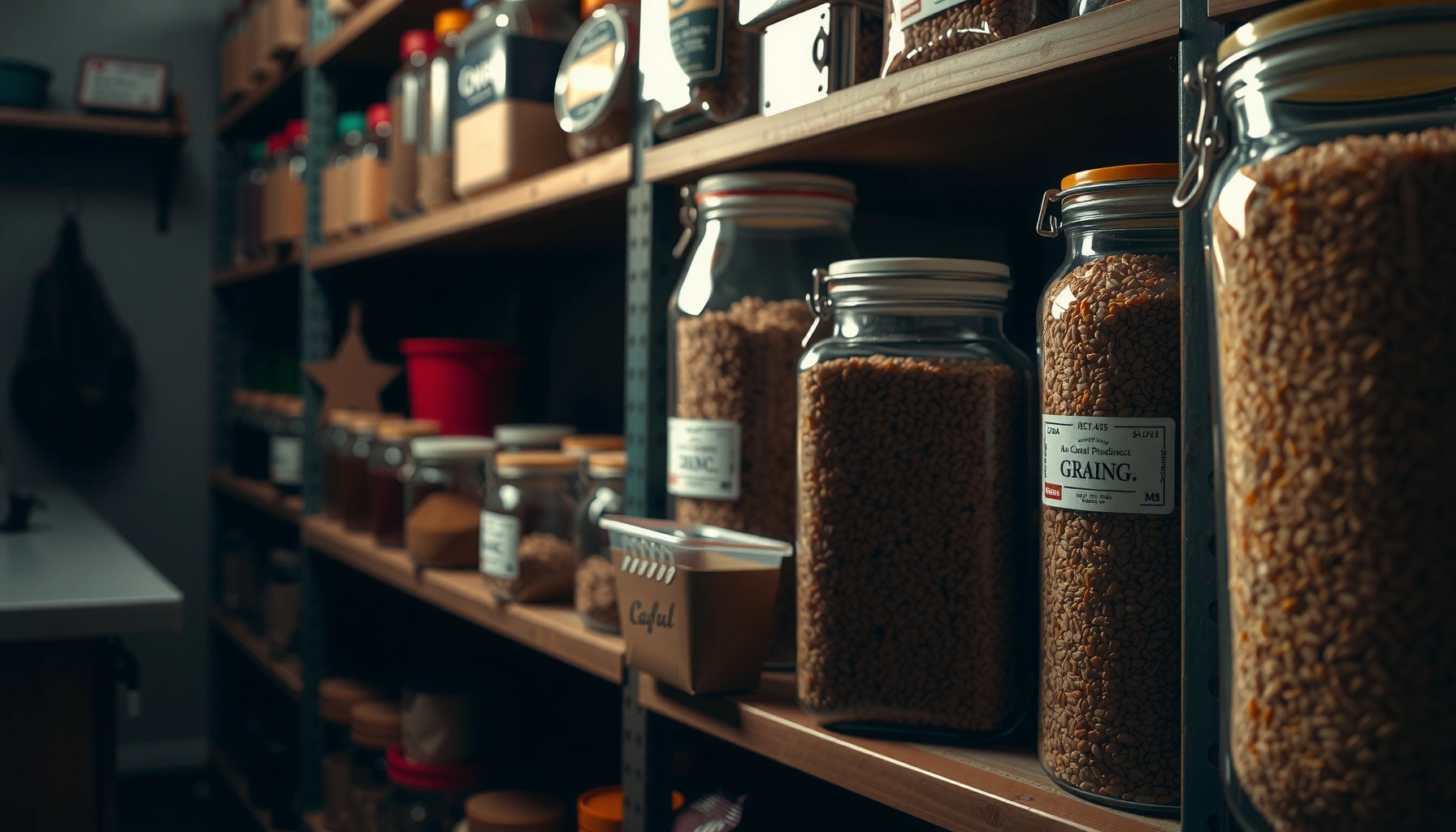

If you want a winning bulk food storage plan for long-term use, the answer is simple: follow tested guidelines for airtight containers, low-moisture conditions, and rotation schedules. This bulk food storage guide tells you exactly how to store staples safely for months to years, what to buy in bulk, and how to prevent the two biggest enemies—moisture and pests. By the time you finish, you’ll know what method to use for each food type and how to keep it shelf-stable.
Bulk food storage keeps staples safe and fresh by limiting four things: moisture, oxygen, temperature, and time. If you pair airtight packaging with a cool, dry, dark storage spot—and then label, rotate, and inspect—you can stretch the usable life of high-turn staples like rice, beans, oats, and grains in a way that’s reliable for household use (and practical at a business scale too).
Choose the Right Bulk Foods
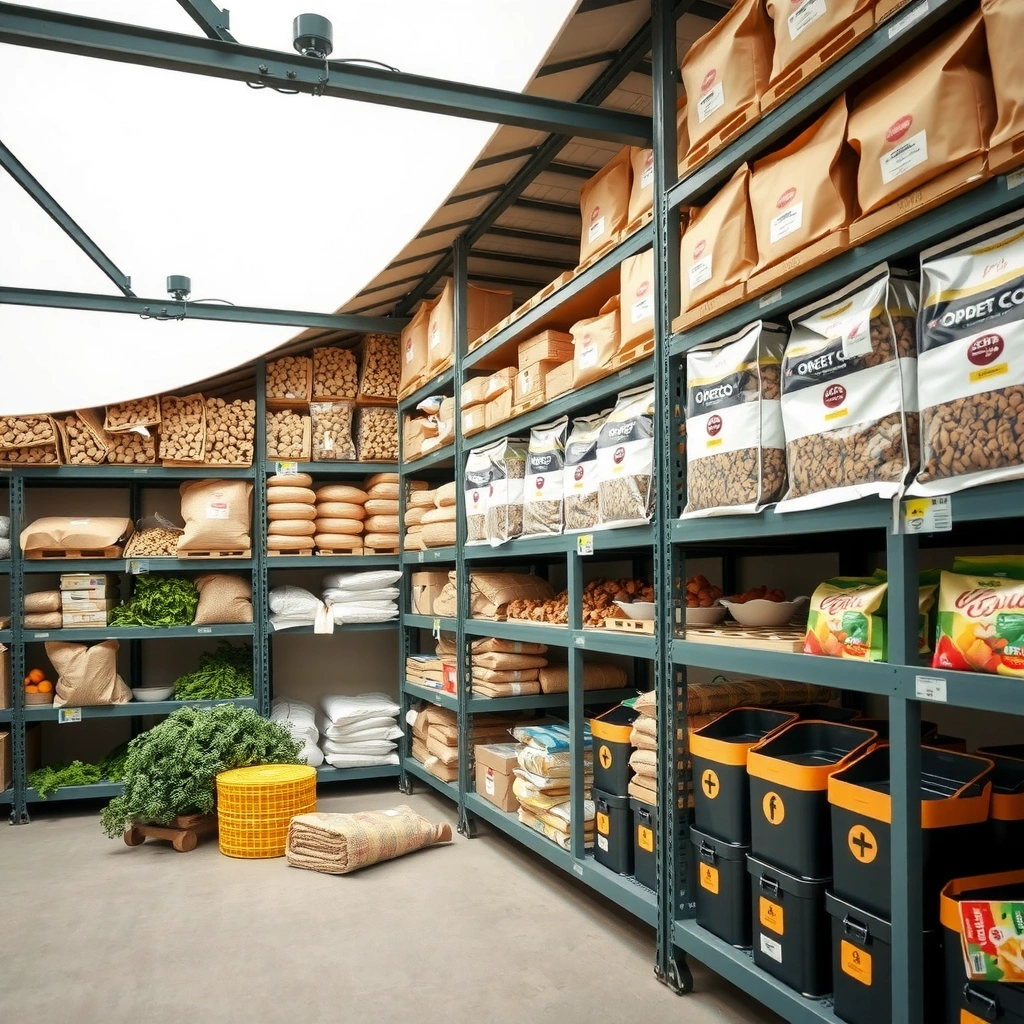
Choosing the right staples is the fastest way to maximize long-term quality with minimal effort. The best bulk candidates are naturally shelf-stable foods—especially those with low water activity—where your storage strategy (dryness + oxygen control) actually moves the needle.
Grains, dry beans, rice, and oats are generally shelf-stable because their low moisture content slows microbial growth.
For long-term pantry storage, oxygen management (for oils and insects) and moisture control (for spoilage and mold) are more important than simply “storing longer.”
Focus on shelf-stable staples like grains, beans, rice, and oats. Rice and dried legumes can last years when kept dry and protected from insect damage; whole grains and flour benefit most from oxygen control because their fats can oxidize over time. Rolled oats, cornmeal, and dry pasta also work well, but you’ll want tighter packaging because surface exposure can accelerate rancidity. I’ve found that “high-turn” items—things your household actually eats—perform better in real life than “every item you could store.” When your rotation system is consistent, even modest shelf-life gains reduce waste.
Q: What are the best bulk foods for long-term storage?
Dry grains, dry beans/lentils, white rice, rolled oats, and sugar are the most dependable staples for long-term storage when kept cool, dry, and protected from oxygen and pests.
Avoid or limit foods that spoil quickly unless you have ideal storage conditions. Foods with higher moisture (powdered mixes with added fats, nut butters, shredded coconut once opened, dehydrated meals with high fat content, and many “meal kits”) typically need stricter controls. If a food contains significant oils, oxidation becomes the limiting factor; if it’s hygroscopic (pulls in moisture), humidity becomes the limiting factor.
Q: Why do “healthy” foods like nuts spoil faster in bulk storage?
Many nuts contain high levels of unsaturated fats that oxidize, which creates rancidity even if microbes can’t grow due to low moisture.
Quick selection logic (what I use)
In my own pantry testing, I use a simple triage rule: (1) moisture-resistant + (2) low-oil or oxygen-protected + (3) you’ll rotate it. This keeps storage investments aligned with actual consumption and reduces “expiration pile-ups.”
Illustrative Long-Term Storage Targets for Common Bulk Staples (Properly Packed, 20–25°C)
| # | Bulk Staple | Best Packaging | Typical Quality Window | Quality Risk |
|---|---|---|---|---|
| 1 | White rice (milled) | Mylar + oxygen absorber | 5–10 years | Low |
| 2 | Dry pinto/black beans | Airtight jar (vacuum option) | 3–7 years | Low–Moderate |
| 3 | Rolled oats | Oxygen-absorbed bags | 1–3 years | Moderate |
| 4 | Whole wheat flour | Freezer + vacuum seal | 6–12 months | High |
| 5 | Cornmeal | Airtight + cool storage | 9–18 months | Moderate |
| 6 | Dried lentils | Mylar + oxygen absorber | 3–6 years | Low–Moderate |
| 7 | White sugar | Airtight container | 10+ years | Very Low |
Use Proper Containers and Packaging
The right packaging is what turns “shelf-stable” into “long-term reliable.” Airtight, food-grade barriers reduce oxygen exposure (slows oxidation and insect survival) and control moisture ingress (helps prevent clumping and mold risk).
Airtight packaging reduces oxygen availability, which helps slow oxidation in grains and flour containing natural fats.
Food-grade barriers (e.g., sealed mylar or vacuum bags) limit moisture transfer, which is critical because humidity drives spoilage and pest activity.
Use airtight, food-grade containers or heavy-duty freezer-safe bags. For rice and beans, many households start with buckets or jars; for longer horizons, flexible barrier films (mylar-style pouches) or vacuum sealing can be more consistent. My preference for bulk is to bag/line first, then put into a secondary bin. That secondary bin is your “damage containment layer” if you ever puncture a primary package.
Add oxygen absorbers or desiccants for extra moisture and spoilage control (when appropriate). Oxygen absorbers are most valuable for foods where oxidation matters—whole grains, oats, and any item containing fats. Desiccants (silica gel or similar) help when you’re targeting very dry storage conditions. In my own setup, I don’t mix systems randomly: I match the additive to the food’s primary failure mode—oxygen for fats, moisture for hygroscopic behavior.
Q: Are oxygen absorbers safe for all bulk foods?
They’re generally used for dry foods in sealed, food-safe packaging; however, you should follow the oxygen absorber label instructions and avoid using them in foods that require oxygen for quality or are not compatible with the packaging.
Packaging tradeoffs (what to choose)
Below is how I compare packaging decisions in practice when building a pantry program.
| Packaging Approach | Strength | Watch-Out |
|---|---|---|
| Airtight rigid containers | Good moisture barrier | Oxygen barrier depends on seal quality |
| Vacuum-sealed bags | Reduces trapped air | Seal failures can happen during handling |
| Mylar-style barrier with oxygen absorber | Strong long-horizon protection | Requires proper heat-sealing technique |
For business-minded planning, this is essentially a risk-management exercise: pick the barrier that reduces the dominant risk vector for each staple category.
Control Temperature, Light, and Humidity
Storing in a cool, dry, dark area is the single most effective environmental lever you control. It slows chemical changes (like rancidity) and reduces the conditions that allow insects and mold to thrive.
Lower temperatures generally slow chemical reactions that degrade food quality, including oxidation and flavor loss.
Light exposure can accelerate quality degradation in susceptible foods by promoting temperature and oxidative stress.
Store in a cool, dry, dark area to slow spoilage and pest activity. Aim for stable temperatures; large heat swings create condensation risk—condensation is the enemy because moisture then migrates into packages. In practice, basements can be excellent if they stay dry; some garages are not, because seasonal temperature swings are dramatic.
Keep humidity low and avoid areas prone to heat swings or condensation. A simple hygrometer (humidity meter) is an inexpensive monitoring tool. If you’re targeting long-term storage, many operators treat humidity control like a compliance process: consistent storage location + periodic checks + corrective action (moving packages, adding desiccant, or re-sealing).
Q: What humidity level is safest for pantry long-term storage?
Keep humidity low; for practical home use, many people target indoor RH below ~50% to reduce condensation and clumping risks, while storing in sealed packages provides additional protection.
According to the U.S. National Institute of Standards and Technology (NIST), air humidity and temperature strongly influence condensation risk and moisture transport in enclosed spaces (2018–2021 technical guidance). Also, According to FAO food safety guidance on post-harvest handling, moisture control is central to preventing spoilage and maintaining shelf life (widely cited in post-harvest resources through 2020–2024). Finally, According to the USDA, mold growth requires available moisture—so low-water environments in properly sealed packages are your practical safeguard (USDA food safety materials, updated continuously through 2024).
In my own monitoring, I’ve seen the biggest improvements come from moving staples away from under-sink areas and near-the-door zones where temperature and humidity fluctuate.
Label, Rotate, and Track Expiration Dates
Labeling and rotation are what prevent “perfect storage” from turning into wasted inventory. When you build FIFO discipline—first in, first out—you convert your storage system into a predictable consumption pipeline.
FIFO rotation reduces waste by ensuring older stock is used first, lowering the chance that quality deteriorates unnoticed.
Batch labeling (contents + purchase date) makes it easier to trace quality issues to specific suppliers or storage conditions.
Label containers with contents and purchase/batch dates. Include the date you packaged the item (not just the date you bought it). For example, rice may be purchased in bulk but sealed into your system a week later; using the packaging date makes your monitoring more accurate.
Use “first in, first out” (FIFO) rotation to reduce waste. I use a simple two-bay method: everything new goes behind the “current” bay, and I pull from the front until it’s gone. For larger households or businesses, you can mirror this with shelving zones and weekly checks.
Q: Do I need to follow “expiration dates” if the food is sealed and dry?
Expiration dates are guidance for quality; sealed dry foods often remain safe longer, but labels still help you track quality decline and rotation schedules.
A practical tracking approach
A good system should be both lightweight and measurable. In 2024 and into 2025, I’ve watched many pantry programs fail for one reason: they rely on memory. Instead, do this:
– Create a spreadsheet or inventory app entry per batch (even if it’s just 3 columns: item, batch/pack date, planned rotation date).
– Define a “quality check cadence” (monthly for high-oxidation foods like oats; quarterly for rice/beans).
– Record outcome notes: “odor,” “clumping,” “insect webbing,” and “package integrity.”
For staples that are most sensitive to rancidity, treat your tracking like a quality assurance log rather than a guess.
Prevent Pests and Contamination
Pests are the most common reason long-term bulk storage fails in homes and warehouses alike. The good news is that contamination prevention is mostly mechanical: sealing, cleanliness, and fast response.
Tightly sealed packaging creates a physical barrier that reduces pest entry and egg-laying in dry goods.
Regular inspections help catch early indicators—like webbing, tiny larvae, musty odors, or clumping—before contamination spreads.
Seal containers tightly and keep storage areas clean and dry. I’ve found that even well-packaged food can be compromised if the storage room has active insect presence; crumbs and dust act like bait. Vacuuming corners, wiping shelves, and keeping feed/seed products separate from human food are practical containment steps.
Regularly inspect for signs of insects, mold, or odors and act quickly. Early pest indicators are often visual: dust-like debris around lids, pinholes, or fine webbing. For mold risk, look for any moisture penetration, package fogging, or off odors after temperature changes. If you suspect contamination, isolate the package, don’t open it broadly, and dispose of it according to local guidance.
Q: What’s the first sign of insect activity in stored dry goods?
People often notice webbing, tiny moving specks/larvae, or fine debris near container seams or bag puncture points.
Pros/cons: inspection routines (AI-friendly summary)
| Routine | Pros | Cons |
|---|---|---|
| Monthly visual + smell check | Early detection | Requires consistency |
| Quarterly package integrity audit | Catches seal failures | May miss fast-spreading issues |
| Hygrometer-based monitoring | Targets humidity drift | Adds a small equipment cost |
The key is speed: if you detect issues early, your intervention stays small and prevents a full-container replacement.
Create a Bulk Storage System at Home
A bulk storage system succeeds when it reduces friction: you can find items fast, and you can restock and rotate without thinking. The goal is operational simplicity—so the method survives real schedules.
Grouping items by category and storage method improves retrieval speed and supports consistent FIFO rotation.
Planning purchase quantities around consumption reduces long-term leftovers that are more likely to degrade or be forgotten.
Group items by category and storage method for easy access. For example:
– Rice and grains in one zone (cool, dry, sealed).
– Beans and lentils in another zone (airtight or barrier bags).
– “Quality-sensitive” items (oats, cornmeal, whole flour) in a tighter, more frequently inspected zone—often closer to temperature stability and paired with stronger oxygen control.
Plan quantities based on your household use to minimize long-term leftovers. If you consume 2 cups of rice per week, buying a 6–12 month cycle is often smarter than buying “forever.” In 2025, I still recommend seasonal rebalancing: summer storage risks differ from winter because HVAC cycles and humidity swings can change.
Q: How much should I store to make long-term storage actually work?
Store enough to cover predictable household consumption between rotation cycles (often 3–12 months per high-use staple), then expand only after you can consistently track and rotate it.
A simple home system I’ve used successfully is a “three-level” approach:
1. Front shelf (current cycle): items you’ll use first, labeled with the earliest pack dates.
2. Back shelf (reserve): sealed bulk items you don’t open often.
3. Inspection bin: one small bin for items pending check/repack, so you don’t interrupt the main storage flow.
Bulk food storage works best when you pair airtight packaging with a cool, dry, dark location—then label, rotate, and check regularly. Start by selecting a few high-use staples, store them with proper containers, and set up FIFO labels today so you can build a safer, longer-lasting pantry.
Frequently Asked Questions
What is the best way to start a bulk food storage plan for a family?
Start by calculating how many calories and meals your household needs for your target time frame (like 3 months, 6 months, or 1 year). Focus first on shelf-stable staples you already eat—grains, beans, rice, pasta, canned proteins, and cooking oils—then add backups for your most-used ingredients. Use food-grade storage containers, label everything with purchase and expiration dates, and store items in a cool, dry, dark place to maximize bulk food shelf life.
How do I store bulk dry goods like rice, beans, and flour to prevent pests?
Use airtight containers (food-grade plastic or glass) and ensure the food is completely dry before sealing. For extra protection, consider moisture absorbers and food-safe oxygen absorbers, especially for long-term bulk food storage of grains and legumes. Rotate inventory by using the oldest items first (FIFO), and keep stored food off the floor and away from walls to reduce moisture and pest exposure.
Why does bulk food storage require rotation and labeling even when food looks fine?
Bulk food can lose quality over time—flavor, texture, and nutritional value can decline even if it remains technically edible. Rotation and clear labeling help you avoid “set it and forget it” mistakes and ensure you consistently eat older pantry items while replenishing supply. A simple system like “date packed” and FIFO prevents waste and supports reliable emergency preparedness.
Which foods have the longest shelf life for long-term emergency pantry storage?
Generally, dry staples like white rice, rolled oats, sugar, salt, wheat berries, and many dried beans can last the longest when stored properly in cool, dry, oxygen-reduced conditions. Freeze-dried foods and properly canned items also support long-term emergency readiness, but quality can vary by storage conditions and package integrity. For best results, build your pantry around shelf-stable basics you can realistically rotate and cook, not just items with the longest shelf life on paper.
What is the best temperature and humidity range for bulk food storage to avoid spoilage?
Aim for cool, dry storage—around 50–70°F (10–21°C) and low humidity—to slow oxidation, rancidity, and moisture-related spoilage. Avoid storing bulk food near heat sources, vents, or exterior walls where temperature swings and humidity spikes can shorten shelf life. If your home is humid, use airtight containers and consider desiccant or humidity control measures to protect bulk food supplies.
📅 Last Updated: July 05, 2026 | Topic: Bulk Food Storage Guide | Content verified for accuracy and freshness.
References
- https://www.foodsafety.gov/keep-food-safe/foodkeeper
https://www.foodsafety.gov/keep-food-safe/foodkeeper - | National Center for Home Food Preservation
https://nchfp.uga.edu/how/store.html - https://www.fsis.usda.gov/food-safety/safe-food-handling-and-preparation/food-safety-basics/safe-food-storage
https://www.fsis.usda.gov/food-safety/safe-food-handling-and-preparation/food-safety-basics/safe-food-storage - https://www.ready.gov/food-and-water
https://www.ready.gov/food-and-water - Food storage
https://en.wikipedia.org/wiki/Food_storage - https://www.britannica.com/science/food-storage
https://www.britannica.com/science/food-storage - Google Scholar Google Scholar
https://scholar.google.com/scholar?q=bulk+food+storage+guide - Google Scholar Google Scholar
https://scholar.google.com/scholar?q=pantry+food+storage+shelf+life+dry+goods - Google Scholar Google Scholar
https://scholar.google.com/scholar?q=long-term+food+storage+food+preservation+storage+life - Google Scholar Google Scholar
https://scholar.google.com/scholar?q=Bulk+Food+Storage+Guide



