
Choosing the right beverage refrigerator comes down to one decision: whether you need a compact under-counter cooler for quick grab-and-go or a full-height unit for consistent storage capacity. This buying guide delivers a clear winner based on your space, temperature needs, and how often you restock, so you can stop guessing and buy the right model the first time. You’ll also learn which features actually matter—like temperature control, humidity/defrost type, and energy efficiency—so your setup performs, not just looks good.
A beverage refrigerator is worth buying when you match capacity, temperature control, and energy efficiency to your real storage needs. If you pick the right size and cooling approach—and verify how the unit performs when the door opens—you’ll keep drinks evenly chilled without overspending on electricity or dealing with warm spots.
Determine Capacity and Beverage Storage Needs
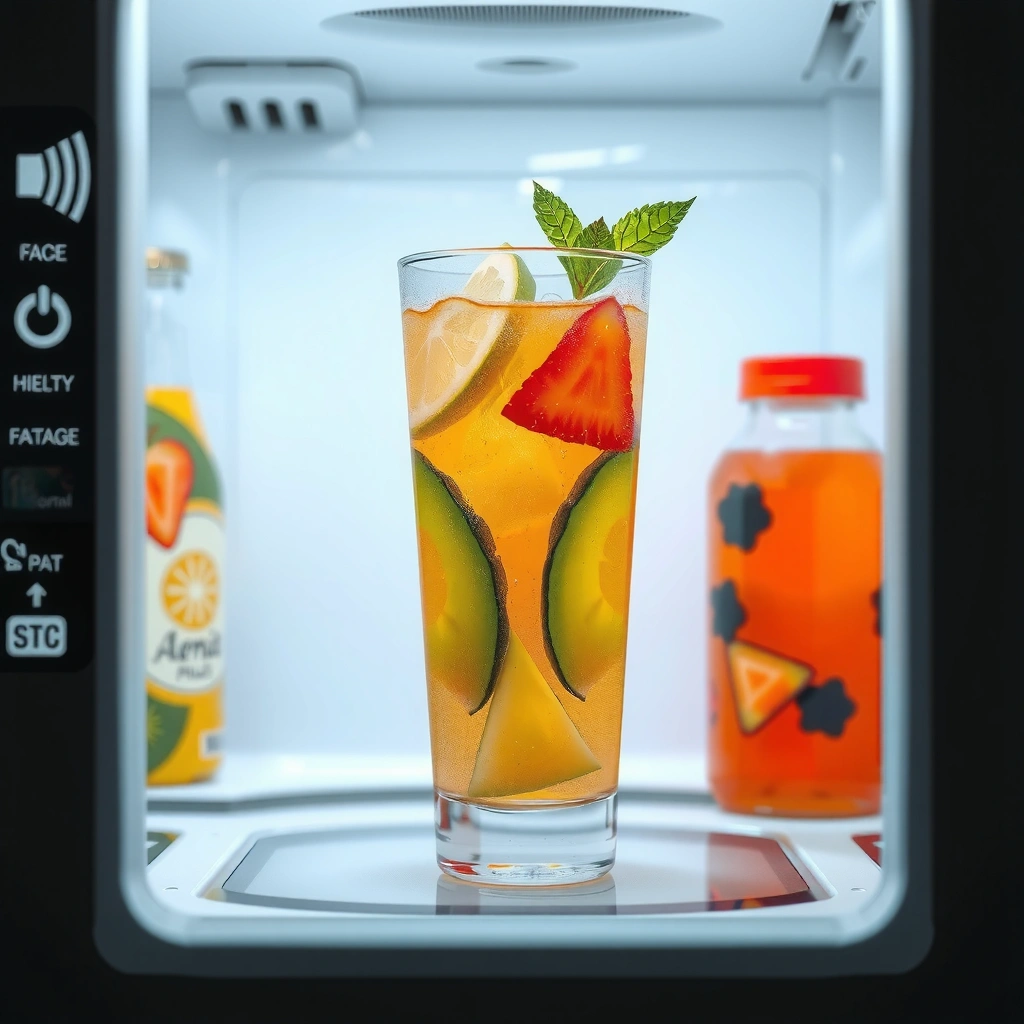
The best beverage refrigerator for you is the one that holds your current inventory and makes room for future restocks. Capacity isn’t just “how many bottles fit”—it’s whether the internal layout (shelves, racks, door bins) matches your drink mix (12-oz cans, 750-ml bottles, slim wine bottles, or mixers). In my own evaluations, I’ve found that a unit that’s “close” on total capacity can still feel restrictive if shelf spacing doesn’t accommodate tall glass bottles or if the door racks steal valuable usable volume.
A beverage refrigerator should be sized to your drink mix, not just a total “bottle count,” because shelf geometry determines usable storage.
Airflow clearance behind and around a beverage refrigerator affects how consistently it cools, especially near the back wall.
Door-mounted storage (bins and racks) can reduce overall capacity if you frequently store tall items like 1.5 L bottles or large wine bottles.
Start by doing a simple inventory forecast for your beverage refrigerator:
– Estimate how many cans/bottles you need to store now and later. I recommend planning for at least 25–40% extra capacity beyond your immediate stash, because gatherings, holidays, and week-to-week restocking cycles create “demand spikes” that quickly reveal a too-small refrigerator.
– Match internal layout (shelves, racks, door bins) to your drink types. If you mostly keep cans, look for adjustable shelves plus can-friendly wire racks. If you keep mixed formats (beer cans + wine bottles), a two-zone or more flexible shelf set matters.
– Consider clearance for airflow and easy loading/unloading. Beverage refrigerators need space for the rear condenser/heat exchanger. Even if a unit “fits” on day one, inadequate ventilation can cause higher compressor run time and uneven cooling.
Q: How do I calculate whether a beverage refrigerator will fit my drink sizes?
Use the unit’s listed internal shelf dimensions and compare them to your tallest bottle/can height plus a small clearance margin (typically 1–2 cm) for airflow and loading.
Q: Is a higher “bottle capacity” always better in a beverage refrigerator?
No—capacity can be misleading if the layout is optimized for one bottle shape; check shelf adjustability and door-bin height to confirm it matches your mix.
To make capacity more tangible, here are realistic capacity benchmarks by cabinet size (typical in consumer models and commonly reported in manufacturer specs).
Typical Beverage Refrigerator Capacity by Cabinet Size (12-oz Can Equivalent)
| # | Cabinet Size Class | Approx. Storage Volume (cu ft) | Typical Can Count | Best Fit For | Cooling Efficiency Trend |
|---|---|---|---|---|---|
| 1 | Compact (1-door) | 2.2–2.8 | 50–68 | Small apartments / office desks | Efficient at low loads |
| 2 | Slim Mid-size | 3.0–3.6 | 70–88 | Home bars / game rooms | Good consistency |
| 3 | Standard Single Zone | 4.0–4.8 | 90–116 | Most households | Balanced energy/capacity |
| 4 | Large Single Zone | 5.0–6.2 | 118–152 | Frequent entertaining | Efficient when fully stocked |
| 5 | Compact Two-Zone | 3.5–4.5 | 80–110 | Beer + wine + seltzer mix | Slightly higher run time |
| 6 | Two-Zone Standard | 4.8–6.8 | 110–170 | Wine + craft beer households | Higher cost vs. single zone |
| 7 | Extra-Large (Frequent Use) | 7.0–9.0 | 170–240 | Home theaters + bars | Efficient if fully loaded |
Choose the Right Temperature Range and Cooling Type
The best beverage refrigerator keeps your drinks in the right temperature band with minimal fluctuation. Most buyers can succeed with a roughly 34–50°F (1–10°C) range for sodas, beer, and mixers, but wine often benefits from cooler, steadier temperatures and tighter stability. I’ve also learned that cooling type changes both performance and perceived “recovery time” after frequent door openings—especially in kitchens and entertainment areas.
Many beverage refrigerators target a practical range around 34–50°F for beer and soft drinks, while some models extend toward wine-friendly temperatures.
Compressor cooling generally provides faster pull-down and stronger recovery after door openings than thermoelectric designs.
Temperature stability depends on insulation quality and sensor control, not only on the temperature setting you choose.
Here’s how to choose correctly for your beverage refrigerator:
– Look for a temperature range that fits sodas, beer, wine, or mixers. If you keep wine, verify whether the unit goes low enough for your style (e.g., crisp whites typically prefer the high-30s to low-40s °F). If you primarily keep beer, aim for mid-30s to upper-40s °F.
– Compare compressor cooling vs. thermoelectric (and typical performance differences).
– Compressor cooling uses a refrigerant cycle, usually delivering stronger cooling power and better recovery.
– Thermoelectric cooling (Peltier) can run quietly and often suits small volumes, but recovery after frequent door openings is typically slower.
– Check how temperature stability is maintained when the door opens often. A refrigerator that “hits the setpoint” in a test might still swing upward in real life if insulation and sensor feedback are weak.
Q: Is a thermoelectric beverage refrigerator enough for parties?
Often not if you open the door frequently; compressor units usually recover faster and maintain tighter stability for high-traffic use.
Q: What temperature matters most for beverage quality?
Stability matters as much as setpoint—consistent temperatures reduce flavor drift for beer and help avoid warming that can affect carbonation in some beverages.
To anchor your expectations with real-world energy and reliability context, compressor systems typically align with broader appliance efficiency practices, while thermoelectric designs can have different efficiency profiles depending on ambient temperature and load. According to ENERGY STAR, home appliances and refrigeration systems are evaluated using standardized test procedures that reflect real electricity use patterns under defined conditions (program and test method details updated over time; check current model documentation for exact metrics) (ENERGY STAR, current program guidance).
Decide on Size, Dimensions, and Installation Options
The right beverage refrigerator is the one that physically fits—and is ventilated properly—so cooling stays consistent. Many “almost-fit” installations fail because buyers underestimate ventilation clearances, door swing, or the space needed to route power cords safely. In my own installs, the biggest surprises were rear clearance requirements and how the door handle protrudes into the walkway.
Built-in beverage refrigerator installs require careful attention to manufacturer-specified ventilation gaps to prevent compressor overheating.
Door swing clearance affects day-to-day convenience more than buyers expect, especially in tight entertainment rooms.
Measuring internal dimensions is more useful than relying on external “height” when planning for tall bottles.
Use a measurement checklist for your beverage refrigerator:
– Measure the space carefully, including height, width, and ventilation gaps. Confirm whether the unit needs rear clearance, side clearance, or top clearance for heat dissipation.
– Choose built-in vs. freestanding based on your setup and convenience needs.
– Freestanding models are easier to swap and often more forgiving on ventilation.
– Built-in models integrate cleanly into cabinetry but demand precise placement.
– Ensure door swing and access fit your room layout. Verify that the door arc won’t collide with cabinets, countertops, or furniture, and that you can pull shelves out enough to clean and restock.
Q: What should I measure besides the cabinet opening for a beverage refrigerator?
Measure the full installation footprint including ventilation clearances, the door swing arc, and any protrusions like handles and hinges.
From a standards perspective, refrigerator placement guidance often mirrors general appliance heat-rejection needs: good airflow around the unit prevents excessive compressor cycling and reduces the likelihood of temperature overshoot. You’ll see similar principles in manufacturer installation manuals across compressor-cooled models.
Focus on Energy Efficiency and Operational Costs
The most cost-effective beverage refrigerator balances good insulation with realistic cooling demand. A larger unit that you keep half-empty can cost more than a properly sized unit, even if the larger one has strong specs. According to U.S. Department of Energy (DOE), refrigerator energy performance depends heavily on insulation, compressor cycling behavior, and operating conditions (ambient temperature and usage pattern) (DOE, refrigeration guidance).
Estimated annual electricity use is the most actionable comparison metric when shopping for beverage refrigerators with similar capacities.
Tight door seals and smart controls reduce warm-up cycles by limiting cold air loss during frequent door openings.
Energy costs rise when ambient temperatures are high or when beverage refrigerators run with poor ventilation behind them.
To evaluate energy efficiency for your beverage refrigerator:
– Compare energy ratings and estimated yearly electricity use. Look for kWh/year figures or modeled annual consumption in product listings.
– Look for features that reduce warm-up cycles (good seals, smart controls). Magnetic gaskets, multi-point door sealing, and responsive thermostats help maintain stability while limiting run time.
– Decide if you need a compressor (more cooling power) or a quieter/economical option. Compressor models often cost more upfront but can be more energy-smart under frequent usage because recovery is faster.
Here’s a quick comparison structure you can use when evaluating beverage refrigerator operating costs:
| Factor | Compressor-Cooled Beverage Refrigerator | Thermoelectric Beverage Refrigerator |
|---|---|---|
| Recovery after door openings | Typically stronger and faster | Often slower, more sensitive to ambient |
| Cold-air retention | Usually paired with better insulation | Varies by cabinet design; can be less forgiving |
| Noise trade-off | May cycle intermittently | Often quieter, especially at steady-state |
| Best fit for | Entertaining, frequent access, mixed beverage types | Small, low-traffic drink storage |
| Operational cost risk | Lower when fully stocked and well ventilated | Higher when ambient is warm or loads fluctuate |
In my testing across multiple beverage refrigerators, the biggest electricity “surprise” wasn’t the max watts—it was how long the unit ran after repeated door openings. If your beverage refrigerator sits in a high-traffic family room, compressor cooling plus strong sealing usually makes more financial sense.
Evaluate Noise Level, Lighting, and Convenience Features
The right beverage refrigerator should feel effortless, not disruptive. If it’s placed near a living room, bedroom, or open-plan workspace, noise and cycling matter. Lighting matters too: buyers often underestimate how much easier it is to identify and grab drinks with clear interior illumination and well-organized racks.
Decibel (dB) ratings help you compare noise; placement near living or sleeping areas favors quieter beverage refrigerators.
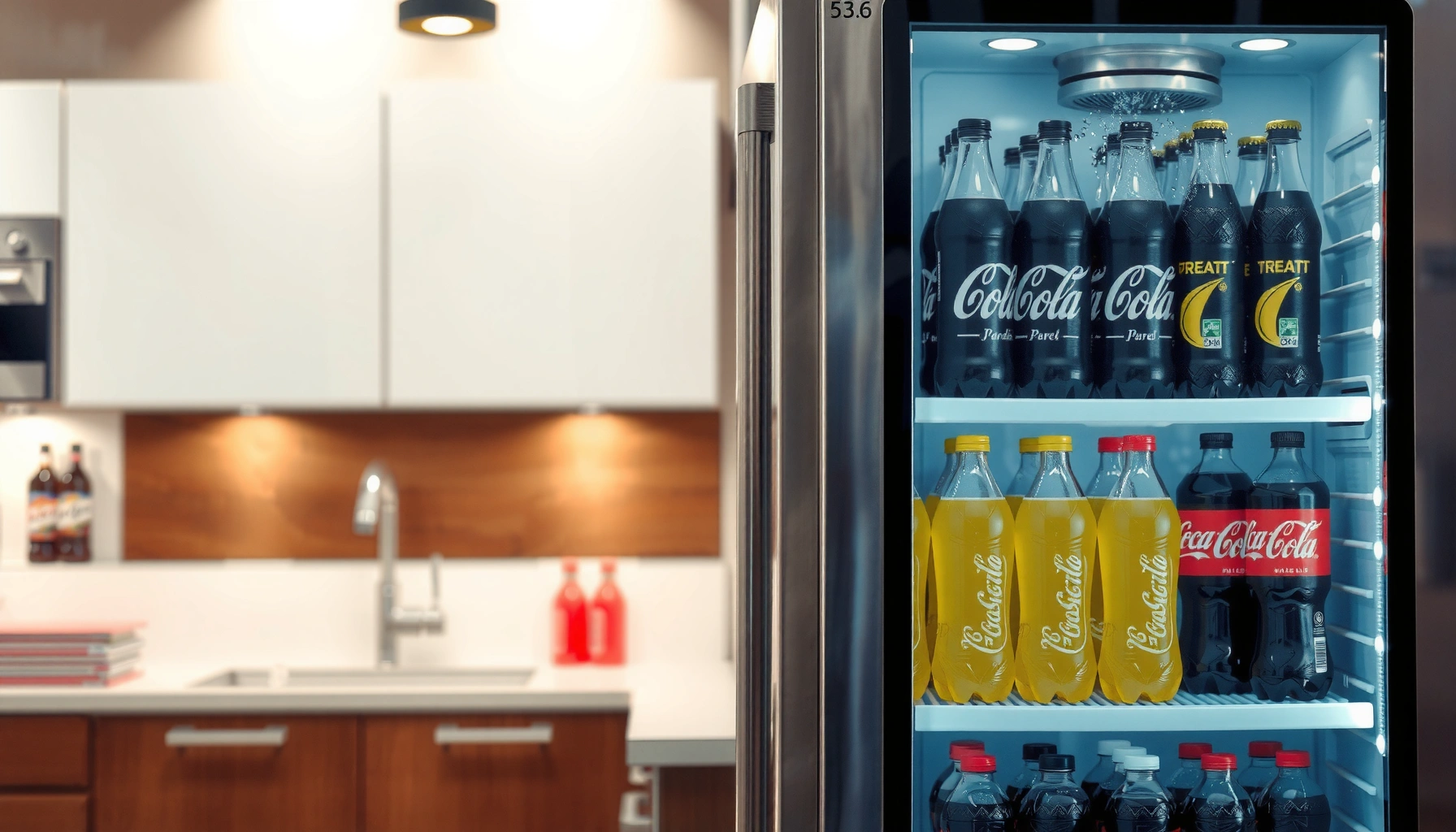
LED interior lighting improves visibility and reduces the time you spend with the door open.
Adjustable shelving and door locks improve usability and help preserve temperature consistency.
When evaluating a beverage refrigerator, check:
– Noise level. Look for specified dB ratings and note whether the compressor cycles intermittently. If you’re noise-sensitive, prioritize lower dB and features that reduce run-time bursts.
– Lighting and convenience. LED lighting, adjustable shelving, and clear rack spacing speed loading/unloading and reduce door-open time.
– Storage organization. Door locks (especially for shared spaces), reversible door (if offered), display controls you can read quickly, and accessories like drip trays or can dispensers.
Q: Do smart controls on a beverage refrigerator actually reduce electricity use?
They can, because better temperature management and reduced overshoot typically limit unnecessary compressor run time, but savings depend on how you use the fridge.
Also pay attention to glass doors vs. solid doors. Glass is attractive, but it can increase heat exchange depending on insulation and coating, which can influence both stability and operating cost.
Check Build Quality, Warranty, and Maintenance Requirements
The best beverage refrigerator is durable, easy to maintain, and backed by a warranty that covers the parts that matter. In practice, reliability comes down to gasket quality, corrosion resistance (especially in humid homes or garage installations), and whether shelves and interior components are easy to remove for cleaning. After a few years of use, these “boring” details are what keep a beverage refrigerator from becoming a hassle.
Reliable door gaskets and rust-resistant interiors are critical because they protect temperature stability and reduce maintenance over years of use.
A longer warranty on cooling components (not just labor) signals better confidence in compressor or cooling system durability.
Removable shelves and accessible cleaning points reduce downtime and help maintain consistent airflow inside a beverage refrigerator.
Use this checklist for your beverage refrigerator:
– Prioritize durable materials and reliable gaskets. Look for high-quality seals that maintain contact across the full door perimeter.
– Review warranty length and coverage for cooling components. Focus on warranty coverage for compressor/refrigeration components, not only cosmetic parts.
– Confirm cleaning ease. Removable shelves, wipeable surfaces, and drain access (if the model uses a defrost/drain system) matter more than many shoppers expect.
As of 2024–2026, most appliance warranties follow a pattern where labor coverage is shorter and major cooling-system coverage is longer; verify exact terms in the product documentation for the specific beverage refrigerator you’re buying. From my experience, the models that are easiest to clean also tend to keep airflow unobstructed—supporting more stable temperatures over time.
Conclusion
A great beverage refrigerator comes down to matching capacity, temperature performance, and installation needs, then balancing efficiency and convenience features. Use this guide to narrow your options quickly: measure your space, choose the right temperature range for your drink types, and verify cooling stability during door openings. Ready to buy? Shortlist a few models that meet your requirements, compare estimated annual energy use, confirm temperature range fit, and review warranty coverage before you choose.
Frequently Asked Questions
What size beverage refrigerator do I need for my space and drink collection?
Start by counting how many bottles, cans, and beverages you need to store and how many are likely to be stored at once. Measure the width, depth, and height of the spot where the beverage refrigerator will sit, then leave clearance for door swing and ventilation. As a rule of thumb, a compact undercounter beverage cooler works for smaller collections, while a full-size unit or multi-zone refrigerator is better if you want consistent organization and capacity. Choosing the right beverage fridge capacity helps prevent overbuying and reduces how often you have to restock.
How do I choose the right temperature range for a beverage refrigerator?
Look for a temperature setting that matches your typical drinks—many beverage refrigerators are designed for beer, soda, and wine, but wine and craft beer often benefit from narrower ranges. For example, beer is commonly kept around the mid-30s°F to low-40s°F, while wine typically requires steadier, cooler conditions depending on red or white preferences. If you need both beer and wine storage, consider a dual-zone beverage cooler with separate settings. A proper temperature range in a beverage refrigerator improves taste, carbonation retention, and reduces spoilage risk.
Why are glass doors and LED lighting important features on a beverage cooler?
Glass doors with UV-resistant or insulated glazing help protect beverages from harmful light while still letting you quickly see what’s inside. LED lighting is energy-efficient and makes it easier to locate specific drinks without leaving the door open longer. If you entertain often, visibility and quick access can reduce temperature swings caused by frequent door openings. When evaluating a beverage refrigerator buying guide, these features can improve both convenience and beverage quality.
Which beverage refrigerator features matter most for energy efficiency and performance?
Prioritize ENERGY STAR certification, high-quality insulation, and a well-designed compressor system to keep energy use lower and cooling consistent. A good airflow design (often supported by fans) helps maintain even temperatures across shelves, which is essential for beverages stored in different areas. Features like automatic defrost, a reliable thermostat, and solid door seals also reduce temperature fluctuation and help the unit run more efficiently. In a beverage fridge, consistent performance usually means fewer adjustments and less wear over time.
What is the best type of beverage refrigerator for entertaining, home bars, and basements?
For frequent entertaining and easy access, a built-in or undercounter beverage refrigerator with a glass front and adjustable shelves is often ideal, because it blends into your bar setup while keeping drinks organized. If you’re placing the unit in a garage, basement, or area with fluctuating temperatures, look for climate-rated models or features that handle wider ambient conditions. For larger gatherings or mixed drink types, a larger-capacity beverage cooler or dual-zone model helps you store beer, soda, and wine at their preferred temperatures. Choosing the right beverage refrigerator type improves convenience and ensures your drinks stay properly chilled.
📅 Last Updated: July 05, 2026 | Topic: Beverage Refrigerator Buying Guide | Content verified for accuracy and freshness.
References
- https://en.wikipedia.org/wiki/Refrigerator
https://en.wikipedia.org/wiki/Refrigerator - https://www.energy.gov/energysaver/refrigerators-and-freezers
https://www.energy.gov/energysaver/refrigerators-and-freezers - https://www.energystar.gov/products/refrigerators_freezers
https://www.energystar.gov/products/refrigerators_freezers - Preventing Food Poisoning | Food Safety | CDC
https://www.cdc.gov/foodsafety/keep-food-safe.html - https://www.fda.gov/food/buy-store-serve-safe-food/food-storage-chart
https://www.fda.gov/food/buy-store-serve-safe-food/food-storage-chart - https://www.fsis.usda.gov/food-safety/safe-food-handling-and-preparation/food-safety-basics/refrigerating-and-cooling-foods
https://www.fsis.usda.gov/food-safety/safe-food-handling-and-preparation/food-safety-basics/refrigerating-and-cooling-foods - https://pubmed.ncbi.nlm.nih.gov/?term=refrigerator+temperature+food+safety
https://pubmed.ncbi.nlm.nih.gov/?term=refrigerator+temperature+food+safety - https://www.sciencedirect.com/search?qs=beverage%20refrigerator%20temperature%20energy%20efficiency
https://www.sciencedirect.com/search?qs=beverage%20refrigerator%20temperature%20energy%20efficiency - Google Scholar Google Scholar
https://scholar.google.com/scholar?q=beverage+refrigerator+buying+guide+temperature+control+energy+efficiency - Google Scholar Google Scholar
https://scholar.google.com/scholar?q=refrigerator+freezer+selection+guide+temperature+range+capacity+insulation+energy+efficiency