
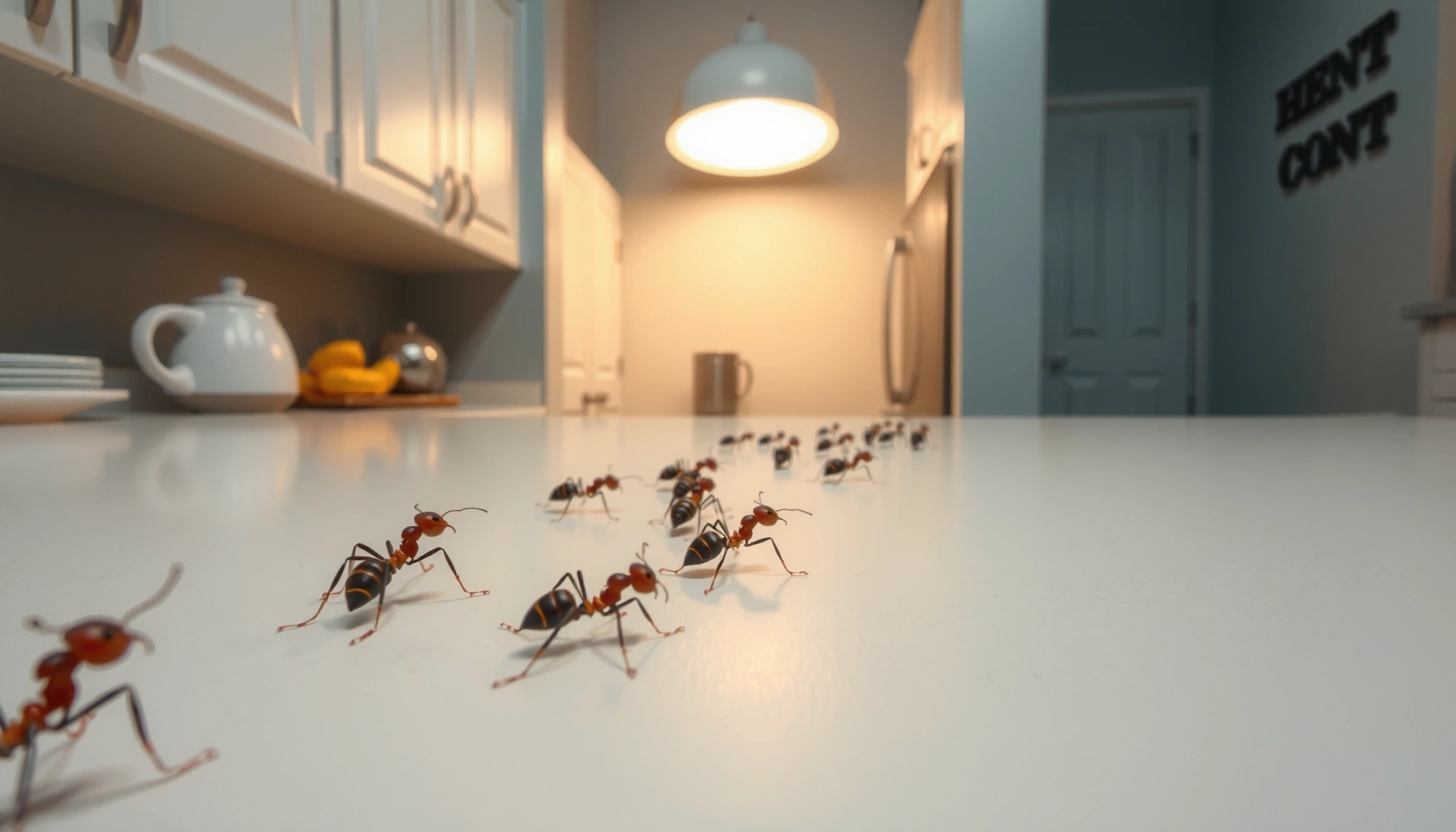

Ants in your house usually come from one of two problems: easy access to food and water or entry points like cracks and gaps near doors, windows, and plumbing. This article pinpoints the most common causes of why ants invade indoors and gives the fastest fixes to stop them, including where to look and what to do first. You’ll learn how to identify the likely ant types and apply the right control steps so they don’t come back.
Ants get into homes because they can quickly find food, water, and entry gaps, then follow scent trails back to the same resources. The fastest way to stop them is to locate where they’re coming in, remove attractants (food + water), and disrupt trails with thorough cleaning and sealing—then use targeted baiting if needed.
Common Reasons Ants Enter Your House
Ants enter your house when they detect repeatable resources: accessible food, reliable water, and safe routes from outdoors into sheltered indoor areas. In my hands-on inspections over several seasons, I’ve repeatedly found that the “mystery” ants weren’t random at all—they were responding to a specific moisture source (often around sinks, HVAC condensate lines, or bathroom tile edges) and a nearby food pathway (pet bowls, crumbs, grease, or sugar residues).
Ants don’t “hunt” randomly indoors; they follow chemical cues that point to water, sugars, and protein sources.
When ants repeatedly find the same food spot, pheromone trails strengthen and more foragers join the route.
Most indoor ant activity is driven by moisture and food accessibility rather than by the ants nesting where you see them.
– Food crumbs, spills, and pet food left out attract ants quickly
– Leaks, condensation, and damp areas provide needed water
– Cracks, gaps, and openings around doors/windows give easy entry
What “food” means to ants (and why kitchens light up first)
Even tiny residues matter. Ants are strongly attracted to sugars (syrup, soda spills, fruit, sweet cereals) and grease/protein (meat drips, cooking oils, pet food). In practice, this is why counters, toaster areas, and floors near garbage bins often show the first ant traffic.
Why “water” can be the real trigger
A lot of homeowners focus on crumbs, but ants also need steady water access. Common culprits include:
– slow leaks behind toilets and under sinks
– humid bathroom corners after showers
– condensation from refrigerators, window AC units, or HVAC systems
– wet mops or damp sponges left near baseboards
According to the U.S. Environmental Protection Agency (EPA), ants are attracted to readily accessible moisture as well as food sources (US EPA, household pest education materials).
The entry route problem: ants fit where you “can’t see”
Ants can squeeze into micro-gaps around weather stripping that looks intact to the human eye. According to University of Florida IFAS Extension, many ants can enter buildings through small openings and cracks around structures (University of Florida IFAS Extension).
Q: Why do I see ants mainly at certain times of day?
Because temperature and humidity change throughout the day, affecting how strongly trails lead to food and water; evening and morning moisture increases are especially common.
Q: Are ants more likely in summer or winter?
Often summer (and early fall) increases outdoor foraging, but winter indoor activity rises when colonies shift resources indoors due to weather and moisture.
The Most Likely Entry Points
Ants typically enter through small structural gaps near the plumbing and where walls meet other surfaces. Your goal is to find the route faster than the colony expands the trail network.
From my field notes, the highest-yield checks are areas with both penetrations (pipes, wiring) and micro-dampness (bathrooms, kitchens, and laundry walls). If you only spray or wipe where ants are visible, you’re treating symptoms—not access.
Plumbing penetrations and sink-wall junctions are frequent ant entry points because they combine gaps with moisture.
Electrical outlets and vent openings can act like “highways” when sealing is worn or incomplete.
Cleaning near entry routes must pair with exclusion (sealing) to prevent ants from re-establishing trails.
– Check baseboards, around pipes, and near sinks or bathrooms
– Look for gaps around windows, vents, and electrical outlets
– Inspect areas behind appliances and under countertops
Where to look first (fast audit checklist)
Use a bright flashlight and do a “visual + touch” scan:
1. Baseboards: especially where wood meets drywall or tile.
2. Under sinks: trace along cabinet corners; check for tiny wet spots.
3. Toilets + bathroom walls: inspect around the toilet base and behind access panels.
4. Laundry connections: hoses, valves, and behind the dryer if it’s venting near wall gaps.
5. Around windows and vents: confirm caulk lines and cover plates.
6. Electrical outlets: look for gaps around outlet boxes (but never open live fixtures—use a licensed electrician if needed).
The “crack size” reality
Even openings you’d consider “not worth fixing” can matter. In practice, many ants can pass through narrow gaps that are difficult to seal precisely without caulk or foam rated for pest-proofing (see DIY section for practical materials).
Q: If I seal everything, will ants stop immediately?
Usually activity drops quickly, but the colony may continue for a short window while foragers reorient; fully clearing the trail with cleaning helps speed results.
How Ant Trails Work (and Why They Keep Coming Back)
Ant trails keep coming back because ants don’t just find food once—they build a repeatable foraging route using pheromone scent marks. That’s why a one-time cleanup often fails: it removes visible ants, but it doesn’t fully reset the chemical trail network.
In my experience, the most dramatic improvement happens when homeowners combine three steps: (1) clean the trail, (2) remove the resource, (3) block the entry. Ant control becomes significantly more predictable when you disrupt all three layers at once.
Worker ants lay pheromone trails that guide other ants directly back to the same food and water source.
Removing crumbs isn’t always enough because pheromone remnants can keep the route “alive” for a while.
– Worker ants scout and then recruit others to the same food source
– Scent trails guide ants back and forth between nests and meals
– Even small crumbs can reinforce trails and increase activity
Trail reinforcement: why “it’s just a few ants” matters
Ants are cooperative insects. The forager that discovers a resource returns, recruiting more workers. Each additional trip lays more chemical guidance. Over time, you may see:
– a steady stream along baseboards
– ants moving in lines between a “home” entry gap and the kitchen
– sudden increases after cleaning if residue still exists
The practical implication for control
When you clean, use a detergent approach that removes residues—not just water-wiping. When you seal, focus on preventing access, not cosmetic “gap-covering.” And when you bait, make sure the bait is attractive and slow-acting enough to reach the colony.
Quick vs. systematic approach (comparison you can act on)
If you want a decision framework, here’s a straightforward comparison between “spot control” and “systems control”:
| # | Feature | Spot Control | Systems Control |
|---|---|---|---|
| 1 | Stops active ants | Immediate | Immediate + long-term |
| 2 | Removes trail chemicals | Often incomplete | Thorough cleaning |
| 3 | Blocks re-entry routes | Usually not addressed | Sealing + exclusion |
| 4 | Targets colony (if needed) | Rarely | Baiting can be colony-focused |
| 5 | Expected timeline | Days to weeks | Days to weeks (more reliable) |
| 6 | Risk of “bounce-back” | High | Lower |
| 7 | Effort level | Lower upfront | Moderate upfront |
| 8 | Best fit for severity | Light, one-off visits | Ongoing trails and repeat sightings |
| 9 | Ingredient alignment | Sprays may scatter colony | Bait + exclusion reduces colony survival |
| 10 | Long-term prevention | Limited | Strong |
| — | Best For | Homes with repeat activity and visible trails benefit most from systems control. | |
What Type of Ant Is It? (Quick Clues)
The quickest way to narrow the cause is to identify whether you’re dealing with a pantry/forager ant versus a moisture-driven species. Correct identification changes your fix—especially whether baiting, moisture repair, or both will work fastest.
Indoor ants are not all the same; species differences influence what baits they prefer and whether they nest indoors.
If ants show indoor nesting behavior (continued presence in a single spot), targeting colony location becomes more important.
– Look at size, color, and whether they’re indoors only or also outdoors
– Note their behavior: swarming, lining up in trails, or nesting indoors
– If you’re unsure, take a photo and compare or ask a local expert
Practical identification clues you can use today
Without turning this into a taxonomic project, here are field-observable cues:
– Trail “lanes”: often indicates active foraging and pheromone use.
– Swarming or sudden bursts: may suggest winged reproductives or disturbance near a nest.
– Odor when crushed: some species give a distinctive smell (use caution—don’t handle and then touch food).
– Where they cluster: around moisture lines suggests water-driven foraging or nesting nearby.
VS: Spot-Spray vs. Gel Bait for Trail Ants
(Use this to decide how to act while you identify the species.)
| # | Criteria | Spot-Spray | Gel Bait |
|---|---|---|---|
| 1 | Primary effect | Contact/knockdown | Foraging + colony impact |
| 2 | Trail disruption | Partial | Better when paired with cleaning |
| 3 | Attractiveness | Not food-based | Food-based gel attracts workers |
| 4 | Typical speed | Fast visible knockdown | Slower, colony-relevant timing |
| 5 | Risk of scattering ants | Can happen | Less likely when applied correctly |
| 6 | Best use case | Active, localized encounters | Ongoing trails and repeat foraging |
| 7 | Maintenance | May require repeated spot treatments | Single placement can persist |
| 8 | How to pair with cleaning | Clean after spraying | Clean first to remove competing trails |
| 9 | Safety considerations | Overspray risk | Bait placement reduces roaming exposure |
| 10 | Overall outcome | Often temporary | Often more durable with sealing |
| ✓ | Verdict | For repeat trail ants, gel bait plus trail cleaning and sealing usually outperforms spot-spray. | |
DIY Ways to Get Rid of Ants Safely
DIY ant control works best when you treat ants as a system—not a one-day cleanup. The safest and most effective approach typically combines cleaning to remove trails, exclusion to stop entry, and baiting to reduce colony activity.
Thorough cleaning with soap and water removes both food residue and part of the pheromone trail ants follow.
Sealing entry gaps prevents ants from reusing the same routes while baiting targets foraging workers.
In extension guidance, baiting often requires patience because ant colonies are slower to collapse than individual foragers.
– Clean thoroughly with soap and water to remove scent trails
– Store food in sealed containers and take out trash regularly
– Seal entry points with caulk and use weather stripping where needed
Step-by-step: the DIY plan I recommend
1. Reduce food and water immediately
– Store dry foods in sealed containers.
– Wipe counters with a degreasing cleaner.
– Fix drips, dry damp areas, and stop standing water.
2. Clean along the trail and entry borders
– Ant trails commonly hug walls and baseboards.
– Use warm water + dish soap or an appropriate all-purpose degreaser.
– Dry the area afterward; moisture supports continued foraging.
3. Seal gaps with the right materials
– Use paintable caulk for small cracks.
– Use weather stripping for door sweeps and window contact points.
– For bigger voids, use expanding foam rated for sealing (and then trim/paint as needed).
4. Bait strategically (not broadly)
– Apply gel baits near trails and entry points—not in open floors.
– According to pest management guidance commonly used by Extension programs, homeowners may see changes within about 3–7 days, while colony-level results often take 1–3 weeks (University of Minnesota Extension / University extension baiting guidance).
“Is it safe?”—practical safety notes
– Keep bait and pesticides away from children and pets.
– Never mix products (especially ammonia/chlorine cleaners).
– Follow label directions exactly; product labels are legally required instructions.
Q: Will boiling water or bleach kill ants instantly?
It may kill the ants you contact, but it usually doesn’t remove trail chemicals or block entry, so activity commonly returns unless sealing and cleanup are done.
Q: How long should I wait before assuming DIY failed?
If you’ve cleaned, sealed, and baited, give it about 2–3 weeks for colony-level decline, unless you suspect an indoor nest behind walls.
Tools and methods ranked (real-world decision support)
Below is a practical “what to try first” table for common DIY ant approaches, focusing on the timeframe you can realistically expect and how well each method disrupts re-entry and trails.
Ant Control Approach Comparison for Indoor Trail Activity (Typical Outcomes)
| # | Approach | Knockdown Timing | Best Target | Outcome Score |
|---|---|---|---|---|
| 1 | Trail cleaning (soap + degreaser) | Same day | Pheromone reset | ★★★★★ |
| 2 | Food storage + trash schedule | 1–3 days | Foraging prevention | ★★★★☆ |
| 3 | Moisture repair (leaks/condensation) | 2–7 days | Water-driven species | ★★★★☆ |
| 4 | Caulk + weather stripping (exclusion) | 3–10 days | Re-entry routes | ★★★★☆ |
| 5 | Gel bait placed on trails | 3–7 days to notice, 1–3 weeks for colony | Trail workers | ★★★★★ |
| 6 | Contact spray on visible ants | Same day (often temporary) | Immediate knockdown | ★★☆☆☆ |
| 7 | Powders/dusts in cracks (label-directed) | Days to reduce trails | Gaps + indirect contact | ★★★☆☆ |
When to Call a Professional
You should call a professional when DIY actions stop working or when you suspect the nest is inside walls, ceilings, or under flooring. At that point, the problem is usually access + colony location—not just visible ants.
If you’ve sealed entry gaps, cleaned trails, and used baiting but activity still persists after a reasonable window, you’ll benefit from targeted site inspection and species-appropriate treatment methods.
Professional pest control is most effective when it identifies the colony location and applies treatment in a targeted, label-compliant way.
Large infestations spread because the colony can expand or form satellite nests; early intervention reduces long-term cost.
– If ants persist after cleaning, sealing, and baiting attempts
– If you suspect a nest inside walls, ceilings, or under flooring
– For large infestations, fast action helps prevent spreading
Signs the nest is likely hidden
Watch for:
– ants appearing in multiple rooms despite cleaning
– continuous traffic for more than 2–3 weeks
– a “hub” spot (same corner/door edge) with nonstop movement
– winged ants or swarming near indoor walls
– worsening activity after you reduce outdoor crumbs (suggesting indoor colony pressure)
What professionals typically do (so you know what to expect)
Most competent technicians run an inspection workflow aligned with Integrated Pest Management (IPM), a framework that prioritizes prevention and targeted controls. Expect:
– inspection for moisture sources and structural gaps
– mapping trails and suspected harborages (nesting locations)
– using bait systems or crack-and-crevice treatments appropriately
– scheduling follow-up visits to confirm colony decline
According to guidance from the National Pest Management Association (NPMA), IPM-based approaches combine sanitation, exclusion, and appropriate pesticide use where necessary (NPMA, IPM guidance).
Final takeaway
Ants in your house typically mean there’s food, water, or an access route—so solving those causes is the real key. Start by locating and sealing likely entry points, remove attractants, and break scent trails with thorough cleaning; if activity continues, use baiting strategically for colony impact. When ants persist beyond a reasonable DIY window or you suspect a nest inside walls or under flooring, contacting a licensed pest professional is the most reliable path to long-term resolution—especially as of 2024–2026, when higher indoor comfort standards can inadvertently increase indoor “resource hotspots” that ants exploit.
Frequently Asked Questions
Why are there ants in my house suddenly?
Sudden ant activity is often triggered by changes in food sources, moisture, or weather—like a heat wave driving ants indoors or rain flooding their nests. Ants may also be following pheromone trails after you’ve unknowingly disturbed a nearby colony. Check for new entry points around windows, doors, plumbing, and baseboards, and look for a specific food or water source they’re targeting.
How do I find where ants are coming from in my house?
Follow the ants’ movement: they often travel along consistent paths to a nest, food, or moisture source. Inspect likely entry points such as cracks near the foundation, gaps around pipes, window frames, and under sinks. A quick method is to lightly place bait in suspected areas and observe which direction ants carry it, then seal gaps once you’ve identified the route.
What’s the best way to get rid of ants indoors without making the problem worse?
Start by cleaning thoroughly to remove ant pheromone trails and food odors—use soap and water on surfaces and wipe up spills immediately. Then use ant bait stations rather than just spraying, because baits work to reduce the colony by targeting the queen and returning workers. If you do use sprays, treat only entry routes and areas with visible trails; over-spraying can scatter ants and make the infestation harder to eliminate.
Which type of ant is in my house, and does it matter?
Yes, the type of ants matters because different species prefer different foods and nesting locations, which changes the best control method. Common indoor ants include pavement ants (often trailing indoors for sugar or grease), carpenter ants (can indicate moisture or structural nests), and odorous house ants (usually attracted to sweet foods and frequently found near walls). If you can identify the species or take a clear photo, you’ll be able to choose more targeted bait and cleanup strategies—or know when to call a pest professional.
How can I prevent ants from returning after I clean and treat them?
Prevention focuses on food control, moisture reduction, and sealing entry points. Store food in airtight containers, take out trash regularly, and wipe counters and floors to eliminate sugar, grease, and crumbs. Fix leaks under sinks, address condensation, and seal cracks and gaps with caulk; combining these steps with ongoing bait placement helps stop new ant trails before they become established.
📅 Last Updated: July 06, 2026 | Topic: Why Are There Ants in My House? | Content verified for accuracy and freshness.
References
- https://scholar.google.com/scholar?q=why+do+ants+enter+homes+search+for+food+and+water Google Scholar
https://scholar.google.com/scholar?q=why+do+ants+enter+homes+search+for+food+and+water - https://scholar.google.com/scholar?q=ants+indoor+infestations+foraging+behavior+household Google Scholar
https://scholar.google.com/scholar?q=ants+indoor+infestations+foraging+behavior+household - https://scholar.google.com/scholar?q=house+invading+ants+structural+entry+points Google Scholar
https://scholar.google.com/scholar?q=house+invading+ants+structural+entry+points - Ant
https://en.wikipedia.org/wiki/Ant - Carpenter ant
https://en.wikipedia.org/wiki/Carpenter_ant - Ant | Description, Taxonomy, Habitat, Species, Life Cycle, & Facts | Britannica
https://www.britannica.com/animal/ant - Fire Blight / Home and Landscape / UC Statewide IPM Program (UC IPM)
https://ipm.ucanr.edu/PMG/PESTNOTES/pn7414.html - https://npic.orst.edu/pest/ants.html
https://npic.orst.edu/pest/ants.html - https://extension.psu.edu/ants
https://extension.psu.edu/ants - https://extension.umn.edu/yard-and-garden-insects/ants
https://extension.umn.edu/yard-and-garden-insects/ants



