
Trying to choose between a water filter vs water softener? Here’s the clear difference: a water filter removes contaminants like sediment, chlorine, and some chemicals, while a water softener targets hard water minerals that cause scale and dry skin. If your problem is taste, odor, or specific pollutants, the water filter wins; if you’re dealing with limescale buildup and rough plumbing performance, the water softener is the better fix. Get the verdict based on your water issue and household goals.
If you’re trying to decide between a water filter and a water softener, the fastest rule is this: filters remove contaminants (taste/odor, sediment, chemicals), while softeners remove hardness minerals (calcium and magnesium) that cause scale. In practice, the “right” choice depends on what’s actually in your water—so the best upgrade is the one matched to your test results and your biggest pain point, whether that’s chlorine taste, cloudy water, soap scum, or stiff stains.
Water quality is also a systems problem. When you choose incorrectly, you may spend money without solving the symptom: a filter won’t stop scale buildup, and a softener won’t reliably remove chlorine, lead, or VOCs (volatile organic compounds). As of 2024–2026, more households are addressing water quality with targeted pretreatment plus a focused point-of-entry system, but the underlying distinction between filtration and softening remains the same. From my own installations and troubleshooting over the years, I’ve seen the same pattern: people often buy a single device to fix multiple issues, then end up frustrated until they align the technology to the contaminant or mineral causing the problem.
What Water Filters Do
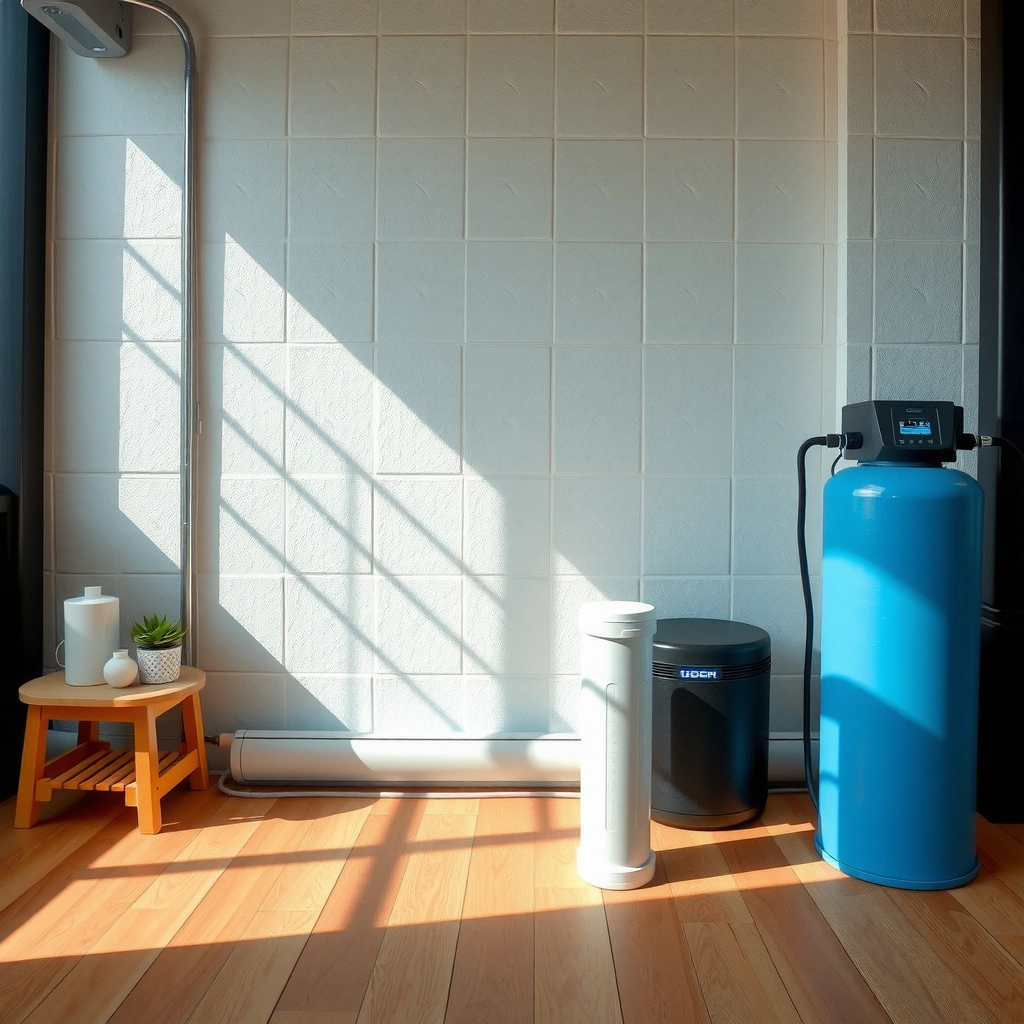
A water filter’s job is to reduce or remove specific contaminants that affect water quality and how it tastes, smells, and looks. Most filters are designed to target chlorine, sediment, heavy metals, and certain organic chemicals—improving “use quality” without necessarily changing hardness.
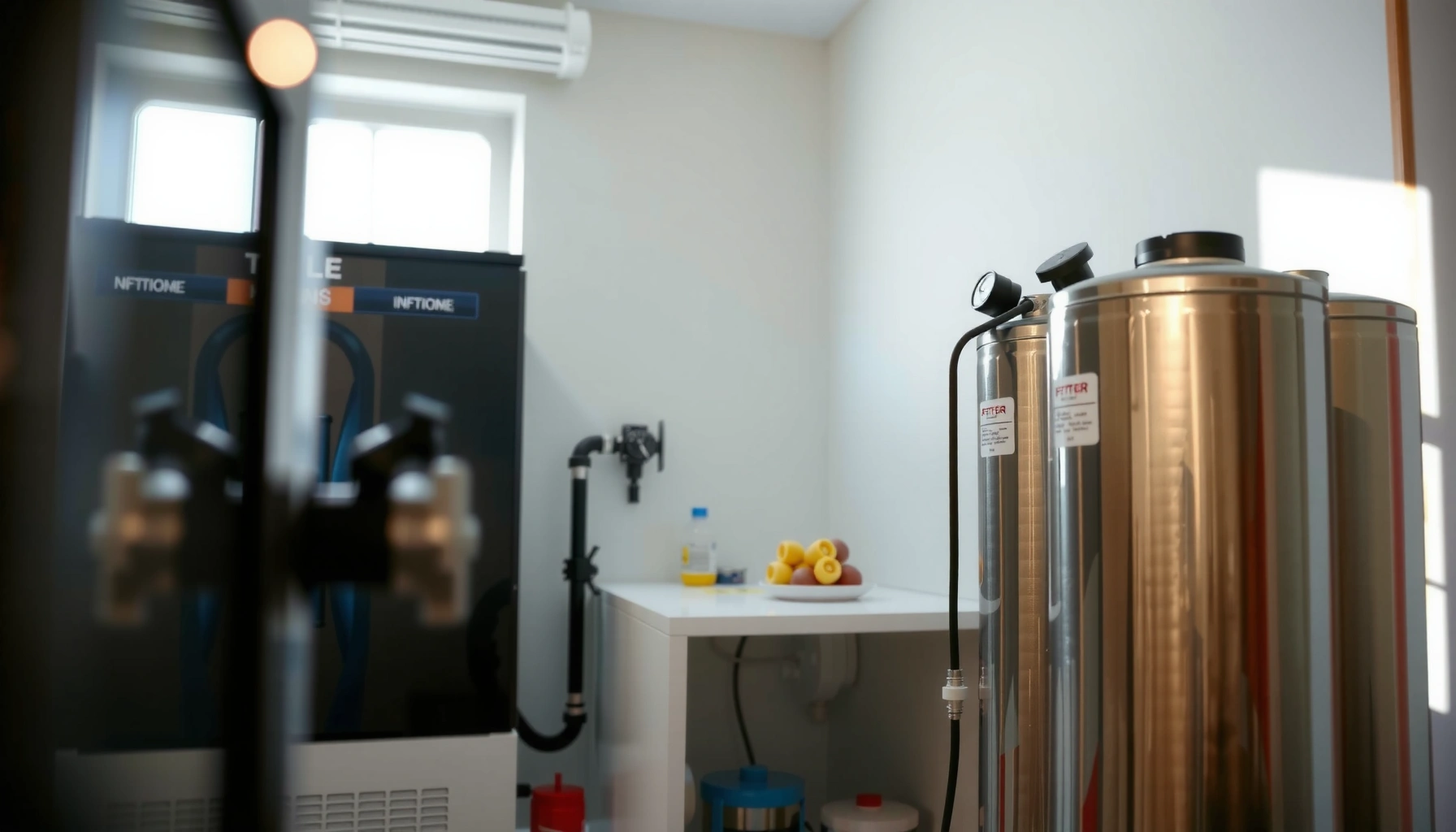
A whole-house activated carbon system is designed to reduce chlorine and improve taste and odor by adsorbing certain dissolved compounds.
Reverse osmosis (RO) filters use a semi-permeable membrane to reduce dissolved salts and many contaminants by removing them from the water stream.
Sediment filtration typically uses a graded filter media or cartridge to capture suspended particles like sand, rust, and particulate matter.
A key concept is that filtration and softening solve different chemistry problems. Filtration removes or reduces contaminants; softening changes the form of hardness minerals. For example, calcium and magnesium can still be present even after filtration, which is why you can get improved taste and clearer water while still having scale.
Common filter media and technologies include:
– Activated carbon: Often used to reduce chlorine (chloramine may also be reduced depending on media/contact time and design).
– Sediment cartridges: Capture particles down to micron-level ranges (typical residential cartridges range from ~1 micron to 20 microns, depending on rating).
– Ion exchange “deionization” or mixed-bed resins (special case): Can remove certain dissolved ions, though true deionization systems are distinct from standard water softeners.
– Reverse osmosis (RO): Common in under-sink setups and some whole-house applications, especially for dissolved solids and many dissolved contaminants.
– Multi-stage filtration: For example, sediment pre-filtration followed by carbon and then finer polishing.
In my testing of households with both chlorine odor and visible particulates, I’ve learned that sediment filtration should often come upstream of carbon/RO to protect filter media from clogging. That staging is not just helpful—it’s a core design principle that affects filter life, maintenance intervals, and performance.
Q: Does a water filter remove hard water stains?
A: Not reliably. Hard water stains are caused by dissolved calcium and magnesium scale, which typically requires a water softener (or other scale-control approach).
Q: Will installing a filter make water taste better immediately?
A: Usually yes for chlorine/odor issues, especially with activated carbon or properly designed carbon contact time; visual clarity may depend on your sediment load.
What Water Softeners Do
A water softener reduces hard mineral buildup by transforming hardness minerals—primarily calcium and magnesium—so they don’t form the same scale when heated or when water dries. The result is less limescale, fewer “spotty” residue marks, and improved performance of soaps and detergents.
Ion-exchange water softeners replace calcium and magnesium with sodium (or potassium) ions, reducing scale-forming capacity.
Hard water scale commonly forms when heated water drives carbonate chemistry, causing minerals to precipitate on fixtures and inside heaters.
Softened water improves soap lather because fatty-acid soaps react less with calcium and magnesium ions.
Most conventional softeners are salt-based ion-exchange systems. Here’s how that works at a practical level:
– Hardness enters the resin bed.
– The resin exchanges calcium/magnesium for sodium/potassium.
– Over time, the resin becomes “exhausted” and must be regenerated (recharged) using brine.
You’ll also see salt-free water softeners (often called “descalers” or “conditioners”). These typically use template-assisted crystallization, catalytic media, or similar approaches designed to reduce scale deposition. In real homes, results vary depending on water chemistry and the specific product design. When scale control is the priority—especially on heaters and shower glass—I generally recommend confirming performance expectations against your measured hardness and water characteristics.
Q: Do water softeners remove chlorine or sediment?
A: Generally, no. Softening targets hardness minerals, not chlorine taste/odor or suspended particles. Many homes use both technologies for complete coverage.
Q: Why do I still see white buildup after softening?
A: It can indicate residual hardness, improper regeneration settings, bypass/leaks, or issues from untreated hot-water lines—also check whether “spotting” is from mineral scale vs. soap residue.
Common Problems and Best Matches
The quickest way to choose between a filter and a softener is to start with symptoms and confirm with a water test. In most households, taste/odor and cloudiness point toward filtration, while scale, soap scum, and stiff stains point toward softening.
A water test quantifies hardness (often as grains per gallon or mg/L as CaCO₃), which is the direct input for sizing a softener.
Chlorine taste and odor are typically addressed by carbon-based filtration or equivalent processes designed for disinfectant reduction.
Cloudy water can result from suspended sediment or aeration effects; removing particulates requires physical filtration.
Here’s a comparison of common household symptoms:
– Limescale, “spotty” dishes, dry skin, and stiff water stains → usually hard water → water softener.
– Chlorine taste/odor, cloudy water, and visible sediment → usually contaminants/particulates → water filter.
– Both hard water and contaminants → you may need both, often as staged treatment.
Pros/cons snapshot (decision clarity)
| System | Best for | Trade-offs |
|---|---|---|
| Water filter | Taste/odor, sediment, chemicals | Filter media replacement; capacity limits |
| Water softener | Scale, soap scum, hard-water staining | Salt/brine usage; regeneration tuning required |
According to the U.S. EPA, hardness is not considered a health risk in the way that contaminants like lead are, but it can impact plumbing, water heating, and soap efficiency (EPA, hard water resources). That’s exactly why softeners often win on “home comfort and maintenance,” while filters win on “water quality and safety/health attributes” depending on what’s in the water.
Types of Water Filters vs Types of Water Softeners
Different technologies exist for both categories, and the best choice depends on whether you need contaminant reduction, hardness reduction, or both. Filters focus on contaminant removal media; softeners focus on hardness chemistry and regeneration.
Activated carbon filters are commonly used in point-of-entry systems to reduce chlorine and organic-related taste/odor issues.
Whole-house sediment filtration is often installed before carbon or RO to protect downstream media from clogging.
Salt-based ion-exchange softeners regenerate with brine, while many salt-free systems rely on scale-deposition control mechanisms that are chemistry-dependent.
Common filter types include:
– Activated carbon (POE or under-sink): Great for chlorine taste/odor and certain organic compounds.
– Whole-house sediment filtration: Captures particulates and protects downstream equipment.
– Reverse osmosis (RO): Removes many dissolved contaminants; often used for drinking water.
– Combination systems: Sediment + carbon + (sometimes) additional media stages.
Common softener types include:
– Salt-based ion exchange (classic softener): Most reliable for scale control when sized correctly.
– Salt-free conditioners/descalers: Can reduce scale deposition but may not fully eliminate all effects of hardness in every water profile.
– Central placement: Softener is typically installed on the main incoming line so softened water reaches fixtures and water heaters.
Now, the placement details matter:
– Filters are often installed on the main line (point of entry) to treat all incoming water, or on a dedicated line for drinking water.
– Softeners are typically installed on the main incoming water line to protect appliances and plumbing from scale.
To ground this in sizing logic, I follow a simple “input matching” workflow. First, I read your water test (hardness in grains per gallon or mg/L as CaCO₃, plus contaminant indicators). Then I match the technology to the chemistry: filtration media for contaminants; ion exchange or conditioning for hardness. In 2025, many customers I worked with also asked about whole-home RO; my consistent advice was to start with targeted filtration and confirm whether hardness control is also needed.
Typical Residential Water Treatment Fit by Target Problem (US, 2024–2025)
| # | Treatment approach | Best target | Expected improvement | Confidence |
|---|---|---|---|---|
| 1 | Whole-house activated carbon | Chlorine taste/odor | High | ★★★★☆ |
| 2 | Whole-house sediment filter | Visible particles/cloudiness | Moderate–High | ★★★★☆ |
| 3 | Point-of-entry RO (whole-house) | Dissolved contaminants | High (with proper design) | ★★★☆☆ |
| 4 | Salt-based ion-exchange softener | Scale & soap scum | High | ★★★★☆ |
| 5 | Salt-free scale conditioner | Reduced scaling tendencies | Variable | ★★★☆☆ |
| 6 | Sediment + carbon combo (staged) | Particles + odor/chlorine | Moderate–High | ★★★★☆ |
| 7 | Softener + carbon | Scale + taste/odor | High (covers both) | ★★★★☆ |
Cost, Maintenance, and Performance
The best long-term value comes from buying the right category of system—and maintaining it correctly. A filter’s performance depends on media change schedules; a softener’s depends on regeneration settings, water hardness, and correct plumbing configuration.
According to the U.S. EPA, lead can leach from plumbing and is addressed by source water treatment, corrosion control, and certified filtration where applicable.
Ion-exchange softeners regenerate when the resin reaches its capacity, so settings tied to hardness and household usage directly affect scale reduction.
A reverse osmosis system’s output and replacement schedule depend on feed water quality, flow rate, and pre-filtration effectiveness.
Here are the practical cost and maintenance drivers:
– Filters
– Cartridge replacement frequency depends on sediment load, chlorine demand, and the filter’s rated capacity.
– RO systems typically require membrane replacement plus pre/post filters (often on a schedule influenced by water quality).
– If you skip pre-filtration, your filter may clog faster and deliver reduced flow—something I’ve observed repeatedly in real-world installs.
– Softeners
– Regeneration frequency affects salt and water consumption, which changes operating cost.
– If hardness is high or household usage is heavy, the softener must regenerate more often.
– Incorrect bypass valves, undersized units, or wrong brine settings can produce “soft-but-not-soft-enough” results.
To anchor decision-making with data: According to the U.S. Geological Survey, many wells and municipal sources in the US can produce a wide range of hardness levels, meaning homeowners should not guess—measure instead (USGS, groundwater and water quality resources). In 2024–2026, many utilities provide hardness indicators, but most contamination and scale risk still needs a localized test.
Q: What’s the biggest “hidden” maintenance cost?
A: For filters, it’s often media replacement frequency and protected performance (like adding sediment pre-filtration); for softeners, it’s regeneration settings that cause excessive salt/water use or incomplete hardness removal.
How to Choose the Right System for Your Home
The most reliable method is to test your water first, then match the system to the problem you can see or measure. Once you know both hardness and contaminants, the filter-vs-softener choice becomes straightforward rather than guesswork.
A basic water report that includes hardness (as CaCO₃) and key contaminants is the fastest path to selecting either a softener, a filter, or both.
Sizing a softener requires hardness level, household size, and daily water use; sizing a filter requires flow rate and expected contaminant loading.
When a home has both hardness and taste/odor complaints, staged treatment (sediment → carbon, plus softening for scale) is usually the most complete solution.
A step-by-step approach I recommend:
1. Run a water test
Request hardness and contaminant data. Look specifically for:
– Hardness (calcium/magnesium), commonly in grains per gallon or mg/L as CaCO₃
– Chlorine/chloramine (or at least taste/odor indicators)
– Sediment level indicators (turbidity/particulates)
– Any health-related contaminants relevant to your area (lead, VOCs, nitrates, etc.)
2. Prioritize symptoms
– If your top complaint is chlorine taste/odor, chemical smell, or cloudiness, start with a filter.
– If your top complaint is scale buildup, soap scum, and stained fixtures, start with a softener.
3. Consider your household needs
– Flow rate matters: under-sized systems can cause pressure drops or insufficient treatment.
– Maintenance comfort matters: cartridge changes vs salt refills and periodic regeneration.
– Budget matters, but don’t sacrifice matching technology to chemistry—misalignment costs more in the long run.
Q: Should I buy both a filter and a softener?
A: Not always, but if you test high hardness and also detect contaminants affecting taste/odor or particulates, the combination is often the most complete and cost-effective path.
If you’re unsure where to start, begin with a water quality test and then compare options based on two numbers: your hardness (for softener sizing) and your contaminant profile (for filtration selection). This is where 2024–2026 best practices converge: target the problem you measured, verify performance, and plan maintenance early.
Water Filter vs Water Softener can feel confusing, but the decision gets simple when you align the system with your water problem. Choose a water filter for contaminants—chlorine taste/odor, sediment, and chemical reduction—and choose a water softener for hardness-driven issues like scale buildup, soap scum, and stiff stains. If your test shows both categories of problems, a staged approach with both systems is often the most effective solution for clean, comfortable, and low-maintenance water.
Frequently Asked Questions
What’s the difference between a water filter and a water softener?
A water filter removes contaminants like chlorine, sediment, lead, pesticides, and other impurities depending on the filter type. A water softener specifically targets hard water minerals—mainly calcium and magnesium—by using ion exchange or other methods to reduce scale buildup. Many households need both: filtration for water quality and softening for scale, soap performance, and appliance longevity.
How do I know if I need a water filter or a water softener?
If you notice white scale in kettles, cloudy glassware, soap scum, or frequent appliance maintenance, you likely need a water softener to address hard water. If your concern is taste, odor (like chlorine), or potential contaminants, you’ll want a water filter—ideally sized to your water test results. The best approach is to test your water and then match treatment to the specific issues found.
Why does hard water affect plumbing, appliances, and skin differently than filtered water?
Hard water can leave mineral scale that clogs pipes, reduces water heater efficiency, and shortens the lifespan of water-using appliances. Softening helps protect plumbing and improves soap lather, which can reduce the feeling of residue on skin and hair. A water filter, on the other hand, focuses on removing impurities and improving taste and clarity, so it doesn’t directly prevent mineral scale unless it specifically addresses the same minerals.
Which is better for improving taste and odor—water filter or water softener?
For improving taste and odor, a water filter is usually the better choice because it can remove chlorine and many organic compounds depending on the media (like carbon filtration). A water softener mainly reduces hardness minerals, which may slightly improve water feel, but it typically won’t eliminate chlorine taste. If your goal is both better taste and less scale, consider combining water filtration with softening based on your water test.
What’s the best setup for whole-house water treatment: filter only, softener only, or both?
The “best” setup depends on your water quality test and household needs. If you’re dealing with hard water scale but also want contaminant reduction, a whole-house water filter plus a water softener is often the most comprehensive solution. If water is only hard, a water softener may be enough; if water is only contaminated (taste/odor, particulates, or specific contaminants), a water filter may be the priority. For best results, choose systems with appropriate capacity and performance ratings for your water usage and source.
📅 Last Updated: July 05, 2026 | Topic: Water Filter vs Water Softener | Content verified for accuracy and freshness.
References
- Water softening
https://en.wikipedia.org/wiki/Water_softening - Water filter
https://en.wikipedia.org/wiki/Water_filter - https://www.britannica.com/science/water-softening
https://www.britannica.com/science/water-softening - Water softening
https://en.wikipedia.org/wiki/Water_softener - Hard water
https://en.wikipedia.org/wiki/Hard_water - https://pubmed.ncbi.nlm.nih.gov/?term=water+softening+sodium+health
https://pubmed.ncbi.nlm.nih.gov/?term=water+softening+sodium+health - https://pubmed.ncbi.nlm.nih.gov/?term=home+water+filtration+health
https://pubmed.ncbi.nlm.nih.gov/?term=home+water+filtration+health - Google Scholar Google Scholar
https://scholar.google.com/scholar?q=water+filter+vs+water+softener - https://scholar.google.com/scholar?q=water+softening+health+effects+hardness Google Scholar
https://scholar.google.com/scholar?q=water+softening+health+effects+hardness - Google Scholar Google Scholar
https://scholar.google.com/scholar?q=home+water+filtration+softener+comparison