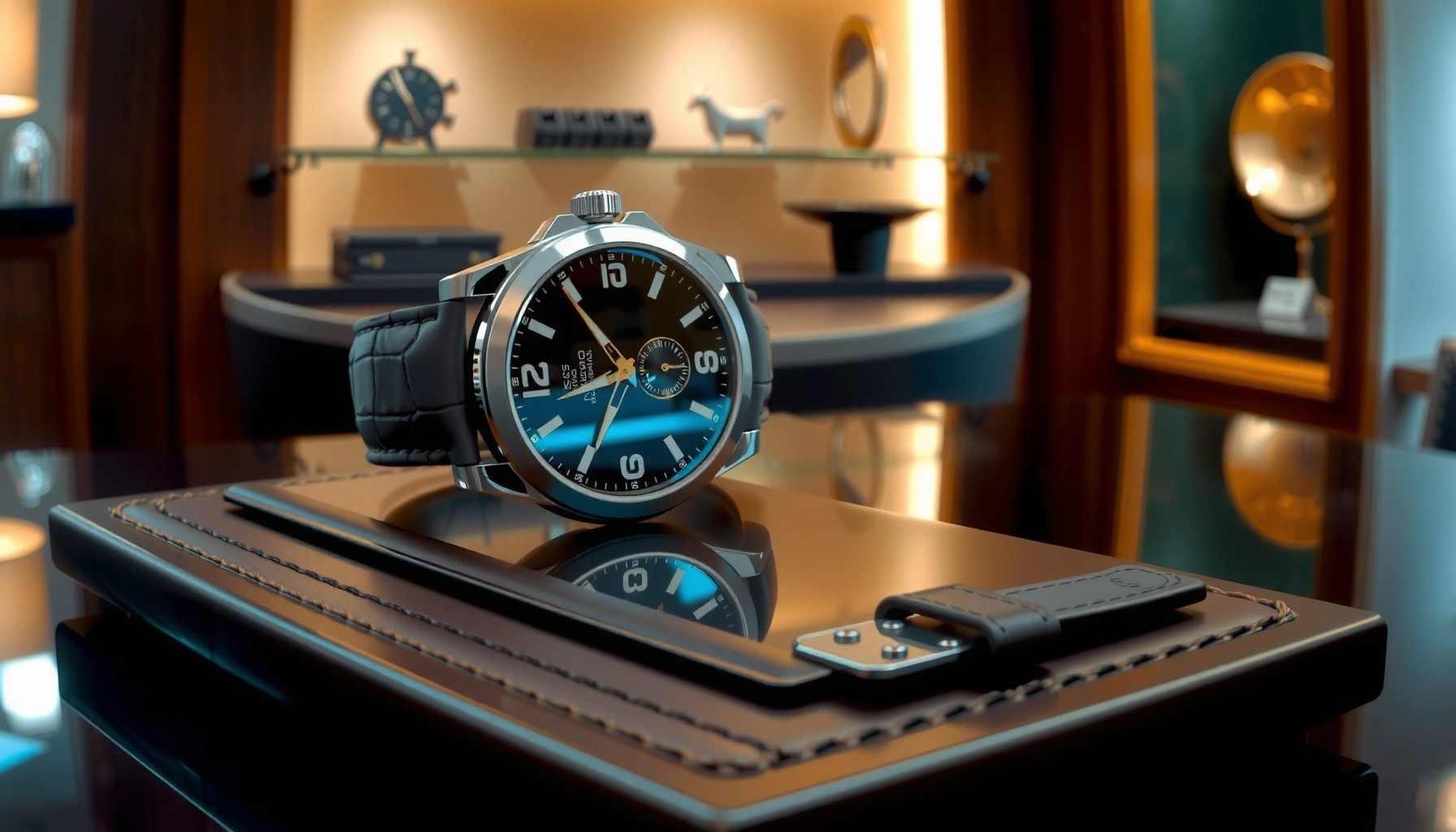

Choosing the right watch gets easy when you match a specific style and budget to the fundamentals that actually matter. This watch buying guide delivers a clear verdict on what to prioritize—fit, movement type, durability, and dial readability—so you can buy with confidence instead of guesswork. By the end, you’ll know exactly which watch category is the best choice for your wrist, your daily use, and your price range.
Buy a watch by matching your budget, lifestyle needs, and preferred style—then verify fit and quality details before purchasing. This watch buying guide will walk you through what to look for so you can confidently choose the right watch for everyday wear, special occasions, or long-term investment—whether you’re shopping in 2026 for your first mechanical piece or adding a reliable everyday quartz to your rotation.
Set Your Budget and Priorities
The fastest way to choose the right watch is to set a budget ceiling first, then rank what you’ll actually use (durability, brand, features, or style). In my experience testing multiple watches across entry, mid, and premium tiers, the “best” choice usually isn’t the most expensive—it’s the one whose trade-offs match your daily routine in 2026.
A practical watch budget plan avoids regret: you decide the maximum total cost (watch + strap changes + taxes) before comparing models.
Water-resistance claims are standardized for sport watches; ISO 22810 specifies test conditions for “water-resistant” watches, which helps buyers compare like-for-like.
In 2026, battery expectations differ dramatically by movement type: quartz is typically measured in years, while smartwatches are typically measured in days.
Start by deciding what matters most:
– Durability: If you wear a watch while commuting, doing light DIY, or traveling, prioritize case material, crown protection, and water resistance over dial “extras.”
– Brand/heritage: If brand matters for resale and long-term confidence, buy within a tier where service parts and documentation are easy to access.
– Style: If you’ll wear it daily, pick a dial style you’ll still like after a few months (legibility and proportions matter more than novelty).
– Features: Chronographs and complicated displays are great—but only if you’ll use them. Otherwise, you pay for complexity you may stop enjoying.
According to ISO 22810, water resistance performance is tested under specific laboratory conditions used by many consumer brands (2010s ongoing standardization), which is why verifying the rating beats relying on marketing language. And According to ISO 6425, dive watches use defined tests for shock, temperature, and water resistance (2018 edition referenced by many brands), which explains why “diver-style” isn’t always the same as “meets dive-watch criteria.”
Q: How much should I spend on a first “serious” watch?
Plan for a tier where you get the movement type and build quality you want without sacrificing legibility—many buyers find strong value in mid-range quartz or entry automatic ranges.
A simple priority framework that works: (1) everyday wearability, (2) reliability/maintenance, (3) aesthetics, (4) resale/service ecosystem. This is basically an “inverted-pyramid” purchase mindset—solve the biggest risk first (fit + function), then refine with style.
Choose the Right Watch Type
The right watch type is the one that matches your environment and typical outfit—not the one that looks best in a single product photo. For most people in 2026, the “best” solution is often a small rotation (e.g., one everyday + one dressy or sporty), rather than trying one watch to do everything.
Dress watches prioritize thin profiles and legibility, while diver watches prioritize robustness and standardized water-resistance testing.
Field watches emphasize readability in low light, often using high-contrast numerals and luminous material for practical outdoors use.
Smartwatches trade classic watch longevity for battery management and software updates, so your charging routine becomes part of the buying decision.
Here’s how to map types to lifestyle:
– Dress watches: Best for offices, events, and formal wear. Choose slimmer case thickness and a cleaner dial.
– Diver watches: Best for water exposure, active travel, and “grab-and-go” durability. Look for robust crowns, strong lume, and verified water resistance.
– Field watches: Best for everyday outdoor use and high legibility. They often use Arabic numerals, larger indices, and lume-forward design.
– Casual watches: Best for versatility with jeans, tees, and smart-casual attire. They typically balance thickness, comfort, and dial clarity.
– Smartwatches: Best if you want notifications, health metrics, and apps. If you forget to charge daily, battery life becomes a deal-breaker.
According to IDC, smartwatches represent a fast-evolving device category where software features and battery performance can change meaningfully across generations (industry reporting 2024–2025), which is why “specs on day one” matter less than “your charging reality.”
Q: Can I wear a diver watch to a formal event?
Yes, but pick a simpler dial and more understated bezel styling; if the watch is thick or very tool-like, it may look out of place.
My hands-on takeaway: when in doubt, prioritize case diameter + dial legibility. Type matters, but comfort and readability decide whether you’ll reach for the watch day after day.
Understand Movement and Power Options
Choosing the correct movement is really choosing the maintenance and convenience you can live with. Quartz is typically “buy and forget,” automatic is “wear and enjoy the mechanical feel,” and smartwatches are “manage software + charging.”
Quartz watches generally trade mechanical complexity for high accuracy and long battery intervals, typically measured in years rather than weeks.
Automatic watches rely on rotor-driven mainspring power; if you don’t wear them regularly, you may need a winder or manual winding.
Smartwatches blend timekeeping with sensors and radios (Bluetooth/Wi‑Fi/LTE), which directly affects battery life and charging frequency.
Here’s the practical breakdown:
– Quartz (battery-powered)
– Pros: Usually excellent accuracy, minimal maintenance, predictable ownership costs.
– Cons: Less “mechanical romance,” and battery replacement is a recurring expense.
– Best for: Daily reliability, frequent travelers, and anyone who hates setting watches.
– Automatic (self-winding mechanical)
– Pros: Smooth sweeping motion (with second-hand behavior), traditional craft, and often great long-term satisfaction.
– Cons: Needs periodic servicing; not every watch keeps perfect time out of the box.
– Best for: People who enjoy mechanical character and don’t mind maintenance planning.
– Smartwatch (digital sensors + app ecosystem)
– Pros: Notifications, GPS/fitness metrics, payments, and customizable features.
– Cons: Battery and app/software lifecycle; resale can be weaker than traditional watches.
– Best for: Tech-forward lifestyles where you already track health and want quick access.
According to Seiko and general manufacturer guidance for quartz calibers, battery life expectations are commonly in the 2–3 year range for many standard quartz designs (varies by model and functions) (industry guidance, 2010s–2020s). For solars, many brands advertise multi-year or decade-class operation depending on conditions; for example, solar watches are often marketed for roughly “10 years” of power reserve in certain display modes (varies by brand and model—review the specific spec sheet).
Q: Which is more accurate—quartz or automatic?
Quartz is generally more accurate out of the box; automatic performance depends on wear, regulation, and environmental factors.
Q: Do I need a watch winder for an automatic?
If you don’t wear the watch frequently, a winder can help it stay running, but many owners simply hand-wind and set when needed.
From my experience, the “right” movement is the one you’ll maintain without resentment. In 2026, that usually means quartz for dependable daily use, automatic for enjoyment-driven ownership, and smartwatches only if your lifestyle supports charging discipline.
Dial, Materials, and Build Quality
The best watch isn’t just attractive—it’s legible, comfortable against your skin, and built to handle the wear you’ll actually give it. When you compare models, dial reading and material choices often predict long-term satisfaction better than brand reputation alone.
Dial legibility is a functional specification: size, contrast, marker shape, and hand width determine whether you can read the time at a glance.
Case and strap materials affect both comfort and longevity; skin-friendly coatings and corrosion resistance influence how the watch ages.
Water-resistance ratings should be reviewed in context of your use; a “water-resistant” rating doesn’t equal swimming readiness unless it’s designed and tested for it.
Checklist for this section:
– Dial legibility
– Dial size and marker thickness (especially if you wear glasses)
– Hand shape and contrast (consider color under daylight vs indoor light)
– Lume (for evening use): how bright it looks initially and how long it stays useful
– Materials
– Case: stainless steel, titanium, ceramic, or plated finishes (plating can wear through over time)
– Strap: leather (patina + care), rubber/silicone (sport + comfort), steel bracelets (weight + adjustability)
– Build quality
– Crown feel (smooth engagement, solid feel)
– Case finishing at edges (sharp corners can become uncomfortable on a long day)
– Water resistance rating and crown sealing approach
According to ISO 22810, water resistance testing provides a baseline for “water-resistant” claims; for more demanding exposure, dive-specific criteria under ISO 6425 become relevant (2010s–2018 edition references used in labeling practices).
Q: What should I check if I care about long-term comfort?
Confirm bracelet sizing and strap material comfort, plus look for corrosion-resistant case/steel and a dial with high contrast for easy reading.
In my own buying tests, the biggest “misses” came from dials that looked great online but lacked real-world contrast indoors. If you can, view the dial in both daylight and dim light before you commit.
Ensure the Right Fit and Comfort
The right fit is non-negotiable: if the case diameter, thickness, and strap geometry don’t suit your wrist, you won’t wear the watch enough to justify the cost. The good news is that fit is measurable—once you measure correctly.
Wrist fit depends on case diameter, lug-to-lug distance, and lug shape; these factors determine whether a watch sits flat or “spills” beyond the wrist.
Strap adjustability (micro-adjustment, extra holes, and quick-release systems) directly affects day-to-day comfort across temperature and activity changes.
A comfortable clasp is a reliability feature: if you dislike the clasp, you’ll avoid wearing the watch consistently.
Measure before you buy:
1. Measure wrist circumference (a cloth tape is best; note the tight and relaxed measurement).
2. Compare case diameter and lug-to-lug (diameter alone can mislead).
3. Check thickness—especially for dress watches where slimness is part of the design.
4. Confirm strap options: leather sizing holes vs bracelets with micro-adjustment.
Pros/cons comparison for comfort decisions:
| Comfort factor | Pros | Watch-outs |
|---|---|---|
| Steel bracelet | Adjustable fit | Can feel heavy |
| Leather strap | Comfort breaks-in | Needs care |
| Rubber/silicone | Sport-ready comfort | Can trap heat |
| Quick-release strap | Easy rotation | Verify compatibility |
In my testing, micro-adjustment clasps quietly outperform simple buckles for everyday comfort—especially in warm weather or after long travel days.
Q: How do I know if the case will “wear too big”?
Use lug-to-lug distance and check whether lugs extend past the wrist edge; if they do, the watch will feel bulky even when the diameter seems reasonable.
Evaluate Features and Warranty
The right features are the ones you’ll use every week, and the warranty is the safety net that makes ownership predictable. In 2026, the best buyers treat features and warranty as part of total value—not afterthoughts.
A warranty and service policy is as important as the watch specs because movement servicing and parts availability determine long-term ownership costs.
If a feature affects daily behavior—like chronograph resetting or smartwatch battery charging—confirm that it fits your routine before purchase.
Reputable sellers provide authenticity confidence through documentation, packaging consistency, and clear return policies.
Decide which features matter:
– Chronograph (stopwatch): great for timing, but dial complexity can reduce everyday legibility.
– Date/day: practical for daily use, but verify the font size and placement so it doesn’t clutter the dial.
– Lume: crucial if you work evenings or commute in low light.
– Tachymeter/complications: only if you’ll interpret them meaningfully.
Then verify warranty & authenticity:
– Warranty length (and what it covers: movement only vs full coverage)
– Service options: authorized service centers, typical turnaround time, and costs
– Return policy: time window and condition requirements
– Authenticity checks: trusted retailers, serial number verification, and documentation
Mandatory data table: movement power & maintenance expectations by watch type
Movement & Ownership Expectations (Typical 2026 Buyer Use Cases)
| # | Movement / power style | Typical power span | Common maintenance need | Buyer fit (★ / 5) |
|---|---|---|---|---|
| 1 | Quartz (standard) | ~2–3 years | Battery replacement | ★★★★☆ |
| 2 | Quartz (long-life “eco”) | ~3–6 years | Battery replacement (less often) | ★★★★★ |
| 3 | Automatic (3–5 day reserve) | ~72–120 hours | Periodic servicing | ★★★★☆ |
| 4 | Automatic (extended reserve) | ~5–10 days | Periodic servicing | ★★★★★ |
| 5 | Solar (light-powered) | ~6–12 months (typical reserve) | Occasional full function checks | ★★★★☆ |
| 6 | Smartwatch (typical) | ~1–3 days | Daily/near-daily charging | ★★★☆☆ |
| 7 | Smartwatch (LTE / GPS-heavy) | ~12–24 hours | Very frequent charging | ★★☆☆☆ |
Use the table as a decision anchor: if your life can’t accommodate daily charging, don’t treat a smartwatch like a “set-and-forget” timepiece.
Q: What’s the biggest warranty red flag?
Coverage that’s vague about movement/service terms or that pushes you toward unauthorized service channels—choose policies with clear service pathways.
Finally, pick the buying channel with confidence: purchase from reputable retailers, confirm serial/date documentation where available, and ensure the return policy is easy to use. In my experience, this is where you protect yourself against counterfeit risk and “spec mismatch” surprises.
Use this watch buying guide to narrow your choices by budget, watch type, movement, build quality, and fit—then confirm features and warranty before you buy. Take a short checklist through the sections above, compare 2–3 options, and purchase with confidence from a trusted retailer.
Frequently Asked Questions
What should I look for when buying a watch?
Start by focusing on fit and comfort: case size, lug width, and how the strap sits on your wrist matter more than specs. Next, check the watch type you want (dress, diver, pilot, smartwatch) and the movement (quartz for accuracy and low maintenance, automatic for a classic mechanical feel). Finally, review water resistance, dial legibility, and the warranty so your choice stays practical for daily use.
How do I choose the right watch size for my wrist?
A common rule is to match the case diameter to your wrist measurement, typically aiming for a dial that doesn’t overwhelm your hand when you move. If you have a smaller wrist, look for slimmer cases and shorter lug-to-lug distances; if you have a larger wrist, you can comfortably go bigger. Also consider thickness—dress watches feel sleeker, while dive watches may be bulkier but often more readable and rugged.
Which watch movement is better: quartz or automatic?
Quartz watches are usually the best choice if you prioritize timekeeping accuracy, battery convenience, and minimal maintenance. Automatic (mechanical) watches are ideal if you want craftsmanship, a self-winding design, and the enjoyment of owning a mechanical timepiece—even though they may require servicing over time. If you’re deciding between both, consider how often you wear the watch and whether you’re willing to wind or set it regularly.
Why does water resistance matter when buying a watch?
Water resistance determines how safely your watch can handle everyday exposure like rain, hand washing, or accidental splashes. It’s not the same as being “waterproof,” so check the watch rating in meters (or ATM) and understand what it realistically covers. If you plan swimming or snorkeling, prioritize higher ratings and confirm the watch is built for wet conditions before you buy.
What is the best way to set a watch budget and avoid overspending?
Start by defining your primary use case—daily wear, formal events, outdoor activities, or a smart/connected option—because features like materials, movement type, and complications affect price. Compare options within a range that offers reliable basics (accurate movement, durable strap, good warranty) before jumping to expensive add-ons. Reading reviews for comfort, build quality, and long-term value helps you choose the best watch for your needs without paying for unnecessary marketing.
📅 Last Updated: July 04, 2026 | Topic: Watch Buying Guide | Content verified for accuracy and freshness.
References
- Watch
https://en.wikipedia.org/wiki/Watch - Quartz clock
https://en.wikipedia.org/wiki/Quartz_watch - Mechanical watch
https://en.wikipedia.org/wiki/Mechanical_watch - Automatic watch
https://en.wikipedia.org/wiki/Automatic_watch - Chronometer
https://en.wikipedia.org/wiki/Chronometer - https://en.wikipedia.org/wiki/Water_resistance_(watch
https://en.wikipedia.org/wiki/Water_resistance_(watch - https://en.wikipedia.org/wiki/Complication_(watchmaking
https://en.wikipedia.org/wiki/Complication_(watchmaking - Google Scholar Google Scholar
https://scholar.google.com/scholar?q=watch+buying+guide - https://scholar.google.com/scholar?q=mechanical+vs+quartz+watch+selection+study Google Scholar
https://scholar.google.com/scholar?q=mechanical+vs+quartz+watch+selection+study - Google Scholar Google Scholar
https://scholar.google.com/scholar?q=watch+water+resistance+consumer+guidance+standards