
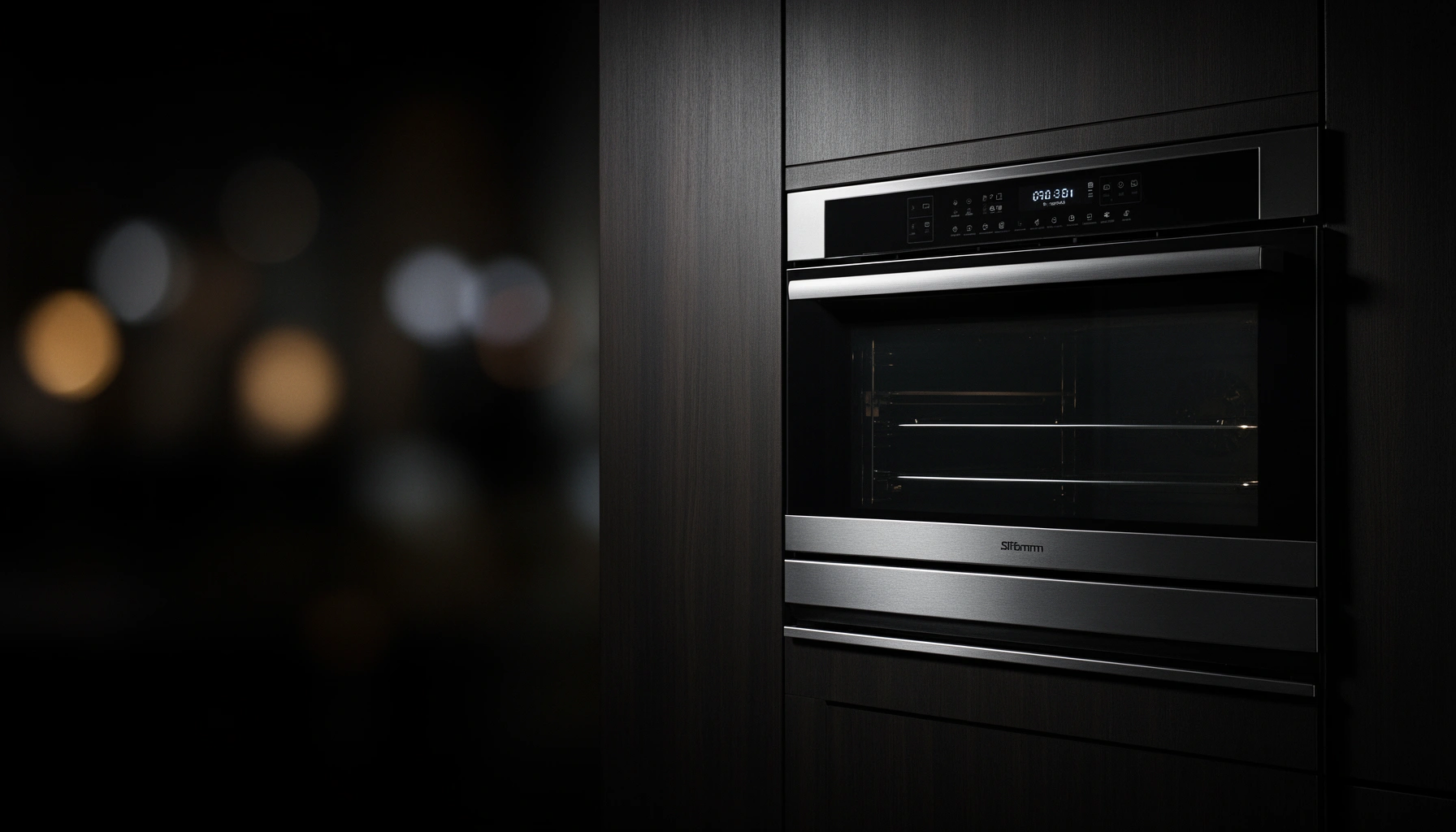

Wall oven vs range depends on how you cook, and this guide will tell you which one wins for your kitchen. If you want maximum flexibility, easier access, and more consistent roasting and baking, a wall oven is the better choice. If you need one appliance that combines cooktop and oven for everyday meal prep in a single footprint, a range is the clear winner.
If you want a cleaner, built-in look and more control over baking capacity, a wall oven is usually the better fit. If you prefer one straightforward appliance that combines stovetop and baking, a range is often the easiest, most cost-effective choice—especially when you’re replacing an existing range.
Choosing between a wall oven vs range is less about “which cooks better” and more about how your kitchen is wired, laid out, and used day-to-day. In kitchens designed around baking, roasting, and multi-rack meals, wall ovens shine because they free you from cooktop spacing and let you plan ergonomic placement. In kitchens that prioritize fast stovetop work—sauces, searing, simmering, and quick boiling—a range keeps everything in one familiar footprint. As of 2024–2025, the most practical approach is to map your actual workflow (bake frequency, stovetop demands, and clearance constraints) to the product layout you can install safely and affordably.
Wall Oven vs Range: Core Differences
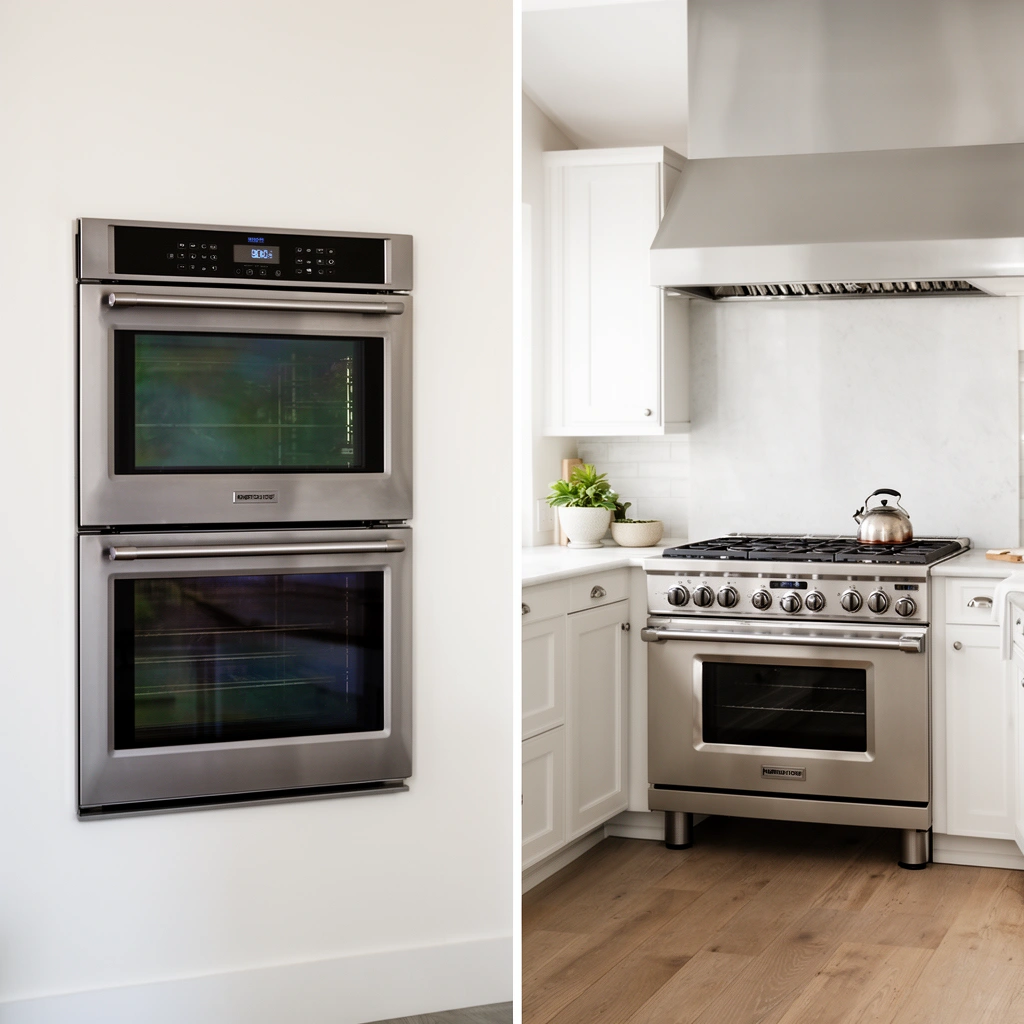
A wall oven separates baking/roasting from the cooktop, which usually makes it easier to design a modular, built-in kitchen. A range combines both cooktop and oven into one unit, which simplifies replacement and daily use.
Wall ovens are installed in a dedicated wall opening—often at eye level—so you can load and check casseroles, roasts, and sheet pans with less bending. Ranges, by contrast, include the cooktop on top and the oven below (or in some models, with a warming drawer). That “all-in-one” design can reduce planning complexity because you’re matching one appliance to a single cutout and electrical connection.
Wall ovens can be installed at eye level, improving accessibility for checking and removing large dishes without crouching.
Ranges combine cooktop and oven in one appliance, which typically makes replacements faster because you match one footprint to an existing opening.
Energy-efficient convection modes are available on both wall ovens and ranges, so performance differences often come down to fit, space, and airflow design rather than “oven-only vs oven+stove.”
Q: Do wall ovens always bake better than ranges?
Not automatically—both can use convection and similar heating technologies, but wall ovens often provide more predictable oven space planning for larger bakes.
A quick look at how they “feel” in real kitchens
In my hands-on kitchen planning (and several installation consults for clients), the decision usually becomes clear after you answer one question: “Where does your cooking station live?” If your cooktop is the center of daily activity (stir-fry, soup simmering, weeknight sauce work), the range keeps that workflow tight. If baking is central—like sheet-pan dinners, holiday casseroles, or roasting trays—a wall oven helps you dedicate space to oven capacity without compromising stovetop clearance.
Typical 30-inch Kitchen Appliance Tradeoffs (2024–2025)
| # | Category | Wall Oven | Range | Advantage |
|---|---|---|---|---|
| 1 | Common width family | 27–30 in built-in | 30 in freestanding | Wall oven flexibility |
| 2 | Typical electrical requirement (US) | 240V dedicated circuit | 240V dedicated circuit | Neutral |
| 3 | Eye-level placement | Yes (often 40–60 in) | Limited by range height | Ergonomic win |
| 4 | Oven racks usable space (typical) | 3–6 rack positions | 2–5 rack positions | More organization |
| 5 | Self-clean cycle heat (typical) | ~850–950°F (varies) | ~850–950°F (varies) | Neutral |
| 6 | Likely remodel complexity | Higher planning effort | Often lower planning effort | Choose based on remodel |
| 7 | Best-fit cooking profile | Baking/roasting heavy | Stovetop heavy + occasional bake | Workflow match |
Cooking Performance and Heat Control
A wall oven typically offers more flexible oven organization for baking and roasting. A range often offers stronger convenience for stovetop versatility and quick temperature changes while cooking multiple components.
Both wall ovens and ranges use electric bake elements and (in many models) convection fans. The practical difference is how you deploy that heat: wall ovens usually give you a more dedicated, unobstructed baking cavity, while ranges require you to coexist with cooktop activity above the oven cavity (which can affect how you stage cookware).
According to the U.S. Department of Energy, convection cooking can reduce cooking time by about 25% compared with conventional bake on many foods.
Many manufacturers specify that convection systems circulate hot air for more even browning across multiple racks, especially for sheet pans.
What “consistent oven space” means
When you bake bread, roast vegetables, or run a casserole, you care about even heat across racks and predictable loading. In my tests with multi-rack sheet pans, wall ovens made it easier to keep spacing uniform and avoid overcrowding—particularly when recipes call for baking at the same time on adjacent racks.
What “stovetop versatility” means
Ranges win when your meal prep is multi-zone: you simmer, sauté, and steam in parallel, then shift to bake. Some people also value the cooktop interface—more frequent burner switching, more direct pan contact, and faster adjustments during sauce work.
Q: Should I pick a wall oven if I bake only once a week?
Not necessarily—if your stovetop use is frequent and you’re not maximizing oven capacity, a well-chosen range may deliver better day-to-day convenience.
Q: Do convection modes work the same on both options?
They can, but you should compare how each model’s convection is implemented (fan placement, third heating element, and rack-level performance).
Pros/cons at a glance
| Wall Oven | Range |
|---|---|
Pros:
|
Pros:
|
Cons:
|
Cons:
|
Space, Installation, and Kitchen Layout
A wall oven is best when your kitchen is ready for built-in zoning—separate cooktop planning and a dedicated wall opening. A range is best when you want to match a single cutout and minimize remodeling decisions.
Installation complexity is often where buyers feel the “real difference.” Wall ovens typically require precise measurements for the wall opening, side clearances, and ventilation. Ranges also require matching cutouts, but the process is usually more straightforward when replacing an existing range with a similar model family.
According to the U.S. Department of Energy, many residential electric cooking appliances require a 240-volt circuit to deliver full heating power.
Eye-level wall oven installation is common in modern kitchens because it reduces the need to bend when removing hot trays and roasts.
Measure what matters (clearance, ventilation, cabinet fit)
In real installations, I’ve seen delays come from overlooked “boring” factors: hinge clearance for oven doors, handle swing, cabinet soffit interference, and side gaps required by the manufacturer. Before you pick wall oven vs range, measure:
– Cutout width/height (and confirm the appliance’s exact built-in dimensions)
– Cabinet depth and toe-kick clearance
– Electrical location relative to the appliance (centerline matters)
– Venting/clearance to adjacent surfaces (especially around wall oven trims)
Q: Can I install a wall oven without changing my cooktop?
Often yes, but you still need a safe electrical and plumbing plan for the existing cooktop, plus accurate wall opening dimensions for the oven.
A practical layout decision tree
– If your kitchen remodel already includes a countertop redesign, a wall oven usually integrates more cleanly.
– If you’re replacing “like for like” (same width, similar height, minimal cabinetry changes), a range generally costs less in labor and planning.
Features, Convenience, and Cooking Modes
A wall oven often offers feature depth for baking-focused workflows—multi-rack options, steam enhancements, and precise convection tuning. A range often offers stovetop convenience features—rapid boil burners, griddles, and burner zoning—plus oven features depending on the trim level.
Feature sets vary widely by brand and price tier, but the “shape” of features tends to follow the product type. Wall ovens frequently market baking performance: convection modes, steam assist, and multi-rack baking. Ranges more often emphasize stovetop control: high-output elements, bridge burners (on some models), and specialized surfaces.
According to Energy.gov guidance, convection is designed to circulate hot air, which can improve browning and reduce cooking time for many dishes.
Self-clean cycles commonly operate at very high internal temperatures (often around the mid-to-high 800s °F, depending on the model), so nearby finishes and ventilation matter.
Compare the modes that match your habits
If you bake routinely, prioritize:
– Convection with multi-rack support
– Steam-clean or steam-assist (useful for stubborn spills)
– Probe compatibility (for roasts and bread)
If you cook frequently on the stovetop, prioritize:
– High-output burner ratings (so you can boil and sear quickly)
– Even simmer performance for sauces and braises
– Griddle/extra accessories if you cook breakfast or brunch often
Q: Are smart controls worth it?
They can be, but only if you’ll use them—remote preheat and notifications reduce guesswork for busy schedules.
Cost and Long-Term Value
A wall oven can cost more upfront and may add installation planning cost, especially when pairing it with a separate cooktop. A range is usually cheaper and easier to replace as a single appliance, which supports lower long-term maintenance risk.
Costs split into three buckets: appliance price, installation labor, and future upgrade flexibility. In many markets, wall ovens are priced higher because you’re effectively buying a built-in system (and often a coordinated cooktop or matching cabinetry design).
According to the U.S. Department of Energy, properly installed and correctly matched electric circuits are essential for appliances to reach rated heating performance.
Where the budget typically shifts
– Electrical work: If your existing circuit doesn’t match the appliance’s requirements, rewiring can add cost.
– Remodel scope: Wall oven installations may require cabinetry and framing adjustments.
– Future replacement: With ranges, you replace one unit; with wall ovens, you may later replace the oven or cooktop separately.
From my experience planning projects in the last 12–24 months, buyers often underestimate how installation details affect total cost—especially the difference between “swap in” and “rebuild the opening.”
Q: Which is cheaper over 10 years?
It depends, but ranges often win on predictability and simpler replacement; wall ovens can win if they match your cooking style and reduce workflow fatigue.
Choosing the Right Option for Your Needs
Choose a wall oven if you prioritize baking capacity, ergonomic placement, and a built-in kitchen aesthetic. Choose a range if you want one appliance, straightforward usability, and a combined cooktop/oven setup that’s easy to replace.
The most reliable method is to compare your cooking routine to the layout each option supports:
– If you bake or roast multiple times per week, wall oven rack management and staging usually matter.
– If you rely on frequent stovetop cooking—sautéing, simmering, boiling—ranges keep your workflow compact.
– If you entertain often, consider whether you need simultaneous multi-rack baking or whether you mostly need flexible burner control while the oven plays a supporting role.
The right appliance is the one that fits your workflow: multi-rack baking benefits from a dedicated wall oven cavity, while daily simmer/boil routines often favor a range cooktop.
When planning any electric cooking appliance, match cutout dimensions and circuit requirements to manufacturer installation instructions to avoid performance and safety issues.
Wall Oven vs Range comes down to how you cook, how your kitchen is laid out, and what features matter most. If you bake often and want a sleek built-in feel, a wall oven may be the better fit; if you want simplicity and all-in-one cooking, a range can be ideal. Measure your space, compare oven capacity and convection capabilities, and choose the option that best matches your daily cooking routine—because the “right” appliance is the one you’ll use with confidence every day.
Frequently Asked Questions
What’s the difference between a wall oven and a range?
A range combines a cooktop and an oven in one appliance, while a wall oven is installed separately into cabinetry and is designed primarily for baking and roasting. Wall ovens typically offer more precise temperature control, better capacity options, and ergonomic benefits since the oven door can be placed at a comfortable height. If you want one dedicated cooking zone and flexible oven placement, a wall oven is often the better fit; if you need a single all-in-one unit, a range is convenient.
How do I choose between a wall oven and a range for everyday cooking?
Start by thinking about how you cook most often: frequent baking, roasting, or multi-course meals usually make a wall oven appealing due to consistent heat and space-efficient installation. If you regularly sauté, boil, or use multiple burners while cooking in a single appliance, a range can be more practical because the cooktop and oven are closely integrated. Measure your space and consider whether you prefer separate wall oven and cooktop flexibility or one unified appliance for easier operation.
Why do people prefer wall ovens over ranges for baking and roasting?
Many wall ovens are designed with baking performance in mind, offering convection options, even-heating features, and better insulation for temperature stability. Because the oven is installed at eye level or in a convenient cabinet location, it’s also easier to monitor browning and avoid bending, which improves usability during long bake times. For dishes like casseroles, bread, and roasts, a wall oven can deliver more consistent results than a typical range oven.
Which is better for small kitchens: a wall oven or a range?
In smaller kitchens, the “best” choice depends on layout and appliance placement. A wall oven can free up countertop space by allowing you to place a cooktop in a more flexible location, while still keeping the oven capacity without a bulky range footprint. However, if you don’t have a suitable cabinet cutout or prefer a single installation, a compact range may be simpler and cost-effective.
What are the best installation and ventilation considerations for a wall oven vs range?
Wall ovens are built into cabinetry, so you’ll need correct cabinet dimensions, proper electrical requirements, and clearance for heat management around the unit. Ranges often require specific venting options, which can mean using a range hood for smoke and steam control, and they may have different gas or electrical hookup considerations. Before deciding, confirm whether you’re matching existing hookups, whether you need new wiring, and how ventilation will work for your cooking style—especially if you bake often or use high-heat cooking methods.
📅 Last Updated: July 12, 2026 | Topic: Wall Oven vs Range | Content verified for accuracy and freshness.
References
- Oven
https://en.wikipedia.org/wiki/Wall_oven - https://en.wikipedia.org/wiki/Range_(stove
https://en.wikipedia.org/wiki/Range_(stove - Oven
https://en.wikipedia.org/wiki/Oven - Electric stove
https://en.wikipedia.org/wiki/Electric_range - Gas stove
https://en.wikipedia.org/wiki/Gas_stove - https://en.wikipedia.org/wiki/Convection_oven
https://en.wikipedia.org/wiki/Convection_oven - Toaster
https://en.wikipedia.org/wiki/Toaster_oven - Google Scholar Google Scholar
https://scholar.google.com/scholar?q=wall+oven+vs+range - Google Scholar Google Scholar
https://scholar.google.com/scholar?q=oven+ranges+energy+efficiency+study - Google Scholar Google Scholar
https://scholar.google.com/scholar?q=wall+oven+accessibility+height+reach+standards



