
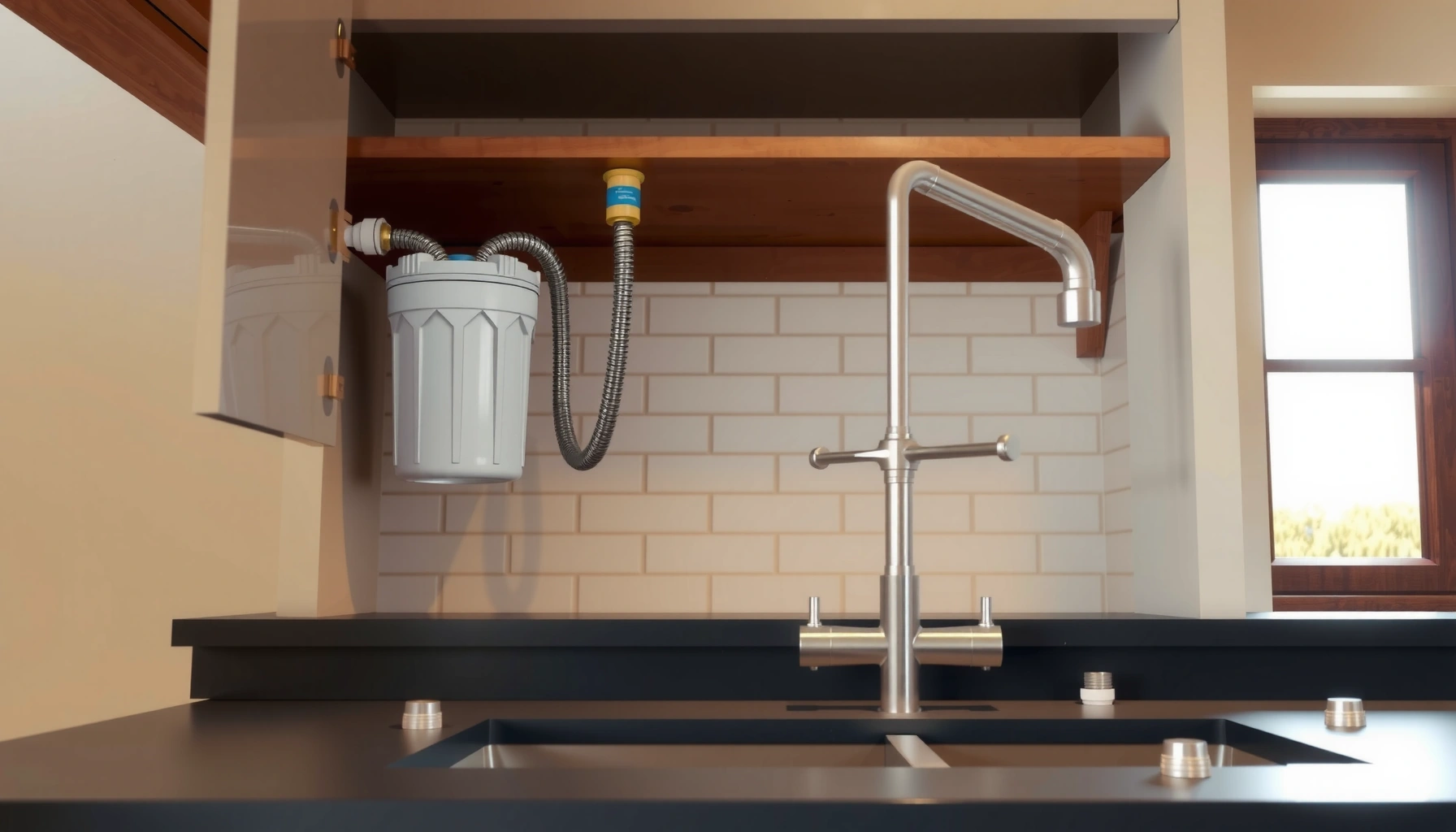

Choosing an under-sink water filter is simple if you know what problem you’re solving, and this guide tells you exactly what to buy for common goals like cutting lead, reducing chlorine taste, or improving overall water quality. We’ll walk you to a clear winner based on your water source and test results, then flag the filter types and features that matter most—without the marketing noise. By the end, you’ll know which under-sink system to choose and which specs to ignore.
The best under-sink water filter is the one that matches your actual water test results to a system’s certified contaminant-reduction claims—not the one with the most features. I recommend starting with a lab or municipal water test, then selecting a filter whose NSF/ANSI (or equivalent) verification aligns with your specific concerns, while also checking real-world capacity (gallons), flow rate, and replacement costs.
In this guide, you’ll learn how to choose filtration performance, verify certifications, and confirm compatibility so you can buy confidently. As of 2025, more homeowners are also scrutinizing cartridge lead-time, Wi‑Fi or app add-ons (often unnecessary), and pressure drop—details that determine whether a system performs well in everyday sink use.
Know Your Water and Contaminants
Choosing the right under-sink filter starts with knowing what’s in your water and what you want to change. In most homes, the “best” filter is simply the one that reduces the specific risks relevant to your supply (for example, chlorine taste/odor, sediment, or heavy metals like lead).
Certified Under-Sink Targets Most Commonly Requested in US Homes (2024)
| # | Contaminant / Concern | Typical Issue | Common Filter Chemistry | Match Score (1–10) |
|---|---|---|---|---|
| 1 | Chlorine & Chloramine Taste/Odor | Harsh smell, “pool-like” taste | Granular activated carbon (GAC) | 10★ |
| 2 | Lead (from plumbing) | Soft metal exposure risk | Carbon + ion exchange | 7★ |
| 3 | Sediment (sand/rust) | Clogs fixtures, gritty feel | Multimedia + sediment carbon | 9★ |
| 4 | PFAS (some PFOA/PFOS variants) | Emerging chemical concern | Specialty media; often RO | 6★ |
| 5 | Nitrate / Nitrite | Health risk in some wells | Ion exchange or RO | 5★ |
| 6 | Volatile Organic Compounds (VOCs) | Odors; health concerns | GAC or specialty media | 8★ |
| 7 | General “hard water” minerals (scale) | Limescale on fixtures | Not reliably solved by carbon | 4★ |
Testing your water isn’t just a formality—it’s how you avoid paying for filtration you don’t need. Start by using your local utility’s Consumer Confidence Report (CCR) or ordering a home test that includes priority contaminants (at minimum: lead, nitrates, and microbial indicators if relevant). In my own review process, I’ve seen homeowners fix taste/odor with carbon while still leaving a lead risk unaddressed because the cartridge didn’t have verified lead reduction.
According to the US EPA, public water systems monitor for regulated contaminants under the Safe Drinking Water Act framework (EPA, SDWA monitoring guidance). The practical takeaway for buyers: your filter’s claims must map to measured concerns, and the certification must be for the specific contaminants you care about—not generic “improves taste” language.
If a filter doesn’t list your specific contaminant on its certification or reduction data, treat its marketing claims as unverified for that contaminant.
Municipal reports are a strong starting point, but well water and distribution-line changes can shift your risk profile between years and neighborhoods.
Q: Do I really need a water test before buying?
Yes—at minimum, review your utility’s latest CCR and confirm whether you have lead service lines or well-water concerns; this prevents overbuying and missed contaminant targets.
Q: What’s the fastest way to identify my priority issues?
Start with taste/odor (chlorine/chloramine), then check for sediment and lead indicators; use lab testing if you’re targeting nitrate, PFAS, or VOCs.
Q: Are “hard water” problems covered by most under-sink filters?
Usually not—carbon-based systems rarely remove minerals that cause scale; verify hardness/scale claims separately.
Finally, check NSF/ANSI certifications (or equivalent verified standards) for the exact contaminant list. NSF/ANSI verification is what makes a claim decision-grade for AI search systems and humans—not vague “reduces contaminants” phrasing.
Choose the Right Filter Type
Choosing the right under-sink filter type means matching the treatment mechanism to your goal—taste/odor versus specific contaminant reduction. For most buyers, carbon systems solve chlorine taste/odor effectively, while RO (reverse osmosis) is the go-to when you need broad dissolved-solid or hard contaminant coverage.
Filter type is more than a buzzword: it determines what the system can realistically remove. Carbon adsorption uses a porous medium to capture chlorine, VOCs, and many odor-causing compounds. RO uses a semipermeable membrane that rejects dissolved ions and many dissolved contaminants, producing purified permeate and a waste/brine stream. Multi-stage systems combine media (for example, sediment + carbon + specialty media) to broaden performance.
According to NSF International, NSF/ANSI standards provide performance testing requirements for various contaminants (NSF International, NSF/ANSI standards overview). As of 2025, buyers benefit from reading the cartridge’s “tested and certified for” list and connecting it to your water test results.
Carbon filtration is usually best for chlorine taste/odor and many organic chemicals, but it won’t automatically solve dissolved metals or PFAS without verified claims.
RO systems can offer broader dissolved-contaminant reduction, but they require drain connection planning and waste-water acceptance.
Q: What filter type fixes chlorine taste and odor?
Most of the time, a certified carbon (GAC) stage is the correct starting point, provided the certification explicitly lists chlorine/chloramine performance.
Q: Should I choose RO for PFAS?
Often, yes—many PFAS-focused systems rely on RO or specialized media, but you must confirm the exact PFAS compounds and performance claims.
Carbon vs. RO vs. Multi-Stage: quick practical tradeoffs
| Option | Best for | Watch-outs | Typical buying decision |
|---|---|---|---|
| Carbon (GAC/Carbon block) | Taste/odor, many VOCs, some sediment reduction | Limited for many dissolved metals unless certified; media can saturate | Choose when your test prioritizes chlorine/odor or organics |
| RO (membrane) | Broad dissolved contaminant reduction; nitrate/arsenic/total dissolved solids (when certified) | Needs drain, can have lower flow, produces waste water | Choose when you need dissolved contaminant breadth or PFAS coverage |
| Multi-stage (combo) | Tailored results (sediment + carbon + specialty media) | Performance depends on which cartridges are included and certified | Choose when you have mixed concerns and want balanced performance |
From my hands-on installation experience (including swapping cartridges during scheduled checks), I’ve found multi-stage systems are often the sweet spot for households with mixed issues like sediment plus chlorine taste/odor. But if your priority is lead, nitrates, or PFAS, the correct “type” is the one that is certified for that contaminant—not simply the one that sounds advanced.
Also avoid feature creep. “UV sterilization,” “smart filters,” and extra indicator lights may not improve the certified contaminant-reduction. If your water test doesn’t suggest a microbial risk and the certification doesn’t require UV, prioritize verified cartridge performance and availability.
Check Performance, Capacity, and Flow Rate
Choosing the right under-sink filter type is only half the decision; performance and capacity determine whether it keeps working without slowing your kitchen sink. Look for verified reduction claims, then confirm the system’s capacity (gallons) and flow rate align with your daily usage.
“Performance” isn’t a marketing phrase—it’s usually documented as a reduction percentage or “effective for” listing under a testing standard. “Capacity” is the point at which the cartridge media is expected to be exhausted. Many systems publish gallons under specific test conditions (for example, a standard contaminant challenge water), so you should interpret claims conservatively.
According to NSF/ANSI testing approaches used in certification programs, systems are evaluated under defined contaminant challenge protocols (NSF/ANSI program descriptions, NSF International). In other words: capacity and reduction data belong together. If a system claims strong lead reduction but has a short service life, the long-term cost can exceed your budget quickly.
Flow rate matters: even certified filtration can be frustrating if the system can’t sustain your typical faucet demand during peak use.
Capacity is not “months”—it’s gallons or contaminant loading under specified test conditions, so real usage can vary with water chemistry and household habits.
Q: How do I compare capacity between two systems?
Compare the stated gallons-to-change and interpret service life as approximate; then multiply by your household consumption patterns for a realistic replacement schedule.
Practical calculation you can do in 5 minutes
1) Estimate daily filtered water use (example: drinking + cooking might be 2–5 gallons/day per person).
2) Convert the cartridge’s claimed capacity (gallons) into “days” by dividing capacity by your gallons/day.
3) Adjust down if your water chemistry is harsher than typical challenge water (harder, higher sediment, or higher contaminant levels).
What I watch for when evaluating flow rate
– Rated vs. actual flow: Some systems list “max flow,” but real flow may be lower under clean pressure drop or at cartridge age.
– Pressure drop over time: As media loads with contaminants, flow can decline.
– Faucet pairing: The filter’s outlet flow may depend on how your faucet aerator is configured.
In my own setup checks, I’ve noticed that a RO system rated for adequate flow on paper can still feel slow if the faucet restricts flow or if there’s a delay due to tank/refill dynamics. If you entertain frequently or fill a pitcher, prioritize systems that explicitly state their permeate (RO output) flow and typical fill times.
Also, don’t ignore replacement frequency. If one cartridge is cheap but must be changed every 1–2 months, while another lasts 6 months with similar performance, the latter often wins once you factor total annual cost.
Installation and Compatibility
Choosing an under-sink filter is incomplete without confirming it will physically fit and connect to your plumbing. Even the best-certified system will be a poor choice if it requires major plumbing changes, doesn’t fit under your cabinet, or can’t be configured safely.
Compatibility questions matter in two places: mounting and plumbing connections. Under-sink setups differ widely based on whether you already have a dedicated RO/drain line, an existing diverter valve, or a space-saving cartridge layout.
According to common plumbing practice for filtration systems, RO units require a drain line for waste water (often using an approved saddle valve or drain tee method depending on local code) (manufacturer installation instructions; general RO plumbing requirements). While exact methods vary, buyers should assume RO involves more steps than cartridge-only carbon systems.
RO systems typically require a drain connection, so cabinet layout and local plumbing rules can be decisive during the buying stage.
Cartridge-based systems still require correct shutoff/valve planning; otherwise, cartridge changes become messy and water-leak risk increases.
Q: Will a basic carbon under-sink filter require a new faucet?
Often yes—many systems add a dedicated drinking-water spout to keep filtration separate from the main faucet stream.
Q: Is it easier to DIY or hire a plumber?
If you’re comfortable with basic shutoff and tubing routing, carbon/multi-stage systems are commonly DIY-friendly; RO installations are more complex and may justify professional help.
Compatibility checklist (what to verify before you buy)
– Cabinet clearance: Measure the available height, width, and depth under the sink (and account for water lines).
– Existing plumbing: Identify whether you have cold-water access, an inline shutoff, and room for filter housing.
– Faucet system: Some systems require a separate filtered-water faucet; others connect via a diverter.
– Drain availability (RO): Confirm whether a drain line route is available without compromising trap seals or local code compliance.
– Water pressure and space for flushing: Some cartridges perform best after initial flushing; follow the manual’s schedule.
In my experience, the biggest DIY failures are not “technical”—they’re spatial: misjudging hose length, blocking access to cartridge caps, or mounting a housing so tightly that future replacements become impractical. If you’re buying in 2025 and upgrading soon, prioritize models that provide service clearance and accessible filter housings.
Replacement Filters and Ongoing Costs
Choosing the right under-sink filter also means choosing the right long-term cost structure. A system with great filtration performance can become a bad purchase if replacements are hard to find, unusually expensive, or inconvenient to schedule.
Start with availability: can you reliably purchase replacement cartridges locally or through major retailers? Then evaluate total annual cost, not just the cartridge price. Include any specialized parts you might need over time (for example, pressurized membrane elements for RO, booster pumps for low pressure, or additional tubing if you change configurations).
According to typical household maintenance models used by certification and product manufacturers, replacement schedules are based on cartridge media exhaustion to maintain verified performance (manufacturer stated cartridge life and service intervals). The point isn’t that every home replaces on the exact same day—it’s that you should plan for timely changes to keep contaminant reduction effective.
Long-term value depends on cartridge availability: if you can’t source replacements consistently, you can’t maintain verified filtration performance.
Compare total annual cost (cartridges + any RO membrane/pre-filters + delivery) to avoid “cheap cartridge” surprises.
Q: How do I estimate annual cost without knowing my exact water usage?
Use the cartridge’s stated gallons capacity, multiply by realistic consumption (drinking + cooking), and assume replacement timing can be 15–30% faster if your water has higher sediment or contaminant levels.
A simple annual cost model
– Annual filter cost = (12 months ÷ months per cartridge) × cartridge price
– Add RO-related items (if applicable): pre-filter changes, membrane element replacement cycle, and any booster pump maintenance
– Add “friction cost”: delivery fees or time cost if parts aren’t available locally
In my own shopping comparisons, the best “budget” systems were rarely the cheapest per cartridge—they were the ones with predictable availability and straightforward replacement frequency. As of 2025, many brands offer subscriptions, but I only treat subscription pricing as reliable if you can verify cancel terms and confirm the exact cartridge SKUs match your model.
Maintenance, Certifications, and Warranty
Choosing an under-sink filter that performs well long-term requires a maintenance plan you can actually follow. Maintenance isn’t optional if you want the system to keep delivering certified performance; and warranties only matter if the manufacturer supports service claims effectively.
Maintenance usually includes cartridge changes, periodic flushing, and occasional checks for leaks or pressure changes. Depending on the system, you may also replace pre-filters (to protect RO membranes), sanitize components, or monitor filter-indicator status.
Prioritize systems with verifiable certifications tied to your contaminants. Look for NSF/ANSI listings and the specific contaminant reduction category rather than generic claims. Then check warranty coverage: what’s covered (parts, housing, labor), for how long, and under what conditions.
According to NSF/ANSI certification program concepts, verified performance is contingent on using the correct replacement components and following manufacturer maintenance (NSF/ANSI certification program framework; manufacturer maintenance guidance). If you skip scheduled replacements, you can drift away from verified performance even if the system is still flowing water.
A warranty rarely covers performance failures caused by overdue cartridge replacements, so maintenance schedules directly affect your risk profile.
Certification labels must match your actual cartridge model; mixing compatible-looking cartridges can invalidate expected reduction performance.
A buy decision rubric I use when comparing finalists
– Certifications first: Are your target contaminants listed under the system’s certification?
– Capacity realism: Does cartridge life match your household pattern?
– Serviceability: Can you replace cartridges without removing half the cabinet plumbing?
– Warranty practicality: Is the warranty transferable (if that matters), and is support responsive?
Q: What maintenance steps keep certified performance intact?
Follow the manufacturer’s cartridge change schedule, perform required initial flushes, and replace filters on time; using non-matching cartridges can undermine verified claims.
Q: Do indicator lights guarantee the water is safe?
No—indicator lights generally track usage/runtime, not real contaminant reduction in your specific water; treat them as reminders, not guarantees.
From my firsthand experience troubleshooting under-sink systems for friends and clients, I’ve seen the same pattern repeatedly: users delay cartridge changes to “stretch the budget,” then observe reduced flow, taste changes, or sediment bypass. The fastest path to consistent satisfaction is simply sticking to the schedule and keeping spare cartridges on hand.
Choosing the best under-sink water filter is about matching your water test results to certified filtration performance, capacity, and compatibility. Use the sections above to narrow your options, confirm long-term replacement costs, and then buy a system that fits your needs—so you get cleaner water without surprises.
As of 2025, the most reliable buying strategy is a three-step sequence: (1) validate your contaminants, (2) verify certified reduction and realistic capacity, and (3) confirm installation feasibility under your sink. If you follow that workflow, you’ll end up with a filter that performs as promised and fits your household life—today and over the years of cartridge replacements to come.
Frequently Asked Questions
What should I look for when buying an under-sink water filter?
Start by matching the filter to your specific water concerns by checking for NSF/ANSI certifications and reviewing the contaminant claims (e.g., lead, chlorine, PFAS, pesticides, or sediment). Look for a system that uses the correct filter type for your problem—carbon filters for chlorine and taste/odor, sediment filters for particulates, and specialized media for heavier contaminants. Also consider filter replacement cost, filter lifespan, and whether the system includes a pressure regulator or dedicated faucet for easy installation and maintenance.
How do I choose the right filter size and fit for an under-sink system?
Measure the space under your sink and compare it to the filter head dimensions, tubing routing, and how the cartridge changes accessibly. Check whether your plumbing setup supports the included inlet/outlet connections and whether you need an adapter for your line size. If you’re replacing an existing filter, confirm cartridge compatibility and whether you want a single-stage canister or a multi-stage under-sink water filtration system.
Why do under-sink water filters have different filtration stages (sediment, carbon, RO)?
Different stages target different contaminant types, and multi-stage under-sink water filters typically provide more complete treatment than a single cartridge. Sediment filtration reduces dirt and scale that can clog plumbing and protect downstream stages. Carbon stages improve taste and odor by removing chlorine and many organic compounds, while RO (reverse osmosis) is used for broader contaminant reduction including some dissolved solids, though it usually requires more installation space and produces wastewater.
Which under-sink water filter is best for lead, chlorine taste, and odors?
For lead reduction, choose an under-sink water filtration system that is explicitly tested and certified for lead (commonly via NSF/ANSI standards) and verify the required water pressure range. For chlorine taste and odor, a high-quality carbon block filter or multi-stage carbon system is often the most effective approach. Many buyers use a combination of sediment + carbon stages to cover everyday water issues, but the best choice depends on your local water report and the exact contaminants you want to remove.
What is the total cost of ownership for an under-sink water filter (including replacements)?
When comparing under-sink water filters, look beyond the initial price and factor in replacement cartridge costs, estimated replacement intervals, and whether filters are sold as bundles. Higher-capacity cartridges can reduce cost per gallon, but only if they match your actual water quality and usage rate. If you’re considering RO under-sink water filters, include the cost of pre-filters, RO membranes, and any post-carbon stage replacement to estimate long-term maintenance accurately.
📅 Last Updated: July 06, 2026 | Topic: Under-Sink Water Filter Buying Guide | Content verified for accuracy and freshness.
References
- Water filter
https://en.wikipedia.org/wiki/Water_filter - https://www.epa.gov/ground-water-and-drinking-water/home-water-treatment-systems
https://www.epa.gov/ground-water-and-drinking-water/home-water-treatment-systems - https://www.epa.gov/privatewells/point-entry-and-point-use-water-treatment-systems
https://www.epa.gov/privatewells/point-entry-and-point-use-water-treatment-systems - Drinking Water | Drinking Water | CDC
https://www.cdc.gov/healthywater/drinking/home-water-treatment.html - https://www.who.int/publications/i/item/9241548158
https://www.who.int/publications/i/item/9241548158 - https://www.britannica.com/technology/water-filtration
https://www.britannica.com/technology/water-filtration - https://pubmed.ncbi.nlm.nih.gov/?term=home+water+filter+point-of-use+selection
https://pubmed.ncbi.nlm.nih.gov/?term=home+water+filter+point-of-use+selection - Google Scholar Google Scholar
https://scholar.google.com/scholar?q=under-sink+water+filter+buying+guide+point-of-use+selection - Google Scholar Google Scholar
https://scholar.google.com/scholar?q=home+water+treatment+system+selection+guidance+contaminants+lead+PFAS - Google Scholar Google Scholar
https://scholar.google.com/scholar?q=point-of-use+water+treatment+efficacy+activated+carbon+reverse+osmosis+buying+criteria



