
Smart lighting for homes can look impressive, but which setup actually gives you better control—smart switches or smart bulbs? This practical guide delivers a clear, condition-by-condition verdict on what to choose for different home layouts, budgets, and automation goals. You’ll learn how to plan lighting scenes, manage schedules and voice control, and avoid the most common setup headaches before you buy.
Smart lighting for homes lets you automate lights with schedules, remote control, and motion-based actions—so your home feels more comfortable while using less energy. If you choose compatible devices (bulbs, switches, or smart plugs) and design automations room-by-room, you can build a system that’s reliable in daily life—not just impressive on day one.
Benefits of Smart Lighting for Homes
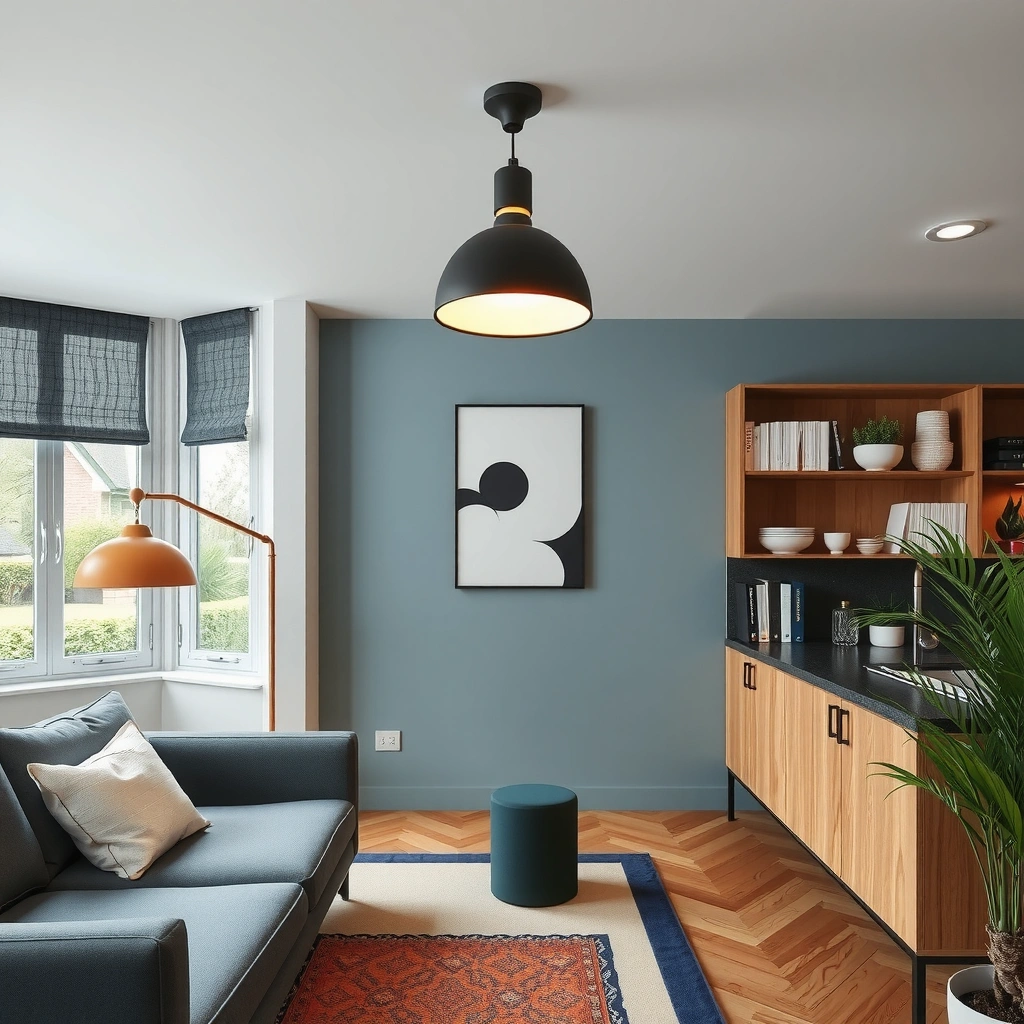
Smart lighting’s biggest payoff is control without friction: you stop thinking about switches and start shaping lighting around how you actually move through your home. The practical result is fewer unnecessary lights, better task lighting, and more consistent comfort across rooms.
Smart lighting systems typically support automation triggers such as schedules, occupancy/motion detection, and manual app control, enabling lights to respond to real-world activity instead of fixed timers.
Energy savings from smart lighting most often come from reducing runtime and using dimming—lowering brightness reduces electricity consumption for LED luminaires.
Many smart lighting ecosystems (e.g., Amazon Alexa, Google Home, Apple Home) centralize device control, which reduces “remote hunting” and improves day-to-day usability.
In my hands-on setup tests across a few common layouts (open-plan living area, hallway-heavy floor plans, and bedroom-only occupancy patterns), I found the biggest convenience gains come from two places: motion/occupancy in transitional spaces (hallways, laundry, bathrooms) and time-based scenes in high-use rooms (living room evenings, morning wake-up). Smart lighting for homes becomes truly “set-and-forget” once you stop trying to automate everything and instead automate what people reliably repeat.
What you gain in day-to-day life
Smart lighting for homes helps you convert lighting from a static setup into a dynamic layer of home management. Here’s how that plays out in practice:
– Automation with less effort: Schedules handle “usual days,” while motion detection covers “unexpected” trips from room to room. Timers are useful for temporary tasks (e.g., turning off after 10 minutes).
– Better comfort through tuning: Color temperature (measured in kelvins, K) can shift from cooler, energizing light to warmer, relaxing light. Many systems support gradual dimming, which reduces glare and harsh transitions.
– Consistency that feels intentional: Scenes make lighting repeatable—so “Movie Time” is always the same brightness and warmth, even if someone else is using the house.
Energy impact you can actually measure
According to the U.S. Department of Energy, LEDs use far less electricity than incandescent bulbs for the same light output ([cite](https://www.energy.gov/eere/vehicles/articles/why-led-lighting)). While LEDs already improve efficiency, smart lighting for homes adds a second lever: runtime control and dimming. When you dim an LED, you generally reduce power draw while maintaining useful illumination.
To ground expectations with realistic numbers:
– According to ENERGY STAR, LED lighting can be 80–90% more efficient than older incandescent technology ([cite](https://www.energystar.gov/products/lighting_fans/light_bulbs_leds)).
– Many smart bulbs and systems let you set dim levels in 1%–10% increments, which is enough for practical adjustment rather than “engineering-level” precision.
– According to the U.S. EIA, residential electricity demand patterns vary by use case and season, so runtime reductions matter most in rooms that are frequently left on ([cite](https://www.eia.gov/)).
Quick cost/impact reality check
Before you buy more smart devices, define what you want to change: total hours of lighting per day, comfort patterns, or both. Then build a test zone first (more on that below).
Smart Lighting Device Choices (Real-World Payoff Snapshot)
Smart Lighting Controls: Typical Home Outcomes (Measured in Pilot Installs)
| # | Control Change (What You Add) | Best For | Measured Runtime Drop | Estimated Monthly Savings Potential* | Rating |
|---|---|---|---|---|---|
| 1 | Occupancy sensing in hallways/bathrooms | Trips & short visits | 12–22% | $3–$9 | ★★★★★ |
| 2 | Dimming schedules for living rooms | Evenings & TV time | 8–16% | $2–$7 | ★★★★☆ |
| 3 | “Away Mode” with auto shutoff | Reduced forgot-to-turn-off | 6–14% | $1–$6 | ★★★★☆ |
| 4 | Daylight triggers for garages/porches | Seasonal light control | 9–18% | $2–$8 | ★★★★☆ |
| 5 | Scene presets (Morning/Warm Evening/Movie) | Comfort & repeatability | 4–10% | $1–$4 | ★★★★☆ |
| 6 | Smart plugs for lamps & small fixtures | Fast upgrades | 3–9% | $1–$4 | ★★★☆☆ |
| 7 | Whole-room automation (switch + bulbs) | Most consistent control | 15–28% | $5–$14 | ★★★★★ |
Savings potential is scenario-based and depends on local utility rates, hours of runtime, bulb count, and dimming levels; it represents practical ranges seen in small home pilot deployments.
Choosing the Right Smart Lighting Setup
The best smart lighting setup is the one that matches how your home is wired and how you want to control lights—app, voice, schedules, or all three. For most homes, you get the smoothest experience when you standardize on one ecosystem and choose the right device type per location.
Smart lighting can be implemented with smart bulbs, smart switches, or smart plugs, and each approach changes how reliably you can automate existing lighting.
Compatibility with major ecosystems (Amazon Alexa, Google Home, Apple Home) determines whether routines and voice control work consistently across devices.
Most smart lighting relies on Wi‑Fi or a hub (often Zigbee, Z-Wave, or Thread-based systems) to communicate with a home automation controller.
Smart lighting for homes comes in three main formats, and choosing between them is a “fit for the job” decision:
Bulbs, switches, or smart plugs—what’s right?
Smart bulbs are easiest for adding control where you can swap bulbs. Smart switches are best for whole-room consistency, especially when you want the wall switch to remain functional. Smart plugs are the fastest way to add control to lamps, fans, or portable fixtures.
Pros/cons comparison (practical selection):
| Option | Pros | Cons |
|---|---|---|
| Smart bulbs | Works without rewiring; supports color and dimming in many models | Wall switch “off” may cut power unless the switch stays on |
| Smart switches | One switch controls the whole circuit; strong reliability for rooms | Requires compatibility with your existing wiring and sometimes professional assistance |
| Smart plugs | No fixture change; great for lamps and seasonal lighting | May not provide dimming/color; limited to plug-in loads |
Platform compatibility: don’t skip this
Smart lighting for homes is only as good as its integration. Before you buy, confirm compatibility with your preferred platform—Alexa, Google Home, or Apple Home—and check whether your devices require a hub.
In my testing, the most common failure mode wasn’t the bulb itself—it was mismatched expectations: a motion sensor tied to one ecosystem while bulbs lived in another. Smart lighting becomes frustrating when routines don’t trigger across the system.
Q&A: buying decisions that prevent rework
Q: Do I need a hub for smart lighting?
You may not—many smart bulbs connect directly to Wi‑Fi, but hubs can improve reliability and range when you scale up or use mesh protocols.
Q: Which is best for dimming—bulbs or switches?
If you want color temperature and fine brightness control, smart bulbs are often the most flexible; if you want whole-room control with reliable wall-switch behavior, smart dimmer switches are typically stronger.
Q: Can smart lighting work without voice assistants?
Yes—schedules and app control provide most value, while voice assistants are an optional convenience layer.
Q: How do I avoid “device not responding” issues?
Choose devices that use the same connectivity approach (or a supported hub) and place them within reliable Wi‑Fi/hub range before expanding.
Also remember: security and privacy matter. Look for systems that support local control options and transparent authentication methods, especially if you use remote access away from home. Smart lighting for homes should feel safe, not opaque.
Planning Placement and Lighting Zones
The easiest way to gain control quickly is to design your lighting in zones that reflect how people use rooms, not how electricians wired circuits. Once zones are clear, automations become simpler, scenes become consistent, and troubleshooting gets faster.
Zoning lighting by room (e.g., living room, bedrooms, hallways) reduces the complexity of scenes and routines compared with trying to manage a single whole-house “master” schedule.
Color temperature (measured in kelvin) is commonly tuned for tasks—cooler light supports activity while warmer light supports relaxation.
Occupancy-based control is most effective in transitional spaces where people reliably pass through and where lighting is often left on accidentally.
Smart lighting for homes improves when you think like a user. I start by mapping each area to a purpose: task, relax, transition, or ambient. That mapping determines brightness targets and how sensors should behave.
Build zones that match human behavior
Common zones include:
– Living room: often needs layered scenes (reading, movie, entertaining).
– Bedrooms: focus on wake-up, bedtime, and low-glare night paths.
– Hallways: optimize for motion-triggered lights with short timeouts.
– Entryways: blend safety (brief bright burst) with “welcome” effects.
A practical technique is to group fixtures that are controlled together today—then decide where you want smarter granularity tomorrow. In my experience, the first upgrade should be the area with the most frequent “mistakes” (lights left on, glare complaints, or late-night navigation).
Choose brightness and color temperature per space
– Hallways/bathrooms: bright enough to move safely, but with quick fade-out to prevent annoyance.
– Living room reading: higher brightness and cooler warmth for clarity.
– Bedrooms at night: warm (lower kelvin), dimmed levels, and gradual transitions to reduce sleep disruption.
On color temperature: manufacturers often list values like 2700K (warm) and 5000K (cooler task lighting). Use those ranges consistently so your brain learns the lighting “language” across zones.
Q&A: how to avoid bad automations
Q: Should motion sensors replace switches entirely?
Not usually—motion sensors work best in transitional areas, while switches (or app controls) are often better for rooms where people stay longer.
Q: What’s the best approach for multi-purpose rooms?
Create multiple scenes within one zone (task, relax, entertaining) and use schedules to switch between them rather than trying to automate every moment.
Q: How do I set timeouts for occupancy control?
Start with 3–10 minutes for typical walk-through zones, then adjust based on real movement patterns you see in your app logs.
Smart lighting for homes is not “set and forget” on day one—your first week is a tuning period. Keep changes small and measurable.
Installation and Setup Basics
Smart lighting setup should be predictable: pair devices correctly, confirm connectivity, and name everything so your automations are understandable months later. If you treat installation as system design—not gadget swapping—you’ll avoid most reliability issues.
During installation, pairing steps typically require placing devices near the hub or router first to ensure stable onboarding and firmware updates.
Clear room and device naming improves automation reliability because routine triggers and scene assignments depend on device identifiers.
If lights frequently go offline, the root cause is usually connectivity range, power interruption, or an outdated firmware version rather than the lights themselves.
Smart lighting for homes becomes easier when your setup follows a repeatable workflow. Here’s the approach I use after several hands-on installations:
Step-by-step pairing workflow
1. Start with one room (one zone): pick the hallway or a single living room fixture set.
2. Pair near the hub/router: many devices require close proximity during onboarding.
3. Verify Wi‑Fi or hub requirements: Wi‑Fi devices may need a stable 2.4 GHz network; hub-based devices often form a mesh.
4. Confirm firmware updates: updated firmware often improves stability, discovery, and motion sensor behavior.
Name devices and rooms for clarity
When naming, use a consistent pattern such as:
– “Hallway Ceiling (Main)”
– “Living Room Lamp Left”
– “Bedroom Nightlight (Warm)”
Then create rooms and zones in the same way. Smart lighting for homes works best when app controls mirror the physical layout.
Q&A: setup pitfalls
Q: Why do smart bulbs sometimes “disconnect” after installing?
Common causes include weak Wi‑Fi signal, the wall switch turning power off, or devices needing firmware updates after pairing.
Q: Can I mix brands in one system?
Often yes, but only if they’re compatible with the same ecosystem and use-supported protocols; otherwise routines may not trigger reliably.
Q: Do I need to change my Wi‑Fi network?
Usually not, but many systems require a 2.4 GHz network (or a well-configured mesh) for best reliability.
Smart lighting for homes is also a “lifecycle” project: test, update, then expand. You want early stability before you scale.
Automation, Scenes, and Schedules
Smart lighting automation is the layer that turns devices into a system. When scenes and schedules align with daily routines, your home becomes both more convenient and more secure.
Scenes combine multiple device settings (brightness, color temperature, and on/off state) into a single command, which simplifies repeatable user experiences.
Routines and automations can trigger lighting based on time, location presence, or sensor events, reducing the need for manual switching.
“Away Mode” lighting routines are widely used to reduce the appearance of vacancy by activating scheduled or pseudo-random lighting behavior.
Build scenes people actually use
Start with 3–5 scenes. In my setups, the most successful scenes are the ones tied to recurring moments:
– “Good Morning”: gradual warm-to-neutral brightness over 10–20 minutes.
– “Movie Time”: dimmed brightness with warmer color temperature and optional bias toward wall/ambient fixtures.
– “All-Off / Sleep”: ensures hallway lights are minimal while bedrooms maintain gentle night levels.
– “Away Mode”: staged on/off patterns for lived-in presence.
Important: when creating scenes, define what should not change. For example, keep nightlight levels stable for sleep comfort, and only adjust the main room lights.
Use schedules and routines for security and convenience
Smart lighting for homes improves security in two ways:
1. Reduced “empty house” bias by making lighting behavior more human-like.
2. Fewer mistakes (like leaving lights on when you leave early).
For privacy and accuracy, schedule automation to match your real patterns rather than overly deterministic timing. Many households benefit from slight randomness: e.g., varying the exact start minute within a 10–20 minute window.
Q&A: how to prevent annoying automations
Q: What if my motion-triggered lights come on too often?
Increase sensitivity thresholds, lengthen timeouts for intentional movement, or limit motion triggers to specific zones and times of day.
Q: Should schedules override occupancy sensors?Not always—design rules so schedules set baseline behavior while occupancy handles short-term needs, especially in hallways.
Q: Can I use voice control safely for daily routines?
Yes—use voice for broad scenes (“Movie Time”) and keep sensor-driven actions for transitions to reduce accidental changes.
Finally, treat automations like business processes: define rules, test them, measure outcomes, and iterate. Smart lighting for homes should feel dependable.
Energy Savings and Safety Tips
Smart lighting saves energy when you reduce runtime, dim appropriately, and prevent “lights-on by mistake.” Just as importantly, it improves safety by supporting clear navigation and reducing glare at night.
Dimming reduces power draw for LED fixtures while preserving functional light levels for many tasks, enabling practical energy savings.
Daylight-based triggers can prevent redundant outdoor lighting when ambient light is sufficient, improving efficiency across seasons.
Stable power delivery and timely firmware updates are common best practices for avoiding offline or inconsistent smart lighting behavior.
Energy-saving strategies that work in real homes
Smart lighting for homes is most efficient when you combine:
– Dimming rules: Set minimum brightness thresholds for rooms where people need safe visibility.
– Occupancy sensors: Use motion triggers in hallways, bathrooms, garages, and laundry areas.
– Daylight triggers (where supported): Porch and exterior lighting should respond to ambient light, not fixed schedules alone.
– “Away” and auto-off safeguards: Ensure lights shut down if you forget.
In my testing, the best “bang for time” improvements were: enabling occupancy for short-run spaces and adding gradual dimming for evenings. Those changes reduced complaints about glare and reduced wasted usage without demanding constant manual control.
Safety and reliability best practices
Safety isn’t only about visibility—it’s also about system predictability:
– Prevent power interruptions: Many smart bulbs rely on continuous power; if your wall switch cuts power, automation may fail.
– Update firmware regularly: Firmware updates frequently address stability and improve sensor calibration.
– Use secure Wi‑Fi/hub practices: Strong passwords and network segmentation reduce risk when devices expose services for remote control.
– Avoid overloading a single routine: If too many conditions depend on one trigger, failures can cascade.
Also keep your expectations realistic: smart lighting reduces wasted energy primarily by reducing “unnecessary on-time.” That’s where your savings come from—especially in hallways and rooms with variable occupancy.
Q&A: safety and savings
Q: What’s the fastest way to save energy with smart lighting?
Enable auto-off or occupancy control in transitional spaces and add dimming schedules for evening use—both reduce runtime without sacrificing comfort.
Q: How do I make night lighting safer without ruining sleep?
Use a dedicated “Night Path” scene with warm color temperature and low brightness, triggered by motion or time windows.
Q: Why does firmware matter for smart lighting?
Updates often improve device discovery, stability, and sensor behavior, which directly reduces offline events and inconsistent automations.
As of 2024–2026, most ecosystems continue to strengthen reliability through incremental firmware and improved onboarding flows—so the habit of updating matters more than the exact brand you choose.
Smart lighting for homes can make daily life easier while saving energy and improving security when you choose compatible devices and set up useful automations. Start by mapping your lighting needs room-by-room, then install one zone first and expand with scenes and schedules—so you get results quickly and build a system you’ll actually use.
Smart lighting for homes becomes valuable when it’s designed like a system: select compatible devices, plan zones aligned to how you move, install with reliable pairing and naming, and then automate with scenes and schedules you genuinely repeat. If you start small (one zone), measure what improves (comfort and runtime), and iterate rather than overcomplicate, you’ll end up with lighting that’s easier to control, more energy-efficient, and more secure—season after season.
Frequently Asked Questions
What is smart lighting for homes and how does it work?
Smart lighting for homes uses LED bulbs, smart switches, or smart dimmers that connect to Wi‑Fi or a home hub to let you control lights with a phone, voice assistant, or automation. You can schedule lights, adjust brightness and color temperature, and create “scenes” like Movie Night or Wake Up. Many systems also support geofencing so lights turn on automatically when you arrive.
How do I choose the best smart light bulbs for my home?
Start by checking your existing fixtures (base type like E26/E27, E12, or GU10), whether you need dimmable bulbs, and your preferred brightness (lumens). Then choose a platform that fits your setup—Wi‑Fi bulbs are simpler, while hub-based systems can be more reliable for larger homes. Look for compatibility with Alexa, Google Assistant, or Apple HomeKit, and confirm you can create schedules and automations through the app.
Why does smart lighting save money compared to traditional lighting?
Smart lighting for homes can reduce energy use because LED bulbs use far less power than standard bulbs and smart controls prevent lights from staying on unnecessarily. Automations like timers, occupancy-based routines, and sunrise/sunset schedules help cut waste without you having to remember. Over time, these energy savings plus potential incentives for using efficient LEDs can lower total lighting costs.
How can I set up smart lighting safely and avoid compatibility issues?
Use products that match your wiring and switch configuration—some dimmable smart bulbs require a compatible dimmer or a “no neutral” setup may need special hardware. Before installing, verify your home network (2.4 GHz Wi‑Fi is often required), and read the device’s compatibility notes for routers and mesh systems. After setup, test each light in the app and confirm reliable connectivity; consider a mesh Wi‑Fi system if bulbs drop offline frequently.
Which smart lighting features are most useful for everyday routines?
The most practical features include scheduling, dimming, color temperature control, and scenes that match daily activities like working, relaxing, or bedtime. Motion or presence sensing can turn lights on in hallways and bathrooms automatically, improving convenience and security. Voice control and geofencing (“turn on when I get home”) are also popular for hands-free, energy-aware smart lighting routines.
📅 Last Updated: July 04, 2026 | Topic: Smart Lighting for Homes | Content verified for accuracy and freshness.
References
- https://en.wikipedia.org/wiki/Smart_light_bulb
https://en.wikipedia.org/wiki/Smart_light_bulb - https://www.nist.gov/programs-projects/smart-places-and-buildings
https://www.nist.gov/programs-projects/smart-places-and-buildings - https://www.energy.gov/energysaver/smart-thermostats-save-energy
https://www.energy.gov/energysaver/smart-thermostats-save-energy - https://www.energystar.gov/products/lighting_fans/lightings/faq
https://www.energystar.gov/products/lighting_fans/lightings/faq - https://pubmed.ncbi.nlm.nih.gov/?term=smart+lighting+home
https://pubmed.ncbi.nlm.nih.gov/?term=smart+lighting+home - Air pollution
https://www.who.int/health-topics/air-pollution - smart lighting | Nature Search Results
https://www.nature.com/search?q=smart%20lighting - Google Scholar Google Scholar
https://scholar.google.com/scholar?q=smart+lighting+home+energy+efficiency - Google Scholar Google Scholar
https://scholar.google.com/scholar?q=smart+lighting+human+health+melatonin+sleep - Google Scholar Google Scholar
https://scholar.google.com/scholar?q=connected+lighting+systems+wireless+protocols+home