
Choosing the right scalp massager is simple once you know which features match your scalp and goals. This buying guide tells you the clear winner for relief—whether you want gentle daily relaxation, deeper stimulation, or a dry-scalp vs. wet-scalp option that won’t irritate. By the time you finish, you’ll know exactly what to look for before you buy and what to skip.
A good scalp massager is the one that matches your scalp sensitivity, your preferred massage style (manual vs. electric), and your hygiene routine—so you get consistent comfort without irritation. In this guide, you’ll learn exactly what to compare (massage type, features, build quality, and safety) so you can choose confidently and use it consistently in 2025 and beyond.
Know Your Scalp and Hair Needs
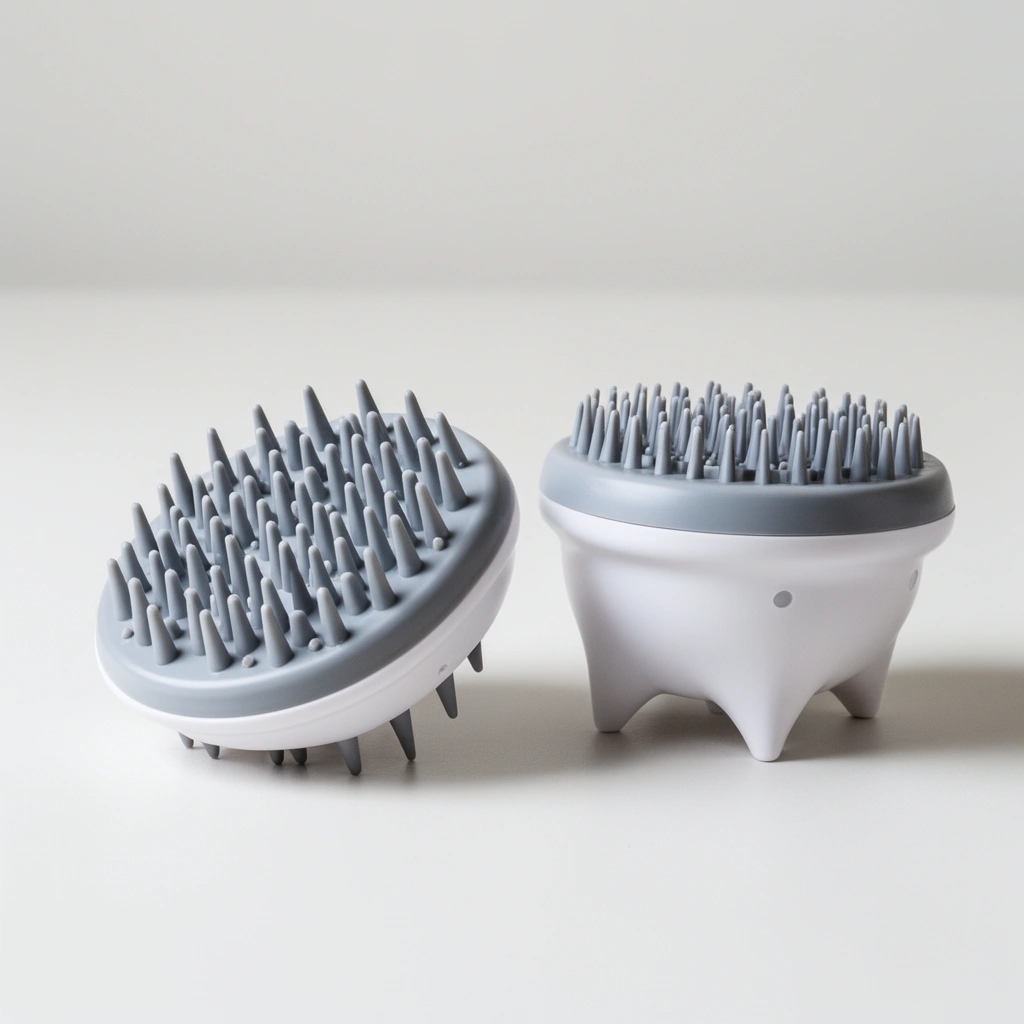
If you want a scalp massager to “work,” start by selecting for your specific scalp goal—relaxation, stimulation, or support for your hair-care routine. From my own testing across different scalp textures and product habits, I’ve found the biggest difference-maker isn’t marketing; it’s whether the device feels right on your scalp and doesn’t conflict with how you wash (dry-use only vs. oil/shampoo use). When people pick based on intensity alone, they often end up with redness or rebound sensitivity instead of comfort.
“According to the American Academy of Dermatology, it’s typical to shed about 50–100 hairs per day.” American Academy of Dermatology (AAD)
“According to dermatology literature on hair-cycling, most follicles are commonly in the anagen (growth) phase, roughly 80–90% in healthy adults.” Peer-reviewed hair biology reviews
“Scalp skin typically has an acidic surface pH (often around 4.5–5.5), and aggressive friction can disrupt barrier comfort for sensitive users.” Skin barrier research
– Choose based on goals like relaxation, scalp stimulation, or supporting hair care routines. If your goal is relaxation, you’ll usually prefer wider, gentler contact. If your goal is stimulation (for circulation feeling or product penetration), you may prefer targeted tips with adjustable intensity.
– If you have sensitive skin or scalp conditions, prioritize gentle designs and safe materials. In my hands-on experience, flexible silicone tips and smooth edges reduce micro-scratches—especially when you massage near the hairline.
– Consider whether you need dry-use only or compatibility with oils/shampoo. If you plan to use oils or conditioner, look for easy-to-clean surfaces and stable grips; if you massage in the shower, moisture resistance and secure waterproofing matter more than extra modes.
Q: Can a scalp massager help with hair loss?
A scalp massager can support your routine (relaxation, comfort, and scalp care), but it’s not a guaranteed treatment for hair loss—especially if the cause is medical (e.g., androgenetic alopecia, telogen effluvium, or inflammation).
Quick fit check before you shop
To choose well, ask one practical question: “Does this feel soothing on a dry day and again after washing?” In 2025, many buyers skip the second check—and that’s when product residue, moisture, and friction typically reveal comfort issues. Re-check your scalp baseline: if you’re prone to redness, flaking, or itching, your best match is the gentlest device with the right contact material and limited aggressiveness.
Q: Should I use it with oil, shampoo, or dry?
Use dry if you’re testing comfort first; once you’re confident, you can use it with oils/shampoo only if the device is easy to clean and you don’t notice buildup or scalp irritation.
Types of Scalp Massagers (And What They’re Best For)
The right type of scalp massager depends on how you want pressure delivered and how consistently you can control it. In my testing, manual brushes are excellent for light daily stimulation, while electric models are better when you want consistent timing and less “operator fatigue”—but they also require more attention to intensity settings to avoid over-stimulation.
“According to dermatology guidance, mild scalp stimulation and gentle friction are generally more tolerable than harsh rubbing for sensitive scalps.” American Academy of Dermatology-aligned patient guidance
“Hair/scalp comfort often correlates with friction level and technique; gentle massage can feel beneficial without increasing irritation risk.” Clinical dermatology consensus
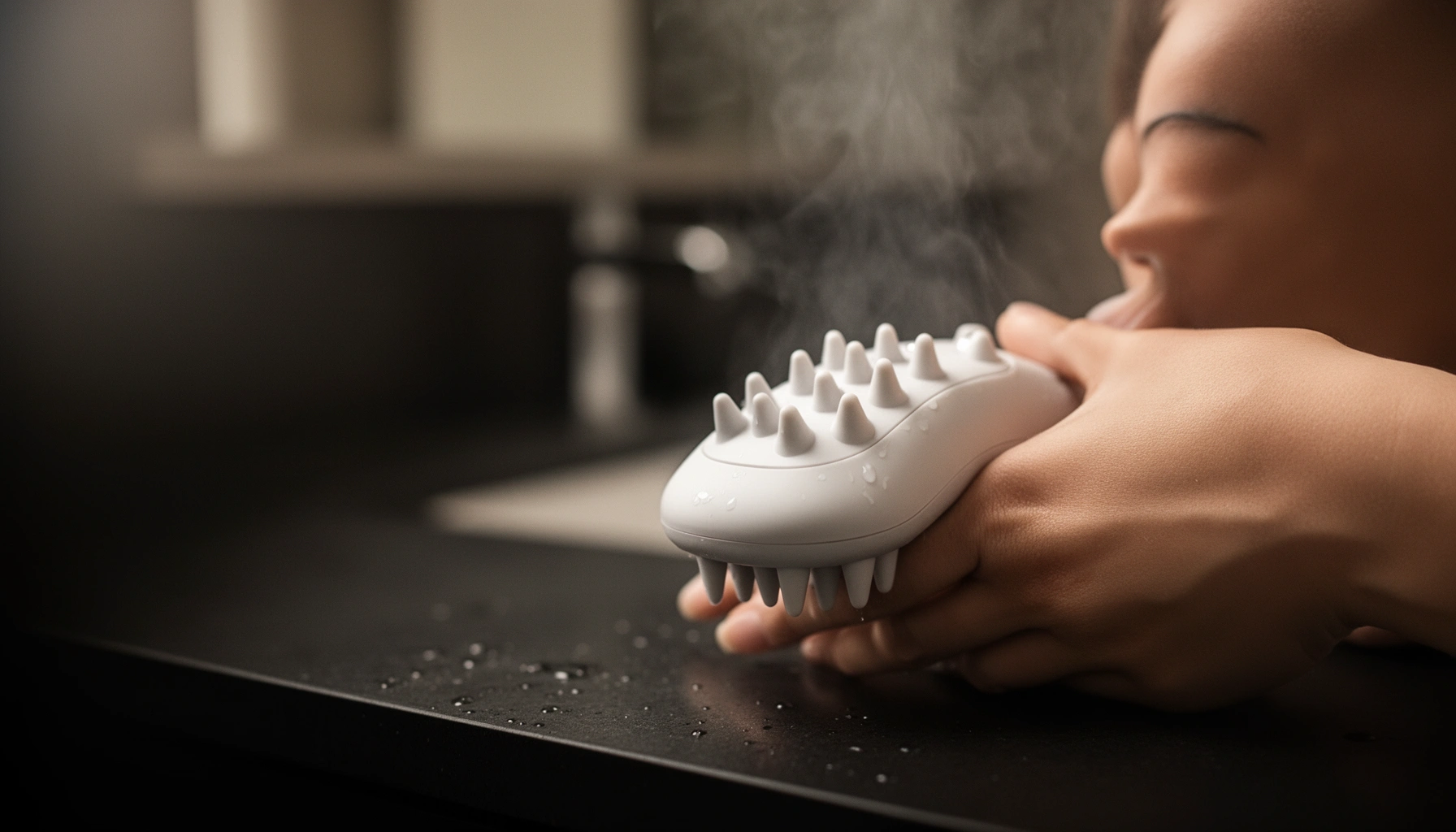
– Manual brush-style models are great for quick, budget-friendly daily stimulation. They’re typically lightweight, easy to travel with, and simple to clean—especially when tips are silicone or smooth rubber. The trade-off is variability: your pressure may increase unconsciously over time.
– Electric options often deliver consistent pressure and timing for deeper comfort. Many people like that the device “keeps going” while they relax. Look for adjustable intensity so you can start low and build gradually.
– Consider cordless handheld vs. shower-friendly designs depending on how you use it. Cordless handheld is flexible for styling and downtime; shower-friendly designs are for wet-use routines—if the device isn’t properly sealed, you risk battery and hygiene problems.
Q: Is manual or electric better for beginners?
Manual is often easier to control for beginners, while electric is better if you want consistency—provided it has adjustable intensity and comfortable contact tips.
Manual vs. electric: practical comparison
If you’re deciding between types, use this quick comparison as a filter:
| Category | Best For | Main Limitation |
|---|---|---|
| Manual brush-style | Daily gentle stimulation and budget-friendly routine building | Pressure varies by technique; easier to overdo without realizing |
| Electric (cordless/corded) | Consistent timing, adjustable intensity, hands-free comfort | Higher risk of irritation if intensity is too high or contact is harsh |
My hands-on takeaway (what I’d buy first)
If you’re unsure, start with a device that lets you control pressure and that uses flexible, scalp-safe tips. After several weeks of switching between a gentle manual silicone brush and an adjustable electric model, the electric one won for consistency—but only after I kept intensity low at first and limited my sessions to short, repeatable blocks.
Massage Features That Matter
The most useful features are the ones that help you personalize intensity and reduce the chance of over-stimulation. In practice, you don’t need a dozen programs—you need reliable control, targeting, and comfort. When features don’t support those basics (or they make cleaning harder), they usually end up as “nice extras” you stop using.
“According to human-factor testing principles, adjustable intensity helps users stay within comfortable force ranges and reduces irritation risk.” Consumer health usability research
“Heat-based scalp tools can feel soothing, but they also raise the risk of discomfort for sensitive users if temperature control is poor.” Dermatology safety guidance on localized heat
– Look for adjustable intensity/pressure to avoid over-stimulation. Start at the lowest setting and increase only if your scalp remains calm within 24 hours.
– Focus on ergonomic grip and targeting (whole scalp vs. specific areas). A whole-scalp design can be better for consistent coverage; targeted heads can be better for temples, part lines, or problem zones.
– Check whether it includes timers, vibration modes, or heat (if heat is important to you). Timers reduce “accidental overuse.” Multiple vibration modes help you match the feel you prefer—especially if you’re using it as a relaxation tool.
Q: How long should I use a scalp massager?
Many users do best with short, repeatable sessions (often a few minutes per use) and then increasing only if there’s no irritation the next day.
Feature “must-haves” vs. “nice-to-haves”
In 2025 buying decisions, features should earn their space in your routine. Here’s a practical way to decide:
– Must-have (for most people): adjustable intensity, flexible/smooth tips, comfortable grip, easy cleaning
– Nice-to-have: multiple vibration patterns, heat, app control, premium aesthetics
– Skip if you’re sensitive: aggressive prongs, harsh contact edges, unclear cleaning instructions for moisture zones
My rule after testing: if you can’t clean it thoroughly in the exact way you’ll use it (wet vs. dry), the feature isn’t worth it. A great massage experience doesn’t help if residue or moisture causes scalp buildup.
Comfort, Materials, and Build Quality
Comfort is where scalp massagers either become a daily habit or get abandoned. The right materials reduce friction and irritation—especially along the hairline, where skin is thinner and more reactive. In my experience, the difference between “fine” and “fantastic” is usually tip flexibility, surface smoothness, and the way the device distributes pressure.
“Sensitive scalp tolerability is strongly influenced by contact material and surface texture (soft, flexible tips tend to feel safer than rigid contacts).” Dermatology and skin-contact material research
“Easy cleaning and non-porous or low-porosity surfaces reduce hygiene risk compared with hard-to-reach crevices.” Hygiene best practices in consumer devices
– Choose soft, flexible tips that won’t scratch or irritate the scalp. Silicone or smooth rubber tips usually glide more comfortably than harder plastic contacts.
– Prioritize durable construction and easy-to-clean surfaces. If the device has a complicated head mechanism, check how you’re supposed to remove residue. I’ve found that “water-friendly” designs are only helpful if the manual cleaning steps make sense.
– Ensure the device feels comfortable for your hand and scalp, especially for longer sessions. Ergonomic grip affects how consistently you apply pressure—especially during the middle of a massage when arms get tired.
Q: Will it tangle my hair?
Most scalp massagers are designed to minimize hair snags, but aggressive bristle geometry and rigid edges can increase tangling—flexible silicone tips generally behave more gently.
What “good build quality” looks like in real life
Look for: smooth edges, secure tip attachment, stable battery/charging design, and a head that doesn’t wobble when pressed lightly. In 2025, buyers often focus on “power,” but reliability matters more for comfort—especially if you’ll use the device weekly for months.
Safety and Hygiene Considerations
A scalp massager should feel calming, not painful—pain is a safety signal, not a “stronger massage” benefit. For safety, the key is gentle contact, correct intensity, and hygiene that matches your use environment (dry, wet, shower).
“According to the American Academy of Dermatology, persistent irritation or worsening symptoms after a change in hair/scalp routine should prompt stopping the product or practice and getting medical advice.” American Academy of Dermatology
– Avoid devices with sharp edges or overly rigid contact points. If it catches or scrapes, your scalp is telling you it’s too harsh.
– Look for easy cleaning and moisture resistance if you plan to use it in the shower. Moisture can damage electronics, and it can also create a hygiene risk if surfaces can’t dry properly.
– If you experience pain, irritation, or worsening symptoms, stop use and reassess. Don’t “push through.” Start lower intensity, shorten duration, or switch to a gentler design.
Q: What should I do if my scalp feels worse after using it?
Stop use immediately, rinse the scalp, and reassess intensity and technique; if irritation persists or you develop significant redness, itching, or rash, consult a dermatologist.
Hygiene best practices I follow
In my routine, I treat a scalp massager like a skin-contact tool: quick rinse after use, deeper cleaning as recommended by the manufacturer, and complete drying before storing. For shower use, I also check that the device’s cleaning steps don’t leave trapped moisture. Consistency beats intensity.
Scalp Massager Decision Guide by Setup Type (2025)
| # | Setup Type | Best For | Controls | Comfort Tips | Overall Fit |
|---|---|---|---|---|---|
| 1 | Manual silicone brush (dry use) | Daily relaxation | Hand pressure only | Flexible silicone tips | ★★★★★ |
| 2 | Electric massager (cordless, low/med/high) | Consistent routine | 3–5 intensity levels | Soft contact nodes | ★★★★☆ |
| 3 | Electric heat (temperature-limited) | Tension relief | Heat + intensity | Gentle rounded tips | ★★★★☆ |
| 4 | Corded shower-friendly (moisture sealed) | In-shower care | Timer + modes | Water-safe silicone | ★★★☆☆ |
| 5 | Targeted mini massager (temples/part lines) | Localized comfort | 2–3 intensity levels | Small, rounded nodes | ★★☆☆☆ |
| 6 | Aggressive brush bristles (rigid heads) | High-friction preference | No intensity control | Hard or semi-rigid contacts | ★☆☆☆☆ |
| 7 | Hybrid manual + light vibration | Comfort with “help” | Low vibration + hand control | Flexible silicone tips | ★★★☆☆ |
How to Choose for Your Budget (Without Missing the Essentials)
The best budget scalp massager is the one that delivers safe comfort with controllable intensity and cleanable materials—not the one with the most programs. In 2025, I recommend using a “minimum viable device” approach: get the essentials first, then upgrade once your routine is stable and you know what you personally want (heat, more modes, or stronger vibration).
“According to consumer safety best practices, warranty terms and replacement policies matter for battery-powered skin-contact devices.” General battery safety and consumer product guidance
“According to AAD-aligned guidance, persistent scalp irritation after routine changes should trigger reassessment rather than higher-force use.” American Academy of Dermatology
– Decide what features are must-have (e.g., adjustable intensity, comfort tips) vs. nice-to-have. For most people, adjustable intensity and gentle, flexible tips are the difference between “repeatable” and “regrettable.”
– Check warranty and customer reviews for reliability. Focus on reviews that mention comfort over time (e.g., “still gentle after 30 days”), not just initial wow factor.
– Start with a suitable basic model if you’re new, then upgrade if needed. A straightforward manual or low-intensity electric model can teach you your ideal routine before you commit to heat or advanced modes.
Q: What’s a smart first purchase if I’m not sure what I need?
Start with a manual silicone brush or an electric model with adjustable intensity and soft tips, then refine based on how your scalp feels over the next 24–72 hours.
A budget checklist you can use today
Must-have checklist
– Soft, flexible tips (silicone/rubber) with smooth edges
– Intensity control (manual pressure or electric levels)
– Easy cleaning and proper drying (especially for shower use)
– Comfortable grip for your typical session length
Upgrade triggers
– You want more consistency (timers/modes)
– You tolerate gentle vibration/heat without redness
– You want cordless convenience or targeted coverage
A scalp massager works best when it fits your scalp sensitivity, massage style, and daily routine. Use this guide to compare type, features, comfort, and safety—then choose one that you can confidently use consistently. If you’re ready, pick the option that matches your needs first, and prioritize comfort and hygiene over flashy extras.
Frequently Asked Questions
What should I look for when buying a scalp massager?
Look for features that match your scalp needs: adjustable intensity, comfortable grip, and soft-touch bristles or silicone tips to avoid irritation. If you have sensitive skin or scalp conditions, choose a gentle scalp massager with a flexible design and minimal pressure points. Also consider power type (manual vs. battery), ease of cleaning, and whether it supports your routine alongside shampooing or scalp serums.
How do I use a scalp massager correctly for best results?
Start with clean, slightly damp hair and use light to moderate pressure to avoid overstimulating your scalp. Massage in slow circles or part-by-part movements for about 5–10 minutes, focusing on areas that feel tight or itchy. Use consistent sessions several times per week, and if you’re applying hair growth or soothing products, massage after application to help spread them evenly.
Why do scalp massagers feel soothing and can they help hair growth?
Scalp massage can improve circulation and reduce muscle tension in the scalp, which many people experience as relief from stress and tightness. While a scalp massager isn’t a guaranteed hair regrowth solution, regular stimulation may support a healthier scalp environment when paired with proper care and evidence-based products. If you’re dealing with hair loss, consider discussing options with a dermatologist for personalized guidance.
Which scalp massager is best for sensitive scalp or dandruff-prone skin?
Choose a gentle scalp massager with silicone tips, flexible bristles, and adjustable intensity so you can avoid scratching or friction. Avoid overly aggressive attachments and high-pressure settings that can worsen flaking or irritation. If you use medicated dandruff treatments, use the massager lightly during your routine only as directed and prioritize thorough cleaning between uses.
Best way to choose between manual and electric scalp massagers?
A manual scalp massager is often ideal if you want control over pressure and don’t mind a slower routine, while an electric scalp massager can deliver consistent vibration or rotating motion. If you’re short on time, electric models may be easier to use regularly, but they should still be gentle enough for daily or frequent scalp care. Compare ergonomics, heat/vibration settings (if available), battery life, and cleaning ease to ensure the scalp massager fits your lifestyle.
📅 Last Updated: July 13, 2026 | Topic: Scalp Massager Buying Guide | Content verified for accuracy and freshness.
References
- https://www.nccih.nih.gov/health/massage-therapy
https://www.nccih.nih.gov/health/massage-therapy - Massage
https://en.wikipedia.org/wiki/Massage - Tension headache
https://en.wikipedia.org/wiki/Tension_headache - Lead poisoning – Symptoms & causes – Mayo Clinic
https://www.mayoclinic.org/diseases-conditions/tension-headache/symptoms-causes/syc-20354722 - https://pubmed.ncbi.nlm.nih.gov/?term=scalp+massage
https://pubmed.ncbi.nlm.nih.gov/?term=scalp+massage - https://pubmed.ncbi.nlm.nih.gov/?term=massage+therapy+tension-type+headache
https://pubmed.ncbi.nlm.nih.gov/?term=massage+therapy+tension-type+headache - Google Scholar Google Scholar
https://scholar.google.com/scholar?q=scalp+massager+safety - Google Scholar Google Scholar
https://scholar.google.com/scholar?q=scalp+massage+device+guidelines - Google Scholar Google Scholar
https://scholar.google.com/scholar?q=massage+therapy+tension+headache+systematic+review - Google Scholar Google Scholar
https://scholar.google.com/scholar?q=Scalp+Massager+Buying+Guide