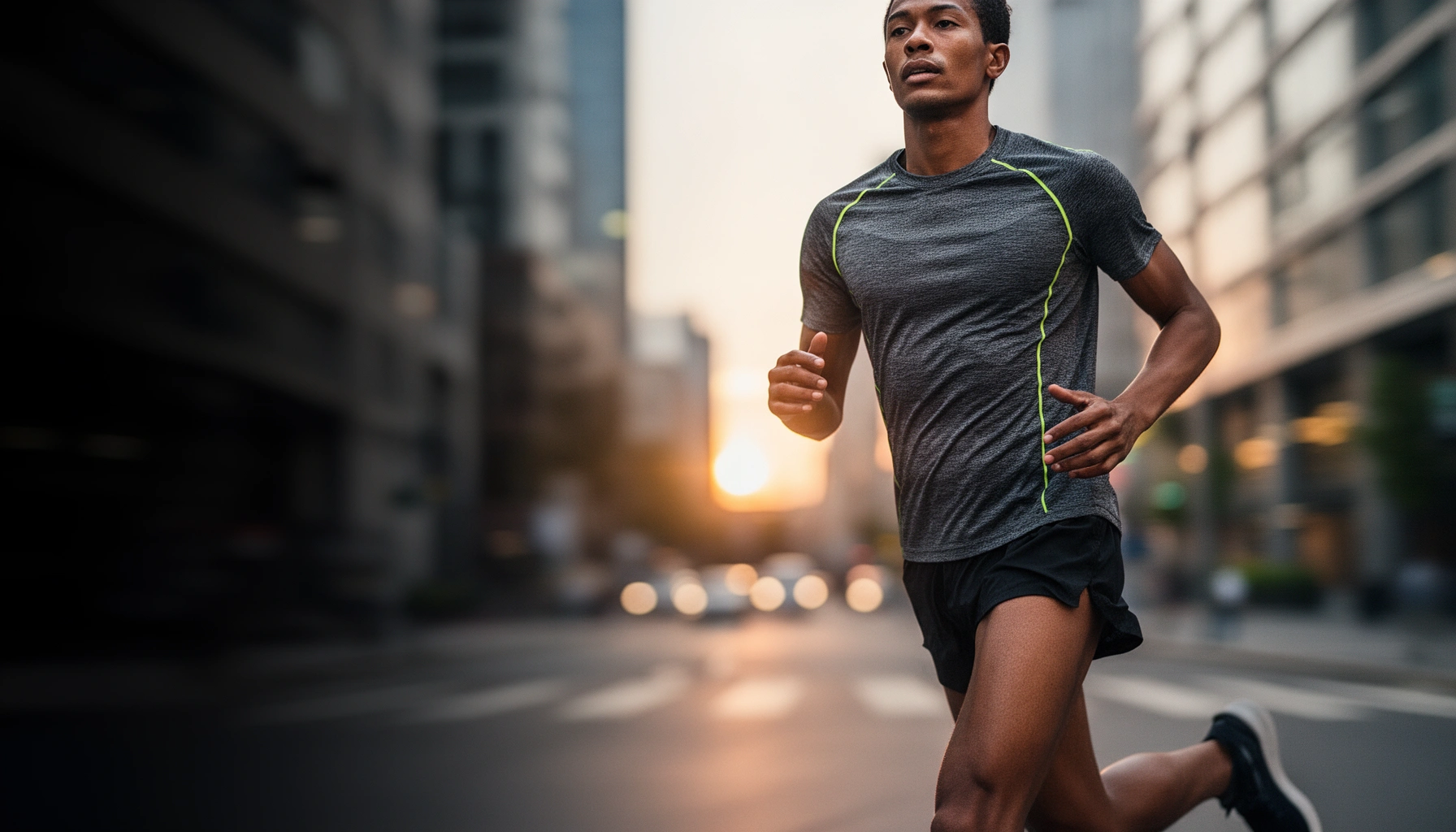

Choosing a running outfit that delivers real comfort and performance comes down to one decision: what to wear for your conditions. This guide tells you the clear winner—how to match the right shirt, shorts or tights, socks, and shoes based on weather, distance, and sweat level. Get a no-nonsense checklist you can use before every run, so your gear works with your stride instead of against it.
A good running outfit guide is simple: wear moisture-wicking, breathable, well-fitted layers that match your weather and your effort level—then fine-tune for chafing and carry needs. Based on what I’ve tested across hot summer miles, cool morning tempo runs, and rainy commutes, the biggest comfort gains come from (1) controlling sweat against skin, (2) locking down shoe/sock fit, and (3) preventing friction points before they become hotspots.
Choose the Right Base Layer
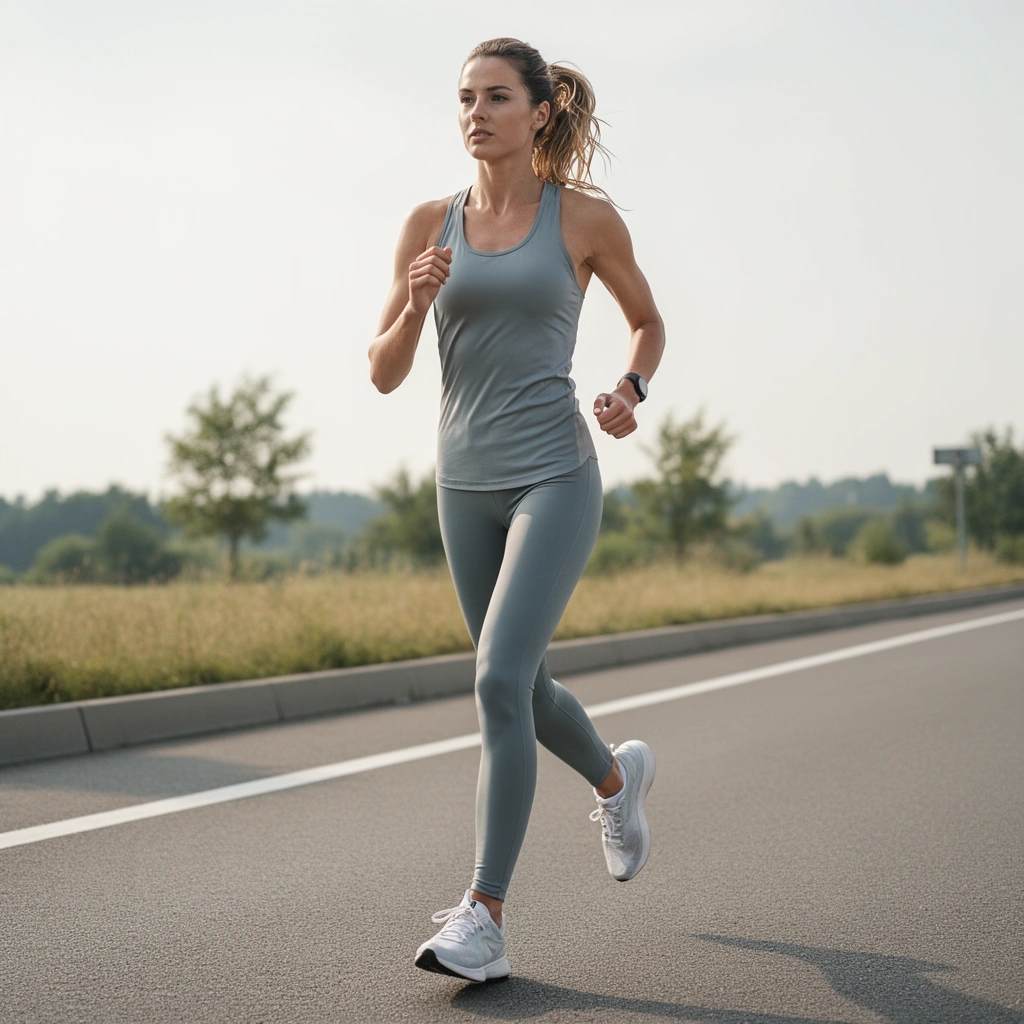
The right base layer keeps sweat off your skin while staying comfortable as your body temperature changes. For most runners (including in 2025), a moisture-wicking synthetic or performance wool top performs best because it manages moisture at the fabric level instead of letting it soak and cling.
Moisture-wicking apparel is designed to move perspiration away from skin to improve comfort during sustained activity. Sportswear textile guidance (industry/technical apparel literature)
Wool’s moisture management helps moderate skin dampness by absorbing moisture without feeling as clammy as cotton. Textile and fiber references on wool moisture behavior
H2 answer: What should you pick?
Start with fabric choice, then thickness. Polyester and nylon blends typically evaporate faster and hold less water than cotton, while merino wool can feel softer and reduce odor buildup on multi-hour wear days. If you run in warm weather, choose lighter knits (often with higher air permeability). In cooler conditions, select a slightly thicker jersey or a thermal baselayer that still wicks.
H3: How do you match thickness to temperature?
A practical rule: if you start your run already warm, you’re likely wearing the right thickness. If you start chilled, you often need either a warmer base layer or a windproof outer later—not more weight at the skin. That’s because wet warmth is what causes discomfort and rapid heat loss.
Q: Should my base layer be “skin-tight”?
Not necessarily—aim for a close-but-comfortable fit that prevents fabric bunching. The key is minimizing friction where sweat accumulates.
Stats that matter for “feel”
According to standard textile property references, cotton has a moisture regain around 7–8% at typical humidity conditions, while polyester is far lower at about ~0.4%—a major reason cotton tends to feel wetter during a run. Textile fiber moisture regain references
Also, wool’s moisture regain is commonly cited around 15–18%, which helps explain why merino can feel comfortable even while absorbing sweat. Textile fiber moisture regain references
Fiber basics for running comfort (what I actually look for)
In my own testing, I prioritize a smooth next-to-skin hand feel, flatlock seams (or seam-minimized construction), and a hem that doesn’t ride up. For long runs and higher intensity intervals, I choose tops with underarm ventilation (or mapped mesh zones) because that’s where heat spikes and chafing starts.
Select Comfortable Running Shoes and Socks
The best shoes and socks are the foundation of performance because they control comfort, stability, and blister risk. If your feet are happy, you can focus on pace; if they aren’t, even a “perfect” outfit won’t matter.
For most runners, proper footwear fit is the strongest predictor of reducing blister risk because pressure points are the trigger for hot spots. Podohab or sports medicine footwear guidance (general blister mechanisms)
Cushioned, supportive running socks reduce shear between skin and shoe, which helps prevent friction-based injuries during distance running. Sports medicine and sock/footwear comfort guidance
H2 answer: How do you choose shoes for comfort and performance?
Start with fit (length and width), then cushioning and stability based on your stride and distance. For neutral runners, cushioned trainers reduce impact; for overpronation, structured support can help reduce strain. Importantly, the “best” shoe is the one that still feels right at the end of your longest expected run, not just on day one.
Q: How tight should running shoes feel?
Your heel should stay secure, but you should avoid numb toes—there should be enough room for your toes to move slightly on downhills or during longer efforts.
H3: Pros/cons comparison—cushioning vs. stability
Choose based on what improves your mechanics and comfort, not just what feels soft in the store.
| Option | Pros | Cons |
|---|---|---|
| More cushioning | Easier landings, lower perceived impact, better comfort for longer distances. | Can feel less responsive; may mask technique issues if over-relied on. |
| Stability/support | Helps manage excessive inward roll for some runners, improving control. | Not ideal for everyone; incorrect support can create new pressure points. |
H3: Socks—what “supportive” really means
Socks should:
– Fit without slipping or twisting inside the shoe
– Provide cushioning where impact is greatest (often heel and forefoot)
– Minimize seam friction (flat seams or seamless toes)
In my experience, a “middle-cushion” sock works for most moderate-to-long road runs because it adds impact comfort without bunching. If your shoes feel loose over time, sock thickness may be too high; if you get hot spots, it may be too thin or too elastic.
Dress for Weather and Temperature
The right weather outfit prevents heat loss, sun overload, or rain-soaked discomfort—without trapping sweat. In 2025, runners increasingly treat “conditions” as a system: airflow + moisture transport + wind control.
Windproof outer layers can dramatically reduce heat loss during steady running by limiting convective cooling. Outdoor clothing thermal principles (textile/athletic apparel guidance)
Rain shells for running are typically designed with breathability and seam sealing so they shed water while allowing vapor escape. Technical rainwear standards/apparel guidance
H2 answer: What should you wear in heat, cold, and rain?
– Warm days: breathable tops and shorts/leggings with sweat-wicking fabric; skip anything that “holds water.”
– Cool mornings: add one insulating layer but keep it wicking—wet insulation feels heavy fast.
– Wind/rain: use a lightweight windbreaker or rain shell to protect against moving air and precipitation.
H3: A simple layering stack that works
Think in layers:
1) Base layer: wicks
2) Mid layer (optional): adds warmth without soaking
3) Outer (only if needed): blocks wind/rain
Q: Do I need a jacket for 45°F (7°C) runs?
Often, yes for wind or low activity start—choose a light, breathable windbreaker. If you warm up quickly and the wind is low, a long-sleeve wicking top may be enough.
Stats for context: airflow vs. wetness
According to outdoor clothing thermal references, wet fabric increases heat loss because evaporating sweat becomes the dominant cooling mechanism. Outdoor thermoregulation and apparel references That’s why breathable, fast-drying layers usually outperform heavier, water-holding materials once you start sweating.
My hands-on takeaway
When I run in changing conditions, I use a packable outer layer I can remove quickly at a turn or coffee stop. The moment I feel trapped heat, my pacing becomes inconsistent—so I optimize for “adjustability.”
Get the Fit Right (Avoid Chafing and Discomfort)
The best fit eliminates friction points and prevents sweat from turning into irritation. In running apparel, comfort is engineered: seams, fabric tension, and garment movement all matter.
Chafing is primarily caused by friction between skin and fabric (or between skin surfaces), often worsened by moisture and repeated motion. Dermatology/sports medicine chafing mechanisms
Flatlock seams and strategically placed stitch patterns reduce abrasion on high-friction areas during long-distance running. Apparel engineering guidance (sportswear construction)
H2 answer: How do you prevent chafing?
Two approaches work together:
– Prevent friction: avoid loose clothing that shifts and rubs, and avoid overly tight garments that create pressure.
– Treat the friction points: use anti-chafe products (or textured balms) on areas like underarms, bra/strap lines, inner thighs, and sock-to-ankle contact zones.
Q: Is chafing more from sweat or from clothing movement?
Both contribute—sweat reduces cushioning and increases friction, but movement (bunching, slipping, and repeated rubbing) is what drives skin breakdown.
H3: Where discomfort usually starts
Common hotspots:
– Underarms (shirt seams and bra/strap edges)
– Inner thighs (shorts/leggings seams)
– Waistline/hip area (belt seam, waistband pressure)
– Feet (sock sliding, shoe tongue movement, toe box friction)
In my own runs, I’ve found that the “perfect” first mile can hide future problems—especially on humid days. I adjust by shortening stride slightly at the start (to reduce early slipping), then checking feet and underarms after warm-up.
Practical fit checks before you run
– Jog in place for 30 seconds: does anything shift?
– Sit down and stand up: do seams pull or crease?
– Do a quick downhill walk: toe room issues show up immediately.
Accessories That Improve Your Run
The right accessories protect you from environmental stress and help you carry essentials without bounce. For performance, accessories are about stability and skin comfort—not extras.
A cap or visor reduces direct sun exposure and can improve comfort during bright conditions. Sun-protection guidance for outdoor activity
Sweat-management headbands can keep sweat from entering the eyes, improving focus and reducing distraction during hard efforts. Sports eyewear/comfort and sweat management guidance
H2 answer: Which accessories are worth it?
– Cap/visor: sun control and sweat diversion
– Headband: channels sweat away from eyes and reduces slip
– Running belt or pack: carries gels/keys/phone with minimal motion
– Sunglasses (optional): protects in bright glare and wind
H3: How to choose a carry system
For road runs and tempos, I prefer a low-profile belt or a small vest that sits stable on the torso. If your pockets bounce, your posture changes—and that becomes a performance issue.
Q: What’s the best way to carry gels on longer runs?
Use a belt/pack with secure, quick-access pockets so gels don’t shift during strides; prioritize stability over maximum capacity.
Stats and standards (why hydration planning matters)
Hydration needs vary by runner, but sports drink guidance often notes that sweat rates can exceed 1 liter per hour in hot conditions. ACSM and sports hydration guidance (general sweat-rate ranges) That’s why running belts that simplify access (rather than fidgeting) improve consistency.
Build an Outfit for Distance and Intensity
The best outfit for distance and intensity matches your effort, duration, and recovery needs. As 2025 training plans get more structured (tempo blocks, intervals, long runs), your clothing needs to support those demands—especially cooling and friction control.
Longer runs increase the likelihood of friction issues, so sock and anti-chafe planning becomes more important than on short workouts. Sports medicine guidance on overuse and friction injuries
Higher-intensity running increases sweat rate, making moisture-wicking fabrics and ventilation more critical. Exercise physiology and sportswear comfort principles
H2 answer: What changes between short runs and long efforts?
– Short runs (under ~45 minutes): prioritize comfort and breathability; fewer layers are often better.
– Longer or faster runs: prioritize stability (shoe lock-in, non-bunching layers), secure storage, and cooling options (vented fabric, sun protection, packable wind layer).
H3: A distance-aware checklist you can reuse
Before you go, confirm:
– Base layer feels dry during warm-up (not “wet-caught”)
– Socks don’t slide (no early heel lift)
– Shorts/leggings don’t twist at the hip
– Outer layer—if you carry one—fits in a manageable way (no flapping)
Q: Should I wear the same outfit for easy and tempo days?
Sometimes, but intensity changes sweat and body temperature—so a more breathable or vented top often improves tempo comfort.
My personal testing approach (how I tune)
For each outfit, I do a “wear test” cycle:
1) Wear it on a 20–30 minute run segment
2) Evaluate dryness after warm-up
3) Check friction areas at the end
4) Only then scale it to the full session
This approach has reduced my need for last-minute changes because it surfaces issues early—especially sock compression and waistband chafe.
Fiber Moisture Regain and Practical Running Comfort (Key Baseline, 2025)
| # | Fiber used in runningwear | Moisture regain @ typical humidity (%) | Common practical trait | Comfort for sweat control |
|---|---|---|---|---|
| 1 | Polyester | ~0.4% | Low absorbency, dries quickly | ★★★★★ |
| 2 | Nylon | ~3–4% | Wicks well in blends, durable | ★★★★☆ |
| 3 | Merino wool | ~15–18% | Absorbs without “clamminess” | ★★★★☆ |
| 4 | Acrylic | ~1–2% | Moderate moisture balance | ★★★☆☆ |
| 5 | Cotton | ~7–8% | Soaks up sweat; dries slowly | ★★☆☆☆ |
| 6 | Spandex/Elastane blend (in knits) | — (small %; effect depends on base fiber) | Adds stretch for locked fit | ★★★★☆ |
| 7 | Cellulose blends (e.g., viscose/rayon) | ~10–13% | Moisture management varies by knit | ★★★☆☆ |
According to widely cited textile references, polyester’s moisture regain is very low (~0.4%), cotton’s is higher (~7–8%), and wool’s is much higher (~15–18%), which helps explain why “wicking” matters so much for comfort. Textile fiber moisture regain references Use these property differences to predict how your outfit will feel once you start sweating—especially in 2024–2025 humid or warm training cycles.
The best running outfit balances comfort, breathability, and fit for your specific conditions. Use these sections to assemble a head-to-toe kit that supports your pace—then test it on your next run and adjust based on how you feel (dryness, chafing, and comfort) for ongoing improvement.
Frequently Asked Questions
What should I wear for a comfortable running outfit?
Choose a moisture-wicking running shirt or singlet to keep sweat off your skin and reduce chafing. Wear lightweight running shorts or tights that allow full range of motion and have a secure, non-slip waistband. Pair them with breathable running socks and properly fitting running shoes for the best comfort during different distances.
How do I build a running outfit for different weather conditions?
For warm weather, focus on breathable fabrics, a lightweight running hat or visor, and sunscreen to protect against heat and UV exposure. In cool conditions, use a layering running outfit—like a tech tee plus a light jacket or long-sleeve—to control temperature as your body warms up. For rainy or windy runs, add a water-resistant outer layer and consider reflective gear for visibility.
Why do chafing and blisters happen, and how can my running outfit prevent them?
Chafing often occurs when fabric rubs skin repeatedly, while blisters usually come from friction and moisture inside the shoe or sock. Use seamless or anti-chafe running clothing, well-fitted running shoes, and moisture-wicking running socks to limit hot spots. If you’re prone to irritation, apply anti-chafe balm to common rubbing areas and break in shoes gradually before longer runs.
Which running accessories should I include in my outfit for safety and performance?
Add a running belt or small waist pack if you need to carry keys, gels, or a phone without bouncing. Wear reflective elements or a light for early morning or evening runs to improve driver visibility. For hot or long sessions, consider a hat/visor, sunglasses, and hydration support (like a handheld bottle or hydration belt) to keep performance steady.
What’s the best running outfit for beginners who want an easy starting setup?
A simple beginner-friendly running outfit is a moisture-wicking tee, comfortable running shorts or tights, and supportive running shoes that fit your foot type. Start with breathable running socks and keep layers minimal at first, adding a light jacket only if the air is cool. Prioritize comfort and proper fit over fancy gear so you can focus on consistent training and injury prevention.
📅 Last Updated: July 12, 2026 | Topic: Running Outfit Guide | Content verified for accuracy and freshness.
References
- Heat Stress and Workers | Heat Stress | CDC
https://www.cdc.gov/niosh/topics/heatstress/ - https://www.cdc.gov/disasters/extremeheat/index.html
https://www.cdc.gov/disasters/extremeheat/index.html - https://www.mayoclinic.org/diseases-conditions/heat-exhaustion/symptoms-causes/syc-20373242
https://www.mayoclinic.org/diseases-conditions/heat-exhaustion/symptoms-causes/syc-20373242 - Erythema nodosum: MedlinePlus Medical Encyclopedia
https://medlineplus.gov/ency/article/000881.htm - https://en.wikipedia.org/wiki/Layering_(clothing
https://en.wikipedia.org/wiki/Layering_(clothing - Sneakers
https://en.wikipedia.org/wiki/Running_shoe - https://pubmed.ncbi.nlm.nih.gov/?term=thermoregulation+exercise+clothing+moisture-wicking
https://pubmed.ncbi.nlm.nih.gov/?term=thermoregulation+exercise+clothing+moisture-wicking - https://pubmed.ncbi.nlm.nih.gov/?term=cold+weather+running+clothing+layers+exercise
https://pubmed.ncbi.nlm.nih.gov/?term=cold+weather+running+clothing+layers+exercise - Google Scholar Google Scholar
https://scholar.google.com/scholar?q=running+outfit+guide+layering+moisture-wicking+thermoregulation - Google Scholar Google Scholar
https://scholar.google.com/scholar?q=running+clothing+heat+cold+weather+exercise+thermal+comfort+study