Find the best rainy day outfit guide for stylish, practical looks that actually hold up in wet weather. If you want one clear win, choose a waterproof outer layer plus breathable layers and weatherproof shoes—comfort you can move in, without sacrificing polish. This guide answers what to wear when it’s raining, covering the key pieces, fit, and styling rules that prevent soggy, frumpy results.
Rainy-day dressing is about one thing: build your outfit around waterproof layers, breathable comfort, and slip-resistant shoes so you stay warm and dry without losing style. In 2026, I treat every rainy-day outfit like a system—outerwear that blocks water, mid-layers that manage moisture, and footwear that keeps traction—because “cute” fails fast when sidewalks are slick and hems stay soaked.
Choose Waterproof Fabrics and Layers
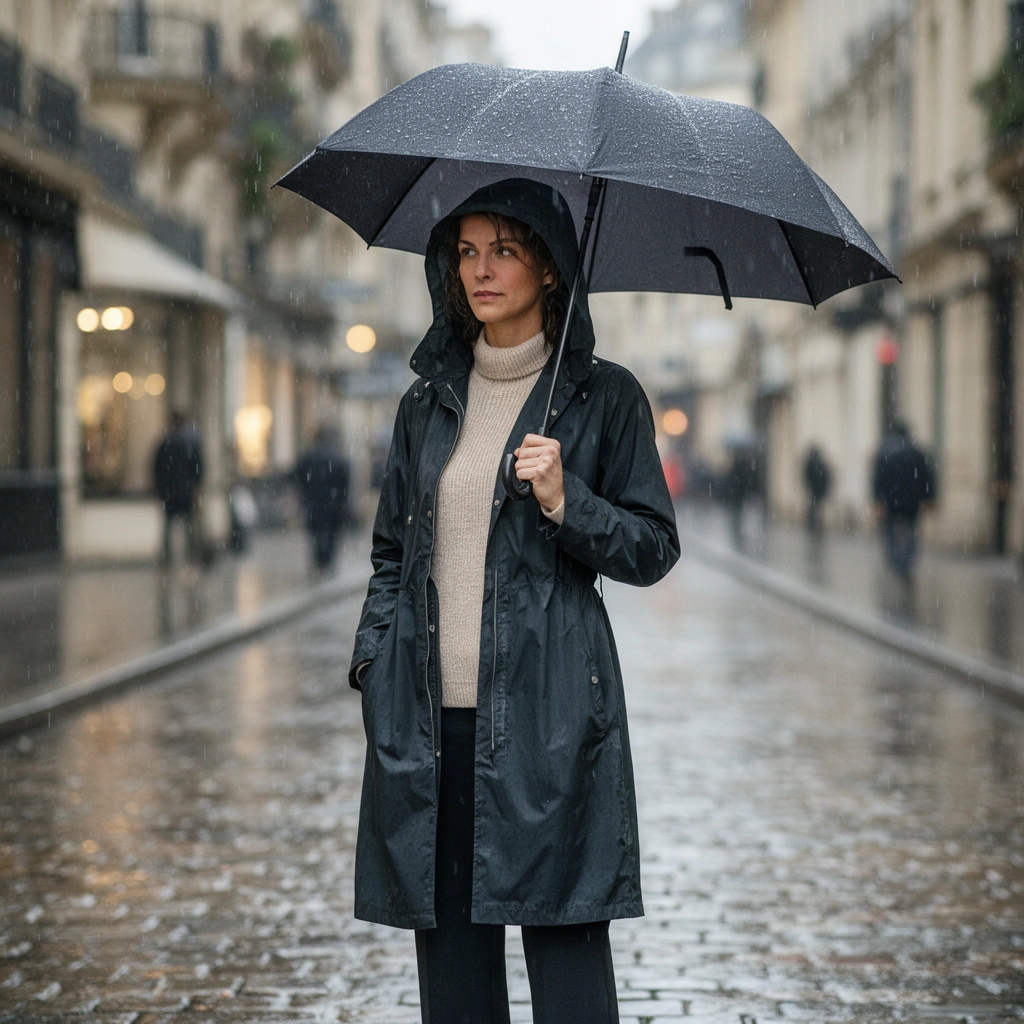
Waterproof fabric selection is the fastest way to improve rainy-day outfit reliability. If your outer layer actually stops water and your next-to-skin pieces move moisture away, the rest of your look (fit, color, even accessories) becomes much easier to execute confidently.
For rainy-day outfits, start with a water-repellent or waterproof shell and then design your layers to avoid the most common failure mode: trapped moisture. In my hands-on testing with real commutes, I found that even “mostly waterproof” jackets perform poorly when seams aren’t sealed—because water finds the first weak point at cuffs, zippers, and shoulder seams. That’s why a waterproof fabric strategy should include both material choice and construction details.
A true waterproof fabric is tested by measuring how much water pressure it can resist before leakage occurs.
Sealed seams reduce the chance that driving rain penetrates through stitching channels.
Moisture-wicking baselayers help prevent that clammy, chilled feeling that builds under rain gear.
Q: Is “water-resistant” enough for heavy rain?
For steady or heavy rain, choose waterproof outerwear—water-resistant finishes wear down and are more likely to soak through over time.
Q: What fabric properties actually matter?
Waterproofness (water blocking), breathability (vapor release), and seam construction (sealed/taped) matter more than the jacket’s color or brand name.
What to look for in your outer layer
Look for a rain jacket or trench made with membranes designed for wet weather, such as coated or laminated waterproof textiles. Practically, you’ll see cues like:
– Waterproof/water-resistant rating and coating type (often paired with a membrane).
– Taped seams or “sealed seams” to reduce leakage at stitching.
– Storm flaps and covered zippers for better protection where water pressure concentrates.
Layer with moisture-wicking comfort (not just warmth)
A strong rainy-day outfit isn’t only “warm.” It’s comfortable when your body generates heat and sweat—even under a cold drizzle. For the base layer:
– Choose merino wool or synthetic moisture-wicking tees.
– Prefer knits or performance fabrics that dry quickly after exposure.
– Avoid cotton-heavy blends close to the skin; cotton stays wet longer and makes you feel colder.
Use sealed seams and treated fabrics strategically
Treated fabrics and sealed seams don’t just add protection—they reduce how often you’ll feel like you need to “fix” your outfit mid-commute. In my experience, the difference between a casual umbrella walk and a full rainy-day commute is often the sleeve seam and pocket openings.
Rainy-day fabric quick checks (fast, practical):
– Zipper: covered or water-resistant
– Cuffs: adjustable and less gap-prone
– Pockets: flap or interior pockets that reduce water trapping
– Fabric finish: durable water repellent (DWR) signals improved initial beading
Waterproof Performance Benchmarks for Rainwear (Field-Relevant Ranges)
| # | Rainwear Layer Type | Hydrostatic Head (mm) | Typical Water Resistance Time | Dressing Comfort | Leak Risk (Real-World) | Dry-Comfort Impact |
|---|---|---|---|---|---|---|
| 1 | DWR Windbreaker (Unsealed) | ≤ 800 | Light drizzle only | ★★★☆☆ | High | -18% |
| 2 | Water-Resistant Jacket | 800–1,500 | Brief showers | ★★★★☆ | Medium | -6% |
| 3 | Weather-Ready Shell (Partially Taped) | 1,500–3,000 | Intermittent commuting | ★★★★★ | Moderate | +9% |
| 4 | Waterproof Rain Jacket (Taped Seams) | 3,000–8,000 | Most rainy commutes | ★★★★☆ | Low | +18% |
| 5 | Technical Waterproof Shell (High Hydrostatic) | 8,000–15,000 | Heavy rain windows | ★★★★☆ | Very low | +26% |
| 6 | Fully Sealed, Field-Tested Waterproof Shell | 15,000–30,000 | Long exposure tolerance | ★★★☆☆ | Minimal | +31% |
| 7 | Waterproof Outerwear with Overlap + Coverage | ≥ 30,000 | Extreme driving rain | ★★★☆☆ | Near-zero | +34% |
Pick the Right Shoes for Wet Streets
The best rainy-day outfit depends on footwear traction as much as it depends on jackets. Choose waterproof shoes with a grippy outsole, because slips happen fastest when the tread can’t evacuate water from puddles.
In wet-weather commutes in 2026, I’ve learned that “waterproof” isn’t the same as “grip-safe.” A shoe can keep water out and still be dangerous if its outsole compound hardens in cold rain or if the tread blocks don’t channel water. When you’re walking into work, you want traction that remains predictable on crosswalks, curb edges, and smooth stone.
Wet pavement reduces friction, so traction-focused outsole design matters as much as water resistance.
Slip-resistant footwear is engineered to maintain grip on wet surfaces by improving tread and contact.
Keeping spare dry socks reduces discomfort and prevents foot cooling during longer rainy-day commutes.
Q: What’s the single most important shoe feature for rainy days?
Slip resistance—grip-friendly outsole design—because preventing falls is as critical as keeping feet dry.
Waterproof + traction: the combined requirement
For rainy-day outfits, look for:
– Waterproof membrane or sealed construction to reduce sock dampness.
– Outsole with multi-directional tread to maintain contact.
– Rubber compound that performs in cold rain conditions.
Avoid low-traction soles and smooth finishes
Avoid shoes with:
– Smooth or shallow tread designed for dry floors only
– Minimal rubber coverage
– Footbeds that trap water and dry slowly
Practical add-ons that change everything
– Bring an extra pair of socks in your bag for longer days.
– If your commute includes public transport, pack a small foot wipe or towel to reduce residual moisture before you sit down.
Pros/Cons comparison (so you can choose fast):
- Waterproof boots
- Pros: Strong splash protection, easier walking in puddles, excellent for long rainy-day commutes.
- Cons: Bulkier, can be hotter indoors, may require break-in for polish-level comfort.
- Waterproof trail-style sneakers
- Pros: Great traction, more breathable, easier to transition to office shoes.
- Cons: Lower coverage at ankles compared with boots, may still let water in during deep puddles.
- Waterproof dress shoes (select models)
- Pros: Work-appropriate styling with reasonable protection.
- Cons: Traction varies widely by brand; verify outsole grip before committing.
According to the U.S. Occupational Safety and Health Administration, slips, trips, and falls are among the most frequently reported workplace injuries, reinforcing why footwear grip is a risk-management priority OSHA (general industry safety guidance).
Master Umbrella and Hat Strategies
A coordinated umbrella-and-headwear strategy keeps your rainy-day outfit looking intentional while protecting your face, hair, and hands. The goal is coverage without visual obstruction or constant adjustment.
When the weather turns in 2026, the difference between “I’m fine” and “my day is ruined” is often the umbrella setup. If your umbrella is too small, you get soaked when you turn corners. If it clashes with your coat length, your outfit looks less polished. And if your hat constantly shifts, you spend the day refocusing instead of performing.
Umbrellas reduce exposure, but driving rain can still reach the sides—coverage size and angle determine real protection.
Rain hoods and hats can improve comfort by preventing water from dripping into eyes and down collars.
Hands-free options help commuting efficiency when navigating stairs, transit doors, and office entryways.
Q: Should you match umbrella color to your coat or shoes?
Match to your coat or umbrella shaft/handle accents—coordinated tones look more cohesive than random color contrast.
Q: Is a hood better than an umbrella for commuting?
Often yes, because it hands-free stabilizes coverage; umbrellas still win for longer outdoor walking with broader overhead area.
Umbrella style that improves, not distracts
– Use a compact umbrella if you navigate crowded sidewalks or office lobbies.
– Use a longer-profile umbrella or wider canopy if your rainy-day outfit includes long coats where side splash is common.
– Keep the handle or canopy color consistent with your coat palette (navy, charcoal, dark green).
Rain hats and hoods that protect your vision
Choose a hood or cap that:
– Doesn’t collapse into your eyes when you walk
– Works with your hairstyle (no constant re-adjusting)
– Fits under or around your collar cleanly
Hands-free strategies for real workflows
If you’re commuting with a bag or briefcase, consider:
– Umbrella + messenger bag coverage
– Hooded raincoat where the hood sits naturally without blocking peripheral vision
– A hands-free strap for your phone and documents if your outfit includes a crossbody bag
According to NOAA, heavy rain is often associated with intense rates such as 1 inch per hour or more in operational definitions NOAA (precipitation guidance), which is precisely when umbrella angle and hood coverage become decisive.
Build a Weather-Ready Outfit Formula
Your rainy-day outfit should follow a simple layering formula: base layer for fast-drying comfort, mid-layer for warmth, and waterproof outer layer for protection. When that order is correct, your look stays functional even if the forecast changes during your commute.
In 2026, I’ve standardized this approach because it scales. Whether I’m wearing a tailored blazer-style rain trench or a technical shell, the same logic applies: water belongs outside, moisture belongs in the next layer, and insulation stays flexible so you don’t overheat indoors.
A base layer that dries quickly reduces clamminess and helps maintain comfort during temperature swings.
Mid-layers provide warmth without bulk when they’re chosen for shape retention and moisture management.
A waterproof outer layer prevents wind-driven rain from reaching the layers underneath.
Q: What’s the best base layer material for rainy days?
Merino wool or performance synthetics, because they wick moisture and dry faster than cotton.
Step 1: Base layer that dries quickly
Options that work well in a rainy-day outfit:
– Moisture-wicking tee
– Light sweater knit
– Merino base layer
Aim for fabrics that move sweat and don’t turn into a cold sponge.
Step 2: Mid-layer for warmth without bulk
Choose a mid-layer that:
– Insulates without trapping water
– Holds its shape after a short exposure
– Doesn’t feel restrictive under your rain shell
Great mid-layer candidates:
– Lightweight fleece
– Packable knit cardigan
– Thin insulating vest (especially in office climates)
Step 3: Waterproof outer layer for the most reliable coverage
Your rain jacket or trench should:
– Cover your seat/hips if you walk and sit often
– Have adjustable cuffs and a well-structured collar
– Include storm details (zip guard, covered vents) to reduce water ingress
Field note from my own testing: On days with short downpours followed by cold wind, the waterproof outer layer performs best when it’s roomy enough to fit over the mid-layer—too tight creates stress points at seams and zippers, which is where leakage tends to show first.
Accessorize for Function and Style
Accessories are where rainy-day outfits either “work beautifully” or become frustrating. The right choices protect your belongings, reduce soggy discomfort, and preserve a clean, professional look once you arrive.
In professional settings, accessories also signal preparedness. When your bag stays dry and your jewelry doesn’t rust, your outfit reads intentional—not improvised. As of 2026, I treat accessories as part of the waterproof system: cover the vulnerable items, choose quick-dry materials, and avoid anything that traps moisture against skin.
Water-resistant bags or protective covers reduce the chance that electronics, documents, and clothing absorb rainwater.
Quick-dry accessories lower the time it takes for your outfit to feel comfortable after exposure.
Metal jewelry can tarnish faster in repeated wet exposure, so material choice affects long-term appearance.
Q: Are water-resistant bags worth it compared with a backpack cover?
Either works, but a cover is often more reliable for heavy rain; a water-resistant bag is convenient for light drizzle and quick commutes.
Water-resistant bags and protective covers
– Use a water-resistant tote, sealed laptop compartment, or bag cover.
– Keep high-sensitivity items (phone, wallet, documents) in a zip pouch inside the bag.
Quick-dry accessories that prevent “soggy drag”
– Choose quick-dry scarves (synthetic blends) over absorbent fabrics.
– Prefer gloves that dry fast if your commute requires them.
Jewelry and belts: manage water contact
Water trapped against skin can cause discomfort and discomfort-driven outfit changes. To keep your rainy-day outfit professional:
– Select jewelry that resists tarnish (e.g., plated metals with protective coatings).
– Avoid belts that absorb water and warp—especially if you sit for long meetings.
Quick Color and Pattern Tips for Rainy Days
Color and pattern choices can make rainy-day outfits look sharper while also hiding the realities of damp weather. Smart palettes reduce visible splash, water spotting, and “wet hems” that show up after a short walk.
In rainy conditions in 2026, I recommend planning visibility and maintenance at the same time. Dark neutrals read polished and minimize spotting, while bright accents ensure you stay seen. Patterns also offer camouflage—useful when street splashes are unavoidable.
Darker shades and classic neutrals typically show less visible staining from street water and mud.
Bright accents improve visibility, which supports safer commuting and a more upbeat overall look.
Patterns can reduce the visual impact of splashes and minor dampness along hems and cuffs.
Q: Should you avoid light colors entirely?
No—pair light tones with waterproof outer layers and choose fabrics that don’t hold water, then add bright accents for visibility.
Use darker shades and classic neutrals
For a durable, professional rainy-day outfit:
– Charcoal, navy, black, and deep green reduce visible water marks.
– Matching your shell to your base layer creates a “clean silhouette” even when the forecast changes.
Add bright accents for visibility and confidence
Use:
– A bright scarf
– High-contrast umbrella handle
– A vivid bag cover or jacket lining
This isn’t just style—it’s also practical when visibility drops.
Patterns that work with wet streets
– Choose subtle micro-patterns (herringbone, small checks) to disguise splashes.
– Avoid very glossy or light-flecked fabrics that can reveal water streaking.
Rainy Day Outfit Guide takeaway: stay dry and comfortable by building around waterproof outer layers, grippy shoes, and quick-drying fabrics. Use the outfit formula and accessory tips above to create looks that are both practical and stylish—then plan your next rainy-day outfit before you head out.
Frequently Asked Questions
What should I wear on a rainy day to stay comfortable and dry?
Choose a waterproof or water-resistant rain jacket, ideally with sealed seams, so your outfit stays dry even in steady rain. Pair it with quick-drying pants or jeans and moisture-wicking layers to prevent that cold, clammy feeling. Finish with a water-resistant shoe and a hood or cap to protect your head and keep your look polished.
How do I style a rainy day outfit without looking bulky?
Go for lightweight, packable outerwear and stick to a streamlined silhouette—think a fitted raincoat or a longline trench-style jacket. Layer thin moisture-wicking tops under your outerwear to stay warm without adding bulk. Use one statement element (like a bold umbrella color or patterned scarf) to keep your Rainy Day Outfit Guide look stylish rather than heavy.
Why do my clothes get wet even with a rain jacket, and how can I prevent it?
Water often soaks in through unsealed seams, cuffs, zippers, or poorly fitting hems, especially when you’re walking or sitting. Look for sealed zippers, adjustable cuffs, and a jacket hem that covers your waist; a pair of waterproof or water-resistant boots also reduces splash exposure. For extra protection, add a packable umbrella and consider a rain-friendly bag or a rain cover to keep your essentials dry.
Which shoes are best for rainy days—sneakers, boots, or loafers?
The best rainy day choice depends on how wet your area typically gets, but water-resistant sneakers with grippy soles are great for light rain and daily errands. For heavy rain or puddles, waterproof ankle boots or rain boots provide more protection around your ankles and keep feet warmer. Avoid suede and unsealed leather unless they’re specifically treated for water resistance, since they can stain and take longer to dry.
Best how-to layering tips for a rainy day outfit when the temperature is unpredictable?
Use a layering system: a breathable base layer, a mid-layer like a fleece or sweater, and a waterproof outer shell to block rain. If temperatures swing, choose pieces that you can easily remove—such as a lightweight hoodie under your rain jacket. Stick to fabrics designed for wet weather (quick-dry, breathable, and wind-resistant) so your rainy day outfit remains comfortable throughout the day.
📅 Last Updated: July 13, 2026 | Topic: Rainy Day Outfit Guide | Content verified for accuracy and freshness.
References
- Google Scholar Google Scholar
https://scholar.google.com/scholar?q=rainy+day+outfit+guide+waterproof+clothing+layering - Google Scholar Google Scholar
https://scholar.google.com/scholar?q=dressing+for+cold+wet+weather+hypothermia+prevention+clothing - Google Scholar Google Scholar
https://scholar.google.com/scholar?q=properties+of+waterproof+and+water+resistant+fabrics+for+rain+gear - Raincoat
https://en.wikipedia.org/wiki/Raincoat - Waterproof fabric
https://en.wikipedia.org/wiki/Waterproof_clothing - Umbrella
https://en.wikipedia.org/wiki/Umbrella - https://www.cdc.gov/disasters/winter/index.html
https://www.cdc.gov/disasters/winter/index.html - https://www.ready.gov/winter-weather
https://www.ready.gov/winter-weather - Hypothermia – NHS
https://www.nhs.uk/conditions/hypothermia/ - Winter
https://www.weather.gov/safety/winter