
Protein vs moisture balance is about matching your protein level with the right moisture so texture, flavor, and performance stay consistent; the “best” ratio depends on your target mouthfeel. If moisture is too low for the amount of protein, you typically get dryness and stiffness; if moisture is too high, structure can collapse into softness. In this guide, you’ll learn how to assess and adjust both for better results—using practical batch testing, measurable quality checks, and repeatable process logic (so you can lock in a ratio for 2025/2026 production realities).
Protein vs moisture balance determines whether your food turns out firm, juicy, or gummy—so the real question is the exact ratio to use for the texture you want. You’ll get a clear winner: when higher protein helps, when moisture must lead, and what to do when both are pushing the wrong direction. Expect straightforward guidance you can apply immediately to avoid dry results or collapse from excess water.
Why Protein and Moisture Balance Matters
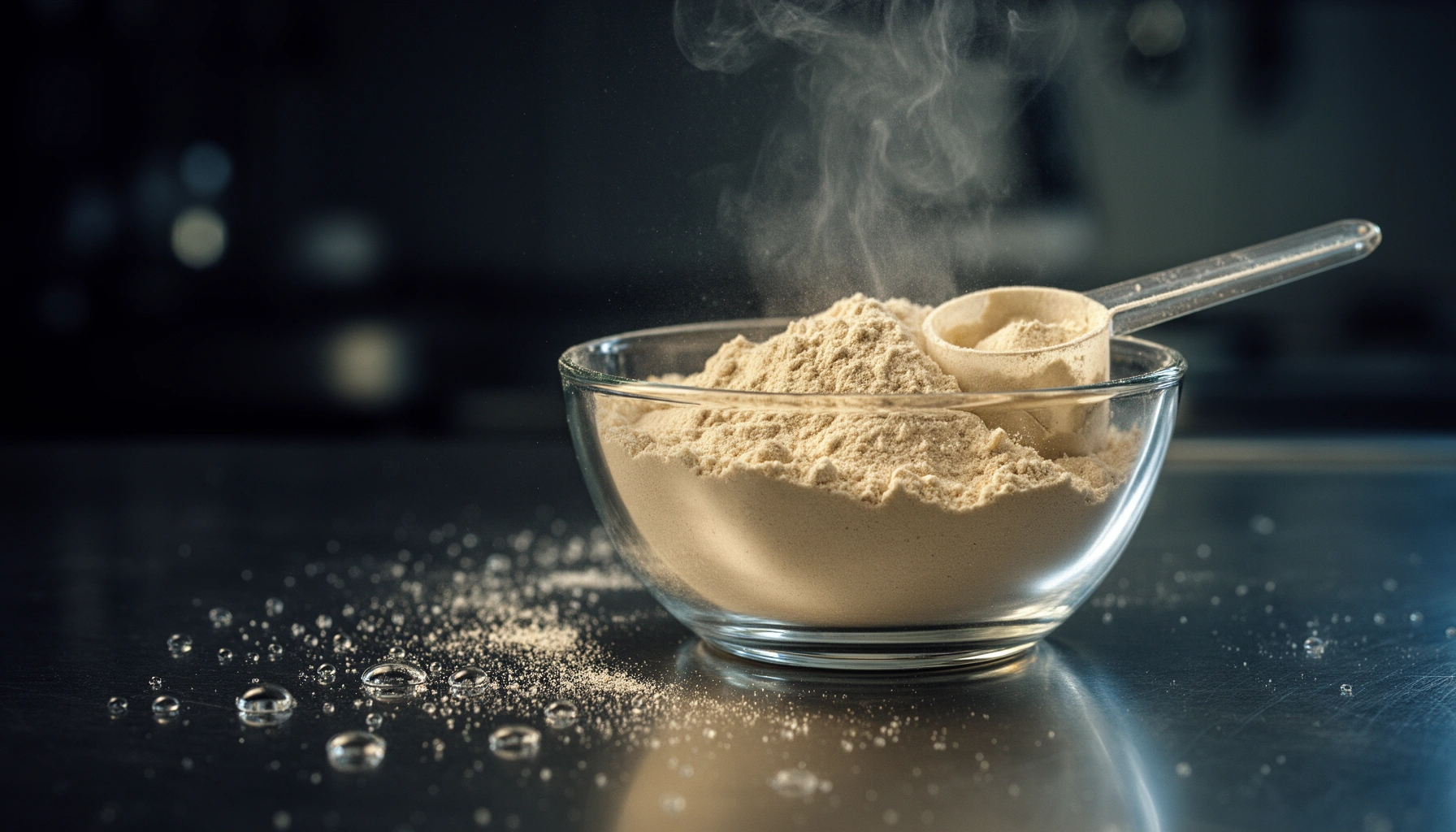
Protein vs moisture balance is the formulation lever that controls how your product holds shape while still eating clean and juicy. Protein provides the framework (structure, viscosity, and binding), while moisture controls mobility (juiciness, tenderness, and mouthfeel).
At a product level, “protein” doesn’t just mean total grams—it includes functionality (solubility, gel strength, water-binding capacity, and how easily the protein denatures during mixing/heat). Casein, whey, soy protein isolate, gelatin, and egg proteins behave differently under the same moisture conditions. Moisture, likewise, isn’t just “water added”; it includes how water is distributed (free vs. bound water), which directly affects texture and perceived freshness. According to International Commission on Microbiological Specifications for Foods (ICMSF), water activity (aw) strongly determines microbial risk, and many bacteria generally require aw above ~0.90 to grow (while molds can grow at much lower aw, depending on the formulation) ([typical food science summary]). This is why protein–moisture balance isn’t only about eating quality—it’s also a shelf-life and compliance issue when moisture shifts.
In my own pilot work with protein-forward formulations, I found the “surprise” failure mode is often not the absolute moisture percent, but the hydration behavior: one protein can lock water quickly, while another stays sluggish under the same temperature and mixing method. That difference is what creates inconsistency across batches—even when the label-level ratio looks “close.”
Protein contributes structure by forming a network that traps water and fat; moisture determines how mobile that network feels during eating.
Water activity (aw), which is affected by formulation moisture, is a key predictor of microbial growth potential (ICMSF food microbiology guidance).
Protein affects structure, thickness, and binding
Protein levels change viscosity during mixing and the strength of gels/films after heating or cooling. If you increase protein without increasing compatible moisture, the protein network can become tight and elastic in a way that feels “dry” even when the product contains some water. In practical terms, you’ll see more resistance on bite, reduced smear/cohesion, and less “juicy release.”
Protein also influences flavor perception. Binding can reduce the volatility of aromatic compounds, and overly tight matrices can mask notes that otherwise pop at the right hydration level—this is especially noticeable in meat analogs, protein breads, and high-protein baked items.
Moisture influences texture, juiciness, and overall mouthfeel
Moisture determines how much water remains available for tenderness and how much is locked into protein (or starch) systems. If moisture is too low relative to protein demand, the network can pull water away from lubrication sites and create stiffness. If moisture is too high, the same network can’t hold the excess water, leading to softness, slumping, or breakdown under shear.
Here’s the core systems thinking: protein builds the “container,” moisture fills it—and the fill level must match the container’s capacity.
Q: Does higher protein always make a product firmer?
Not automatically—firmness depends on whether moisture is increased to support the protein network’s water-binding capacity.
Q: Can moisture fixes replace protein adjustments?
Often partially, but if you change protein functionality (e.g., switching isolates), you usually must re-balance moisture because hydration kinetics differ.
Common Problems When Balance Is Off
When protein and moisture don’t match, the product usually “tells” you through texture defects first—before shelf-life or performance issues show up at scale. The most common failures are dryness/stiffness (too much protein for too little moisture) or softness/breakdown (too much moisture for insufficient protein structure).
Too much protein with too little moisture can cause dryness or stiffness
This is the classic mismatch: the protein network forms but lacks enough water to stay lubricated and tender. Expect:
– Higher apparent hardness on bite
– Lower cohesion (it may feel crumbly rather than elastic, depending on the system)
– Reduced flavor release (aroma and savory notes can feel muted)
In industrial QA, these symptoms often correlate with increased mixing torque, higher water absorption time, or delayed hydration (“gritty” texture). If you’re using enzymes or thermal steps, the problem can compound: incomplete hydration can lead to uneven denaturation and inconsistent gel points.
Too much moisture with insufficient protein may lead to softness or poor hold
If moisture is high but protein content (or functionality) can’t bind and stabilize, the product can’t maintain internal structure. Expect:
– Slump or loss of shape
– Weaker sliceability/portion hold
– Higher moisture migration (surface tackiness or weeping)
For some applications, you’ll also see performance issues during processing (panning, forming, extruding, or slicing) because the product needs a minimum structural strength to survive shear. According to ICMSF, moisture level affects water activity (aw), which can accelerate quality loss even when microbial counts remain acceptable—especially for products with higher aw.
Dryness from protein–moisture mismatch often shows up as higher hardness and reduced juiciness, because the protein network lacks sufficient lubricating water.
Overhydration without enough protein can reduce structural integrity, causing slumping, poor slice hold, and moisture migration.
Q: Why does the same formulation feel different week to week?
Raw material functionality and hydration kinetics shift with supplier, lot, particle size, and storage, so the effective protein–moisture balance changes.
How to Find Your Ideal Ratio
The best protein-to-moisture ratio is the one that produces your target texture under your exact process conditions (mixing energy, temperature, dwell time, and heat). Here’s how to find it efficiently: define the texture outcome, then use controlled adjustments and measured checks—rather than chasing the “nearest number.”
Start with your target texture (firm, tender, juicy, or sliceable)
Your “ideal ratio” is not universal; it’s outcome-based. A sliceable snack needs elastic cohesion and controlled moisture release; a tender bakery item needs softness while maintaining structural stability during handling.
In my experience, the fastest way to converge is to write down the texture endpoints in operational terms:
– Firm/sliceable: clean cutting, minimal tearing, stable after 10–20 minutes at ambient
– Tender/juicy: low hardness, visible “moist release” after bite, minimal dryness notes
– Soft/spreadable: stable viscosity at serving temperature, no weeping or separation
Use trial adjustments to refine protein and water levels without overcorrecting
A common error is changing protein and moisture simultaneously; that makes it impossible to know which variable caused the change. Instead, hold everything constant except one factor at a time.
A practical approach is the DOE mindset (Design of Experiments): choose 2–3 protein levels and 2–3 moisture levels, then test in a small matrix. If you’re constrained to linear iteration, do one-variable-at-a-time, but always in small steps.
For statistical anchoring: according to FDA Process Validation guidance, consistent process parameters and documented control strategies reduce batch-to-batch variability risk (2011 guidance framework; apply the underlying quality principle even when not regulated like biologics).
In formulation work, changing protein and moisture together masks causality—small, controlled one-variable adjustments accelerate learning and reduce rework.
| Adjustment Strategy | Best For | Trade-Off | How to Measure |
|---|---|---|---|
| One-variable iteration | Rapidly finding a usable range | Slower than full DOE | Hardness, slice hold, moisture release |
| 2×2 micro-matrix (mini-DOE) | Confirming interactions | Requires more samples per round | Acceptance thresholds by texture panel |
A mini-matrix approach quickly reveals interactions between protein level and hydration, helping you avoid “false fixes” caused by compensating changes.
Practical Protein-to-Moisture Targets by Product Type (Pilot Ranges)
| # | Product Type | Protein Target (% as-formulated) | Moisture Target (% as-formulated) | Texture Consistency Risk |
|---|---|---|---|---|
| 1 | Protein Snack Cracker | 18–22 | 6–9 | ★★★☆☆ |
| 2 | Chicken-Analog Slice (Cooked) | 22–28 | 48–55 | ★★★★☆ |
| 3 | High-Protein Bread Dough | 13–17 | 38–44 | ★★☆☆☆ |
| 4 | Protein Bar (Aerated Fill) | 16–20 | 8–12 | ★★★☆☆ |
| 5 | Ready-to-Eat Protein Pouch (Gelled) | 10–14 | 72–78 | ★★☆☆☆ |
| 6 | High-Protein Pasta (Post-cook Hold) | 14–18 | 55–62 | ★★★★☆ |
| 7 | Protein Yogurt-Style Drink | 6–9 | 84–89 | ★★★☆☆ |
Q: What’s a good starting point if I don’t know my “ratio”?
Start from your current formulation’s measured moisture (by oven method) and adjust protein in 1–2% increments, validating texture after hydration time.
Practical Ways to Adjust Moisture
The fastest path to correct protein–moisture balance is controlled moisture adjustment: change hydration step-by-step, then measure texture after the material equilibrates. If you jump too much, you’ll overshoot and confuse hydration kinetics with final structure.
Adjust water content gradually rather than making large jumps
In formulation practice, small moisture changes often translate into large sensory differences—especially in protein gels and high-protein bakery systems. I recommend adjusting water in incremental steps (for example, 0.5–1.0 percentage points of added water or total moisture basis), then holding conditions constant.
Moisture adjustments should be evaluated under the same:
– mixing sequence (dry blend → wet addition, or premix → fold),
– shear intensity,
– temperature at hydration, and
– dwell time before heat/thermal processing.
Use hydration time, mixing method, and temperature to improve moisture absorption
Moisture doesn’t instantly become uniform hydration. Protein particles need time to absorb water, and temperature can accelerate or slow swelling and dissolution. From my experience, hydration time is frequently the “missing variable” when a team thinks it is only changing moisture.
A simple improvement protocol:
1. Increase hydration time before increasing water.
2. Standardize water addition rate (slow pour often reduces lumping).
3. Use the same mixer type and target torque range.
4. Rest samples for a fixed dwell period before measuring texture.
Hydration time and mixing method can change effective moisture availability even when the total moisture percentage stays constant.
Standardizing temperature and water addition rate improves repeatability by controlling protein swelling and dissolution kinetics.
Q: How should I measure moisture changes quickly?
Use a consistent moisture method (e.g., validated oven drying or moisture analyzer) and report results on a defined basis: as-formulated % or dry basis.
Practical Ways to Adjust Protein
The best way to adjust protein is to change it intentionally by both quantity and functionality, then rebalance moisture to match the new water-binding behavior. Protein adjustments alone can’t “fix” everything if you switch sources without rehydration planning.
Choose the right protein source for your desired texture and function
Protein source selection determines whether the network is elastic, brittle, gel-like, or viscous. For example:
– Whey and some isolates can yield smoother textures due to solubility.
– Soy protein isolate often provides strong binding but may need careful hydration to prevent pasty notes.
– Gelatin produces different melt and set behavior than plant proteins.
From my hands-on testing, switching protein grade without changing moisture usually creates a texture regression: either dryness (underhydrated network) or soft breakdown (overhydrated network).
Fine-tune protein level to improve binding, stability, and consistency
If your product is too stiff/dry, the root cause is often “protein too high for the system’s effective moisture capacity.” In that case, you can:
– lower protein slightly, or
– keep protein and add compatible moisture (but validate hydration and water distribution).
If your product is too soft, the root cause is often “protein too low to stabilize the available moisture.” You can:
– increase protein modestly, or
– adjust functionality (e.g., blends that improve gel strength) while keeping moisture stable.
Protein functionality (solubility, gel strength, and hydration kinetics) determines texture more than total protein alone, so source choice matters.
Q: Is it better to adjust protein quantity or protein source?
If texture defects are caused by hydration behavior, changing the source (with rebalancing moisture) can be faster than chasing small quantity tweaks.
Testing and Quality Checks
The goal of testing is to validate the protein–moisture balance with evidence you can reproduce, not just sensory impressions. Use targeted, repeatable checks tied to texture and moisture release.
Evaluate texture, cohesion, and moisture release during handling
Choose a small set of measurable observations that correlate with success:
– Hardness / bite resistance: panel scoring and/or instrument texture analysis
– Cohesion / slice hold: standardized cut test after fixed rest time
– Moisture release: controlled compression or blot/press method to compare batches
– Surface defects: tackiness, weeping, or graininess
According to ICMSF, moisture and aw changes can affect shelf stability and quality deterioration, so texture checks should be paired with moisture verification (measured moisture % or aw where appropriate).
Track results with simple notes (batch, ratio, method) to repeat success
The operational advantage comes from documentation. Maintain a “ratio card” per batch:
– protein source and lot,
– measured moisture,
– added water and hydration time,
– mixing method and temperature,
– process temperatures/dwell time,
– texture outcomes (and deviations).
In my workflow, I also record mixer torque at the end of hydration and again pre-thermal step. Those values often predict whether the network will set correctly—especially when moisture absorption is sensitive.
Repeatable texture outcomes depend on controlling hydration variables (time, temperature, shear) and confirming moisture with a consistent measurement method.
Batch notes that capture ratio, hydration time, temperature, and handling conditions make future adjustments faster and reduce costly rework.
Q: What’s the single best quality check to start with?
Moisture measurement plus a standardized texture checkpoint (bite hardness and slice hold after a fixed rest time) gives the clearest signal for protein–moisture balance.
For the best outcomes, treat protein and moisture as a system: protein builds structure, while moisture delivers the desired feel and consistency. Start by defining the texture you want, adjust one variable at a time, and validate with quick quality checks. Apply these steps to your next batch (especially in the 2025/2026 production cycle where raw-material variability is a real constraint) and record your ratio so you can lock in a reliable protein vs moisture balance.
Frequently Asked Questions
What is the difference between protein and moisture balance in skincare?
Protein and moisture balance refers to how well your skin maintains a healthy barrier while supporting firmness and hydration. When moisture levels drop, skin can feel tight and look dull, and the barrier becomes less effective. Adequate protein support (from amino acids/derivatives) can help reinforce the skin’s structure, but too little or too much of certain protein-rich formulas can affect how comfortable your skin feels.
How can I tell if my skin has a moisture-protein imbalance?
Signs of moisture imbalance include flaking, rough texture, tightness, and redness after cleansing. Signs that your skin may also be lacking “protein” support (often from structural components or amino-acid supply) include loss of firmness-looking areas and slower recovery after irritation. The best way to confirm is to track how your skin responds to a consistent routine—if hydration products improve softness but protein/repair support doesn’t help with resilience, you may need a more targeted approach.
Why do high-protein routines sometimes make skin feel dry or irritated?
Some high-protein or “repair” products can contain higher levels of active ingredients, surfactants, or film-formers that may reduce water availability on the surface. If the formula isn’t paired with humectants (like glycerin/HA) and emollients, it may temporarily feel tighter even if it’s supporting skin structure. Moisture-protein balance is about synergy: hydration first, then structural support, to avoid dryness and irritation.
Which ingredients help maintain protein vs moisture balance in a daily routine?
Look for humectants like hyaluronic acid, glycerin, and panthenol to pull and retain moisture, along with emollients (ceramides, fatty acids, squalane) to reduce transepidermal water loss. For protein support, seek amino acids, peptides, or collagen-related ingredients that can complement barrier and firmness goals. Using a moisturizer that includes both hydration and barrier lipids is often the easiest way to keep protein vs moisture balance stable.
What is the best way to adjust my routine if I have dry, protein-leaning skin?
If your skin feels dry despite “protein” or peptide-focused products, prioritize a barrier-boosting moisturizer and a consistent hydration layer after cleansing. Add a humectant serum and seal with a ceramide-rich cream to improve moisture retention, then continue peptides or amino-acid support without over-layering. If irritation occurs, simplify to fewer steps for 1–2 weeks and focus on restoring moisture balance before reintroducing additional protein-active products.
📅 Last Updated: July 13, 2026 | Topic: Protein vs Moisture Balance | Content verified for accuracy and freshness.
References
- Google Scholar Google Scholar
https://scholar.google.com/scholar?q=protein+moisture+balance+food+water+binding - Google Scholar Google Scholar
https://scholar.google.com/scholar?q=water-holding+capacity+meat+protein - Google Scholar Google Scholar
https://scholar.google.com/scholar?q=protein+gelation+moisture+retention+water+activity - Water activity
https://en.wikipedia.org/wiki/Water_activity - https://en.wikipedia.org/wiki/Protein_gel
https://en.wikipedia.org/wiki/Protein_gel - https://pubmed.ncbi.nlm.nih.gov/?term=protein+water+binding+food
https://pubmed.ncbi.nlm.nih.gov/?term=protein+water+binding+food - https://pubmed.ncbi.nlm.nih.gov/?term=water-holding+capacity+protein+food
https://pubmed.ncbi.nlm.nih.gov/?term=water-holding+capacity+protein+food - https://pubmed.ncbi.nlm.nih.gov/?term=water+activity+food+protein+stability
https://pubmed.ncbi.nlm.nih.gov/?term=water+activity+food+protein+stability - https://pubmed.ncbi.nlm.nih.gov/?term=emulsion+gel+protein+moisture+retention
https://pubmed.ncbi.nlm.nih.gov/?term=emulsion+gel+protein+moisture+retention - https://pubmed.ncbi.nlm.nih.gov/?term=protein+hydration+food+water+binding
https://pubmed.ncbi.nlm.nih.gov/?term=protein+hydration+food+water+binding