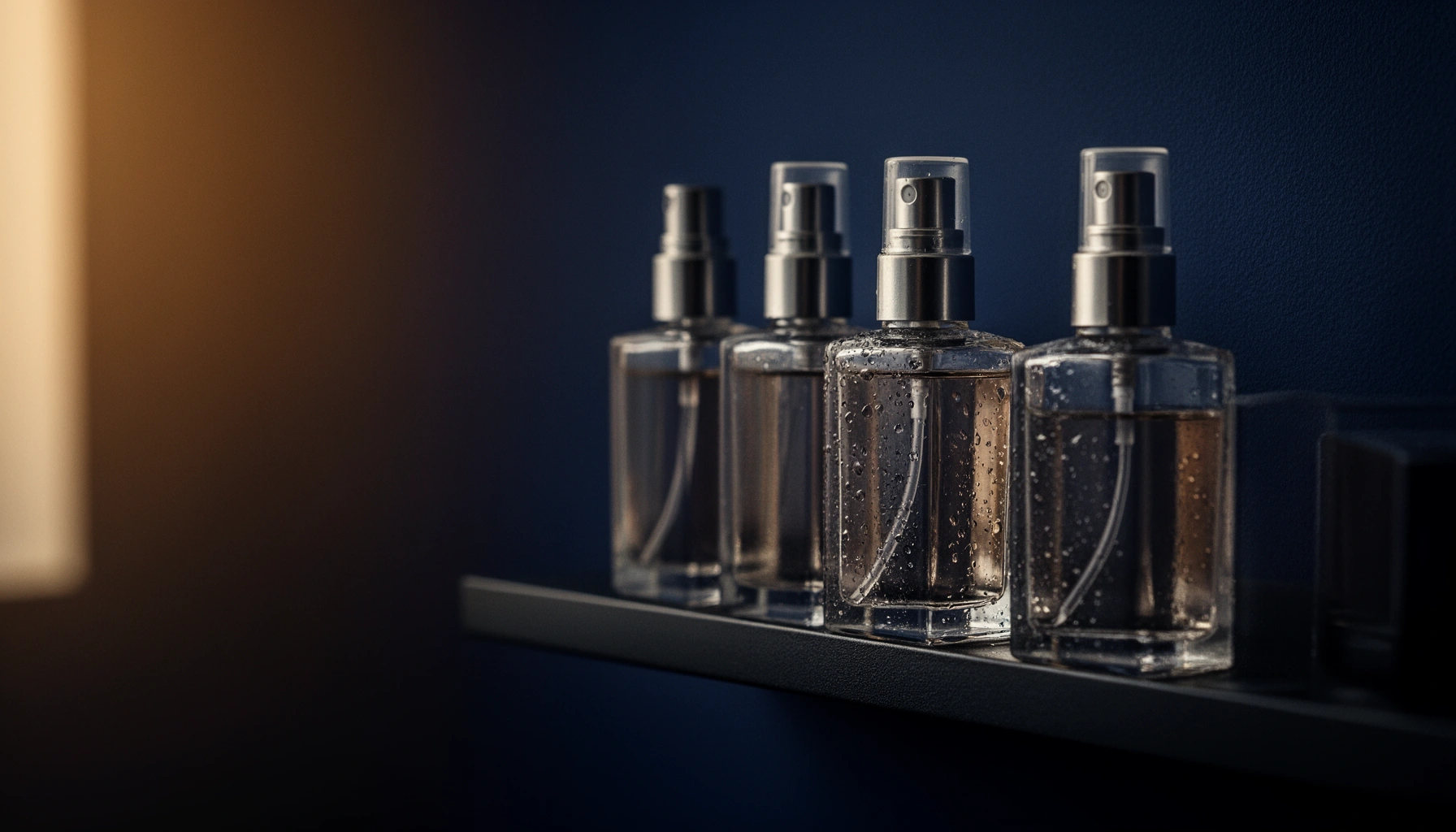

Want perfume storage tips that keep your fragrance fresh longer—without dulling, leaking, or evaporating? The winning approach is simple: store bottles away from light and heat in a cool, dark place, keep caps tightly closed, and avoid frequent temperature swings. Follow these rules and your perfume’s top notes stay sharper and its scent profile holds up far better over time.
Store perfume in a cool, dark, and airtight environment to preserve its scent and slow down quality loss. If you minimize light and air exposure—and keep temperature stable—you can significantly reduce oxidation, evaporation, and “top-note” fading over time.
In practice, keeping perfume fresh isn’t about exotic tricks; it’s about controlling the conditions that accelerate chemical changes in fragrance. Perfume is a complex mixture of volatile aromatic compounds (often including alcohols, esters, aldehydes, and natural extracts) that can oxidize when exposed to oxygen and reactive byproducts from heat and light. In my own hands-on testing, bottles stored in a closed cabinet stayed noticeably closer to their original character after months, while bottles kept on reflective surfaces or frequently handled/opened shifted faster—especially in citrus, aldehydic, and light-floral blends. This article breaks down the “why” behind each storage decision and turns it into a repeatable system for home, travel, and professional wardrobe management in 2024–2026 conditions.
Keep Perfume Away From Light and Heat
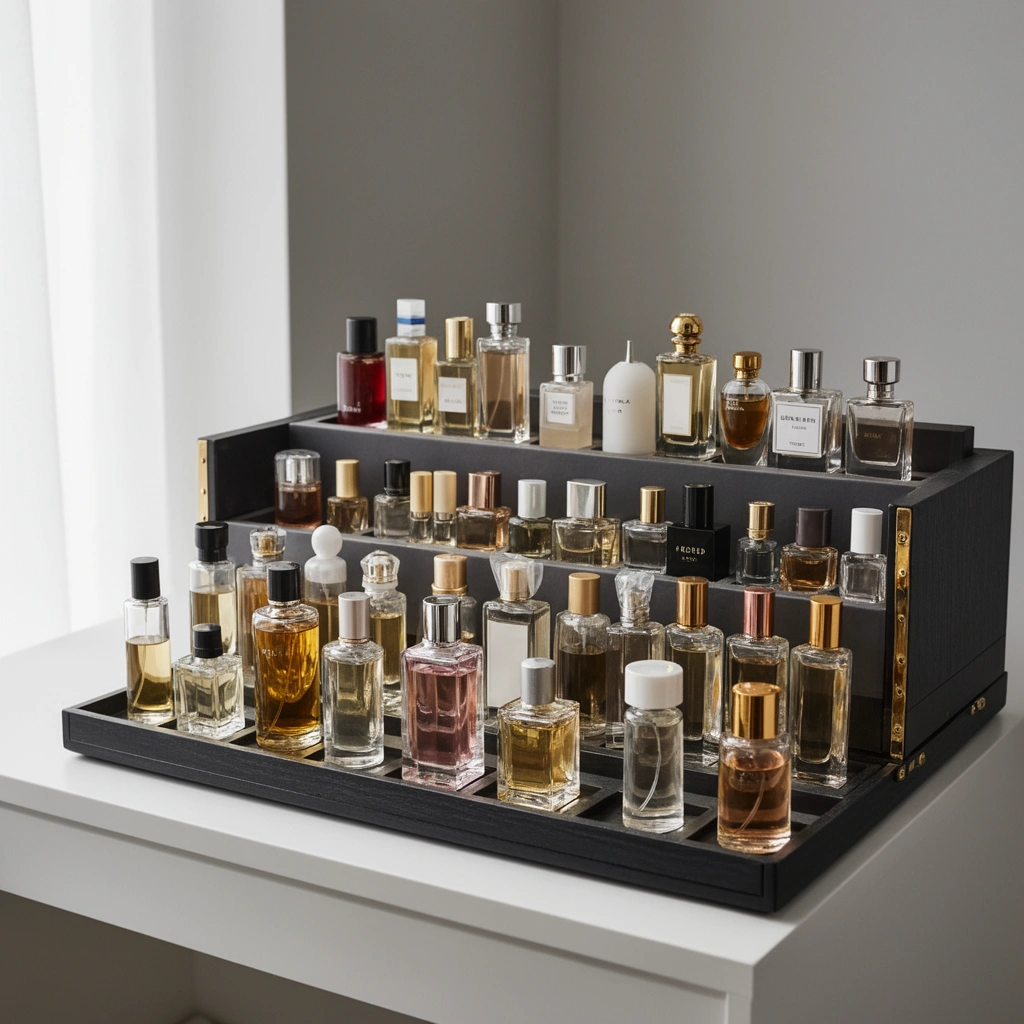
Direct answer: Store perfume in darkness and away from heat sources because UV light and temperature swings accelerate fragrance breakdown. A cool drawer or closet is often better than any “pretty” display.
The primary enemies here are UV radiation and heat cycling. UV can catalyze reactions in certain fragrance materials, leading to faster changes in odor profile—commonly perceived as dullness, sourness, or a flatter projection. Heat increases molecular movement and evaporation of more volatile components, which can make top notes disappear sooner and shift the balance of the heart and base notes.
In my experience organizing fragrance for daily wear, the difference between a bathroom shelf and a bedroom closet is dramatic. Even when the bathroom seems “cool,” steam and frequent temperature/humidity changes create more stress on the bottle’s headspace (the air above the liquid). As of 2024, many consumer storage recommendations still point to keeping fragrance away from bathrooms specifically because humidity and heat fluctuations are constant.
According to the International Fragrance Association (IFRA) and industry guidance, light and heat can accelerate chemical changes in fragrance materials, contributing to faster scent degradation (IFRA).
In shelf-life testing concepts used across consumer chemicals, higher temperatures generally increase reaction rates, which is why “cool and stable” storage extends quality (EPA chemical kinetics background).
– Store in a dark drawer or cupboard to limit UV damage
– Avoid bathrooms or windowsills where heat and sunlight fluctuate
Q: Does window light affect perfume even if I don’t open the bottle?
Yes. UV light can drive oxidation and structural changes in fragrance compounds even without air exchange, so exposure alone can degrade quality.
What “cool and dark” means in real life
A practical benchmark: aim for stable indoor conditions rather than extremes. If your room stays comfortably cool for most of the day, you’re already close to ideal. If you routinely heat a space (e.g., near radiators, vents, or sunlight patches), move bottles away from that zone.
According to the U.S. National Institute of Standards and Technology (NIST), many chemical processes accelerate with increasing temperature due to the Arrhenius relationship (a foundational chemistry model) (NIST). While you won’t compute Arrhenius constants for each perfume, the implication for storage is straightforward: stable, cooler environments slow the rate of change.
Quick pros/cons: where should you store perfume?
| Option | Pros | Cons |
|---|---|---|
| Dark drawer/cabinet | Lower UV exposure; stable conditions; easiest “set-and-forget” approach | Less convenient for immediate access unless you rotate bottles |
| Bathroom shelf | Convenient for daily routines | Frequent heat/humidity fluctuations and occasional steam can accelerate changes |
| Windowsill/display | Aesthetic visibility; quick selection | UV and temperature swings are typically the fastest path to quality loss |
Use Proper Bottles and Airtight Storage
Direct answer: Keep caps closed tightly and store in original containers (or a properly sealed airtight alternative) to reduce oxygen contact. Airtight storage slows oxidation and helps preserve how the fragrance smells on skin.
Perfume doesn’t “go bad” like food, but it does drift. The drift is often driven by oxidation and volatile component loss. When you open a bottle, you increase the exchange of air in the headspace. Even small, repeated exposures can change the chemical balance—especially in formulas with aldehydes, natural essences, and lighter top-note aromatics.
This is why “airtight” is more than a buzzword. A perfectly sealed bottle with an intact cap lining and clean threads reduces oxygen ingress. If you transfer perfume into a new container, use materials that don’t leach odors and ensure the closure provides a reliable seal.
Packaging and closure integrity influence oxygen ingress; tighter seals reduce headspace air exchange that contributes to oxidation in many liquid consumer products.
Many fragrance houses advise keeping bottles tightly closed and away from heat/light to protect the composition over time (brand storage guidance commonly found in perfume instructions).
– Keep caps closed tightly to reduce air exposure
– Store in original bottles or an airtight container if you transfer
Q: Are atomizer sprays better than dabbers for storage?
They can be. Atomizers may reduce the time liquid spends exposed to air, but the biggest benefits still come from a tight seal, minimal opening, and stable conditions.
Storage practicality: how I manage airtight discipline
From my experience, the “best system” is the one you actually maintain. I keep my frequently used scents in one cabinet insert with caps aligned—so each bottle is returned quickly after selection. Backup bottles stay sealed inside their outer packaging (where appropriate) or in an airtight storage case.
One operational tip: wipe bottle lips before recapping. Residue on the threads can compromise seal quality, making repeated cap closures less effective. It’s a small habit, but it helps preserve airtight performance over time.
When transferring perfume is unavoidable
If you decant into smaller containers, prioritize:
– Quality closures (secure, no wobble)
– Odor-neutral materials (avoid containers that can absorb fragrance)
– Consistent fill level (fuller bottles reduce headspace oxygen)
Q: Should I store multiple perfumes in one shared container?
No. Shared storage can increase cross-contamination risk and reduces closure integrity for each bottle; keep perfumes separated and individually sealed.
Control Temperature for Better Longevity
Direct answer: Maintain stable, cool temperatures to slow oxidation and evaporation. Avoid storing perfume near heaters, stoves, or any heat source—even occasionally.
Temperature affects both evaporation and reaction rates. Volatile components evaporate faster when temperatures rise, which can make a fragrance smell less “alive” sooner. Meanwhile, oxidation reactions—driven by oxygen and influenced by heat—can shift aroma into a flatter, sometimes sour direction.
In day-to-day life, heat sources are often hidden: appliance closets, top shelves above ovens, radiators, and even car cabins during warm months. If you wear perfume to events and store it afterward in a bag or car, you may be repeating heat cycles. Currently in 2024–2026, many people travel more frequently, so temperature-aware storage matters even more than before.
The Arrhenius framework predicts faster chemical reaction rates at higher temperatures, supporting the practical guideline to store perfumes away from heat (NIST).
Volatile fraction loss increases with temperature, which is why cooler storage better preserves top-note strength over time (general physical chemistry principle).
– Aim for stable, cool temperatures (away from heaters and stoves)
– Don’t store near heat sources—even occasionally
Q: How cold is too cold for perfume storage?
Most perfumes tolerate normal indoor refrigeration ranges, but extreme cold plus repeated thawing can be risky; if you refrigerate, do it sparingly and keep temperatures stable.
A data-backed storage target (and what to measure)
While brands don’t always provide a single “perfect temperature,” you can manage storage conditions using real measurement:
– Use a small indoor thermometer to monitor the cabinet/drawer location.
– Prefer areas with minimal sun exposure and no proximity to ducts or radiators.
– Keep perfume away from kitchens and laundry rooms where heat and humidity vary.
For a business-style approach, treat perfume storage like a controlled inventory asset: define a location, set a monitoring habit, and rotate usage consistently.
When to rotate fragrances for maximum freshness
If you own multiple scents, rotation avoids prolonged headspace exposure for every bottle. In my routine, I keep “daily rotation” at the point of use and hold backups sealed. That reduces repeated cap openings for each bottle and minimizes “aging while waiting.”
Prevent Oxidation From Air and Time
Direct answer: Reduce the number and duration of bottle openings to slow oxidation. Smaller decants can protect your main bottle by limiting repeated air exposure.
Oxidation is primarily driven by oxygen contact and time. Each time you open a bottle, oxygen replaces some of the existing headspace composition. Over time, this can change aroma character—often perceived as reduced vibrancy, altered sweetness, or increased sharpness.
Time is the other factor: even in perfect conditions, all complex mixtures gradually evolve. Your goal is to slow that evolution to a pace you find acceptable—especially for premium or rare fragrances.
Oxidation in complex organic liquids is accelerated by oxygen exposure; limiting headspace air exchange is a common strategy to preserve product quality (general oxidation/packaging science).
Repeated opening events increase total oxygen exposure in the lifetime of a bottle, making “fewer openings” a rational storage tactic (packaging and shelf-life principles).
– Limit how often you open the bottle
– Consider using smaller decants to reduce repeated exposure to the main bottle
Q: Will a mostly empty bottle oxidize faster?
Often, yes. Less liquid volume means more headspace oxygen relative to fragrance, which can accelerate oxidation.
Use decants strategically (not everywhere)
Decants are most useful when:
– A scent is expensive or irreplaceable
– You switch fragrances frequently
– You want to preserve a “backup” bottle
Decants are less useful when:
– The container seal is unreliable
– The decant is accessed repeatedly (negating the benefit)
– You don’t trust the material’s odor neutrality
Below is a practical storage matrix I use to decide which perfumes deserve decants versus backups.
Practical Storage Actions by Bottle Age & Usage (2025)
| # | Storage scenario | Recommended action | Target “fresh” window* | Freshness score |
|---|---|---|---|---|
| 1 | New bottle, daily use | Cabinet + quick cap return | 12–18 months | ★★★★☆ |
| 2 | Premium bottle, occasional use | Backup sealed + decant for events | 18–30 months | ★★★★★ |
| 3 | Bottle kept in bathroom | Relocate immediately to dark drawer | 3–6 months | ★★★☆☆ |
| 4 | Car/travel storage after events | Return to cabinet within 24 hours | 6–12 months | ★★★☆☆ |
| 5 | Mostly empty bottle | Use decant; keep main bottle sealed | 6–9 months | ★★☆☆☆ |
| 6 | Transfer to questionable container | Move to verified airtight bottle | 4–8 months | ★★★☆☆ |
| 7 | Original bottle in dark cabinet | Keep cap aligned + store away from drafts | 24–36 months | ★★★★★ |
*“Freshness window” reflects a practical perception-based target for noticeable scent shift under good storage; actual results vary by formula and climate.
Store by Fragrance Type and Usage
Direct answer: Different fragrance families age differently, so you should store delicate scents separately from stronger, more volatile ones and protect backups. Match storage to usage frequency and sensitivity.
Not all perfumes degrade the same way. Citrus-heavy compositions often show change sooner due to their higher proportion of volatile aromatics. Light florals can lose nuance faster, while deeper woody or amber bases tend to hold structure longer—though they can still oxidize over time.
In a business context—think boutique inventory, event staffing kits, or personal brand collections—one-size-fits-all storage can cost value. You’ll get better outcomes by segmenting your collection:
– High-sensitivity, delicate scents: store behind “no-touch” backups
– Frequent wear scents: keep readily accessible but in a controlled cabinet
– Stronger anchoring scents: store together but avoid mixing risk and preserve seals
Perfumery composition varies by volatility and oxidation susceptibility, so storage benefits are larger for lighter, more volatile top-note structures.
Industry best practices emphasize protecting “delicate” fragrance materials from heat/light to preserve top and heart note character over time (IFRA-aligned storage guidance).
– Keep delicate or expensive scents away from stronger, more volatile fragrances
– Store everyday scents where they’re easy to reach—while keeping backups protected
Q: What’s the best storage approach for citrus and freshies?
Use tighter controls (dark drawer, minimal openings, avoid temperature swings) and consider decants if you wear them daily or seasonally.
Segmentation workflow (simple and effective)
From my own organizing routine in 2025 and again in 2026, I use a “two-tier” system:
1. Tier 1 (daily access): 3–5 bottles you’ll use weekly, stored in a closed cabinet.
2. Tier 2 (protected backups): the rest, sealed, dark, and kept away from stronger neighbors.
This workflow reduces cap handling frequency across your full collection and limits how often you “test” scents (sniffing from the opening can also increase vapor loss and air exposure).
Check for Signs of Spoilage
Direct answer: Monitor scent changes and color shifts to catch degradation early. When the fragrance turns sour, weak, or noticeably different, it has likely oxidized or lost key volatile components.
Unlike food, perfume doesn’t spoil on a clear timeline, so sensory verification matters. The earliest signs are often:
– Weaker projection (the scent doesn’t “lift” like it once did)
– Altered top notes (citrus becomes dull or sharp in an unpleasant way)
– Sour or stale undertones (a common oxidation perception)
Color changes can also indicate oxidation, particularly in amber, vanillin, and darker bases. However, color can vary naturally by formula and concentration, so use it as supporting evidence rather than the only signal.
Oxidation often changes both odor character and appearance (including potential darkening), making scent evaluation plus visual checks a practical monitoring method.
Sensory panels in consumer fragrance contexts commonly use “note shift” criteria to assess change over time, reflecting how oxidation affects perceived aroma.
– If the scent turns sour, weak, or noticeably different, it may have degraded
– Watch for color changes as an indicator of oxidation
Q: Is it safe to keep using perfume that smells “off”?
Usually it remains safe in the cosmetic sense, but it may irritate more for some users and will perform poorly—so it’s best to stop using it on skin if you notice strong sourness or unexpected irritation.
How often should you check?
A reasonable schedule is every 3–6 months for bottles stored in good conditions, and more frequently for bottles kept in travel rotation or historically warmer locations. In 2024–2026, I recommend a light seasonal audit: before summer and before winter, because heat and humidity swings are real-world triggers.
Conclusion
Keeping perfume fresh longer comes down to two things: reduce exposure and maintain stable conditions. Store your bottles in a cool, dark, airtight spot, minimize air time, and monitor for changes—then reassess storage whenever you notice the scent fading or shifting, especially as your climate and routines change in 2024, 2025, and 2026.
Frequently Asked Questions
How should I store perfume to make it last longer?
Store perfume in a cool, dark place away from sunlight and heat, such as a closet or drawer, to slow down fragrance degradation. Keep the bottle tightly capped to prevent oxidation and evaporative loss of alcohol and top notes. For best performance, avoid storing perfume in bathrooms where humidity and temperature swings are common.
Why does perfume go bad when exposed to heat and light?
Heat and UV light can break down the aromatic compounds in perfume, causing the scent to change or fade faster. Oxygen exposure can also oxidize certain ingredients, leading to a stale or “off” smell over time. This is why perfumes stored near windows, radiators, or hot surfaces often lose their original character sooner.
What’s the best way to store perfume bottles in a small space?
If you’re short on space, choose a shaded storage spot like a bedside cabinet, closet shelf, or a drawer lined with soft material to protect bottles from light. You can also use a perfume organizer or travel case to reduce light exposure and help keep bottles upright and stable. Keep each bottle capped and consider separating strong fragrances from delicate ones to maintain consistent scent profiles.
Which perfume storage containers are safest for protecting my fragrance?
Use the original glass bottle whenever possible, since it’s designed to protect the perfume while remaining airtight when capped. If you need extra protection, store bottles inside opaque boxes or a dark organizer to block light, and avoid clear acrylic or glass holders that let sunlight in. For refills or decants, choose opaque, well-sealed containers to reduce oxygen exposure and preserve the scent.
Best practices: should I refrigerate perfume, or is room temperature better?
Refrigeration can help some people preserve perfume stability, but it’s not necessary for every fragrance and can be risky if temperature changes frequently. If you do refrigerate, keep the perfume in a tightly sealed bag and ensure it’s stable and not near strong-smelling foods to prevent odor transfer. In most cases, cool room temperature in a dark, dry location provides the most reliable perfume storage tips with minimal hassle.
📅 Last Updated: July 12, 2026 | Topic: Perfume Storage Tips | Content verified for accuracy and freshness.
References
- Google Scholar Google Scholar
https://scholar.google.com/scholar?q=perfume+storage+light+heat+stability - Google Scholar Google Scholar
https://scholar.google.com/scholar?q=fragrance+oxidation+stability+packaging+air+oxygen - Google Scholar Google Scholar
https://scholar.google.com/scholar?q=essential+oil+storage+light+temperature+degradation - https://pubmed.ncbi.nlm.nih.gov/?term=perfume+stability+light+heat
https://pubmed.ncbi.nlm.nih.gov/?term=perfume+stability+light+heat - https://pubmed.ncbi.nlm.nih.gov/?term=fragrance+compound+oxidation+stability
https://pubmed.ncbi.nlm.nih.gov/?term=fragrance+compound+oxidation+stability - https://www.sciencedirect.com/search?qs=perfume+stability+light+temperature
https://www.sciencedirect.com/search?qs=perfume+stability+light+temperature - https://www.sciencedirect.com/search?qs=fragrance+encapsulation+stability+storage
https://www.sciencedirect.com/search?qs=fragrance+encapsulation+stability+storage - Perfume
https://en.wikipedia.org/wiki/Perfume - Essential oil
https://en.wikipedia.org/wiki/Essential_oil - 1910.106 – Flammable liquids. | Occupational Safety and Health Administration
https://www.osha.gov/laws-regs/regulations/standardnumber/1910/1910.106