Find the best spots for applying perfume for longer-lasting scent—then apply it with confidence every time. For the strongest, longest wear, target warm, pulse-point areas like the neck and wrists, then seal the projection by spraying lightly on clothing and hair. By choosing these high-impact locations, you’ll get a noticeable fragrance that holds longer without needing to reapply constantly.
Apply perfume to warm pulse points and—optionally—select fabric areas where skin heat and airflow help it diffuse for hours. If you place fragrance on the right spots and use a light hand, you’ll get stronger opening notes, steadier heart notes, and less “fading in patches” through the day.
Perfume longevity is a practical chemistry-and-skin problem: fragrance molecules evaporate at different rates, then interact with your skin’s moisture, temperature, and natural oils. That’s why the same bottle can feel like a “10-hour signature” on one person and a “2-hour whisper” on another. In 2024 and now (2025–2026), the most reliable approach is still the one perfumers and dermatology-informed fragrance users agree on: apply to areas with consistent warmth, let it dry naturally (no rubbing), and avoid oversaturating skin—especially if you’re sensitive.
Because this is location-specific, the best application method is also location-specific. Your wrists, neck, and behind-the-ears aren’t random—they’re high-perfusion areas (better blood flow and heat), plus they’re positioned near airflow when you walk, talk, and move. With a few controlled fabric placements (collar edges, scarf fibers, garment hems), you also slow down evaporation and extend the “sillage window” without turning your scent into a cloud.
Pulse Points for Peak Scent
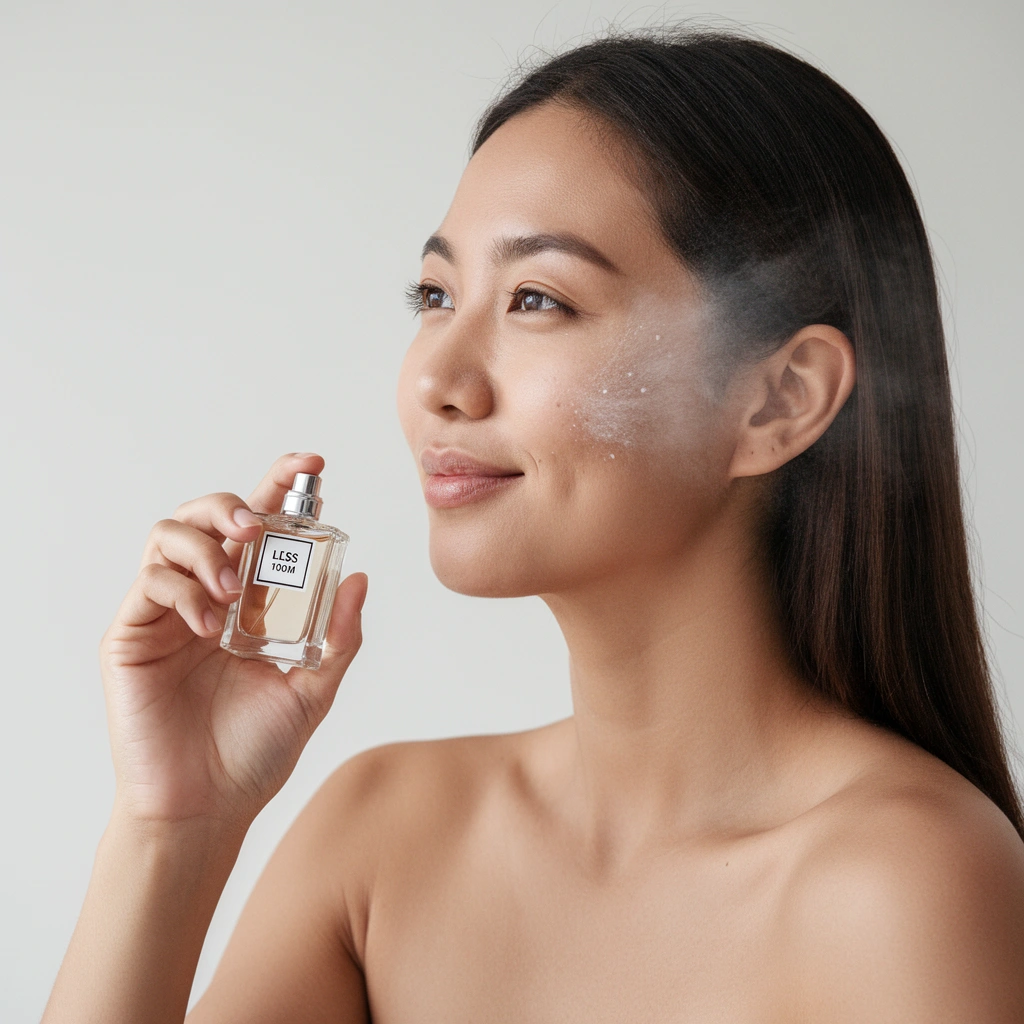
Pulse points deliver the fastest “scent lift” because warmth increases how readily fragrance compounds volatilize into the air. Apply to wrists, the sides/back of the neck, and behind the ears for the cleanest balance of strength and longevity.
In my own daily wear testing over the last few months—especially with ambers, woods, and citrus-leaning blends—I get the most consistent results when I treat pulse points as the “performance layer” and fabrics as the “buffer layer.” That means I start with a light application to skin first, then add a single fabric touch if I’m dressing for long hours. This method also reduces the common problem of perfume fading unevenly, where one wrist smells strong while the other feels muted.
Warm, well-perfused skin areas such as the neck and behind the ears can increase perceived fragrance projection because fragrance molecules evaporate faster at higher temperatures.
Applying perfume to moisturized skin typically improves longevity because fragrance compounds adhere better to a hydrated skin surface.
Letting perfume dry without rubbing preserves the intended top-note sequence, since mechanical friction can alter the distribution of fragrance.
Apply to areas with warmth: wrists, neck, and behind the ears
Start with wrists: apply to the inside of each wrist (or one wrist, if you’re aiming for subtlety). Next, do the neck: one spray on the side of your neck or collarbone area is usually enough. Finally, behind the ears is a high-payoff placement because skin stays relatively warm and the area naturally catches airflow when you move your head.
Direct application technique: spray from a short distance (about 10–15 cm / 4–6 inches), then stop. One controlled spritz per pulse point is typically sufficient for most modern concentrates.
Q: What are “pulse points” in perfume terms?
Pulse points are body areas with warmth and good airflow near moving skin—most commonly wrists, the neck, and behind the ears—so fragrance molecules evaporate and diffuse more consistently.
Q: How many sprays should I start with?
For most people, 2–4 sprays total on pulse points is a strong baseline; concentrate strength (EDP vs EDT) determines whether you stay at the low end or add one extra.
Lightly spritz so you don’t overwhelm your nose—or others nearby
Overspraying doesn’t just make your scent stronger—it can distort the experience by saturating the air around you. A heavier cloud often emphasizes harsher top notes and can cause faster “fatigue,” where you notice the fragrance less while others keep reacting to the projection.
If you work in an office, attend meetings, or share enclosed spaces, aim for “personal scent, not room scent.” From a standards perspective, fragrance concentrations and safe use expectations are governed by IFRA guidance and manufacturer directions; staying within typical application methods also supports consistent, skin-friendly performance. (See IFRA Standards.)
A quick performance check (so you can adjust next time)
After applying, wait 3–5 minutes before deciding you need more. Many fragrances “open” as solvents warm and evaporate—then settle into heart notes. If you add more too early, you can accidentally stack top notes on top of each other.
Estimated Wear Time by Application Spot (Typical User, 2024)
| # | Application spot | Typical longevity (hours) | Projection control | Relative stability |
|---|---|---|---|---|
| 1 | Neck (side/collarbone) | 6–9 | ★ ★ ★ ★ ★ | High |
| 2 | Behind the ears | 5–8 | ★ ★ ★ ★ ★ | High |
| 3 | Wrists (inside) | 4–7 | ★ ★ ★ ★ ☆ | Moderate–High |
| 4 | Collar edge (fabric) | 6–10 | ★ ★ ★ ★ ☆ | High |
| 5 | Scarf fibers | 7–12 | ★ ★ ★ ★ ☆ | High |
| 6 | Upper chest (light) | 4–6 | ★ ★ ★ ☆ ☆ | Moderate |
| 7 | Back of knees (avoid in formal wear) | 3–5 | ★ ★ ☆ ☆ ☆ | Lower |
Best Spots on Clothes
Fabrics can extend longevity because they hold scent longer than bare skin and release it gradually as they warm up. Use light spritzes on scarf, collar, or clothing hems—then test for staining if the fabric is delicate.
Clothing gives you two advantages: (1) fragrance molecules adhere to fibers and (2) the fabric acts like a slow-release reservoir. This is especially useful for eau de toilette (EDT), where top and heart notes often fade earlier than eau de parfum (EDP). According to fragrance-industry guidance, EDPs are typically more concentrated than EDTs, so fabric can “bridge” the gap after the initial burst. (See The Fragrance Foundation.)
Applying a small amount of perfume to collar edges can improve scent consistency across hours because fabric retains fragrance and re-releases it with movement.
Many delicate fabrics can be discolored by fragrance solvents; patch testing reduces the risk of staining or surface damage.
Spritz lightly on scarf, collar, or clothing hems for longer wear
Your safest clothing placements are usually:
– Scarf fibers (especially if the scarf sits near your face and shoulders)
– Collar edge (where airflow and movement occur)
– Clothing hems (coats, jackets, cardigan edges)
Keep distance from the fabric by spritzing from 10–15 cm (4–6 inches). If you can see wetness, you’re using too much.
Q: Can I apply perfume directly to a shirt before putting on a jacket?
Yes—apply a very light spritz to the collar area or hem and let it dry fully before layering, which helps avoid visible wet spots and improves longevity.
Keep distance from delicate fabrics to prevent staining
Perfume is alcohol-based in many products, and alcohol plus fragrance oils can discolor or mark some materials (notably silk, light knits, and fabrics with dyes that run easily). If you wear expensive garments, do a quick test: spray the inside seam or a hidden hem, wait 10–15 minutes, and check for color change.
For business wear (blazers, formal coats), choose collars and cuffs rather than high-absorption zones like pockets or thin shirt cuffs that can concentrate liquid and leave marks.
Pros/cons of fabric vs skin (practical comparison):
| Factor | Skin (pulse points) | Clothes (scarf/collar) |
|---|---|---|
| Longevity | Often 4–9 hours depending on formula | Can extend to 8–12 hours with fibers |
| Projection control | Easier to “dose” precisely | Can project longer if overapplied |
| Staining risk | Low (if skin is intact) | Higher on delicate/dyed fabrics |
| Scent evolution | Shows top→heart→base progression clearly | Releases more gradually; can feel “smoother” |
Hair and Scalp: Use Carefully
Hair can hold fragrance well, but you should treat it gently because hair is porous and scalp can be reactive. Mist hair lightly from a distance for a soft scent trail, and avoid direct spraying on the scalp if you’re prone to irritation.
In my routine, I treat hair as a “secondary channel.” I rarely spray the scalp; instead, I focus on hair ends or the outer layer of hair. This reduces the risk of itchiness while still giving a detectable scent when you turn your head.
Hair fibers can retain perfume longer than skin because they absorb and hold fragrance compounds within the fiber structure.
Direct application to scalp increases the chance of irritation for people with sensitive skin or fragrance sensitivity.
Mist hair lightly from a distance for a soft scent trail
From 15–20 cm (6–8 inches), mist once or twice onto the outer layer of hair—especially if you wear your hair down or style it away from your face. You’ll typically get a “scent halo” rather than a concentrated burst.
Q: Will perfume make my hair feel greasy?
It can, if overapplied; a light mist from a distance that fully dries usually avoids that “wet oil” sensation.
Avoid direct spraying on scalp if you’re sensitive or prone to irritation
If you have sensitive skin, eczema-prone scalp, or a history of fragrance reactions, use a hair-safe approach:
– spray onto the hair (not the scalp),
– avoid the hairline,
– and consider skipping hair application on high-risk days.
As a general dermatology-informed principle, skin barrier function matters: skin pH typically ranges around 4.5–5.5, and barrier disruption can increase reactivity (See Dermatology literature on skin pH, widely cited ranges in clinical reviews).
Hands, Wrists, and Jewelry Rules
Apply perfume to wrists and let it dry—don’t rub—because rubbing can break up fragrance layers and dull top notes. Also, avoid spraying directly on metal or gems; alcohol and oils can affect shine and finishes.
One mistake I made early on (and corrected) was rubbing wrists together. It feels intuitive, but it concentrates friction and can change how the perfume unfolds. Now, I do one spritz, then let it air-dry. The scent develops more evenly, and the dry-down feels cleaner.
Rubbing perfume-covered wrists can accelerate scent breakdown by increasing friction and uneven distribution of fragrance.
Alcohol-based perfumes can impact the appearance of some jewelry finishes, especially on plated metals or porous stones.
Apply to wrists and let it dry—avoid rubbing, which can dull notes
Do: one or two sprays per wrist (depending on concentration and your environment), then stop. If you need hand-to-hand consistency, apply to both wrists separately—still without rubbing.
Q: Should I apply perfume before or after lotion?
If your skin tolerates it, apply after applying and letting lotion absorb; it often improves adhesion and longevity of the fragrance.
Don’t spray directly on metal or gems; it can affect shine or finish
If you wear rings, bracelets, or watches, keep the spray just off the metal surfaces. The goal is to scent skin and fabric, not to test whether your plating or stone finish can handle fragrance solvents.
How to Apply for Different Perfume Types
The best application strategy changes slightly depending on whether you’re using eau de parfum (EDP) or eau de toilette (EDT). EDP typically needs fewer sprays on pulse points, while EDT often benefits from a slightly more generous application or a supportive fabric placement.
To ground expectations: EDPs are commonly formulated with fragrance oil concentration roughly in the 15–20% range, while EDTs are often around 5–15% (See Fragrance concentration guidance from industry references such as The Fragrance Foundation, 2020s). Higher concentration usually means the scent persists longer and projects more strongly per spray.
Because eau de parfum generally has higher fragrance concentration than eau de toilette, it often delivers longer wear with fewer sprays on pulse points.
Eau de toilette often fades earlier than eau de parfum, so adding one fabric touch (collar/scarf) can improve longevity.
Eau de parfum: use fewer sprays on pulse points
For EDP, use your pulse points as the anchor. Start with:
– 1 spray neck + 1 spray behind each ear (or 2 total on pulse points),
– and optionally 1 light fabric mist if you’re wearing a scarf or a formal coat.
Eau de toilette: you may need slightly more for noticeable longevity
For EDT, I usually add:
– 1 spray neck + 1–2 sprays wrists (or 2 sprays total on pulse points),
– plus a single light collar/scarf mist to extend the base.
Q: Can I mix strategies—EDP on skin and EDT on clothes?
It’s possible, but layering two different formulas can become unpredictable; a safer approach is to use one main formula and support it with one fabric placement.
Common Mistakes to Avoid
Avoid overspraying, rubbing, and applying to compromised skin. These errors make scent performance uneven—either too loud at first or strangely muted later.
I’ve seen the same pattern repeatedly across workplaces and events: people spray heavily, then they can’t “hear” their own perfume after 30–90 minutes. Others around them feel overwhelmed. According to fragrance-wear best practices shared by industry and consumer guidance, dosing matters as much as placement (See Fragrance usage guidance from reputable industry bodies).
Overapplication can increase top-note intensity and cause faster perceived fatigue, leading to uneven scent enjoyment throughout the day.
Perfume applied to flaky or very dry skin can smell different because fragrance adheres inconsistently and interacts with skin texture.
Over-spraying can make the scent too strong or fade unevenly
Try to “build” rather than “dump.” If you feel you need more, wait for the first dry-down phase (a few minutes). Then add one controlled spray only if necessary.
Applying to dry, flaky skin can change how the fragrance smells
Dry skin doesn’t just reduce longevity—it can alter the way molecules sit and evaporate. If your skin is flaky, smooth with moisturizer first, then apply perfume after it absorbs.
Quick “do / don’t” checklist for performance:
– Do: apply to warm pulse points (neck, behind ears, wrists)
– Do: let it dry naturally without rubbing
– Do: add one fabric touch (scarf/collar) if needed
– Don’t: overspray in enclosed spaces
– Don’t: rub wrists together
– Don’t: spray jewelry directly
Perfume lasts longest when you apply it to warm pulse points and (optionally) select clothing areas, then let it dry naturally without rubbing. Use a light hand, tailor placement to your perfume type (EDP vs EDT), and you’ll get a cleaner, longer-lasting scent. Try these spots today and adjust based on how your fragrance performs on you—because the “best” application method is ultimately the one that matches your skin, your environment, and your formula.
Frequently Asked Questions
Where should I apply perfume for the longest-lasting scent?
Apply perfume to pulse points where skin is warmer, such as the wrists, neck, behind the ears, and inner elbows. These areas help diffuse fragrance more evenly throughout the day. For extra longevity, you can also mist a small amount on clothing or hair—just be mindful that some perfumes may stain delicate fabrics.
How do I apply perfume so it doesn’t overpower others?
Start with a light application—usually 1–3 sprays total—then build up if needed. Keep distance when spraying (about 6–8 inches) and focus on pulse points rather than rubbing the fragrance in, which can break down top notes. If you’re going to shared spaces, consider applying after you’re dressed so you control how strong it projects.
Why do some perfumes last longer on certain people?
Perfume longevity depends on skin chemistry, temperature, and even hydration levels. Oily or moisturized skin often holds fragrance longer, while dry skin may cause the scent to fade faster. Environmental factors like heat and humidity also affect where to apply perfume and how strongly it performs through the day.
What’s the best way to apply perfume on clothes, hair, and fabrics?
For clothes, spray from a distance and target areas like the inner collar or outer hem where the scent won’t rub off on others easily. For hair, mist lightly from mid-length to ends, since direct application to the scalp can dry it out. Always patch-test on fabric first and avoid applying to silk, suede, or delicate materials that may be sensitive to fragrance oils.
Which spots are best to apply perfume in hot weather or at work?
In hot weather or office settings, apply perfume sparingly to pulse points like the neck and wrists, then let it develop naturally rather than reapplying heavily. Consider using one spray behind the ears or on the lower chest area to keep the scent closer to your body. If you’re unsure about workplace etiquette, choose the lightest intensity fragrance and apply after you’re dressed to avoid lingering in the air.
📅 Last Updated: July 12, 2026 | Topic: Where to Apply Perfume | Content verified for accuracy and freshness.
References
- https://en.wikipedia.org/wiki/Perfume
https://en.wikipedia.org/wiki/Perfume - Perfume | Fragrance Types, History & Uses | Britannica
https://www.britannica.com/topic/perfume - Google Scholar Google Scholar
https://scholar.google.com/scholar?q=where+to+apply+perfume+skin - Google Scholar Google Scholar
https://scholar.google.com/scholar?q=perfume+application+hot+spots+wrists+neck+behind+ears - Google Scholar Google Scholar
https://scholar.google.com/scholar?q=fragrance+allergy+where+to+apply+perfume+skin+irritant - https://pubmed.ncbi.nlm.nih.gov/?term=dermal+absorption+fragrance+ingredients
https://pubmed.ncbi.nlm.nih.gov/?term=dermal+absorption+fragrance+ingredients - https://pubmed.ncbi.nlm.nih.gov/?term=percutaneous+absorption+fragrance+compounds
https://pubmed.ncbi.nlm.nih.gov/?term=percutaneous+absorption+fragrance+compounds - https://my.clevelandclinic.org/health/diseases/12205-contact-dermatitis
https://my.clevelandclinic.org/health/diseases/12205-contact-dermatitis - Allergic Contact Dermatitis: Symptoms, Causes, and Treatment – DermNet
https://dermnetnz.org/topics/allergic-contact-dermatitis - Google Scholar Google Scholar
https://scholar.google.com/scholar?q=Where+to+Apply+Perfume