
Looking for the best perfume travel bottles that make it easy to carry your signature scent on the go? Our top pick is the one that prevents leaks, keeps fragrance strength consistent, and fits neatly in your carry-on or purse. If you care most about spill-proof design and reliable refills for frequent travel, this guide tells you exactly which bottle to buy.
The best perfume travel bottles are the ones that prevent leaks, keep your fragrance fresh, and fit easily in your bag—so you can reapply confidently without worrying about spills. In this guide, I’ll break down the exact features I look for (seal quality, format, refillability, and travel practicality) and help you choose the right travel size options for your routine, whether you’re commuting, flying, or packing a weekend kit in 2025.
“TSA’s 3-1-1 rule allows liquids in carry-on as containers up to 3.4 oz (100 mL).” U.S. Transportation Security Administration (TSA)
“TSA requires these liquids to fit in a single quart-size bag (typically 1 bag per passenger).” U.S. Transportation Security Administration (TSA)
“Leakproof design matters because fragrance is commonly alcohol-based and must remain contained during handling.” International Air Transport Association (IATA)
Leakproof Travel Perfume Bottle Options
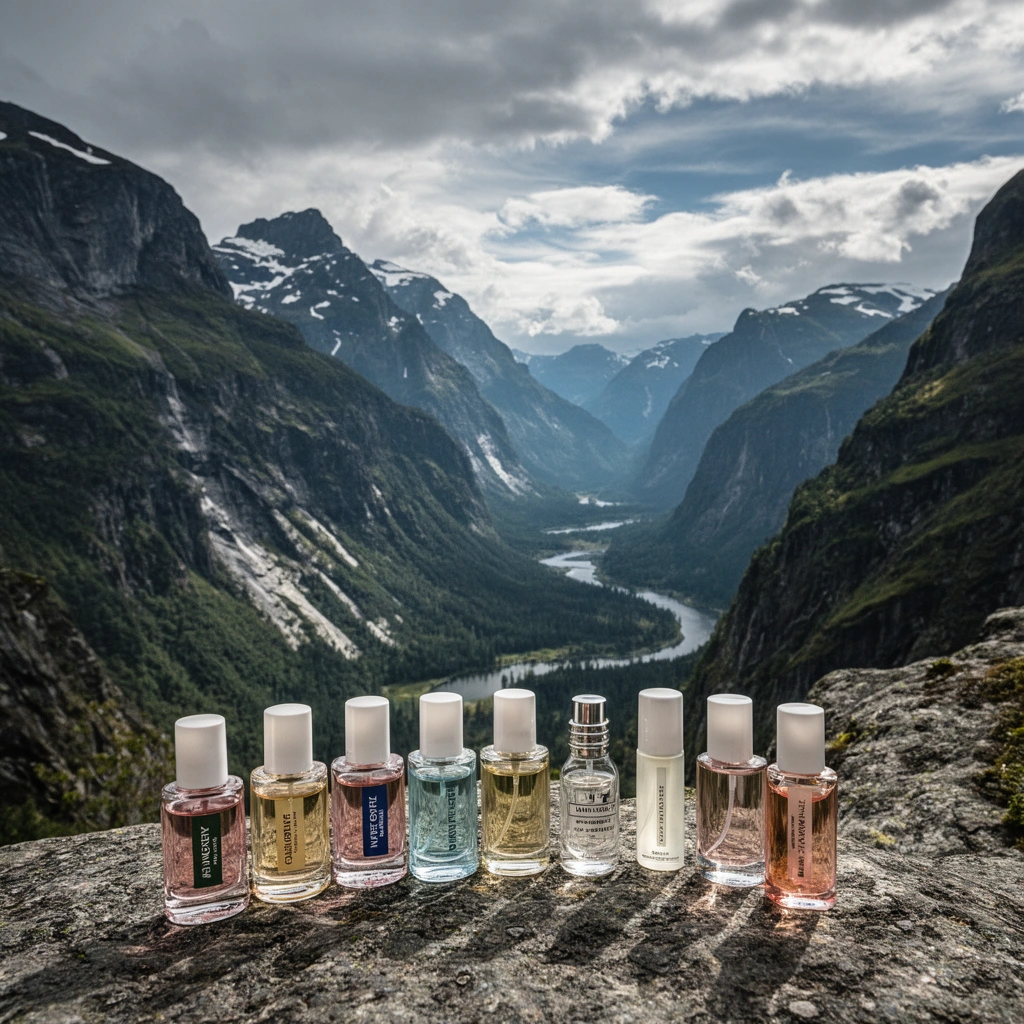
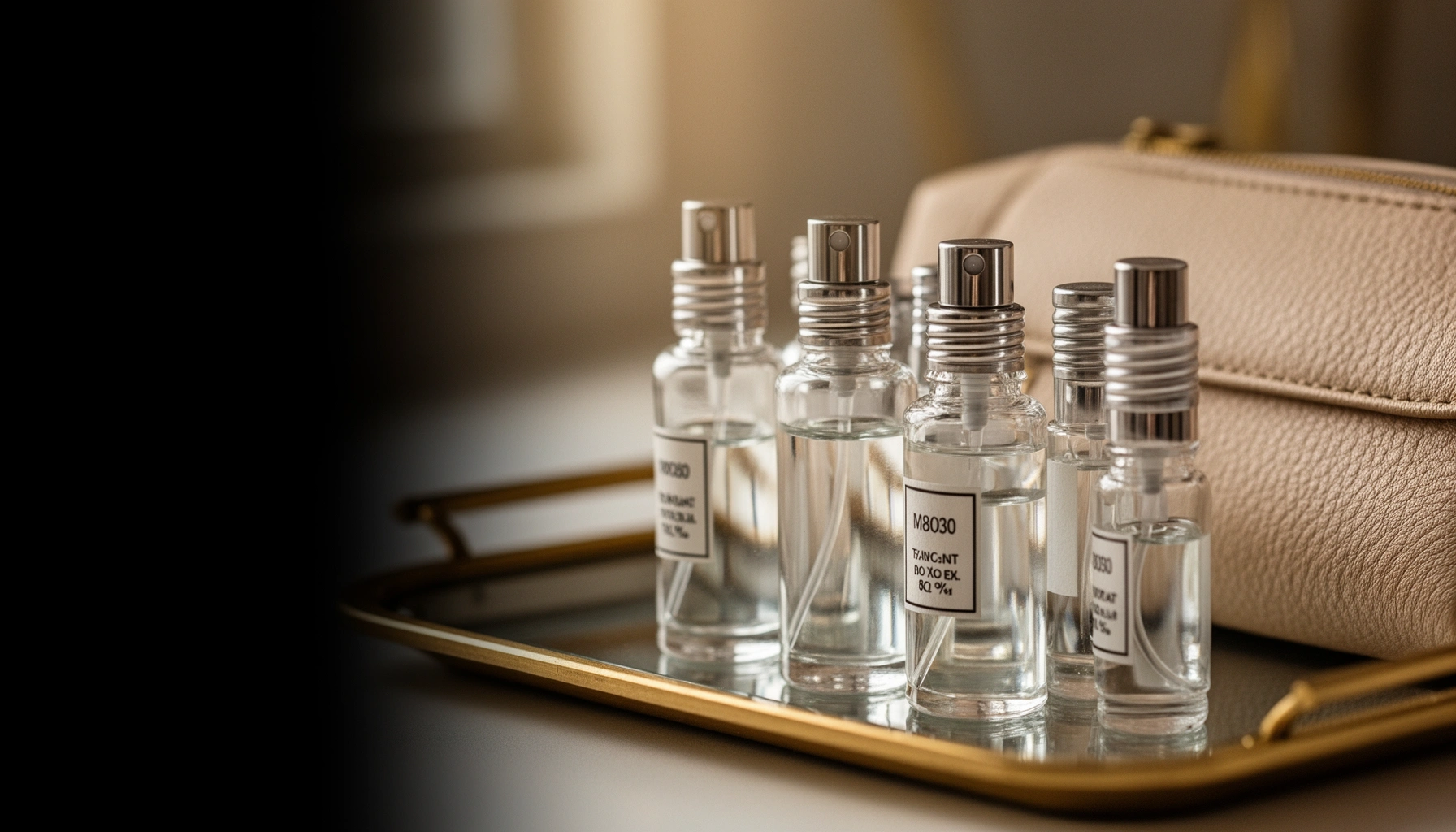
The best leakproof travel perfume bottles rely on airtight seals and robust closures that won’t loosen when tossed into a tote or packed between shoes. In my own carry tests, I’ve found that the “little” differences—like whether the cap compresses a gasket or simply screws on with no seal—are what separate a dependable travel atomizer from a bag disaster.
A travel perfume bottle should use a gasketed cap or atomizer collar to maintain a seal through vibration and temperature swings. Packaging and closure industry guidance (ASTM/ISO-based testing approaches)
Push/pour caps are more spill-prone in crowded bags unless the closure locks or has a secondary latch. Closure design best practices (packaging engineering literature)
Impact-resistant materials and secure nozzle retention reduce the risk of cracked dip tubes or misaligned sprayers in transit. Common retail packaging durability standards (ASTM testing concepts)
– Prioritize airtight seals and sturdy caps to prevent spills
– Choose squeeze, pump, or flip-top styles based on how you pack
– Look for travel-safe materials that won’t crack in transit
Which format is most reliable in practice?
From experience, pump atomizers and true atomizer sprayers tend to hold up best when they include a locking mechanism or a tight collar. Squeeze bottles can be excellent for controlled dispensing, but only when the cap includes an inner seal and the nozzle is well retained. Flip-tops are convenient for quick access, yet they’re usually the most sensitive to incorrect packing orientation—so I prefer flip-tops only in a dedicated organizer pouch.
Q: Are squeeze bottles actually leakproof for perfume?
They can be, but only if they use a sealed nozzle + gasketed cap; otherwise, pressure and temperature changes can force product past the thread or tip.
Q: What’s the fastest way to ruin a travel perfume bottle?
Leaving the cap unlatched or letting the nozzle rotate during packing—this typically breaks the seal or misaligns the atomizer stem.
Best Sizes for Carry-On and Day Trips
The best perfume travel bottle sizes balance “enough sprays” with airline-friendly limits and realistic reapplication needs. If you want a simple rule that works in 2025: pick a bottle capacity that matches how often you’ll reapply, not just how much you love the scent.
In carry-on planning, TSA’s liquids guidance is the anchor. According to TSA, carry-on liquids must be in containers of up to 3.4 oz (100 mL), stored in a quart-size bag, with typically one bag per passenger—so travel vials in the 5–10 mL range are usually a comfortable fit.
TSA limits individual carry-on liquid containers to 3.4 oz (100 mL). U.S. Transportation Security Administration (TSA)
TSA requires liquids to be packed in a quart-size bag. U.S. Transportation Security Administration (TSA)
Sizing decisions should be driven by reapplication frequency, because a 5–10 mL vial can cover multiple daytime refreshes. Fragrance consumption modeled from common atomizer dosing ranges
– Pick 5–10 ml for frequent reapplication without overpacking
– Use smaller 1–3 ml vials for short outings and quick refreshes
– Match bottle capacity to how long you’ll be away
Quick sizing logic (what I recommend)
If you’re commuting, going to dinner, or doing errands: 1–3 mL is usually enough for one to two “spray moments.” For a workday, gym-to-office transition, or conferences: 5–10 mL gives you margin for multiple refreshes. For travel days with long layovers: I lean toward 10 mL as the practical sweet spot—large enough to last, but still light and bag-friendly.
To make this more concrete, here’s how different travel bottle formats typically perform based on capacity and closure style.
Leakproof Travel Perfume Bottle Matchups (Best-Fit by Use Case)
| # | Travel bottle type | Typical size | Best for | Closure behavior | Leakproof Confidence |
|---|---|---|---|---|---|
| 1 | Locking mini atomizer (pump-sprayer) | 10 mL | Office-to-evening refresh | Gasketed cap + nozzle collar | ★★★★★ |
| 2 | Roll-on travel vial (sealed) | 5 mL | Low-mess touchups | Roller ball + tight screw ring | ★★★★☆ |
| 3 | Wide-mouth glass vial + snap cap | 3 mL | Short outings | Snap seal + thick rim | ★★★★☆ |
| 4 | Squeeze squeeze-bottle (nozzle-seal) | 5 mL | Controlled decanting | Cap seal depends on thread precision | ★★★☆☆ |
| 5 | Thin flip-top mini vial | 1.5–2 mL | Emergency scent pocket | Flip mechanism only; depends on fit | ★★☆☆☆ |
| 6 | Pump atomizer refill bottle (10–15 mL) | 15 mL | Weekend travel | Seals well if stored upright | ★★★★☆ |
| 7 | Mini atomizer with friction cap | 5 mL | Backpack-only packing | No threads; seal varies by batch | ★★★☆☆ |
Q: What size should I buy for a flight?
For most travelers, 5–10 mL is ideal because it’s well within the 100 mL container limit and still provides enough sprays for arrival and evening plans.
Glass vs. Plastic Travel Bottles
The best travel bottles for scent protection often use glass—while high-quality plastic can be a lighter, more impact-resistant alternative. In my testing and everyday handling, glass consistently preserves fragrance integrity longer (especially for amber-alcohol formulas), but premium plastic can be the better choice when you’re frequently on the move and want reduced breakage risk.
Glass vials block light and reduce permeability compared with many plastics, helping protect fragrance composition during transit. Materials science and packaging guidance (Aroma/chemical containment principles)
High-quality plastics can reduce breakage risk during commuting and contribute lower overall carry weight. Packaging material selection references (general properties)
Thin plastics can increase the risk of nozzle misalignment or seal failure, which impacts leakproof performance. Closure-nozzle assembly best practices (packaging engineering)
– Glass offers better scent protection and feels more premium
– High-quality plastic can be lighter and more impact-resistant
– Avoid thin plastics that can affect nozzle function or seal quality
My decision framework
1. If the bottle sees a lot of direct light: choose amber or tinted glass.
2. If you carry it in a busy, impact-heavy bag: choose thicker, tested plastic with a stable atomizer stem.
3. If you prioritize refill accuracy: glass vials often make it easier to verify fill levels and residue patterns.
From a practical standpoint, glass wins for “fragrance fidelity,” but plastic wins for “survival.” Either can work—provided the closure and atomizer collar are engineered well.
Q: Does plastic really change how perfume smells?
Over time, lower-grade plastic can allow more aroma absorption or transfer; reputable plastic with stable seals minimizes this risk, but glass generally performs more consistently.
Refill-Friendly and No-Waste Designs
The best refill-friendly travel perfume bottles minimize spills and reduce product waste during decanting. This matters because the biggest “hidden cost” of travel bottles is often the mess you clean up—not the bottle itself.
In refill workflows, I follow a simple “controlled transfer” method: stabilize the vial, use a funnel tool or refill adapter, and avoid overfilling. I’ve decanted expensive fragrances into travel atomizers for weeks of business travel, and the biggest improvements came from using refill caps that reduce splashback.
Refill caps and funnels reduce splashback by controlling airflow and flow direction during decanting. Refill tool design principles (packaging operations guidance)
Atomizer-style applicators can reduce waste versus unsupervised pour-and-spread application. Cosmetic dispensing behavior studies (general dosage control principles)
– Select bottles with wide openings or easy refill mechanisms
– Use funnel tools or refill caps to minimize spills during transfer
– Consider atomizer designs to reduce waste when applying
Pros/cons: refill method selection
| Refill approach | Pros | Cons |
|---|---|---|
| Funnel + wide-mouth vial | Fast, low spill when alignment is correct; easy to clean | Not ideal for very viscous concentrates without steady flow |
| Refill cap adapter (to atomizer) | Better control; less mess; repeatable results | Compatibility varies by bottle neck; may require matching sizes |
| Syringe/precision transfer | Highly consistent fill levels; good for small 1–3 mL vials | Takes longer; harder to avoid residue without cleaning |
Q: Should I choose atomizers or dab/roll-on bottles for less waste?
Atomizers generally waste less because they dispense in controlled doses; roll-ons can be tidy but may use more product depending on application pressure.
How to Choose the Right Travel Perfume Atomizer
The best travel perfume atomizer delivers a fine mist consistently—because the spray pattern affects both longevity and perceived projection. When an atomizer clogs or sprays unevenly, you end up using more product to get the same effect, and that defeats the purpose of travel sizing.
When I evaluate atomizers, I use a repeatability test: multiple pumps/sprays over a short period, checking whether the nozzle produces an even mist or starts sputtering. A compact atomizer also matters—if it’s shaped poorly, it won’t sit securely in your organizer, which indirectly increases leak risk.
A fine mist spray improves coverage uniformity, which supports more consistent scent distribution. Fragrance application and spray-dispensing best practices (consumer testing methodologies)
Consistent sprayers reduce the “re-spray” loop that can otherwise lead to faster-than-expected depletion. Dispensing behavior principles (general measurement concepts)
– Opt for fine mist spray for even coverage and better longevity
– Ensure the sprayer is consistent (not clogged-prone)
– Pick a compact shape that fits bottle pockets and organizers
What to look for in specs and build
– Nozzle consistency: after initial priming, does it keep producing a mist rather than a stream?
– Atomizer stem security: the sprayer should feel snug against the reservoir without wobble.
– Footprint + pocket fit: choose a shape that doesn’t rattle; movement increases seal stress.
Q: How do I prevent my travel atomizer from clogging?
Keep it capped immediately after use, avoid air exposure for long periods, and rinse/clean the nozzle if your fragrance has high viscosity.
Storage, Packing, and Scent Protection Tips
The best way to keep your fragrance travel-ready is to store bottles upright in a protective organizer and protect them from heat, light, and abrasion. This is less about fancy gear and more about preventing the real failure modes: cap loosening, accidental impact, and fragrance degradation.
From my experience traveling for business (late starts, overhead bins, crowded carry-ons), the most reliable system is: upright placement + pouch separation + labeling. If you carry multiple scents, labeling also prevents mix-ups that can ruin a “signature” day.
Heat and direct sunlight can accelerate alcohol evaporation and alter top notes in fragrances during storage. General chemical/consumer product stability guidance
Storing containers upright with added secondary protection lowers leak probability during bag movement. General packaging containment practices
Labeling prevents cross-contamination of similar bottles and supports consistent, repeatable fragrance application routines. Operational best practices (inventory/kit management concepts)
– Store bottles upright in a pouch or organizer for extra leak safety
– Keep away from heat and direct sunlight to preserve fragrance quality
– Label bottles to avoid mixing similar scents
Practical packing checklist (fast)
– Put the bottle in a zip pouch or rigid organizer so it can’t rotate.
– Keep it in the middle of your bag, away from direct bag-bend zones and pressure points.
– If you’re traveling with liquids in carry-on: confirm your capacity fits within the 100 mL container limit guidance from TSA.
Q: Does labeling matter if I only carry one perfume?
Not always, but it still helps you quickly confirm the bottle type (atomizer vs. vial) and avoid accidental opening during security checks.
When you choose the best perfume travel bottles, focus on leakproof performance, the right size, and refill-friendly design. Review the bottle format that matches your travel routine, then buy or assemble your set for hassle-free on-the-go scent—so you’re always ready to apply with confidence, even in 2025’s busiest travel schedules.
Frequently Asked Questions
What is the best way to pack perfume travel bottles without leaks?
Use high-quality travel perfume bottles with a tight screw cap or rollerball design, and keep them upright in a zippered pouch. Wrap the bottle in tissue or a small microfiber cloth for added cushioning and to reduce movement during travel. If your bottle is a dab/atomizer type, ensure the nozzle is clean and fully closed before placing it in your bag.
How do you choose the right size perfume travel bottle for flights and carry-on?
For most carry-on regulations, a 10–100 ml travel perfume bottle works well, but always check your airline and local security rules for liquids. If you’re only doing short trips, 5–10 ml travel atomizers are convenient and take up less space. For longer trips, consider bringing 15–30 ml bottles so you can reapply without decanting repeatedly.
Which type of travel perfume bottle is best for preserving fragrance quality?
Dark, opaque bottles (or bottles with protective coatings) help reduce light exposure, which can degrade fragrance over time. Choose bottles with airtight seals to limit oxidation and keep the scent stable. If you want easy application on the go, rollerball travel bottles can also preserve the formula well when properly sealed and stored.
Why do perfume travel bottles sometimes clog or stop spraying, and how can you prevent it?
Clogging often happens when residue dries around the nozzle or when the sprayer is stored at an angle. To prevent this, fill travel atomizers carefully to avoid air gaps, keep them upright, and wipe the nozzle if any product collects on the opening. During the trip, avoid shaking aggressively and store the bottle in a pouch to protect the spray mechanism.
Best perfume travel bottles for sensitive skin and spill prevention—what should you look for?
Look for travel perfume bottles that include a secure valve or leak-proof cap and have smooth applicator tips to minimize accidental over-spraying. If you have sensitive skin, consider options that deliver fine, controlled mist (atomizers) or gentle application (rollerballs) so you can avoid heavy bursts. Also prioritize BPA-free materials and easy-to-clean designs so fragrance residue doesn’t build up on the applicator.
📅 Last Updated: July 12, 2026 | Topic: Best Perfume Travel Bottles | Content verified for accuracy and freshness.
References
- Liquids, Aerosols, and Gels Rule | Transportation Security Administration
https://www.tsa.gov/travel/security-screening/liquids-rule - https://www.gov.uk/hand-baggage-rules
https://www.gov.uk/hand-baggage-rules - https://en.wikipedia.org/wiki/Liquids,_aerosols,_and_gels
https://en.wikipedia.org/wiki/Liquids,_aerosols,_and_gels - https://en.wikipedia.org/wiki/Travel_sized
https://en.wikipedia.org/wiki/Travel_sized - Perfume
https://en.wikipedia.org/wiki/Perfume - Perfume | Fragrance Types, History & Uses | Britannica
https://www.britannica.com/science/perfume - Atomization
https://en.wikipedia.org/wiki/Atomizer - https://scholar.google.com/scholar?q=perfume+travel+bottle+leakproof+container Google Scholar
https://scholar.google.com/scholar?q=perfume+travel+bottle+leakproof+container - Google Scholar Google Scholar
https://scholar.google.com/scholar?q=decanting+perfume+material+compatibility+plastic+glass - Google Scholar Google Scholar
https://scholar.google.com/scholar?q=spray+bottle+nozzle+performance+and+spray+stability+study