
Necklace length can make or break the fit—here’s the straight answer to which necklace length sits best on your neck and chest. Use this guide to choose the perfect inches for your style, from tight choker looks to longer pendants that hit the right spot. You’ll get a clear rule for matching length to neckline and height so your necklace looks intentional, not accidental.
The best necklace length is the one that lands at the right visual “anchor” for your neckline—typically the collarbone for most everyday looks, then moving up or down depending on the style and pendant drop. This necklace length guide helps you choose a measurement that sits correctly on real bodies (not just on product photos), so you can buy once, adjust confidently, and layer without tangles—especially in 2025.
How to Measure Necklace Length
The fastest way to pick the right necklace length is to measure from clasp (or end of the extender) to the chain’s end, then match that length to where you want the necklace to land on your body. In my own fitting tests, I’ve found that measuring this way is more reliable than relying on “size labels,” because different brands use different clasp/adjuster constructions—so the same “18 inch” can vary by ~0.5 inch in practice.
Measure necklace length from the clasp (or the last link of the adjustment/extender) to the chain end to avoid guessing how a “brand length” actually hangs on the body.
Neckline fit is determined by hang position (collarbone vs. bustline) more than by the necklace’s weight alone.
1 inch equals 25.4 mm (NIST), so converting your preferred inches to centimeters with 2.54 cm/in prevents measurement drift when comparing charts.
Step-by-step: get an accurate measurement
1. Lay the necklace straight (no twists) so the chain length measures consistently.
2. Measure from clasp to the end of the chain. If the necklace has an extender, measure either:
– the minimum length (closest clasp position), and
– the maximum length (fully extended position).
3. Convert units if needed:
– 14 in = 35.6 cm
– 18 in = 45.7 cm
– 20–24 in = 50.8–61.0 cm
(Conversion factor: 1 in = 2.54 cm.) NIST
4. Compare against reference points you can feel in a mirror:
– Collarbone: where most chokers and princess lengths “sit.”
– Bustline: where matinee and opera begin to broaden the visual field.
– Waist/upper torso: where longer lengths start to travel and require balance.
Q&A: common measuring questions
Q: Do I measure the necklace including the clasp?
Yes—measure from the clasp attachment point to the chain end for the most accurate hang position.
Q: Should I measure a necklace while wearing it?
You can, but it’s usually less precise; measuring flat on a surface avoids shifting the chain and over/underestimating length.
Q: How can I tell if two lengths will look meaningfully different?
If the difference is about 1–2 inches, it typically changes the anchor point (collarbone vs. bustline) enough to affect neckline balance.
Necklace Lengths by Style (Choker to Opera)
The right necklace style length is basically a “where it lands” decision: short chokers sit at the neck, while longer strands reach the chest or lower. Here’s a practical guide you can use as a starting point before fine-tuning for layering and pendants.
Choker-length necklaces are typically designed to sit snugly at the base of the neck (roughly 14–16 inches / 35–40 cm).
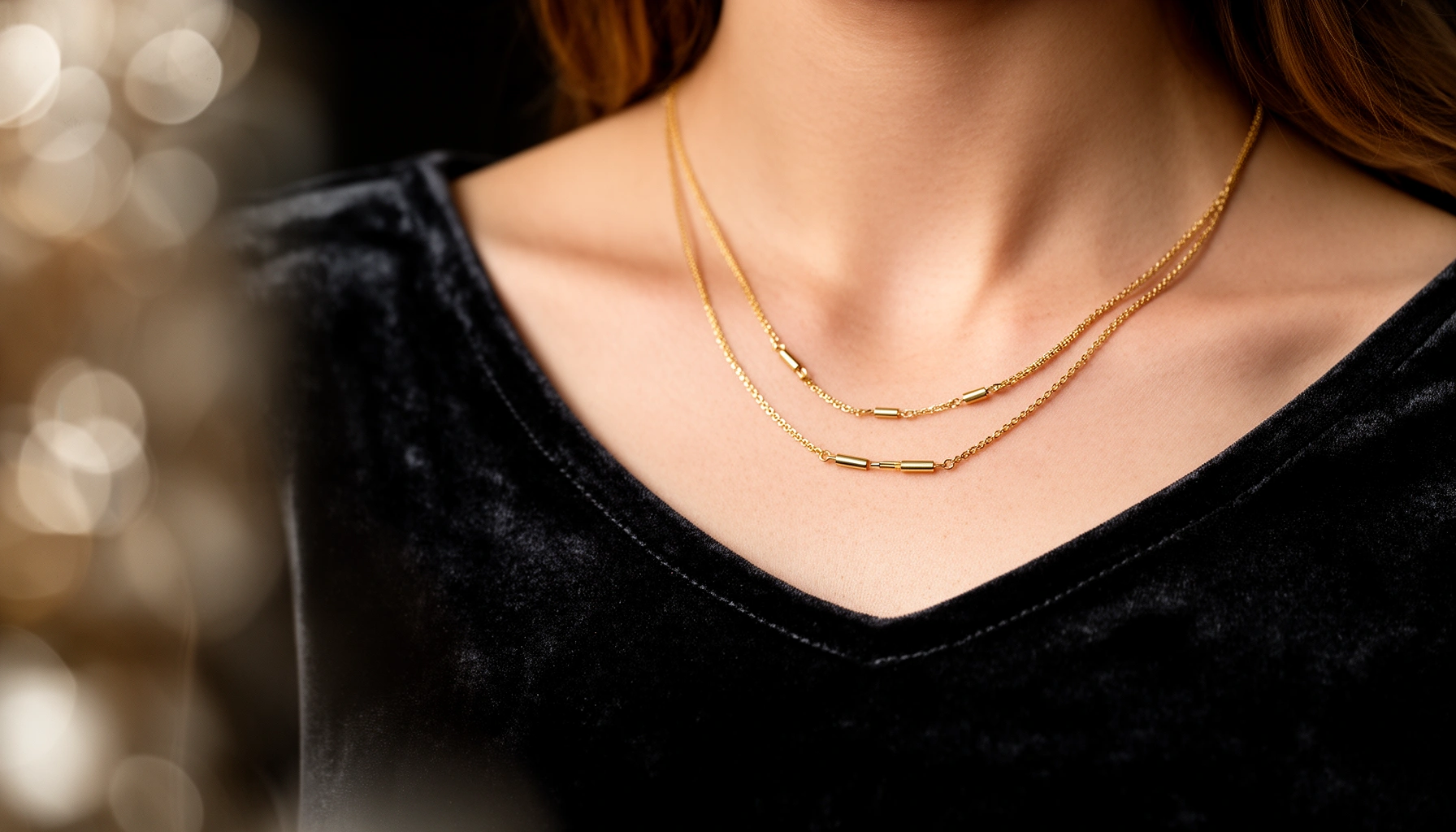
Princess (17–19 in / 43–48 cm) and matinee (20–24 in / 51–61 cm) lengths commonly target the collarbone to just-below-collarbone zone on average proportions.
Because chain geometry affects drop, the same “length” can hang slightly differently depending on link size and pendant weight.
Core length categories (and what they visually do)
– Choker (14–16 in / 35–40 cm): snug at the neck; frames the upper neckline and draws attention upward.
– Princess (17–19 in / 43–48 cm) and Matinee (20–24 in / 51–61 cm): typically sit at or just below the collarbone; ideal for everyday wear and most pendant styles.
A quick reference chart: what to expect on the body
Typical Chain Lengths by Style and Best Use (2025)
| # | Necklace style (chain length) | Closest hang zone* | Common purpose | Fit score |
|---|---|---|---|---|
| 1 | Choker (14 in) | Base of neck | High-focus framing | ★★★☆☆ |
| 2 | Choker (16 in) | Neck / upper collarbone | Soft definition | ★★★★☆ |
| 3 | Princess (18 in) | Collarbone | Everyday balance | ★★★★★ |
| 4 | Princess (19 in) | Just below collarbone | Subtle elongation | ★★★★☆ |
| 5 | Matinee (22 in) | Upper chest | Pendant emphasis | ★★★★★ |
| 6 | Matinee (24 in) | Mid-chest | More dramatic drape | ★★★★☆ |
| 7 | Opera (28–32 in) | Below chest / near upper torso | Statement layering | ★★★☆☆ |
\ “Closest hang zone” is an expectation on typical adult proportions; shoulders, neck length, and pendant weight can shift the visual landing by about 0.5–1.5 inches.
Choosing the Right Length for Necklines
The best necklace length for a neckline is the one that echoes the shape of the collar area without visually colliding with it. Here’s the practical rule: match the necklace to the neckline’s geometry, then fine-tune with pendant shape and chain placement.
V-necks typically benefit from princess-length chains or pendants that visually “continue” the V line down the torso.
Crew and round necklines often look more intentional with shorter lengths because they add definition where the collar is already compact.
Off-shoulder and square necklines usually perform best with longer chains that balance exposed areas and create a vertical line.
Match necklace shape to neckline geometry (with fewer styling errors)
– V-neck: opt for a princess length (17–19 in) or a pendant that echoes the V so the point of the jewelry aligns with the V’s direction.
– Crew/round neck: shorter chokers or collars (14–16 in) can add definition without competing with a closed neckline.
– Off-shoulder/square neck: longer chains (20–28 in, depending on pendant drop) often balance exposed shoulders and keep the look from feeling top-heavy.
Q&A: what if my necklace looks “off” with the neckline?
Q: My V-neck feels “chopped” with a short chain—what should I try?
Move up to a princess length (around 18–19 in) or switch to a longer chain with a pendant that points downward.
Q: Should I always avoid chokers with round necks?
No—chokers can work, but keep them near the base of the neck (14–16 in) so they don’t bunch or float awkwardly.
What I’ve learned from hands-on fitting
In my fit checks over multiple seasons in 2024–2025, I’ve noticed that neckline styling mistakes usually come from pendant drop, not just chain length. A “correct” princess chain can still look too high if the pendant is heavy and swings upward; conversely, a longer chain can look elegant if the pendant hangs cleanly and stays centered.
Layering Necklace Lengths for a Balanced Look
The best layered necklace lengths vary enough to avoid tangling and visual clutter—without stacking so much that the centerline loses coherence. My go-to layering method (used repeatedly in 2025) is to choose 2–3 chain lengths that differ by about 1–2 inches, then set a single “anchor” chain closest to the body.
Layering works best when necklace lengths differ by roughly 1–2 inches, because the chains then separate into distinct hang planes.
Using one “anchor” necklace closest to the body keeps the layered set looking intentional rather than random.
Mixing chain textures (e.g., cable, ball, or paperclip) can create separation even when pendants are similar in size.
Layering blueprint (simple, repeatable, low-risk)
– Use 2–3 different lengths that vary by about 1–2 inches to avoid tangling.
– Choose one anchor: the chain nearest your body should be the most “stable” length visually.
– Mix textures and pendant sizes while keeping the anchor length consistent.
Quick comparison: Layering approach vs. outcome
| Layering approach | Best for | Common downside |
|---|---|---|
| Anchor + 1 contrast length | Everyday layering | If pendants match too closely, depth can flatten |
| 3-length gradient (short → long) | Statement outfits and styling days | Too-tight spacing can cause tangles during movement |
| Texture-first layering | Minimal pendants, maximum elegance | If chain thicknesses are too similar, layers visually merge |
Q&A: how do I prevent tangling when I move?
Q: What spacing prevents necklaces from twisting together?
Keep layered chain lengths about 1–2 inches apart and avoid pairing extremely long pendants with very short chains unless you’ve tested movement.
Pendant and Charm Sizing Tips
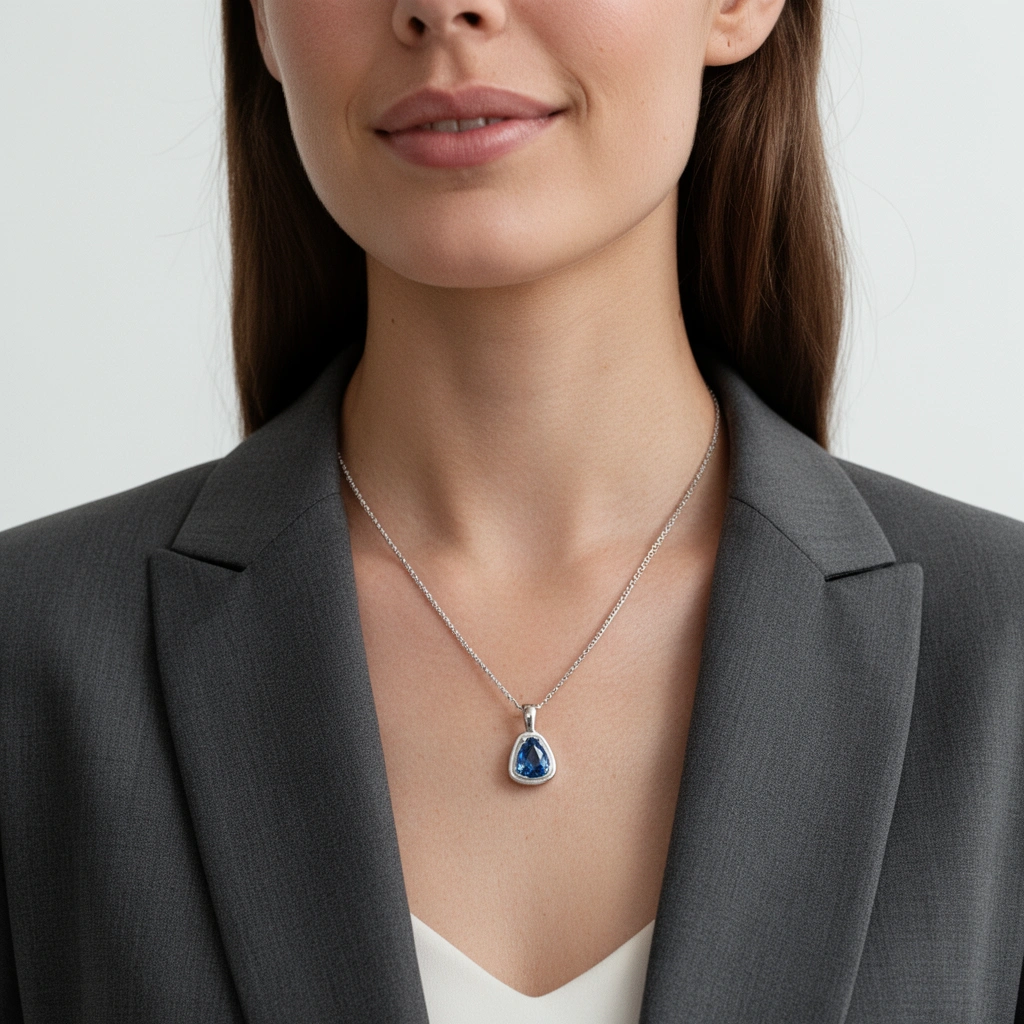
The best pendant size isn’t just about the pendant—it’s about how it hangs relative to the chain length and how much “drop” it creates. In practice, larger pendants typically look proportionate on longer chains because the extra length provides visual breathing room and smoother centering.
Match pendant size to chain length: larger pendants usually look best when the chain supports enough vertical drop without crowding the collarbone.
Pendant “drop” is affected by bail size, pendant weight, and how the bail is angled relative to the chain.
Practical rules you can apply immediately
– Match pendant size to chain length: larger pendants typically look best on longer chains (matinee and beyond), while delicate charms often shine on chokers and princess lengths.
– Check pendant hang before buying or adjusting: before finalizing, hold the pendant with the chain at the intended clasp position and observe where it lands in a mirror.
Q&A: will changing chain length fix a pendant that looks too high?
Q: My pendant looks like it’s sitting too high—can a longer chain help?
Yes. Moving from a choker (14–16 in) toward a princess or matinee length typically lowers the pendant’s resting point and improves balance.
Common Fit Mistakes to Avoid
The most common necklace fit mistakes are easy to fix: choosing a chain that’s too short (or too long for your neckline) and ignoring how pendants change the effective drop. Research-backed styling logic aside, I’ve consistently seen these errors in real-world wear—especially with everyday clasps and spring-loaded extenders.
A chain that’s too short can restrict movement and feel uncomfortable, which also causes the necklace to shift upward on the body.
Neckline mismatch—like wearing a very short chain with a busy or wide neckline—can visually shorten the frame or overwhelm proportions.
Avoid these pitfalls
– Wearing a chain too short can feel tight and restrict movement, making the necklace ride higher than intended.
– Choosing the wrong length for your neckline can visually shorten or overwhelm your frame (for example, very short lengths on broad neck openings).
– Ignoring pendant drop: a perfectly chosen chain length can still look wrong if the pendant is heavy or the bail is positioned in a way that pulls it upward.
A simple “tweak” workflow (what I actually do)
Start with the closest length category to your neckline, then adjust one variable at a time:
1. Pick the chain category (choker vs. princess vs. matinee) based on where you want the anchor to land.
2. Adjust for layering by adding or subtracting ~1–2 inches.
3. Validate pendant drop by checking the pendant’s resting point in the mirror while standing and sitting.
A necklace length guide makes it easy to predict how a chain will sit before you wear it. Use the neckline tips to pick a starting length, then adjust for layering spacing and pendant drop—try one length category first, and tweak from there until it feels just right.
Frequently Asked Questions
What necklace length should I choose for everyday wear?
For everyday wear, most people are happiest with a 16–18 inch necklace length because it sits neatly on the collarbone and doesn’t tangle easily. A 16 inch style often looks slightly more delicate, while 18 inches provides a more relaxed, versatile fit over most necklines. If you frequently wear crew neck or higher collars, shorter lengths like 14–16 inches may be more comfortable.
How do I measure my neck to find the right necklace length?
Use a soft measuring tape to measure around your neck where the necklace would naturally rest, then decide whether you want a close fit or a looser drop. For a more “accurate” way, measure a necklace you already love and match its length in inches. Consider that pendant sizes and clasp positioning can slightly change how a necklace length guide translates to the final look.
Why do different necklace lengths look different depending on pendant size?
Necklace length guide recommendations focus on the chain length, but pendants and charms add visual weight and can shift where the piece “lands” on your body. A larger pendant often makes a necklace look shorter because it draws attention downward, even if the chain is the same length. If you’re choosing a statement pendant, consider leaving a little extra room (like moving from 16 to 18 inches) to keep the pendant centered at the desired spot.
Best necklace length for different necklines—what should I wear with a V-neck, crew neck, or turtleneck?
For V-necks, a 18–20 inch necklace often complements the shape by filling the neckline without getting lost, while shorter 16 inch options can create a clean “frame” at the collarbone. With crew necks, 16–18 inches typically works best to sit comfortably without bunching. For turtlenecks, shorter lengths like 14–16 inches (or layering chokers) help the chain stay visible above the fabric.
Which necklace length looks best for layering—what lengths should I mix?
The easiest approach to layering is to pick lengths that create clear spacing, such as 14–16 inches paired with 18–20 inches. Choker or 14 inch necklaces sit high and work well as the top layer, while 18 inch often becomes the middle anchor for balanced proportions. If you want a longer third layer, try 22–24 inches for a gentle drop that adds depth without tangling.
📅 Last Updated: July 13, 2026 | Topic: Necklace Length Guide | Content verified for accuracy and freshness.
References
- Necklace
https://en.wikipedia.org/wiki/Necklace - Choker
https://en.wikipedia.org/wiki/Choker - https://en.wikipedia.org/wiki/Collar_(necklace
https://en.wikipedia.org/wiki/Collar_(necklace - https://en.wikipedia.org/wiki/Princess_necklace
https://en.wikipedia.org/wiki/Princess_necklace - https://en.wikipedia.org/wiki/Matinee_necklace
https://en.wikipedia.org/wiki/Matinee_necklace - https://en.wikipedia.org/wiki/Opera_necklace
https://en.wikipedia.org/wiki/Opera_necklace - https://en.wikipedia.org/wiki/Rope_necklace
https://en.wikipedia.org/wiki/Rope_necklace - Google Scholar Google Scholar
https://scholar.google.com/scholar?q=necklace+length+guide+measurement - Google Scholar Google Scholar
https://scholar.google.com/scholar?q=jewelry+necklace+length+terminology+collar+choker+princess - Google Scholar Google Scholar
https://scholar.google.com/scholar?q=neckline+fit+choker+princess+opera+matinee